
Quora is still one of the fastest places to discover hidden content ideas because the questions are already written in the language your audience uses. The question and answer site remains a gold mine for finding out what your market cares about, how you can solve their problem, who the influencers are, and what other data appears at a glance before you invest effort writing.
The trick is to treat Quora as audience research, not as a place to copy topics. Look for repeated questions, strong answer threads, niche debates, and specific wording. Then turn those signals into useful blog post ideas, guides, checklists, videos, outreach angles, and keywords your readers would actually recognize.
This is why Quora is your secret weapon for content ideas
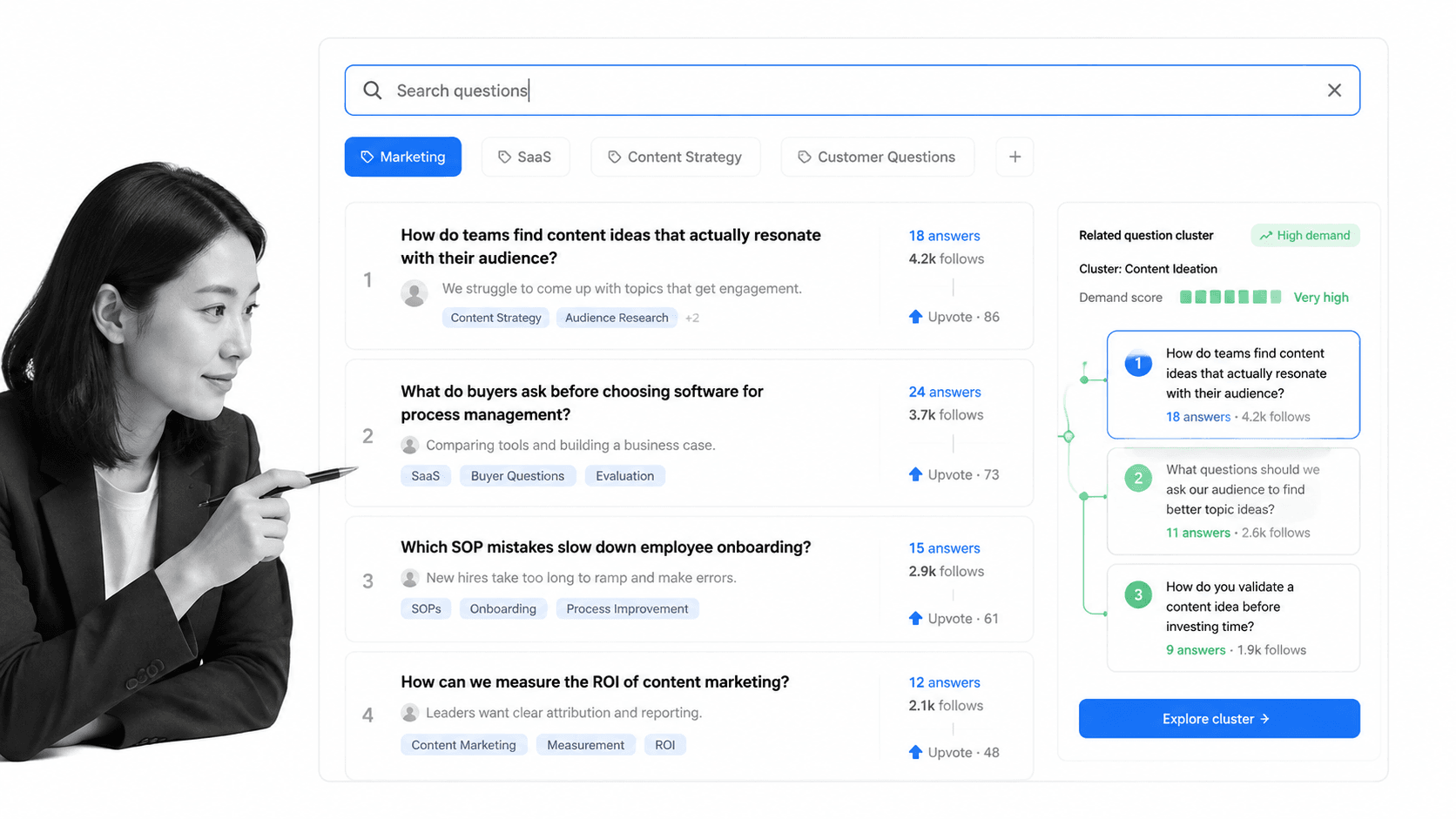
A good content idea is not just a subject you can write about. It is a subject people already care enough about to ask, answer, follow, and debate. That is why Quora is useful. Its topic pages, feeds, answer threads, and related questions act like a well-indexed database of the questions people really want to know, including topics with actual interest from communities that help each other out.
The value is especially clear when a phrase has more than one meaning. Selling baseball bats? Search for something simple like baseball bat and you may see questions about bat shops, Little League gear, the best material for a bat, and why a baseball bat is shaped the way it is. If you were writing for a baseball bat shop, those questions would give you quality content ideas already. Search for bat on its own and the topic can branch into mammals, birdwatching, medieval manuscripts, Henry Ford references, or even Tolkien’s elves. Quora helps you see which branch your audience actually means before you write the wrong article.
Use that ambiguity as a filter. If a broad keyword is noisy, read the questions and refine the idea until it matches a real audience problem. If the questions cluster around beginner explanations, write a beginner guide. If they cluster around comparisons, write a comparison. If they cluster around objections, write a post that answers those objections directly. That is how hidden content ideas become practical content planning.
Instantly find what people are saying about topics related to your product or service
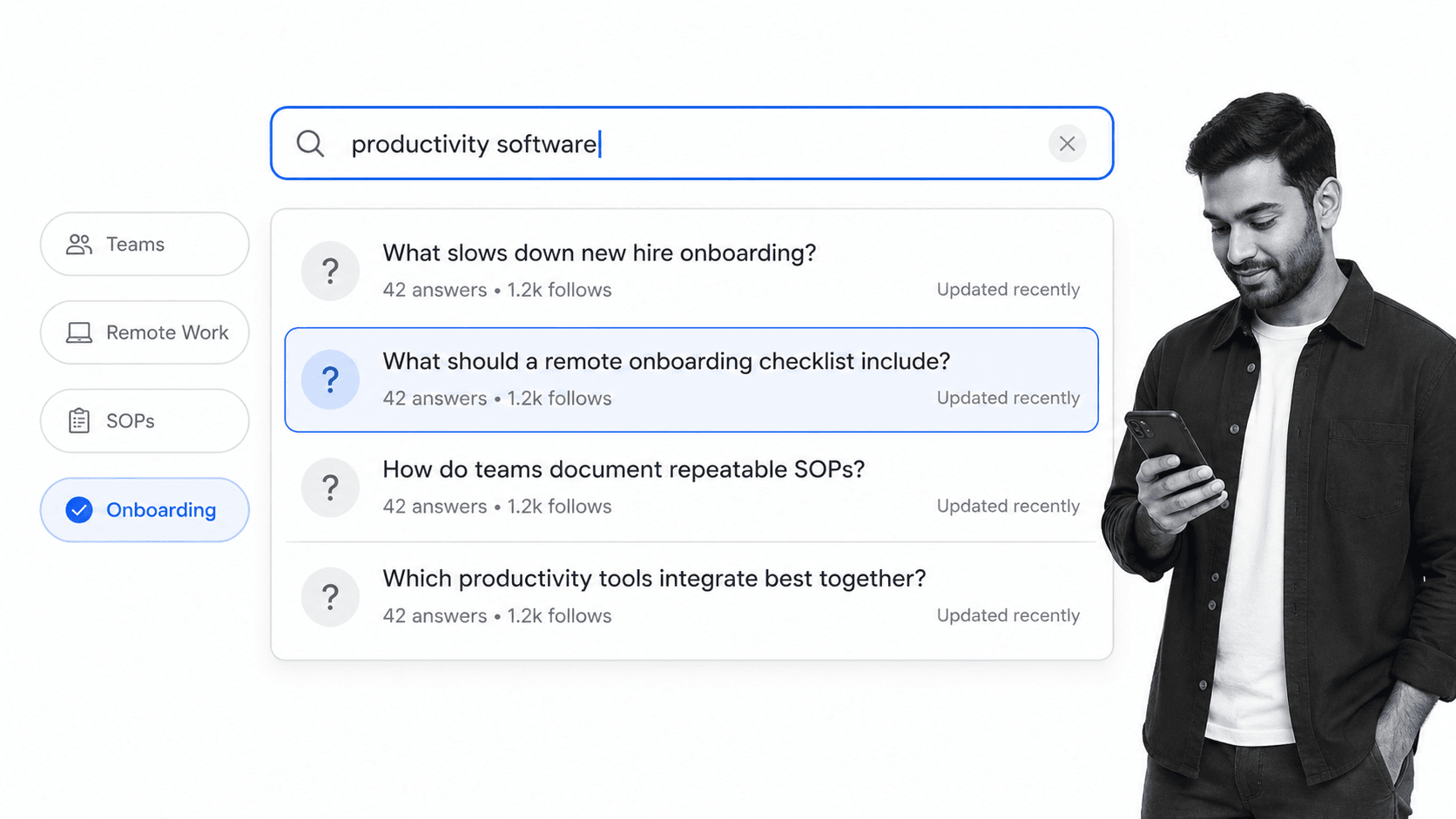
Start with the topic closest to your product or service, then watch the related questions. Input your niche into the search bar, but look at the topic option and the related questions instead of hitting enter too quickly. A workflow software team might search for productivity software, onboarding checklists, SOPs, audit prep, approvals, or remote team documentation. The questions that appear are often more useful than the keyword itself because they show what people are actually searching for before they have the right vocabulary.
For example, a person may not search for process documentation maturity model. They might ask, How do teams document repeatable SOPs?, What should a remote onboarding checklist include?, or What slows down new hire onboarding? Those are strong content ideas because they reveal the problem, the audience language, and the likely format of the answer.
You do not need every answer on Quora. You need a fresh load of repeated, specific questions around your chosen topic so you can pick the ones your product, service, or expertise can solve. Save the questions that keep appearing, group them by intent, and ignore anything that looks interesting but does not connect to your audience.
Read sourced research from experts that you can quote in your content

Quora answers can improve your content when you use them as research material, not filler. A strong answer from an expert can give you a sharper explanation, a better sourced example, or a quote that makes a point feel grounded. The most useful answers usually include the writer’s role, a concrete story, and enough detail that you can verify the idea before citing it.
The classic SaaS pricing example still works. Jason Lemkin’s comments about pricing transparency became useful because they connected a broad question, Should SaaS companies hide prices?, to a real business decision. That kind of answer can lead to a post about SaaS pricing pages, buyer trust, or why companies like GoodData have experimented with pricing visibility. The content idea comes from the expert answer, but the finished post should add your own structure, source checking, and practical takeaways.
When you find an answer you want to quote, save the question, the answer, the writer’s current profile, and any source they mention. Then ask what the answer helps you explain. Does it support a claim? Does it provide a counterpoint? Does it expose a misconception? If the answer cannot do at least one of those things, it is not worth quoting.
Use Quora to gain more knowledge about your niche and become an expert

Following a topic for a few days can teach you the shape of a niche faster than a huge spreadsheet can. You see which questions keep coming back, which explanations people argue with, which answers get traction, and where beginners get stuck. Tailoring your read tab around relevant feeds gives you a fresh load of content ideas each time you are stuck, and that context makes your content more useful because you stop writing from an abstract keyword and start writing from the reader’s actual confusion.
This is also where Quora can help a content writer move beyond surface-level posts. If you are writing about productivity hacks, read the answers that describe how people plan their day, protect deep work, avoid context switching, and build repeatable routines. If you are writing about compliance operations, read the questions about approvals, audit trails, training, and documentation. The exact niche changes, but the research habit is the same.
As you read, build a small research database. Track the question, the topic, the audience type, the strongest answer, the repeated pain point, and the content angle. After a few hours you should have more than titles. You should have explanations, objections, examples, and language that can shape the article itself.
Find every influencer in your niche in an afternoon, then use them for outreach and content inspiration

Quora is also useful for finding influential writers in a niche, but the best signal is not a generic popularity count. Look for people who answer current questions well, show clear experience, and appear repeatedly across the topics your audience follows. A credible niche influencer usually leaves a trail: detailed answers, topic activity, consistent language, and comments from people trying to solve the same problem.
Build a shortlist by searching your topic, opening strong answer threads, and checking the writers behind the best answers. Record their name, role, topics, recent answer quality, and why their perspective would help your audience. Some will be quote sources. Some will be outreach targets. Some will simply reveal content inspiration because their answers show how experts frame the problem.
This is especially useful when your niche is narrow. You can find writers quickly, follow other topics they care about, and branch off into related questions you would not have found from a broad keyword search. If you later run outreach, use a real reason for contacting them: a question they answered, a point they made, or a topic they clearly understand. A generic pitch wastes the research.
Find the right keywords phrased in a way people actually speak
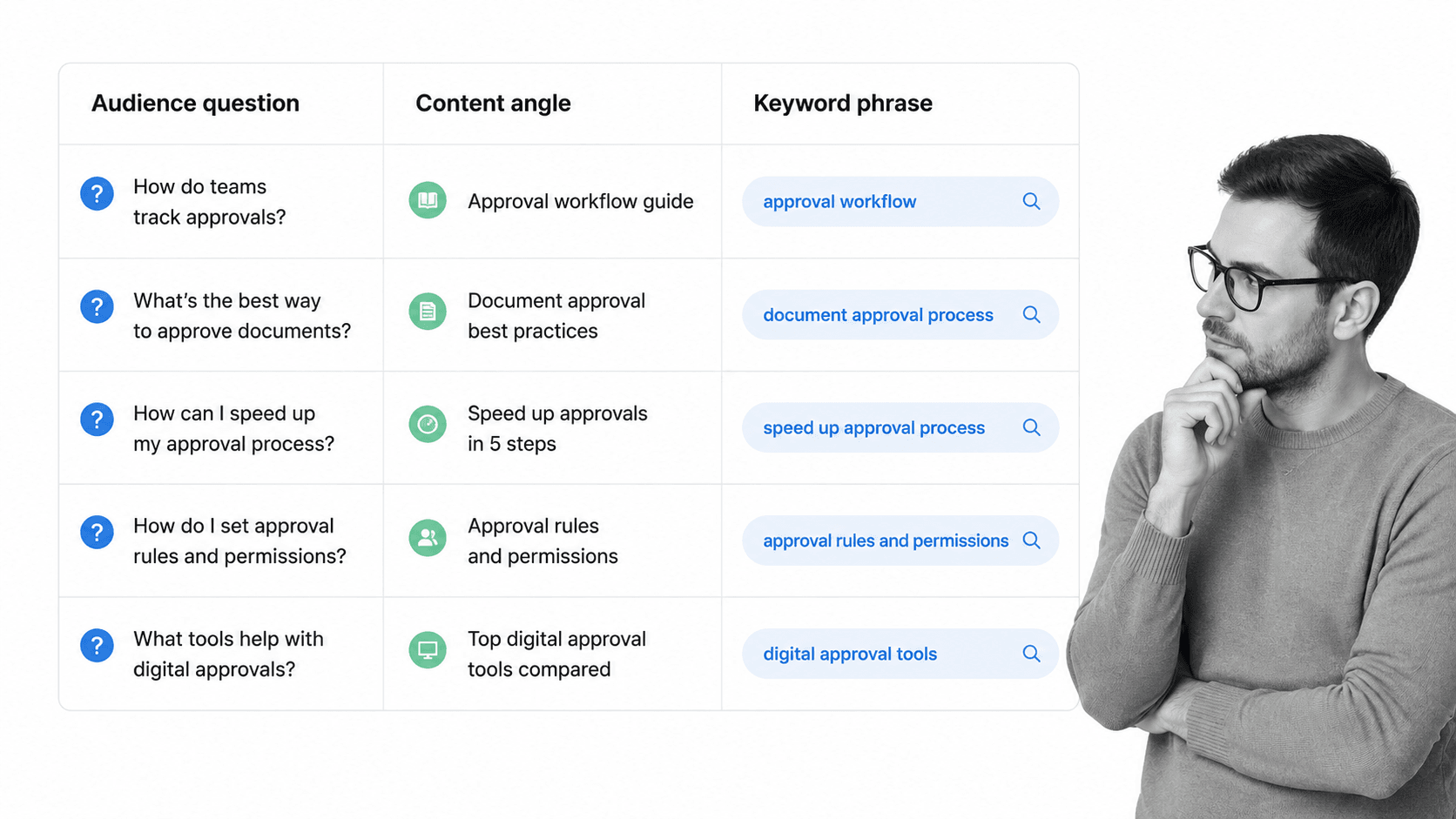
Keyword tools show volume and competition, but they often flatten human language. Keywords are, at their core, a human way to accurately query a massive database, and Quora helps you hear how people phrase the same problem before they know the polished term. That matters because an article that uses the reader’s wording in the introduction, headings, and examples is easier to understand and more likely to match the searcher’s intent.
Turn questions into keywords by keeping the original phrasing close. How do teams track approvals? can become approval workflow or document approval process. What slows down new hire onboarding? can become new hire onboarding checklist or remote onboarding process. The keyword is shorter, but the content should still answer the human question that produced it.
Once you have a list of content ideas, make the workflow repeatable: collect questions, cluster them, validate demand, draft, review, publish, and track performance. A simple checklist is enough for a solo writer. For teams with more moving parts, marketing project management tools keep research, approvals, and publishing work from drifting across tabs.
Quora will not write the post for you, and it should not replace interviews, analytics, or customer research. It gives you input: questions, answers, topics, experts, influencers, and keywords phrased in a human way. The output still depends on your judgment, your sources, and your ability to turn those signals into content your audience can use.
The post 5 Quick Ways To Discover Hidden Content Ideas with Quora first appeared on Process Street | Compliance Operations Platform.






0 Commentaires