
Pre-boarding is the work that happens after a candidate accepts your offer and before their first day. It is where HR, IT, finance, the hiring manager, and the new hire all get aligned before the onboarding clock starts.
These must-know strategies for pre-boarding new hires help you turn that waiting period into a structured process: paperwork completed, access prepared, expectations set, managers ready, and the new hire confident before day one.
- Taking a look at the advantages of a pre-boarding new hires process
- The seven wonders of the pre-boarding world
- You only have one first impression, make it a good one
- Process Street streamlines the process so your attention is on your new hire
Taking a look at the advantages of a pre-boarding new hires process
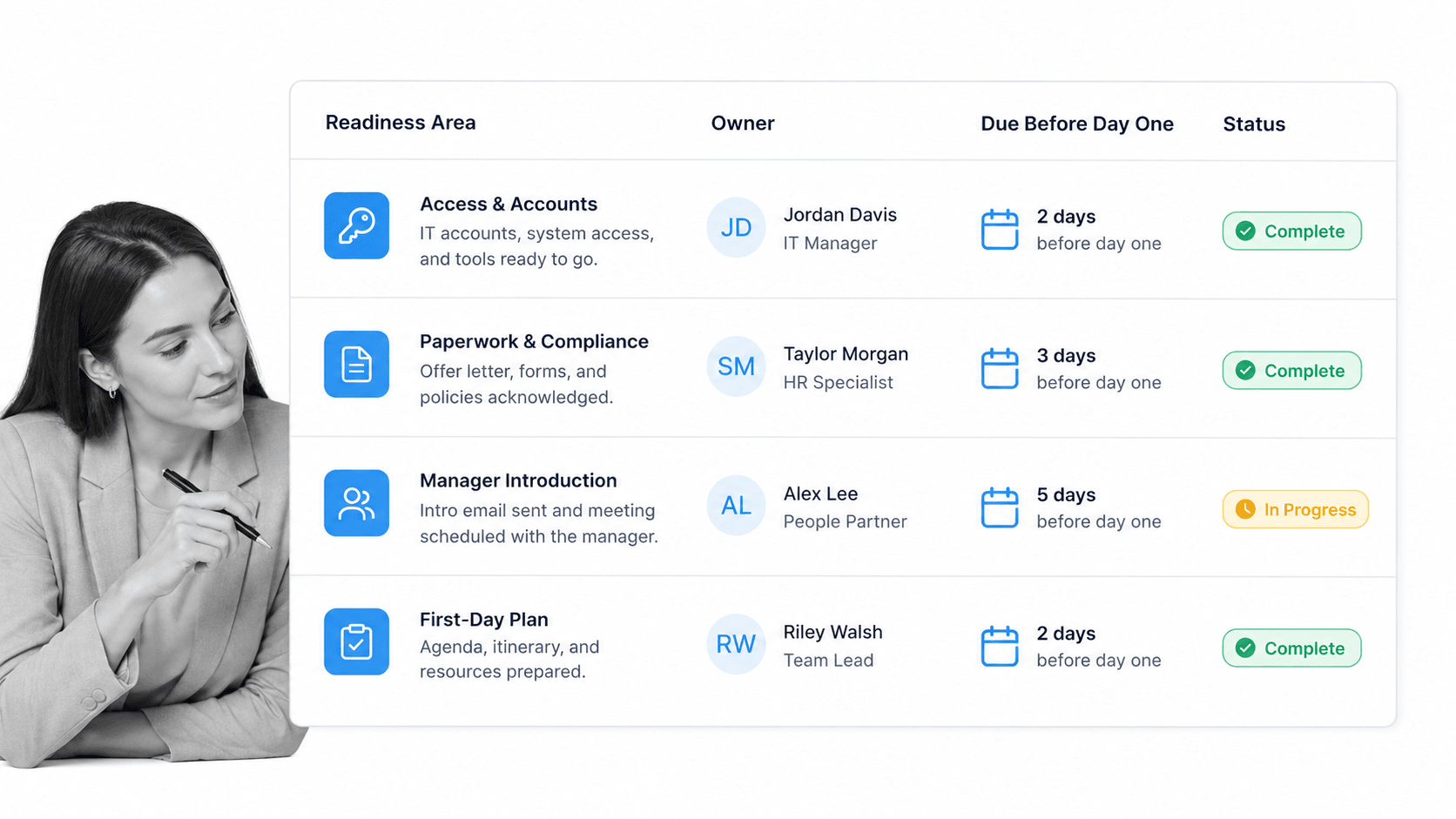
Employee turnover costs can reach 100% to 300% of a new hire salary when a hire leaves early. Pre-boarding will not solve every retention problem, but it gives you control over the period most companies leave vague: the time between offer acceptance and the start date.
A pre-boarding process prepares the person for their role, keeps them engaged, and gives your internal team a clear operating plan. The exact experience depends on your culture, budget, and role type, but the goal is consistent: make the first day feel organized instead of improvised.
Like with most things, preparation is the key to a successful onboarding experience. Pre-boarding is your prep time. It helps you gather what the new hire needs, explain what they can expect, and keep the hiring team organized before the employment process officially begins. Long story short, if your pre-boarding is disorganized, you are already off to a bad start.
1st day experience is improved
“I arrived at the office and no one remembered I was due to start that day.”
“None of the information HR gave me was correct. I did not even know when to show up on my first day.”
“My office letter was made out to someone by a different name.”
Disastrous first days are far too common. A structured pre-boarding plan prevents the obvious misses: incorrect start times, missing forms, no equipment, no manager handoff, and no welcome from the team. The new hire is not spending day one traveling through red tape. They are meeting people, understanding expectations, and starting work with the basics already handled.
They are not signing forms or traveling through insane amounts of red tape. The pre-boarding process is catered to encourage relationship-building among managers and colleagues. People feel involved when they are part of something bigger, and that is the recipe for offering a killer first day.
Offers a more organized process
There is nothing worse than searching through paperwork looking for that one form you swear you saw yesterday. A dedicated pre-boarding hub gives HR, IT, finance, managers, and the new hire one place to see what has to happen before day one.
That hub might include forms, policy acknowledgments, equipment requests, access setup, manager introductions, welcome notes, and first-week agenda planning. When the process is visible, recurring work becomes easier to assign, automate, and improve.
This might include filling out forms, introducing yourself to the new hire, giving them the appropriate instructions for their first day, and informing team members of their start date. Before you know it, you are already building rapport with your new hire and solidifying their commitment before they even begin work.
New hire is more productive from the start
A good pre-boarding process does more than create a warm first impression. It removes avoidable blockers. When admin work, access requests, and basic expectations are handled before day one, the new hire can spend their first week learning the role instead of waiting for systems and signatures.
Since they get the admin work before their first day, they can sink their teeth into the real work from the beginning. In-house training and other job-related work can be streamlined because the basics are complete before the employee arrives.
At Process Street, new hires can be added to Slack channels before their first day so they can get a feel for what is going on. The People Team can stay in contact from the moment an offer is accepted through the first week. A pre-boarding workflow can automatically send required paperwork in advance, route it for approval, and keep managers aware of what is ready and what still needs attention.
The seven wonders of the pre-boarding world
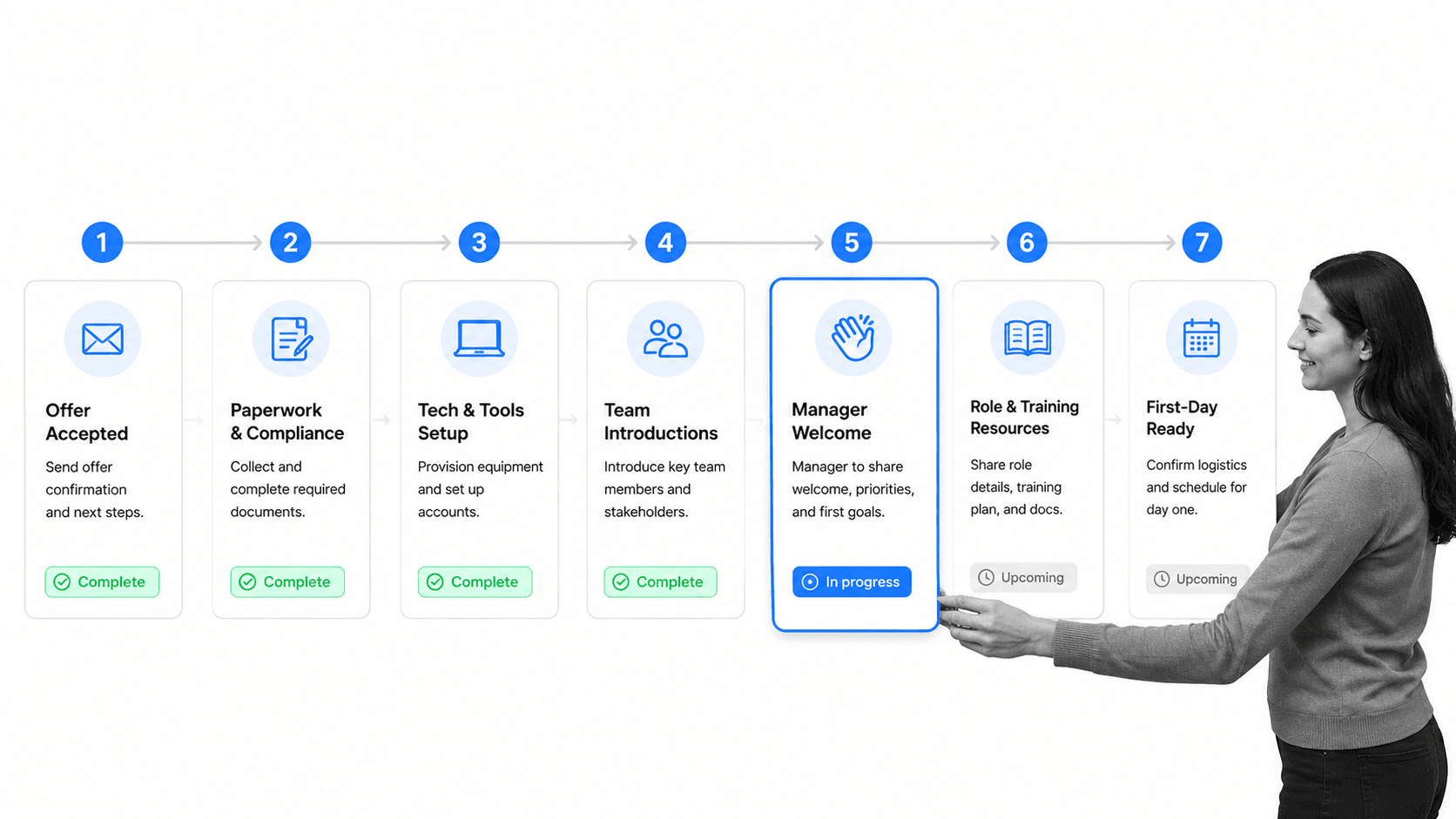
Preparing your new hire before they begin onboarding improves retention, reduces anxiety, and gives your internal team a repeatable way to welcome people. The seven wonders below keep the process practical.
Please let me guide you through the seven magnificent wonders of the pre-boarding world that can help you keep your new hires engaged.
Create a pre-boarding workflow
The first step is to build the process itself. List everything that should happen between offer acceptance and the first day: paperwork, payroll, equipment, system access, policy acknowledgments, manager prep, team announcements, and first-week planning.
Once the process is visible, you can see what tasks are recurring. That helps you identify what you can automate so you spend time on work that needs judgment and let the process handle the repeatable steps. Process Street lets you document the plan in Pages, run the repeatable work through workflows, and keep supporting resources like an employee handbook, reading list, or first-week guide connected to the work.
Announce their arrival
Once the workflow exists, include a task that tells the team when the new hire is starting and how they can welcome them. There is nothing worse than starting a first day with nobody prepared for you.
Letting your existing employees know about your new hire’s start date helps everyone prepare for their arrival. A clear announcement improves communication and makes the arrival feel intentional. If your team uses Slack, the workflow can remind the manager to post an intro, share the new hire profile, and invite the right people into the welcome thread.
Get personal with it
Generic onboarding materials are easy to ignore. A personalized pre-boarding process gives the new hire proof that the team knows who they are and what they need.
Start with the basics: name, start date, job title, department, manager, location, equipment needs, working style, previous work experience, and any accessibility or scheduling needs. Then use that information to shape the onboarding process, welcome message, first-week agenda, and manager prep tasks.
Whenever we welcome a new hire to Process Street, the announcement can go into the general Slack channel so the team has a real chance to say hello. You can also add a task to schedule a first-day lunch, coffee chat, or remote icebreaker. When our remote content team welcomed a new writer, we played Two Truths and a Lie on Zoom. It was simple, but it made the first week feel human.
Ask for their opinion on your hiring process
A new hire who feels heard is more likely to feel valued. I like my opinion to be heard, and most people share that feeling because expressing thoughts makes us feel understood and cared for. Asking for feedback before the first day also gives you useful information while the hiring experience is still fresh.
Add a short checkpoint that asks what went well, what was confusing, and what information they wish they had earlier. You can connect that feedback to your broader employee feedback process so pre-boarding improves over time instead of staying frozen.
Help with the admin
New hires have to work through a mountain of bureaucracy: tax forms, payroll details, policy acknowledgments, contracts, software accounts, and equipment setup. Do not make them discover all of that on day one.
They have to sign copious amounts of paperwork, get familiar with company software, and set up their workspace. Offering help with those tasks lets them know you care and want to be supportive.
Set up their company email, required systems, and calendar access before they start. Route signatures through DocuSign automation when appropriate. Assign owners for every internal handoff so the new hire is not stuck waiting because nobody knew who had the next step.
When I started my role at Process Street, I was shaking in my boots. That changed when I logged into my new company email and already had the meetings, handbook, and onboarding resources I needed. The lesson is simple: readiness reduces anxiety.
Offer clear guidance
First-day anxiety is normal. New hires are trying to understand where to be, when to arrive, what to bring, who to contact, and what success looks like. Clear guidance does not need to be complicated. It needs to arrive before they need it. Being late is not the only anxiety new hires have. Not offering guidance feeds those anxieties, but you can nip it in the bud with clear guidelines for their first day.
Send the first-day agenda, working hours, location or remote login instructions, equipment expectations, support contacts, and manager check-in times. A short personal note from HR or the hiring manager can sit beside the operational emails so the experience feels supportive, not transactional.
Special considerations for international hires
The talent pool is massive, and international applicants may be the best match for the role. Remote teams make international hiring easier, but extra coordination still matters.
International hires may need relocation guidance, local compliance steps, tax or payroll documentation, timezone planning, equipment shipping, visa or work-eligibility support, and earlier access to benefits information. Allied survey data has found that 33.07% of relocating workers had 30 days or less to relocate. If the role involves relocation, proactive support is not a nice-to-have. It is part of the pre-boarding process. I do not know about you, but I would be a ball of stress if I had to move that quickly. You already know these international workers are valuable assets to your company. You do not want to watch them slip through the cracks because of a bad pre-boarding experience.
Click here to get our New Hire Onboarding Process Template.
You only have one first impression, make it a good one!
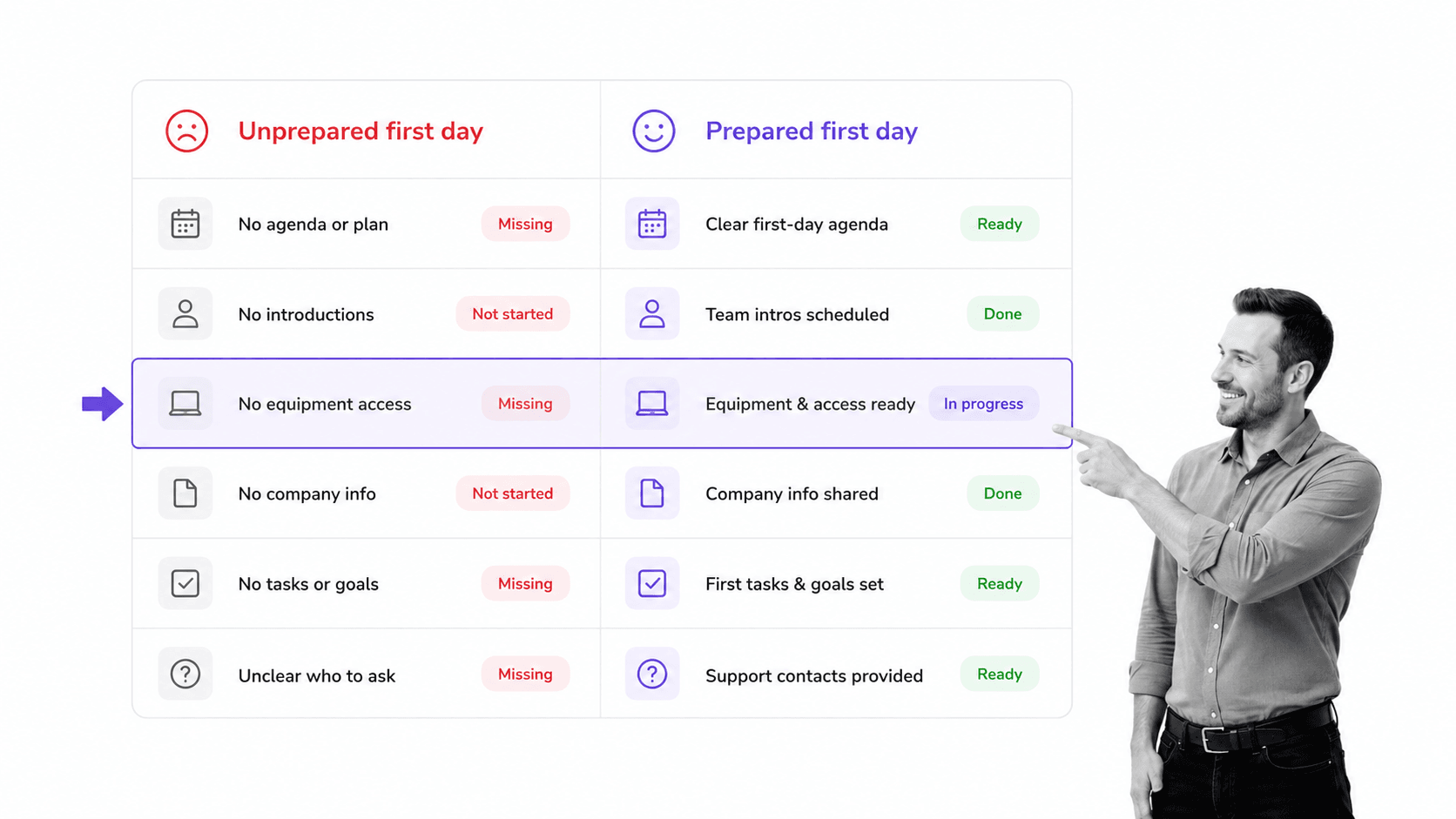
Starting a new role is stressful. The Holmes-Rahe stress scale has long treated a change in line of work as a meaningful life stressor. That does not mean every new job is a crisis. It means employers should not treat the first day like a casual admin event.
Pre-boarding helps you lower that stress before the new hire arrives. It gives them information, structure, and proof that the team is ready. It also helps the company reduce wasted time and cost. HR Dive, citing TEKsystems and Aberdeen research, reported that organizations with preboarding were 1.6 times more likely to have a lower cost per hire.
Pre-boarding workflow templates for new hires
The benefits of pre-boarding new hires are hard to ignore, but creating the process from scratch can be a lot. Start with a template, then adapt it to your team, location, compliance requirements, and role type.
For a broader planning pass, use this new hire checklist to make sure the full hiring and onboarding handoff is covered.
- Employee Onboarding with Automations
- Employee Onboarding Checklist
- New Hire Onboarding Process Template
Approval tasks make sure paperwork is reviewed before it becomes a blocker. Task assignments make ownership clear. A centralized pre-boarding hub keeps HR, managers, IT, and the new hire accountable to the same plan.
Process Street streamlines the process so your attention is on your new hire!
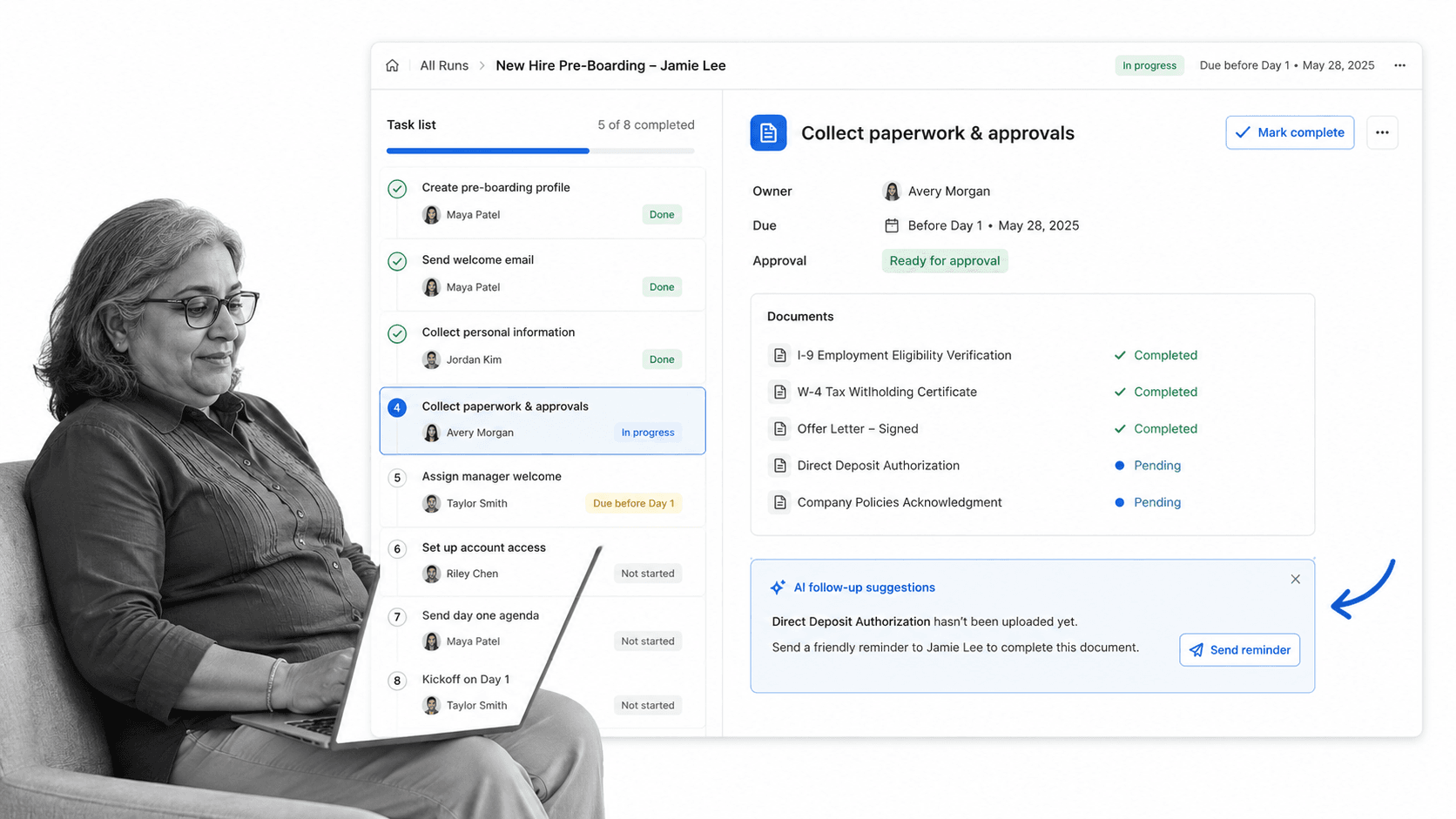
The goal of pre-boarding is simple: outline every task required to welcome a new hire well, then make sure those tasks actually happen before day one.
Process Street is a Compliance Operations Platform that brings Docs, Ops, and built-in AI into one system. Docs keeps your pre-boarding policies, handbooks, and role resources governed. Ops turns those materials into executable workflows with owners, due dates, approvals, signatures, and reminders. Built-in AI helps draft, route, check, and improve the workflow as your process changes.
That means your team can send forms, collect signatures, assign access tasks, confirm equipment, schedule introductions, and prove what happened without relying on memory or scattered messages. Process automations can be linked with recurring tasks to help save time, while task assignments help co-workers and managers understand their responsibility in the process. The new hire gets a calmer start. Your team gets a process that runs.
Have you experienced any pre-boarding nightmares? How did this affect your attitude toward your new role? Let us know in the comments.
The post 7 Must-Know Strategies for Pre-boarding New Hires like a Pro first appeared on Process Street | Compliance Operations Platform.


0 Commentaires