Reboarding is what you do when an employee comes back after an extended absence, changes role due to promotion or restructuring, or returns to a company that has changed enough that old habits no longer fit.
Successfully reboarding employees is not the same as onboarding. New hires need the basics; returning employees need context, confidence, refreshed expectations, and a clear path back into the team. If you want the broader first-day version, use this employee onboarding process guide alongside this reboarding plan.
I know what you’re thinking. Reboarding. Onboarding. It’s all the same thing, right? How complicated can it be?
But reboarding is not the same as onboarding.
They’re both equally important and similar in a number of ways, but the structure, focus, and obstacles of each will be very different.
For example, everyone knows new employees need some sort of onboarding process. Not nearly as many realize that reboarding is something that needs to happen for even the most experienced employee, even if the employee is returning to the same role, and even if the manager thinks nothing major has changed.
Seriously. You know what it’s like coming back from just a couple weeks of vacation. Loads to catch up on, overflowing messages, sometimes new people you’ve never seen before but everyone is already best friends with.
If things can change that much in 3 weeks, how much do you think they’ll change in 3 months?
So in this Process Street post, let’s look into exactly what you need to do to make this whole return-to-work thing easier. These are the things you need to know:
- When reboarding happens
- Essentials for reboarding your employees
- Prioritizing organizational culture during the reboarding process
Let’s get you up to speed, yeah?
When reboarding happens
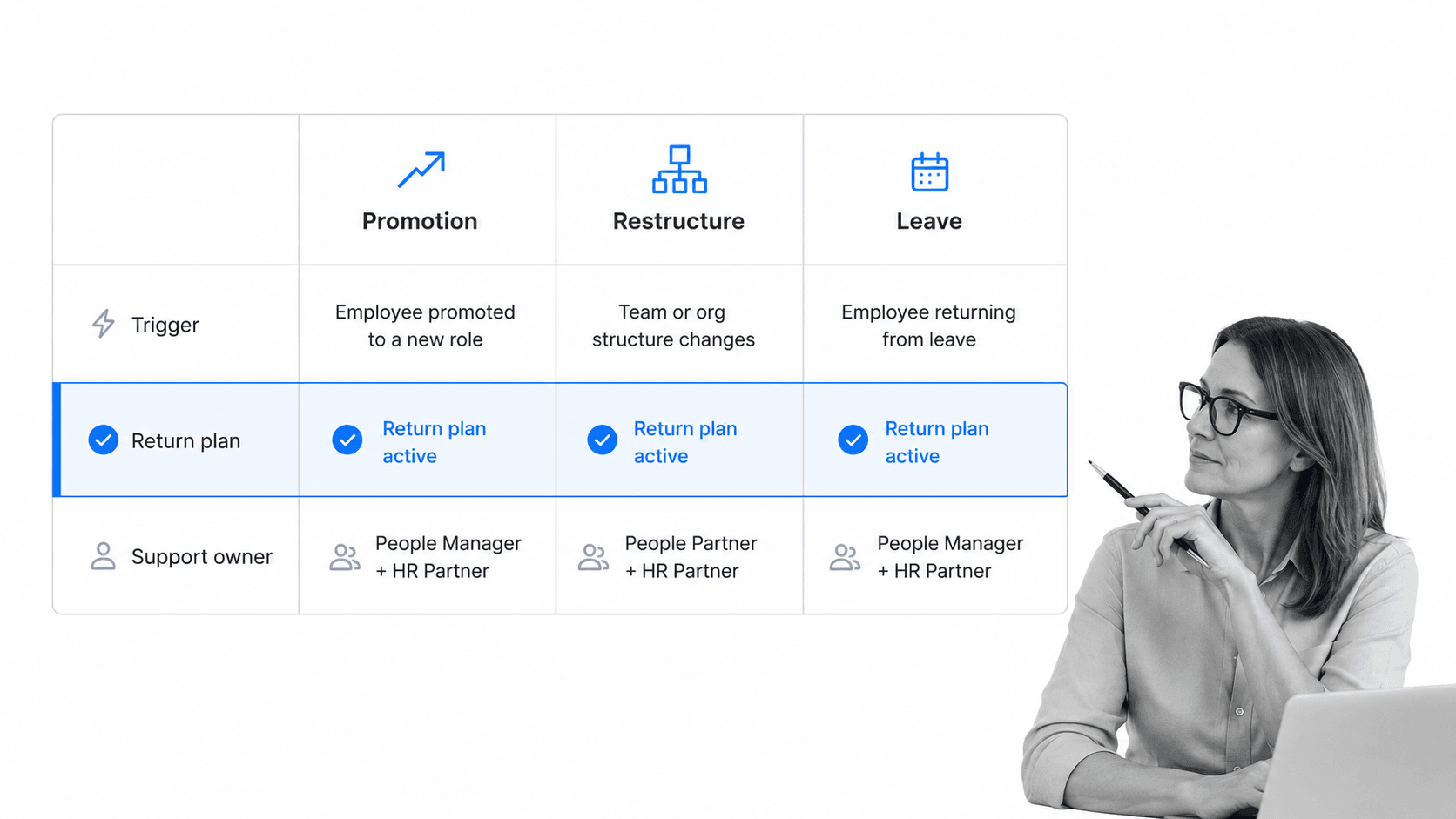
“The biggest mistake organizations make reboarding employees is believing the employee already knows what they need to know. ‘Well, nothing much has really changed, have fun!’ […] Stuff does change and the employee […] has changed as well.” – Tim Sackett, author of The Talent FixWhy do I have to tell Harriet how to do her job again? She’s worked in HR for 5 years; she knows how things go. Clyde hasn’t been gone that long; it’s not like you just forget how to do your job. Sure, Sheryl has a different title, but the role is basically the same, more or less. Yep. I’m sure you’ve said some variation of this about someone else, had a variation said to you, or thought it about yourself at some point. It’s no big deal, right? Your employee knows what they need to do. You know what to expect from them. It’s not like you’re bringing in a completely new person to do the job, after all. Except you are. I’m going to make a quick detour to look at the first two scenarios – promotions and restructuring – but the main focus of this post will be the oft-overlooked one: Leave of absences.
Reboarding scenario: Promotion
Let’s talk about Hanna. She’s a great employee. You hand something to her, you know it’s going to get done correctly the first time. Over the past few years, she’s been taking on more and more responsibilities, and you feel it’s time now to promote her to a position equal to the work she’s doing. She’ll get a raise, of course, maybe a better office. She’ll definitely get a more appropriate title, but otherwise nothing’s going to change, right? After all, Hanna’s been with the company since it was just a team of four stealing Starbucks’ wifi. She knows all the ins and outs of the business, and she’s basically been performing the role already anyway. And maybe there is a completely smooth transition from one position to another. It could happen. If you look at the long term, though, somewhere down the line you’re going to hit an obstacle that could have been prevented by reboarding Hanna into her new role. So she’s been doing the tasks already. Great. She knows that side. A promotion brings increased expectations and increased responsibility. In addition to the tasks she’s already been doing, she’ll have to take over tasks she wasn’t even aware of. She’ll have to justify budgets, request assets, and meet an entire team’s OKRs instead of just taking care of her personal patch. There’s a whole new layer – and new people – within the company that she’s going to have to learn how to work with. Responsibilities aren’t the only change, though. You’ve changed the interpersonal dynamics of her team. If she stays within her existing team, she and the other team members now have to adjust to Hanna’s authority as a leader. Leadership changes are one of the most vulnerable times for a team – even if it’s a positive change. If Hanna doesn’t have the skills to manage the transition well – or there’s conflict within the team, you suddenly have a big problem you didn’t plan for. Moving her to another team is not without risks, either. Again, you’re facing a leadership change, disturbing the social ecosystem of this new team. Hanna will still have to establish her authority, but over complete strangers she knows nothing about. Strangers who know nothing about her, either. It takes time to build trust between leadership and their teams, and unless given the proper tools and support to do this, that team’s productivity and morale will crash and burn in the fieriest, most destructive way possible.Reboarding scenario: Organizational restructuring
Startups restructure all the time. So much. It’s hard to keep up sometimes. At least once a week, I have to look at our employee directory to figure out who’s doing what job now. It can get confusing, but we do have a process for it. Shocking, right? While people get moved around from team to team, it’s never that unexpected or without adequate support. So, for example, one of our previous content editors had been involved in helping out with our video content as a sort of side bonus responsibility. Over time, they worked more and more on that side of our content creation team until it just made more sense for them to move into a team specialized in customer education. The actual move didn’t happen overnight, though. Their editorial work gradually reduced as their customer education work increased over a period of time until it made sense for them to take that final step. The whole process was seamless and gradual, allowing time for both teams to adjust to the new state of things. Granted, not every restructuring has enough advanced warning to take such a slow approach. Sometimes employees get moved around or thrown into projects unexpectedly. In that case, reboarding is even more important. Your first task will be communicating to the company that things are under control – and keeping things under control. Once your employees feel a sense of stability and security, they’ll be more open to whatever changes need to be made. Likewise, the more training and support they have in their new roles, the more confident they’ll be in taking ownership of them.Reboarding scenario: Leave of absence
There are plenty of reasons an employee might take an extended leave of absence. Health reasons, family health reasons, sabbaticals, just for the hell of it, and many more. I’m going to focus on parental leave here since it’s the one you’re most likely to encounter. This is also the most likely scenario in which you will completely overlook the need for reboarding. It’s understandable. Same employee coming back to the same role at the same company. They’ve got that whole backlog of memos from when they were gone. No reason to think they won’t pick up right where they left off. Like I said before: 12 weeks (or more) is a long time for things to stay the same. Not long ago, I was out for just two weeks and during that time, we hired a new writer who I met for the first time five minutes before we were supposed to have a meeting with a third person neither of us had ever met before. The meeting was fine – no issues – but I’d be lying if I said there wasn’t that niggling anxiety that, not only did I not have a clue how the meeting would go, but I knew next to nothing about the colleague I was meant to be on the same page with. That was after only two weeks. An employee coming back from a longer absence will have a number of adjustments to make. The company could have new procedures, policies, or processes. There could be new tech to learn. New team members or leaders. Someone who’d once been their junior employee may have been promoted above them. They might also feel insecure about their position within the company, as well. Are they still necessary? What if their manager regrets letting them come back? What if their colleagues don’t think they’re working hard enough? Depending on their work relationships, they also may not have had much or any contact with their coworkers during their absence. Someone could have gotten married or had a child. Maybe there’d been a company retreat or celebration of an accomplishment. Regardless of why your employee was on leave, these little changes are bound to leave them feeling a little isolated and out-of-sorts while they try to adjust to being back at work. The other side you need to consider: The employee returning from leave is not the employee who initially took that leave. For a new parent – particularly a first-time parent – their priorities could have completely changed while they were away from work. Maybe – with the shift in the family dynamic – plans and goals that had made sense before the small human arrived no longer make sense – or just aren’t as important. Maybe that employee wants to be transferred to another department or even another branch. They may want to extend their leave or just not come back at all. So, just as your returning employee is trying to relearn your company, you need to relearn your employee.“Every reboarded employee should have a full acclimation back into the workforce that parallels what new employees get for their success.” – Tim Sackett
Essentials for reboarding your employees
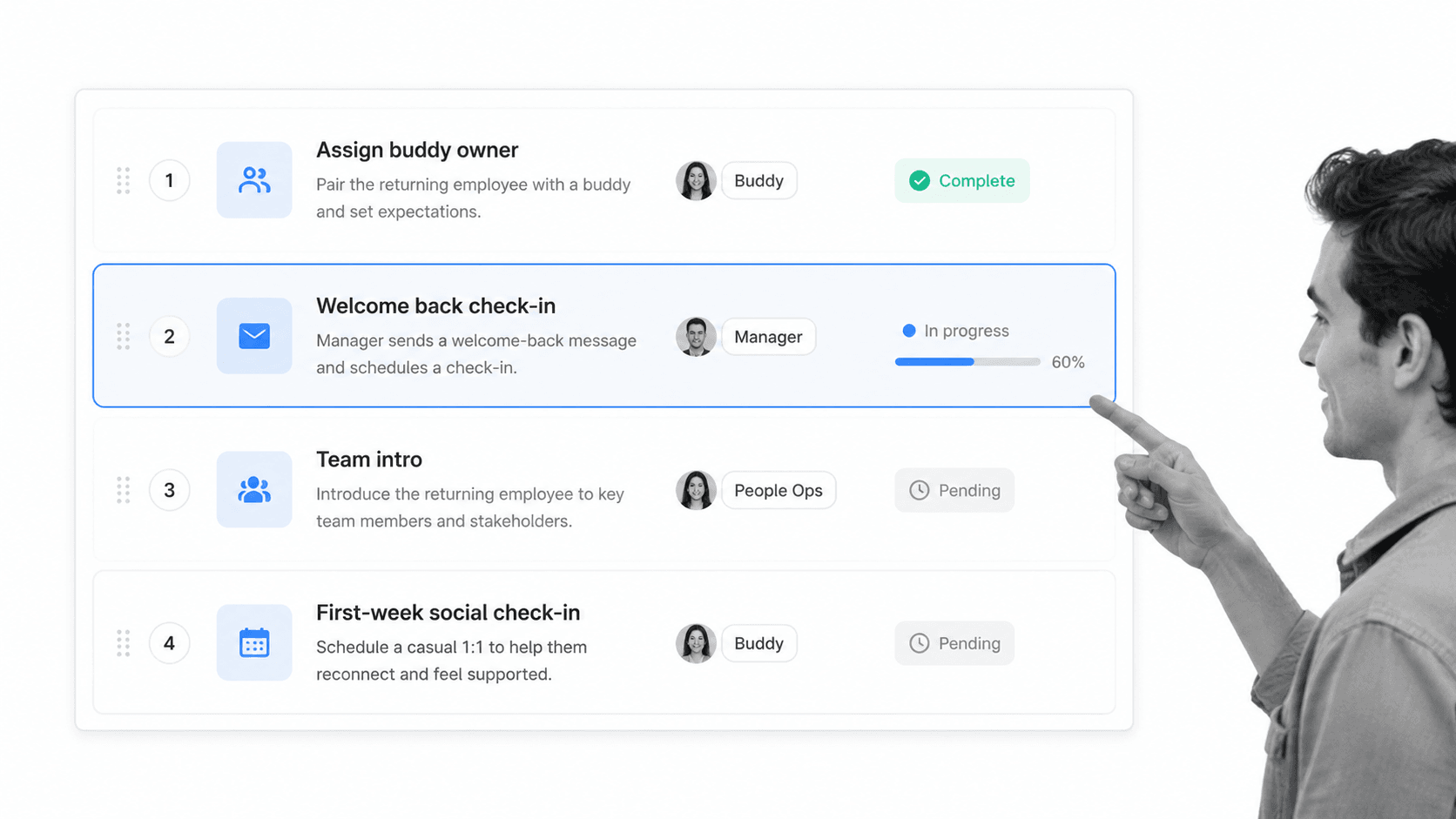
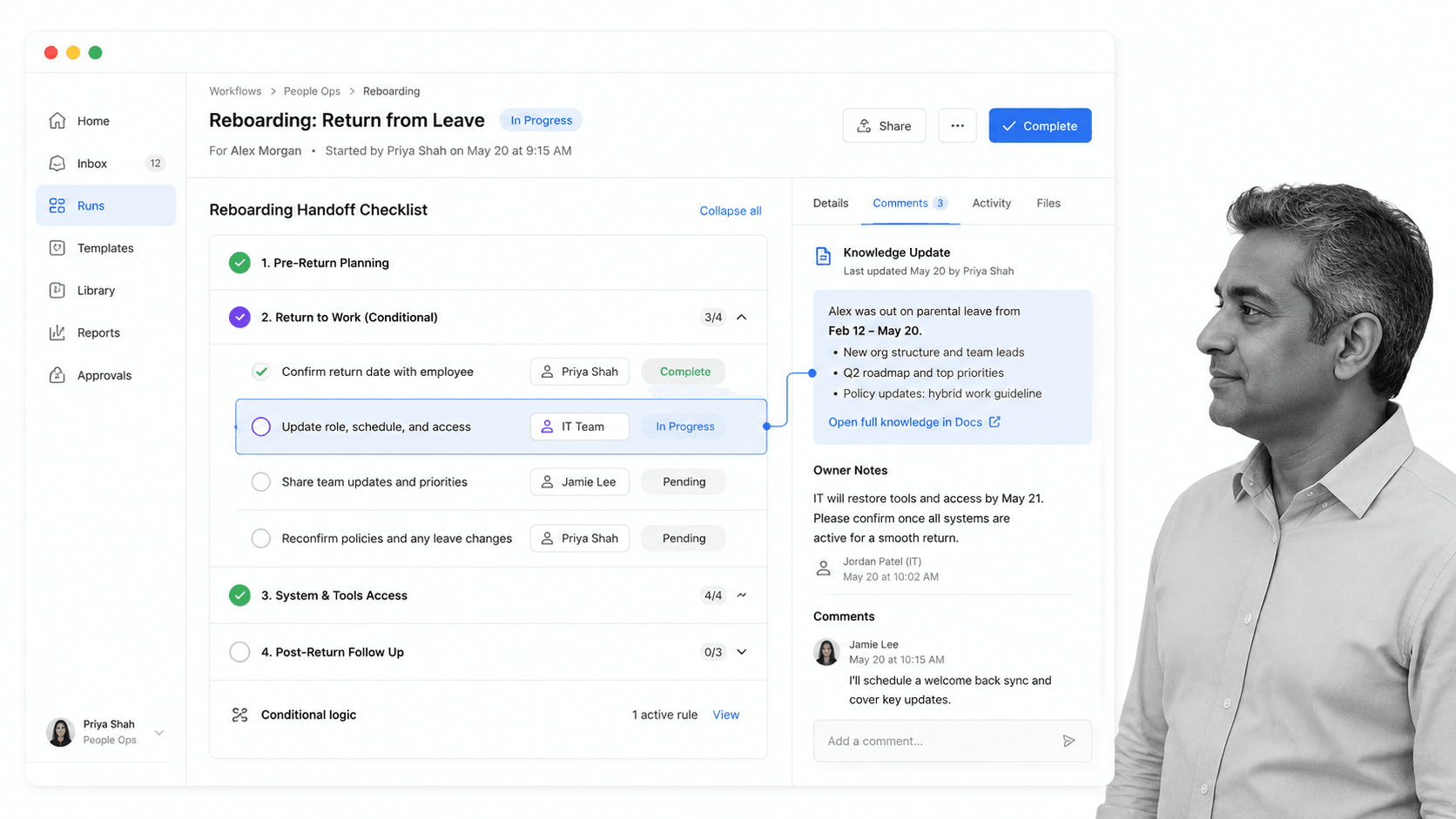
You should adapt your reboarding process to each individual situation. Depending on role, length of absence, and reason for absence, each employee will have different needs to address. Having a standardized process will take away some of the guesswork, though. If you have an outline you can easily adapt to each situation, you can pivot quickly when you need to. For example, say you have a reboarding process for parental leave. It sets up a plan for communication while the employee’s gone, sets up a plan for the employee’s return, fills in all the required bits in between. You’re totally ready for any employee to have a kid. Then, out of nowhere, one of your employees has to have a medical procedure that’s going to keep them laid up for a while. That parental leave outline will sort of help, but not really. If you use one of our workflows for your reboarding process, you can solve that problem with conditional logic, variables, and an Automation or two. One of the first questions in the workflow can be: What type of leave is it? Depending on which answer you give, conditional logic will either show or hide the relevant tasks. One process, any situation. A really cool thing would be to use Pages to document what happens while the employee is away, especially because you can embed workflows and other media right into Pages. Make a Loom video of that week’s updates or even put in a video of the team’s well wishes. Alright. I’m done selling. I also lied about how long this would be, but you’ll forgive me, right? Have a look at this: There are only 5 things you need to keep in mind when building your reboarding process.And you will build a process, right? We don’t have to have the automation talk again, do we?
I’ve started them all with C’s because I like alliteration and it just makes it easier to remember, right? Sure. Let’s do this. I’ll try to be quick.Connect your returning employee with their team
Contribute but don’t dominate
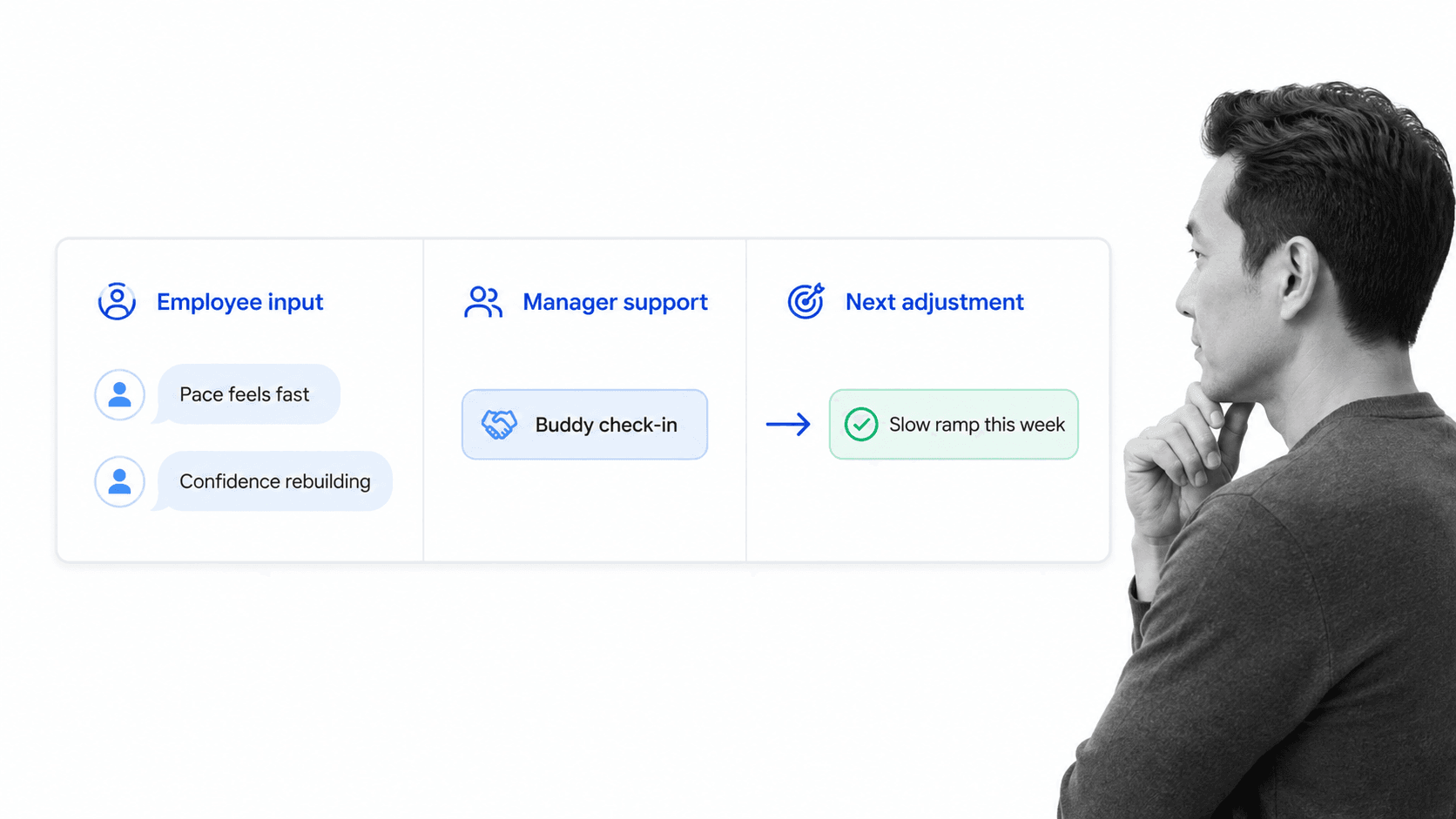
Get your employee’s perspective. What do they need? How are they feeling about their return? Are they overwhelmed with too much too soon? Alternatively, is reboarding going too slow? Reboarding is an adjustment for everyone, so include your employee in the process. Like I said, it’s going to be a little different for everyone depending on their circumstances, so the best way to go about it is to just ask the employee what they need from you.
Collaborate to share knowledge efficiently
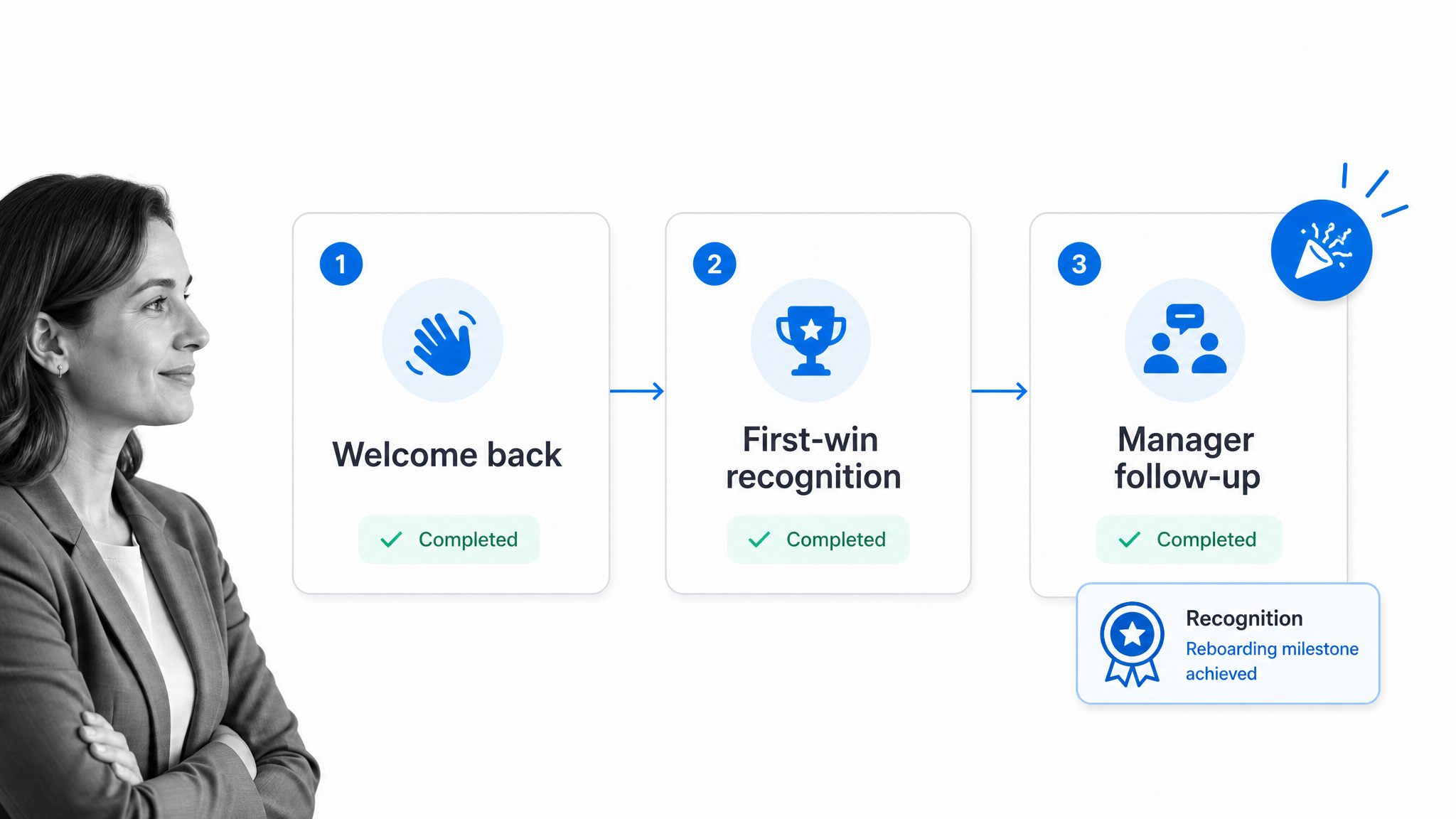
Celebrate the little things, too
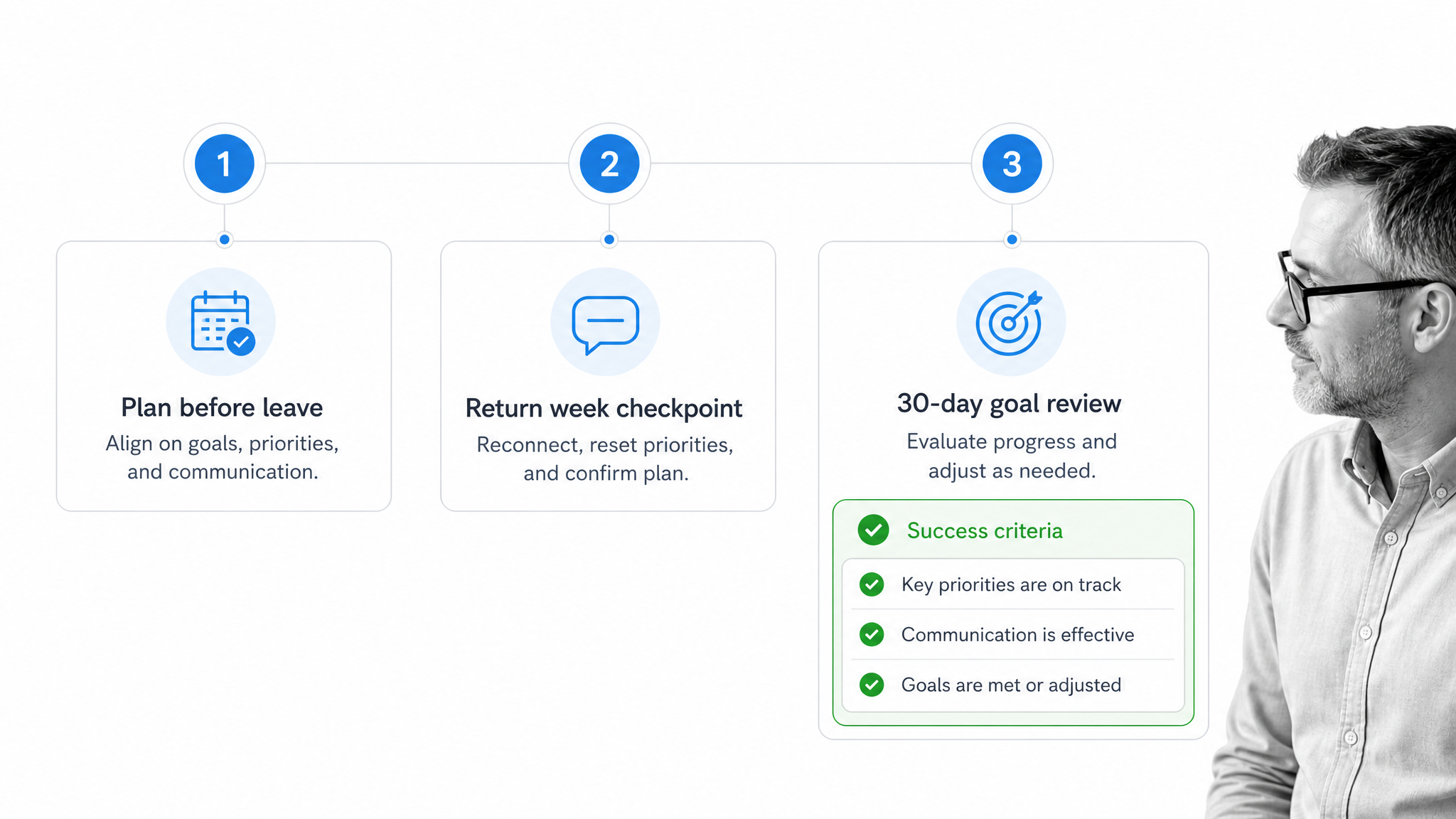
Clarify your plan and goalposts
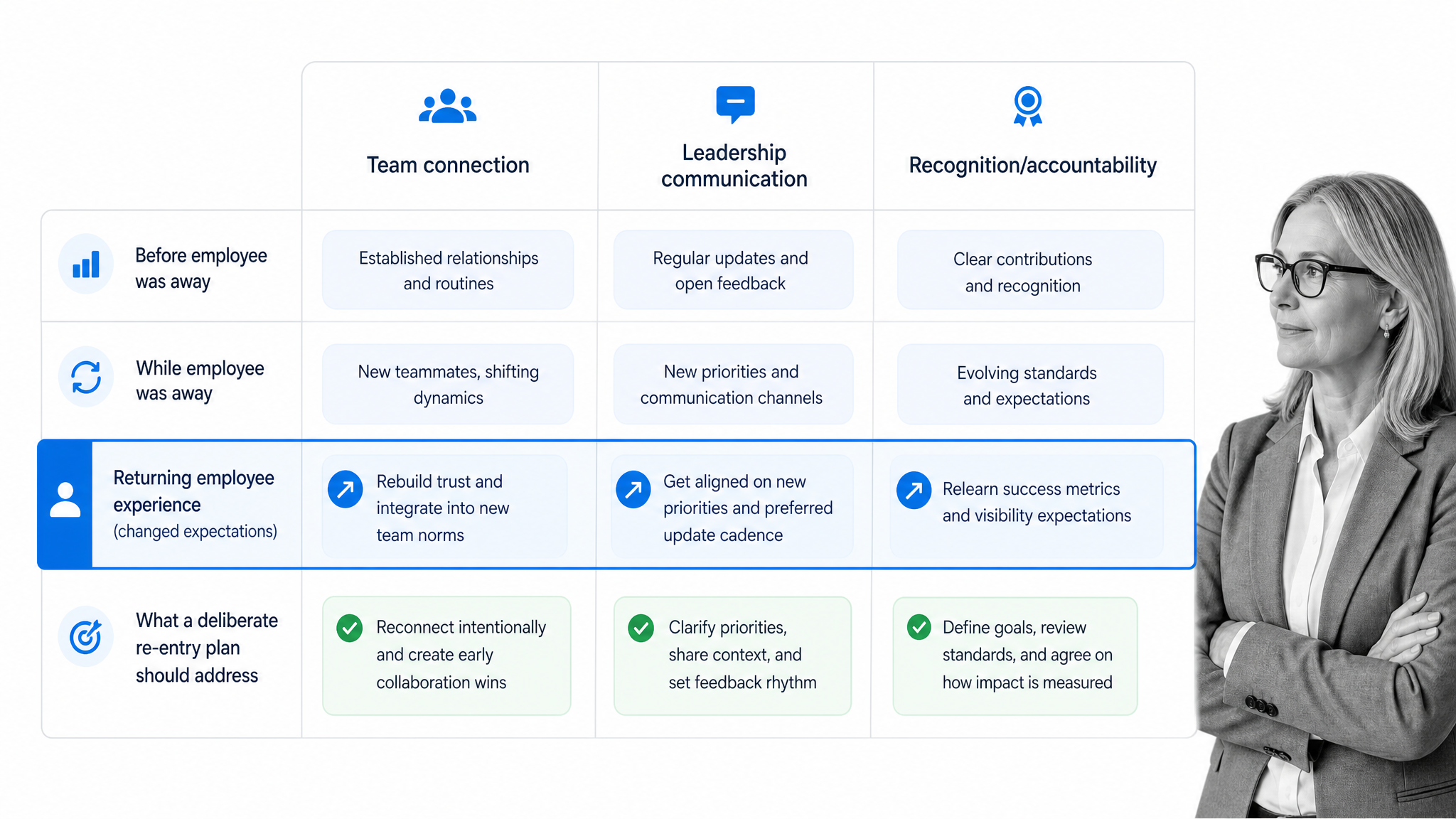
Prioritizing organizational culture during the reboarding process
And this is where I leave you
Obviously, when an employee comes back from leave, gets promoted, or organizational changes mean they get shuttled off to a different department, you want it to go well. You’ve invested in these people, you probably even like a few of them, but you also hired them for a reason. They’re a valuable asset you don’t want to lose, and reboarding can help both of you navigate these changes so everyone has the best chance of reaching their full potential. What’s your opinion of reboarding? Is it just another way to say onboarding? Should I go easier on management gurus? Are you totally behind cultureboarding? Let’s start some controversy in the comments!The post 5 Essentials for Successfully Reboarding Employees first appeared on Process Street | Compliance Operations Platform.


0 Commentaires