Connecting with decision makers on LinkedIn is not about pushing a pitch into a stranger’s inbox. It is about building enough relevance, trust, and context that the right person recognizes why a conversation is worth having.
The seven tactics below help you strengthen your LinkedIn profile, find warm paths into target accounts, and turn social selling into a repeatable part of your sales process management.
LinkedIn still rewards the same fundamentals that made this advice useful in the first place: clear positioning, thoughtful networking, useful content, and follow up that feels personal. What has changed is the tooling around those fundamentals. Groups, articles, newsletters, Sales Navigator, and invitation limits all shape how you should work today.
1. Have A Complete & Professional LinkedIn Profile
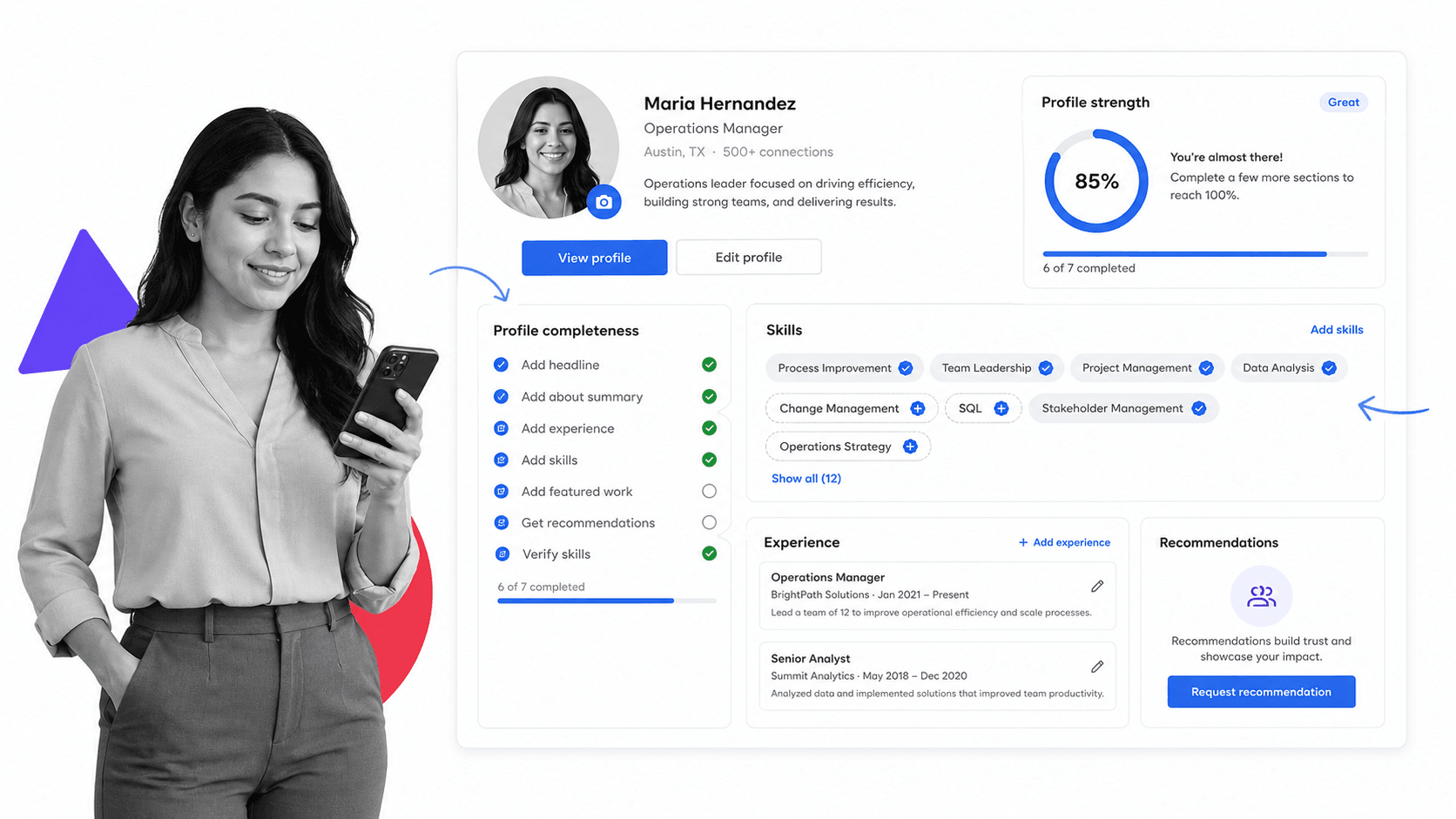
Before you ask a decision maker to connect, make your profile credible enough to answer the question they will ask first: who is this person, and why are they reaching out to me? Your photo, headline, About section, featured content, experience, and recommendations should all point to the audience you serve.
A complete and professional LinkedIn profile is more than a digital resume. It is a trust asset. Use the headline to state the problem you help solve, not just your job title. Use the About section to show industry focus, proof points, and a clear reason for a relevant buyer, partner, or hiring manager to stay interested.
Think of the profile as your professional search-optimized front door. Appropriate attire, a concise headline, a client-focused summary, social proof, and featured media can boost credibility before anyone accepts a connect request. A sloppy profile can hinder even a strong message.
LinkedIn Profile Checklist
You can still use the LinkedIn profile checklist below to tighten the basics before outreach. It is especially useful when several people on a sales or marketing team need a consistent standard for professional profiles.
Once the essentials are in place, add recent posts, examples, or resources that support your expertise. Decision makers often skim before replying. Give them enough evidence to understand your relevance without needing a meeting first.
2. Connect With Other Employees
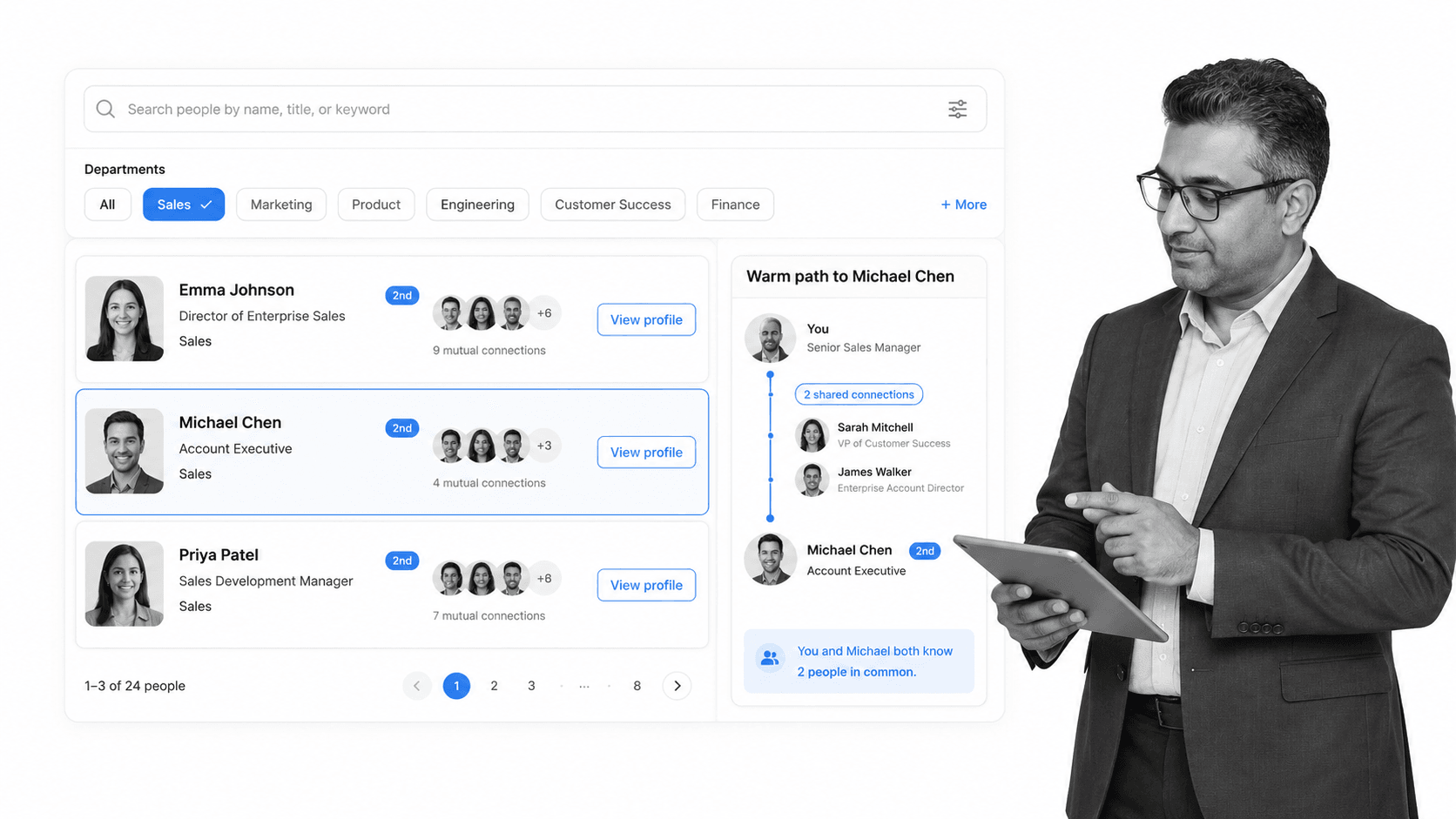
The fastest route to a decision maker is often not a direct route. Connect with people who work in the same company, department, or buying committee before you approach the senior contact. A mutual connection, shared colleague, or visible conversation gives your outreach more context.
Use company pages, people search, alumni filters, and Sales Navigator lead searches to map the account. Look for operations managers, team leads, customer success leaders, finance contacts, and administrators who can tell you how the organization works. These connections can help you understand priorities, language, and timing before you ask for a senior conversation.
Do not treat these employees as stepping stones. Start with a relevant comment, helpful resource, or shared professional interest. If the relationship becomes warm, you can ask who owns the process, budget, or decision you are trying to understand.
Advanced search can filter by company, relationship, location, title, and industry, which helps you find other employees before jumping straight to a key decision maker. Those other potential prospects often share the same department, pain point, or sales funnel context, and they may be able to facilitate a warmer introduction.
3. Use LinkedIn Groups
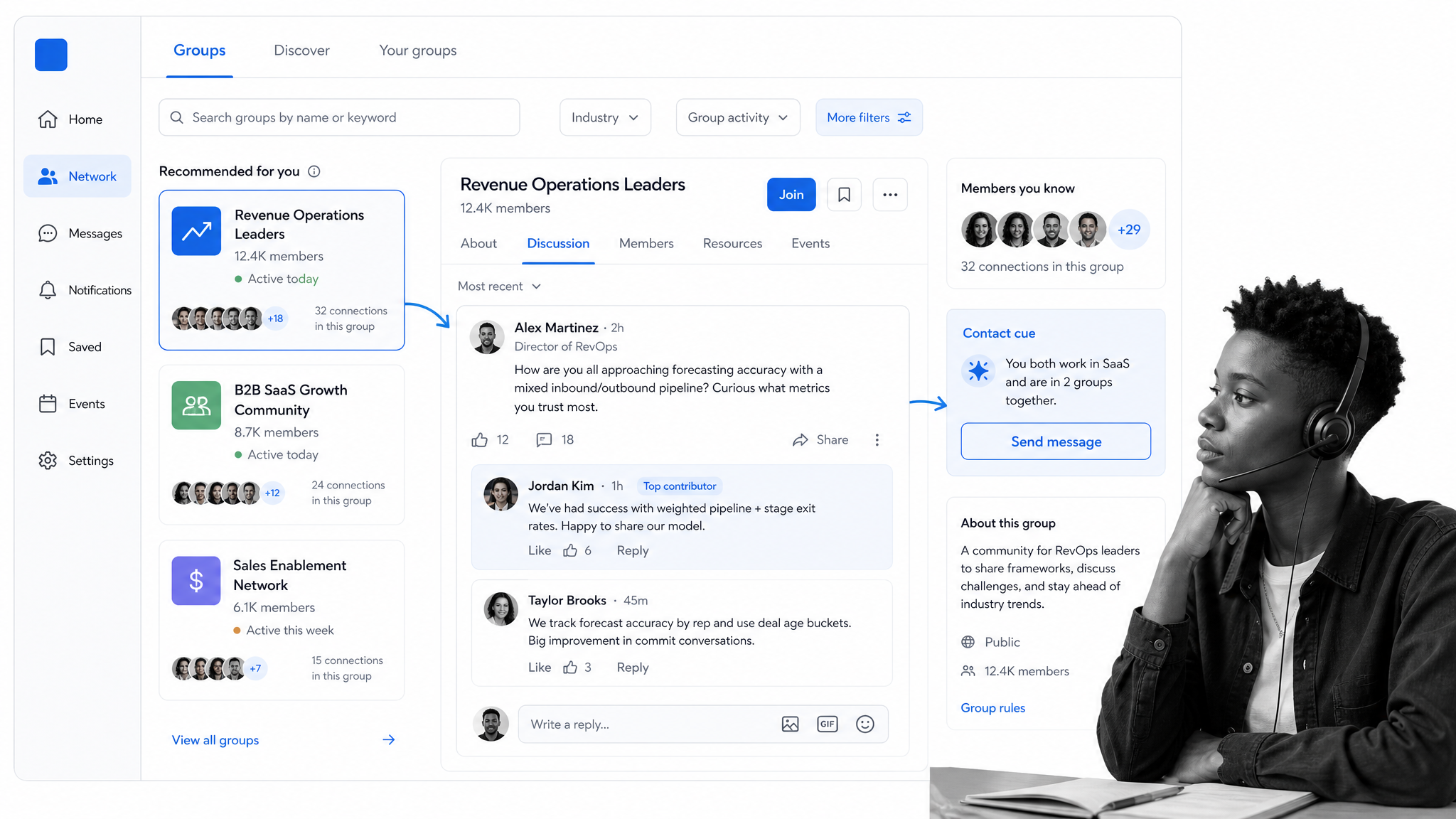
LinkedIn Groups remain useful when you choose communities where your buyers actually participate. The value is not mass promotion. It is watching the questions people ask, learning the vocabulary they use, and contributing in a way that makes your expertise visible.
Join groups tied to industry, role, or problem area rather than generic networking groups. A revenue operations group, compliance operations group, or founder community will usually tell you more than a broad business group with little moderation.
When you comment, be specific. Share a framework, a question, a short example, or a resource that helps the thread. Decision makers notice people who improve a conversation without turning every reply into a sales pitch.
Before you begin participating, read existing conversations, note regular active members, and look for questions where you can provide another helpful way to think about the issue. Groups provide a chance to build reciprocity because people can see you answering before asking for a favor.
4. Send A Personalized Connection Request
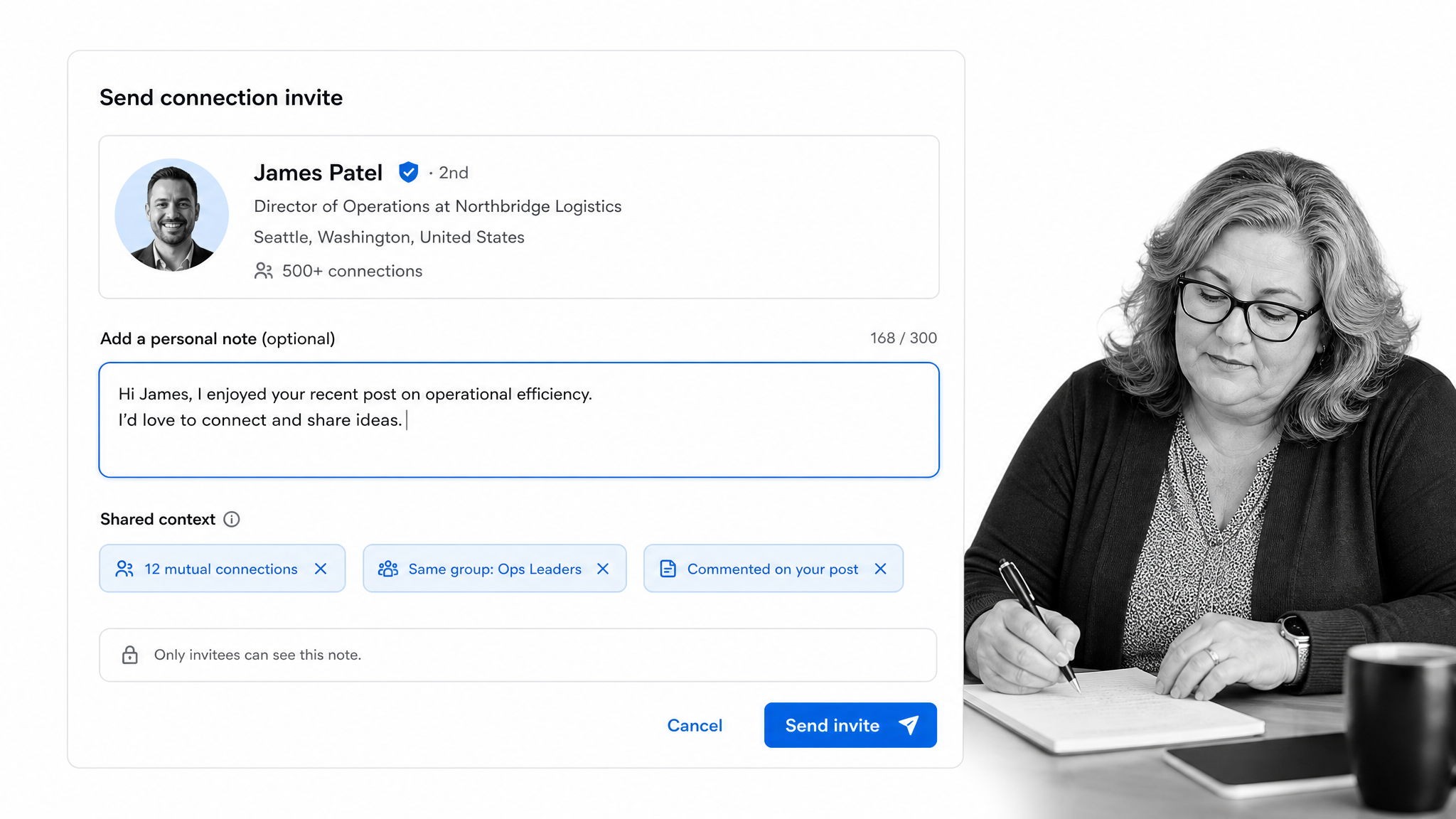
A personalized connection request should make the reason for connecting obvious in one or two sentences. Mention the shared context first: a group, post, mutual connection, event, podcast appearance, article, or business problem that relates to their role.
LinkedIn limits personalized invitation notes for many free accounts, so use them with care and check the current limit before you scale outreach. Premium accounts and Sales Navigator workflows can change what is available, but the principle stays the same: relevant beats long.
A useful structure is simple: context, reason, and low pressure. For example, reference a recent post, say why it connects to your work, and ask to stay connected. Save the pitch for after there is a real reason to continue.
Always personalize the note. Even a short personal note should include personalization that proves you know why the prospect matters. If a premium member path or InMail message is appropriate, craft the copy with the same care: relevant opening, specific reason, and a clear low-friction next step.
5. Post On LinkedIn Publisher
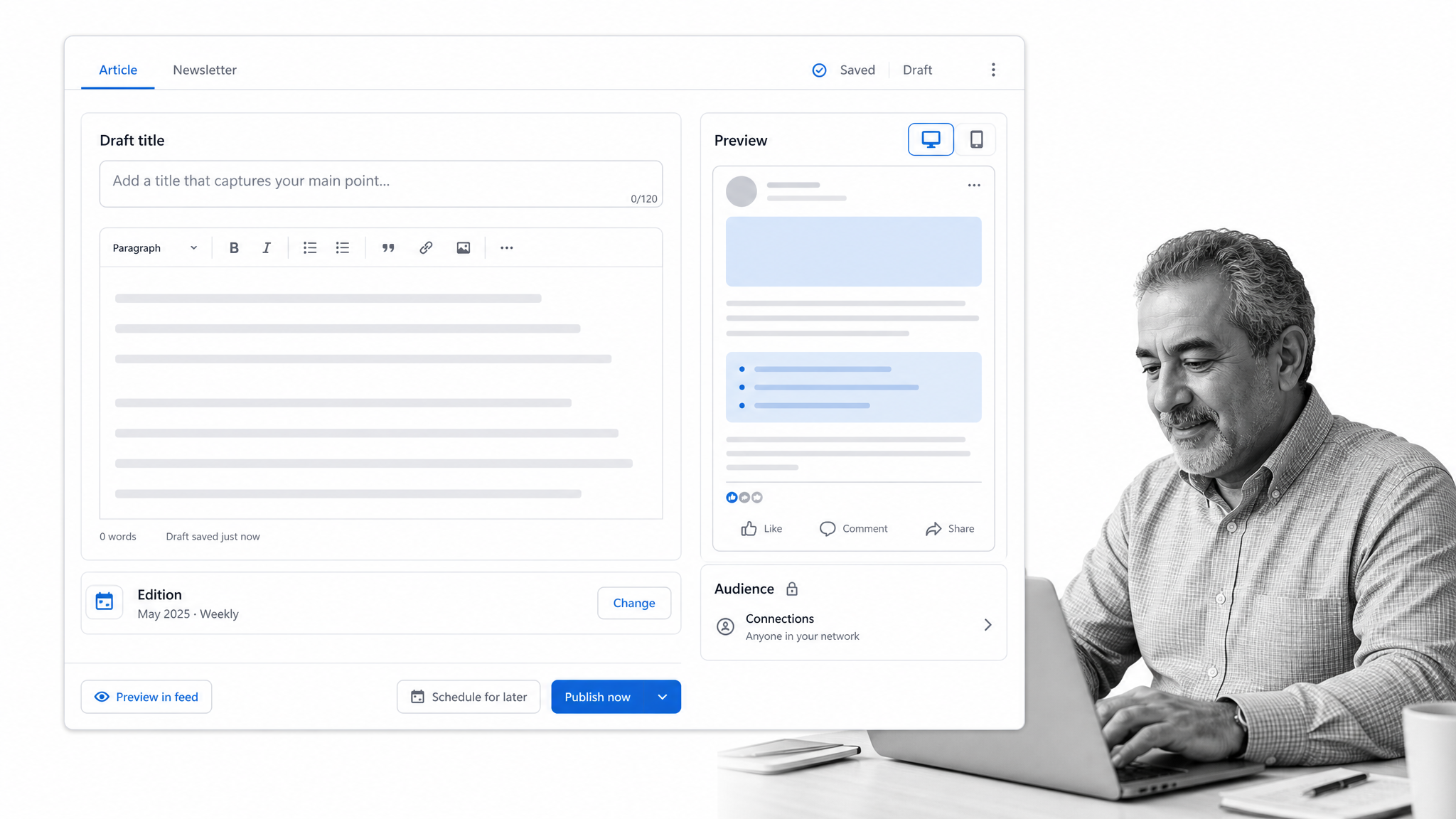
LinkedIn Publisher evolved into LinkedIn articles and newsletters, but the tactic is still the same: publish useful long-form content where decision makers can discover it without leaving the platform.
LinkedIn articles are a good place for practical frameworks, point-of-view pieces, industry explainers, and lessons from customer work. The goal is not volume. The goal is to create one strong resource that your profile, comments, and outreach can point back to.
When you publish, write for the specific person you want to reach. A COO, VP of Sales, compliance leader, or founder will each care about different risks and outcomes. Use examples, subheads, and clear takeaways so the article can stand on its own.
Your own content can include curated articles, client-focused blogs, an interesting stat, a thought provoking statement, or a useful checklist. Curate material from credible expert sources and directly share why it matters to the audience you want to attract.
6. Add Daily Status Updates
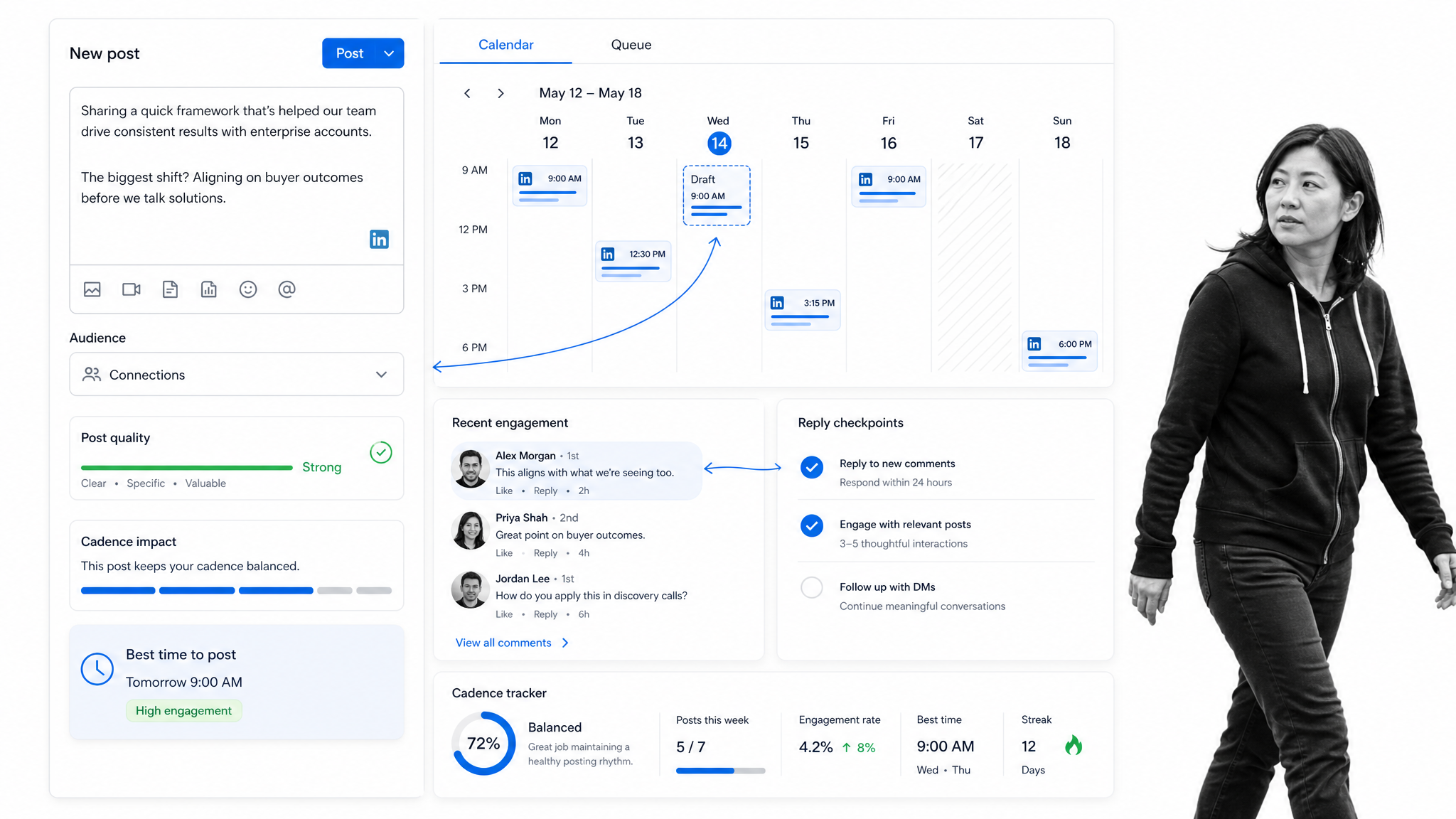
Daily status updates do not need to mean posting for the sake of posting. A better standard is a steady cadence of useful signals: short lessons, customer questions, industry observations, event notes, and concise opinions that connect to your expertise.
Consistency matters because decision makers rarely respond the first time they see you. They respond after your name has become familiar and your posts repeatedly connect to problems they care about.
Build a simple rotation: one practical tip, one question, one short story, one curated resource, and one comment on a market shift. Keep the tone professional and human. If a post starts a discussion, engage with the comments before moving on to the next update.
Consistently providing value keeps conversations going. Like, comment, reply, and encourage conversation under your posts. A regular cadence can put you on a decision maker’s radar until there is a real opportunity to meet, schedule a call, or continue the discussion privately.
7. Think Outside The Box
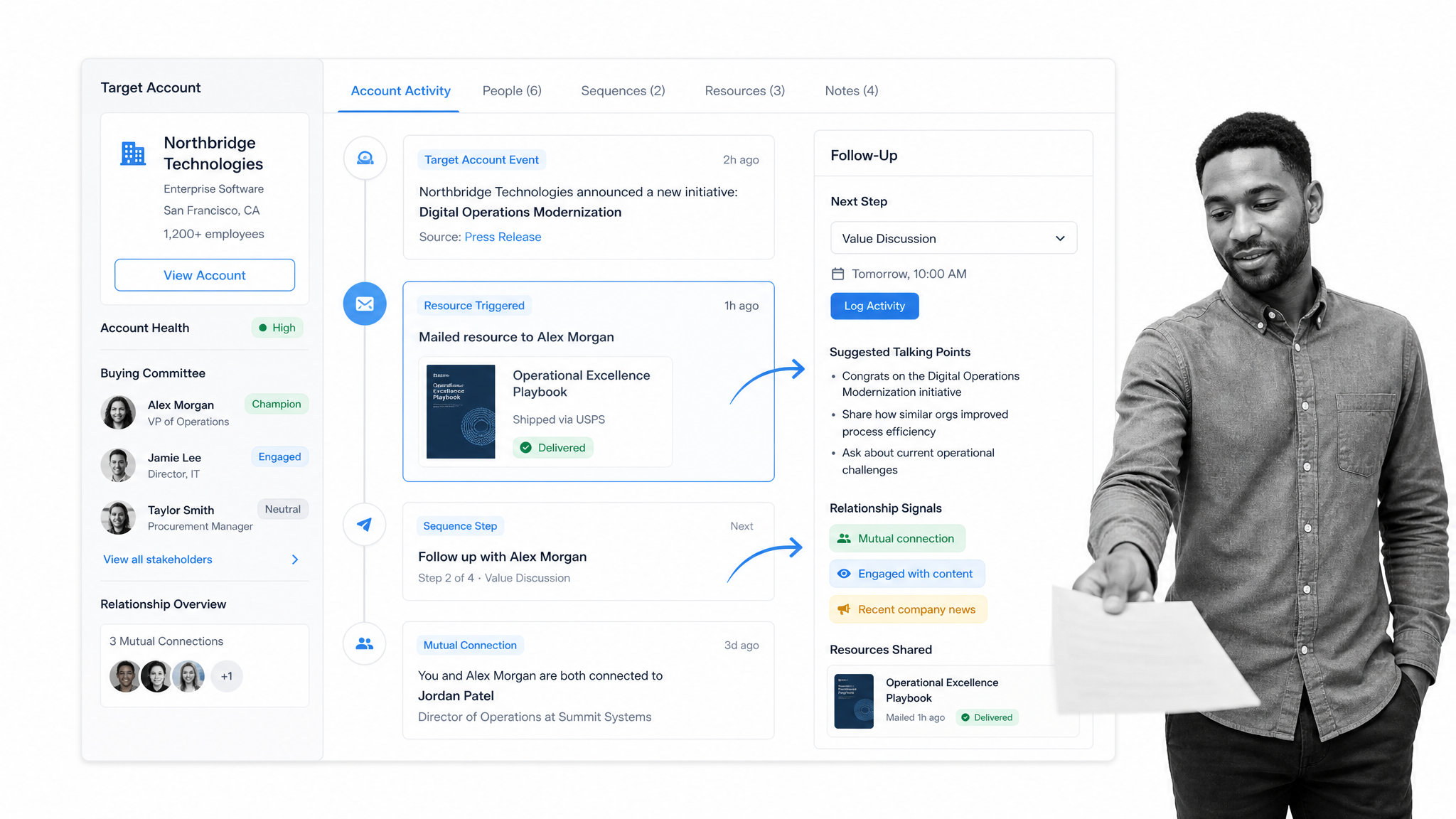
LinkedIn is one channel in a relationship-building system. If a decision maker does not respond there, use other thoughtful touchpoints that fit the account: a mutual introduction, an event follow up, a podcast mention, a useful email, or a well timed direct mail piece.
The key is coordination. Do not repeat the same generic message across every channel. Use each touchpoint to add context. A comment can acknowledge their public point of view. An email can share a relevant resource. A call can reference a specific operational problem. A physical note can stand out when the account is high value enough to justify it.
This is where a documented process helps. Track the account, the people involved, the message used, the next step, and the reason for each follow up. Process Street gives teams a way to standardize that workflow without turning every relationship into a script.
For high-value accounts, a personalized letter can pay off. Some corporate sales teams physically mail a brief note after a conference, webinar, or referral because it can bypass gatekeepers and create a greater impact than another copied message. Use that effort only when the relationship value justifies it.
Become The Resource
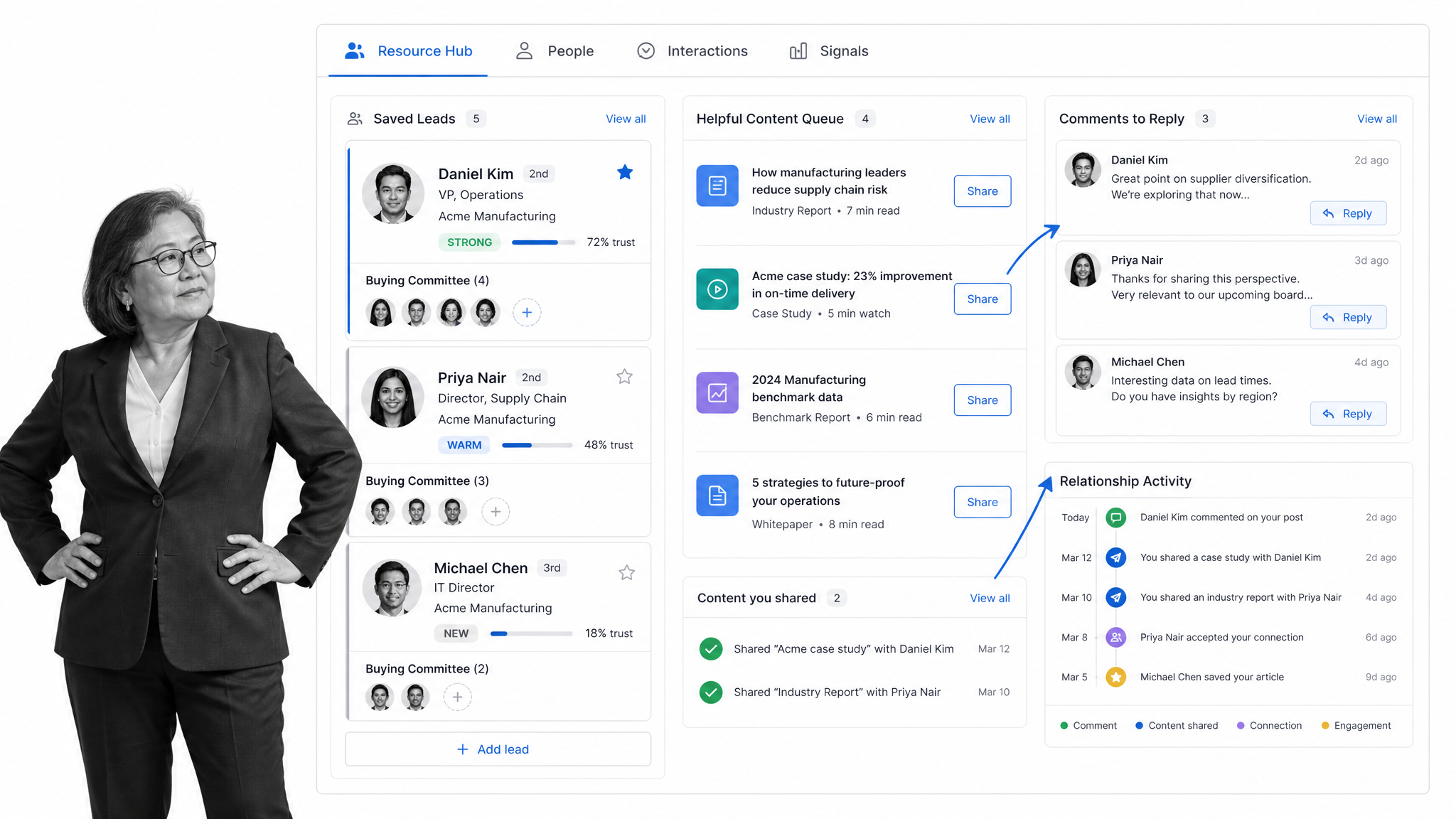
The best way to connect with decision makers is to become the resource they remember when the problem becomes urgent. That means showing up with useful ideas before you need anything from them.
Create templates, checklists, benchmark notes, short guides, and practical posts that help your audience make progress. Share those resources in conversations, groups, articles, and follow ups. Over time, your profile becomes a library of reasons to trust you.
Process Street is a Compliance Operations Platform that helps teams turn recurring work into controlled, AI-powered workflows. Use Docs to capture the standard, Ops to run the process, and built-in AI to make execution easier for the people responsible for follow up, approvals, and handoffs.
Becoming the resource requires a long-term strategy. The objective is not to convince every prospect immediately. It is to establish yourself as the person whose knowledge, quality content, and follow-up message feel useful when the need becomes active.
About Melonie
Melonie Dodaro, author of The LinkedIn Code, is the founder of Top Dog Social Media. She is an international bestselling author and LinkedIn expert whose training has helped brands, entrepreneurs, business owners, corporate sales teams, and sales professionals use LinkedIn for prospecting and relationship building. Social Media Examiner has recognized her work, and her advice continues to focus on becoming a trusted resource before asking for a sale.
The post 7 Tactics To Connect With Decision Makers On LinkedIn first appeared on Process Street | Compliance Operations Platform.


0 Commentaires