
A software requirements specification, or SRS, describes what a software system must do and the conditions it must satisfy. It gives product leaders, users, engineers, testers, and approvers a shared reference for scope. A useful SRS covers functional requirements, non-functional requirements, interfaces, constraints, assumptions, dependencies, acceptance criteria, and the evidence needed to verify each requirement.
The document may begin as a baseline for a sequential project or evolve alongside an iterative product backlog. Either way, it should remain clear, testable, traceable, and controlled. The ISO/IEC/IEEE 29148 requirements engineering standard provides a useful reference point, while the practical structure still needs to match the project’s risk, stakeholders, and delivery model.
This guide covers:
- Choosing a development model: Waterfall or Agile?
- Key attributes for composing a strong SRS
- Tools to simplify software requirements specification management
- A final word on the software development process
Choosing a development model: Waterfall or Agile?
Waterfall and Agile describe different ways to organize delivery. Waterfall tends to establish a detailed baseline and move through defined phases. Agile approaches deliver in smaller increments and use frequent feedback to refine what comes next. Both can produce high-quality software, and both need disciplined requirements. The right choice depends on scope stability, validation needs, stakeholder access, risk, and the cost of change.
Waterfall software development
In a Waterfall model, work moves through a planned sequence such as requirements, design, implementation, verification, release, and support. The team normally completes and approves the main outputs of one phase before the next phase becomes the primary focus. Real projects may revisit decisions, but changes usually go through formal review because later changes can affect plans, designs, tests, and contracts.
A fuller software development sequence may include requirements identification, concept development, inception and planning, construction, testing, release, production, and support. During requirements identification, the development team confirms the technical parameters and the list of requirements for the software. Concept and inception work turn that information into a design and delivery plan. Construction produces the system, testing and debugging verify it, and production and support cover operation, bug fixes, and new functionality. The phase names vary, but the key Waterfall characteristic is sequential coordination with documented decisions between stages.
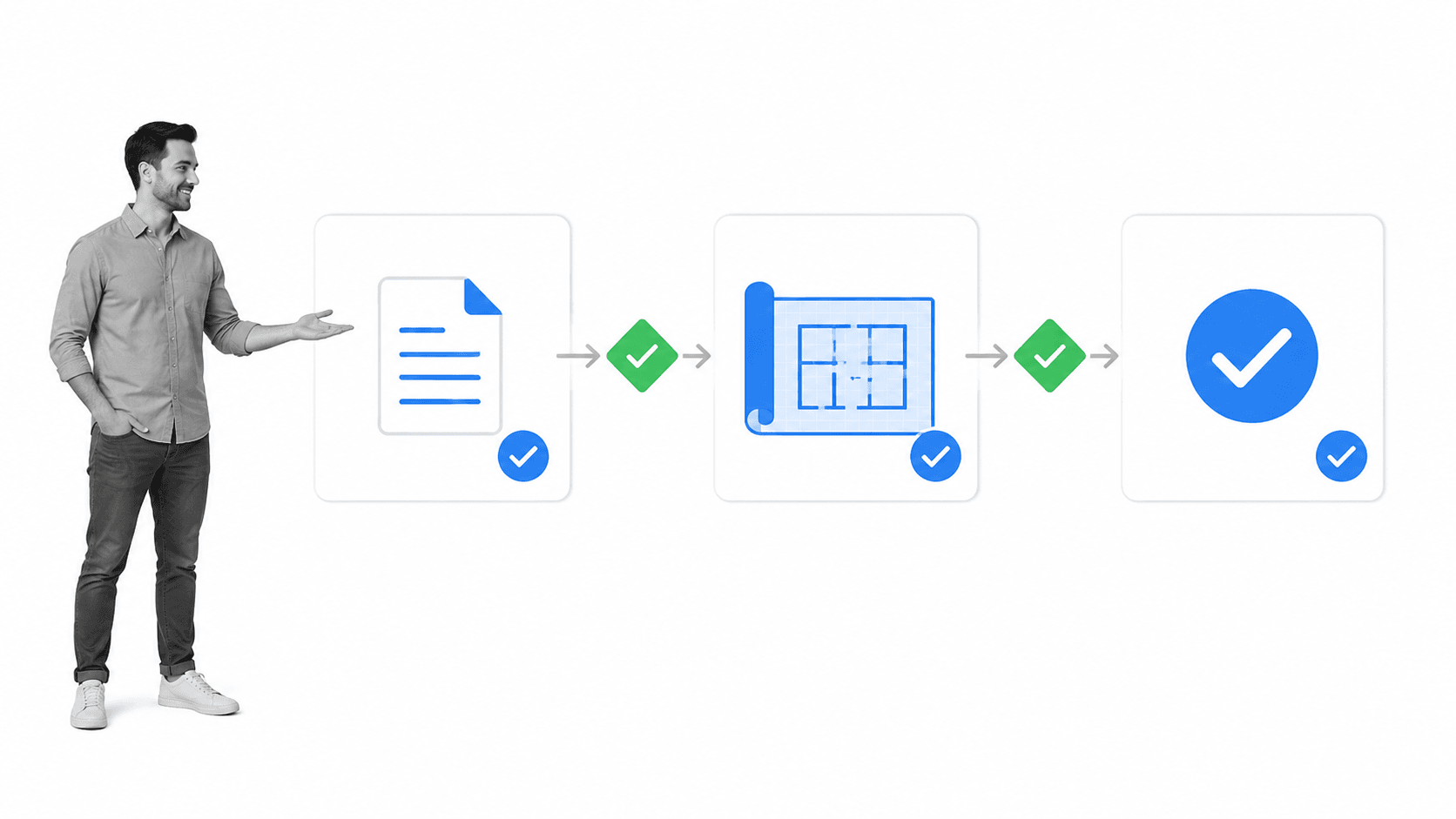
A detailed SRS is especially useful when scope is stable, formal approval is required, suppliers need a shared baseline, or safety and regulatory obligations demand documented evidence. That does not mean the specification can never change. It means each change should identify the affected requirement, rationale, owner, downstream work, tests, and approval.
The main advantages of a Waterfall approach include:
- Clear phase outputs and decision points;
- Strong documentation and an explicit requirements baseline;
- More predictable planning when the problem and solution are well understood;
- Useful evidence for contracts, audits, and regulated reviews.
Those advantages are strongest when the team can make a credible budget and deadline definition from stable inputs. Clear documentation of the development process also gives reviewers a common set of requirements and intermediate documents. Documentation cannot remove dependency on the human factor because sound judgment is still required. Accuracy depends on the quality of the initial information, so the plan should state uncertainty rather than hiding it.
The main disadvantages include:
- Users may wait longer to evaluate working software;
- Documentation and coordination can become heavy;
- Late discoveries can create expensive rework;
- A rigid implementation can discourage useful learning.
In practice, the disadvantages often appear as long timeframes from project start to the first result, a large volume of documents, and continuous coordination of requirements. Dynamic changes remain possible, but they require impact analysis and may be more expensive after design, construction, or test assets have been completed.
Agile software development
Agile development uses collaboration, short feedback cycles, and incremental delivery to reduce the distance between an idea and evidence from working software. Requirements may be represented through an SRS, product backlog, user stories, models, acceptance criteria, or a combination of artifacts. The format matters less than whether the team can understand the requirement, trace it to a source, verify it, and control changes.
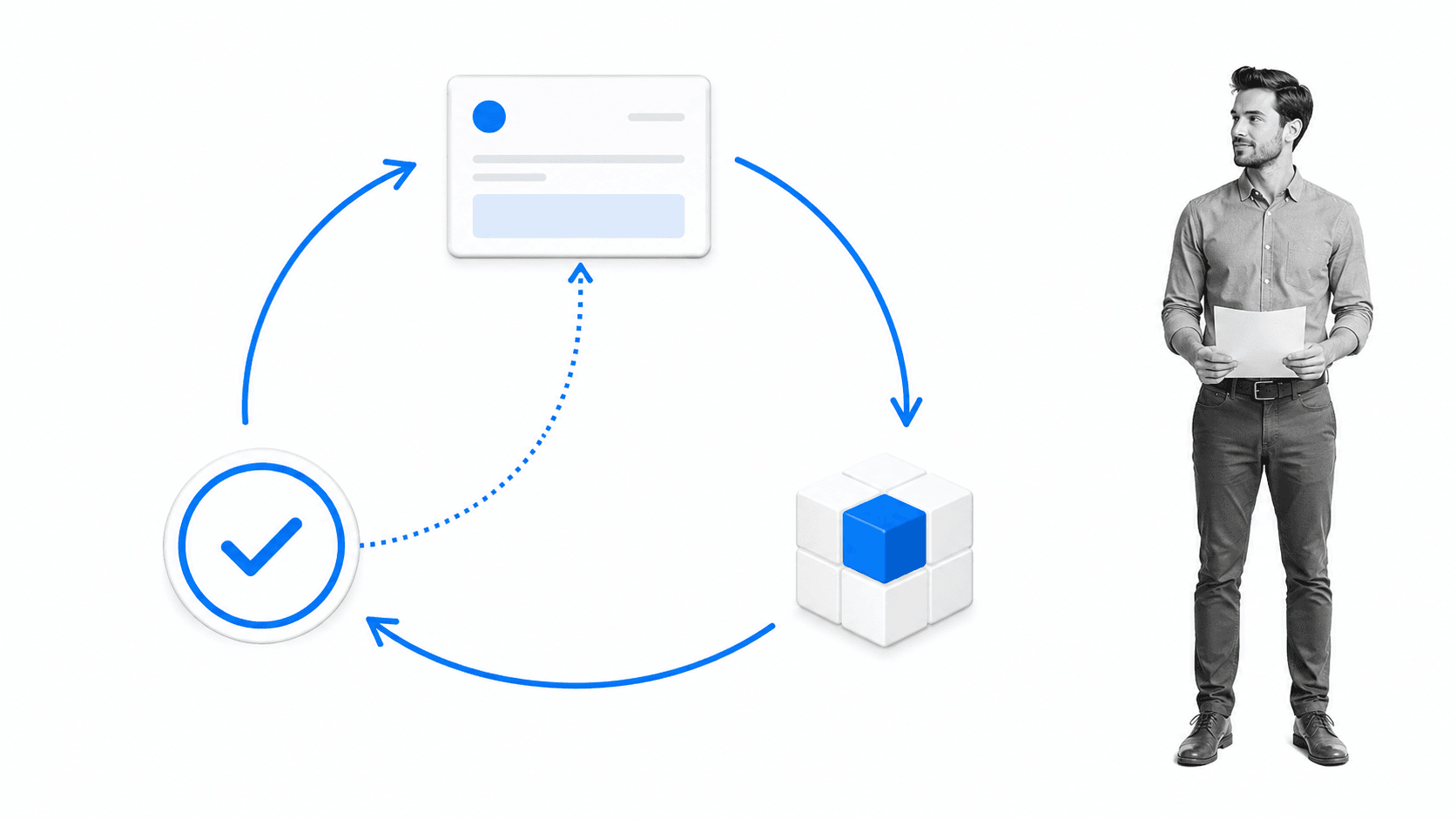
An Agile SRS can be a living, versioned reference. Teams refine requirements when they learn from users, technical investigation, tests, and operational data. The Product Owner, analysts, engineers, designers, testers, and subject-matter experts may all contribute. Accountability and review should be explicit rather than assigned to one role by default.
Repeated user feedback collection can support the dynamic formation of requirements and their implementation within short steps. In module-by-module delivery, a business analyst, Product Owner, tester, or domain expert can perform an acceptance test once the development team finishes a module. The result of an iteration is not merely activity. It should be a working product version or other concrete software increment that stakeholders can inspect.
The 12 principles behind the Agile Manifesto emphasize:
- Customer satisfaction through early, rapid, and uninterrupted delivery of valuable software;
- Acceptance of changes in requirements even late in the development process when they improve the resulting product;
- Delivering working software frequently, with a preference for shorter timescales;
- Close, daily communication between business people and developers throughout the entire project;
- Projects managed by motivated experts, provided with decent working conditions, support, and trust;
- Personal face-to-face conversation as a recommended method of communicating information within a team;
- Treating working software as the primary measure of progress;
- Enabling sponsors, developers, and users to maintain a steady pace indefinitely;
- Constant attention to improving technical craftsmanship and good design;
- Practicing simplicity by avoiding unnecessary work;
- The best technical requirements, design, and architecture come from a self-organized team;
- Regular reflection and constant adaptation to changing circumstances.
Agile approaches can provide earlier feedback, make changing priorities easier to absorb, and produce usable increments sooner. Their tradeoffs include less certainty around distant scope, a greater need for active stakeholder participation, and the risk of fragmented documentation if the team treats agility as an excuse to skip governance. Regulated and public-sector teams can use Agile methods, but they still need the appropriate controls, evidence, and approvals.
The common advantages are gradual product functionality increase, a basic version launch earlier in the development process, and opportunities to correct direction before the entire product is complete. The disadvantages are forecasting ranges rather than exact completion dates, maintaining coordination across frequent changes, and requiring motivation from responsible customer representatives who can answer questions and make timely decisions. Uncertainty does not create an impossibility to determine an exact budget, but the estimate should be a range tied to current scope and risk.
Methods of Agile software development
Scrum organizes work around a Product Goal, Product Backlog, short Sprints, and regular inspection and adaptation. The Product Owner is accountable for effective Product Backlog management, but may delegate parts of that work. Scrum does not prohibit business analysts. Teams can maintain SRS-level detail where risk or complexity requires it, then connect those requirements to backlog items and tests.
When tasks are added to Jira or another delivery system, teams can configure requirements links, support test case traceability, and provide sharing, viewing, and commenting features. The tool does not define Scrum, and the backlog does not replace the software requirements specification when the project needs a controlled document.
Extreme Programming (XP) emphasizes technical practices and rapid feedback, including close customer involvement, small releases, testing, refactoring, and continuous integration. Requirements should be detailed enough to support the next decision and remain connected to executable evidence.
Frequent interaction with the client helps the team identify shortcomings from previous stages, clarify the required functionality of the product, and adjust other parameters before uncertainty spreads through the system.
Dynamic Systems Development Method (DSDM) is an iterative and incremental approach that emphasizes active user involvement, frequent delivery, and control around business need, time, cost, quality, and scope.
Incremental development delivers the system in usable parts. Teams prioritize capabilities and expand the product step by step. The approach can provide working software early, but architecture and interfaces still need enough foresight to prevent each increment from creating avoidable rework.
Each sub-project can have its own verification path, while minimum functionality grows into a broader system. The main advantage is that the team can retain a working system as functionality expands. The main disadvantage is the risk that weak architecture forces redesign or source-code changes when later increments introduce new dependencies.
Evolutionary development begins with partial understanding and refines requirements through successive cycles, prototypes, and delivered versions. It is useful when the problem or solution is uncertain, provided the team records what changed, why it changed, and how the change affects design and verification.
Key attributes for composing a strong SRS
A strong SRS is more than a long document. It is a controlled set of requirements that people can interpret consistently and verify objectively. A practical outline usually covers purpose and scope, stakeholders and users, functional requirements, interfaces and data, non-functional requirements, constraints and assumptions, dependencies, acceptance criteria, traceability, change history, and a glossary.
A useful software requirements specification structure includes:
- Purpose and scope: the problem, intended outcome, system boundary, and explicit exclusions;
- Stakeholders and users: the people, teams, systems, or regulators that supply needs or use the result;
- Functional requirements: the behaviors, decisions, calculations, and data handling the system must perform;
- Interfaces and data: external systems, inputs, outputs, formats, protocols, validation rules, and ownership;
- Non-functional requirements: measurable expectations for performance, security, availability, accessibility, privacy, scalability, and maintainability;
- Constraints and assumptions: mandated technologies, legal obligations, operating environments, dependencies, and conditions that still need validation;
- Acceptance and verification: the objective conditions, test methods, reviewers, and evidence that prove each requirement is satisfied;
- Traceability and change control: stable identifiers, sources, linked work, impact analysis, versions, decisions, and approvals;
- Glossary and references: project-specific terms and the authoritative standards or source material behind them.
A product requirements document, or PRD, may explain the customer problem, desired outcomes, priorities, and product direction at a higher level. An SRS usually goes deeper into system behavior and verification. Teams can combine the artifacts or keep them separate, but the relationship should be explicit so the same need does not acquire conflicting definitions in different places.
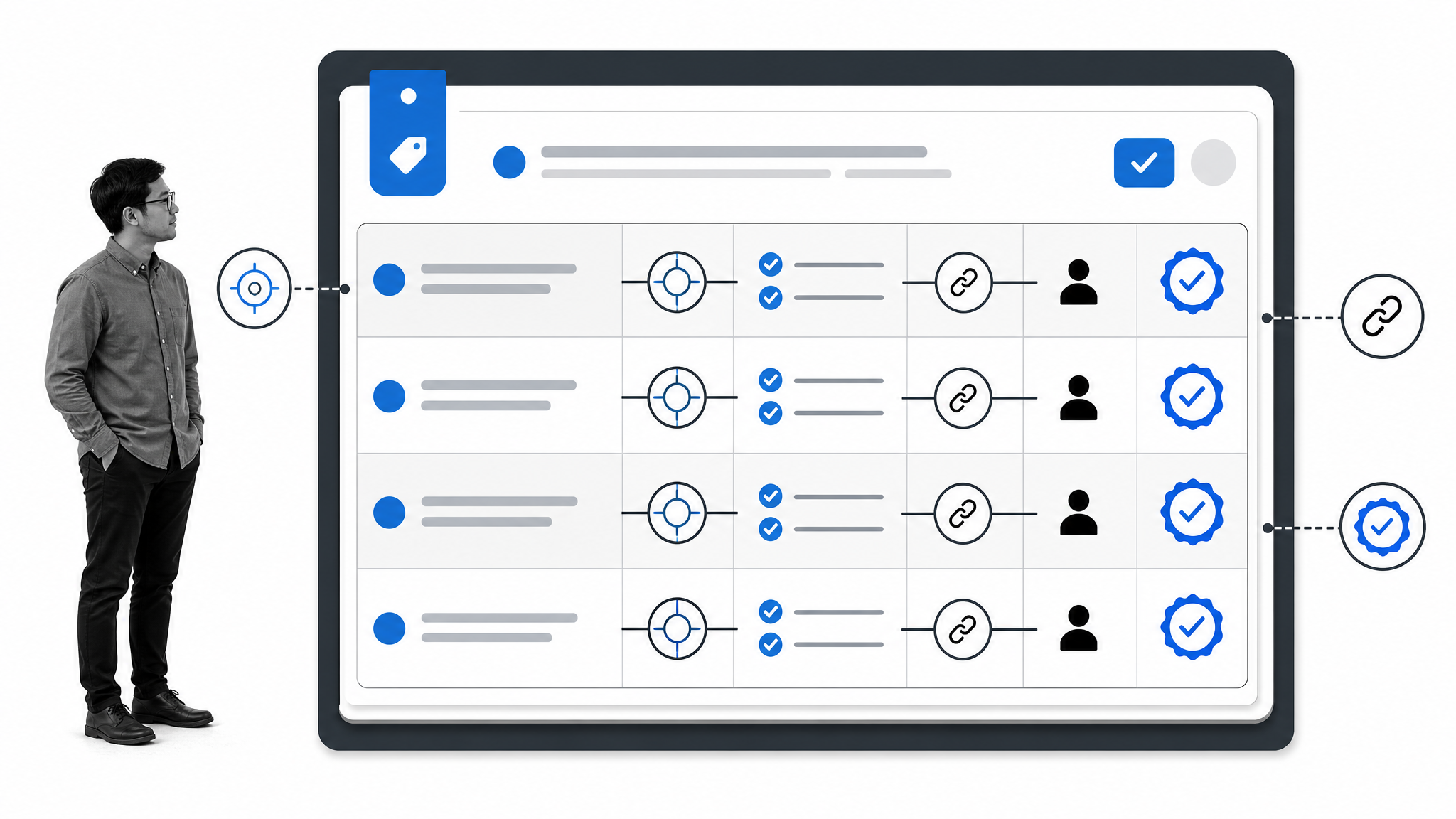
Visualize
Use diagrams and models where they reduce ambiguity. System-context diagrams can show boundaries and external actors. Process flows can show decisions and handoffs. Data models and interface diagrams can reveal dependencies that prose hides. A visual should support a requirement, not replace the detail needed to test it.
Visuals are especially useful for representing major functions and their connectivity. Diagrams, schemes, and models should enrich the SRS by making system boundaries, data movement, states, and failure paths easier for the development team to understand.
Avoid ambiguous language
Use singular, measurable statements. Avoid words such as “fast,” “reasonable,” “user-friendly,” and “approximately” unless the SRS defines the threshold. Developers should not have to fill in critical blanks. For example, replace “The dashboard should load quickly” with “For 95% of requests under normal load, the dashboard displays its first meaningful content within two seconds.” The second version supplies a condition, measure, and acceptance threshold.
Focus on customers
Requirements should reflect real user goals and operating conditions. Combine interviews, observation, support evidence, research, and domain expertise. Identify who performs the task, what outcome they need, what can go wrong, and what constraints shape the work. Record the source and rationale so later reviewers can distinguish a verified need from an assumption.
Field research and user interviews help build a grounded portrait of the end user. Focus on the operations end users are going to perform with the product, including exceptional conditions, accessibility needs, and the surrounding environment. Customer focus does not mean accepting every request. It means connecting software features and capabilities to verified needs.
Apply critical thinking and prioritization
Explain why each requirement matters. Give it an owner, priority, rationale, risk, dependencies, and acceptance criteria. Check for conflicts, gaps, duplicates, and requirements that prescribe a solution without explaining the underlying need. High priority should reflect value, risk, or obligation, not simply the order in which someone requested it.
Critical thinking helps a business analyst decide what information to include when templates offer too many options. Ask why the requirement has to be implemented, what happens if it is omitted, and whether another requirement already covers the goal. Priority should describe the requirement’s role in core functionality rather than assign vague near-term, midterm, or hypothetical labels.
Control flexibility
An SRS should be adaptable without becoming unstable. Version the document, review proposed changes, assess downstream impact, and record approvals. Built-in AI can help draft or compare requirements and identify possible gaps, but a person still needs to validate meaning, source, feasibility, and evidence before a change becomes authoritative.
Maintain traceability
Assign a unique ID to each requirement and connect it to its source, related design or work item, owner, test, and release evidence. Stable identifiers are safer than relying only on folder paths or hyperlinks. A traceability matrix can reveal missing tests, orphaned work, and changes that affect multiple parts of the system.
Keep a history of changes
Record what changed, who changed it, when, why, and who approved the decision. Preserve prior versions where the project’s risk warrants it. This history helps teams explain scope decisions, investigate defects, assess impact, and demonstrate that required reviews occurred.
Create a definition dictionary
Define domain terms, acronyms, roles, states, and measurement rules in a glossary. Use one term for one concept. External references can support standard definitions, but the SRS should state project-specific meanings directly so the document remains usable if a link changes.
Tools to simplify software requirements specification management
The best tool depends on how much structure and governance the project needs. Evaluate structured requirement capture, collaborative review, approvals, version control, change impact, traceability, test linkage, permissions, reporting, and integrations. A familiar work tracker may be enough for a small product, while a safety-critical program may need a dedicated requirements lifecycle platform.
Before choosing, map the lifecycle the tool must support. Ask where a requirement originates, who can edit it, who approves it, how a change reaches affected work and tests, what evidence must be retained, and which system is authoritative. This prevents a polished repository from becoming a disconnected archive.
For larger development teams, useful capabilities include real-time collaboration, the ability to implement test case management, impact analysis tools that support recovery strategies after change, file history graphs, graphical design features, and reporting that shows requirements coverage. Scalability matters when thousands of requirements, multiple product versions, or several approval groups share the same repository.
Jira’s requirements traceability matrix template can connect requirements to delivery tasks, tests, and outcomes. Jira is strongest as a work and delivery system, so teams that need a formal SRS often pair it with a governed document or dedicated requirements repository.
Perforce ALM, formerly Helix ALM, supports requirements, reviews, test cases, traceability, change impact, and reporting across the development lifecycle. Jama Connect provides structured requirements authoring, review, live traceability, change impact analysis, and test linkage for complex and regulated development.
PractiTest is a specialist option when the main need is connecting requirements to tests and execution evidence. Reqchecker can extract requirement and coverage markers from common document and engineering formats, then generate coverage and traceability reports. These tools solve narrower problems than a full requirements lifecycle platform.
Process Street can keep the specification and its operating controls together in one product. Docs supports governed SRS content and shared guidance. Ops supports recurring review, approval, change, and evidence workflows. Built-in AI can help teams turn source material into structured work and spot possible gaps, with people retaining control over approval and traceability. For a broader comparison, review these requirements management tools.
A final word on the software development process
Waterfall and Agile approaches can both support effective software development. Choose according to uncertainty, regulatory obligations, stakeholder availability, feedback cadence, supplier relationships, budget constraints, technical risk, and the cost of change. A project with stable scope and formal stage approvals may benefit from a stronger baseline. A project exploring a new product may need shorter learning cycles and a living specification.
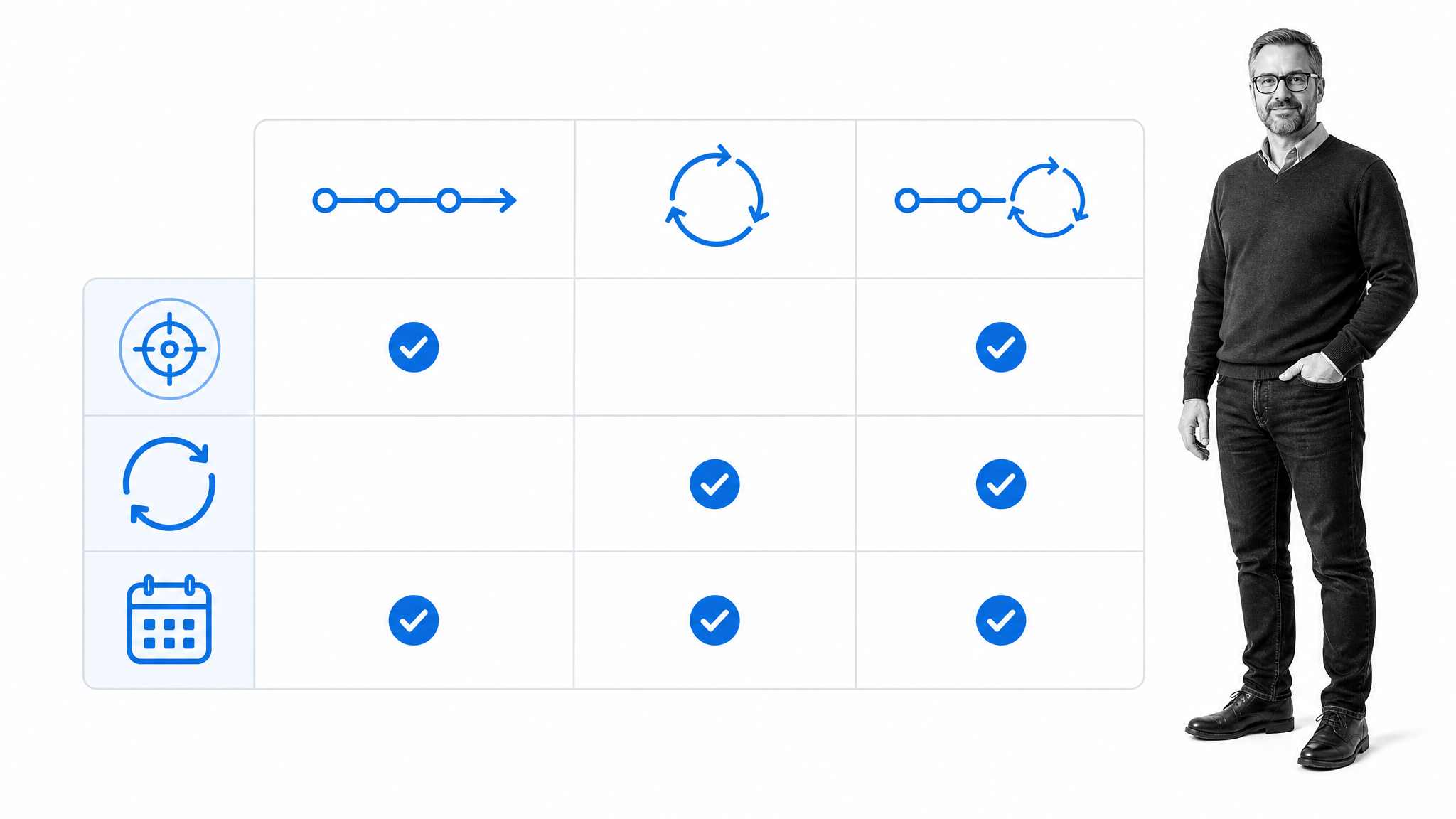
Hybrid approaches can work when the boundaries are explicit. A team might use a controlled SRS and formal safety reviews for the regulated parts of a system while delivering lower-risk interfaces in short iterations. The important point is to define which artifact is authoritative, how changes are approved, and how work remains traceable from need to evidence.
Examine each approach’s strengths and weak spots, consider expert advice, and determine the set of requirements the project must satisfy. Some development teams can optimally combine Agile and Waterfall approaches. Whatever the choice, the goal is a quality project that solves the required tasks while leaving enough evidence for people to understand how and why the product was built.
Customer collaboration requires cooperation with customers, but it does not make contract negotiations irrelevant. The SRS can connect those conversations by recording the agreed outcome, the affected requirement, and the evidence that will demonstrate completion.
The Agile Manifesto values:
- Individuals and interactions over processes and tools;
- Working software over comprehensive documentation;
- Customer collaboration over contract negotiation;
- Responding to change over following a plan.
The manifesto also makes the crucial point that the items on the right still have value. A strong software requirements specification respects that balance. It provides enough structure to align people and prove what was built, without preventing the team from learning and responding when better evidence appears.
The post A Basic Introduction to Creating a Software Requirements Specification first appeared on Process Street | Compliance Operations Platform.


0 Commentaires