
Human resources best practices are most useful when they are specific enough to guide daily work. That is why GitLab is such a useful company to study: its public handbook shows how a remote organization turns people management, communication, inclusion, and data into visible operating habits.
This guide looks at five human resources best practices we learned from GitLab and shows how HR teams can apply the same principles with clearer workflows, stronger documentation, and more consistent follow-through.
HR teams are often asked to do two difficult things at once. They have to protect the organization from risk, and they have to make employees feel supported rather than processed. The gap between those expectations is where many HR frustrations start.
GitLab offers a practical counterexample. Its public company handbook and People Group handbook make policies, expectations, and processes visible. The result is not perfect HR, no company can claim that, but it is a strong model for turning values into repeatable operations.
- Why GitLab is still worth studying
- Why employees distrust HR
- 1. Emphasize the people in people management
- 2. Build remote teamwork deliberately
- 3. Walk the inclusive talk
- 4. Make transparency operational
- 5. Study the data
Why GitLab is still worth studying
GitLab is not just a remote-work example. It is a documentation example. The company has long operated with a public handbook that explains how work gets done, from communication norms to compensation, performance, learning, and people operations. That makes it unusually useful for HR teams because the practices are not hidden inside slogans.
The lesson is not that every company should copy GitLab line for line. The lesson is that HR practices become more trusted when employees can see the logic, the owner, and the next step. A policy buried in a private drive creates dependence on HR as an interpreter. A well-maintained process lets HR become a guide.
Why employees distrust HR
Employees often distrust HR when the function feels inconsistent. One manager gets clear guidance, another improvises. One employee receives follow-up, another hears nothing. One policy is enforced, another is treated as optional. Even when HR has good intentions, inconsistency makes the function feel political.
Modern HR teams also have more ground to cover. Employee engagement remains under pressure globally, and Gallup’s State of the Global Workplace research keeps showing how closely manager behavior, clarity, and wellbeing connect to performance. That makes operational discipline a people issue, not just an administrative one.
The best HR management practices reduce ambiguity. They make expectations visible, give employees reliable ways to ask for help, and turn listening into action.
GitLab practices behind the five tips
GitLab is an all-in-one DevOps software platform, so it may not look like an obvious HR example at first glance. The reason it belongs in a human resource management discussion is that the company has built a community around shared interests, public tactics, and a willingness to document how work happens. GitLab’s software may be improved by staff and contributors, but the same open-source habit shows up in its people operations. That is why HR managers can learn from the approach even if they never touch DevOps software.
The original trust problem is still central. A central conflict between human resources and employees is a lack of trust on both sides. Employees can feel like HR only has the company’s interests in mind. HR can feel like employees behave more like bickering children than professional adults. Over time, bad experiences and resentments build up until even strong employees and HR managers struggle to find common ground. It only takes one negative experience to paint every HR manager with the same brush.
Changing the department name can help only if the work changes too. Process Street has used a People and Operations Manager title, and GitLab uses The People Group. Those name changes signal a different posture, but they cannot be the end of the road. The People Group name matters because the work behind it includes engagement, hiring practices, effective onboarding, GitLab workflow, compliance, learning and development, compensation, and benefits.
That broad People Group Vision shows why human resource management is a complicated job. HR managers have to balance leadership and employee expectations, especially when significant policy changes happen and HR becomes the ill-fated messenger. There will always be difficult conversations, but better processes make those conversations happen less frequently and run more smoothly.
First and foremost, employees are people. That sounds obvious, but it is easy for any company to remember only the employee who complains about snacks, the one who never logs hours properly, or the highest achiever on the sales team. Everyone in between still needs to feel like more than an unappreciated cog in the machine. GitLab puts this idea at the forefront by prioritizing an engaged team and asking employees themselves what is working.
GitLab has monitored employee net promoter score, or eNPS, and has used survey methods such as Gallup’s Q12 index to look at both role clarity and personal development. The useful part is not the label on the survey. The useful part is the loop: ask employees, investigate weak signals, and connect what you learn to support, training, mentoring, or manager action.
Employee Development Plans, or EDPs, are one practical example. Line managers should create employee development plans with their teams, not for their teams. EDPs should be updated on a regular basis, reviewed with the employee, and tied to career aspirations, new challenges, more responsibility, training, mentoring, and a timeframe. A digital version stored in a central database or knowledge library makes the plan easier and faster to update and keeps everyone on the same page. Google Docs, Notion, a human resource information system, BambooHR, Oracle HCM, or Process Street can all support that operating habit, depending on the team’s needs.
Wellbeing checks belong in the same operating model. HR managers need to be prepared to initiate and reinforce strategies that support employees’ mental wellbeing through employee assistance programs, mental health first aiders, manager check-ins, or activities that combat loneliness. Whether a company is remote, hybrid, or face-to-face, line managers should be checking in regularly, and HR should make sure the channel stays open.
Process Street’s own working-out-loud practice is a useful example. Wherever possible, teams communicate in public channels, often via Slack. Each team and department can have its own channel, with more general channels for company-wide or social conversations. The point is not Slack itself. The point is accessibility: colleagues, line managers, and leadership are easier to reach; solutions can come from surprising places; resources are shared; and everyone knows more about what everyone else is working on.
That transparency connects directly to teamwork. Fostering a positive team dynamic, particularly for a remote company, is not always easy. Some teams click from day one, and others need an adjustment period before they productively collaborate. GitLab’s People Group has approached the necessity of building remote relationships with practices such as onboarding buddies, significant life event support, birthdays, anniversaries, and team rituals that help people stay connected while working remotely.
Onboarding buddies are especially practical. From the beginning, new employees can be matched with a buddy outside the main onboarding process. The buddy’s role is to integrate the new employee into company culture and help them establish connections with colleagues. At Process Street, one-on-one introduction calls can serve a similar role. Those early conversations help new hires understand personal interests, professional interests, team dynamics, and the unwritten context that is otherwise hard to find.
Remote work has many perks, but new-hire panic is real. The first days at a new company can be overwhelming, confusing, and lonely. A buddy, a manager check-in, or a scheduled intro call can show a new employee the ropes, especially if they are new to remote work. Birthdays, anniversaries, cards, flowers, social calls, conversation starter prompts, and light-hearted team banter are small practices, but small practices often make the difference in people management.
Diversity, equity, inclusion, and accessibility need the same operational discipline. Legislation covers some areas, and HR managers are responsible for compliance, but not every inclusion issue is covered by legal regulations. Employing a diverse workforce does not automatically mean the organization is inclusive, equitable, or accessible. Those are distinct concepts, and HR teams need to stay up to date on accessibility and inclusivity issues employees face.
GitLab’s public materials have historically included equal opportunity, health and safety, ethics, privacy, mental health awareness, gender and sexual orientation identity guidance, and outreach to underrepresented groups. The exact KPIs and targets change over time, but the people-operations lesson remains useful: do not simply check the diversity box. Create company culture, training, review habits, and feedback channels that help employees surface exclusion, inequity, and unconscious bias when they see it.
Regular diversity training is one practical step, but training should not be a passive document. A useful diversity training checklist acts as an interactive document between HR and the trainee. The checklist is assigned to the individual, the person works through each task with guidance and relevant information, and HR later reviews the tasks with the manager or employee. That creates direct feedback and an opportunity to discuss the work.
Radical transparency is another GitLab concept HR teams can adapt without copying every public detail. The strongest version is not oversharing for its own sake. It is making policies, procedures, and decisions visible enough that employees can participate in the decision-making process. New policies should not feel like things that happen to employees. They should feel like standards employees can understand, question, and improve.
That matters because many employees have experienced an us-and-them scenario with corporate headquarters. HR communicates through line managers, employees have little access to leadership, and policies do not match day-to-day experiences. A more transparent system opens channels of communication, gives on-the-ground employees a way to provide feedback, and helps leadership understand how processes work in practice.
Finally, HR should study the data. Every department has KPIs that show whether the work is working, and HR should be no different. Useful People Group KPIs can include offer acceptance rate, team member retention, pay equality, employee satisfaction, learning and development participation, hiring practices, compensation, benefits, and employee engagement. Adding data about these indicators gives HR managers context about what changes are needed.
The key is to connect the executive summary to action. A People Success Performance Indicators page is useful only if a manager can click from a KPI to why it is measured, how it is calculated, what its current health is, and what action follows. Monitoring a percentage every month can help People Group managers gauge whether hiring practices are effective, but the data matters most when it changes decisions.
Digital tools make that operating model easier. Business process automation, HRIS tools, video apps, time management apps, and workflow management software are increasingly necessary for the workday, regardless of industry. HR managers still have to choose the right tools, convince leadership to make investments, teach employees how to use them, and keep the system practical. The goal is not more software. The goal is better HR management in the digital landscape.
1. Emphasize the people in people management

Human resources best practices start with the human part. GitLab’s People Group framing is useful because it treats people operations as a support system for employees and managers, not only as a compliance function. The work includes onboarding, growth, engagement, compensation, and moments when employees need practical help.
That sounds obvious until it is time to run the work. Employee development plans, check-ins, wellbeing conversations, accommodation requests, and manager follow-ups all depend on consistency. If HR relies on memory or scattered messages, employees experience care as luck. If HR relies on clear workflows, employees experience care as a system.
One practical way to do this is to make employee development visible. A development plan should not sit in a static document after a review cycle. It should include the goal, the support needed, the manager owner, the follow-up date, and the evidence that progress happened.
This is where Process Street fits naturally. HR teams can use HR workflow software to turn development plans, probation reviews, wellbeing checks, and employee relations steps into repeatable workflows. Process Street is a Compliance Operations Platform with Docs, Ops, and built-in AI, so teams can document the policy, run the process, and keep an auditable record of what happened in one place.
The best practice is simple: do not ask employees to trust that HR will remember. Build the follow-up into the way work runs.
2. Build remote teamwork deliberately
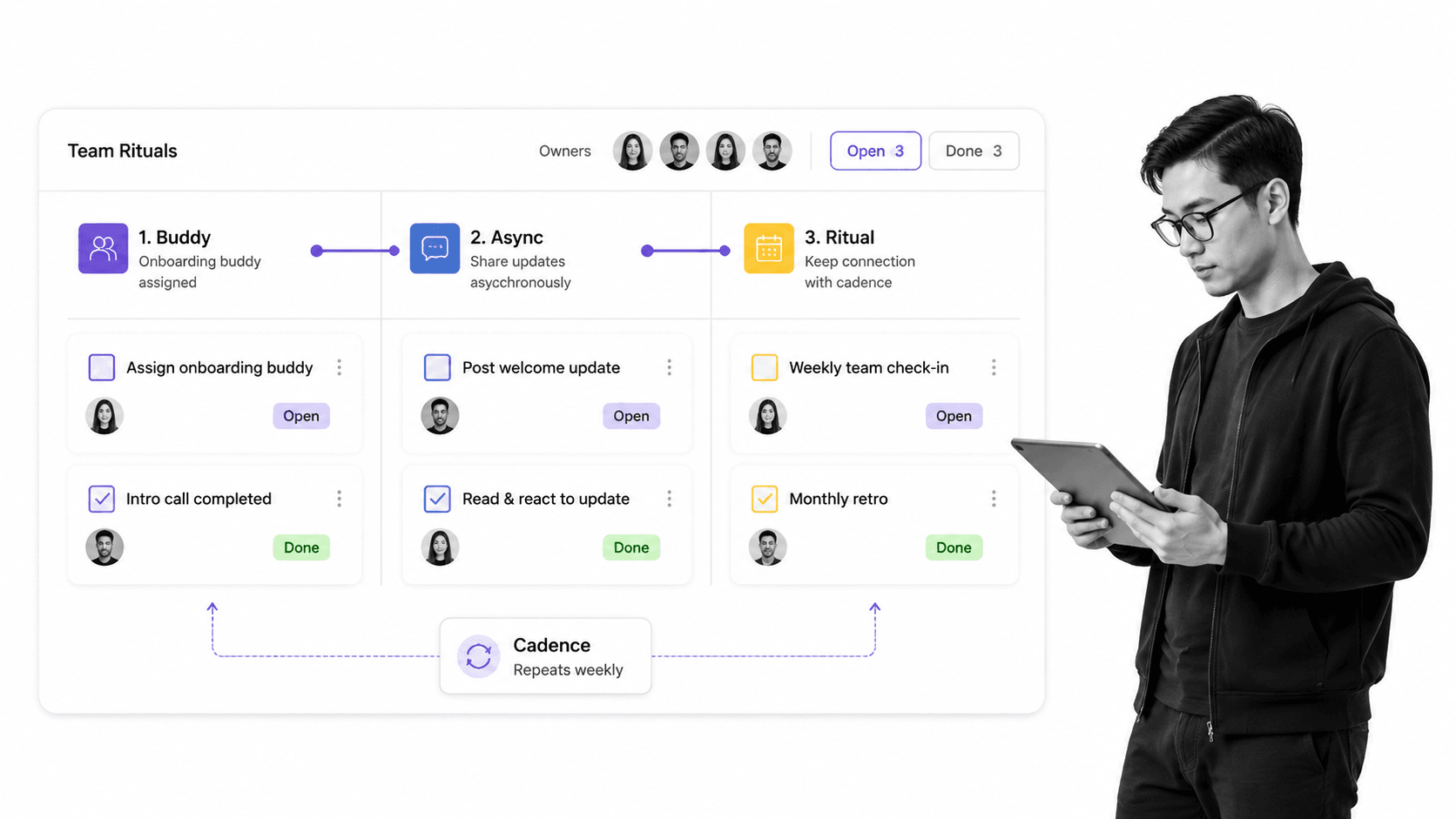
GitLab’s remote model is often discussed as a workplace preference, but the deeper HR lesson is operational. Remote teamwork needs designed rituals. New hires need onboarding buddies. Teams need working agreements. Managers need async update habits. Employees need to know where decisions, feedback, and context live.
In an office, weak processes can hide behind proximity. People overhear context, ask side-channel questions, or solve confusion in a hallway. In a distributed company, weak processes become visible quickly. That is why remote teamwork is an HR best practice even for hybrid companies.
Microsoft’s Work Trend Index research has repeatedly highlighted the cost of fragmented communication and always-on collaboration. HR cannot solve that by asking people to communicate better in the abstract. It has to help teams define what good collaboration looks like.
Useful remote-teamwork workflows include:
- New-hire buddy assignment and first-week check-ins.
- Async status updates with clear owners and blockers.
- Meeting norms that separate decisions from discussion.
- Manager check-ins that include workload, wellbeing, and priorities.
- Team rituals for recognition, learning, and retrospectives.
The best practice is to make teamwork explicit enough that employees do not need social access to understand how to participate.
3. Walk the inclusive talk
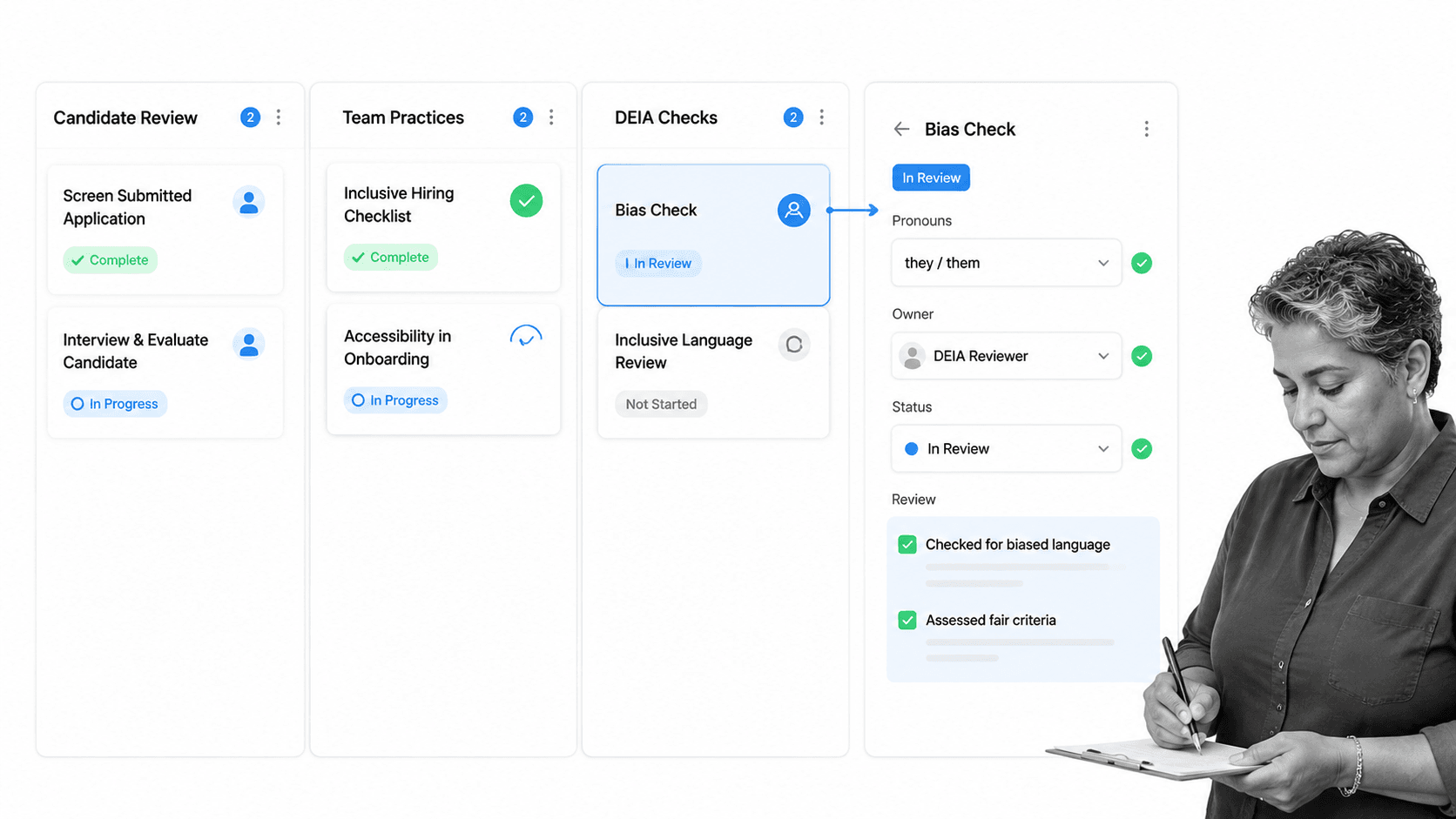
Inclusion fails when it is treated as a statement instead of an operating practice. GitLab’s inclusion handbook material is useful because it connects DEIA language to specific behaviors, resources, and team expectations. That is the move HR teams need to make: convert principles into repeatable actions.
Inclusive HR operations can include pronoun practices, structured interview rubrics, candidate pipeline reviews, accessibility checks, manager training, employee resource group support, and clear escalation paths. Each of those practices needs an owner and a cadence. Without those, inclusion becomes dependent on the most committed individuals rather than the organization itself.
GitLab’s Diversity, Inclusion, and Belonging handbook is a strong reminder that inclusive culture is built through repeated visible choices. The language matters, but the operational follow-through matters more.
For HR teams, the best practice is to design inclusion into the workflow. For example, a hiring workflow can require a structured interview plan before interviews begin. A promotion workflow can require criteria review before calibration. A team onboarding workflow can include accessibility and communication preferences before the employee has to ask.
When inclusive practices are embedded in workflows, HR is not relying on reminders alone. The process makes the right behavior easier to repeat.
4. Make transparency operational
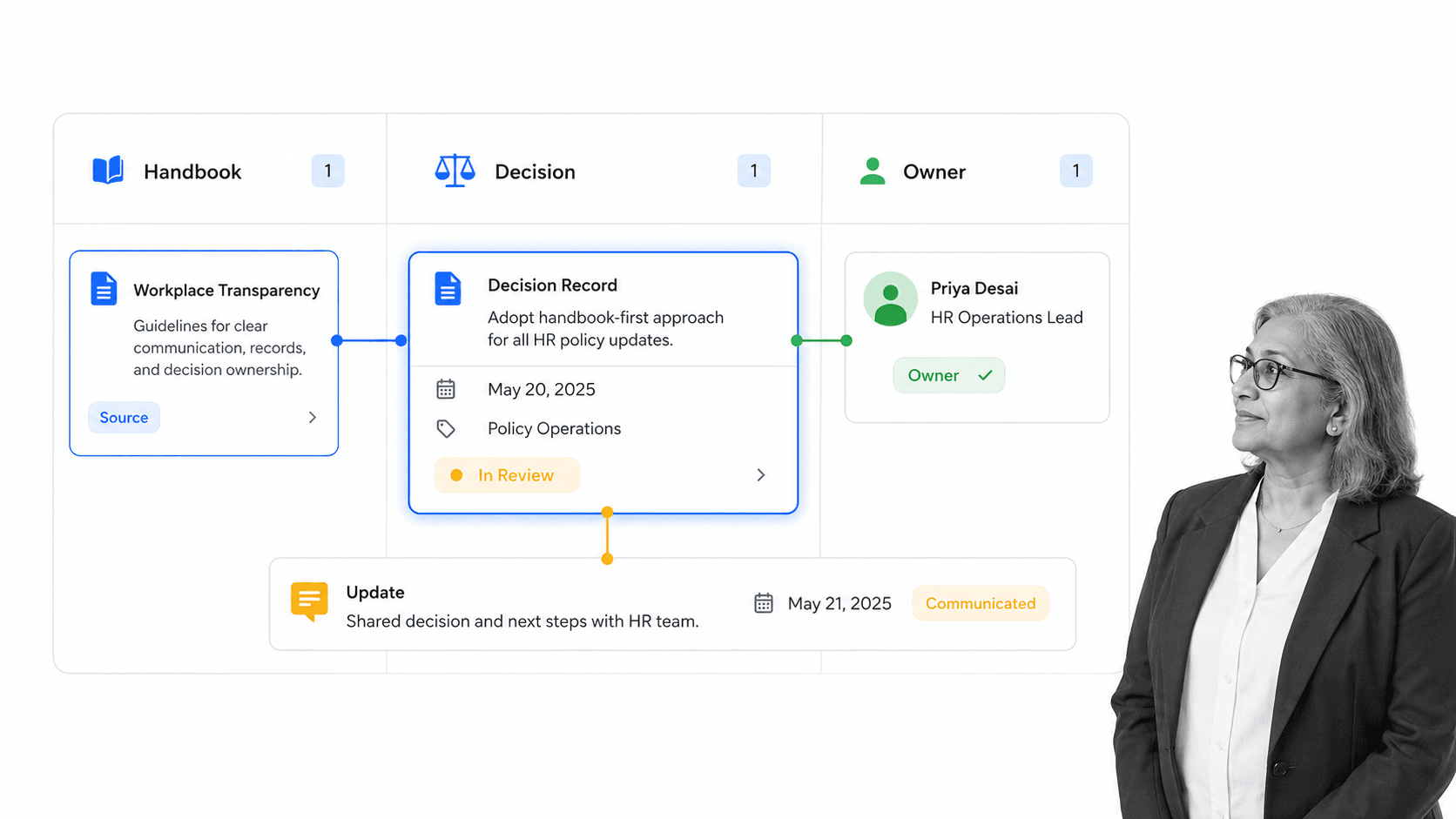
Transparency is one of GitLab’s most recognizable operating principles. The HR lesson is not that every company should make everything public. The lesson is that employees trust systems more when decisions, policies, and responsibilities are visible enough to understand.
For HR, transparency should answer four questions:
- What policy or process applies?
- Who owns the decision?
- What evidence or criteria will be used?
- What happens next?
Those questions matter in compensation, performance reviews, promotions, employee relations, learning budgets, and manager expectations. If employees cannot find the answer, they fill the gap with assumptions. If managers cannot find the answer, they invent local versions of policy.
A handbook-first approach helps, but only when the handbook is maintained. A stale handbook creates a different kind of trust problem. That is why HR documentation needs owners, review dates, and change logs. The document and the workflow should stay connected.
Process Street supports this by connecting documentation with operational execution. HR teams can keep the policy in Docs, run the related procedure in Ops, and use built-in AI to help employees find the right procedure or summarize the next step. The product should be treated as one operating system for compliant work, not as a pile of disconnected documents.
The best practice is to make transparency useful at the moment of action, not only admirable as a value.
5. Study the data
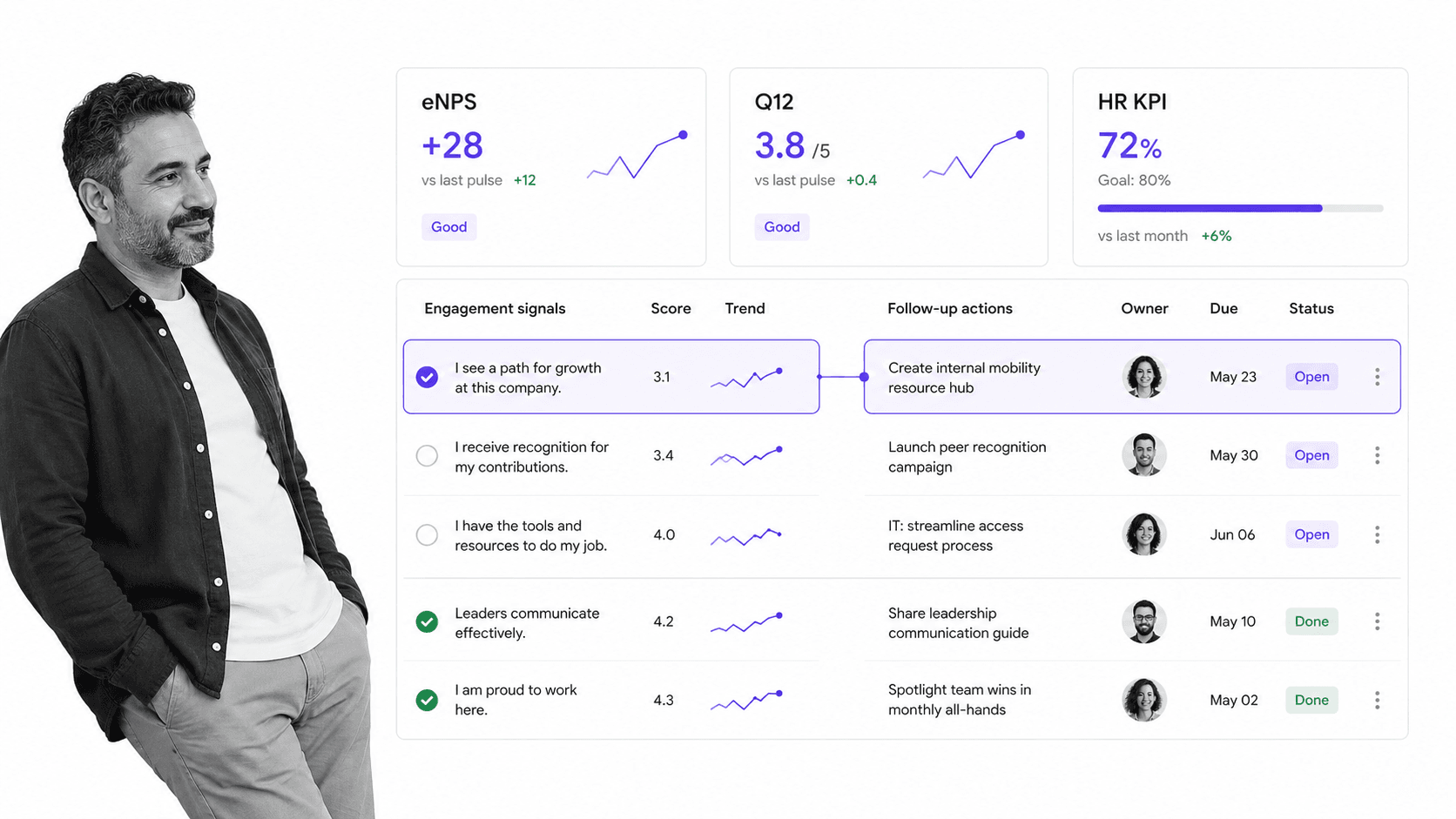
Data-driven HR does not mean reducing employees to numbers. It means paying attention to signals early enough to act. GitLab’s People Analytics function is a useful example because it frames data as a way to support better people decisions and operational learning.
Common HR signals include engagement survey results, eNPS, retention trends, time-to-hire, onboarding completion, manager effectiveness, internal mobility, absenteeism, employee relations patterns, and training participation. Gallup’s Q12 employee engagement survey is one well-known framework for asking whether employees have the clarity, materials, recognition, and growth opportunities they need.
The mistake is collecting data without assigning action. If a survey shows workload pressure, the workflow should create follow-up owners. If onboarding data shows repeated delays, the workflow should show which step is breaking. If manager effectiveness scores are low, HR should connect the signal to coaching, training, and review cadence.
GitLab’s People Analytics handbook shows the value of making data practices explicit. Employees and managers should understand what is measured, why it matters, and how the organization responds.
The best practice is to close the loop. HR data should move from signal, to interpretation, to owner, to action, to review. Anything less trains employees that feedback disappears.
Several small details make these practices concrete. A birthday bot, anniversary note, send-cards habit, flowers for a significant life event, Zoom coffee date, matchmaking bot, and conversation starter bot may sound minor, but they help remote colleagues participate in accomplishments and milestones when an anniversary falls on a weekend or a new hire is still finding their way. They also make downtime and social conversations legitimate parts of team health, not distractions from task-focused work.
The wellbeing vocabulary matters too. Anxiety, depression, employee assistance programs, EAP support, mental health first aiders, MHFA coverage, and mental health disorders should be part of normal HR planning. Employees should be able to talk about their own mental health without stigma, and managers should know when to route issues to trained support rather than trying to solve everything alone.
The historical GitLab examples around women, women in management, senior leadership, outreach to diverse candidates, underrepresented groups, offer acceptance rate, team member retention, pay equality, and individual indicators are useful because they show what HR data can make visible. A manager can look at an indicator, ask what changed after August or another monthly review point, and decide whether hiring practices, compensation, benefits, or learning and development need attention.
Technology also has to be handled deliberately after the abrupt adjustment many companies made to remote work. HR managers may need business process automation, BPM software, HRIS tools, video apps, time management apps, and other software applications, but each tool should answer a practical need. Oliver Peterson’s HRIS software discussion, BambooHR, Oracle HCM, Google Docs, Notion, Slack, and Process Street are all examples of categories HR teams might compare while deciding what fits their workload.
Ray Dalio’s Principles popularized the language of radical truth and radical transparency, but the HR version is more practical than philosophical. Put honest thoughts on the table, let independent thinkers challenge the consensus, and make sure employees have access to the policy, the answer, and the decision path. That is how transparency becomes engagement and ownership rather than a slogan.
There is always room for improvement in human resource departments. The advice is not to chase every app or copy every GitLab policy. The advice is to ask what employees need, maintain accessible public channels, use the best answers wherever they come from, and keep improving the management system so difficult conversations become clearer, fairer, and less frequent.
Conclusion
The five human resources best practices we learned from GitLab all point in the same direction: make HR visible, repeatable, and human. People management should include real follow-up. Remote teamwork should be intentionally designed. Inclusion should be operational. Transparency should help employees act. Data should create accountability.
GitLab’s handbook is a useful model because it shows the work. HR teams do not need to copy every GitLab policy to learn from that habit. They need to build their own operating system for people practices, one that employees and managers can understand, use, and improve.
That is the standard modern HR has to meet. The best policies are not the ones that sound good in a handbook. They are the ones employees can trust because the organization runs them consistently.
The post 5 Human Resources Best Practices We Learned From GitLab first appeared on Process Street | Compliance Operations Platform.


0 Commentaires