Property management runs on relationships, but those relationships depend on reliable processes. Tenants need clear communication, landlords need confidence that their properties are being handled well, and your team needs a consistent way to complete recurring work.
These nine property management workflow templates cover tenant screening, onboarding, move-out, eviction, landlord management, building inspections, and maintenance records. Each template gives your team a repeatable starting point that can be adapted to the property, local requirements, and your operating model.
There is a growing need for process documentation in real estate
Property managers coordinate people, documents, approvals, inspections, payments, repairs, and sensitive decisions. When that work lives in memory or scattered messages, small handoff failures can quickly affect the tenant experience and the landlord relationship.
The job also requires teams to track conversations and deal statuses across multiple landlords, tenants, and applicants in addition to managing the properties themselves. It is high-touch and high-urgency work. Accurate process documentation gives those activities a shared structure instead of leaving every person to assemble the next action alone.
Documented workflows give everyone the same operating sequence. They make responsibilities visible, create a record of completed work, and help a team deliver a consistent service even when the situation changes. That is especially valuable when you manage multiple properties or need to train someone new.
Improve your processes from tenant screening to building maintenance
Property management work does not follow a single straight line. A new tenant may be moving in while another is leaving, a landlord may need an update, and a maintenance issue may require immediate evidence and approval. Prepared workflows help the team handle those events without reinventing the process every time.
Use the templates below as practical checklists, then adjust the tasks, owners, deadlines, approvals, and records to match your portfolio:
- Tenant Screening Template
- Tenant Onboarding Template
- Tenant Move-Out Template for Landlords
- Tenant Eviction Template
- Landlord Screening Template
- Landlord Onboarding Template
- Landlord Offboarding Template
- Apartment Building Maintenance Template
- Maintenance Log Setup Template
1. Tenant Screening Template
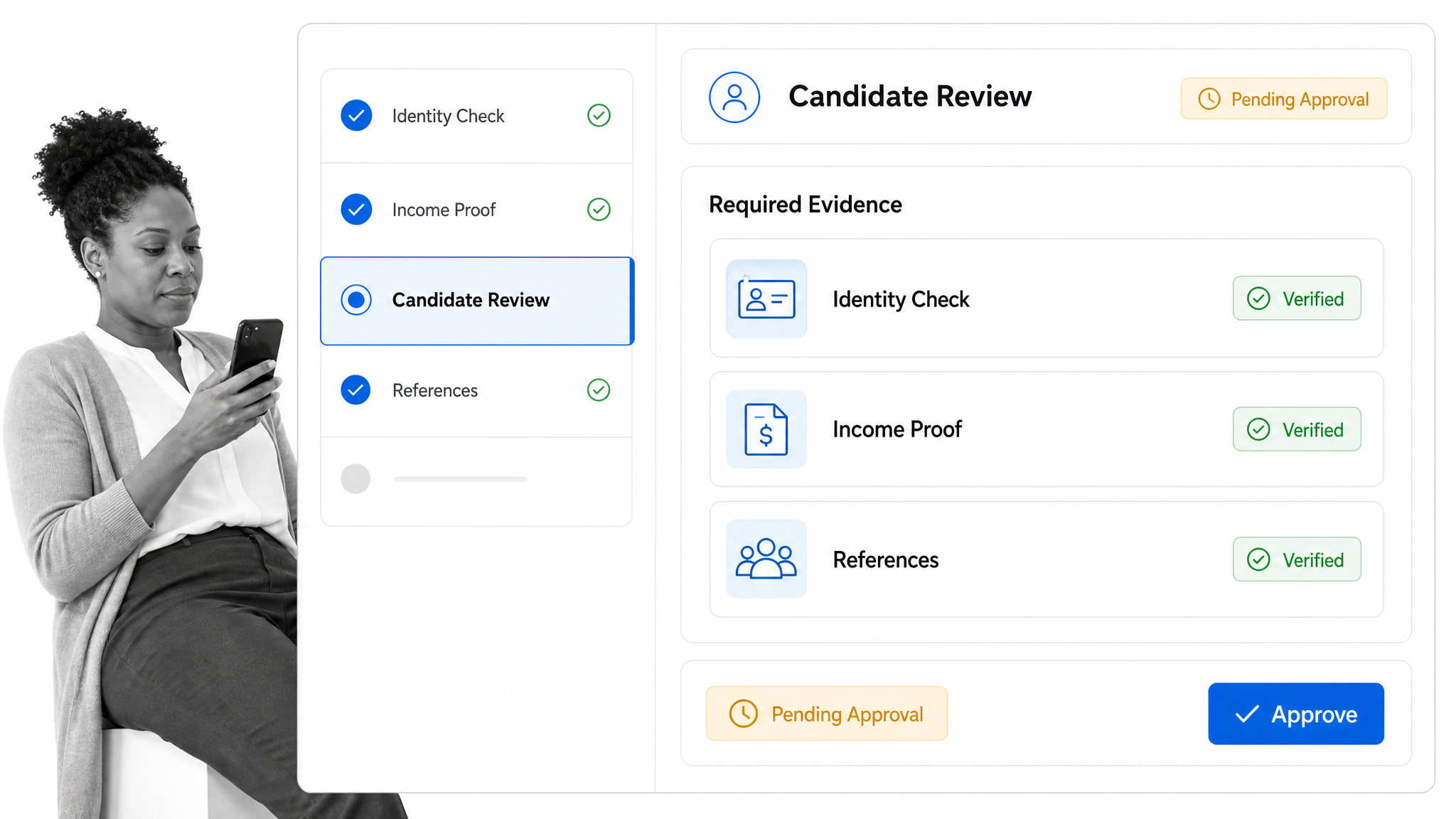
Tenant screening is the foundation of a healthy working relationship between a landlord, property manager, and prospective tenant. A comprehensive screening process helps you review every applicant consistently and gives the landlord a clear record of the checks completed.
Screening prospective tenants is arguably one of the most important aspects of property management. If the landlord being represented feels confident that you are bringing in suitable people, the relationship is off to a strong start. That is easier said than done, and no process can guarantee an ideal tenant every time. The value of the checklist is that it walks the team through the necessary steps and keeps the decision criteria consistent.
The Tenant Screening Template guides the team through applicant details, income and rental-history checks, references, required disclosures, and the final decision. Screening reports can contain errors, so use a consistent review process, follow applicable fair-housing and consumer-reporting rules, and give applicants the notices and opportunities required in your jurisdiction. The FTC tenant background check guidance is a useful starting point for understanding these responsibilities.
2. Tenant Onboarding Template
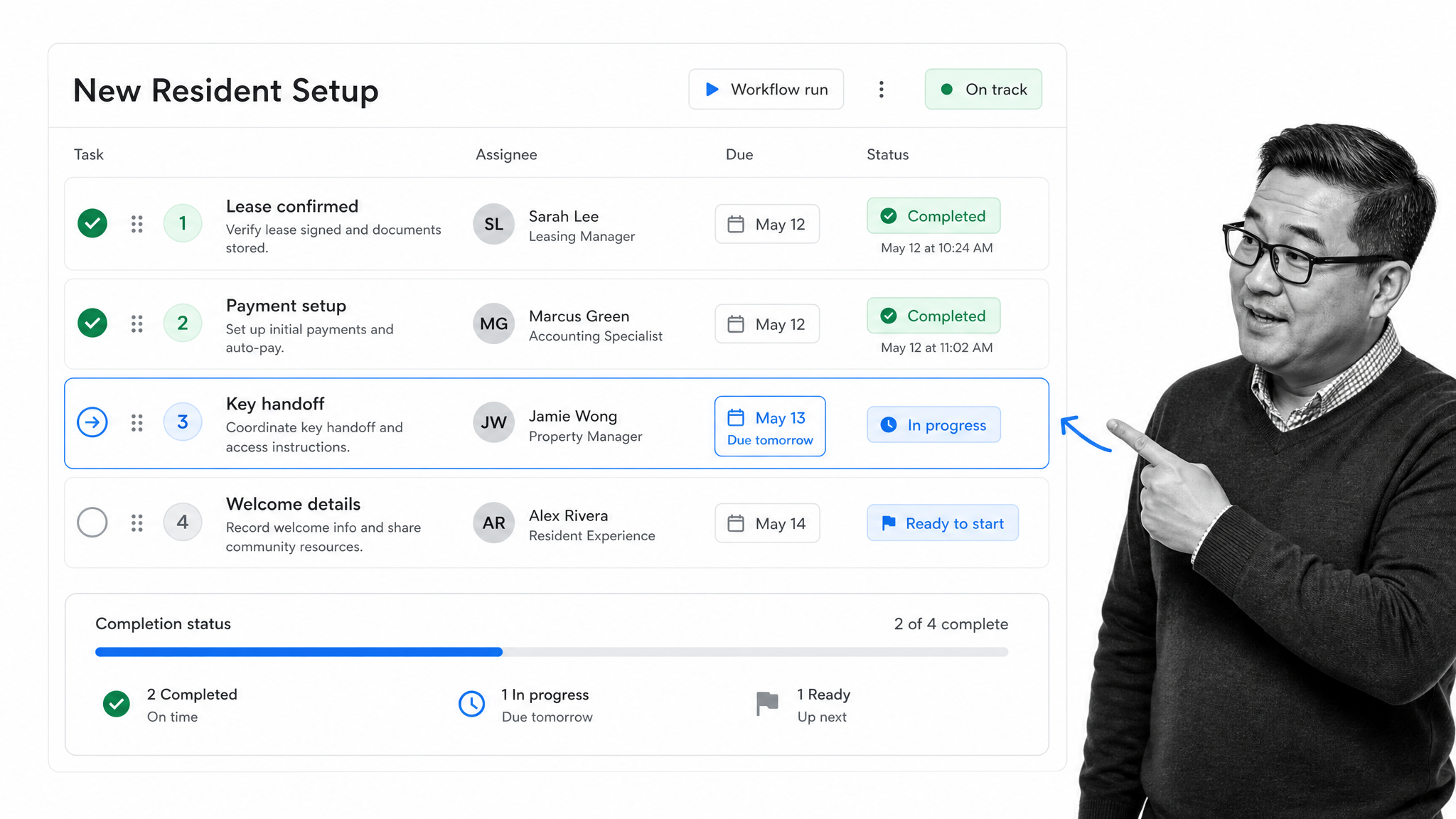
Once a tenant is approved, a structured move-in process makes responsibilities clear before the keys are handed over. It also gives your team a reliable tenant move-in checklist for collecting documents, recording payments, sharing property information, and establishing communication.
A smooth onboarding should make both the property manager and the new tenant feel comfortable with the lease agreement and the next steps. Both parties need to understand their responsibilities and the expectations set in the agreement before the handover. That includes receiving initial payments, confirming access arrangements, and setting up ongoing communication with both the tenant and the landlord.
Run the Tenant Onboarding Template for every new tenancy. Assign each task to the right person, confirm that the lease and required records are complete, document the condition of the property, and make sure the tenant knows how to request maintenance or contact the management team.
3. Tenant Move-Out Template for Landlords
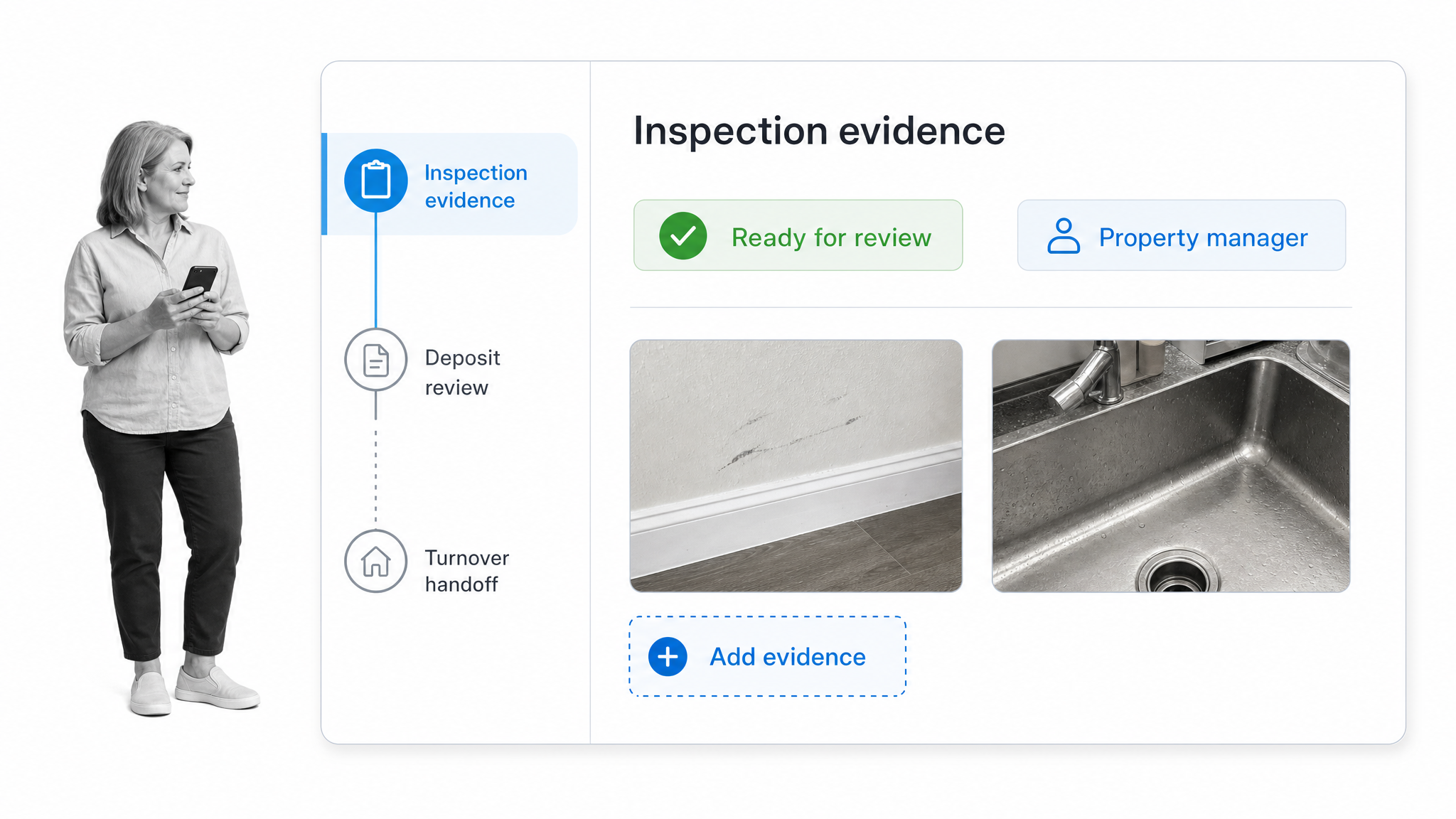
A clear move-out workflow connects the tenant’s departure date, property inspection, deposit review, repair work, and preparation for the next occupant. That coordination can reduce vacancy delays and give the landlord a useful record of what happened during turnover.
The sequence starts with confirming the move-out date, continues through a thorough inspection of the property, and concludes with the security-deposit decision and return according to applicable rules. A quick, low-stress move-out process supports business efficiency because the property can be prepared for a new tenant without unnecessary delay. Clear records also reduce the chance of avoidable disputes with the former tenant.
The Tenant Move-Out Template for Landlords keeps the property management turnover checklist in one place. Confirm notice and access arrangements, complete the move-out inspection, attach evidence, record maintenance needs, and follow the deposit rules and timelines that apply in the property’s jurisdiction. For deeper inspection guidance, use a dedicated rental inspection checklist.
4. Tenant Eviction Template
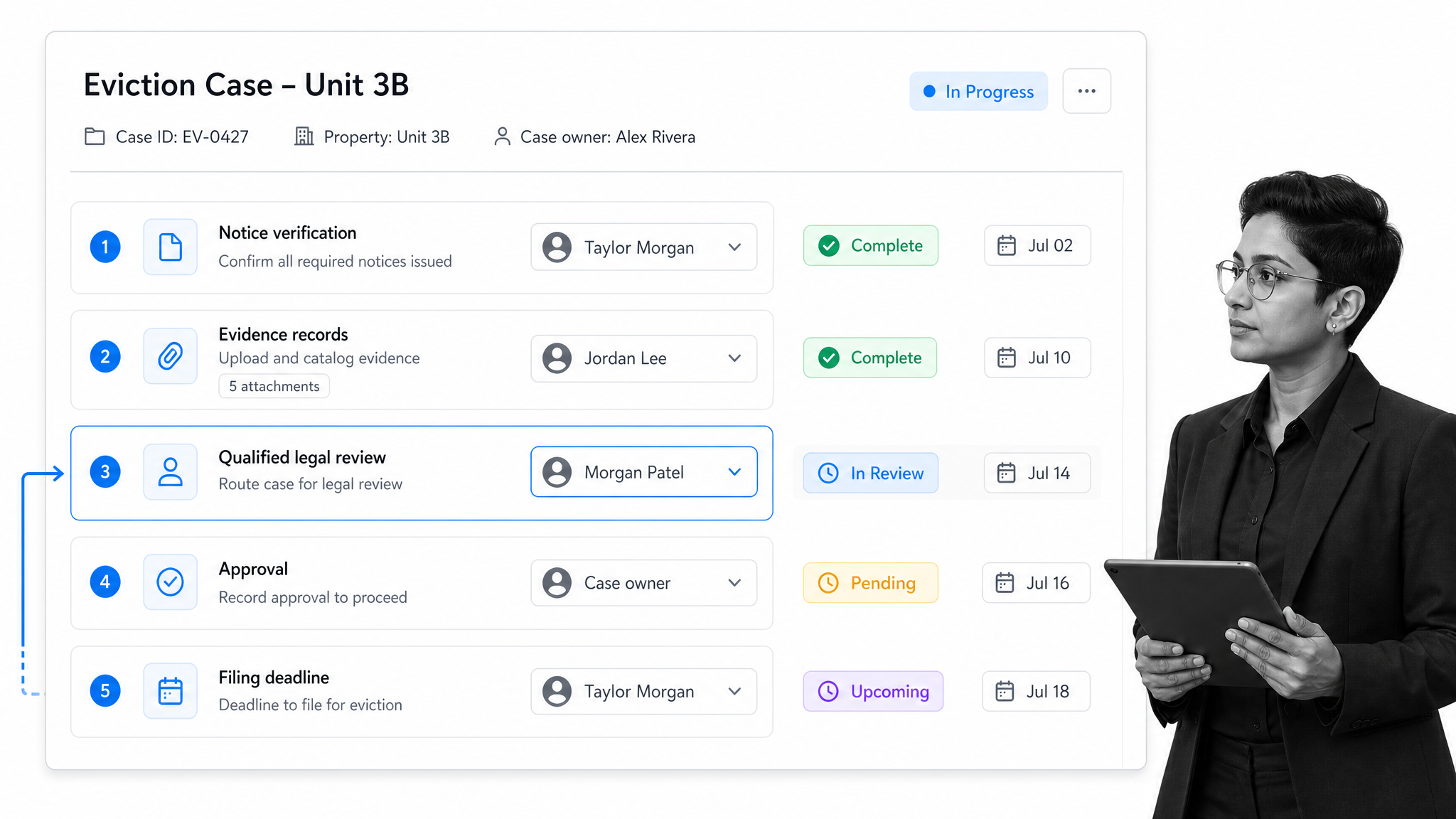
Eviction is a last resort and should be handled carefully, consistently, and with respect for everyone involved. Notice requirements, permitted grounds, filing procedures, timelines, and tenant protections vary by location. A workflow can help the team organize the work, but it cannot replace legal advice.
The process is costly and stressful for all parties involved, so the situation needs extreme care and attention. Before taking action, confirm that the matter is being handled with guidance from a qualified real estate attorney or other appropriate legal professional. The workflow should make the complex legal path easier to coordinate, not create a false promise of compliance.
Use the Tenant Eviction Template to coordinate the internal process: confirm the documented issue, collect relevant records, route the matter for qualified legal review, track notices and deadlines, and preserve evidence of each completed step. Customize the template with local counsel before using it for a specific property.
5. Landlord Screening Template
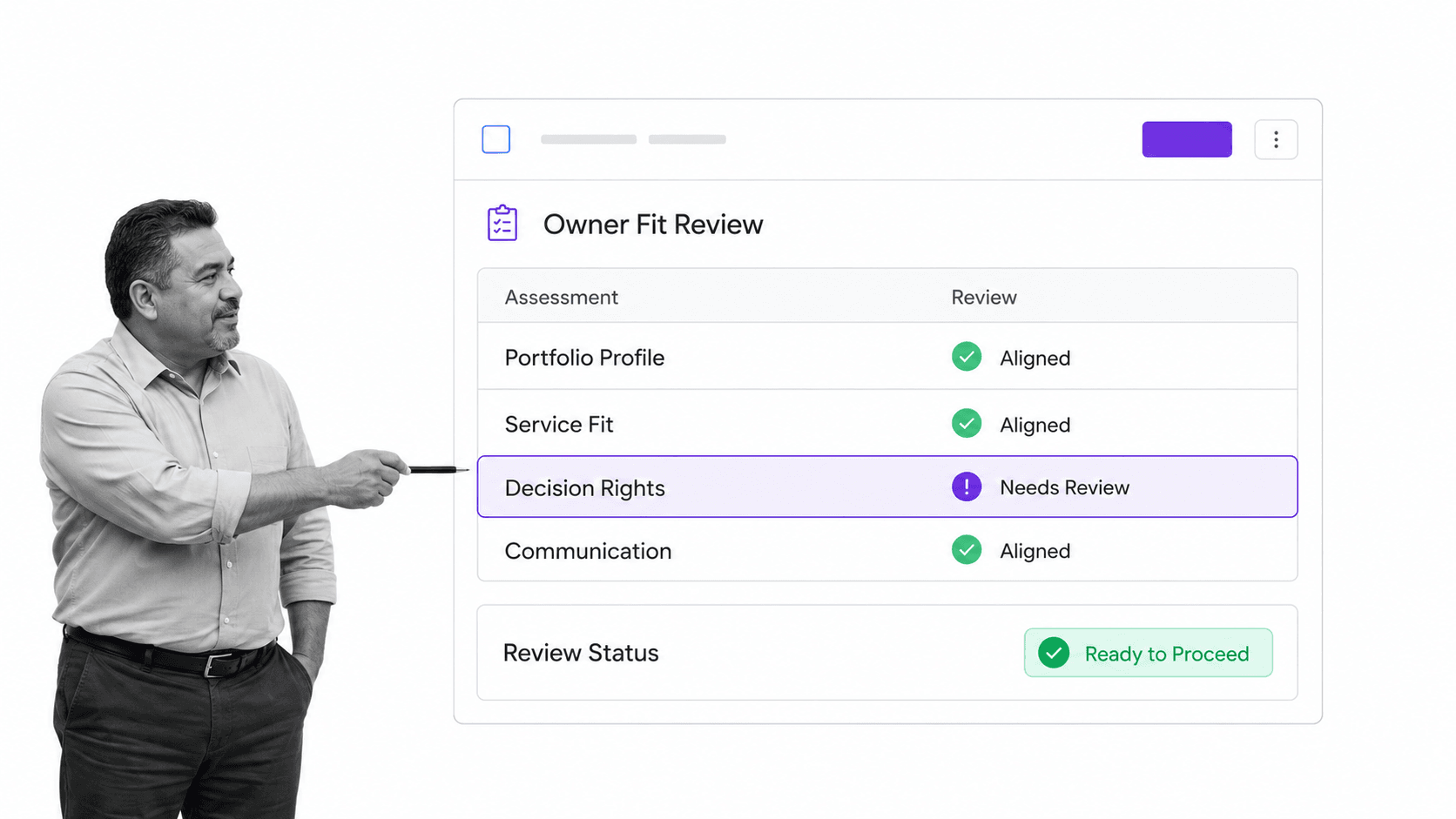
Landlords are clients, and not every prospective client will be a good fit for your management model. Screening landlords helps you understand their properties, expectations, communication style, decision rights, and willingness to follow the agreed process before you commit to the relationship.
Any business naturally wants more clients, but the balance between quality and quantity matters in property management. A landlord who does not respect the work your team does, does not see the value of the service, or constantly attempts to micromanage can create friction for everyone. A simple landlord screening process can make a real difference.
The Landlord Screening Template provides a consistent qualification path. Use it to capture portfolio details, clarify service requirements, identify risks, and decide whether your team can deliver the standard of service the owner expects without creating avoidable friction.
6. Landlord Onboarding Template
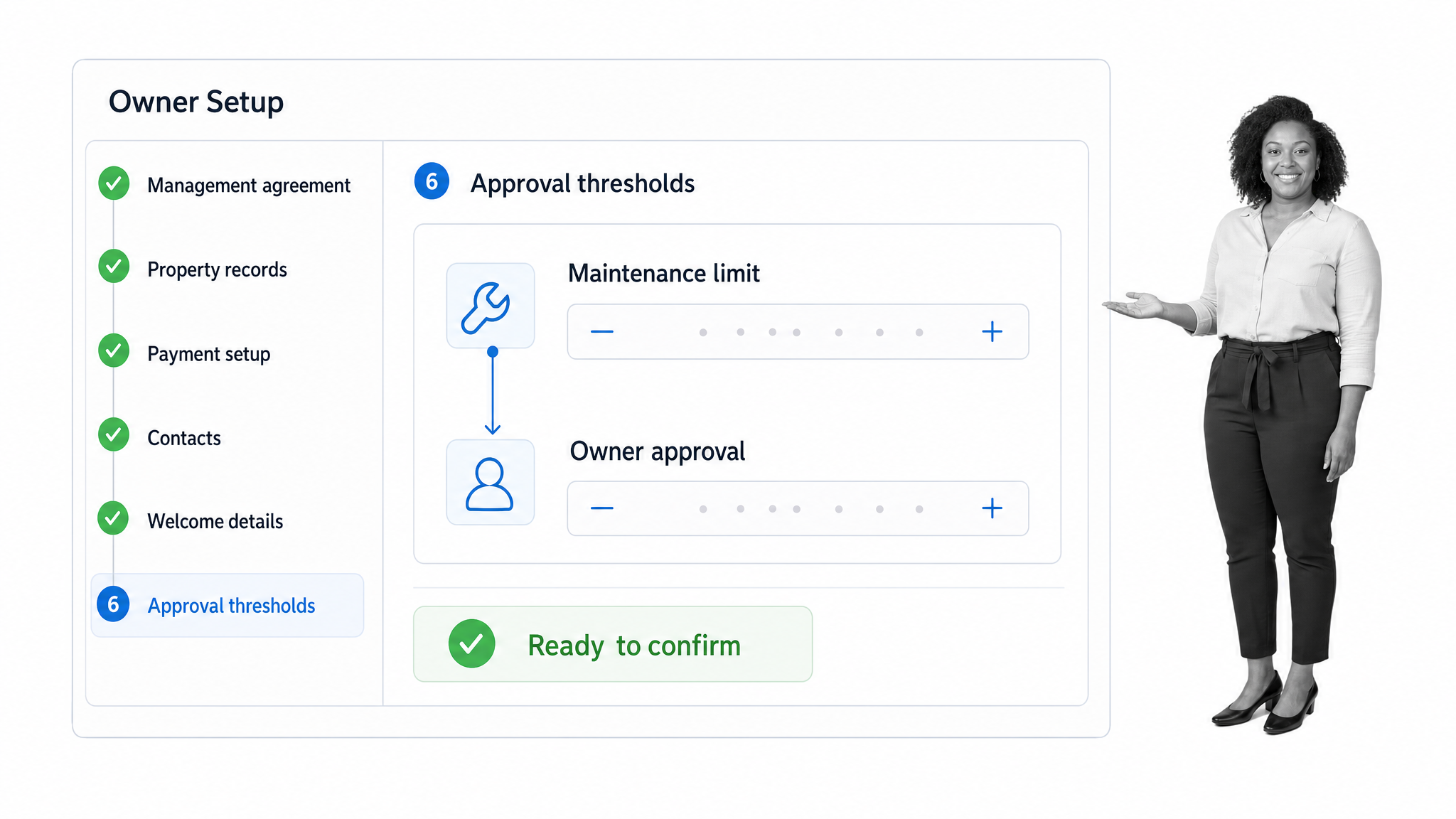
Landlord onboarding picks up where screening ends. A thoughtful onboarding process demonstrates how your company operates, confirms the management agreement, and builds trust before the first issue needs attention. It is also the right time to agree on reporting, payments, maintenance authority, and communication.
The onboarding period is an excellent opportunity to separate your service from the competition, yet it is often one of the most overlooked aspects of property management. Setting the tone for a high level of service can reduce misunderstandings and the risk of early termination. A professional welcome packet, reliable payment records, and agreed points of contact help get the relationship moving.
Run the Landlord Onboarding Template to gather property records, set up payment details, share the welcome packet, confirm contacts, and document approval thresholds. The same principles apply to a broader client onboarding process: a clear handoff prevents confusion later.
7. Landlord Offboarding Template
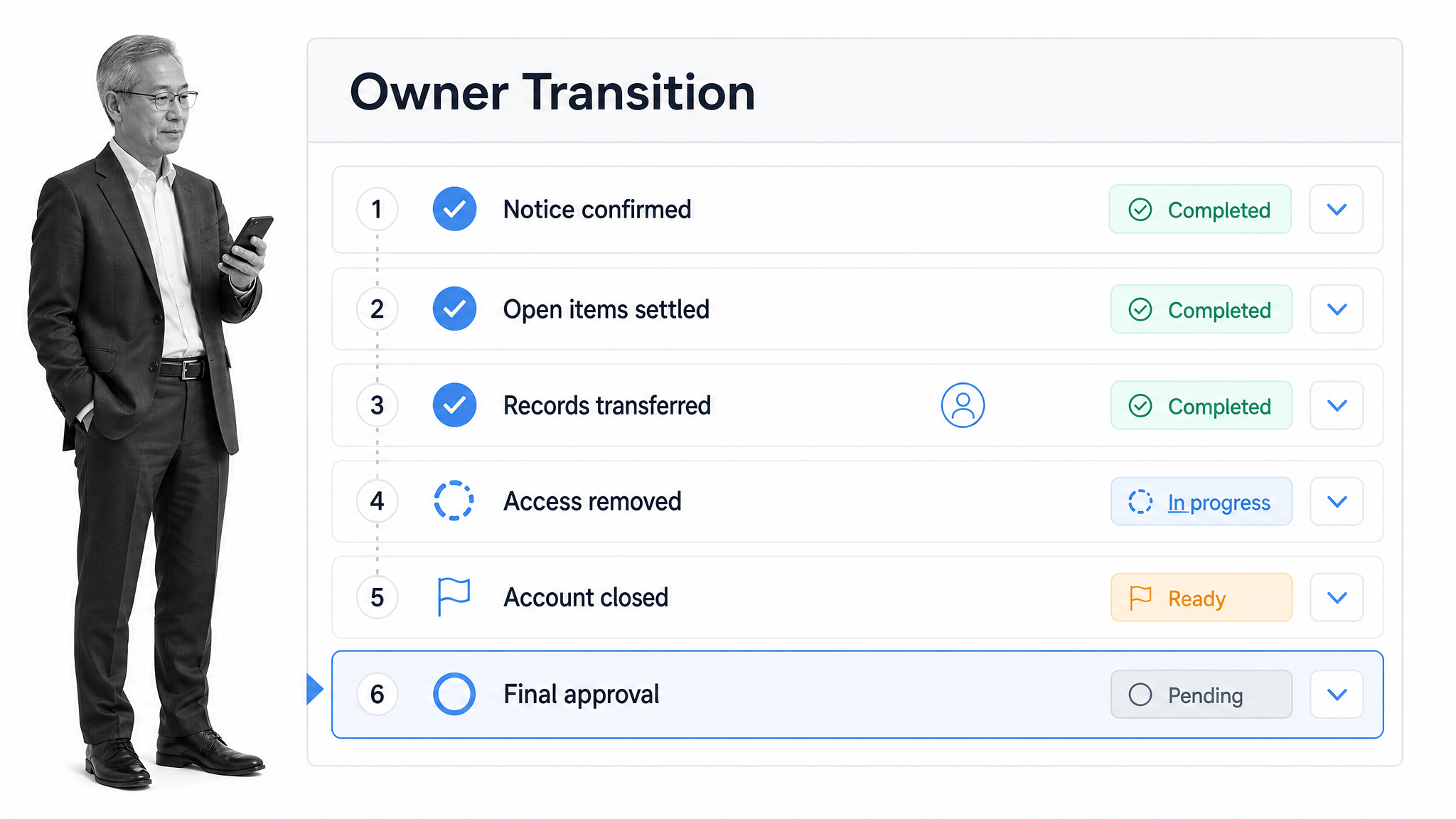
When a management relationship ends, an orderly offboarding process protects both parties and reduces the chance that records, access, payments, or open maintenance work are forgotten. The exact termination obligations depend on the management agreement and applicable law.
There are a number of important things the property manager may need to do, including verifying the reason for termination and following the agreement’s handoff requirements. Without a proper process, a team may face disputes or legal proceedings over whether the management contract was breached. Careful documentation makes the final transfer easier to review.
The Landlord Offboarding Template helps the team confirm notice, settle open items, transfer documents, remove access, close internal accounts, and record final approval. The completed workflow creates a clear internal history of the handoff.
8. Apartment Building Maintenance Template
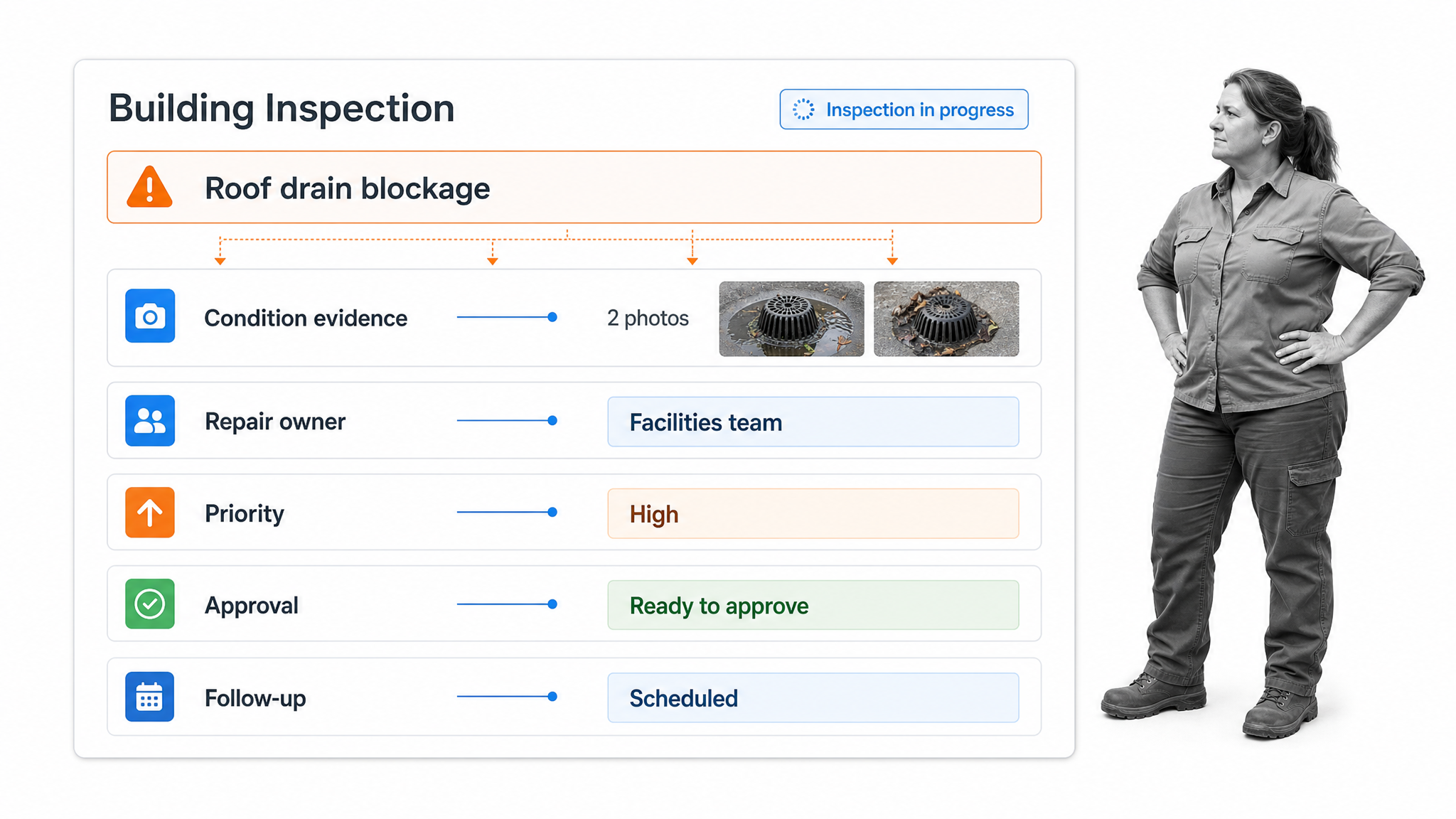
Preventive maintenance is easier to manage when recurring inspections, repair evidence, owners, and approvals follow a documented sequence. The appropriate cadence depends on the property, its systems, the season, the manufacturer’s guidance, and local obligations.
Conducting regular maintenance checks and coordinating repairs is a major responsibility for property managers. Some inspections focus on specific apartments or houses, while others cover building systems and common areas. A clear process makes a potentially arduous task manageable, helps identify repair needs early, and avoids unnecessary expenditures caused by missed warning signs.
Use the Apartment Building Maintenance Template to plan inspections, identify repair needs early, attach photos or reports, assign the next action, and preserve a record for the landlord. Teams managing larger portfolios can connect this operating workflow with commercial property management software practices for approvals, evidence, and oversight.
9. Maintenance Log Setup Template
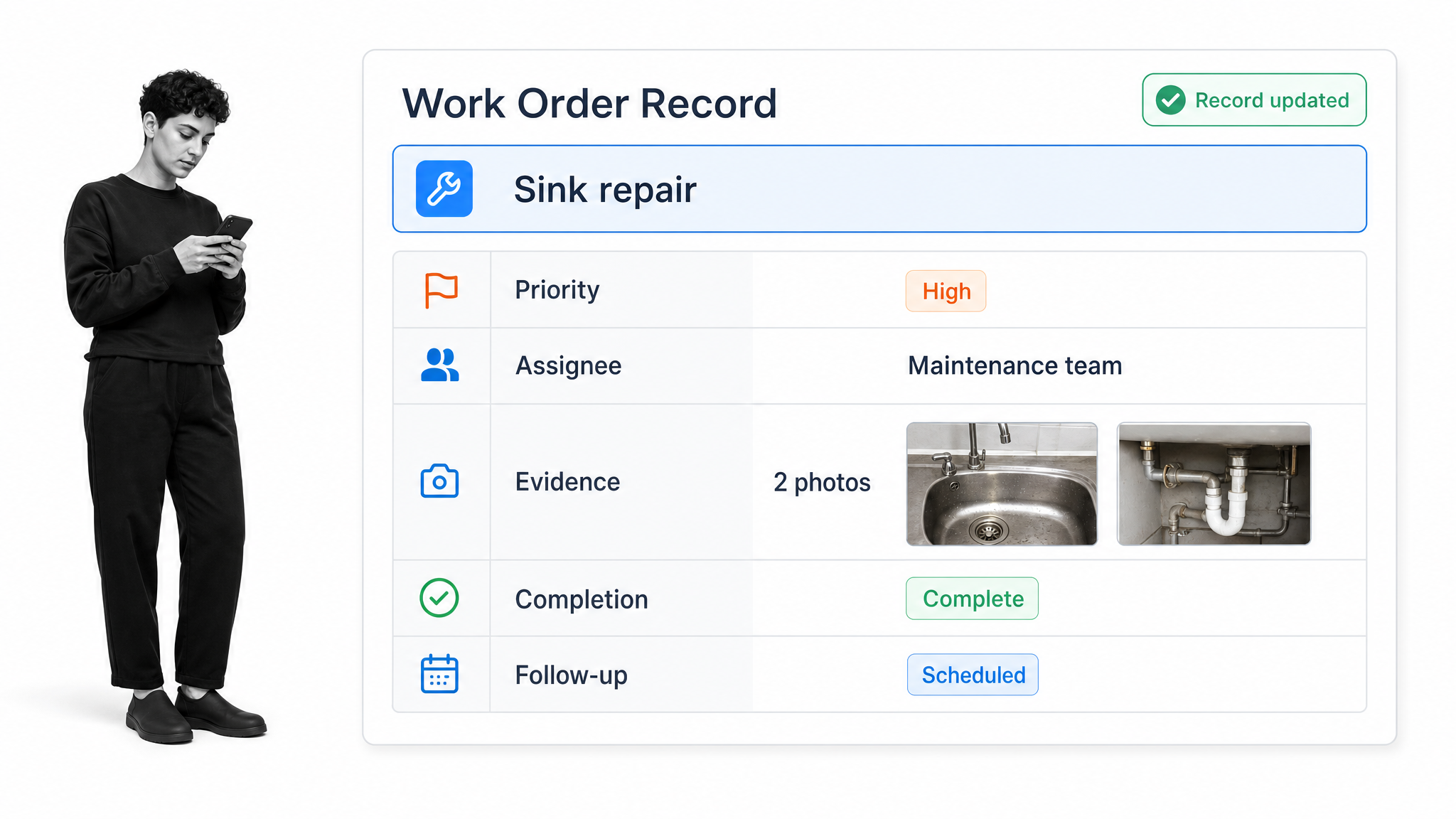
A maintenance log gives the team a shared, auditable snapshot of requests and completed work. It should show what was reported, its priority, who owns the response, what evidence was collected, when the work was completed, and whether a follow-up is still required.
There are sophisticated software tools for the performance and tracking of building maintenance, and many teams already use one. A simple log does not replace those capabilities. It provides a snapshot overview of maintenance activities that property managers and maintenance supervisors can review quickly, especially when discussing work with a landlord.
The Maintenance Log Setup Template helps you establish that record and keep terminology consistent. It can complement specialist building maintenance software while ensuring the operational handoffs and sign-offs remain visible to the property management team.
Supercharge these templates with process automation
Process Street is a Compliance Operations Platform for documenting how work should happen and proving that it did. Docs provides a governed home for policies and procedures. Ops turns those procedures into assigned workflow runs with forms, approvals, due dates, evidence, and reporting. Built-in AI can help teams route information, review structured inputs, and support controlled decisions inside the workflow.
Every property management company has embedded processes that work best for its team, properties, and clients. These templates are designed to be customized and have also been built with automation in mind. If you do not have automation set up yet, start with one repetitive handoff where a completed task can trigger the next action or notify the next owner.
For property management workflow automation, connect recurring work to the systems your team already uses. A CRM stage can start tenant onboarding. Approved screening details can populate the next workflow. A scheduled run can prepare a welcome packet. A completed inspection can route repair evidence for approval. A maintenance report can notify the landlord and update the system of record.
Use Process Street integrations to connect native tools, the API, webhooks, Zapier, Make, or Microsoft Power Automate. Current direct options include Salesforce for CRM handoffs and DocuSign for agreements and signatures. The result is less manual coordination and a clearer record of who completed each step.
A couple of other helpful resources
For a property-management example, see how Dodson Property Management used Process Street while managing 3,500 homes. To track active work after workflows are running, use Reports for progress, assignments, due dates, and completion data.
If you are designing more advanced handoffs, the current automation capabilities and AI automation guidance explain how to connect decisions, systems, and governed process execution.
Looking for other templates?
Explore these related collections for other repeatable processes:
Start with the workflow that creates the most repeated handoffs, customize it for the property and local requirements, then assign clear owners and evidence requirements. A well-run property management checklist should make the next action obvious and leave a record the team can trust.
The post 9 Property Management Workflow Templates to Keep Your Rental Processes on Track first appeared on Process Street | Compliance Operations Platform.


0 Commentaires