
Talent acquisition is the structured work of finding, evaluating, and hiring people who can help a company meet its long-term goals. In a SaaS startup, that work changes quickly: informal hiring through a founder’s network must become a repeatable system with clear roles, consistent decisions, and a candidate experience the team can sustain.
Early teams can rely on generalists, tight communication, and a shared sense of urgency. As headcount grows, the startup hiring process needs defined ownership, approved budgets, trained interviewers, and reliable handoffs. Those foundations let a talent acquisition SaaS stack support the team without turning candidates into numbers.
Process Street’s former Head of Talent, Rosy Bellorini, shared how a growing SaaS company can build those foundations while keeping the human side of recruiting intact.
The early days of a startup are intense. A small group of brilliant, adventurous people takes on work they may never have done before. Tight budgets leave the team building fundamental structures while also getting a product in front of customers. A couple of years later, those people have job titles and clearer job descriptions, the customer base keeps growing, and there are no longer enough hands to do everything. That is when talent acquisition changes from an informal founder activity into an operating capability.
- So you’re ready to scale your startup
- The first rule of Startup Club
- The Process Street acquisition process
So you’re ready to scale your startup
“If you think about talent acquisition in the commercial sense, what we do in recruitment is practically sales, and we also have different stages of our funnel.”
Rosy Bellorini, former Head of Talent at Process Street
The goal of talent acquisition is to put the right people in the right positions at the right time. A mature company may have standardized that work years ago. A startup often has to design the process while hiring is already accelerating.
Before opening more roles, establish three things: a recruiting system that fits the company, one approval path for every new position, and consistent interviewer training. Together, they create a structured hiring process the team can inspect and improve.
A job for every tool and a tool for every job
“At the end of the day, [you need a] CRM that’s flexible enough to allow you to design your process by position. There are a lot of tools out there that are too global for them to be appropriate for a startup.”
A small recruiting team needs tools that reduce repetitive work without forcing every role into the same funnel. An applicant tracking system should support inbound applications, outbound sourcing, interview coordination, evaluation, and follow-up. More importantly, it should let the team adapt hiring process stages to the position instead of hiding a weak process behind more software.
The ATS needs to be powerful enough to automate mass functions while still giving recruiters room to handle specific scenarios. A CRM that supports different processes by position can keep follow-ups and outbound efforts organized. The practical test is whether the software allows a small team to operate effectively, see the full funnel, and understand where a bottleneck occurs.
AI-assisted recruiting can help summarize notes, draft outreach, and identify missing information, but people should remain accountable for selection criteria and final decisions. Define where automation is allowed, review its outputs, and protect candidate data throughout the process.
Centralize your talent acquisition approval process
“Before it goes out to the world that we’re hiring, we start out with [the question]: What is the process of ensuring that the recruitment team is actually working on the roles that are actually approved and budgeted for?”
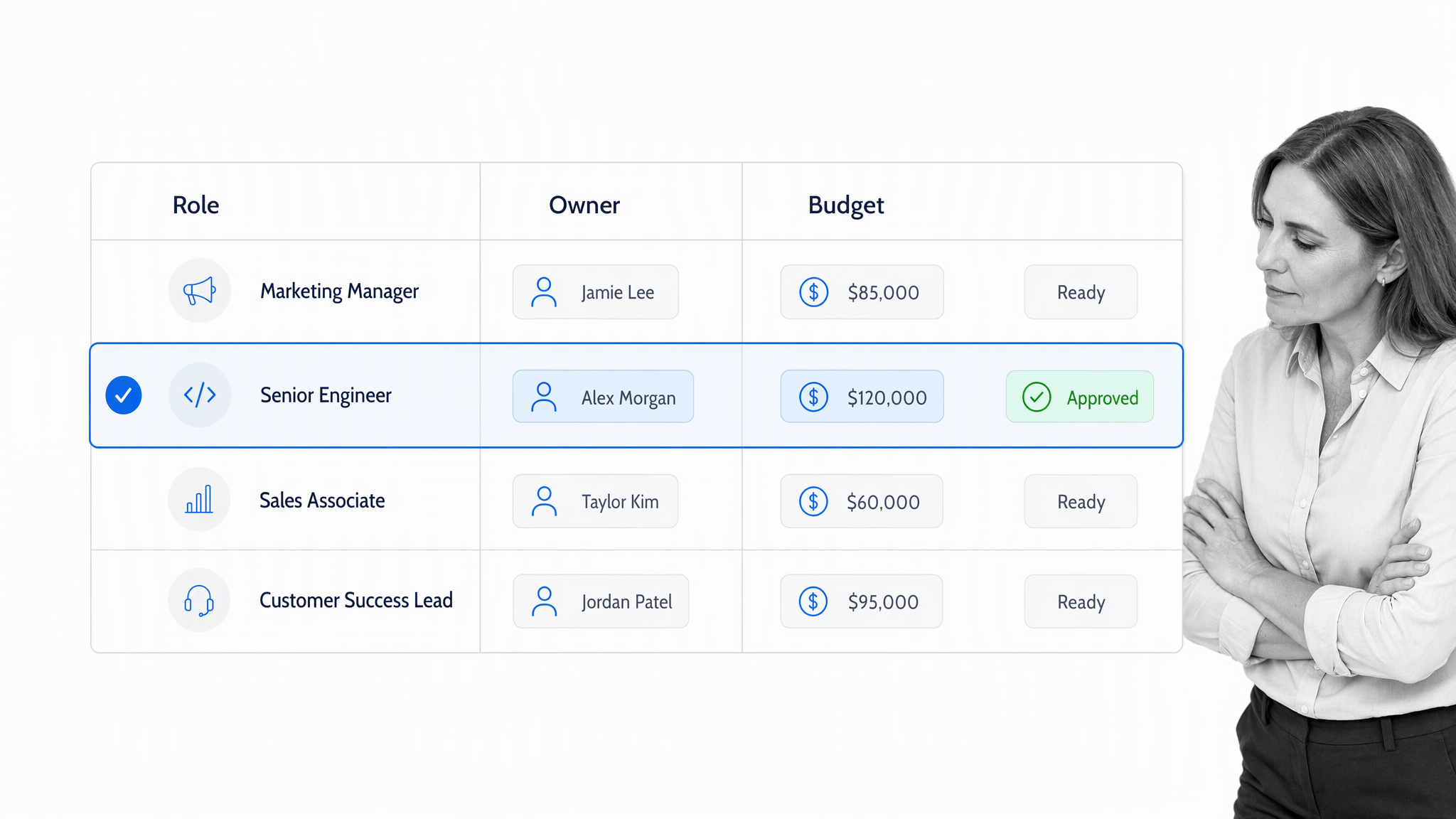
Increasing headcount creates short-term costs for advertising, assessment, and sourcing, plus long-term commitments such as salary, benefits, equipment, training, and management time. Recruiting should not begin because a request appeared in a chat channel. Each role needs a business reason, an owner, a compensation range, and an approved budget.
A centralized approval process makes those decisions visible. Everyone can see which positions have priority, which teams may hire, and where a request is waiting. The result is less wasted sourcing work and a cleaner handoff from workforce planning to recruitment.
This transparency matters because the short-term investment includes advertising, networking, and assessing candidates, while the long-term investment includes salary, insurance contributions, training, and the incidentals involved throughout a person’s time with the company. Without an authorized request, an acquisition team can spend time on prospects the company cannot actually afford. Clear budgetary constraints keep the team focused on roles that are actually needed and approved.
Don’t skimp on team training
“We can miss out on hiring someone amazing because that person is not properly trained. So the training is also a huge part. It has to be uniform, and it also has to be something that we’re strict on.”
Interviewing is a skill, not an instinct. Give every interviewer a defined role, a shared scorecard, job-relevant questions, and guidance on legal and ethical boundaries. Calibration sessions help the panel apply the same evidence standard instead of rewarding confidence, familiarity, or unchecked bias.
Training also protects the candidate experience. Applicants notice when interviewers repeat questions, arrive unprepared, or offer conflicting descriptions of the role. A consistent process signals that the company respects their time and can operate with discipline.
The first rule of Startup Club
The first rule is that there is no universal startup playbook. Funding, growth rate, market, and team design all affect when a company should hire a specialist or build a new department. The useful question is not whether another company hired a particular role at the same stage. It is which constraint the new hire must remove and what evidence will show that the timing is right.
Every startup is completely unique. Ask an executive when to scale or create a department and the answer will usually begin with “it depends.” Despite those different trajectories, the team still needs a deliberate way to acquire talent. Define the business advantage of the role, the skills that are missing, and what the company can offer before entering a competitive market.
Know your customer and appeal to the person
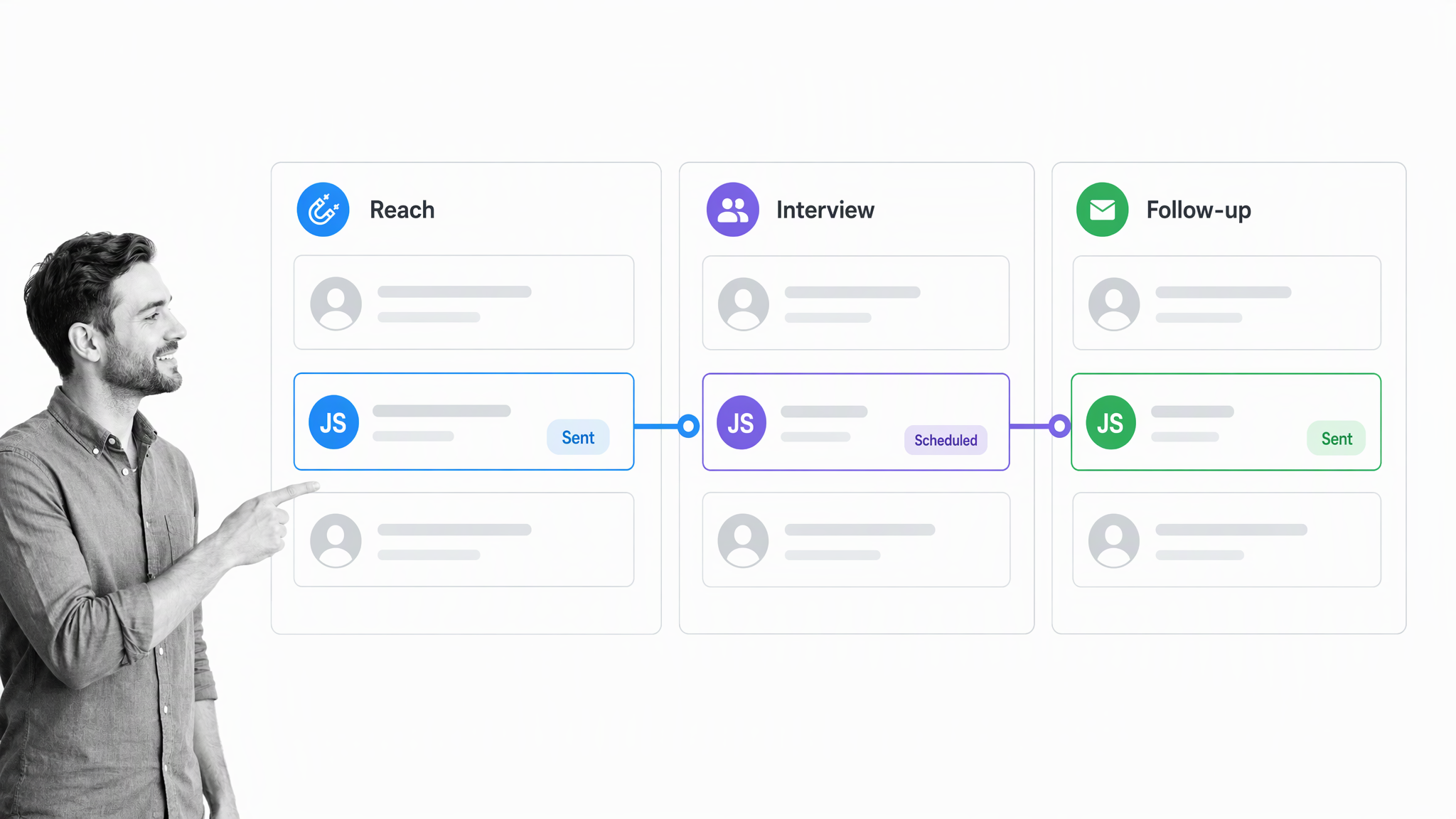
“Every pipeline should always have options so that you can choose the best step forward for that role. The last thing we want is to have someone join and then not be excited and then just leave three months later.”
Leadership roles can be especially difficult for a startup. Experienced candidates may already have strong compensation and several offers. A growing company cannot win every conversation on salary or brand recognition, but it can be candid about the problem, the scope of the role, and the opportunity to build.
People join startups for different reasons. Some want autonomy; others want to shape a team, solve an unfamiliar problem, or see the direct effect of their work. Learn what matters to the individual and explain the role honestly. Interest can open the conversation, but clear expectations are what help the right person stay.
Every candidate has their own network
“We’re the first face that [candidates] see whenever they interact with the brand. So it’s important to remember that we’re in the people business, not herding cattle.”
A candidate’s experience begins with the first message and continues through scheduling, interviews, decisions, and follow-up. Fast growth can make applications feel like units in a queue, but every applicant has colleagues, friends, and professional contacts who may hear about the experience.
Someone who is not right for one role may fit a later opening, refer another candidate, become a customer, or collaborate with the company in the future. Set communication expectations, send updates when timelines change, and close the loop respectfully. Don’t ghost people.
Each applicant has a network of friends, family, colleagues, and professional contacts who can refer people toward the company or away from it. A positive experience can lead to a later hire, a conference or marketing opportunity, or a useful relationship with another SaaS company. A bad experience also travels, especially when multiple applicants encounter the same problem.
The best advice you’ll ever get
“Don’t say no to new tools.”
Experience can create shortcuts, but it can also make a team defend a familiar process long after the work has changed. Explore tools that remove repetitive administration, improve accuracy, or make decisions easier to audit. Adopt them because they solve a defined problem, not because they are new.
A recruiter may arrive thinking, “This is how I’ve always done it.” The old method may work, but a better one could save half an hour of admin work and reduce manual mistakes. Be open to an ATS, CRM software, meeting tools, and automation when the benefit is clear. New tools should improve the process rather than add another disconnected request or system.
“You can’t be the expert in everything.”
Hiring practices, regulations, candidate expectations, and technology continue to evolve. Build a habit of learning from specialists, peers, candidates, and the evidence in your own funnel. That openness is more useful than pretending one recruiting model will work forever.
The Process Street process
“Using [Process Street workflows] speeds up the process massively. It’s less paper trail. It’s less chasing. Each individual person that’s required to make an evaluation of the request gets a notification, and if they don’t react to it, it’s as simple as sending that link over.”
Process Street gives teams a single Compliance Operations Platform with Docs and Ops capability areas plus built-in AI. A hiring team can document its policy, run a role-request workflow, collect the information required for review, route approvals, and keep an audit trail in one product.
The manager starts a request with the title, level, business need, compensation range, target start date, and budget owner. Conditional logic can show the right questions for the role, while assignments and approvals direct each decision to the accountable person. The recruiter begins sourcing only after the required reviewers have approved the request.
That dedicated workflow replaces a bunch of disconnected requests with one review path. Each department can provide the details the recruiting team needs, the responsible people receive notifications, and everyone can see accountability for the next decision. Process documentation keeps the operating standard visible, while automation handles routine routing and reminders.
Process Street has direct, universal integrations to 5,000+ systems. Need a new one? An AI agent builds it on the fly. Those connections can pass approved role data to the recruiting stack and return status updates without making a chat message or spreadsheet the system of record.
Once a candidate accepts, the same operating discipline should continue into a structured onboarding experience. Clear ownership, due dates, and handoffs help the new hire receive equipment, access, training, and role expectations on time.
Scaling talent acquisition is not about adding bureaucracy. It is about making important decisions visible, repeatable, and fair. With approved roles, trained interviewers, thoughtful automation, and consistent candidate communication, a SaaS startup can grow without losing the judgment and care that made the early team work.
The post How Talent Acquisition Changes as You Scale a SaaS Startup first appeared on Process Street | Compliance Operations Platform.


0 Commentaires