Sales onboarding is the structured process that turns a newly hired salesperson into a confident, productive representative. It combines product knowledge, sales skills, supervised practice, manager coaching, and clear readiness checks so every new hire understands what to do and can prove they are ready to do it.
A strong sales onboarding process protects retention because it replaces early ambiguity with support, standards, and visible progress. The 11 templates below cover the full journey, from hiring and background checks to training, performance reviews, development, and sales management.
Use the links below to move to the part of the onboarding process you need. For a broader set of employee onboarding workflows, explore these onboarding templates.
- Sales Onboarding Checklist
- Diversity Hiring Process
- Ari Meisel’s How to Streamline the Hiring Process Guide
- Code of Conduct Policy Adherence Process
- Employee Background Check
- Employee Developmental Plan Template
- Employee Satisfaction Survey
- Performance Management
- Performance Review Template
- Training Plan Template
- Sales Manager Job Description Template
What is sales onboarding?
Sales onboarding is the part of employee onboarding devoted to preparing a new sales representative for the work they will perform. It begins before the first day with role clarity, access, a schedule, and a named point of contact. It then moves through company context, product and market knowledge, sales methodology, tools, practice, feedback, and certification.
Onboarding is the process of introducing a new employee into an organization. It is about familiarizing the employee with company-specific customs, values, and culture while providing effective training for them to succeed in their role. In this article, the context is specific: onboarding new sales reps into your team and helping them become the next generation of sales leaders.
Hiring someone with a strong résumé does not remove the need for onboarding. Recruitment answers whether a candidate has the potential to succeed. Onboarding creates the conditions in which that potential can become repeatable performance inside your company. A salesperson may understand discovery or negotiation in general, but they still need to learn your buyers, positioning, qualification rules, handoffs, evidence requirements, and standards for a good customer conversation.
The most useful sales onboarding programs treat the ramp as a sequence of observable capabilities rather than a pile of content. A new representative should know what good looks like at each stage, who can help, what practice is required, and what evidence demonstrates readiness. That often produces a 30-60-90-day structure:
- Foundation: Understand the company, market, ideal customer, product, policies, and sales process.
- Practice: Shadow calls, complete roleplays, handle common objections, use the CRM correctly, and receive coaching.
- Readiness: Demonstrate the required behaviors in realistic scenarios and earn manager approval for greater independence.
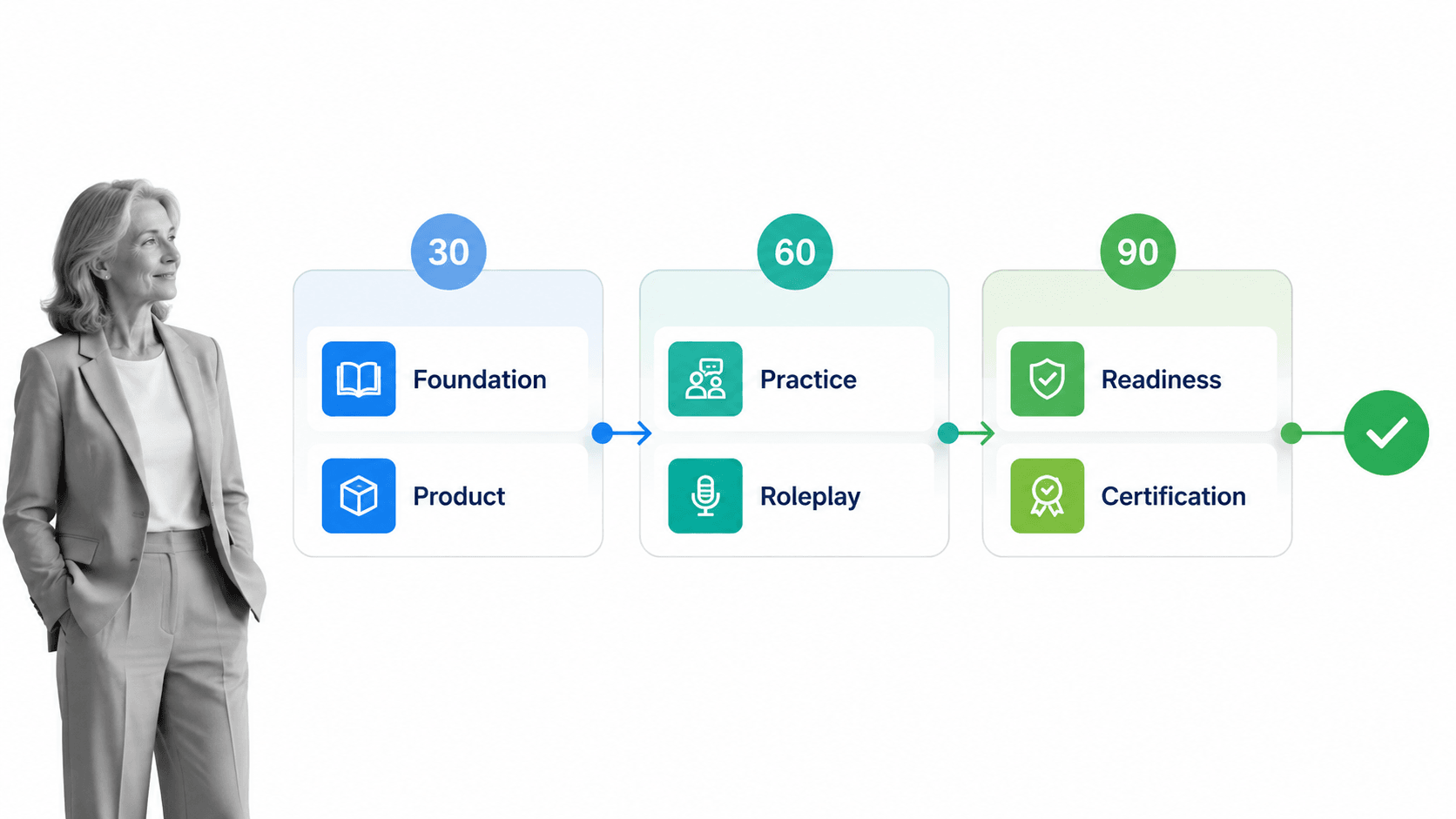
This structure makes onboarding easier to manage because it separates exposure from capability. Watching a product demonstration is exposure. Delivering a clear product explanation in a roleplay is capability. Reading the qualification framework is exposure. Applying it to a live opportunity and documenting the evidence is capability.
The benefits of an effective sales onboarding process
Sales onboarding is an investment in the conditions that help people stay and succeed. A plant may arrive healthy, but it still needs the right soil, light, water, and care. A new salesperson is similar: raw ability matters, yet the environment around that ability determines whether it develops or withers.
You can hire the right candidate, with the right skills and experience, but without an effective employee onboarding process, that talent can fade with neglect. Think of newly hired talent as a plant. Failing to provide a plant’s needs will cause it to shrivel away from flourishing potential. Talent needs to be nurtured to bloom. Carefully planned and tailored employee onboarding processes provide that care by combining expectations, resources, practice, support, and feedback.
The first benefit is clarity. New hires face an unusually dense set of information: product capabilities, buyer needs, competitors, sales stages, messaging, systems, policies, internal relationships, and performance expectations. A sequenced onboarding plan tells them what matters now, what comes later, and where to find the current source of truth. That reduces the temptation to rely on outdated files, copied messages, or whichever colleague happens to be available.
The second benefit is manager consistency. Without a shared onboarding process, the quality of a new representative’s ramp depends heavily on the habits and available time of an individual manager. A controlled workflow creates the same core assignments, practice, evidence, and review points for every new hire while leaving room for coaching based on the person’s role and experience.
The third benefit is earlier feedback. Waiting for a missed target to reveal a knowledge gap is expensive. Roleplays, call reviews, written exercises, and manager checkpoints surface problems while they are still safe to correct. If a representative can explain the product but struggles to uncover business impact, the manager can coach discovery before the problem reaches a live pipeline.
The fourth benefit is measurable readiness. Completion alone is a weak signal. Strong sales onboarding metrics connect activity to outcomes. Useful onboarding measures include time to productivity, retention, engagement, and performance. For sales roles, that can translate into time to first qualified opportunity, roleplay scores, call-quality evidence, CRM hygiene, stage progression, manager certification, and early pipeline quality.
These measures should guide decisions, not punish new hires for normal learning. A readiness dashboard is most useful when it helps managers answer practical questions: Who needs more product practice? Which objection appears repeatedly? Where is a handoff breaking? Which training task predicts a good live call? The goal is to direct support toward the next capability.
Finally, good onboarding strengthens the relationship between the representative and the organization. It demonstrates that expectations are not hidden and that development is a shared responsibility. People know how decisions are made, how their work contributes, and where to raise a concern. That sense of structure and belonging is a foundation for employee retention.
Incorporating the sales skills required
Sales skills should be taught as observable behaviors inside realistic work, not as abstract traits. The exact competency model will vary by role, segment, and sales motion, but most onboarding programs need to cover the following areas:
When it comes to incorporating the sales skills required, think about what skills are needed in your team and for your unique sales position. Some sales reps have a natural ability to build rapport with a prospect on the phone. For others, this is something that has to be taught. Have new hires listen to effective sales calls as part of their training, then give them a safe opportunity to practice the behavior themselves.
- Product and market fluency: Explain the problem, value, boundaries, and fit of the product without reciting a script.
- Research and preparation: Form a useful point of view about the account, people, context, and likely needs before a conversation.
- Discovery: Ask focused questions, listen actively, clarify impact, and distinguish symptoms from the underlying problem.
- Communication: Adapt detail and language to the audience while remaining accurate, concise, and respectful.
- Qualification: Apply the company’s criteria consistently and record the evidence behind a stage or forecast decision.
- Demonstration and storytelling: Connect capabilities to the buyer’s situation instead of presenting a generic feature tour.
- Objection handling: Treat concerns as information, test understanding, and respond without becoming defensive or rushing to a close.
- Negotiation: Protect value, understand constraints, and follow approval rules for pricing or contractual commitments.
- System discipline: Keep opportunity records, follow-up tasks, evidence, and handoffs complete enough for the wider team to rely on them.
- Self-reflection and coaching: Review calls, identify one improvement, apply feedback, and demonstrate progress in the next practice cycle.
Product knowledge matters because sales reps need to understand exactly what they are selling. Product training should give them the knowledge to explain fit as well as limitations. Strategic prospecting skills matter because prospecting is the first step of a sales process, where potential customers, or prospects, are identified. Provide sales reps with the right prospecting knowledge and skills, then evaluate how they apply that preparation to a specific account.
Active listening involves listening with strict focus and asking intelligent follow-up questions. Qualification questioning extends that discipline: the right questions need to be asked to find out what a prospect needs, who is involved, why the problem matters, and what could prevent action. Time management is equally important. Train representatives to sort through leads, prioritize the most promising work, and protect time for preparation and follow-up.
Some sales reps will already have adequate listening skills. For others, these skills may need to be taught. Be sure training covers the skill if it is absent. Sales reps should also learn how to create a buyer-seller agreement. These verbal agreements at the beginning of the sales process help the prospect feel comfortable and understand what is coming next.
Demo skills combine product understanding with customer context. A demo should show how the product or service provides a solution to a prospect’s need. It should not throw in too many features at once, overwhelming and confusing the prospect. Post-sale relationship management belongs in onboarding too. Appreciation, courtesy, and reliability continue after a sale has been made, especially when a representative hands work to implementation or customer success.
A practical training plan links each competency to an activity and a readiness signal. Product fluency might require a teach-back. Discovery might require two recorded roleplays scored against a rubric. Qualification might require a manager to review the representative’s evidence for a sample opportunity. This gives both the learner and the manager a fairer basis for deciding what comes next.
Built-in AI can support preparation and coaching by summarizing approved material, suggesting practice questions, or identifying a potential gap in a call review. It should remain bounded by trusted content and human judgment. The manager still decides whether the evidence is sufficient and whether a representative is ready for greater responsibility.
Case studies: Companies with the best onboarding programs
Sales onboarding does not need to look identical across companies. The most useful examples reveal recurring design principles: create understanding, connect work to meaning, combine training with participation, and make culture visible through action.
Quora onboarding
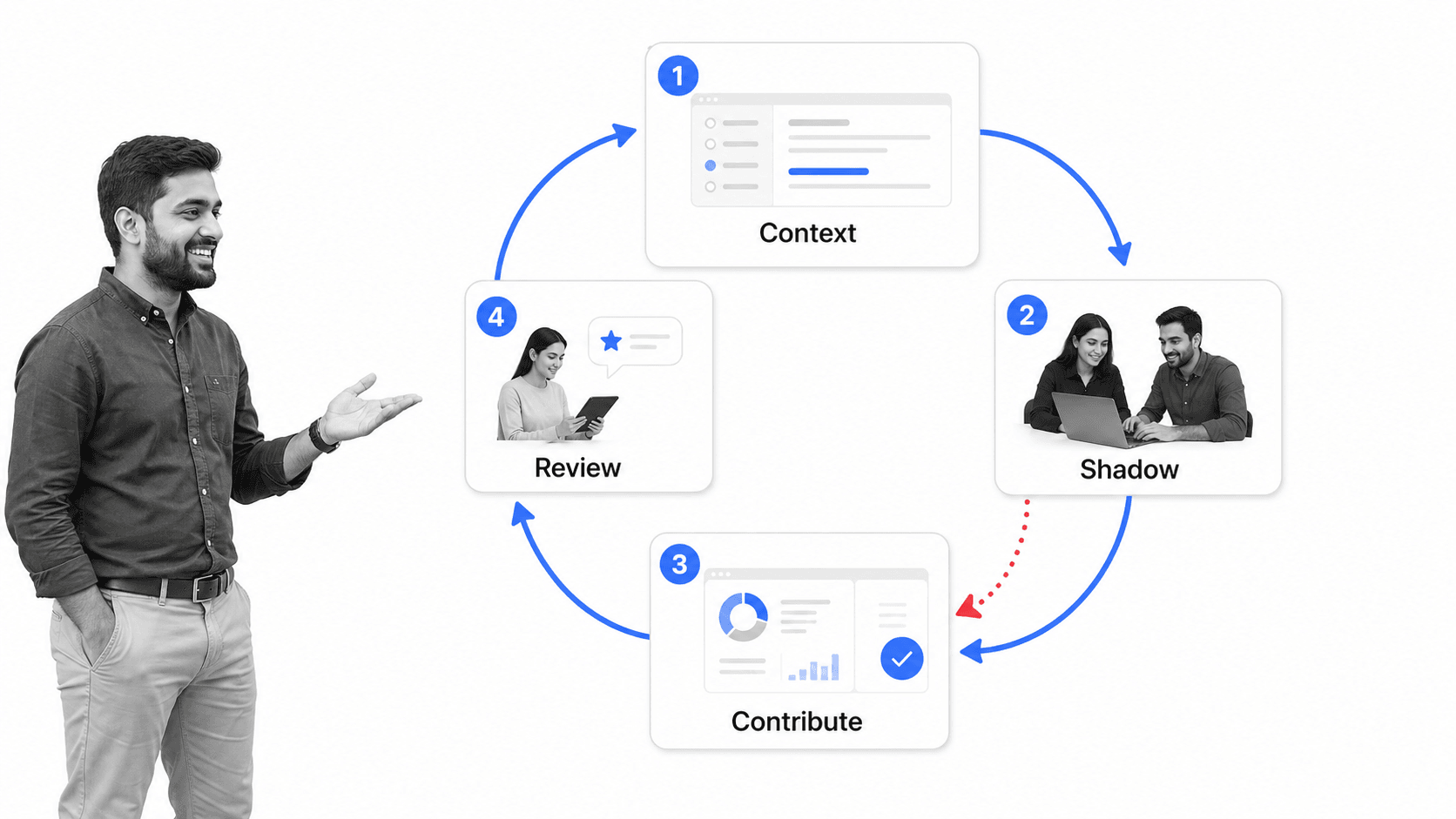
Quora has described an onboarding approach in which a new employee is paired with a mentor and given meaningful work early. The principle is valuable for sales teams: provide context, let the new hire observe, then create a bounded contribution that matters. A representative might research an account, prepare discovery questions, or own one part of a roleplay before taking on a full customer conversation.
New hires are allocated a personal mentor and are considered a priority. Teaching is placed on a pedestal, with onboarding talks used to explain fundamentals for success, key concepts, and the tools people need. The program also gives meaning to the learning by connecting it to useful work. Quora’s approach treats onboarding as a way to steer new employees toward what the team believes matters most.
Early contribution should not mean throwing someone into the deep end. The mentor creates a feedback loop around the work. The new hire can see how experienced colleagues think, attempt the task, receive a specific review, and improve. That makes the first weeks participatory without sacrificing customer experience.
Zappos culture onboarding
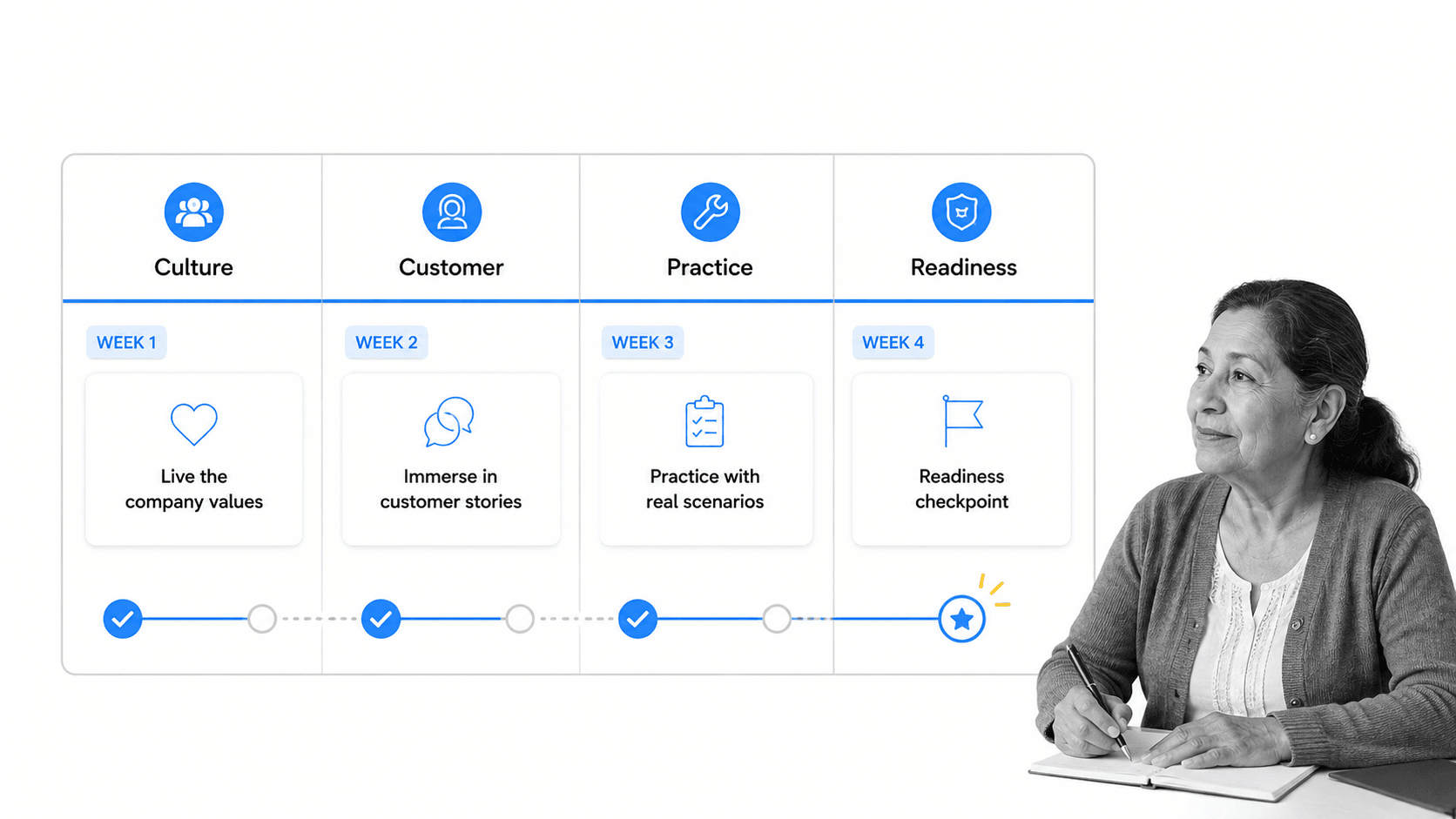
Zappos is widely associated with a culture-led onboarding model. New employees historically participated in a shared training experience that emphasized company values and customer service before settling fully into their specific roles. For a sales organization, the transferable lesson is that culture should appear in the activities people perform, not only in a welcome presentation.
The historical program lasted four weeks and placed a strong emphasis on maintaining company culture, creating bonds, and supporting communication. New hires were trained on practices that formed an important part of Zappos’ identity. Core values were delivered during training, and the history behind those values was explained to create a shared understanding rather than a list to memorize.
A culture-and-customer immersion period can include listening to support calls, reviewing customer stories, shadowing cross-functional partners, and practicing how company values affect a difficult decision. New representatives then understand not just the message they are expected to deliver, but the operating behavior behind that message.
Google manager onboarding
Google tested a simple intervention that focused on the manager. Before a new hire started, the manager received a short checklist covering practical preparation such as defining the role, arranging a buddy, scheduling early conversations, preparing resources, and offering a personal welcome. The result reported in the onboarding process analysis was that new hires reached effectiveness 25% faster when managers completed the checklist.
One day before the new hire joined, the manager was sent an email with five small tasks needing attention. Those tasks included helping the new hire build a social network and matching the person with a peer buddy. Google also used a hands-on educational approach in which new hires could dive into tasks and learn as they went, with culture and values reinforced through the working environment.
The lesson is not that every onboarding problem can be solved with five tasks. It is that manager preparation matters before the employee arrives. Sales managers should enter day one with a clear ramp, protected coaching time, assigned partners, working access, and an initial practice schedule. The representative can then spend energy learning rather than chasing logistics.
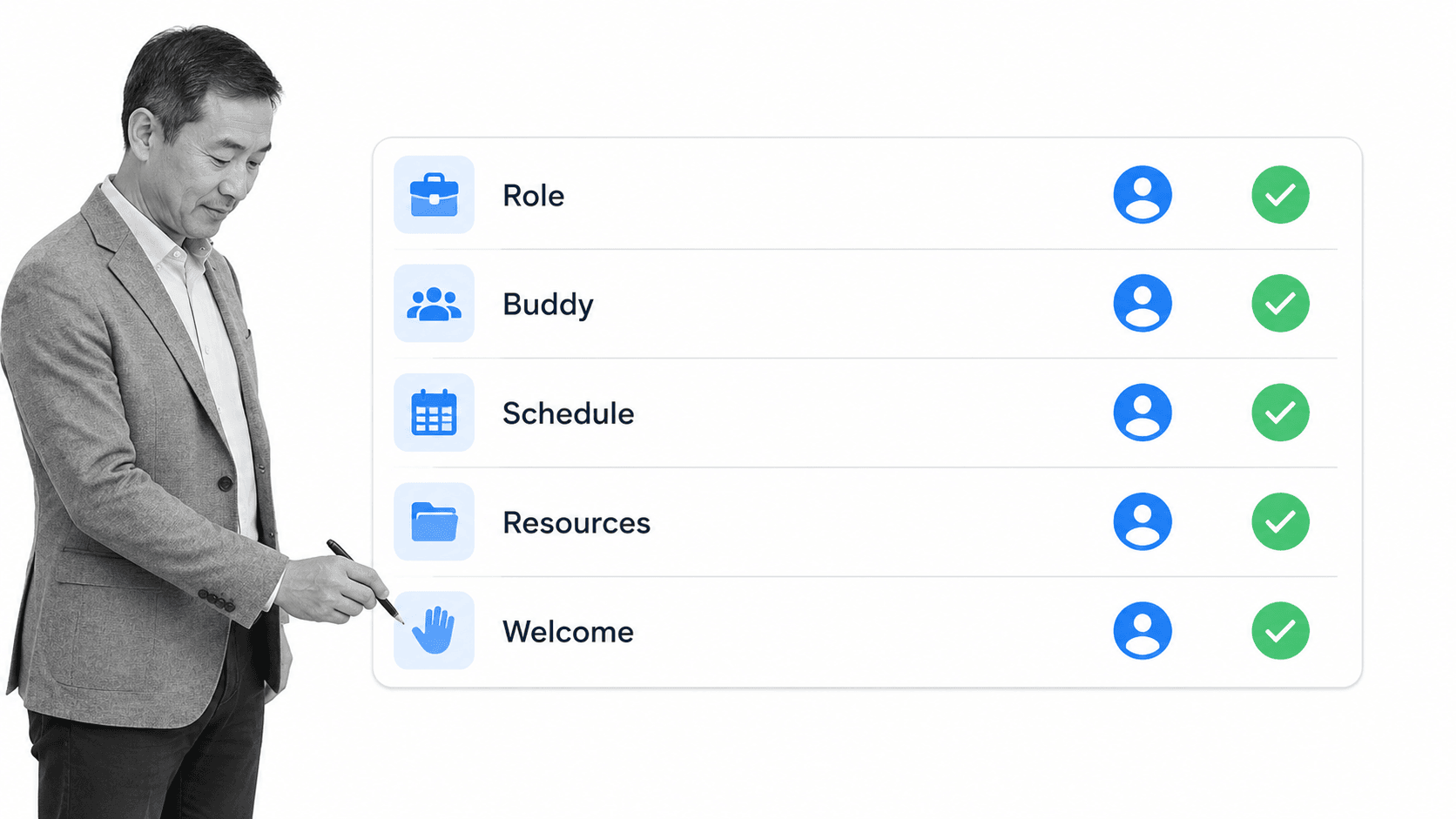
Across these examples, four ideas repeat: give people enough context to understand the organization, connect their role to meaningful outcomes, blend instruction with supervised participation, and express culture through the way work is done. Those ideas can be implemented with the templates below.
Use Process Street for your sales onboarding processes (& more)
The templates in this section cover the operational arc around a sales hire. Start with the Sales Onboarding Checklist, then use the supporting hiring, policy, development, survey, performance, training, and management templates where they fit your process. Each template should be adapted to the role, legal requirements, systems, and approval structure of your organization.
Sales Onboarding Checklist
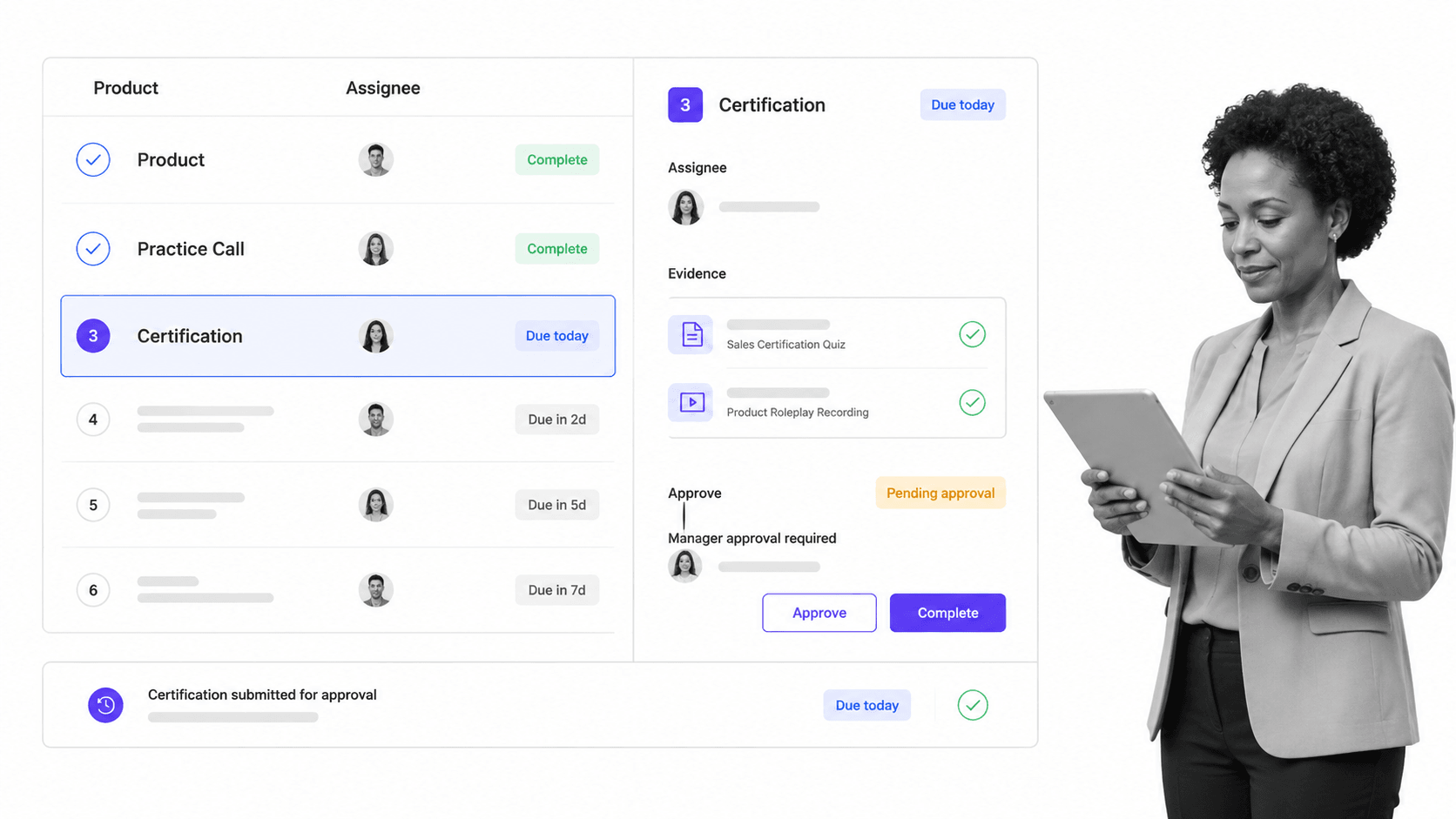
The Sales Onboarding Checklist provides the core structure for welcoming a new sales representative, supplying essential information, assigning training, and checking progress. Use it as the central run for the ramp, then connect specialized templates for background checks, development, performance reviews, or role-specific training.
Open the Sales Onboarding Checklist.
Diversity Hiring Process
Sales onboarding begins with a hiring process that gives qualified candidates a consistent opportunity to demonstrate their capabilities. This workflow helps a recruiting team define requirements, plan sourcing, structure evaluation, and document decisions.
Having a diverse sales team brings forward a wealth of skills, talent, and experience. Consider the team as a unit: diversity can increase the range of perspectives available when the group faces a difficult problem. Run the Diversity Hiring Process whenever the company is looking for a new hire, and use the documented criteria and decision record to support a fairer, more consistent evaluation.
Ari Meisel’s How to Streamline the Hiring Process Guide
This hiring workflow moves from role definition and candidate sourcing through screening, interviews, evaluation, and offer. It is useful when the sales team needs a repeatable handoff from recruiting into onboarding.
After setting up the required automation and ownership, the guide can be run whenever the organization needs to hire a new candidate for the sales team. The important outcome is not speed alone. A streamlined hiring process should remove avoidable coordination work while keeping the evaluation, approval, candidate communication, and onboarding handoff visible.
Code of Conduct Policy Adherence Process
A code of conduct should be more than a document sent on the first day. Use this process to distribute the policy, confirm understanding, capture acknowledgement, and route questions or exceptions to the right owner.
Without guidelines to refer to, sales employees cannot know with confidence what conduct is expected from them. Launch the Code of Conduct Policy Adherence Process during onboarding so the policy, acknowledgement, questions, and follow-up are part of the employee’s recorded path rather than an untracked attachment.
Employee Background Check
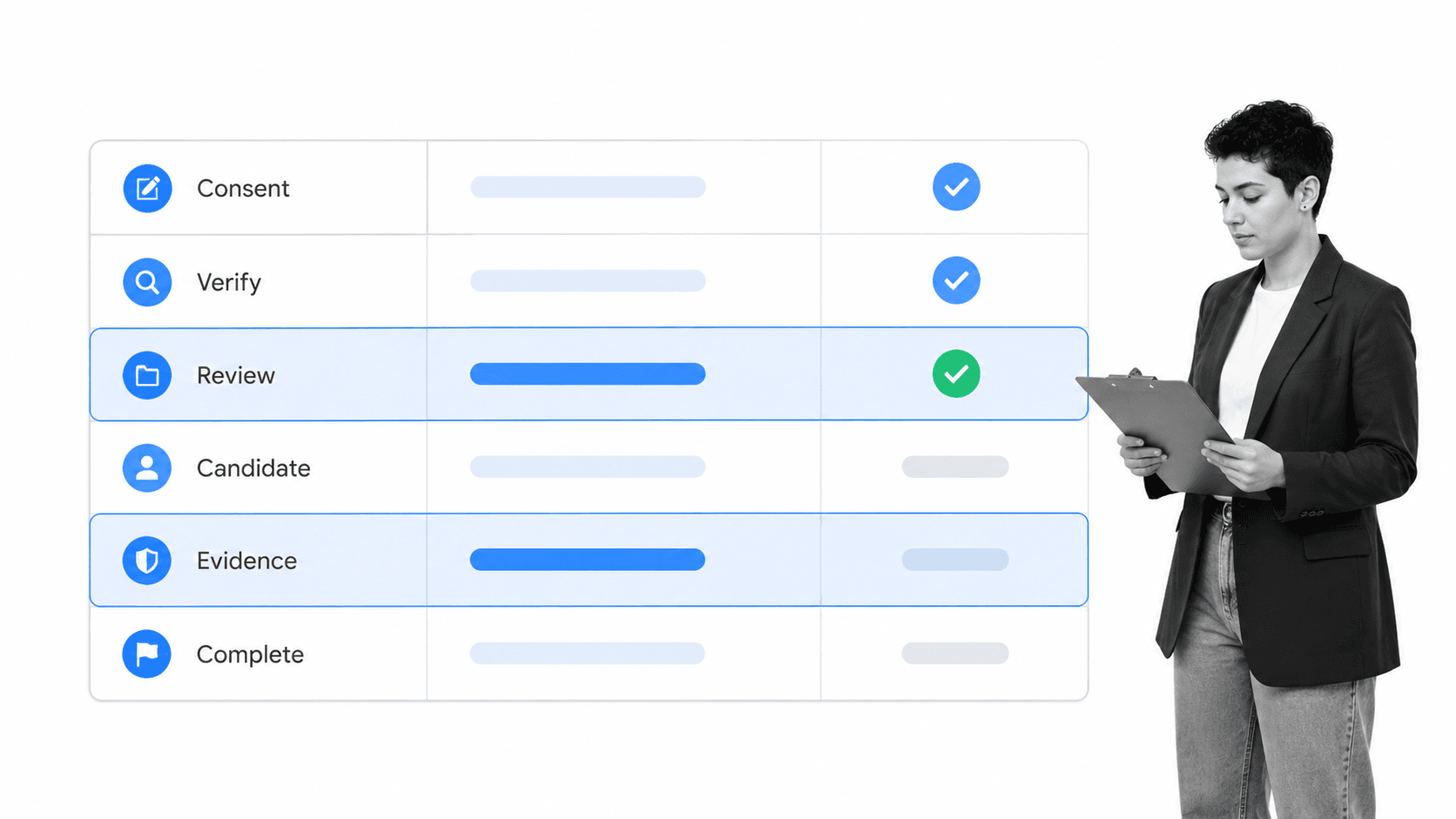
Background checks require clear consent, accurate candidate data, appropriate verification, evidence handling, and a documented decision path. The current Employee Background Check template provides a controlled starting point. Adapt it to applicable law and your organization’s policies.
When hiring new sales reps, exercise caution and due diligence without treating the check as a casual search. Run the Employee Background Check process for new sales staff to coordinate consent and verification, limit access to sensitive information, and make the final decision traceable.
Employee Developmental Plan Template
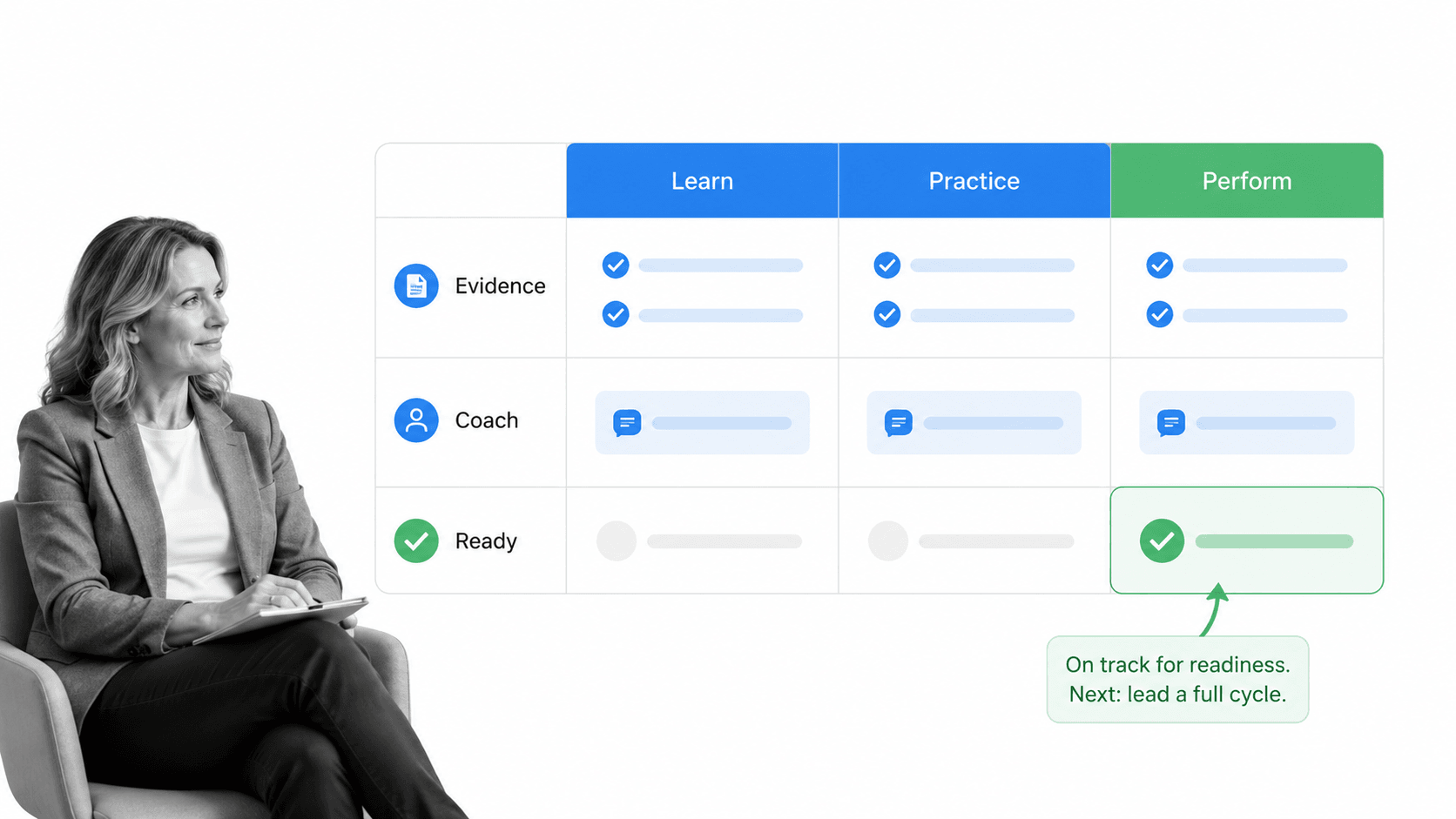
Onboarding should lead into an ongoing development plan. Use this template to define development goals, activities, owners, target dates, evidence, and review points after the initial ramp is complete.
To attract and maintain newly hired sales reps, keep development visible after the first ramp. This includes providing employees with opportunities to develop while making sure the company is achieving its goals. Each step in the Employee Developmental Plan Template can connect an individual goal to a practice activity, manager support, and evidence of progress.
Employee Satisfaction Survey
Surveying new hires can reveal whether the program provides enough role clarity, support, manager access, useful training, and connection to the wider team. Ask focused questions, protect confidentiality where appropriate, and assign improvements rather than collecting feedback without action.
Employee satisfaction is about evaluating employee engagement within a company and understanding how employees feel about coming to work. The Employee Satisfaction Survey can be incorporated into the sales onboarding process to highlight key concerns early. Compare responses by onboarding stage, look for patterns, and assign an owner to improvements.
Performance management
Performance management during onboarding should focus on ramp milestones and coaching. The Performance Management template collection includes workflows that can support goal setting, feedback, improvement, and recognition. Choose the process that matches the outcome you need rather than treating the collection as a single template.
Employee performance management establishes a shared workforce understanding about what is to be achieved. It aligns organizational objectives with agreed measures, skills, competency requirements, developmental plans, and results delivery. During onboarding, keep those measures appropriate to the ramp so the representative is evaluated on the capabilities and outcomes expected at that stage.
Performance Review Template
This review template helps a manager prepare for a structured conversation, consider evidence, discuss strengths and development needs, and agree on follow-up actions. During a sales ramp, shorten the feedback cycle so the representative can apply coaching quickly.
During the onboarding process, managers need to give sales employees constructive feedback to make sure the work is developing toward the required standard. Use the Performance Review Template for a consistent conversation, but supplement formal reviews with frequent coaching while the new representative is learning.
Training Plan Template
Use the Training Plan Template to define learning objectives, required material, practice activities, responsibilities, and evaluation. A sales training plan should connect each item to the behavior it is meant to improve and the evidence that will show progress.
Use the Training Plan Template to prepare training for new sales hires and make sure they develop the skills necessary to succeed in their role. Include product education, process practice, tools, call observation, roleplay, assessment, feedback, and follow-up rather than relying on a library of material alone.
Sales Manager Job Description Template
Sales managers shape the onboarding experience through preparation, coaching, feedback, and readiness decisions. This job description template helps clarify the responsibilities and capabilities required for the role, including accountability for team development.
Onboarding new sales reps starts with hiring the right talent with the skills, experience, and traits needed for the role. Some skills can be taught during onboarding; other role requirements should be evaluated before the offer. Use the Sales Manager Job Description Template to define a manager role, or adapt it to create a more general job description for other sales roles.
How Process Street supports sales onboarding
Process Street is a Compliance Operations Platform that brings governed process knowledge and controlled execution into one product. Docs provides a place to create and maintain approved sales playbooks, policies, and operating procedures with ownership, review, approval, and version history. Ops turns those instructions into workflows with assignments, due dates, required fields, conditional paths, approvals, integrations, and a record of what happened.
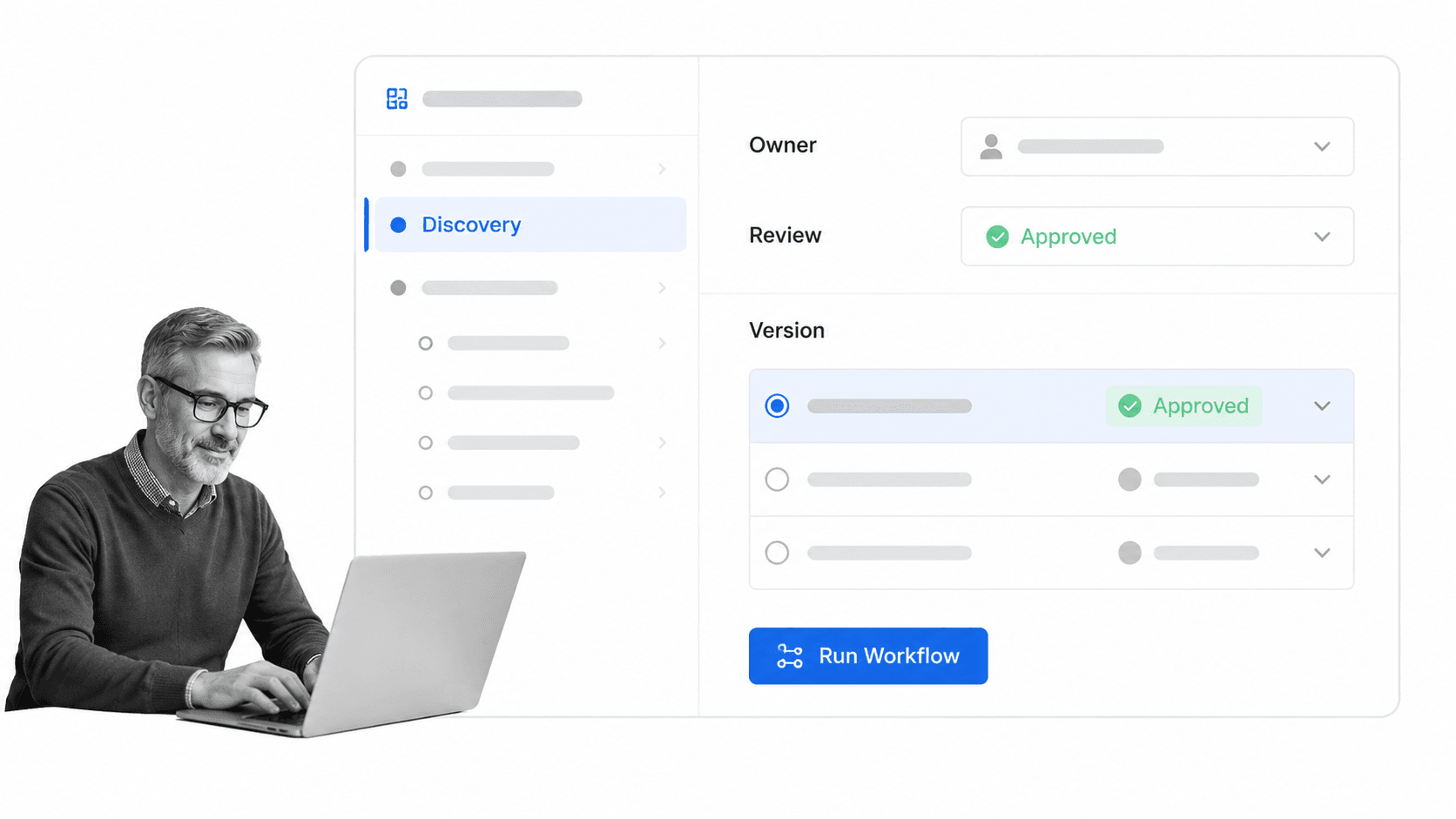
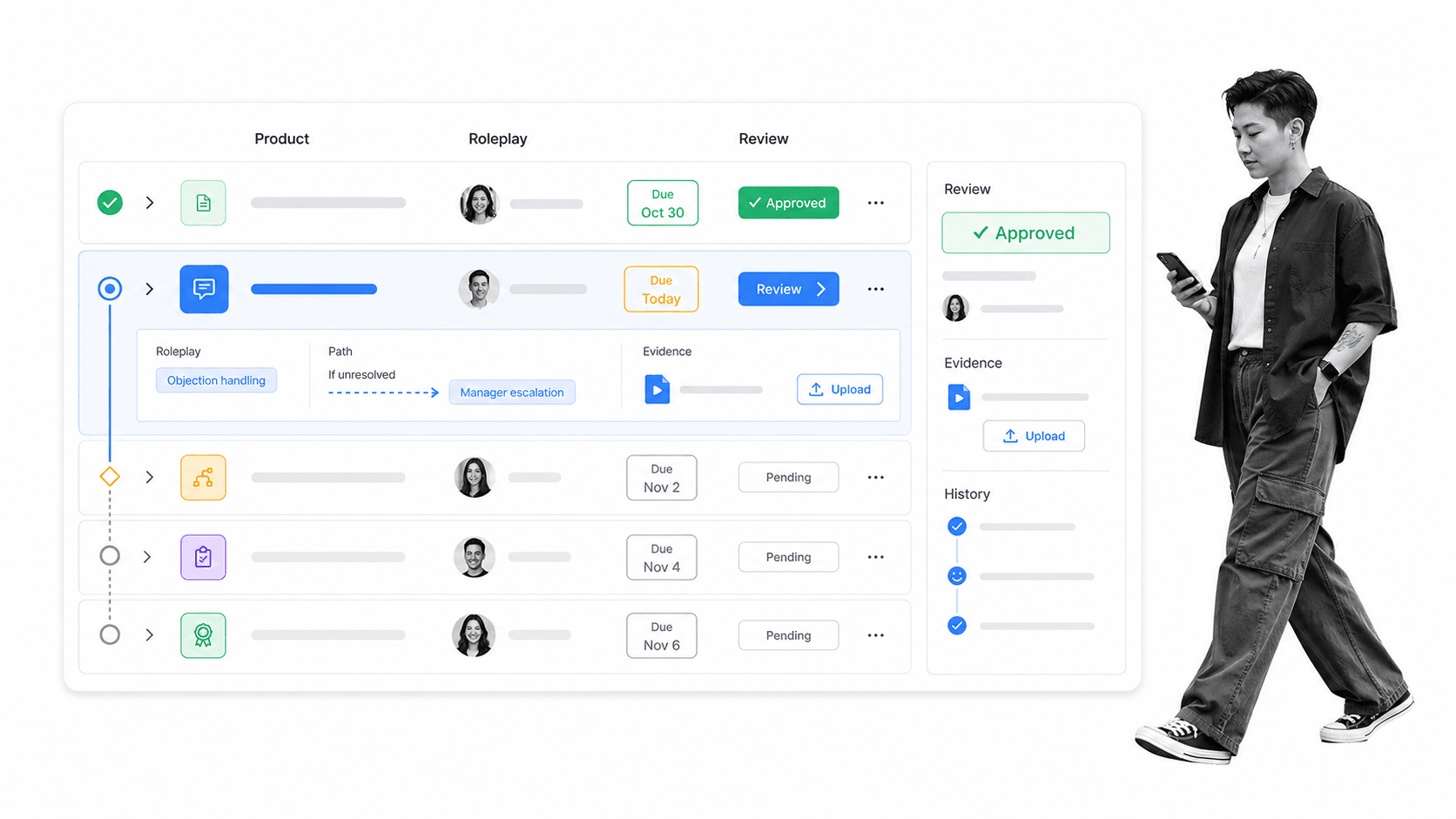
For sales onboarding, that means a playbook can remain the governed source of truth while an onboarding workflow guides each representative through the required work. Assignments make ownership explicit. Required evidence shows that practice occurred. Conditional logic adapts the path to a role or response. Approvals give managers a defined readiness decision instead of an informal assumption.
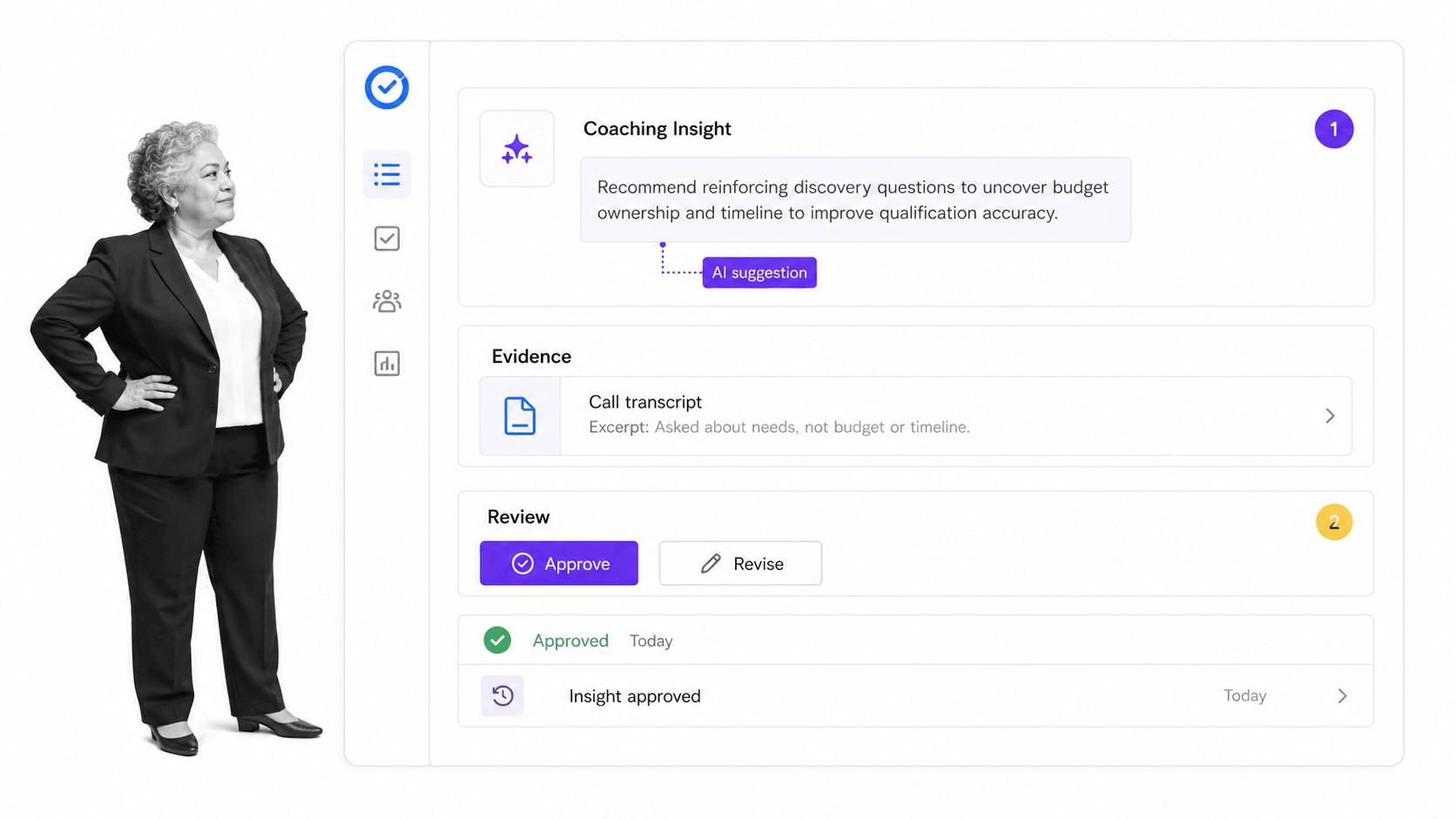
Built-in AI can assist with bounded tasks such as preparing practice questions from approved content, summarizing evidence, or suggesting a coaching focus. Human controls remain part of the operating model: a manager can review the source evidence, revise the suggestion, approve the action, and retain an auditable record of the decision.
The result is a sales onboarding program that connects what the organization says should happen with what actually happens for each new hire. Managers can see progress, intervene when evidence is missing, and improve the system as patterns emerge. New representatives get a clearer path, timely feedback, and a reliable place to find the process they are expected to follow.
Develop a leading sales team with effective sales onboarding processes
Effective sales onboarding is not a single orientation session. It is a managed transition from new hire to trusted contributor. The strongest programs define the capabilities that matter, provide structured learning and practice, involve the manager early, use evidence-based readiness checks, and continue development after the initial ramp.
Start with the Sales Onboarding Checklist, then connect the hiring, conduct, background, development, survey, performance, training, and management workflows that support it. Keep the program focused enough for a new representative to understand, but rigorous enough that customers and colleagues can trust the result.
For related guidance, explore the employee onboarding process and the broader library of onboarding templates. When the process is ready to run, start a 14-day free trial of Process Street.
The post 11 Sales Onboarding Templates For Maximum Employee Retention first appeared on Process Street | Compliance Operations Platform.


0 Commentaires