
Business process analysis is the practice of examining how work currently moves from an input to an output, then using evidence to find delays, unclear ownership, unnecessary steps, and control gaps.
That definition sounds manageable. The subject does not always. Business process management has an image problem: godawful clip art, filing cabinets, and bosses who sincerely talk about wheelhouses, paradigms, and scaffolding. The useful version is much simpler. Look closely at how work gets done, document it, and improve it.
Whether you know it or not, there are processes at work
Every business has its systems, whether they are documented or not. A process is anything that takes an input and produces an output. In a business, it is usually part of a larger system for internal work such as staffing and invoicing, or revenue-producing work such as delivering products and services.
If you use your time, design skills, and email account to run a small graphic design business, there is a process at work even if you never call it one. The idea is to find out what the process is, document it, and then refine it.
For example…
(The two words that make the brain breathe a sigh of relief.)
Suppose you are creating and sending an invoice without automation. You hire four people and need to show them how to invoice the company properly. If you have never analyzed the process, three risks appear:
- You cannot show new staff how to invoice you correctly.
- You cannot show them how to invoice you quickly.
- You cannot be sure you are teaching the best available workflow.
Once the process has been analyzed, you have something concrete to distribute through documentation or a workflow platform. That means you can painlessly scale up that particular business function without relying on somebody remembering every step.
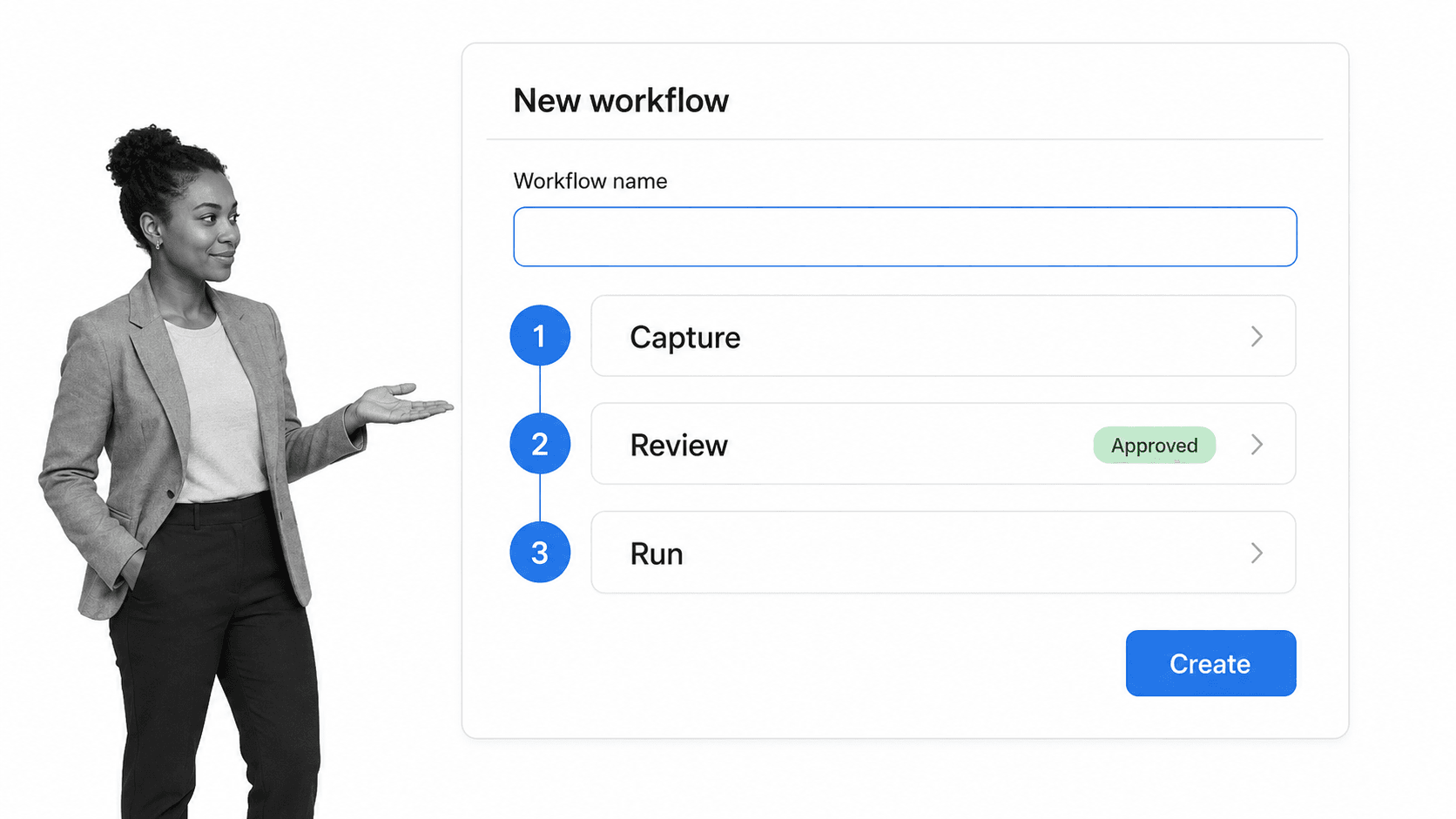
What process analysis looks like on a small scale
For a startup or small business, process analysis does not require a team of consultants carrying folders with clip-art stickers and saying things like co-opetition. It can be done internally by the people closest to the work.
Frontline ownership matters because a process written by someone who never performs the task will miss practical constraints. Boeing checklist specialist Daniel Boorman put the problem plainly: “Bad checklists are vague and imprecise. They are too long; they are hard to use; they are impractical. They are made by desk jockeys with no awareness of the situations in which they are to be deployed.”
Start by observing the task from beginning to end. The way to do this, task by task, is by recording a screencast while following the work from start to end. Then, without doing any documentation beforehand, make a bullet point list of what is happening, leaving out no vital detail. Afterwards, flesh the skeleton out with screenshots, text explanations, exceptions, and handoffs. Without documentation, there is no stable process to analyze.
Process Street is a Compliance Operations Platform for documenting controlled procedures in Docs and running repeatable operational workflows in Ops, with built-in AI supporting the work. Teams can connect instructions, owners, approvals, evidence, and execution in one product instead of splitting the operating record across disconnected files.
How to analyze existing business processes
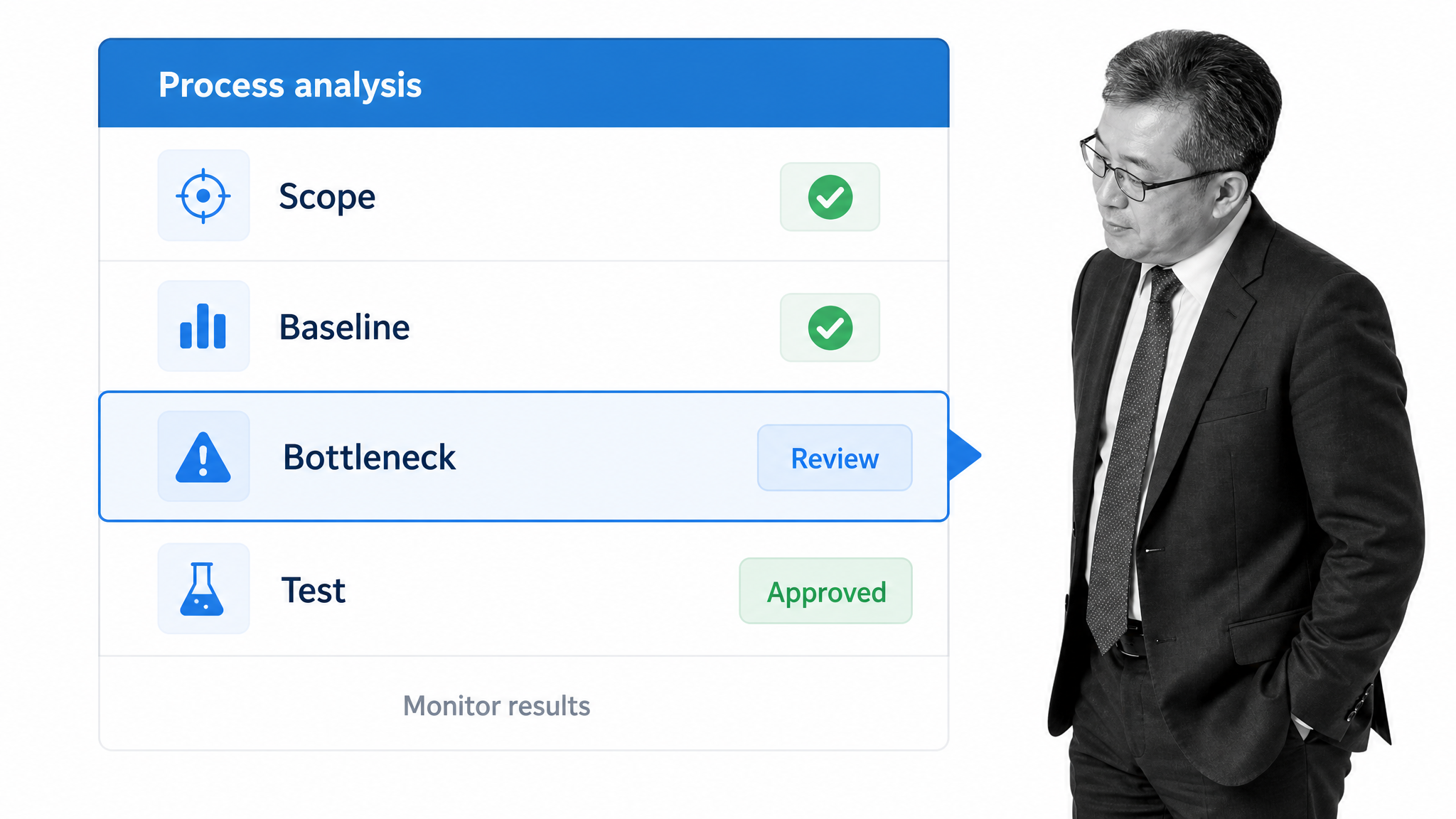
Before making changes, start by looking at what you have already got. A practical business process analysis follows a repeatable sequence that anyone can use:
- Define the scope. Name the trigger, end state, customer, and owner.
- Capture the current state. Observe real work and record steps, decisions, handoffs, tools, and exceptions.
- Establish a baseline. Measure cycle time, wait time, error rate, rework, cost, completion rate, and control failures where relevant.
- Find constraints. Look for duplicate entry, approval queues, unclear ownership, missing information, and steps that add no customer or compliance value.
- Test a change. Make one controlled improvement, assign an owner, and compare the result with the baseline.
- Standardize and monitor. Update the documented process, train the people who use it, and review performance through process analytics.
Useful techniques include direct observation, stakeholder interviews, value-added analysis, root-cause analysis, and process mapping. The right technique depends on the question. A slow approval may need timing data; recurring errors may need a five-whys investigation; confusing handoffs usually become clearer on a map.
The live process optimization template provides a structured starting point:
Apply the questions to core functions and ask other process owners to do the same. A marketing team might analyze blog production, email campaigns, keyword research, content research with BuzzSumo, campaign launches, and performance reporting. One department can contain dozens of recurring processes, each with time and money to save.
Compiling your processes into a map
Business process mapping is another story in its own right, but mapping really is a solid way to analyze a process because it makes the sequence, ownership, decisions, and handoffs visible. Some people think in more visual terms, so if you are one of those people, or if you are working with visual thinkers, mapping will speed things along. It is especially useful when a written procedure hides long waits between short actions.
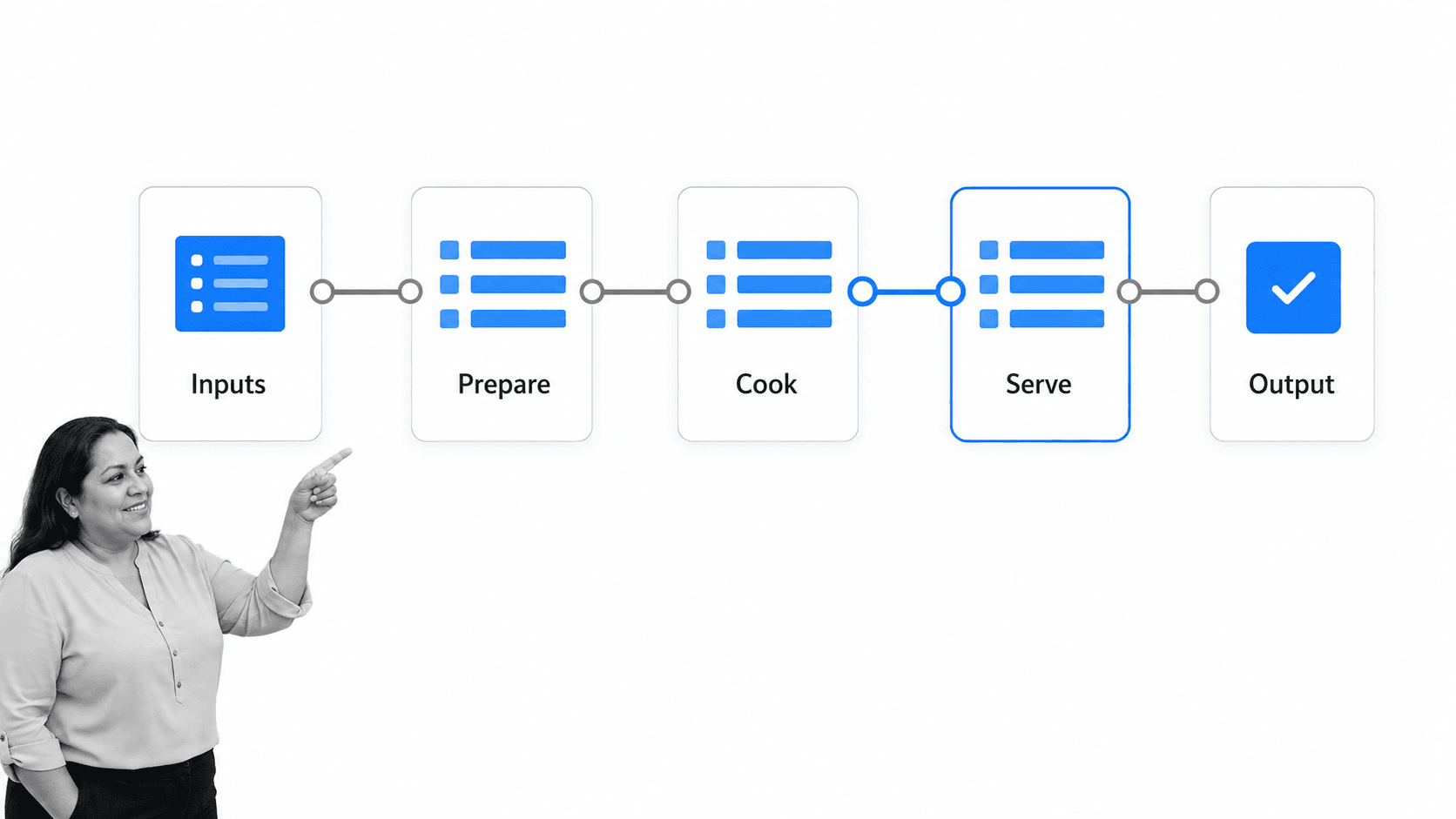
A basic map begins with the trigger and ends with a defined output. Between them, show each activity, decision point, handoff, and feedback loop. Add swimlanes when ownership matters, then annotate the map with baseline metrics so the bottleneck is evidence-based rather than somebody’s favorite theory.
Tools such as diagrams.net make maps easy to redraw and connect. The software matters less than accuracy. Build the map with the people who do the work, validate it against a real case, and keep it attached to the procedure it explains.
In the context of something you do every day, business process mapping is not such a jaw-breaking yawn. It is a shared picture of where work goes, where it gets stuck, and what to change first.
The next steps
Choose one recurring process with a visible problem. Define its boundaries, capture the current state, measure a baseline, and map the handoffs. Then test one change and watch the result. A small verified improvement is more useful than a grand redesign based on assumptions.
Ready to document and run your processes? Explore Process Street and connect controlled documentation with operational execution.
The post Business Process Analysis (Without the Jaw-Breaking Yawn) first appeared on Process Street | Compliance Operations Platform.


0 Commentaires