
Customer Success is no longer a scrappy afterthought bolted onto a SaaS sales team. It is a full discipline with dedicated leadership, purpose-built tooling, and a direct line to revenue. The job is deceptively simple: make sure paying customers actually get the outcome they signed up for. The execution is anything but.
To find out what that execution looks like in practice, we went straight to the source and asked Customer Success leaders at SaaS companies one question: What is your customer success process? Their answers reveal a surprisingly consistent playbook underneath the surface-level variation.
What do Customer Success teams actually do?
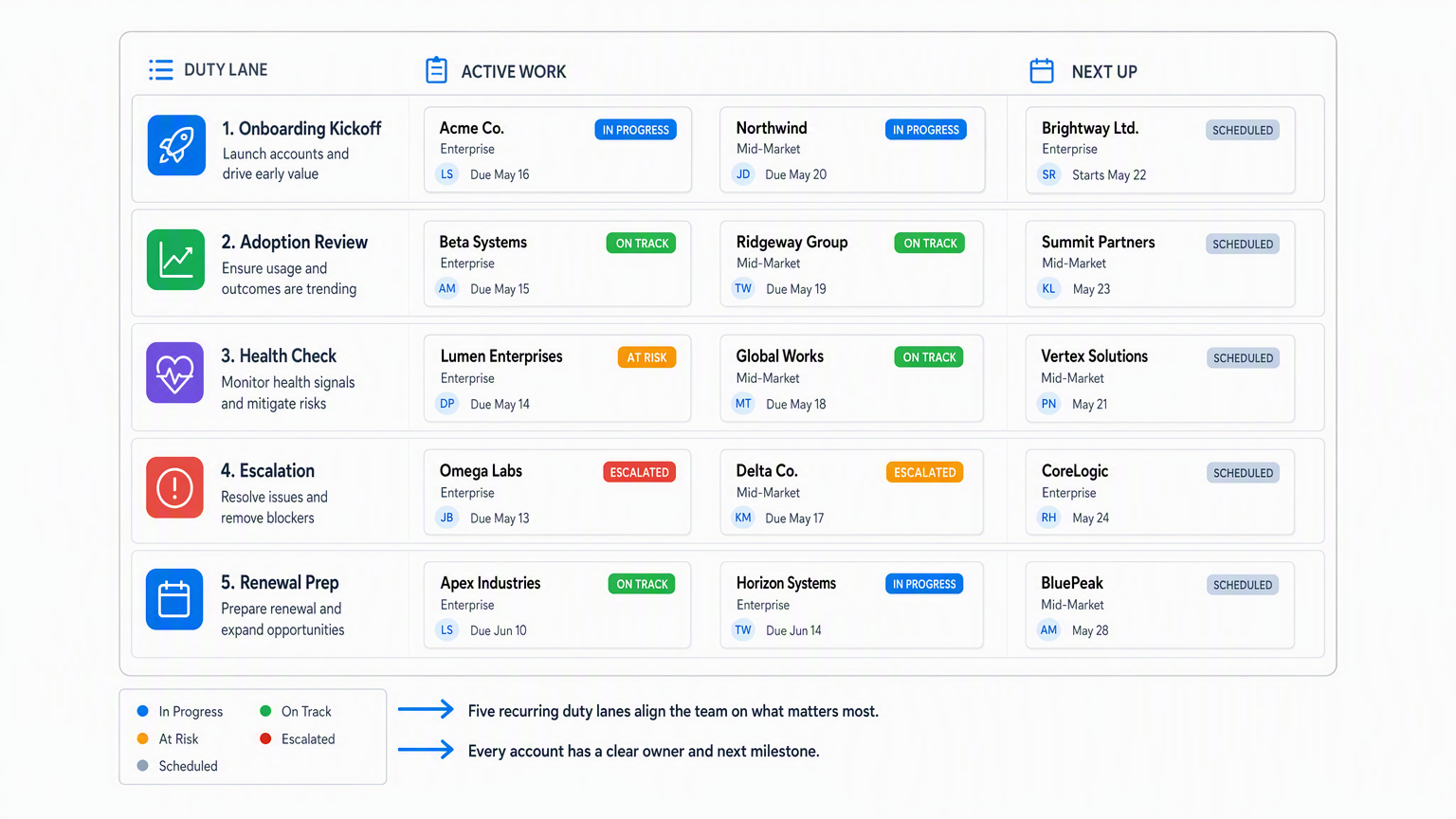
On a business level, the job of a Customer Success team is to reduce the company’s churn rate (the percentage of customers who cancel over a given period).
How is that done?
The mechanics vary by company, product complexity, and deal size, but the underlying structure is consistent. Customer Success teams own the post-sale relationship, connecting product capabilities to customer outcomes and intervening before problems become cancellations.
The days of selling software licenses and walking away are over. Customers buy results, and it is the job of the tool plus the guidance to deliver them. Here is what that looks like, step by step.
The Customer Success process, step by step
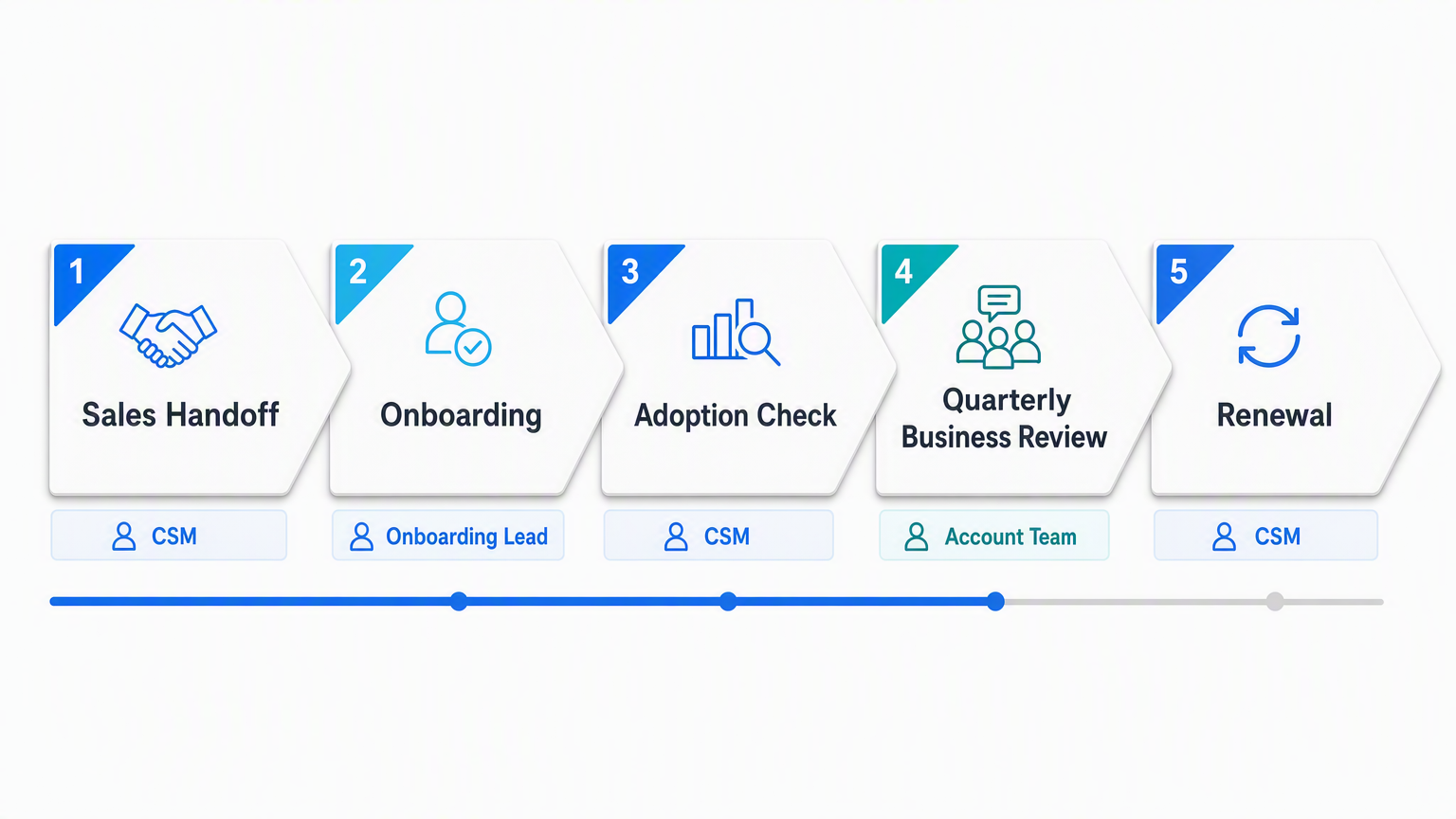
There is a lot of variation in the specifics depending on the company, but the underlying structure is consistent across every team we spoke to.
- Customer Success launches into action the moment a payment is received or a free trial begins, typically within 5 to 60 minutes of signup. The speed depends on deal size and whether you are working with enterprise accounts or startups.
- Next is requirements gathering. This means getting on the phone with decision-makers and documenting the hard facts: What problem are you solving? What do you want to use our product for? What does success look like for your team?
- Identify the decision-makers and champions. This helps the product spread through the organization by getting managers to onboard their teams, which means more users and deeper adoption.
- Map the customer’s current workflow. Understand the tools, processes, and systems they used before choosing your product. Link your features to their specific problems. Be tailored and specific, and make sure you can demonstrate measurable progress toward their goals.
- Deliver training material (custom documents, videos, interactive guides) and schedule live training sessions if needed.
- Stay in touch proactively, with frequent check-ins early on and event-based outreach later. Analyze effectiveness with automated health scores, manual reviews, and surveys.
- Send an NPS survey, evaluate results and maintain an open door. Be the first point of contact when questions or issues come up.
Stickiness: how Customer Success drives revenue
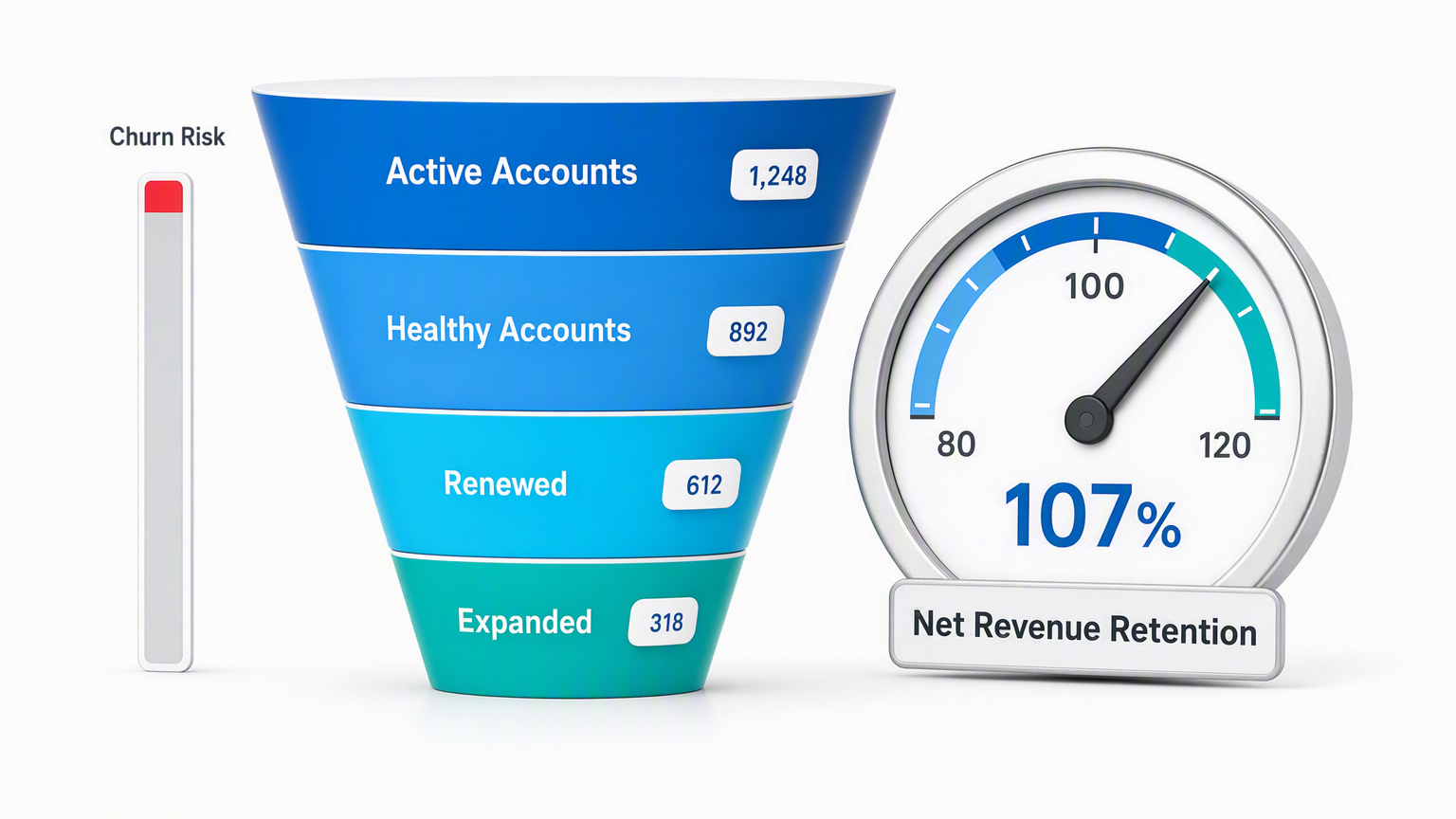
Since the purpose of a customer success process is to reduce churn, SaaS companies have to reassure their customers they made the right choice and guide them to first value as quickly as possible.
This means linking product features to desired outcomes and showing the customer an overview of what will happen and when.
Some teams take a self-service approach to adoption by maintaining a deep library of help center content, tutorials, and interactive walkthroughs. Others create custom onboarding material for each client, whether that is PDFs, videos, or live training sessions. The right approach depends on deal size and product complexity.
The “stickiness” of a product is a tough thing to perfect, but some products are better suited at permeating a company than others because they are an “all or nothing” system. Take team communication platforms: either everyone is using the same tool or nobody can communicate properly.
While this is harder to set up, once adoption takes hold, it becomes self-reinforcing. Employees miss out by not being part of the system, which makes the product harder to remove.
By working closely with team project managers, adoption becomes a natural, internal process rather than something forced from the outside. Managing expectations from the start, before your customer is even a lead, is critical.
Make training material easy to digest. Use the same principles of readability you apply to your marketing: infographics, short text chunks, videos. Nobody reads instruction manuals.
Spread adoption through managers, not mandates. Help the customer’s project manager write an internal email explaining what the product does, which teams use it, and how it will improve their workflow. The push comes from your CS team but is communicated by the client’s own people.
Build stickiness into your process

What makes a product sticky? How do you make sure switching to a competitor or reverting to the old ways simply is not an option?
Communicate every day
Convert customers into power users slowly and gently by offering help and demonstrating value at every step. Sow the seeds of success early by ensuring the customer feels totally comfortable when migrating from their existing system.
Tip: Stay top of mind by keeping open communication and taking every opportunity to demonstrate value.
Catch at-risk customers before they churn
Set up systems to identify red-flag metrics that warrant outreach from your Customer Success team. Some of these flags include accounts that are past due, accounts that could save money by upgrading (currently paying overages), and accounts where activity has dropped off. The goal is to reach out and re-engage before they cancel.
“We are starting to identify red flag metrics that should warrant outreach from our customer success team. Some of these flags include accounts that are past due, accounts that could save money by upgrading, accounts where activity has dropped off. The goal is to reach out and re-engage with these customers before they churn.” — Adam Feber, Maxio (formerly Chargify)
Even if you cannot win a customer back, always follow up with users who cancel. You will learn how to improve your product and its stickiness.
Create direct communication channels
Some teams add key customers to a shared Slack channel so they can interact directly with the product team. This builds a personal connection with the founders and engineers, reduces support tickets, and speeds up adoption.
Chameleon, a product adoption platform, used this approach during their early growth. CEO Pulkit Agrawal says it helped customers form close relationships with the team, and since their product lives inside other SaaS platforms to help with user onboarding, they took a UX-based view toward customer success: take your customer from discovery to their “Aha! Moment” in a few easy steps.
Tip: Users are less likely to give up on something they feel a personal connection to. Deep customer relationships help you learn what they (and everyone like them) actually want from your product.
Unique approaches to Customer Success
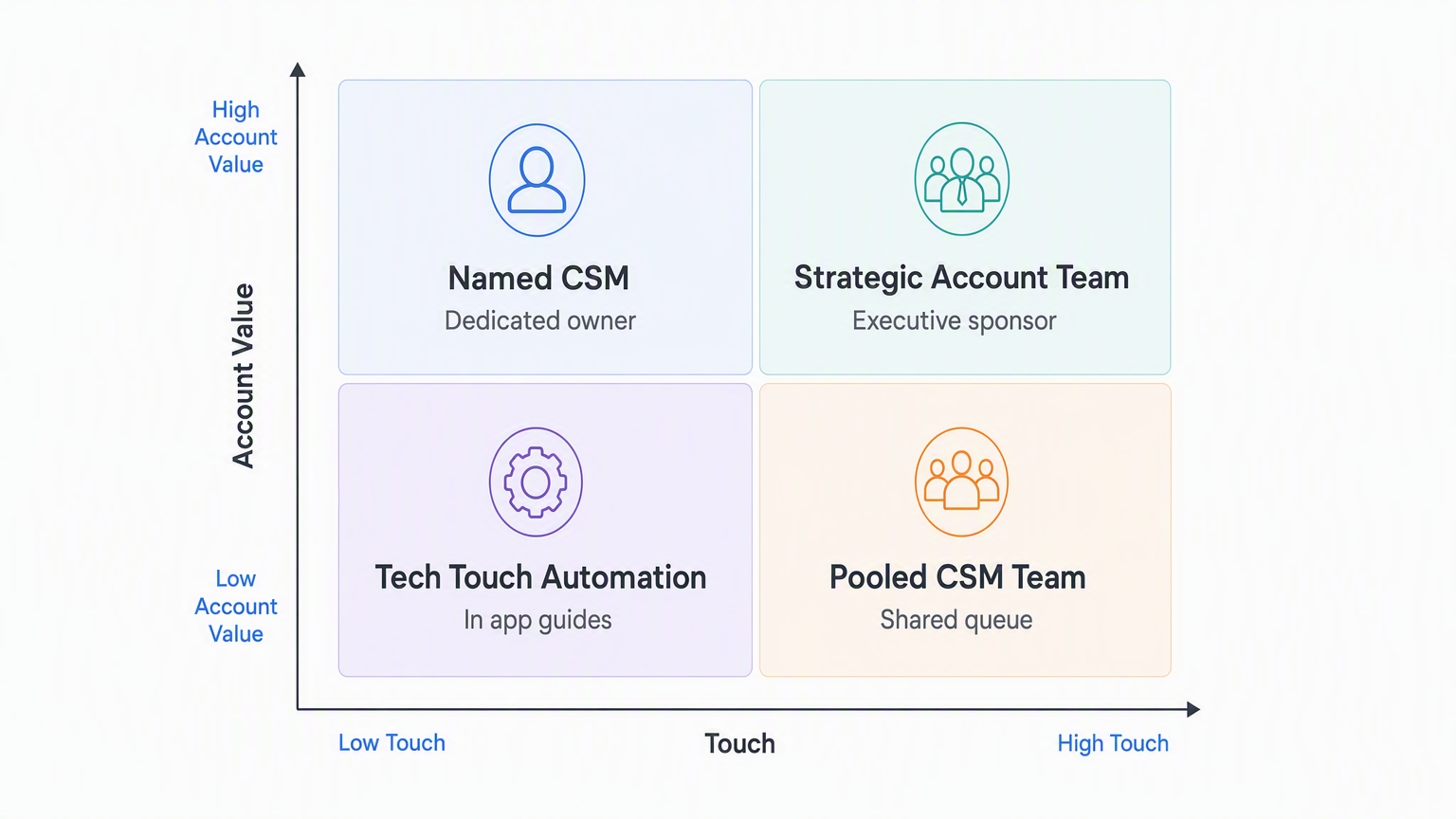
While a consistent process is a good foundation, each team’s approach to “what makes a happy customer” is different.
Celebrate customer wins publicly
Ambition, a sales performance platform, takes public recognition seriously. Their Customer Success team reaches out to record-setting sales people and congratulates them for hitting high scores. Travis Truett, former CEO, explained:
“We recognize awesome user performance on Ambition, publicly. Just last week, one of our clients notified us of a new user high score. We broadcast that record on social media to provide additional public recognition for that user and for the client.”
Teach your customers how to drive adoption internally
For products that need broad adoption across an organization, your CS team’s job goes beyond tech support. Sometimes it means helping people from different departments communicate who are not communicating because they cannot stand each other. It means helping the customer’s project manager write an email to their department explaining what the product does, giving social proof, and asking them to get started. The push to adopt comes from your team but is communicated by the client’s own people.
Align CS with the customer’s usage lifecycle
For products tied to events or time-bound projects, the customer success process has a definite end point, but the customer relationship is the main asset because they could buy again year after year. The secondary challenge after implementation is getting end users to adopt. Teaching customers basic marketing principles (clear signage, email drip campaigns, in-app messaging) gives them the tools to drive adoption internally.
What happens when the process is over?
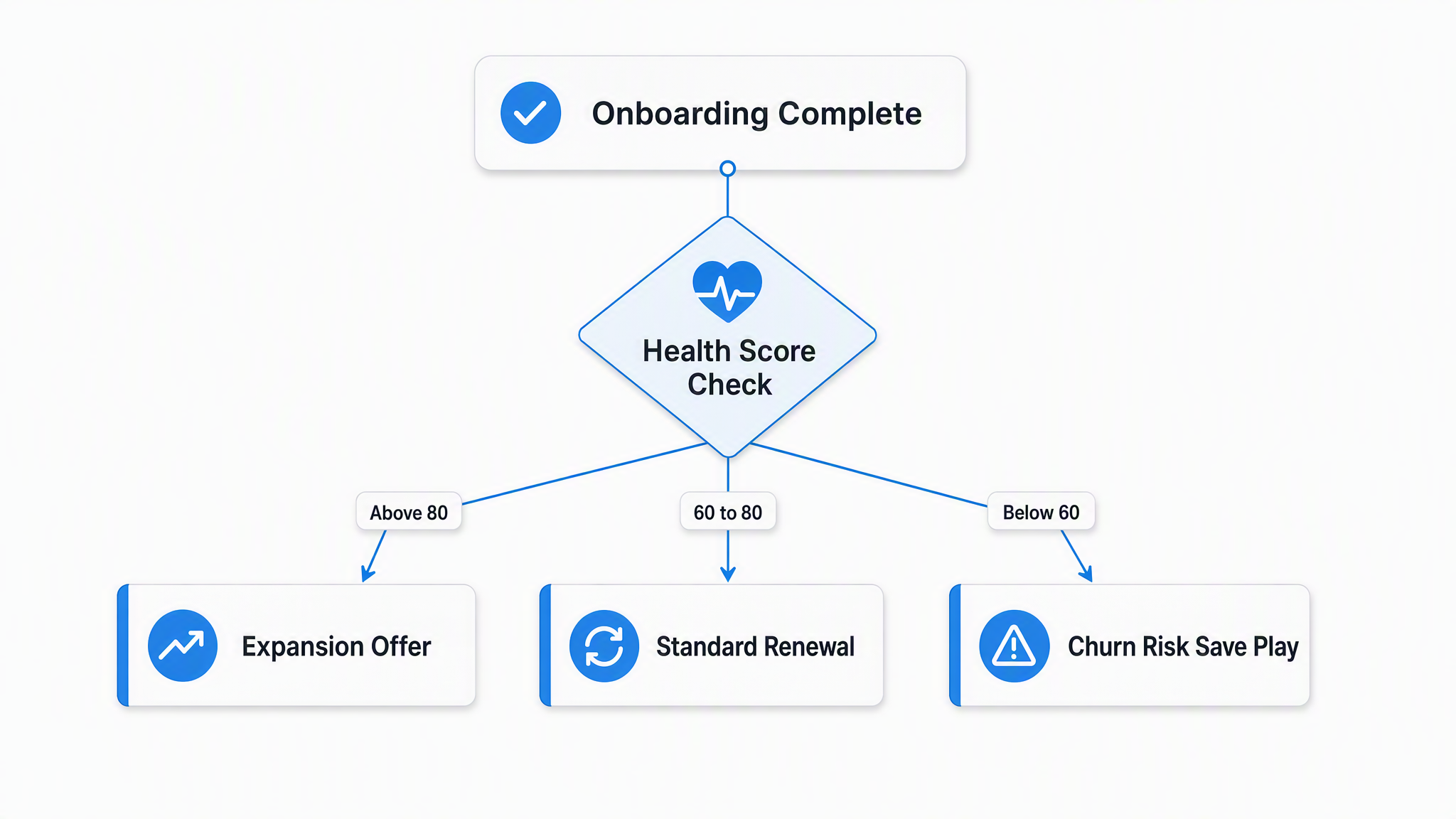
Communication shifts from proactive to responsive
While the job of Customer Success is never truly done, the intensity of the relationship generally scales down after onboarding. Engagement dictates when the initial process winds down. Automated systems tag users as “at-risk” and notify CS to re-engage based on signals like low usage, feature abandonment, or posting issues.
The length of the initial process ranges between 7 and 30 days, depending on implementation complexity and whether there is a natural usage lifecycle.
The customer’s success depends on an open line of communication. While the initial onboarding buzz dies down after implementation, the relationship between the customer’s decision-maker and the success rep is maintained over the long term.
Analysis comes into focus
After implementation, CS teams shift to monitoring usage data to confirm the customer is getting value from the software. Surveys sent after the first two weeks collect specific feedback on that customer while evaluating the customer success process as a whole.
Stream, a chat and activity feed API platform, handles post-onboarding support for free-tier accounts through community channels and developer documentation, while paid accounts receive regular check-ins and closer analysis.
A common practice across all teams we spoke to is the NPS survey, which asks customers to rate their satisfaction on a scale of 1 to 10. Companies run several automated processes alongside manual check-ins to ensure communication is tailored to each customer’s situation without taking an overwhelming amount of time.
Watch for upsell and expansion opportunities
A dedicated Customer Success team creates an open line of communication and puts someone directly responsible for account health. While sales teams traditionally handle upgrades, a CS team lets Sales focus on closing new business.
By analyzing the client’s workflow, CS managers can identify usage patterns and offer a higher plan at the right time, or access to an add-on that will make the customer’s life easier. Kevel (formerly Adzerk), an ad-serving API platform, says the CS relationship can stretch for over a year because the team is tuned to the growth of their clients:
“We try to establish ways to grow the relationship and that’s when Customer Success and Sales work together to identify add-ons, new tiers and areas where clients can upgrade to help them use more of our tools to grow.” — Alejandro Sanchez, Kevel
10 Customer Success tips from SaaS practitioners
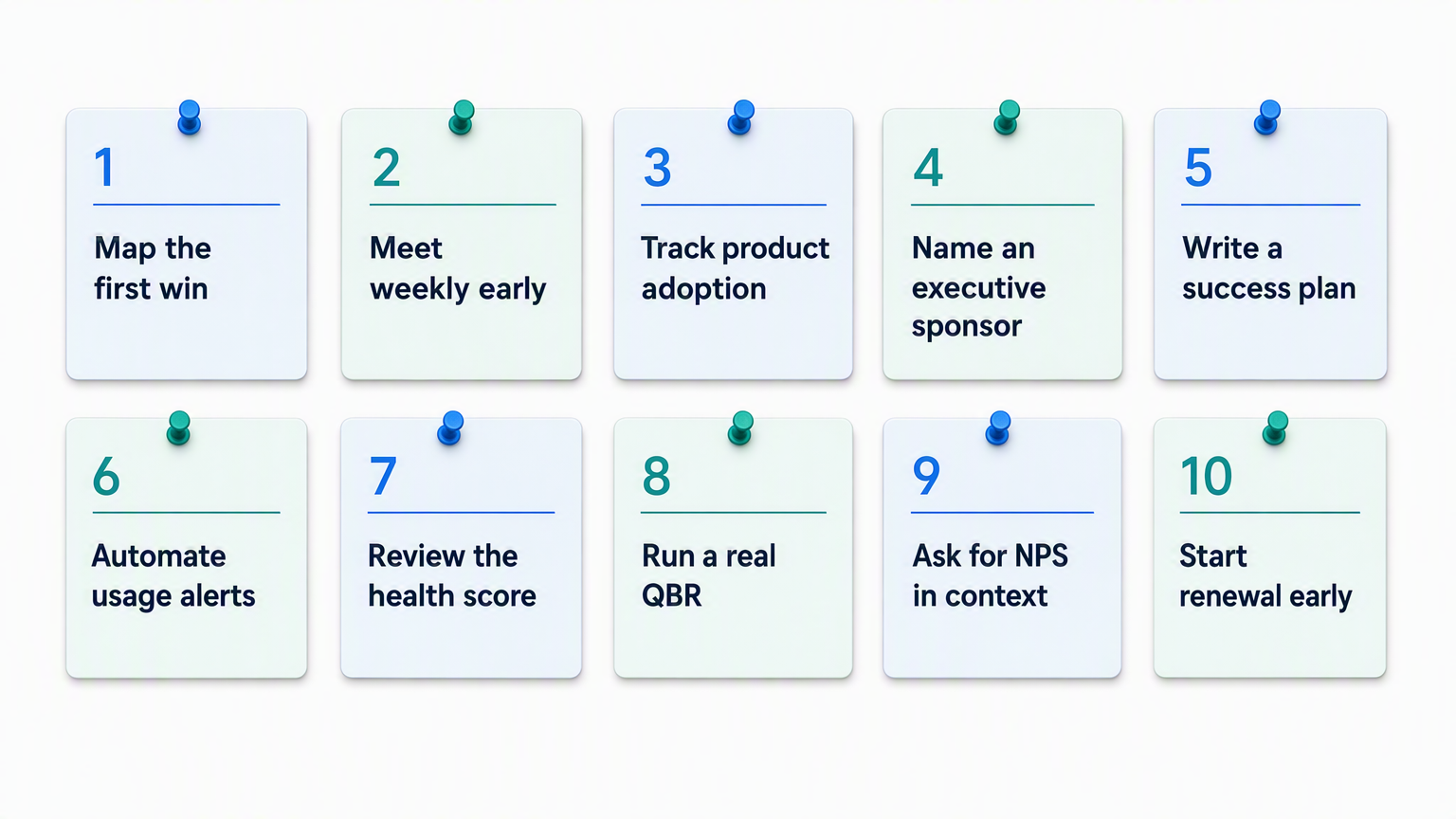
Processes are the foundation, but the real value comes from applying hard-won lessons from teams who have done this at scale. Here are ten tips from the SaaS Customer Success leaders we spoke to:
- Reduce friction at every step. The easier the process, the higher the conversion rate. Fill out as much as you can for your customers to get them where they need to go.
- Define a clear “aha” moment. Have a clear activation point and help customers get there in a few easy steps.
- Talk to your users every day. Rather than guessing, talk to users daily to find out what their needs are. Build a product that truly appeals to their circumstances rather than forcing them to adopt something they may not want.
- Use community channels for scale. Community-driven support channels (forums, Slack groups, knowledge bases) are great for free-tier users and have SEO benefits too.
- Deliver transparency, even when the news is bad. Companies that deliver the most value have nothing to hide. When performance falls short, take it head on and fix the problem instead of hiding it.
- Stay flexible. Keep the process fluid. Maintaining flexibility and agility are the keys to making sure the solution and the customer are successful.
- Always contact customers with a reason. Nobody likes the “just checking in” call. Reach out with value: a new guide, usage insights, or suggestions for how they can get more out of the product.
- Invest in UX. Your product should be easy enough to use that it does not require extensive documentation or support.
- Win the first 48 hours. Onboarding is most critical within the first 48 hours because churn is highest during that window.
- Know when to say no. No matter how much you want the deal, do not hesitate to let users know immediately when your product cannot meet their needs. Honest disqualification saves everyone’s time.
Build your Customer Success process with the right tools
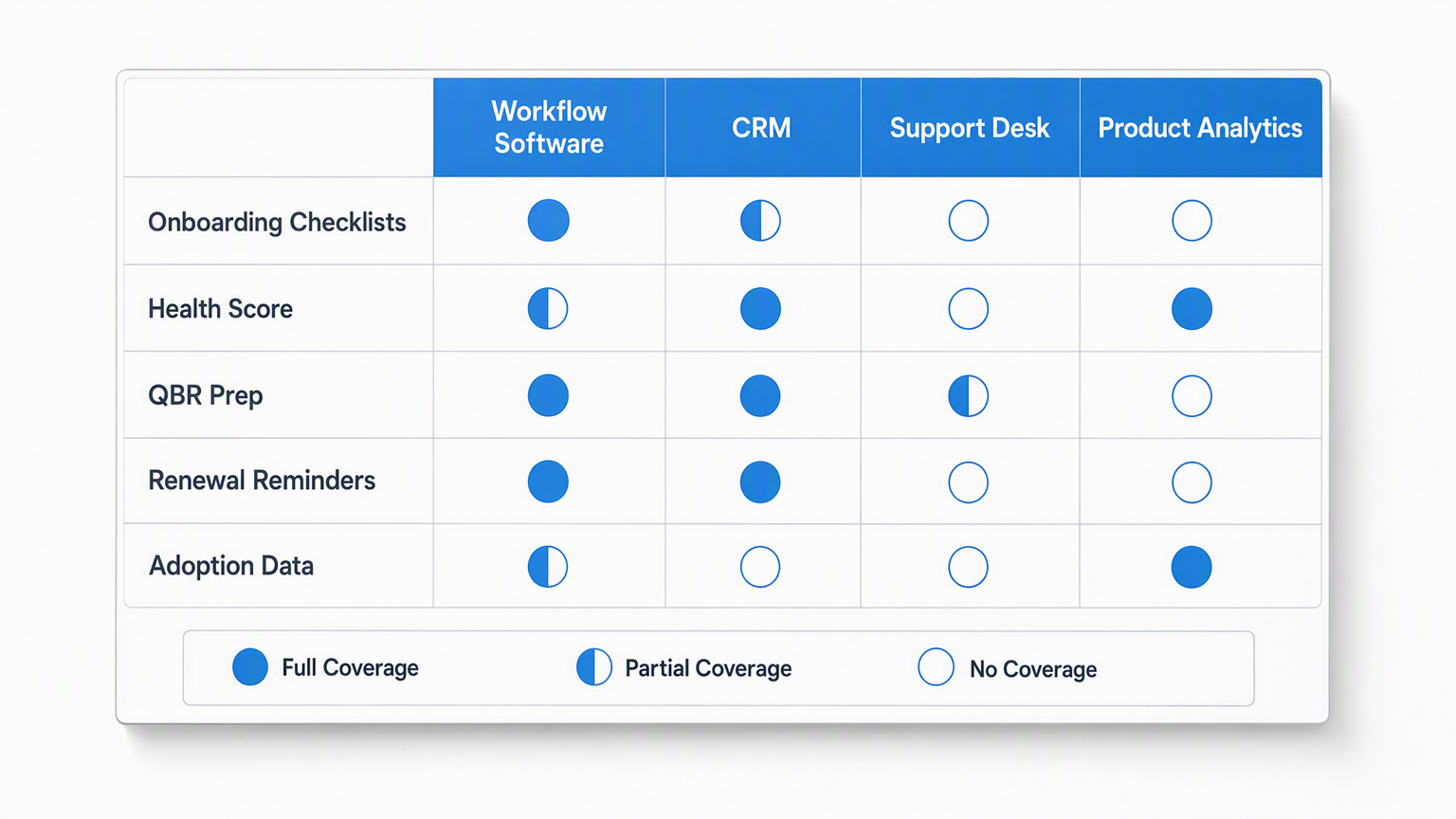
The way your customer success process looks will vary based on your product, deal size, and customer profile. But the principle is universal: having a defined, repeatable process means you can replicate great results, create loyal customers, and act on how they actually use your software.
The best CS teams do not rely on improvisation. They build structured workflows that ensure every customer gets the same high standard of onboarding, support, and proactive outreach, without anything falling through the cracks.
Process Street helps teams build exactly these kinds of repeatable, enforceable workflows. Whether you are standardizing your client onboarding checklists, automating check-in sequences, or ensuring every customer touchpoint follows your playbook, Process Street turns your customer success process into a system that runs itself.
The post 14 Top SaaS Companies Reveal Their Customer Success Process first appeared on Process Street | Compliance Operations Platform.


0 Commentaires