An employee development plan is a shared roadmap for improving an employee’s skills, knowledge, and experience. It connects current strengths and skill gaps with specific goals, learning activities, owners, deadlines, check-ins, and evidence of success, so development becomes part of day-to-day work rather than a once-a-year conversation.
The strongest plans balance what the employee wants to learn with what the organization needs next. This guide explains the difference between professional and employee development, shows how a former Patagonia CEO treated people development as a leadership priority, and gives you a free template for turning the ideas into a repeatable process.
- Employee Development Plan Template
- What is an employee development plan?
- Employee development in action
- Employee development plan benefits
- What should an employee development plan include?
Employee Development Plan Template
A useful template gives the employee and manager one place to record the goal, the reason it matters, the employee’s current level, the target capability, the development actions, available support, milestone dates, and the evidence that will show progress. The plan should also name who owns each action and when the next review will happen.
Use the free Employee Development Plan Template below to create that shared record. Complete it together, then return to it during regular one-to-ones. A plan that is reviewed and adjusted is more useful than an ambitious form that disappears after the first meeting.
Before the first planning conversation, ask the employee to reflect on work they find energizing, strengths they want to use more often, capabilities they want to build, and feedback they have received. The manager should bring upcoming priorities, possible assignments, and clear role expectations. That preparation keeps the meeting focused on evidence and opportunity rather than improvisation.
Choose a review cadence that matches the goal. A short-term skill may need a checkpoint every two weeks, while a longer career objective may need a monthly check-in and a deeper quarterly review. The purpose is not to create more meetings. It is to notice obstacles, acknowledge progress, and change an action before lost time turns into a missed goal.
The template also prompts the employee to describe current tasks, identify which tasks should be performed more frequently, and locate roadblocks to progress. Its goal fields can document several long-term and short-term goals before the employee and manager select the highest priority. This flexible approach keeps the wider picture available while ensuring that the active plan remains focused enough to deliver.
Process Street is a single Compliance Operations Platform with Docs and Ops capability areas plus built-in AI. Teams can document the development method, run it as a repeatable workflow, assign employee and manager responsibilities, collect evidence, and keep approvals or follow-up actions visible. Form fields, role assignments, task permissions, and dynamic due dates help turn a static plan into a governed operating process. Administrators retain access even when task permissions restrict visibility for selected users.
The workflow can be edited to suit different development needs. Stop tasks can enforce task order, conditional logic can create a dynamic path, and role assignments can ease task delegation. Approvals let decision-makers give a go-ahead or rejection and add necessary comments. Webhooks can notify other apps about workflow status, while task assignments make responsibility visible. These features are optional controls, not a substitute for a thoughtful manager conversation.
What is an employee development plan? Professional vs employee development
An employee development plan is broader than a training request. It describes where an employee is now, where they want or need to go, and the practical steps that can close the gap. Those steps may include instruction, practice, coaching, stretch assignments, observation, feedback, and reflection.
What is professional development?
Professional development is the ongoing improvement of knowledge and skills related to a person’s role, profession, or career direction. It can include formal courses and certifications, but it also happens through peer learning, deliberate practice, mentoring, conferences, and increasingly complex work.
The focus is usually occupational: becoming a stronger analyst, learning to lead a team, developing a new technical specialty, or preparing for a different role. The organization benefits from stronger capability, while the employee builds expertise and career options that remain valuable over time.
Professional development focuses on career progression through education and training opportunities, professional experience, and shadowing others. To be most effective, it is an ongoing process that is systematically planned to develop employee competency. For positions that require certification or licensure, this continuing development is also vital for keeping knowledge current and maintaining the required professional standard.
Good professional development starts with a performance or capability need, not with a fashionable course. If the goal is to improve financial forecasting, the plan should specify the decisions the forecast must support, the methods the employee needs to learn, and the work product that will demonstrate improvement. That connection makes it easier to select useful learning and reject activity that will not transfer to the job.
What is employee development?
Employee development includes professional growth but can extend to the wider conditions that help someone perform and thrive. Communication, confidence, leadership judgment, time management, health, relationships, and academic study may all affect an employee’s ability to do meaningful work.
That does not mean an employer owns every personal ambition. It means managers should understand the whole person well enough to find development opportunities that serve both sides. An employee who wants to improve public speaking, for example, might lead a team briefing. The employee gains confidence and the organization gains a stronger communicator.
Boundaries matter. Employees should not be pressured to disclose sensitive personal information or turn private goals into workplace metrics. The manager’s role is to listen for voluntary goals that relate to work and to identify appropriate support. The plan can record the professional action without documenting personal detail that does not belong in an employment record.
What is an employee development plan?
The plan converts those ambitions into commitments. It should be built with the employee, not handed to them. The employee brings their interests, self-assessment, and preferred ways of learning. The manager brings context about the role, upcoming opportunities, performance expectations, and support the organization can provide.
An individual development plan, often shortened to IDP, is a closely related format. Organizations use the terms differently, but both work best when they connect a specific capability gap with real activity and recurring feedback. A plan is not a promise of promotion. It is a clear agreement about growth, support, and evidence.
Development and performance management should inform each other without becoming the same process. Performance conversations clarify the expectations of the current role. Development conversations look beyond immediate delivery and explore how capability can grow. Combining them completely can make employees avoid ambitious goals because every learning attempt feels like a rating. Keeping a distinct development space supports honest reflection and useful experimentation.
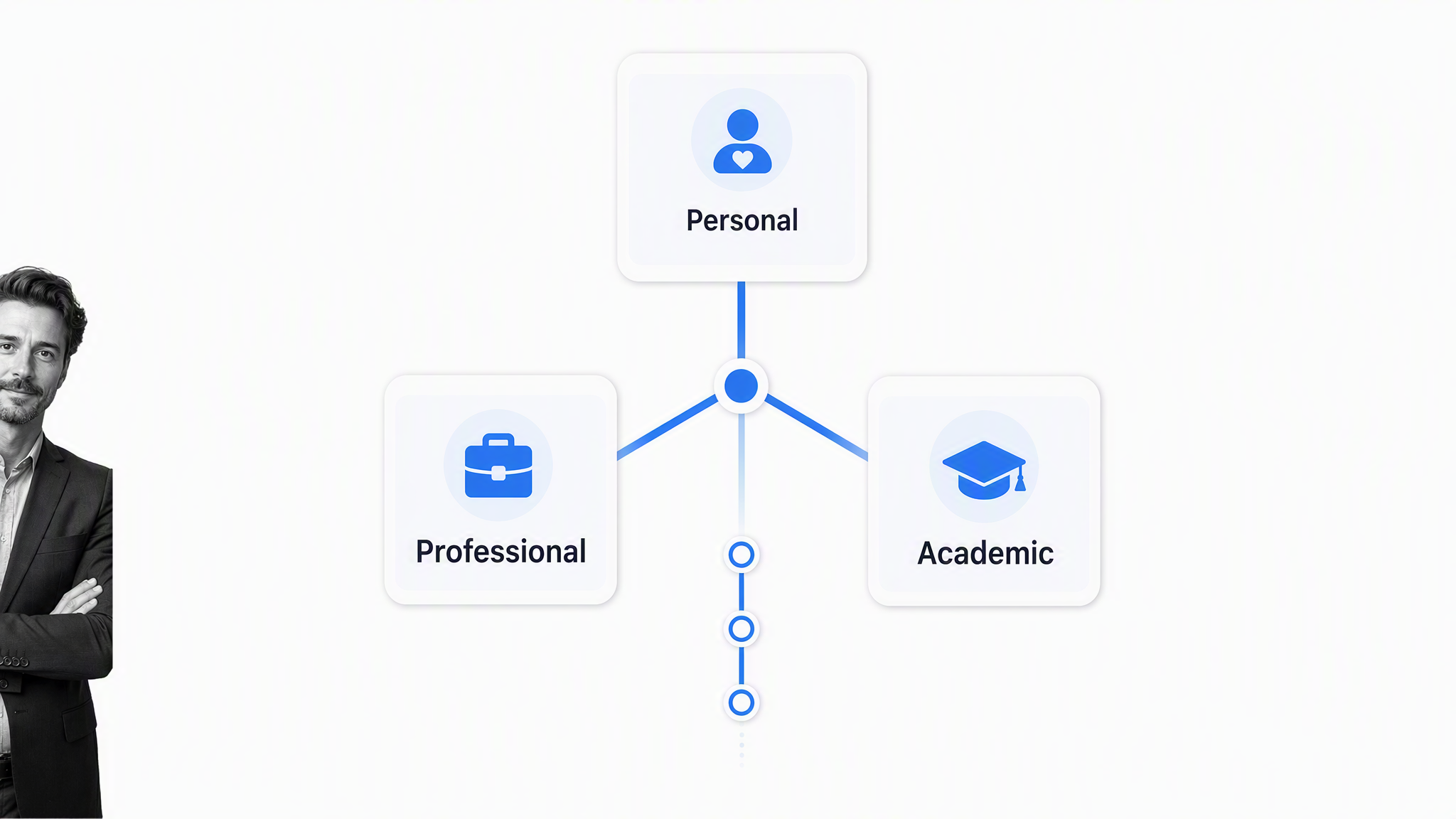
The central difference is scope. Professional development considers the individual’s profession, while employee development looks at professional, academic, and personal growth alongside one another. Carrying out the agreed action steps enables those forms of growth to work together. The plan can align organizational goals with an individual’s core values and beliefs, plus short-term and long-term personal, academic, and career targets.
The working environment continues to change, and employee development should reflect that movement. Flexible schedules, distributed collaboration, new tools, and changing expectations can alter both role demands and learning opportunities. A complete employee-support approach does not assume that one rigid training path fits everyone. It blends professional needs with the personal and academic context that affects whether the employee can apply new capability successfully.
Employee development in action: Rose Marcario, former CEO of Patagonia
Rose Marcario led Patagonia from 2008 to 2020, first as chief financial officer and then as chief executive. During that period, the company became a prominent example of values-led leadership. Fast Company reported in 2014 that profits had tripled and revenue had reached roughly $600 million. Patagonia later confirmed that Marcario stepped down in June 2020.
The lesson is not that one formal development plan caused those results. The evidence does not establish that. The useful lesson is that leadership development becomes credible when executives connect values, responsibility, and business decisions. Employees can see what the organization rewards and where they can contribute.
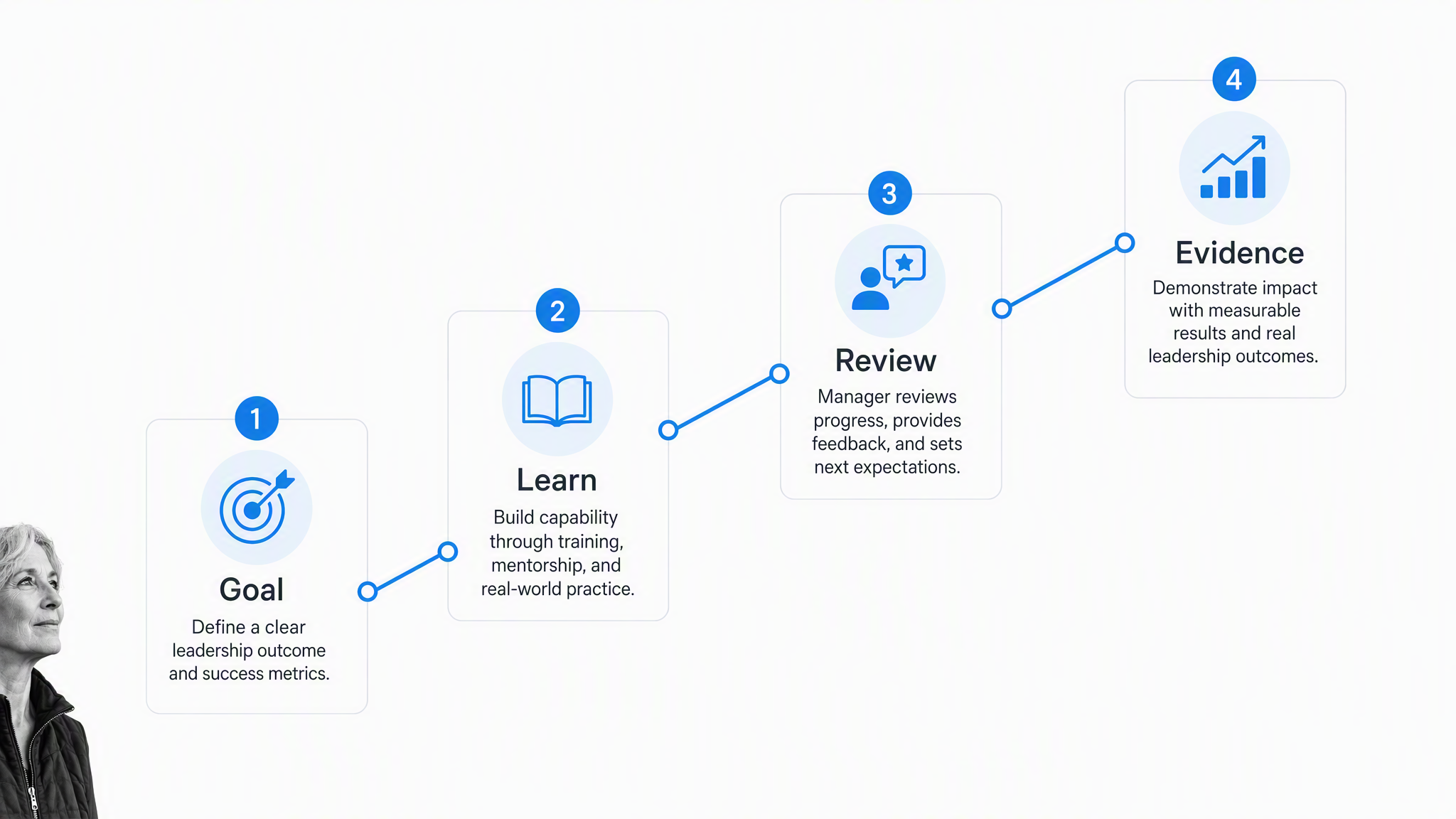
A CEO development plan and an entry-level employee plan use the same basic logic: identify the capabilities the next stage requires, find work that exercises them, provide support, and review evidence. The content changes with seniority. A new manager may practice feedback and delegation, while an executive may need deeper board communication, systems thinking, or stakeholder judgment.
Leadership examples also reveal why plans need context. Development should not become a checklist of courses disconnected from the organization’s mission. It should help people make better decisions in real situations, then use feedback to refine the next step.
Marcario’s tenure also produced notable historical business and sustainability results. Patagonia’s profits tripled as revenue reached about $600 million in 2013, and the company was rated second for global sustainability leadership in a 2019 GlobeScan and SustainAbility survey. Those achievements should not be presented as proof that a documented employee development plan caused the outcome. They show the broader setting in which values, ethics, integrity, and leadership strategy were treated as connected rather than separate beliefs.
For senior leaders, that context includes consequences beyond their own team. A development goal may involve balancing commercial pressure with employee, customer, community, and environmental responsibilities. Evidence can include the quality of a strategic decision, the clarity of communication, the durability of a new operating practice, and feedback from people affected by the choice. The plan still needs specific actions, even when the judgment being developed is complex.
Marcario has described the challenge of coming up with male CEOs as her primary gauge for what a CEO should be, then abandoning that idea when it did not fit. Her emphasis shifted toward developing a personal value system, a clear view of right and wrong, and an authentic leadership style. That distinction is useful for executive development because it joins self-beliefs with professional responsibility rather than imitating a narrow model.
Employee development plan benefits
Development plans create value when they improve the quality of work, the employee experience, and the organization’s future capability. They are not a substitute for fair pay, a healthy manager relationship, or clear performance expectations. They are a way to make growth concrete and accountable.
Strengthens employee motivation
People are more likely to invest effort when they can see progress and have meaningful influence over how they grow. Self-determination theory describes three important conditions: competence, autonomy, and relatedness. A good plan can support all three.
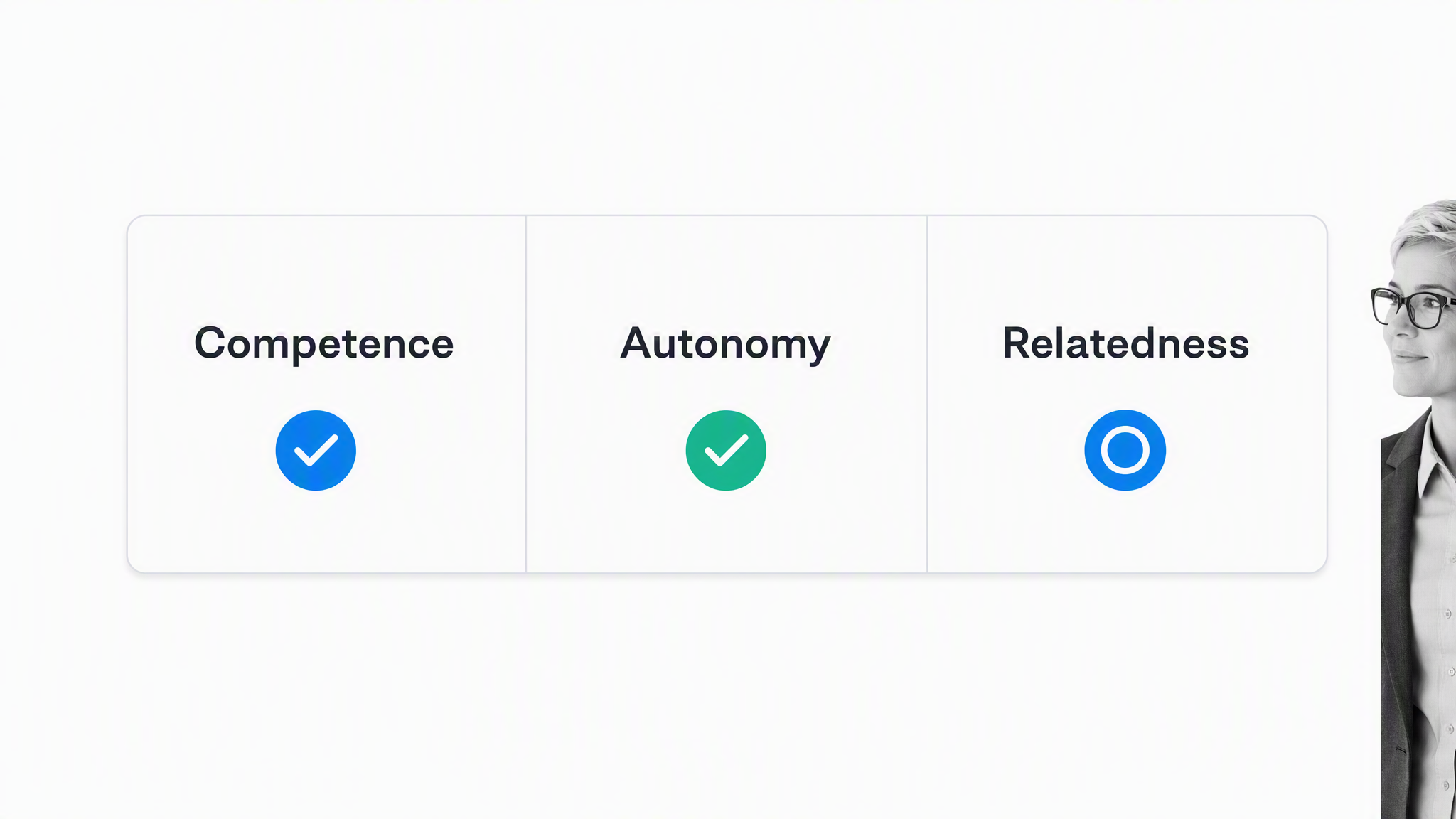
Competence grows through practice and visible mastery. Autonomy grows when the employee helps choose goals and methods. Relatedness grows through coaching, peer learning, and a manager who takes the plan seriously. These conditions are more motivating than a generic instruction to complete a course.
Each condition has a practical role. Competence improves when the plan devises a set of actions that give the employee skills, knowledge, and experience to perform better. Autonomy grows when development goals reflect the individual’s values and the employee helps set and own the plan. Relatedness grows when personal goals and professional goals connect, so employee wants and needs sit alongside the organization’s goals.
Managers can reinforce motivation by making the next step achievable but meaningful. A goal that is too easy produces little learning, while an assignment with no support can feel like abandonment. Agree on where the employee can make decisions independently, when they should ask for help, and how feedback will be delivered. That clarity protects autonomy without removing coaching.
Helps attract talented applicants
Candidates want to know what they can learn, not only what they will do. A documented development process gives recruiters and hiring managers specific answers: how goals are chosen, how often managers review progress, what kinds of opportunities exist, and how employees can demonstrate readiness for more responsibility.
The plan itself should not become a recruiting promise the organization cannot keep. It is most persuasive when current employees can describe consistent coaching, access to relevant work, and honest conversations about possible career paths.
A credible plan also strengthens the Employee Value Proposition by defining how an employee can benefit from working for the organization in relation to their specific aims and goals. That proposition must be supported by actual opportunities, not slogans. When applicants can see professional growth, personal growth, and academic growth treated seriously, attraction and retention become part of a coherent talent strategy.
Recruiters can explain the process without guaranteeing a particular title or timeline. They can describe the first development conversation, the normal review rhythm, examples of stretch work, and how internal opportunities are communicated. Specific process details are more credible than broad claims that everyone can advance quickly.
Attraction and retainment of talent remain central issues for leaders. In Leading Organizations: Ten Timeless Truths, McKinsey senior partners Scott Keller and Mary Meaney discuss talent as a persistent leadership concern. A development plan gives applicants something concrete to assess: not a promise that every ambition will be met, but evidence that the organization has a method for identifying goals, supporting advancement, and discussing future possibilities.
Improves employee performance
Performance improves when development targets a real work need and gives the employee repeated chances to apply the new skill. A data analyst who needs stronger presentation skills might first observe a senior colleague, then present a small finding, request feedback, and later lead a decision meeting. Each action produces evidence for the next review.
This is more reliable than measuring development by attendance. A completed course shows participation; a work sample, observed behavior, quality result, or stakeholder outcome shows whether capability changed.
Transfer is the key test. Ask the employee to use the new approach in a real task soon after learning it, then compare the result with a baseline or agreed standard. The manager can observe one meeting, review one deliverable, or ask a stakeholder for focused feedback. Small evidence collected close to the work is usually more actionable than a vague annual summary.
Increases the firm’s efficiency and profitability
Development can reduce avoidable rework, improve decisions, and help teams solve problems closer to where they occur. The financial effect depends on the capability and the work. A plan for better quality control should track defects or rework. A plan for better customer discovery might track insight quality, cycle time, or conversion from qualified opportunities.
Use measures that fit the goal and avoid claiming that development alone caused a broad business result. HR analytics software can help teams connect learning activity with retention, mobility, performance, and other workforce trends, but the plan still needs human interpretation.
Cost also matters. The best action is not necessarily the most expensive program. A carefully chosen assignment, regular feedback from an experienced colleague, or access to a community of practice may produce better transfer than a course with no application. Compare the time and resources required with the operational value the capability is expected to create.
There is a practical relationship between employee involvement, productivity, organizational profitability, and market share, but the relationship should be measured rather than assumed. A strong company culture supports employees and helps them engage with work on a personal level. An employee development plan contributes by connecting personal, academic, and organizational goals with observable activity. It does not prove causation on its own, and it should be evaluated alongside operating conditions and other investments.
Improves employee retention and satisfaction
A plan signals that the organization is willing to discuss an employee’s future and invest in progress. The conversation can surface frustration before it becomes disengagement, but development should never be used to paper over a role with poor conditions or no credible path forward.
Managers should be candid about what is possible. Sometimes the right outcome is a stretch assignment; sometimes it is deeper mastery in the current role; sometimes the organization cannot offer the direction an employee wants. Clarity is more respectful than vague promises.
Helps you plan for the future
When teams aggregate plan themes, they can see where future roles may be difficult to fill, where managers need coaching support, and where a shared learning investment could help several people. Individual plans should remain centered on the employee, while the patterns can inform workforce and succession planning.
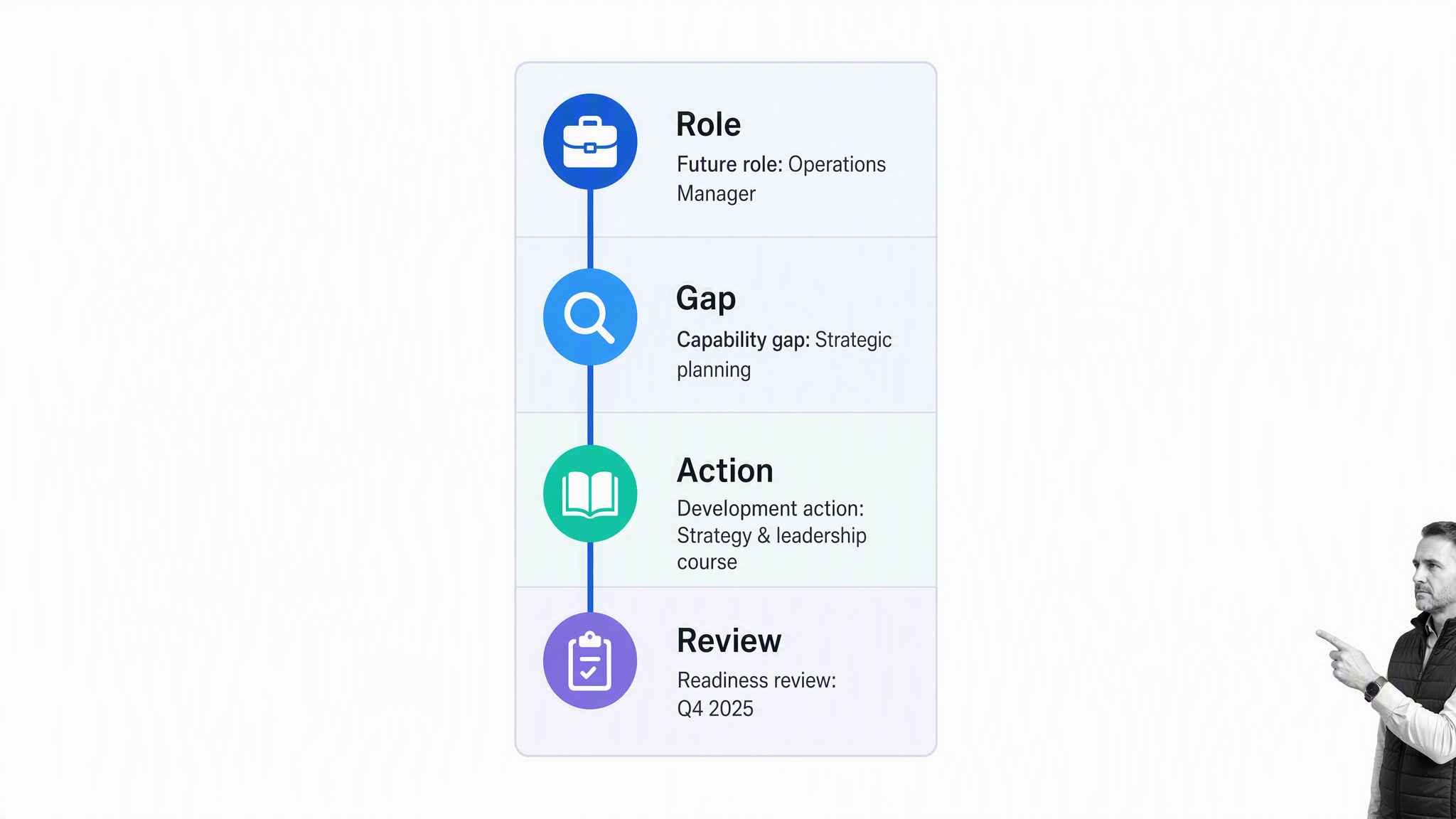
This forward view is especially useful for roles with long learning curves. It gives the organization time to build capability through real work instead of waiting for a vacancy and beginning from zero.
A popular related approach is succession planning, which involves preparing possible replacements for key vacancies. An employee development plan supports that work by helping individuals increase proficiency through continuous improvement and individual advancement. For team-wide competency, employee expertise and intellectual capacity need deliberate support through work-related training, outside academic training, learning, and reflection. Development planning makes those contributions visible without reducing the employee to a replacement candidate.
Succession planning should not turn an employee’s plan into a secret replacement chart. Discuss the experiences that would prepare the employee for broader responsibility, but be transparent about uncertainty. Readiness depends on demonstrated capability, available roles, business direction, and the employee’s continued interest. The plan can prepare options without pretending the future is fixed.
What should an employee development plan include?
Keep the plan specific enough to guide action and simple enough to revisit. The five-stage structure below covers the essential fields without turning development into administration.
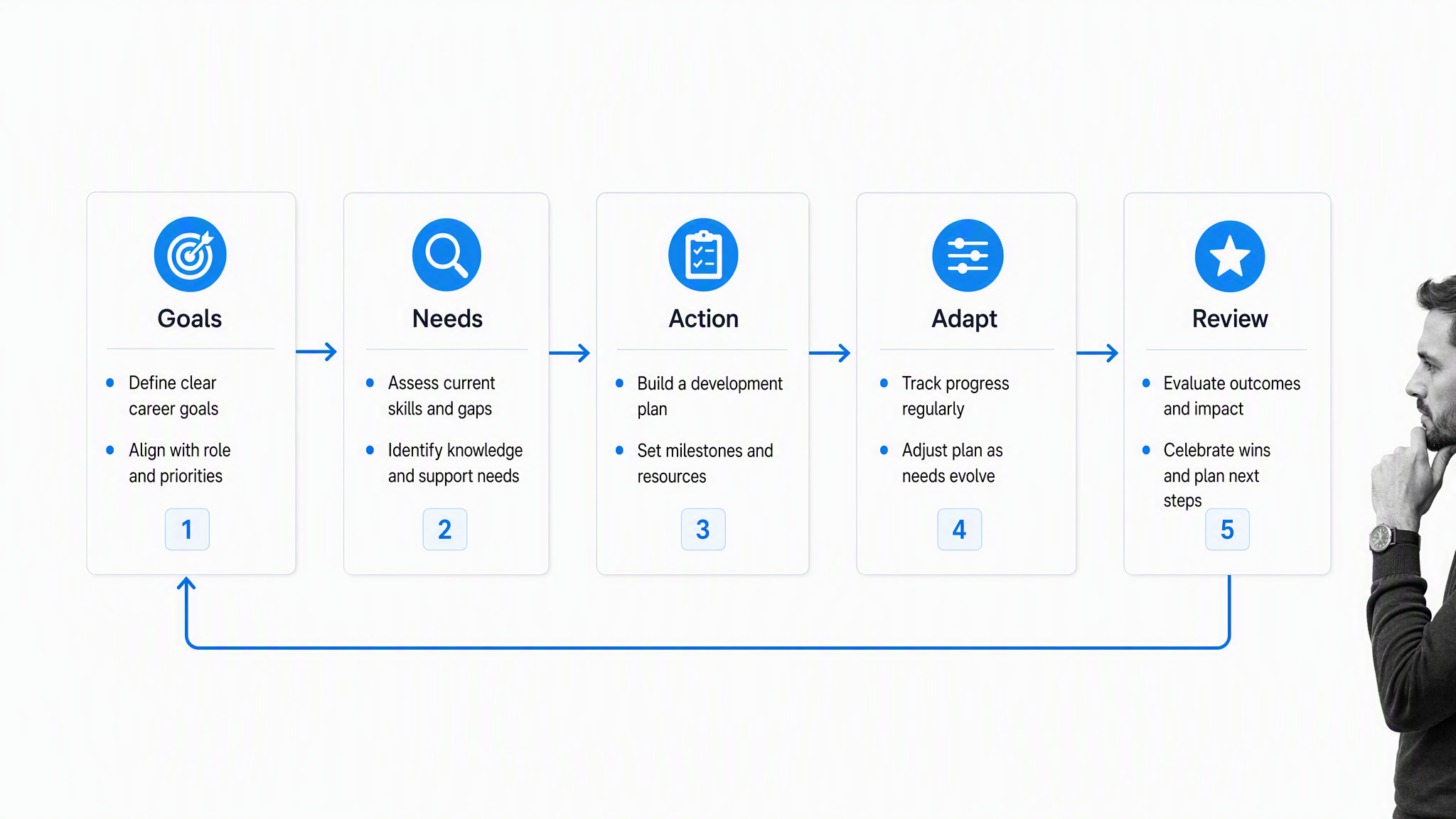
1. Establish personal and career goals
Start with the direction, not the training catalog. Ask what kind of work the employee wants to do more often, what responsibilities interest them, what strengths they want to deepen, and what obstacles they want to remove. Then connect those interests with the team’s priorities and realistic opportunities.
Write one or two focused outcomes. A useful outcome describes the capability and why it matters, such as: “Lead a cross-functional project through delivery so the team can launch customer changes with fewer handoff delays.” Avoid goals that only describe an activity, such as “take a project management course.”
Establishing personal and career goals is a vital step in gaining employee buy-in. A holistic view considers personal, academic, and professional goals without forcing them into the same category. The step-by-step approach should fit both working life and non-working life, with the employee choosing what belongs in the workplace plan. That ownership makes the goal more likely to survive competing priorities.
2. Establish work development needs
Compare the target capability with the current state. Gather evidence from the employee’s self-assessment, manager observations, recent work, customer or peer feedback, and role expectations. Describe the gap as behavior or output that can be observed, not as a personality judgment.
Separate a true skill gap from a process, resource, or expectation problem. Training will not fix missing information, conflicting priorities, broken tools, or a workload that leaves no time to practice. If the barrier is environmental, record the operational change alongside the employee’s action. This prevents the plan from assigning personal responsibility for a system problem.
For the project-leadership example, the employee may already organize their own work well but need practice negotiating scope, clarifying ownership, and surfacing risk early. That definition makes it possible to choose development actions that match the actual need.
Work development needs should also account for role demands and how those demands may change through organizational change, promotions, or increased expectations. Business-oriented development needs can then be mapped against personal-development needs, allowing personal growth and career-focused growth to progress in parallel. The result is a clearer view of both immediate proficiency and the capabilities a future role may require.
3. Develop an action plan
Choose a blend of learning and application. Formal instruction can build a foundation, while coaching, observation, stretch work, peer practice, and feedback convert knowledge into capability. The familiar 70:20:10 model can be used as a planning prompt, but its exact percentages are a heuristic rather than a scientific requirement.
For every action, record an owner, a target date, available support, and the evidence it should produce. A SMART development action might be: “By November 30, lead the weekly launch meeting for six weeks, publish decisions and owners within 24 hours, and ask the sponsor for feedback after weeks two and six.”
Include the manager’s commitments as well as the employee’s. The manager may need to introduce a mentor, protect time for practice, delegate a meaningful assignment, approve a budget, or provide feedback by an agreed date. Shared ownership makes the plan fairer and gives both people something concrete to review.
4. Make changes on the development path
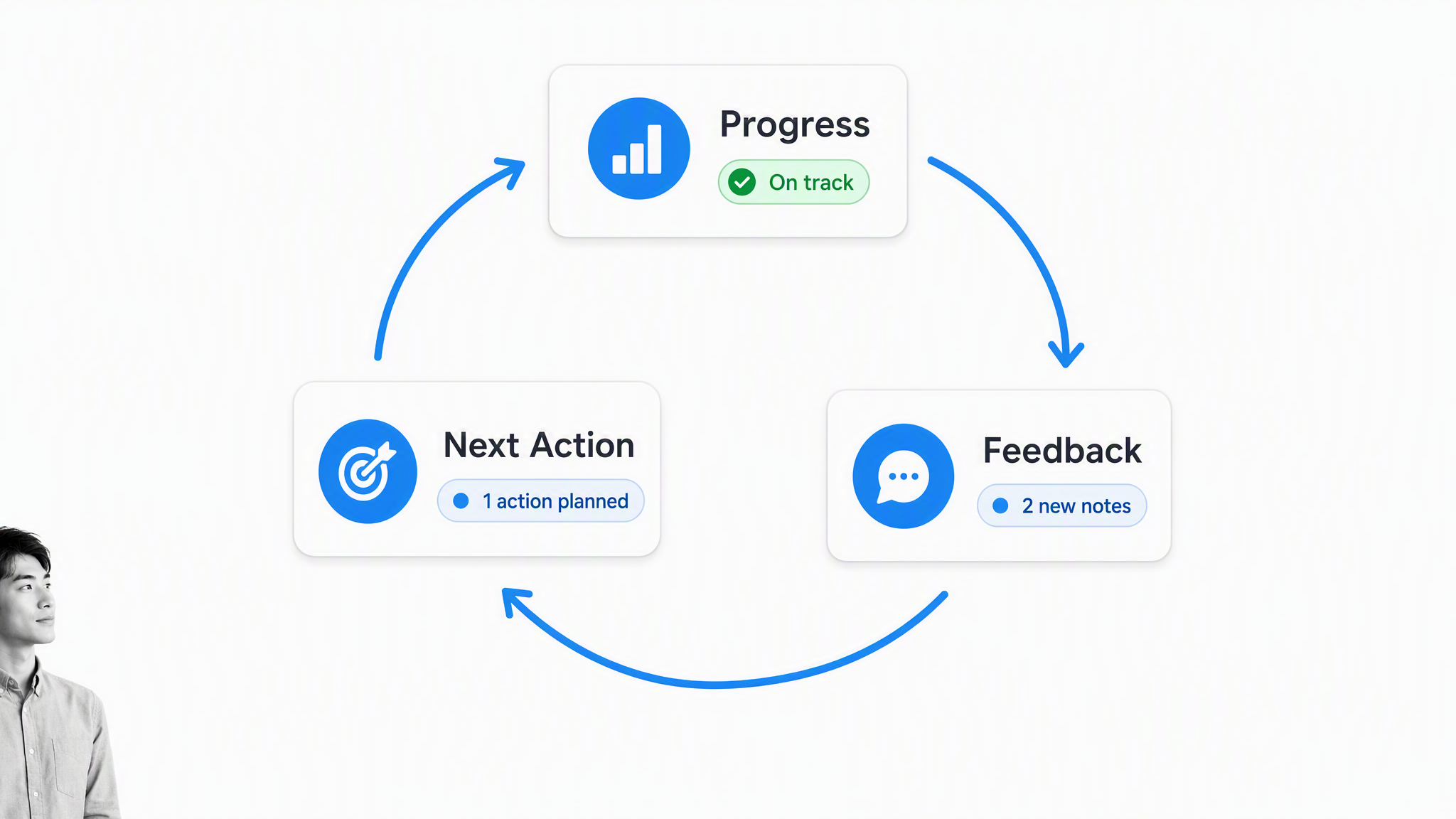
Plans should adapt when the work changes or evidence reveals a different need. A stretch assignment may disappear, a deadline may move, or the employee may master one skill faster than expected. Adjust the action while keeping the intended capability visible.
Regular check-ins prevent silent drift. A short monthly review can cover progress, evidence, obstacles, support, and the next action. Managers should coach and remove barriers without taking ownership away from the employee.
Document changes briefly so the plan remains trustworthy. Record what changed, why it changed, and the new date or action. This history helps the employee and manager distinguish thoughtful adaptation from repeated avoidance. It also makes the final review more useful because both can see how the development path responded to real conditions.
There is no point detailing a plan of action if the employee cannot implement the suggested changes. Organizational change can feel daunting, so the manager should reduce unnecessary friction, protect practice time, and revise the sequence when conditions shift. Making changes on the development path is part of implementation, not evidence that the original plan failed.
5. Reflect on efficacy and make the updates required
At each milestone, compare the evidence with the original goal. Ask what changed in the employee’s work, what remains difficult, which learning method helped most, and what should happen next. Capture both the employee’s reflection and the manager’s observation.
A review can close the goal, extend it, or replace it with the next development priority. It should also acknowledge progress. Recognition helps the employee see that development is real work, not an extra task that only matters during performance-review season.
Continuously nurture talent in your team to build a thriving organization from the inside out
An employee development plan works when it becomes a recurring conversation about goals, practice, evidence, and support. Begin with one meaningful capability, choose actions that happen close to real work, and schedule the review before the meeting ends.
The free Employee Development Plan Template provides the structure. The quality comes from the honesty of the conversation and the consistency of follow-through. For related guidance, explore employee training, talent management, and how to avoid burnout.
Used well, the plan helps an employee strengthen abilities, helps top CEOs connect leadership development with the organization’s bottom line, and helps top talent feel attracted, motivated, and retained. It also gives the team a more adequately planned future because development actions, successes, and challenges are visible before a key capability becomes urgent.
Across employee development practices, the same operating principle applies: experts and top CEOs set goals, document the activities needed, create regular progress checkpoints, and check progress against the desired impact. The approach can support employee onboarding, talent acquisition, an EAP program, work-related goals, and longer-term career development without confusing those disciplines. Further reading can provide ideas, but the current position, employee’s specific aims, and relevant subheader in the active plan should guide the conversation.
An effective talent management strategy cultivates a strong company culture through open dialogue, team learning, continuous progression and change, employee retention and satisfaction, and clear responsibility for sustaining organizational performance. That follow-through supports motivation, boosting employee retainment without making promises.
The post Employee Development Plan: Top CEOs Use One, and So Should You (Free Template) first appeared on Process Street | Compliance Operations Platform.


0 Commentaires