A financial audit is an independent examination of financial statements, records, and related controls. Its purpose is to determine whether the statements are prepared, in all material respects, under the applicable financial reporting framework. A sound audit gives investors, lenders, directors, regulators, and managers greater confidence in the information they use.
That confidence has limits. Auditors provide reasonable assurance, not an absolute guarantee that every error or fraud will be found. They use professional judgment, risk assessment, sampling, evidence, and documented procedures to reach an opinion. This guide explains the financial audit process, the difference between internal and external auditing, the role of International Standards on Auditing, and the checklists that make audit preparation easier.
- Financial audits explained
- Stages in a financial audit
- Internal and external financial audits
- International Standards on Auditing explained
- Benefits of International Standards on Auditing
- How Process Street supports financial audits
- Applying ISA requirements in practice
Financial audits explained
A financial audit evaluates an organization’s financial information against defined criteria. For many entities, those criteria are a recognized accounting framework and the relevant legal or regulatory requirements. The auditor examines whether the financial statements fairly present the entity’s financial position, performance, and cash flows.
A financial statement audit is not the same as preparing the accounts. Management is responsible for the statements and for maintaining appropriate internal control. The auditor remains independent, gathers sufficient appropriate audit evidence, evaluates material misstatements, and reports an opinion. Independence is central because stakeholders need an objective assessment rather than a confirmation from the people who produced the records.
Materiality is another important limit. Auditors focus on misstatements that could reasonably influence a user’s decisions, individually or in combination. That is why reasonable assurance is high but not absolute. Evidence may be persuasive rather than conclusive, transactions may be sampled, and sophisticated collusion can be difficult to detect.
The importance of reliable financial audits
Job loss, insolvency, falling asset prices, and complete market standstill were among the consequences of the 2008 financial crisis. Audit failures were not the sole cause, but the Financial Crisis Inquiry Commission conclusions described major failures in financial regulation, corporate governance, risk management, transparency, and accountability. The episode shows why reliable financial information and credible challenge matter to economic decisions.
Investors, lenders, and other market participants depend on comparable audit information. When an audit identifies material errors, weak controls, or unsupported estimates, management can correct the financial statements and address the process that produced the problem. When the work supports the statements, the independent opinion narrows the information gap between capital providers and those entrusted with their money.
Stages in a financial audit
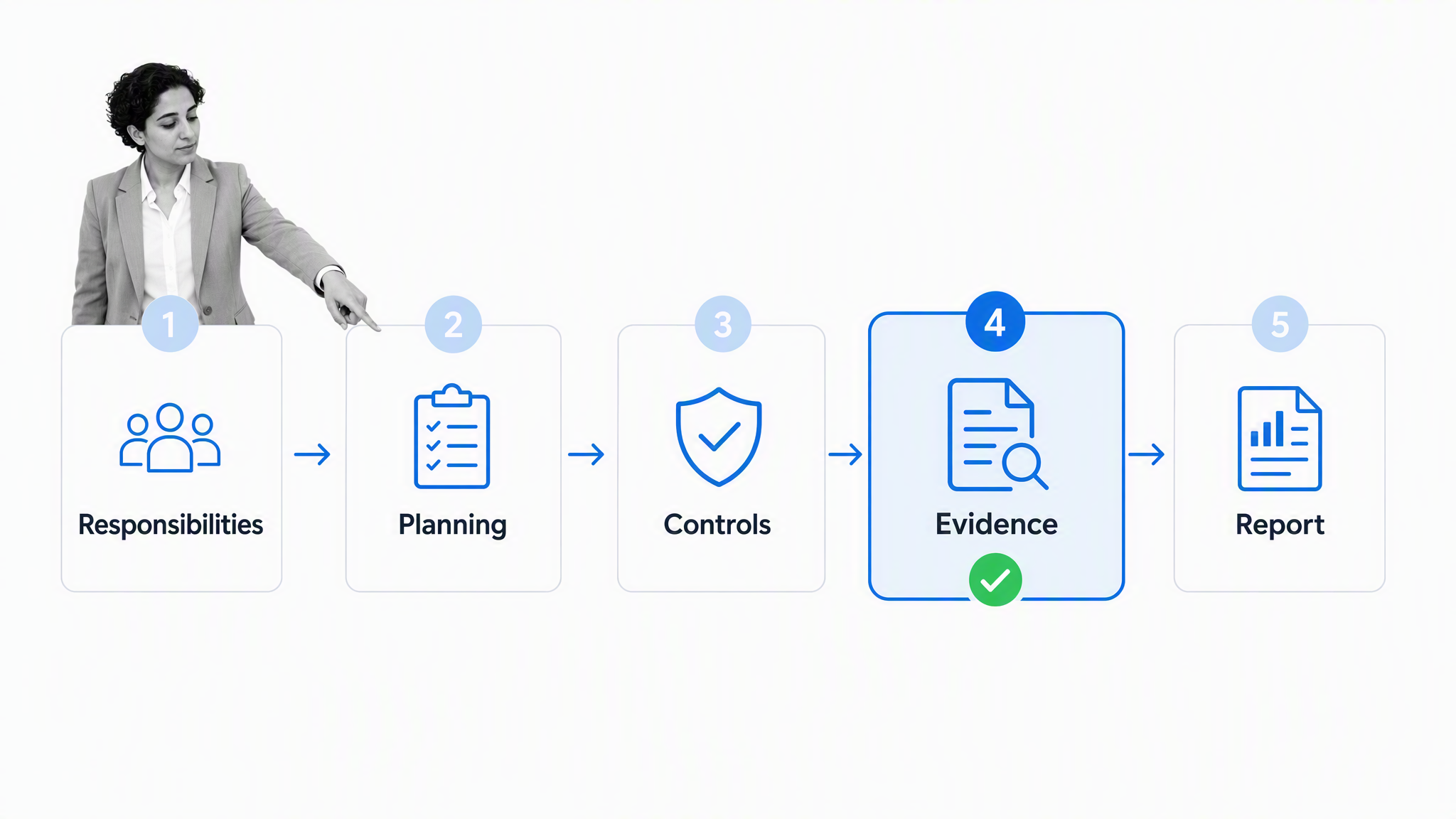
Although the details vary by organization and jurisdiction, a financial audit usually moves through a consistent sequence. Clear ownership and a documented audit trail reduce delays, duplicate requests, and last-minute evidence searches.
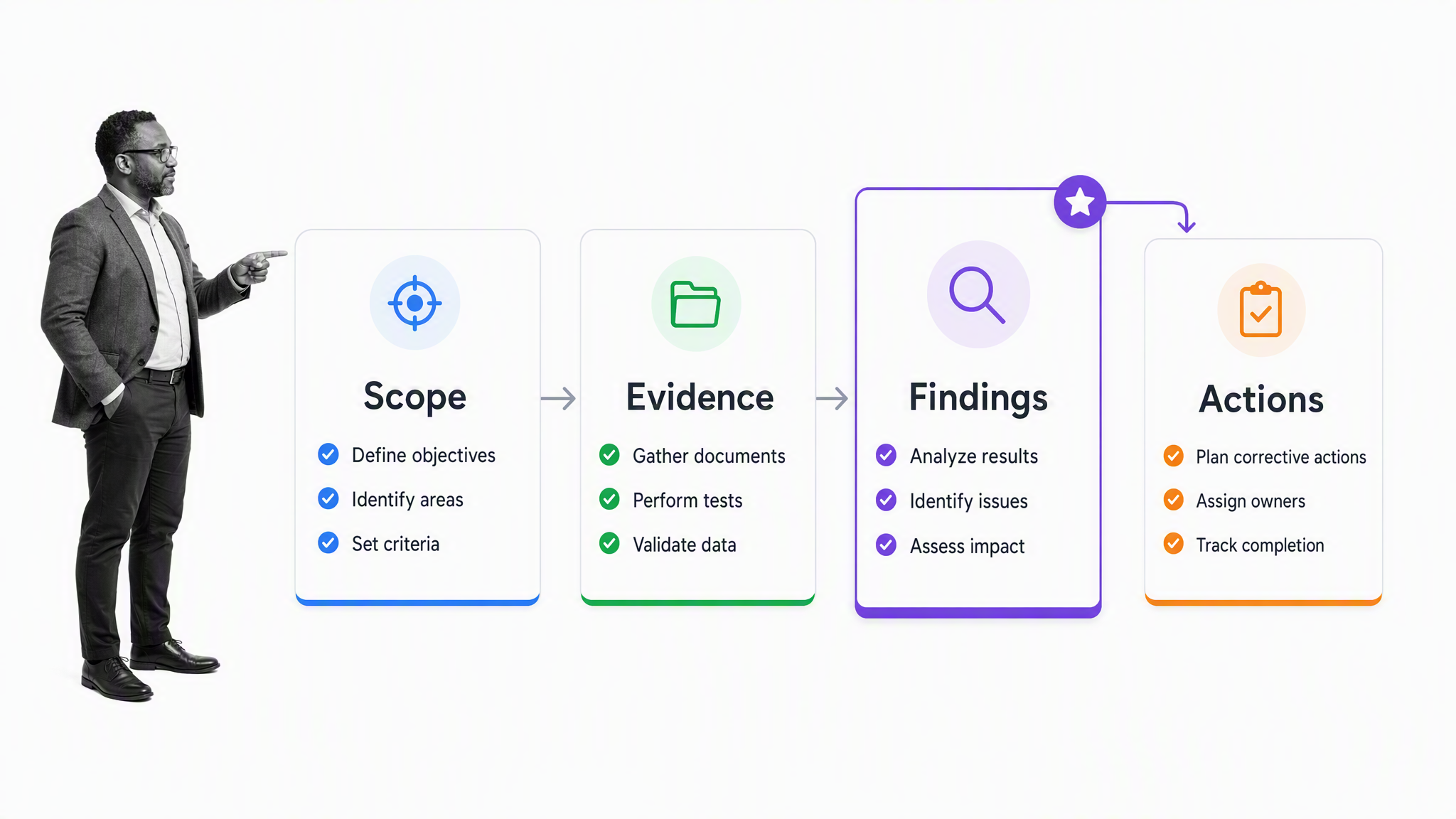
- Define scope and responsibilities. Confirm the reporting period, entities, locations, applicable framework, deadlines, primary contacts, and independence requirements.
- Plan and assess risk. Understand the organization and its environment, identify risks of material misstatement, set materiality, and design the audit approach.
- Understand and test controls. Review the controls that prevent, detect, or correct errors, then test relevant controls when the audit strategy relies on them.
- Collect audit evidence. Inspect records, confirm balances, observe procedures, recalculate amounts, perform analytics, and ask targeted questions.
- Evaluate findings. Compare evidence with the criteria, investigate exceptions, assess misstatements, and determine whether more work is needed.
- Report and follow up. Obtain management representations, communicate significant matters, issue the audit report, and track corrective actions where appropriate.
Audit readiness depends on more than having a folder of documents. Evidence should show what happened, who performed or approved the work, when it occurred, and how exceptions were resolved. A consistent naming convention, retention policy, and request tracker make the evidence easier to retrieve and evaluate.
Documents auditors commonly request
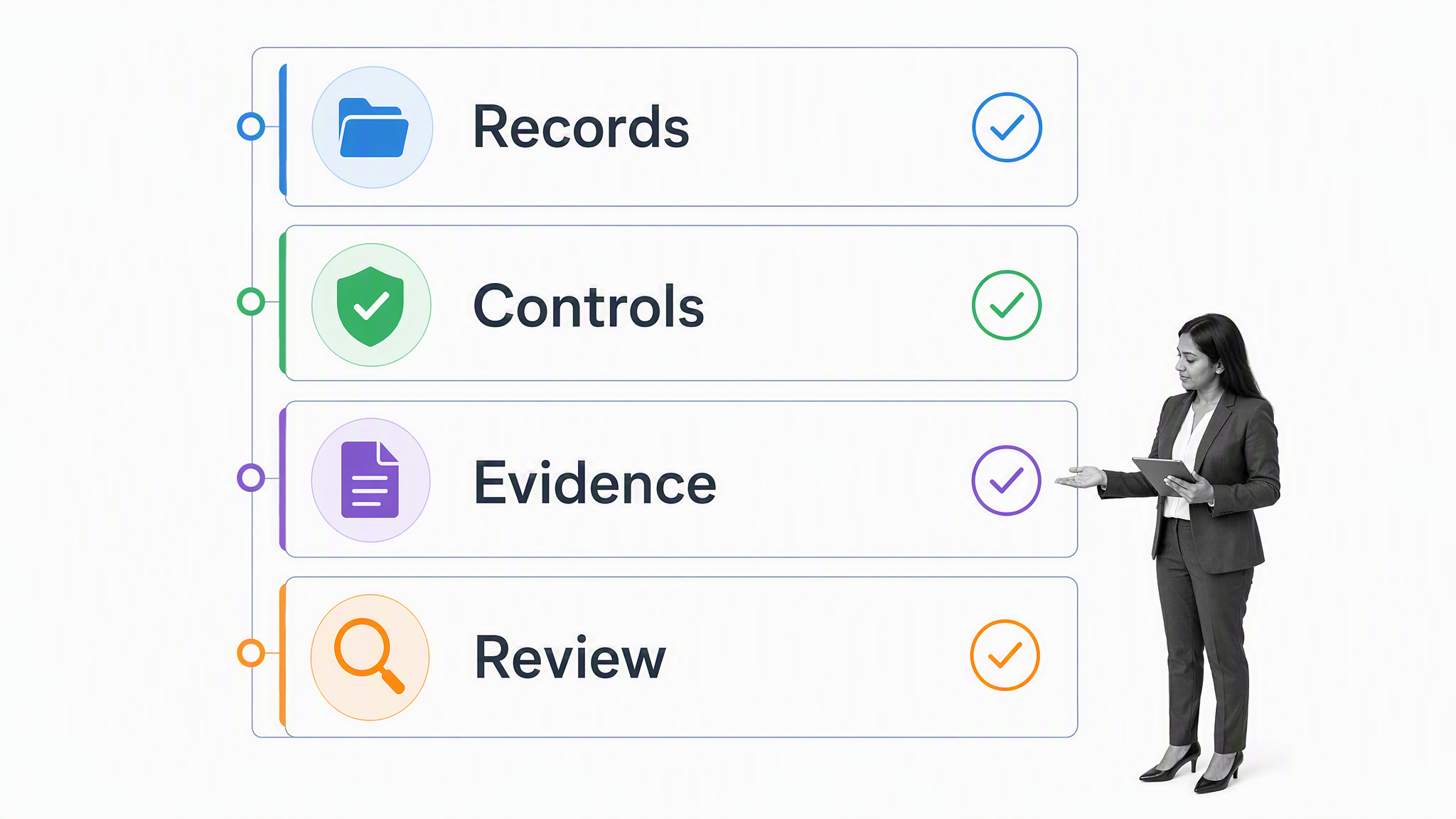
The exact request list depends on the audit scope, but teams commonly prepare the following categories of evidence:
- Core financial records: trial balance, general ledger, financial statements, account reconciliations, and adjusting entries.
- Cash and financing: bank statements, bank confirmations, debt agreements, covenant calculations, and investment records.
- Revenue and receivables: contracts, invoices, credit notes, aging reports, cash receipts, and allowance calculations.
- Purchases and payables: purchase orders, supplier invoices, receiving records, payment approvals, and payable listings.
- Assets and liabilities: fixed-asset registers, inventory records, leases, payroll records, tax documents, accruals, and legal correspondence.
- Controls and governance: policies, process documentation, approval matrices, board minutes, prior findings, access reviews, and evidence of corrective actions.
A checklist cannot replace professional judgment, but it can reduce preventable omissions and make review more consistent. The free financial audit checklist below provides a structured starting point for an internal review or external-audit preparation.
Why a checklist approach improves audit execution
Human error affects every type of business operation, and financial audit procedures are no exception. A checklist approach reduces reliance on memory by turning required procedures into visible tasks, evidence requests, and review points. It can help an auditor or finance team confirm that the work was performed in the required order and that an exception was resolved before the audit moves forward.
The underlying principle is used in other high-stakes environments. The World Health Organization reported that a surgical safety checklist reduced complications and deaths in a multicountry pilot. Checklists are also used in cardiac operating rooms, diagnostic procedures, aviation, and nuclear power plants to reduce avoidable omissions. Financial auditing is different, but the operational lesson still applies: a documented prompt can support consistent action when the work is complex.
The aim is not maximal assurance, because an audit cannot eliminate all audit risk. The aim is better discipline. A useful checklist connects each task to the relevant assertion, record, control, reviewer, and conclusion. It also leaves room for professional judgment when evidence conflicts, a transaction is unusual, or the assessed risk changes.
Open the financial audit checklist.
Internal and external financial audits
Internal financial audits
An internal financial audit is performed by or on behalf of the organization to evaluate financial processes, documentation, records, risks, and controls. Internal audit can examine whether procedures are designed well, followed consistently, and capable of producing reliable information. Its scope may extend beyond the financial statements to operational efficiency, compliance, cybersecurity, or governance.
Internal audit supports management and the board by identifying control gaps before they become larger failures. It can test whether reconciliations happen on time, approvals follow delegated authority, access rights remain appropriate, and corrective actions are completed. The work should still be objective, and internal auditors need enough organizational independence to report uncomfortable findings.
- Measure practice against policy: Compare actual work with approved procedures and document deviations.
- Identify control weaknesses: Find gaps in segregation of duties, review, access, retention, or escalation.
- Improve audit readiness: Confirm that evidence exists and can be retrieved before an external auditor requests it.
- Track remediation: Assign owners and deadlines so findings lead to durable changes rather than repeated exceptions.
The internal audit acts as an in-house check, but its value depends on the scope. A financial controls review can measure practices against proposed procedures, identify inaccurate or fraudulent accounting information, test compliance with governmental regulations, and examine risks such as data breaches or inappropriate access. A mature internal audit function communicates the importance of accounting information while preserving enough independence to report deficiencies to those charged with governance.
External financial audits
An external financial audit is performed by an independent auditor. Depending on the organization and jurisdiction, an audit may be required by securities law, a regulator, a lender, an investor agreement, or governance policy. Other organizations choose an audit voluntarily to increase confidence in their reporting.
The external auditor plans and performs procedures to obtain reasonable assurance, then expresses an opinion on the financial statements. A clean or unmodified opinion does not certify that the organization is free from fraud, operational weakness, or future financial difficulty. It means the auditor concluded that the statements are presented fairly, in all material respects, under the applicable framework.
External auditing can improve credibility, reveal errors, strengthen discipline around records and controls, and surface issues before a transaction or regulatory review. It also creates work for the finance team. A controlled request process helps the organization respond without losing visibility into which evidence was shared, reviewed, or approved.
The benefits are practical. An objective opinion provides validity to financial reporting. Independent procedures can discover errors that would otherwise affect financial trends and decision-making processes. Accurate accounting information can also limit legal and tax issues created by unsupported balances or incorrect treatment. For owners and managers, the engagement can be educational because professional accountants explain why particular records, estimates, disclosures, and controls matter.
External audits offer several benefits because they follow standards set by external regulatory bodies and are performed by an independent accountant. Internal audits continually assess financial information and help maintain compliance; external audits bring greater accountability. Both audit types benefit organizations when financial auditors document audit checks against the applicable international standards.
International Standards on Auditing explained
International Standards on Auditing (ISA) are professional standards for audits of historical financial information. They are issued by the International Auditing and Assurance Standards Board (IAASB), an independent standard-setting body. The standards cover the auditor’s overall responsibilities and the work required from planning and risk assessment through evidence, conclusions, and reporting.
ISA are auditing standards, not accounting standards. Accounting frameworks govern how financial statements are prepared. Auditing standards govern how an auditor plans the engagement, evaluates risks, gathers evidence, forms conclusions, and communicates an opinion. Local law or professional bodies determine how the standards apply in a particular jurisdiction.
That distinction matters when country-specific standards and international standards appear in the same engagement. In the United States, Generally Accepted Accounting Principles (GAAP) provide an accounting framework, while standards issued by the PCAOB or AICPA govern particular audits. Other countries and regions have their own systems. The audit team must identify the authoritative requirements rather than assume that one international reference overrides local law.
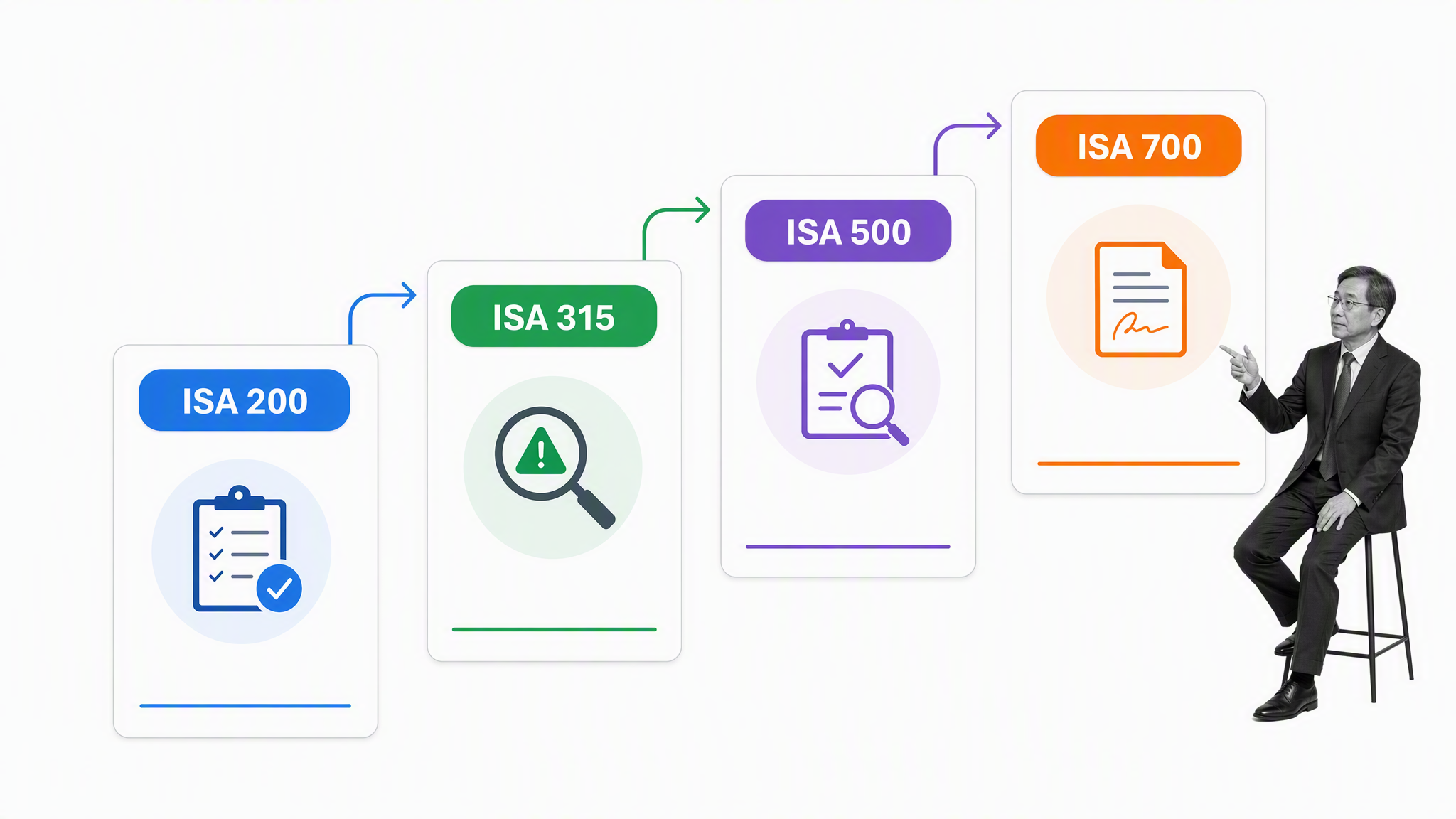
The framework is easier to understand as a set of connected responsibilities. ISA 200 establishes the overall objectives of the independent auditor. ISA 315 addresses identifying and assessing risks of material misstatement. ISA 500 covers audit evidence. ISA 700 addresses forming an opinion and reporting on financial statements. The complete requirements and application material belong in the current official handbook, not in an abbreviated web list.
Why use an international set of standards when localized auditing standards already exist? Multinational firms operate across jurisdictions, component auditors, currencies, and reporting systems. Common terminology can align financial auditing processes around the globe and reduce avoidable differences in instructions, documentation, and reporting. It does not remove cultural influences or national rules, but it gives audit professionals a shared reference point for high-quality work.
The IAASB publishes the current handbook of international quality management, auditing, review, assurance, and related-services pronouncements. Auditors should use the edition and effective dates applicable to their engagement and confirm any national adoption or modification.
A brief history of international auditing standards
International standard-setting developed to improve the consistency and credibility of assurance across markets. The International Auditing Practices Committee was established in 1978 and later evolved into the IAASB. Today, the board develops standards and guidance through a public process intended to serve the public interest. The IAASB explains its mandate and standard-setting role on its official site.
The practical effect is not that every audit becomes identical. An auditor still applies professional skepticism and judgment to the entity, industry, reporting framework, and risks. The standards provide a shared baseline for the quality and documentation of that work.
Benefits of International Standards on Auditing
Consistent auditing standards help users understand what an audit is designed to accomplish and help firms organize work around common requirements. Their value is strongest when the standards are applied with independence, competence, professional skepticism, and effective quality management.
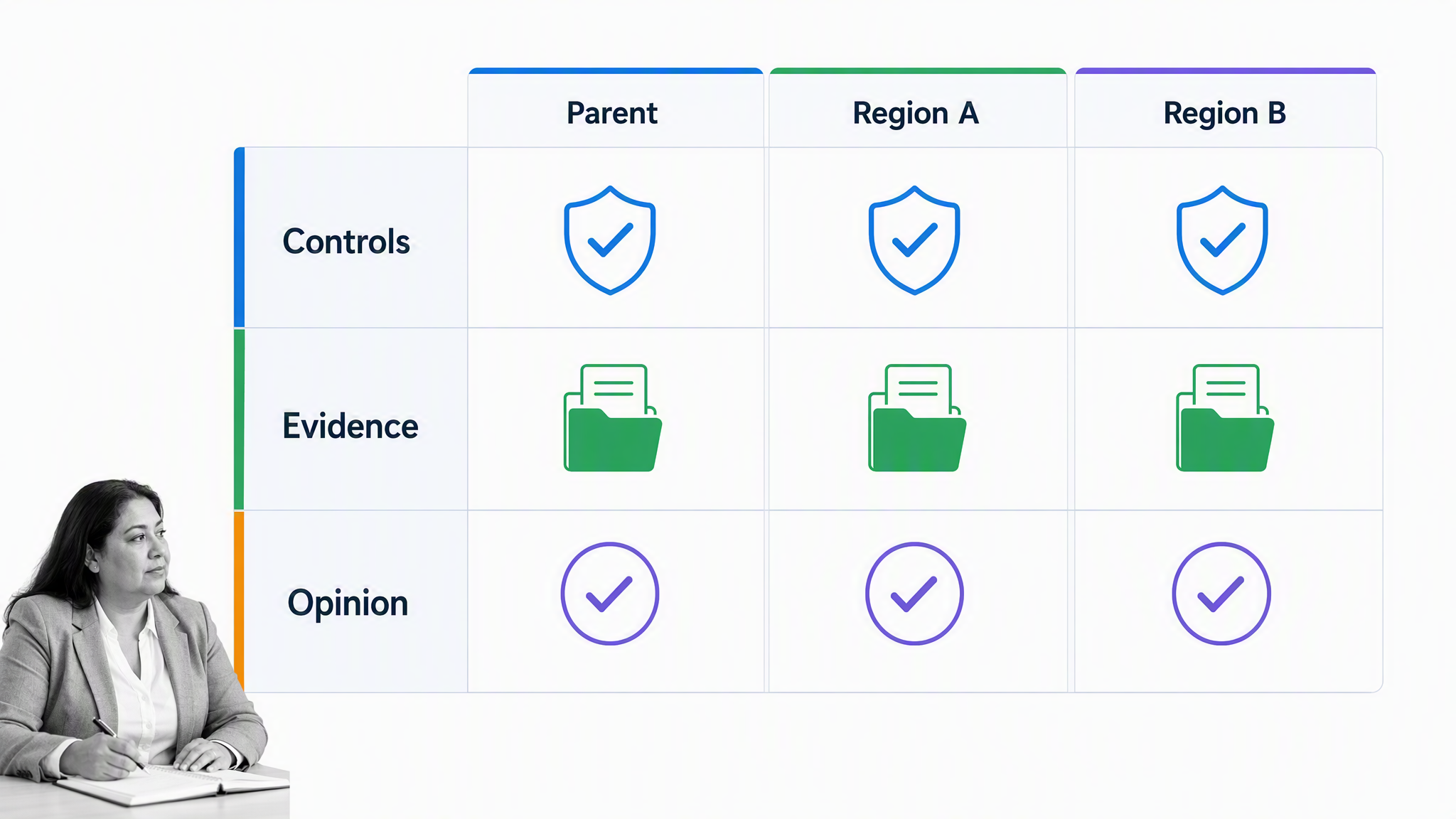
International comparability and the quality of audit information improve when auditors use a shared professional framework. A common language does not erase national requirements, but it makes communication more effective across a worldwide network. It can also improve capital allocation by helping stakeholders identify opportunities and risks on a global scale.
International auditing standards bring benefits otherwise missed from fragmented localized auditing standards, including consistent audit guidelines, lower international reporting costs, and a shared basis to analyze financial information across jurisdictions. They also support the wider aim of high-quality accounting standards and reliable assurance.
Greater transparency
Shared requirements improve transparency about the auditor’s responsibilities, the basis for the opinion, and significant reporting matters. Users can interpret an audit report with a clearer understanding of the work behind it.
Clearer accountability
Standards create a documented basis for planning, supervision, evidence, review, and conclusions. That strengthens accountability within the engagement team and gives regulators and quality reviewers criteria for evaluating the work.
More efficient audit execution
A common framework supports reusable methods, training, documentation structures, and quality controls. Efficiency should not mean fewer necessary procedures. It means less reinvention and better focus on the areas with the greatest risk of material misstatement.
More consistent cross-border work
Multinational groups often need evidence from several entities, regions, and component auditors. Common terminology and requirements make it easier to coordinate scope, instructions, evidence, review, and reporting across borders while still accounting for local law.
Stronger confidence in financial reporting
Reliable reporting supports decisions by investors, lenders, boards, regulators, and other stakeholders. Auditing standards do not remove business risk or cultural differences, but they provide a disciplined process for evaluating financial information and communicating the result.
How Process Street supports financial audits
Process Street is a Compliance Operations Platform that brings procedure documentation and controlled operational workflows together in one product. Its Docs capabilities help teams maintain approved audit procedures and evidence requirements. Its Ops capabilities turn those procedures into assigned, trackable workflows. Built-in AI can support work inside the controls and approval paths the organization defines.
For financial audits, that structure helps teams coordinate recurring controls, evidence requests, reviews, approvals, exceptions, and remediation. An audit lead can assign an owner, require a file or form response, set a due date, route an approval, and retain the activity history. That makes the status of each request visible without relying on disconnected email threads and spreadsheets.
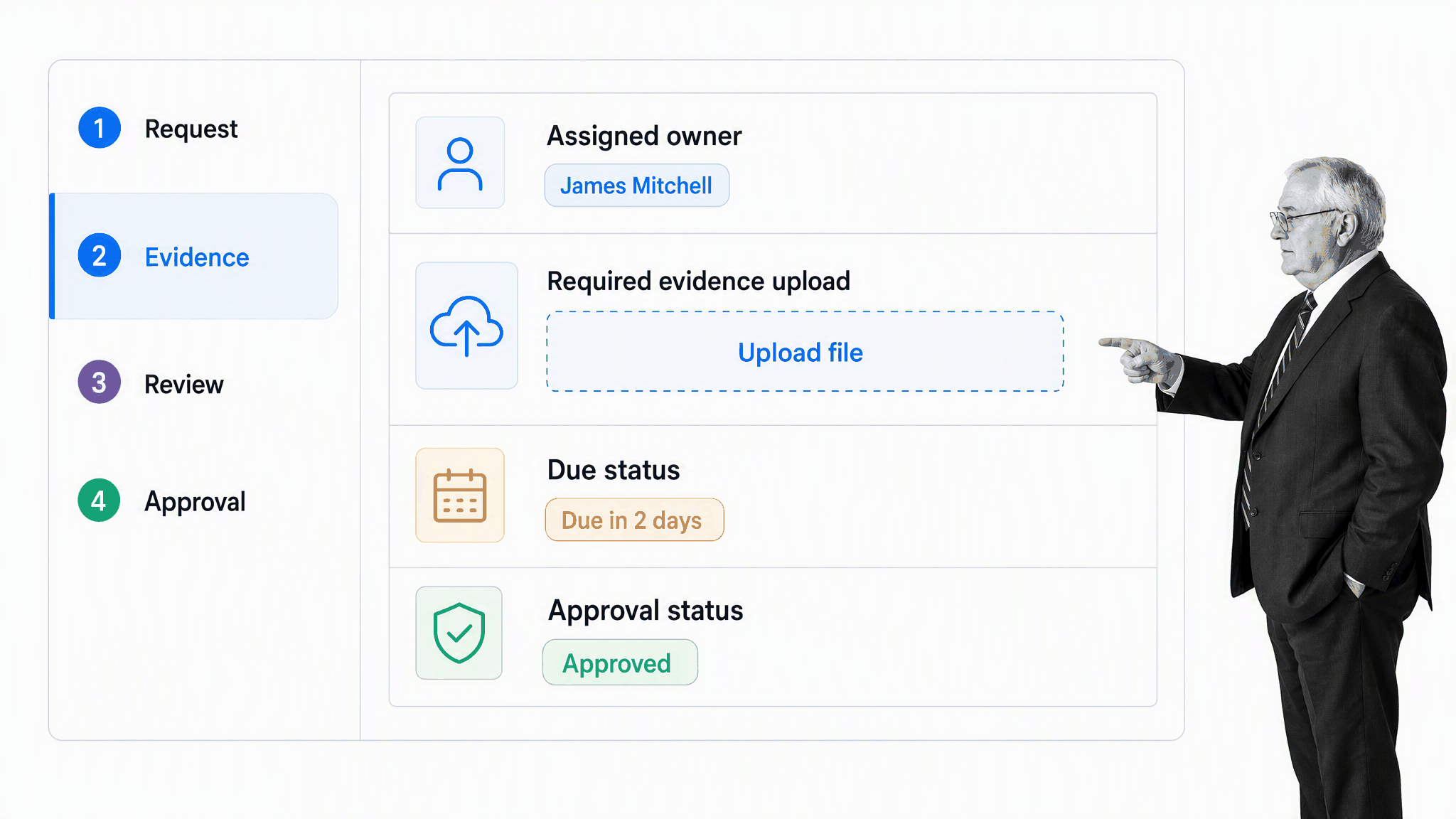
- Standardize audit procedures: Keep instructions, criteria, and evidence requirements in the same controlled process.
- Assign responsibility: Make each request, review, and corrective action accountable to a named owner.
- Collect evidence consistently: Require the right records and information before work can move forward.
- Route approvals: Send exceptions or completed work to the right reviewer with the relevant context attached.
- Track deadlines and findings: Use due dates, notifications, and reporting to reduce missed requests and overdue remediation.
- Maintain an audit trail: Preserve the sequence of activity so reviewers can see what happened and when.
Conditional logic can adapt a workflow to the entity, account, or risk being reviewed. Dynamic due dates keep dependent deadlines aligned. Role assignments support task delegation, while approvals allow decision-makers to give the go-ahead, reject incomplete work, or request necessary comments and evidence. Stop tasks and required fields can prevent a run from advancing before a critical control is completed.
Explore audit management software for coordinating audit work across teams, or see how Process Street supports audit teams that need repeatable, evidence-backed execution.
Applying ISA requirements in practice
An ISA audit checklist can help an audit team organize the applicable requirements and document where each one is addressed. It should be tailored to the engagement, the current standards, local adoption, and the auditor’s professional judgment. It is a navigation and completion aid, not a substitute for the official pronouncements.
Respective responsibilities
Confirm the engagement terms, management’s responsibilities, the auditor’s objectives, ethical requirements, independence, professional skepticism, quality management, documentation, communication, and responses to laws, regulations, and suspected fraud.
- ISA 200: Overall Objectives of the Independent Auditor and the Conduct of an Audit in Accordance with International Standards on Auditing.
- ISA 210: Agreeing the Terms of Audit Engagements.
- ISA 220: Quality Management for an Audit of Financial Statements.
- ISA 230: Audit Documentation.
- ISA 240: The Auditor’s Responsibilities Relating to Fraud in an Audit of Financial Statements.
- ISA 250: Consideration of Laws and Regulations in an Audit of Financial Statements.
- ISA 260: Communication with Those Charged with Governance.
- ISA 265: Communicating Deficiencies in Internal Control to Those Charged with Governance and Management.
Audit planning and risk assessment
Document the overall strategy and audit plan. Understand the entity and its environment, identify related parties, determine materiality, assess risks of material misstatement, and design responses to those risks.
- ISA 300: Planning an Audit of Financial Statements.
- ISA 315: Identifying and Assessing the Risks of Material Misstatement.
- ISA 320: Materiality in Planning and Performing an Audit.
- ISA 330: The Auditor’s Responses to Assessed Risks.
Internal control
Understand controls relevant to the audit, including the information system and control activities. When relying on operating effectiveness, design and perform appropriate tests of controls and evaluate identified deficiencies.
- ISA 402: Audit Considerations Relating to an Entity Using a Service Organization.
- ISA 450: Evaluation of Misstatements Identified during the Audit.
Audit evidence
Obtain sufficient appropriate evidence through procedures such as inspection, observation, external confirmation, recalculation, reperformance, analytical procedures, and inquiry. Address accounting estimates, inventory, litigation, opening balances, and other areas relevant to the engagement.
- ISA 500: Audit Evidence.
- ISA 501: Audit Evidence, Specific Considerations for Selected Items.
- ISA 505: External Confirmations.
- ISA 510: Initial Audit Engagements, Opening Balances.
- ISA 520: Analytical Procedures.
- ISA 530: Audit Sampling.
- ISA 540: Auditing Accounting Estimates and Related Disclosures.
- ISA 550: Related Parties.
- ISA 560: Subsequent Events.
- ISA 570: Going Concern.
- ISA 580: Written Representations.
Using the work of others
When using internal auditors, component auditors, or experts, evaluate their competence, capabilities, objectivity, scope, and findings. The group or engagement auditor remains responsible for the audit opinion.
- ISA 600: Special Considerations, Audits of Group Financial Statements, Including the Work of Component Auditors.
- ISA 610: Using the Work of Internal Auditors.
- ISA 620: Using the Work of an Auditor’s Expert.
Audit conclusions and the audit report
Evaluate identified misstatements, subsequent events, going concern, written representations, disclosures, and the overall presentation of the financial statements. Form the opinion and prepare the report, including modifications or emphasis where the standards require them.
- ISA 700: Forming an Opinion and Reporting on Financial Statements.
- ISA 701: Communicating Key Audit Matters in the Independent Auditor’s Report.
- ISA 705: Modifications to the Opinion in the Independent Auditor’s Report.
- ISA 706: Emphasis of Matter Paragraphs and Other Matter Paragraphs in the Independent Auditor’s Report.
- ISA 710: Comparative Information, Corresponding Figures and Comparative Financial Statements.
- ISA 720: The Auditor’s Responsibilities Relating to Other Information.
Specialized audits and other engagements
Special considerations may apply to group audits, special-purpose frameworks, single financial statements, summaries, reviews, assurance engagements, and related services. Confirm the engagement type before applying a generic checklist.
- ISA 800: Special Considerations, Audits of Financial Statements Prepared in Accordance with Special Purpose Frameworks.
- ISA 805: Special Considerations, Audits of Single Financial Statements and Specific Elements, Accounts or Items of a Financial Statement.
- ISA 810: Engagements to Report on Summary Financial Statements.
More financial audit resources
- Audit procedures and free audit templates
- Financial Audit Checklist template
- Internal audit fundamentals
- Risk management processes
- Process documentation software
- The IIA Global Internal Audit Standards
- PCAOB AS 1000: General Responsibilities of the Auditor
Related finance workflows to document
Audit evidence often comes from recurring finance operations rather than a one-off audit task. Documenting these workflows helps the team explain how transactions are initiated, authorized, recorded, reconciled, and reported. Depending on scope, an auditor may sample records from:
- Accounting onboarding procedures and the accounts payable process.
- The account receivable process, creating an invoice, and cash management process.
- Annual financial report preparation and balance sheet preparation.
- Bank reconciliation, cash flow reporting, and expense management.
- Budget preparation, the budget process, and financial planning process.
- Business tax preparation, payroll, and individual tax preparation where relevant.
- Purchase order workflows, procurement guidelines, and purchasing approvals.
- Investor reporting, private equity due diligence, and Know Your Customer checks.
- PCI compliance, access reviews, and other controls over financial systems.
Make financial audits dependable
A dependable financial audit process connects standards with evidence. Start by defining the scope, responsibilities, reporting framework, and deadlines. Then map each material risk to the relevant control, procedure, evidence, reviewer, and conclusion. That chain makes the audit easier to execute and easier to defend.
Use internal audits to test the system before an external engagement, but keep the roles distinct. Internal audit helps the organization improve risk management and controls. The independent external auditor evaluates the financial statements and reports an opinion. Both benefit from accurate records, consistent procedures, and a visible audit trail.
An internal audit can help an organization stay prepared for an external audit provider, but preparation also requires attention to the applicable audit guidelines. Whether the engagement follows country-specific or international financial standards, the aims are similar: reliable information, economic order and control, and accountability. Failure to abide by required procedures can have damaging consequences, while a consistent set of standards can improve the quality of financial information available to the wider business world.
The two free templates on this page provide a practical starting point. Adapt them to the engagement and current professional requirements, assign clear owners, and keep evidence with the work it supports. The result is a financial audit that is more organized, transparent, and ready for review.
Financial audit FAQ
The post Financial Audits: A Quick Guide with Free Templates first appeared on Process Street | Compliance Operations Platform.


0 Commentaires