Hoshin Kanri is a seven-step strategy deployment method that connects an organization’s long-term direction to annual objectives, team priorities, measurable targets, and accountable owners. Also called Hoshin planning or policy deployment, it gives leaders and frontline teams a shared system for deciding what matters and translating it into action.
The method combines breakthrough objectives, two-way catchball conversations, the Hoshin X matrix, and the Plan-Do-Check-Act cycle. The result is not a static annual plan. It is a recurring management rhythm for aligning resources, reviewing evidence, solving problems, and learning from execution.
This guide explains the Hoshin Kanri process, its origins in Japanese quality management, the role of lean thinking, catchball, and the X matrix, and how to put the method into practice with a free Hoshin planning template. Used well, this lean management approach can help an organization gain a competitive advantage by turning business vision, mission, and strategy into coordinated action.
- What is Hoshin Kanri and where did it come from?
- Hoshin planning and key concepts
- Main benefits of Hoshin Kanri planning
- Using Process Street to implement Hoshin Kanri
- Related Japanese management methods
What is Hoshin Kanri and where did it come from?
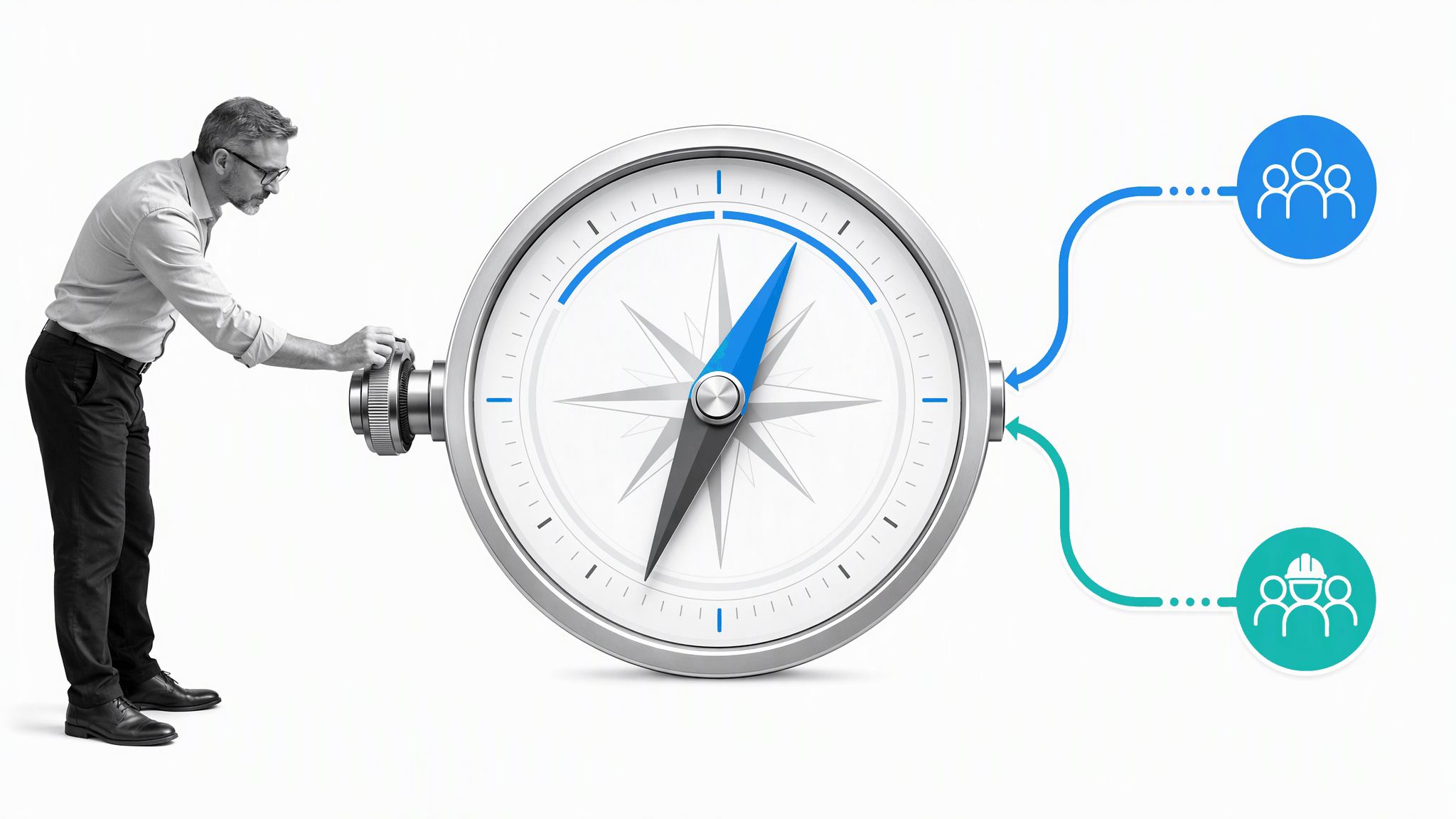
Hoshin Kanri is a structured annual process for developing, deploying, and accomplishing priority policies through coordinated organization-wide work and repeated PDCA review. The term is commonly translated as strategy deployment, policy deployment, or compass management. Each translation points to the same idea: the organization chooses a direction, aligns its levels around that direction, and keeps correcting course as real work produces evidence.
Hoshin planning begins with a small number of breakthrough objectives. These are not routine targets that the organization can reach by repeating last year’s work. They require a material change in capability, policy, process, customer outcome, quality, cost, safety, or growth. The organization then converts those longer-term objectives into annual priorities and specific initiatives.
Breakthrough objectives are targets that can only be achieved by significantly changing the way a business operates. They imply dramatic alterations to the organization’s trajectory and policy, coordinated from top down and bottom up. Senior executives lead the annual process, but accomplishing policies requires priority issues, objectives, and strategies to move through coordinated organization-wide activities and the rigorous application of the PDCA cycle.
The method works in both directions. Leaders set strategic intent and boundaries, while the people responsible for execution test the plan against capacity, constraints, customer needs, and operational reality. That dialogue prevents the plan from becoming either a top-down wish list or a collection of disconnected local projects.
There is no single universal seven-step formulation, but the following practical sequence preserves the common deployment logic:
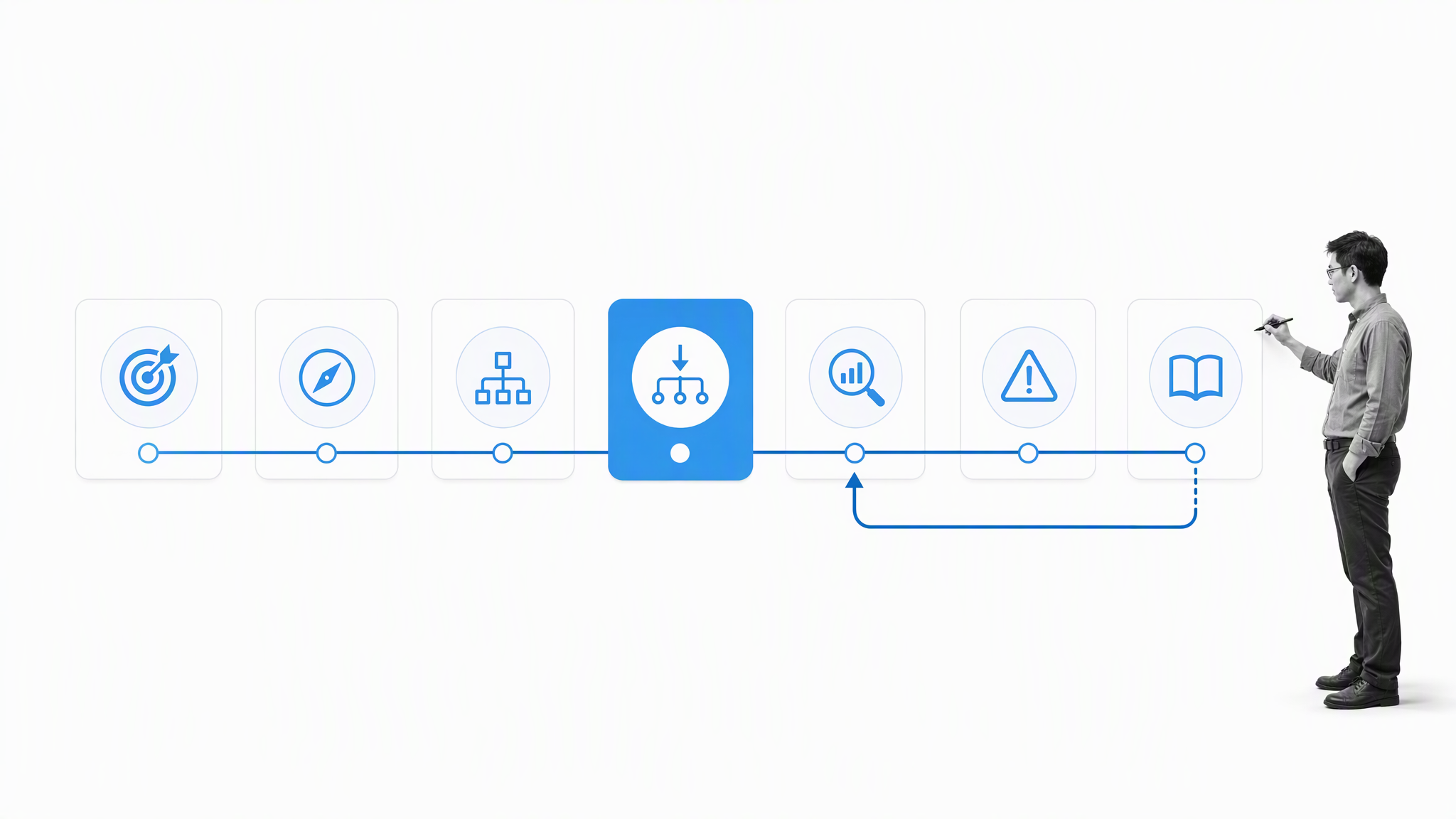
- Confirm vision, mission, and operating values. Establish the long-term direction and the principles that constrain how the organization will pursue it.
- Select breakthrough objectives. Choose the few multi-year outcomes that require a meaningful change in how the organization operates.
- Translate them into annual objectives. Define what progress must be visible this year, with measurable results rather than vague activity.
- Deploy objectives into priorities and initiatives. Connect company goals to departmental plans, projects, workflows, and named owners.
- Review results with evidence. Use agreed measures to compare actual progress with the plan at a regular cadence.
- Use PDCA to solve gaps. Investigate missed objectives, test countermeasures, and adjust the work instead of merely explaining the variance.
- Reflect and learn. Carry lessons into the next planning cycle so the system improves rather than resetting each year.
The explanatory cascade is important. Individual tasks complete projects. Projects advance annual priorities. Annual priorities move the breakthrough objectives. If a lower-level task does not connect upward, it competes for attention without advancing the strategy. If a top-level objective has no owned work below it, it remains an aspiration rather than a deployed plan.
The same logic makes corrective action visible. A missed task or delayed initiative does not automatically mean the strategy is wrong. The review asks where the system broke: Was the objective unclear? Was the owner missing? Was the capacity assumption unrealistic? Did a customer, supplier, regulation, or technology change? The answer determines whether to fix execution, revise the method, or change the objective.
A useful Hoshin plan therefore includes both outcomes and operating discipline. Teams need defined measures, owners, review dates, evidence, and escalation paths. Without that management rhythm, the X matrix can become a polished picture of a plan nobody actually runs.
Objective deployment moves from top to bottom through the organizational hierarchy. Breakthrough objectives are broken down according to organizational structure, separating the contribution expected from groups, departments, and teams. Annual improvement plans become specific projects, and the projects become corresponding tasks assigned to relevant individuals. As project after project reaches completion, the objectives above them should move as well.
That relationship can also be read from bottom to top. The satisfaction of objectives at lower organizational levels supports the objectives higher in the hierarchy. When a task, project, or objective is not met, the result should trigger corrective action during the review and problem-solving steps. Through negotiation and alignment, the company can adapt the plan without losing the new policy or organizational direction it is trying to achieve.
The embedded Hoshin planning workflow provides a practical sequence for turning this logic into repeatable work. It should be adapted to the organization’s strategy cycle, decision rights, measures, and review cadence rather than treated as a one-size-fits-all script.
Hoshin Kanri origins and modern development
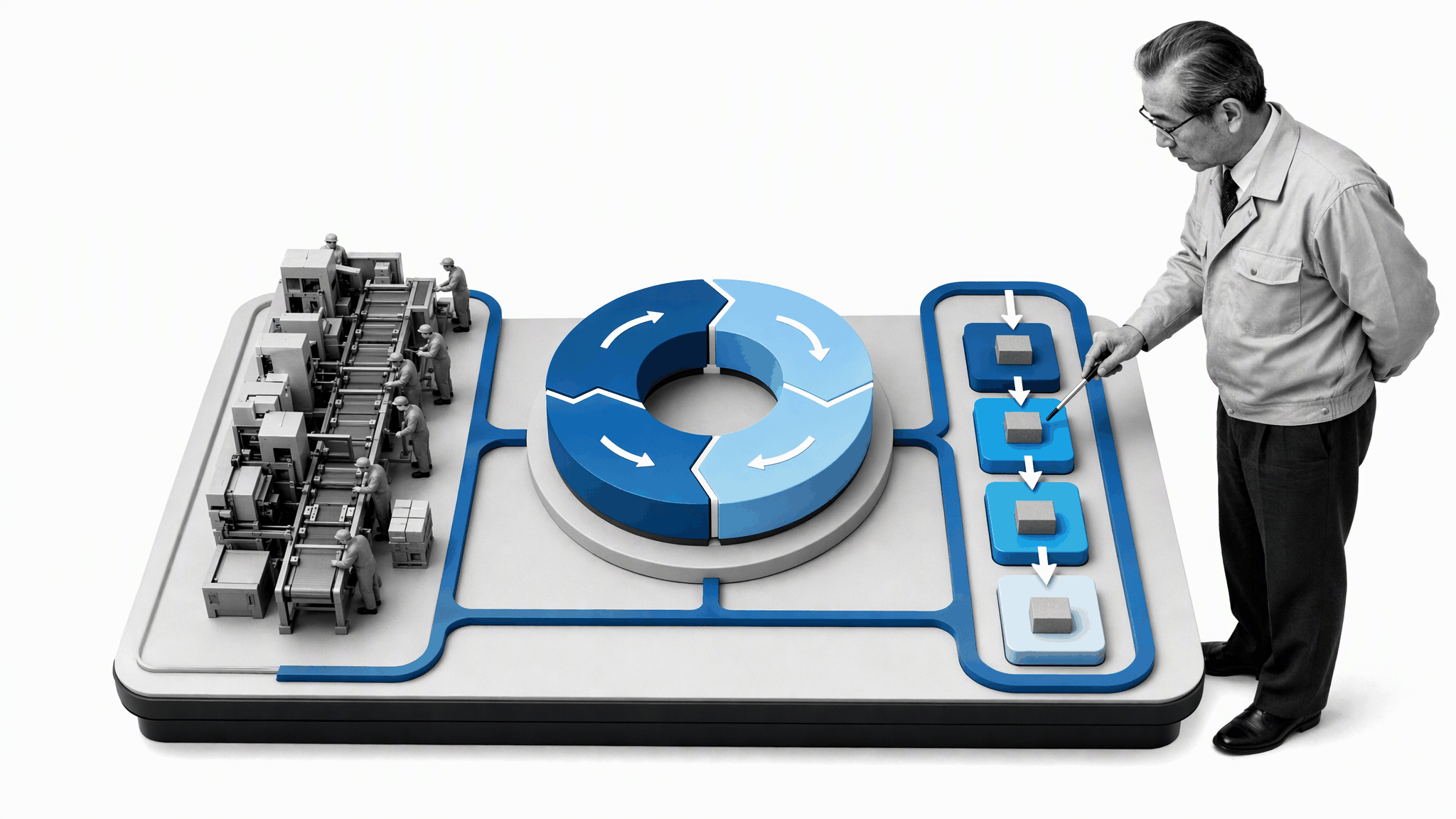
Hoshin Kanri emerged from Japanese total quality management and policy-management practice in the decades after the Second World War. W. Edwards Deming’s teaching on statistical quality control and the PDCA cycle influenced Japanese management, but Hoshin Kanri was not simply a Deming method renamed. Japanese quality leaders adapted several ideas into a system for connecting executive policy with organization-wide execution.
The Lean Enterprise Institute describes Hoshin Kanri as a management process that aligns an organization’s functions and activities with its strategic objectives. Its historical materials place the method’s development in Japan during the 1960s, with roots in total quality management and contributions from Japanese quality experts including Yoji Akao.
Akao is closely associated with developing and teaching policy deployment and quality function deployment. As Japanese firms refined company-wide quality control, the management challenge expanded beyond improving isolated processes. Organizations needed a way to choose strategic priorities, negotiate how those priorities would be achieved, and review progress without losing the connection between policy and frontline work.
The postwar setting matters. Japan faced tremendous damage to its economy and infrastructure, while production facilities, raw materials, and experienced management were in short supply. American experts were called upon to support reconstruction, education, and training. Deming trained engineers, managers, and scholars in statistical quality control, the causes of variation, process control, and the PDCA cycle. Japanese organizations then adapted those teachings to their own company-wide management practices.
One early reconstruction goal was to begin production of new radios. New management was unskilled, production facilities and raw materials were scarce, and quality management was a major issue. Deming helped spearhead quality-control initiatives that placed responsibility on top-level management for clearly defining quality policy and procedures. That kind of quality-control framework spread beyond Japan to America and the rest of the globe as companies looked for a disciplined connection between management policy and operating work.
The language also carries the idea of direction and administration. Hoshin is commonly associated with a compass or a method for setting strategic direction. Kanri is associated with management, control, or administration. The familiar translation, compass management, captures the aim: define the direction, channel coordinated effort toward it, and use evidence to correct the course.
Hoshin planning began spreading into the United States through companies with Japanese operations and through the broader adoption of lean and quality-management methods. Early adopters valued the method because it translated a large strategic ambition into linked annual objectives, measures, responsibilities, and review routines.
The historical lesson is more useful than a tidy origin story. Hoshin Kanri developed as a synthesis of quality thinking, strategic management, and organization-wide learning. Its value comes from the operating system formed by deployment, catchball, measurement, PDCA, and reflection, not from a single diagram or executive planning event.
Hoshin planning and key concepts
The seven-step sequence explains the flow of a Hoshin cycle. Three concepts explain how the cycle stays connected in practice: lean management, catchball, and the Hoshin X matrix.
Lean management and PDCA
Lean management treats improvement as a continuing discipline rather than a one-time initiative. Teams learn by making work visible, identifying waste and variation, testing countermeasures, and standardizing what works. Hoshin planning applies that discipline to strategy deployment.
As a management method, lean thinking makes systematic, incremental changes to improve process efficiency and quality. Organizational improvement is treated as a continuous process, not a temporary program. Hoshin Kanri incorporates those principles by connecting strategic objectives to operating procedures, review, problem-solving, and reflection.
The connection is strongest in the review and problem-solving stages. When a measure falls behind, leaders do not simply demand more effort. They ask what the process is producing, why the gap exists, what assumption failed, and which countermeasure can be tested. The aim is to improve the management system as well as the result.
PDCA stands for Plan-Do-Check-Act. Teams plan a change, carry it out on an appropriate scale, check the evidence, and act on what they learned. Successful changes become part of the standard. Unsuccessful changes produce information that guides the next cycle.
In Hoshin Kanri, PDCA operates at several levels. An initiative owner can use it to improve a project. A department can use it to address a missed annual objective. Senior leaders can use it to test whether the breakthrough strategy still fits the market and the organization’s capabilities.
The four-stage cycle provides a systematic way to review business processes, products, and services. Planning states the expected result and method. Doing produces operational evidence. Checking compares that evidence with the expectation. Acting standardizes a successful change or begins another problem-solving cycle. This is why Hoshin planning treats reflection and learning as part of execution rather than an after-action exercise.
The PDCA workflow above can support a missed-objective review. The important point is to connect each countermeasure to the Hoshin objective, a named owner, evidence, and the next review date.
Catchball and two-way alignment
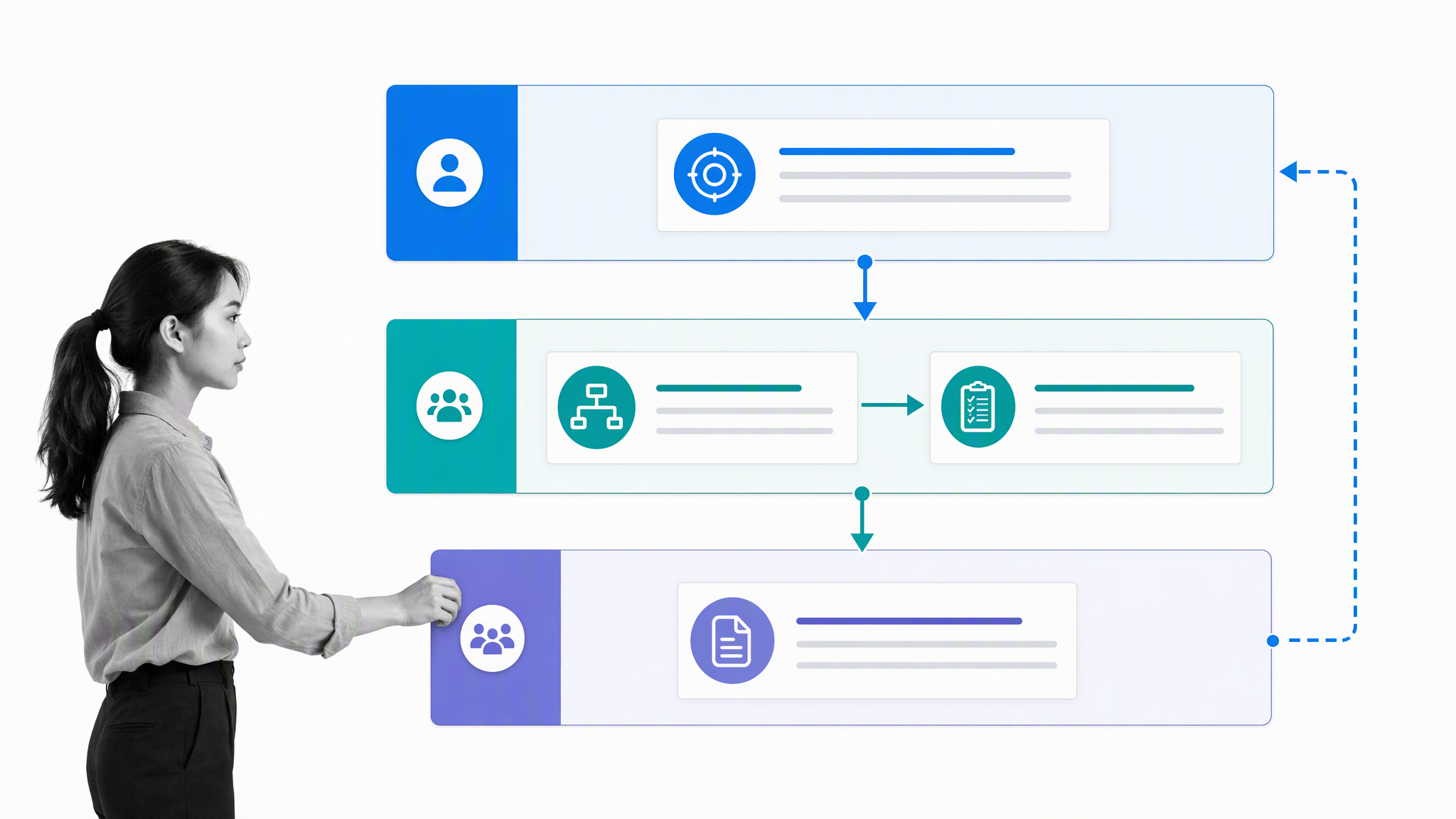
Catchball is the structured dialogue that moves objectives, proposals, questions, and constraints between organizational levels. Leaders pass down strategic intent. Teams respond with information about capacity, risks, dependencies, and the tactics they believe can achieve the result. The plan moves back and forth until the participants understand the objective and can commit to a credible approach.
The ball metaphor is practical. Objectives pass from top-level management to lower organizational levels, and lower levels relay feedback and tactical propositions back to upper management. Several rounds of ball-passing may be needed before consensus is reached and the objective is satisfied. The goal is to create and maintain transparent feedback loops, an open two-way stream for information sharing, and meaningful tasks that support the overarching new policy or direction.
The Lean Enterprise Institute’s strategy-deployment guidance describes this top-down and bottom-up dialogue as a way to match priorities with the projects and resources needed to deliver them. Catchball is therefore more than communication. It is a negotiation about what the organization will do, what it will not do, and who owns the tradeoffs.
A good catchball exchange changes the plan. A department may show that two executive priorities compete for the same specialist capacity. A frontline team may reveal that a proposed measure rewards speed while creating a quality risk. A customer-facing group may identify a dependency the leadership team cannot see from aggregate data.
Catchball fails when it becomes ceremonial. Asking for feedback after the target and method are already fixed is not two-way alignment. Neither is allowing every local preference to dilute the strategic priority. Leaders retain responsibility for direction, while teams contribute the operational knowledge required to make that direction executable.
Document the outcome of each catchball decision. Record the objective, proposed approach, assumptions, resource commitments, rejected alternatives, owner, and review date. That creates continuity when people change roles and gives later reviews a clear record of why the plan was designed as it was.
The Hoshin X matrix in practice
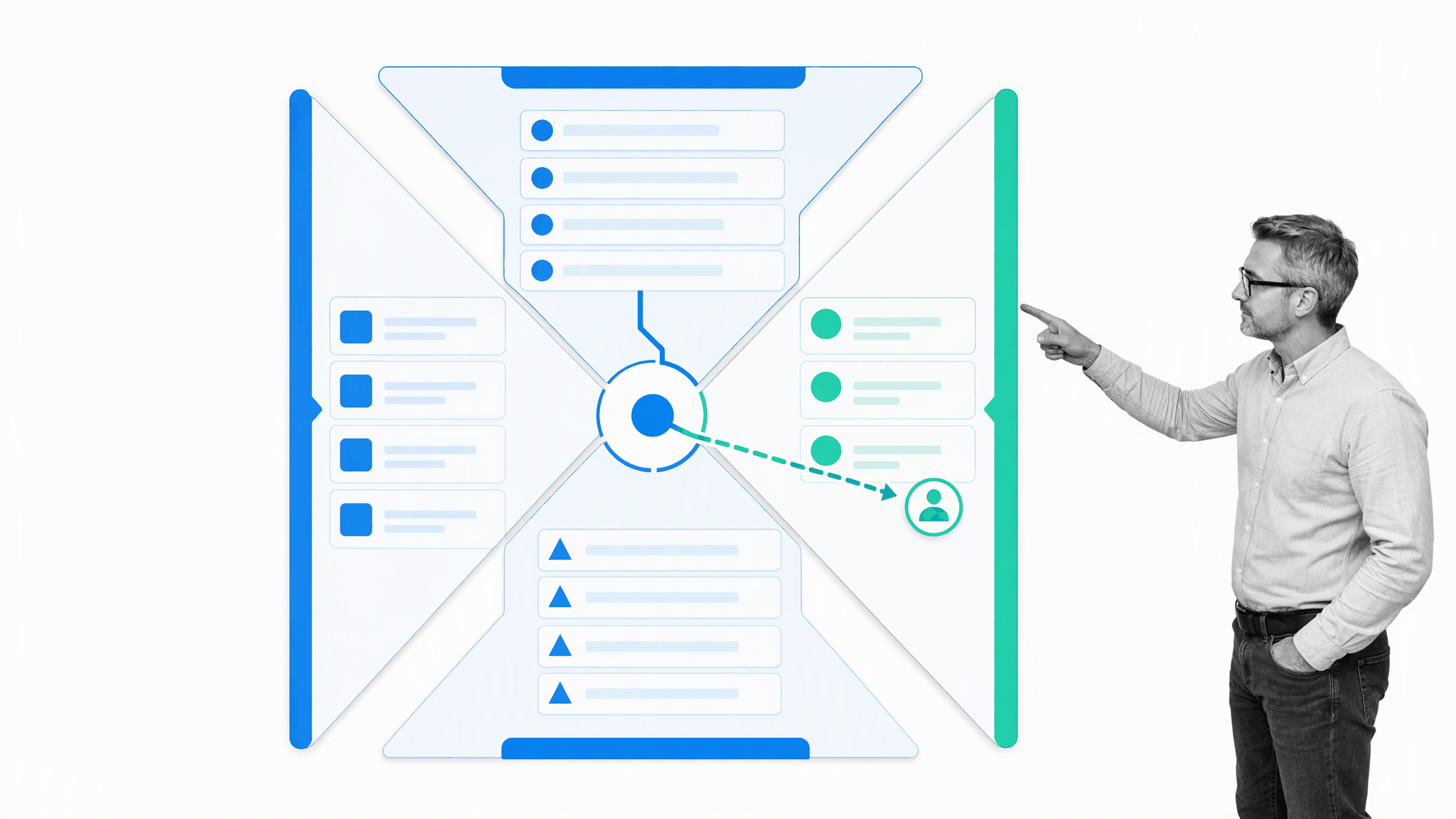
The Hoshin X matrix is a compact visual that shows how long-term objectives, annual objectives, top-level priorities, measures, and owners relate. Its compass-like structure helps readers trace a strategic result across the work intended to produce it.
The conventional orientation starts with long-term objectives at the bottom, or south. Annual objectives sit to the left, or west. Top-level priorities and initiatives sit at the top, or north. Measures and targets sit to the right, or east. An ownership area identifies the people accountable for priorities and results.
South, long-term goals: Start by defining where the organization wants to go. The long-term goals must support the overarching company policy and directional change. They set the context for every annual objective and make it possible to reject attractive work that does not contribute to the chosen direction.
West, annual objectives: Convert the long-term goals into results the organization intends to achieve this year. At the intersection between long-term goals and annual objectives, relationship markers show which yearly result supports which longer-term outcome. Each annual objective should be specific enough to measure and important enough to change resource decisions.
North, top-level priorities: Identify the activities and initiatives required to achieve the annual results. For a carbon-dioxide reduction objective, priorities might include switching to energy-efficient lighting, upgrading equipment, or implementing a cycle-to-work scheme. The matrix marks which annual objective connects to each priority.
East, targets to improve: Set numerical targets based on the top-level priorities and show which priority influences which target. Targets can also connect directly to longer-term objectives when that relationship is useful. The responsibility field on the far right names who is accountable for each top-level priority, preventing shared work from becoming ownerless work.
Relationship markers show which items influence one another. They do not prove causality, and they should not be filled mechanically. The management value lies in the conversation: If an annual objective does not connect to a breakthrough objective, why is it consuming strategic attention? If a priority has no measure or owner, how will the organization know whether it worked?
The X matrix is useful because it compresses a large amount of strategic logic into one reviewable surface. It is optional because the method is not the diagram. A team can run strong Hoshin planning with another clear deployment artifact, while a weak management rhythm will not be rescued by a beautiful matrix.
Keep the matrix selective. A crowded page with dozens of priorities and measures hides the choices strategy is supposed to make. Most organizations benefit from a few breakthrough objectives, a bounded set of annual results, and only the initiatives necessary to achieve them.
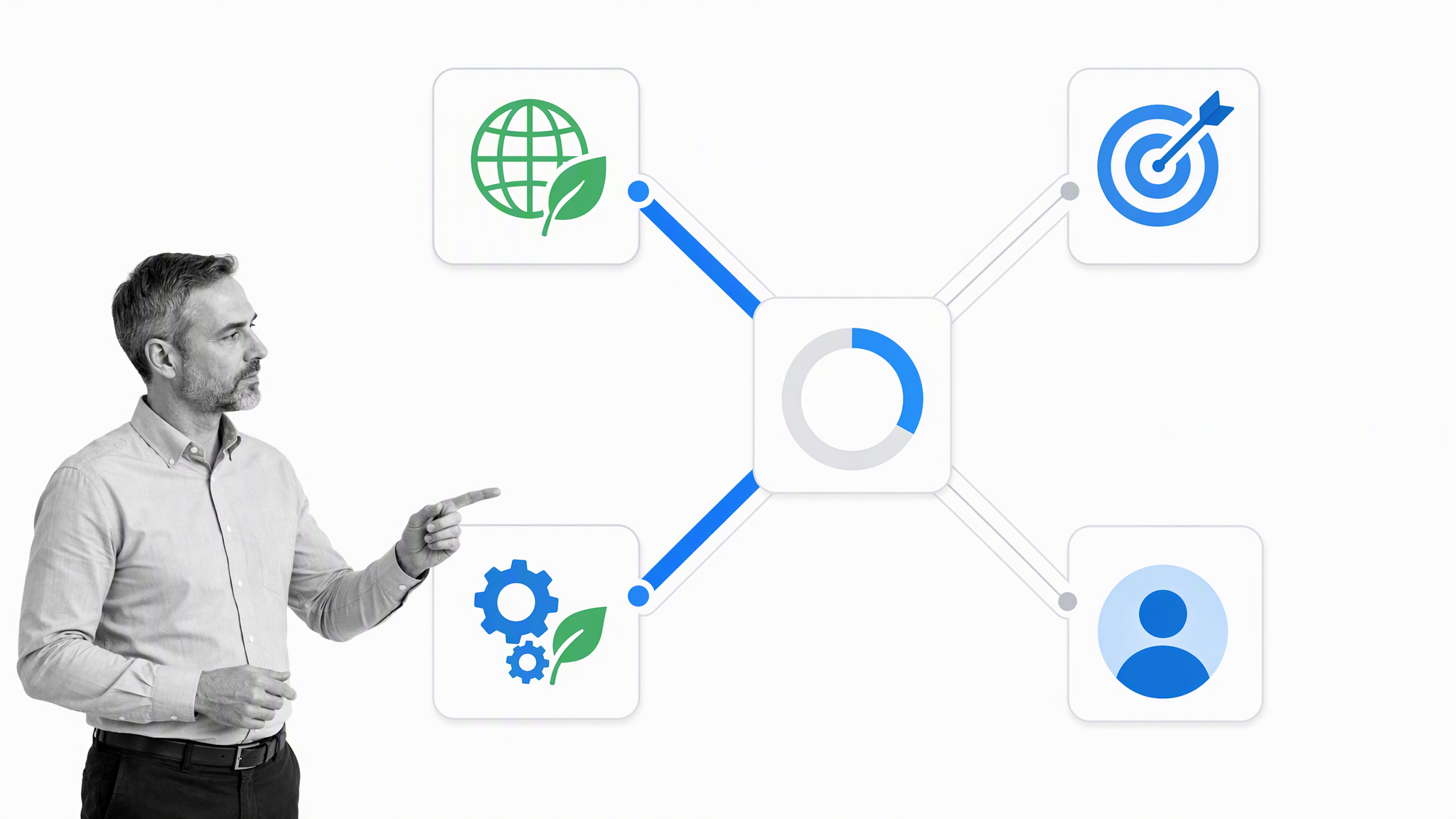
Consider a sustainability example. The long-term objective is to reduce the organization’s environmental impact while maintaining product quality and financial performance. One annual objective might be a defined reduction in operational carbon emissions.
A top-level priority could be upgrading energy-intensive equipment and changing the operating practices around it. Measures might include energy use per unit, verified emissions, implementation milestones, quality variance, and payback. A named executive sponsor and operational owner make responsibility explicit.
The matrix should also expose tradeoffs. A target that reduces energy use but increases defects or creates safety risk is not a successful deployment. Catchball brings those constraints into the plan before the initiative begins, and PDCA helps the team respond when actual results differ from the assumptions.
Other possible long-term goals include supporting sustainable initiatives, reducing employee turnover, and supporting the local community. Each needs its own annual result, initiatives, measures, and owners. Placing every worthy idea in one matrix without prioritization would defeat the purpose.
Main benefits of Hoshin Kanri planning
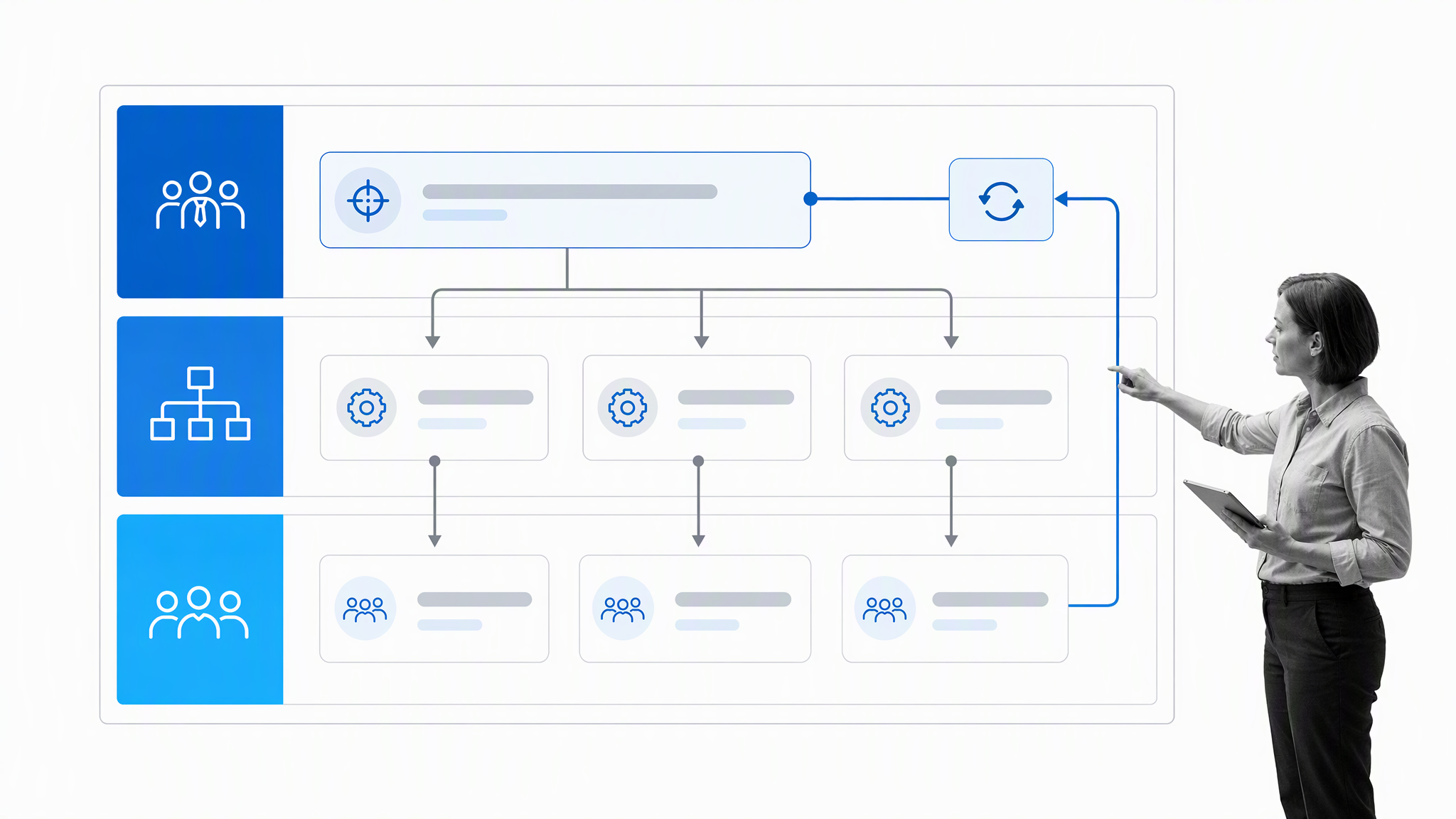
Hoshin Kanri is useful when an organization needs to move from broad strategy to coordinated execution. Its benefits come from the relationships among objectives, people, measures, and review routines, not from the Japanese terminology or the X-matrix format.
- Fewer competing priorities. Breakthrough objectives force leaders to choose which outcomes deserve concentrated resources.
- Alignment from strategy to work. Annual objectives, initiatives, measures, and owners make the link between executive direction and frontline execution explicit.
- Participation without loss of direction. Catchball uses operational knowledge to improve the plan while preserving accountable leadership decisions.
- Measurable learning. Regular reviews and PDCA turn variance into a prompt for investigation and countermeasures.
- Clear accountability. Named owners, evidence, and review dates reduce the chance that strategic work disappears between functions.
These benefits support adaptability. A disciplined Hoshin cycle gives the organization a stable direction and a method for responding to change. Teams can revise assumptions and countermeasures without abandoning the overall strategy every time conditions shift.
The method also improves the quality of strategic conversations. Measures make claims testable. Catchball reveals constraints. The X matrix shows gaps and overloaded owners. Monthly or quarterly reviews create a place to examine those signals before the annual plan becomes irrecoverable.
Hoshin planning provides a fast and dynamic approach to systemized strategic planning by creating structure and uniformity. It supports corporate action by aligning strategy to actions, while team-wide catchball gives people throughout the organization an opportunity to participate. The result is a stable framework that can respond to change while maintaining momentum toward overarching goals.
For early adopters in the United States, this connection between big vision and coordinated execution was the source of Hoshin Kanri’s competitive advantage. The method helped companies use facts, key metrics, and operational data to understand performance, test assumptions, and concentrate effort on the few changes that mattered most.
That reflected a wider shift in the business world as companies increasingly used facts and data in management presentations. Statistical measures enabled deeper analysis of customer experience, market conditions, and operational performance. Hoshin planning propelled that paradigm forward by emphasizing the importance of collecting key metric data to analyze success as part of strategy deployment.
Hoshin Kanri is an inclusive method that drives forward business policy, strategy, and direction through company-wide communication and coordination. It emphasizes looking to the future while adapting the business in accordance with evidence. Key metric data helps leaders analyze the business landscape, customer experiences, market dynamics, and internal operations for continuous improvement rather than relying on presentation quality or intuition alone.
Common Hoshin planning mistakes
The most common mistake is choosing too many breakthrough objectives. If everything is strategic, teams cannot distinguish priority work from ordinary operations. Another is setting top-down targets without catchball, which produces compliance language rather than committed execution.
Other failure modes include activity measures with no outcome, initiatives with no owner, annual objectives that do not support the long-term direction, and review meetings that report status without deciding countermeasures. The matrix can also become an end in itself, updated for presentation rather than used to manage work.
A strong review asks four questions: What result did we expect? What happened? What explains the gap? What will we change before the next review? The answers should update the work, the assumptions, or the strategy. Repeating the same status report is not continuous improvement.
Hoshin planning: Using Process Street to implement the Hoshin Kanri process
Process Street is a single Compliance Operations Platform with Docs and Ops capability areas plus built-in AI. Docs gives teams a governed place for strategy-deployment guidance, review standards, and controlled procedures. Ops turns that guidance into assigned, measurable workflows with evidence and approvals.
That combination suits the operational layer around Hoshin Kanri. The strategy still belongs to leaders and teams. Process Street provides a system for documenting the method, coordinating catchball, assigning initiatives, collecting evidence, reviewing results, approving countermeasures, and maintaining the audit trail of what changed and why.
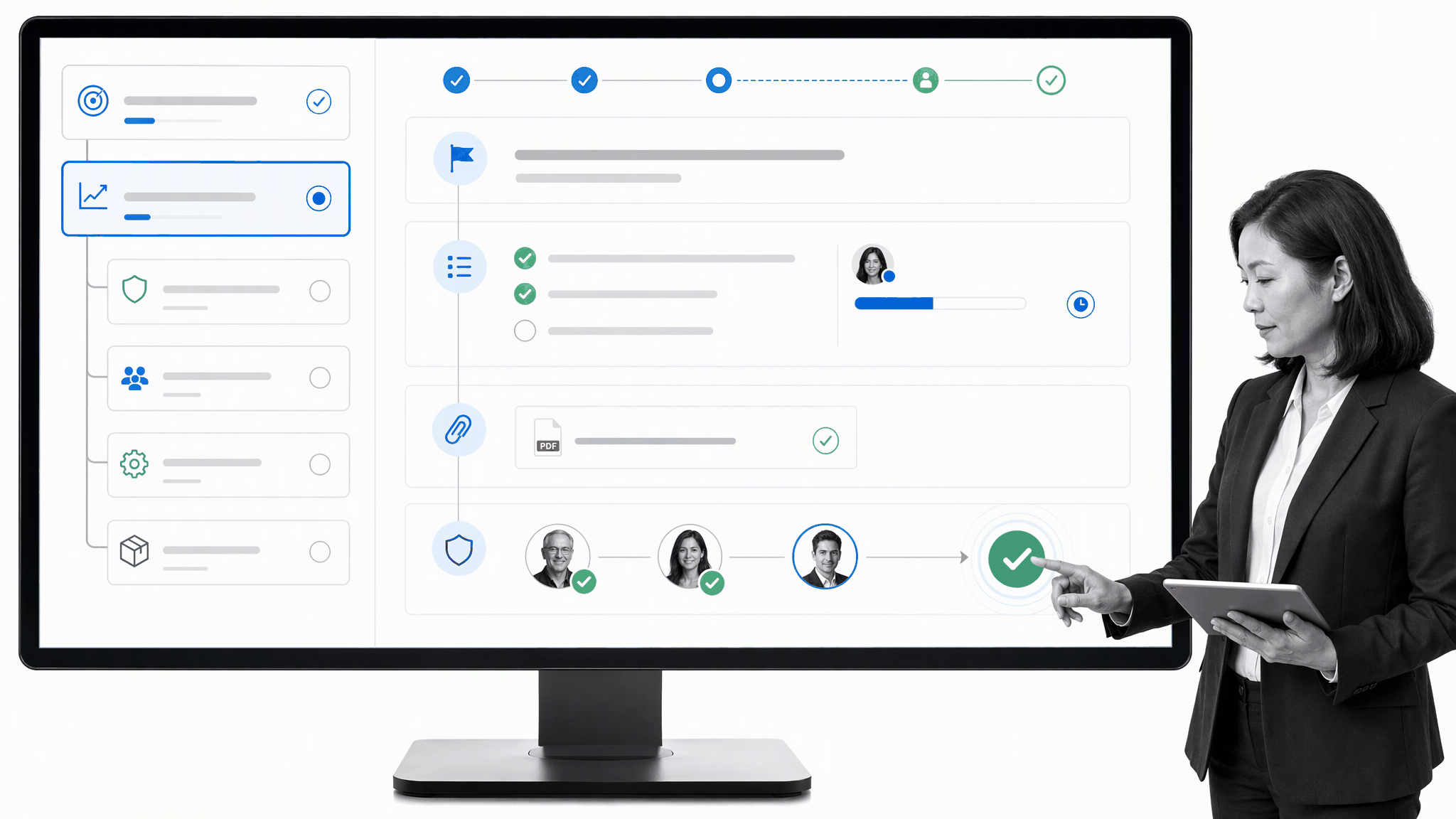
A Hoshin execution workflow can require each objective to include an owner, measure, baseline, target, initiative, due date, dependency, and evidence field. Conditional logic can route different review paths for on-track, at-risk, and off-track results. Approval tasks create explicit decision points for annual objectives, resource commitments, and countermeasures.
The operational details matter. Dynamic due dates help protect deadlines as the plan changes. Role and task assignments make it easy to see who is responsible for what. Stop tasks can enforce an essential sequence, while conditional logic creates a workflow that responds to the result in front of the team. Approvals allow decision-makers to accept or reject important items and capture the comments behind that decision.
Evidence fields and embedded resources let people view the information required for a review without leaving the workflow. Notifications and integrations can keep other systems informed about the status of tasks and objectives. Together, these controls give the organization a consistent process for delegation, progress tracking, results review, and escalation.
Automated messages can notify other applications about the status of checklists, tasks, and reviews. Task assignments can assign users or groups to individual work items, making responsibility visible. Embedded information can keep the supporting context close to the decision. These capabilities help teams create specific processes for each objective or project and follow the agreed procedure while leaders monitor whether execution stays on track.
Docs can hold the current planning standard and supporting SOPs. Ops can run the annual deployment, monthly review, and corrective-action workflows. Built-in AI can help teams draft and maintain operational content, summarize evidence, and surface context inside the product, while accountable people remain responsible for the strategic decision.
Process Street has 5,000+ integrations, so teams can connect the Hoshin workflow with the systems that hold performance data and execution evidence. The platform acts as the governed coordination layer rather than asking every team to replace its systems of record.
This is the difference between storing a plan and operationalizing it. An operations management platform can connect strategic intent with recurring work, while Hoshin Kanri supplies the management discipline for choosing and reviewing that work.
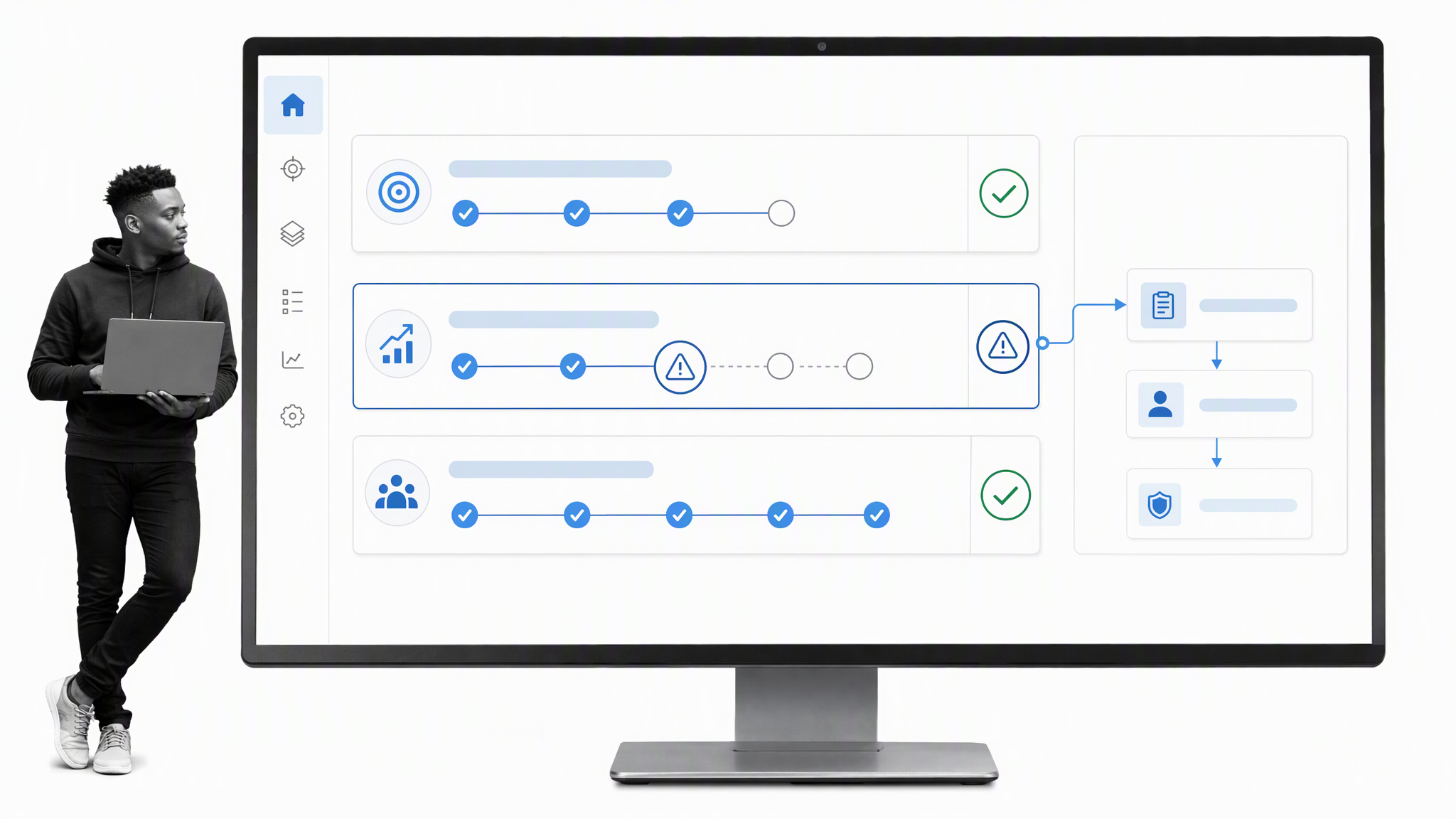
A monitoring workflow can show which objectives are on track, which initiative is overdue, which countermeasure has been approved, and which exception needs follow-up. Each review becomes part of the evidence trail, so teams can see how the plan evolved instead of reconstructing decisions from presentations and messages.
Use the free Hoshin Planning: Hoshin Kanri Policy Deployment Process Checklist as a starting point. Adapt the roles, measures, cadence, and decision gates to the organization rather than forcing strategy into an unchanged template.
The goal is a closed management loop: document the method, deploy the objectives, execute the work, review the evidence, approve countermeasures, and carry learning into the next cycle.
Related Japanese management methods for continuous improvement
Hoshin Kanri focuses on strategy deployment, but it works alongside other Japanese management methods. The important distinction is the job each method performs. Combining them deliberately is more useful than treating every lean technique as interchangeable.
- Muda helps teams identify forms of waste that consume effort without creating customer value.
- Poka-yoke designs error prevention into a process so mistakes are less likely to occur or easier to detect.
- Kaizen supports continuous improvement through repeated, practical changes to work.
- Root cause analysis helps teams investigate why a problem occurred before selecting a countermeasure.
Use Hoshin Kanri to choose and deploy strategic priorities. Use catchball to make those priorities executable. Use the X matrix or another clear deployment artifact to show the relationships. Then use PDCA, kaizen, mistake-proofing, and root cause analysis to improve the work as evidence arrives.
That combination gives an organization both direction and learning: a small number of important outcomes, clear ownership, transparent review, and a repeatable method for correcting course.
The post Hoshin Kanri: Gain a Competitive Advantage With This Lean Management Approach (Free Template) first appeared on Process Street | Compliance Operations Platform.


0 Commentaires