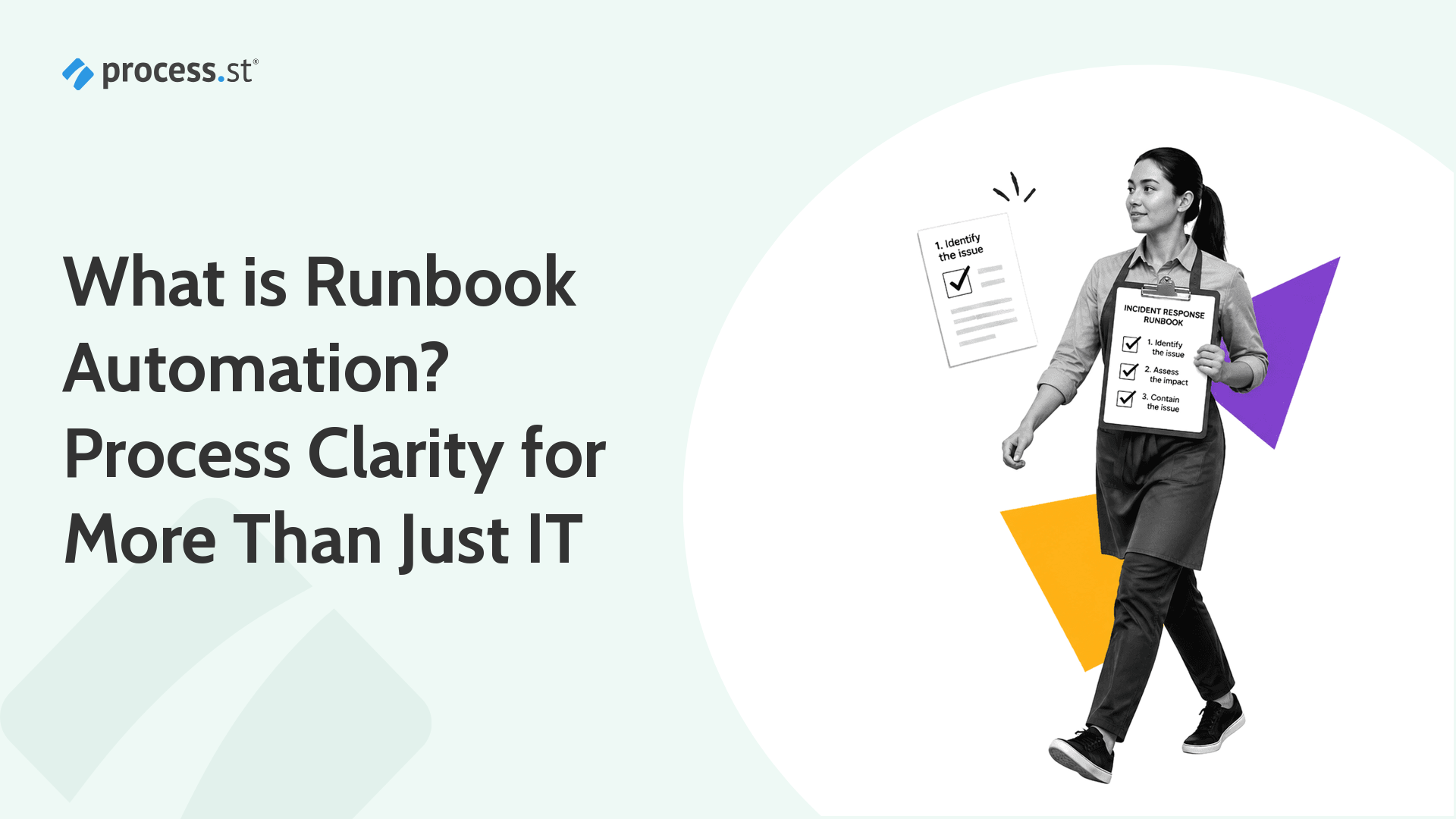
Most teams have processes. Few can prove they ran the way they were supposed to.
Runbook automation is how IT operations teams closed that gap years ago, and the same idea is now reshaping how every team runs critical work, from incident response to compliance to marketing operations. At Process Street, we treat runbook thinking as the foundation of a Compliance Operations Platform: documented procedures, automated execution, and AI oversight working as one closed loop.
This article walks through what runbook automation is, how companies actually use it in 2026, and why the most interesting runbooks are no longer running in IT alone:
- What is runbook automation?
- How do companies use runbook automation?
- What can we learn from runbook automation to improve other teams?
- How Process Street can help you automate set procedures
What is runbook automation?
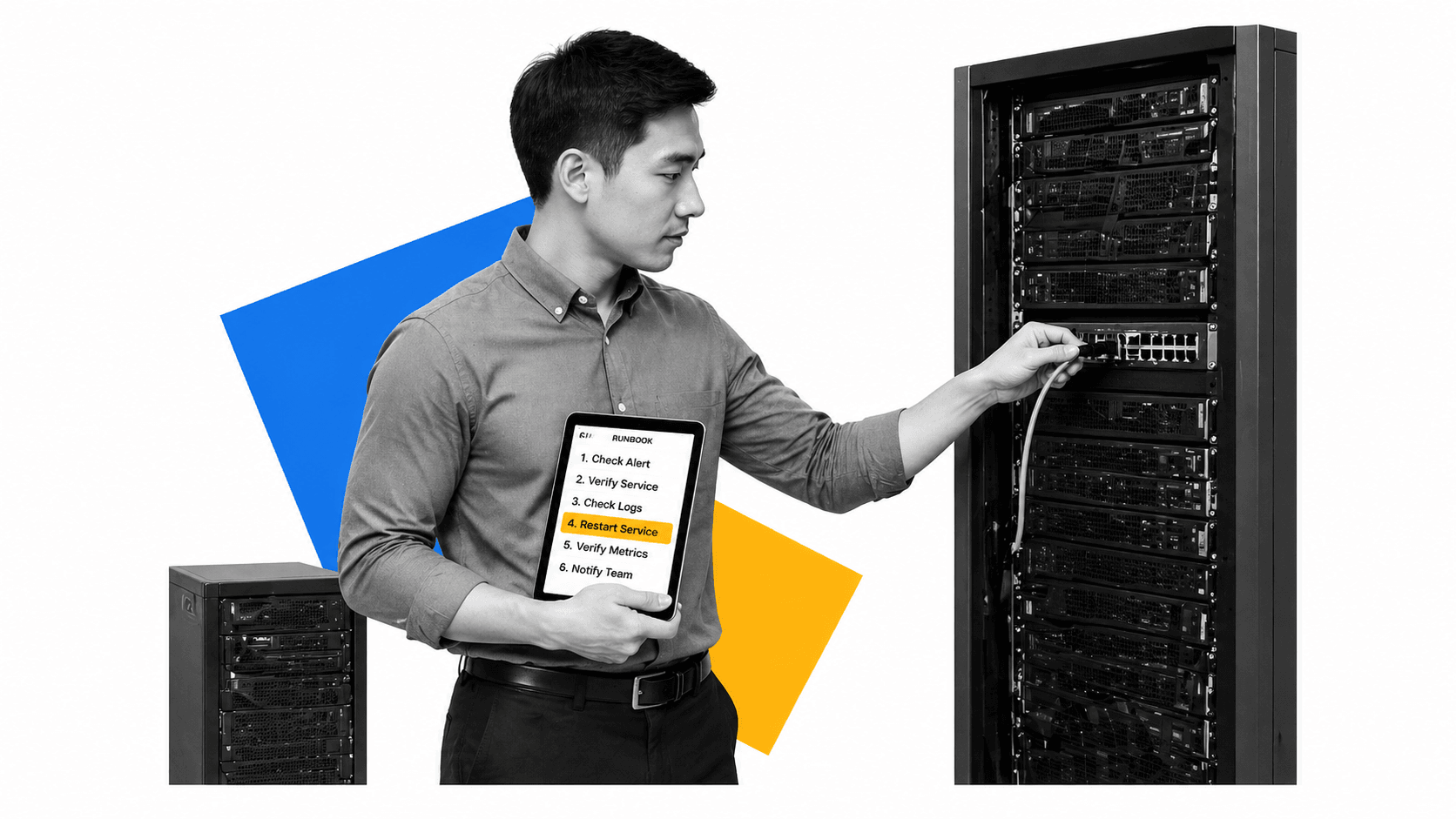
So what is a runbook? A runbook is a documented, repeatable procedure for keeping a system healthy. Originally that meant a binder on a desk in a server room, with the exact steps an on-call engineer should follow when something broke. Runbook automation is what happens when those steps stop being a binder and start being executable: a script, a workflow, or now an AI agent that runs the playbook with people in the loop.
The reason runbook automation took off in IT is simple. It cuts cost, reduces operational risk, and improves quality of service all at once. The same procedure runs the same way every time, and humans only step in where judgment is actually required. That is also the same reason runbook automation has slowly become a model for any team that runs critical work, not just on-call engineers.
The challenge has always been recognizing what to automate and what to leave to people. Pure infrastructure tasks are easy targets. Anything that depends on context, escalation, or external variables is harder. Early automated runbooks famously failed when an operator could see that “the job ran” but had no idea which step actually completed and where to safely restart from. The procedure was automated, but the visibility was not.
Modern runbook automation tools closed that gap. Platforms like PagerDuty Process Automation (Rundeck), AWS Systems Manager Automation, and Ansible Automation Platform give operators a clean view of which steps ran, which failed, and where the next safe action is. That observability is what made runbook automation trustworthy enough to spread well beyond infrastructure.
This is similar to what Process Street does for business processes. With stop tasks, required fields, conditional logic, and approvals through task assignments, Process Street gives operations and compliance teams the same kind of structured execution surface that IT teams get from a runbook automation platform. Every step is logged, every gate is enforced, and every decision is auditable.
How do companies use runbook automation?

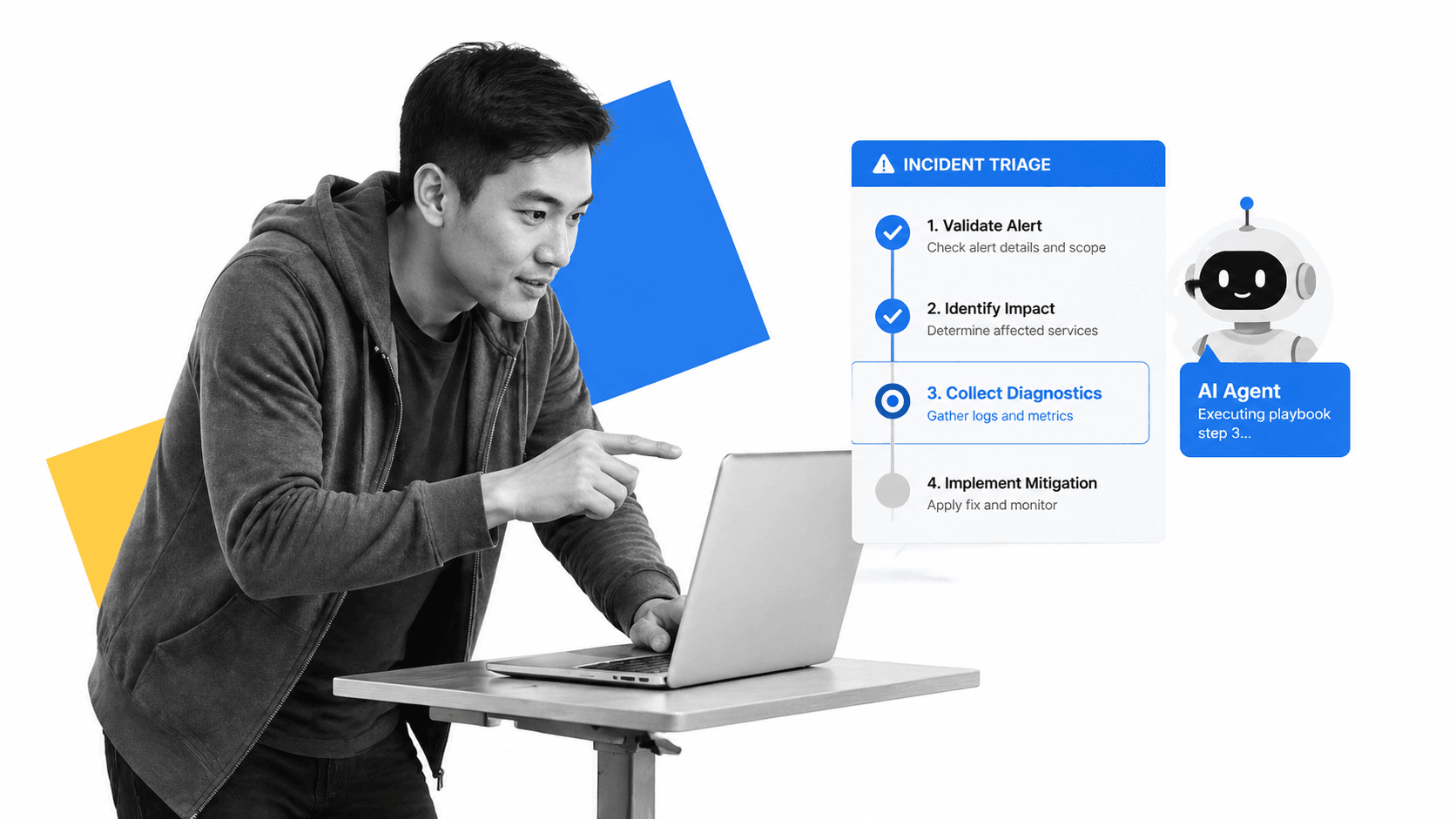
The default use case is still incident response in IT and DevOps. When an alert fires at 3am, an automated runbook takes the deterministic steps no human should be doing manually under pressure: gathering diagnostics, validating service health, restarting workers, escalating to the right on-call. The result is a meaningful reduction in mean time to resolution and a much smaller blast radius when something goes wrong.
The newer pattern is the AI runbook. Instead of a static script that fires when an alert triggers, an AI agent reads the runbook, watches the telemetry, decides which step to run next, and stops to ask a human only when judgment is needed. AWS recently described a production deployment of its DevOps Agent where total resolution time dropped from an estimated two hours to 28 minutes, a 77% reduction in MTTR, by letting an agent investigate and propose fixes instead of paging an engineer to run each step by hand. Source: AWS DevOps Blog.
Beyond incident response, runbook automation now powers everyday business process automation inside IT itself: provisioning new environments, rotating credentials, applying patches, onboarding new services, decommissioning old ones. The same playbook is deployed across regions and customers, which is critical for any team running a regulated workload. Each run is logged, each variation is captured, and each operator action is traceable. A runbook stops being a tribal artifact and starts being a contract between the people running the system and everyone who depends on it.
That contract is what makes runbook automation interesting outside of IT. The point is no longer just operational efficiency. It is operational defensibility. When an auditor asks “show me how you handled the last 50 instances of this incident type”, a team running automated runbooks has an answer in seconds, not days. The same logic applies to a regulated change management process, a customer onboarding flow, a vendor due diligence review, or any repeatable procedure that has to survive scrutiny.
This is why teams that started with simple IT support runbooks now extend the same pattern to compliance reviews, security incident handling, customer escalations, and access provisioning. The runbook is no longer an artifact for the on-call rotation. It is the way the team operates.
What can we learn from runbook automation to improve other teams?
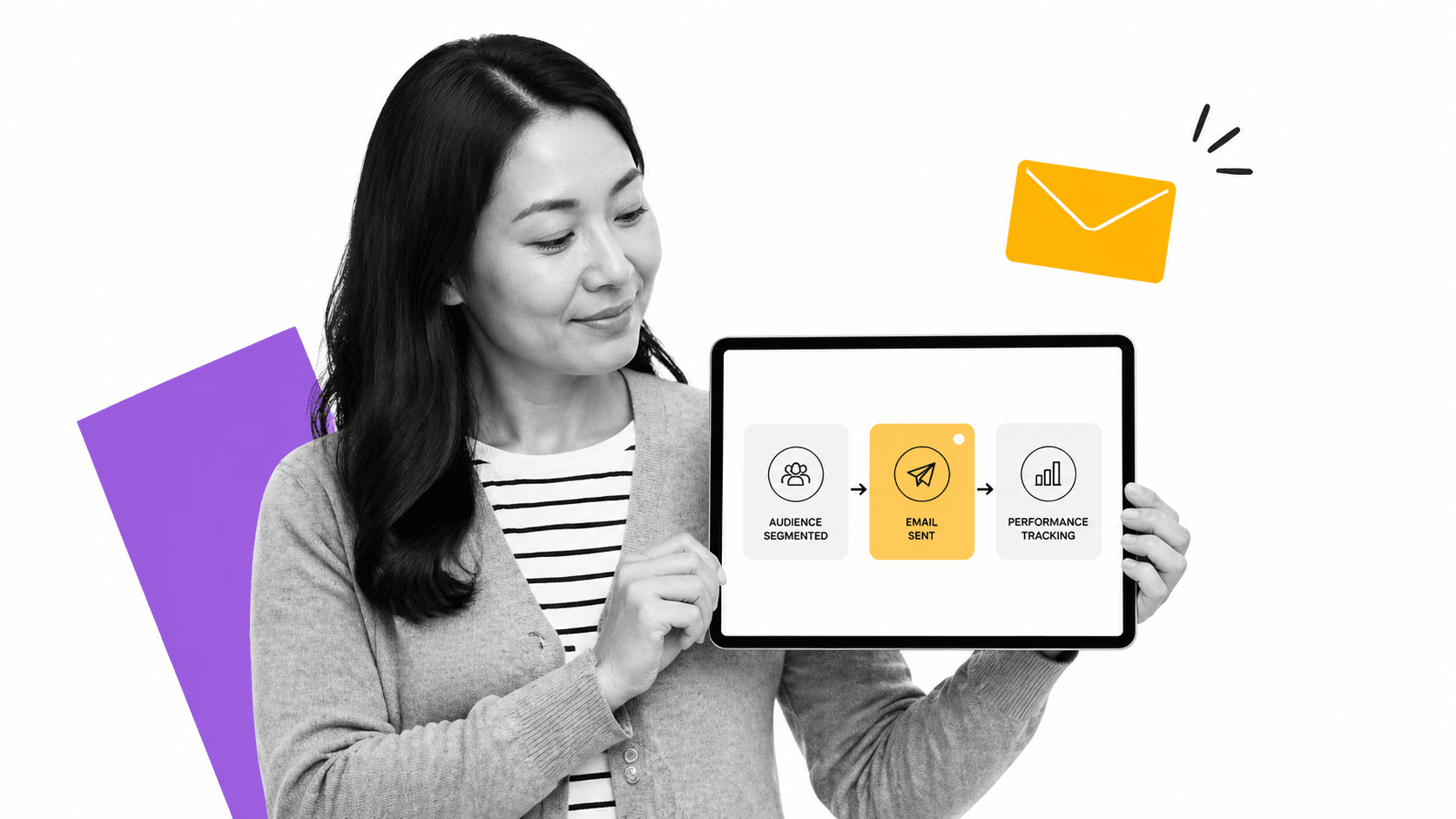
The interesting shift is that runbook thinking has stopped being an IT-only discipline. The pattern is the same in marketing, sales, finance, HR, and compliance: define the procedure, automate the deterministic steps, keep humans in the loop where judgment matters, and log everything for review.
The volume of work that fits this pattern is massive. McKinsey’s November 2025 report estimated that today’s technology could automate around 57% of US work hours, with about 40% of jobs sitting in roles that are particularly amenable to agent or robot automation. The headline number is debated, but the direction is unmistakable: more of the everyday “follow these steps” work is becoming runbook-shaped. Source: McKinsey, “Agents, robots, and us: Skill partnerships in the age of AI”.
For most teams, the right place to start is the same place IT started: data movement and routine handoffs. If a step is repetitive, deterministic, and fully described, it can run on a runbook. Zapier-style integrations and iOS Shortcuts handle the small, personal automations. Workflow platforms like Process Street handle the cross-team ones that need approvals, conditional paths, and audit logs. Either way, the goal is the same: make the procedure executable, not just documented.
One example we have used at Process Street for years lives in sales operations. When a sales rep is on a call with a prospect, the rep follows a Process Street workflow run and enters information directly into form fields. The rep stays in one screen, stays on procedure, and the data ends up in the right shape for downstream sales process steps. When the call ends and the rep checks off the right step, the form field data flows automatically into the CRM through an integration with Close.
The rep spends less time managing CRM hygiene and more time selling. The runbook makes the work consistent. The automation does the data movement. The reviewer, or an AI agent, gets a clean, auditable trail of what happened on every call. The same shape works for an HR onboarding runbook, a finance close runbook, a vendor due diligence runbook, or any other set of core business processes that have to run reliably across many people. Watch a quick walkthrough below:
The example is small, but the shape generalizes. Once the procedure is documented, the deterministic steps automated, and the gates enforced, the team gets the same kind of clarity that a good IT runbook gives an on-call engineer. Most non-IT teams are still a few iterations behind on this, which means the gains are still mostly unclaimed.
How Process Street can help you automate set procedures
Process Street is the Compliance Operations Platform that turns runbook thinking into how an entire business actually runs. Think of it as runbook automation software for the whole company, not just IT. You document a procedure once as a workflow. Each time the procedure runs, it kicks off a workflow run that records every step, every input, and every approval. Cora, our AI compliance agent, monitors execution in real time and flags where things are drifting away from policy.
Each task inside a workflow can carry rich instructions, embedded media, and form fields. Through native integrations and Zapier, individual steps can trigger actions in external systems: send an email, generate a document, update a record, route an approval. The runbook is no longer a static checklist; it is the live shape of the work, with logged execution and policy enforcement built in.
The capability that makes runbook thinking work for non-IT teams is conditional logic. You can map the real branching that a runbook needs without writing code. Take a sales workflow as an example. A task asks whether the customer’s details already exist in the system. If the rep selects “no”, a follow-up task appears to gather the details, and checking that task off pushes the data into the CRM via an integration. If the rep selects “yes”, that step disappears entirely and the workflow jumps to the next stage. The same playbook adapts to the situation in front of it.
The result is what you see in the best IT runbooks: the operator stays focused on the task in front of them, while the system handles the data movement, notifications, document generation, and audit trail in the background. Compliance is not a separate workstream; it is what every successful workflow run produces by default, the way it has been for IT runbook teams for years.
That is the core of the Compliance Operations Platform pattern. Documented policies live in Docs. Automated execution lives in Ops. AI oversight comes from Cora. The three pieces are wired together so the runbook does not just describe how the work should happen, it actually runs the work and proves it ran correctly.
Utilize runbook automation in IT and far beyond

Runbook automation started as an IT discipline. In 2026 it is closer to a universal operating model for any team that runs critical, repeatable work: marketing, sales, finance, HR, customer operations, regulated workflows of every kind.
The principles do not change. Document the procedure. Automate the deterministic steps. Keep a human or an AI agent in the loop where judgment matters. Log everything so you can prove it ran the way it was supposed to.
The teams that internalize this stop running on tribal knowledge and crossed fingers. They run on runbooks. And once the runbooks are good enough, the AI agents start running the runbooks too.
The post What is Runbook Automation? Process Clarity for More Than Just IT first appeared on Process Street | Compliance Operations Platform.


0 Commentaires