Playing multiplayer video games helped me practice a growth mindset through repeated challenge, fast feedback, and recoverable failure. They do not automatically make you smarter, but the right kind of play can give you practice in adapting after mistakes.
I started thinking about this after reading an essay by Sal Khan, founder of Khan Academy, about encouraging a growth mindset. The useful distinction is not between people who are naturally capable and those who are not. It is between treating difficulty as a verdict and treating it as information you can use.
That idea is associated with psychologist Carol Dweck, but it is worth stating carefully. Large studies have found that growth-mindset interventions can produce small, context-dependent benefits, while other reviews find very small average effects. A slogan alone will not transform performance. Challenge, feedback, practice, and the conditions around a learner all matter.
How I developed a growth mindset
I have met people over the years who take on challenges and others who shy away from things they find difficult. I feel I have a growth mindset. You need one to run a startup. Within reason, I believe I can learn to do almost anything; it comes down to time, motivation, and opportunity cost.
That does not mean I succeed at everything, not even close. I have had failed startups and struggled at creating, writing, and promoting a successful blog. But I keep pushing on through uncertainty, and I am willing to fail.
So where did I get this skill from?
It is difficult to pinpoint, but I believe one of the places was multiplayer video games.
I was a big gamer in my day. Some of my favorites included Counter-Strike, StarCraft, and X-Men vs. Street Fighter. They are all fast-paced multiplayer games.
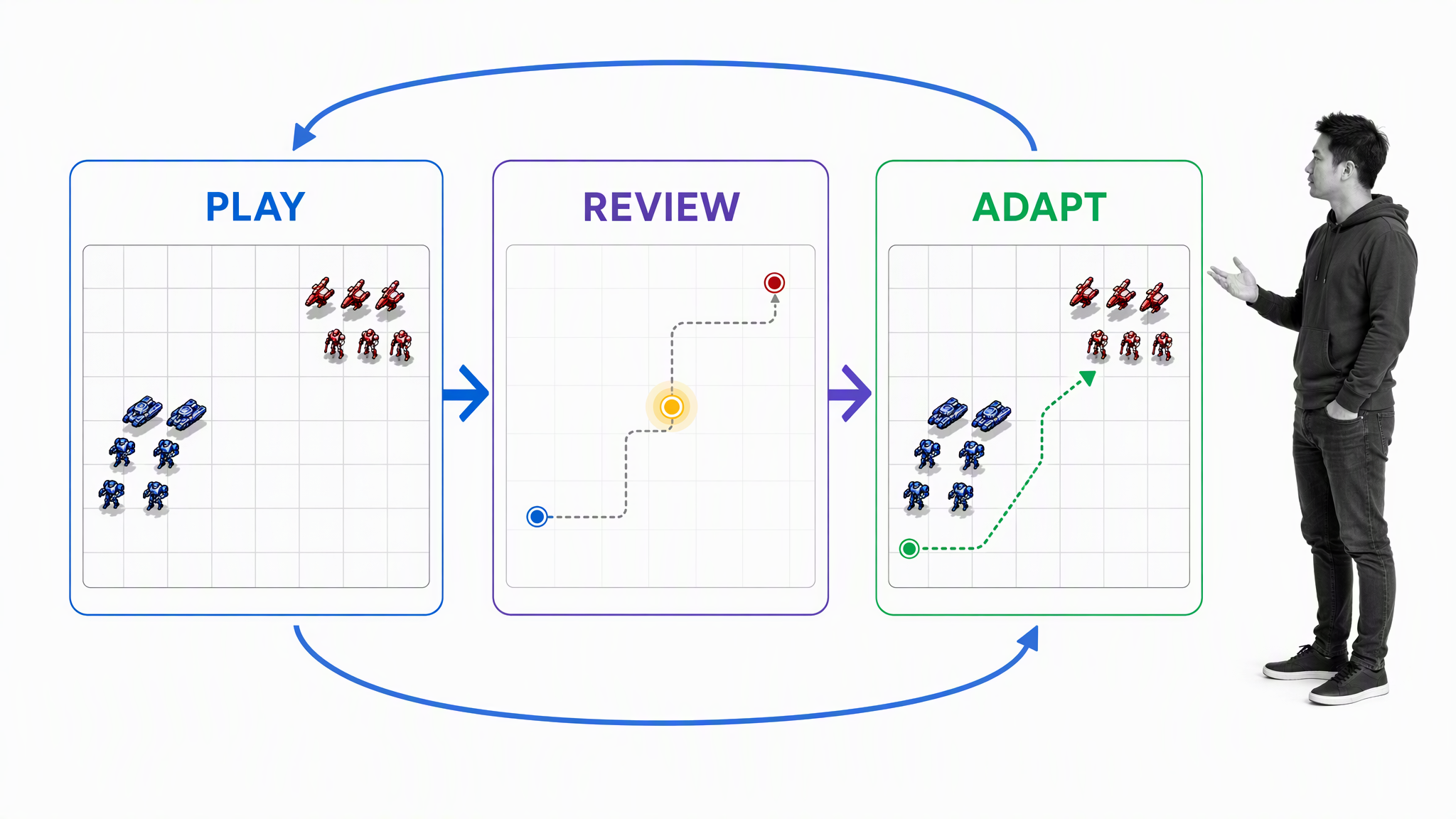
If you have never played a competitive multiplayer game, it may be hard to understand how mentally intense it can feel, especially against skilled opponents. Human opponents make the same map different every time. Their decisions expose gaps in your own judgment and force you to respond.
I would play for hours, getting beaten down and eliminated over and over. Sometimes I became incredibly frustrated, but I kept playing. I learned to notice patterns, change tactics, and recover after a bad round. Slowly I got more eliminations, won more games, and eventually reached a point where I was topping the leaderboard on almost every Counter-Strike map.
That does not prove the games caused a general increase in intelligence. Research on action games points to modest effects in areas such as attention and spatial cognition, with important caveats about study design and publication bias. A newer meta-analysis similarly found a small overall training effect and suggested that specific gameplay features matter more than broad genre labels.
Should your kids play video games?
Seeing progression in an activity can give you confidence that you can learn and grow. That lesson has carried through my studies, career, and social life. Still, video games are not a shortcut to a growth mindset, and one person’s experience is not a prescription for every child.
If children play multiplayer games, the better question is whether the experience is age appropriate, safe, balanced, and followed by reflection. The American Academy of Pediatrics recommends looking at the child, the content, the context, and what media use displaces. Its guidance also encourages parents to understand online interactions, privacy settings, chat, and reporting tools in multiplayer environments.
The transferable part is the loop: attempt something difficult, observe the result, adjust, and try again. That is the same logic behind continuous improvement. It becomes useful when the player can name what changed, rather than simply accumulating more hours.
Do you feel you developed a skill from playing video games? More importantly, can you explain the feedback loop that helped you develop it?
The post How Playing Multiplayer Video Games Helped me Develop a Growth Mindset first appeared on Process Street | Compliance Operations Platform.


0 Commentaires