
Green technology is equipment, software, infrastructure, or a production method that reduces environmental harm compared with the conventional alternative. For a business, that can mean using less energy and water, preventing waste, choosing cleaner electricity, extending the life of equipment, or measuring environmental performance more reliably.
The strongest green technology projects connect an environmental result to an operating result: lower utility costs, more resilient facilities, less material waste, clearer evidence, or a process that can be repeated across every site. The aim is not to buy gadgets labeled “green.” It is to change how work is designed, powered, measured, and improved.
This guide explains what green technology means, why it matters to business, and six practical categories you can evaluate now. This is how a business can go lean, go green, and future proof its operations. It also shows how to turn sustainability intentions into governed policies, recurring workflows, assigned actions, and auditable records.
- What is green technology?
- Why green technology matters to business
- Six green technology examples for business
- How Process Street supports sustainable operations
Open the ISO 14001 Environmental Management Self Audit Checklist.
What is green technology?
Green technology, also called clean technology or cleantech in some markets, uses scientific and engineering innovation to reduce environmental externalities relative to an incumbent product, service, or method. The comparison matters. A technology is not environmentally useful merely because it is digital, new, or efficient in one narrow step. Its materials, energy source, useful life, maintenance, and end-of-life treatment all affect the result.
Green technology overlaps with sustainable technology, but the terms are not identical. Green technology usually emphasizes environmental performance. Sustainable technology takes a wider view that can also include social durability, economic viability, responsible sourcing, and long-term resilience. In practice, a business should evaluate both: the environmental improvement and whether the solution can be operated responsibly at scale.
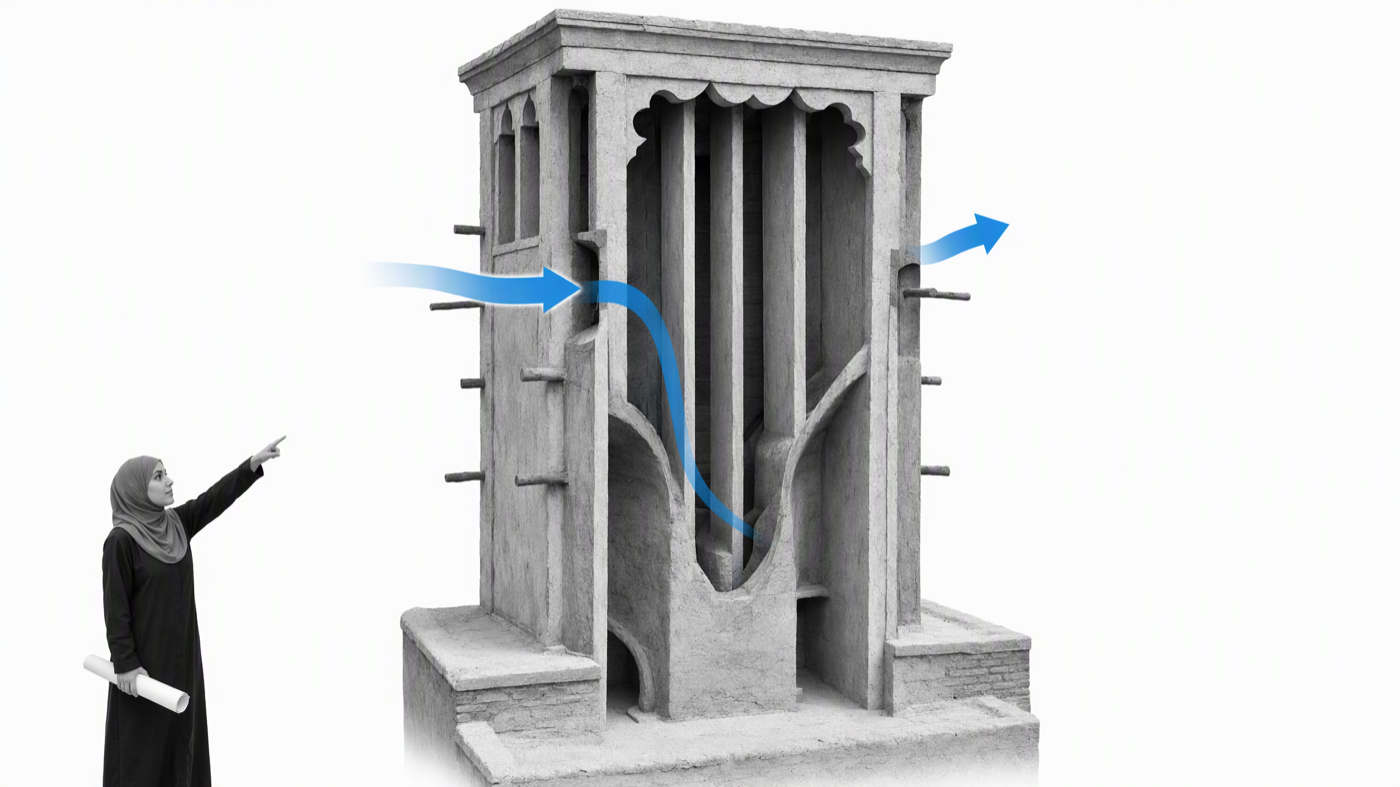
The idea is older than solar panels and electric vehicles. Traditional windcatchers used building form and air pressure to pull cooler air inside and release warm air without mechanical air conditioning. These ancient windcatchers brought cool air in and allowed hot air to escape, creating passive air-conditioned buildings. That is a useful reminder that green technology can be a passive design choice as much as an electronic device.
Modern solar power grew from the photovoltaic effect observed in 1839, when Edmond Becquerel discovered how light could produce electrical energy. What began as a laboratory discovery became a global generation technology. The International Energy Agency’s Global Energy Review reports that renewable capacity additions reached a record level in 2025, with solar PV accounting for more than three quarters of the additions. The scale has changed, but the operating principle is familiar: use design and technology to obtain the same or better result with less environmental damage.
For a business, the most useful question is not “Is this green?” but “What baseline does it improve, and how will we measure the change?” A serious evaluation names the resource or impact being reduced, establishes a baseline, defines ownership, and monitors performance after implementation. That discipline separates durable operational improvement from greenwashing.
A lifecycle view also prevents false wins. An efficient device can still carry large impacts from raw materials, manufacturing, transport, maintenance, or disposal. Before choosing a solution, ask how long it will last, whether it can be repaired, what inputs it requires, what evidence supports the supplier’s claims, and what happens when the asset reaches the end of its useful life. The right comparison is the total operating outcome, not a single attractive feature.
Implementation should follow the same discipline as any operational change. Define the current state, identify the decision owner, run a controlled pilot, train the people who will use or maintain the technology, document exceptions, and compare results against the baseline. A technology that performs well in a brochure but is routinely overridden, badly configured, or poorly maintained will not deliver its expected environmental benefit.
Green technology as a positive and proactive approach for solving our environmental crisis
Climate risks already affect ecosystems, infrastructure, health, and economic activity. The IPCC Sixth Assessment Synthesis Report documents widespread impacts and explains why mitigation and adaptation both matter.
Green technology is one practical part of that response, especially when organizations connect technology choices to measurable energy, emissions, water, waste, and resilience outcomes.
The environmental case is clear, but the business case is equally important. Organizations can act on the systems they control: facilities, energy purchasing, technology infrastructure, materials, transportation, water, waste, and operating procedures. Green technology makes the biggest difference when those choices are connected to a measurable baseline and an owner who reviews the result.
A practical program does not begin by buying the newest device. It begins by identifying where resources are used, where waste or emissions occur, and which changes have a credible path to improvement. The organization can then prioritize projects by impact, feasibility, cost, operational risk, and the quality of evidence available.
Sustainable technology and why sustainability is important in business
Sustainability matters because natural and social systems support every supply chain. Water, energy, materials, land, healthy communities, and stable operating conditions are business inputs, not abstract concerns. When those systems are stressed, organizations face higher costs, disruption, regulatory exposure, and pressure from customers, employees, investors, and partners.
Green technology can reduce that exposure by using resources more efficiently and making environmental performance easier to measure. Sustainable technology adds a wider test: whether the solution remains practical, responsible, and economically viable across its lifecycle. A low-energy machine that cannot be repaired, depends on harmful inputs, or is replaced every two years may not be the most sustainable choice.
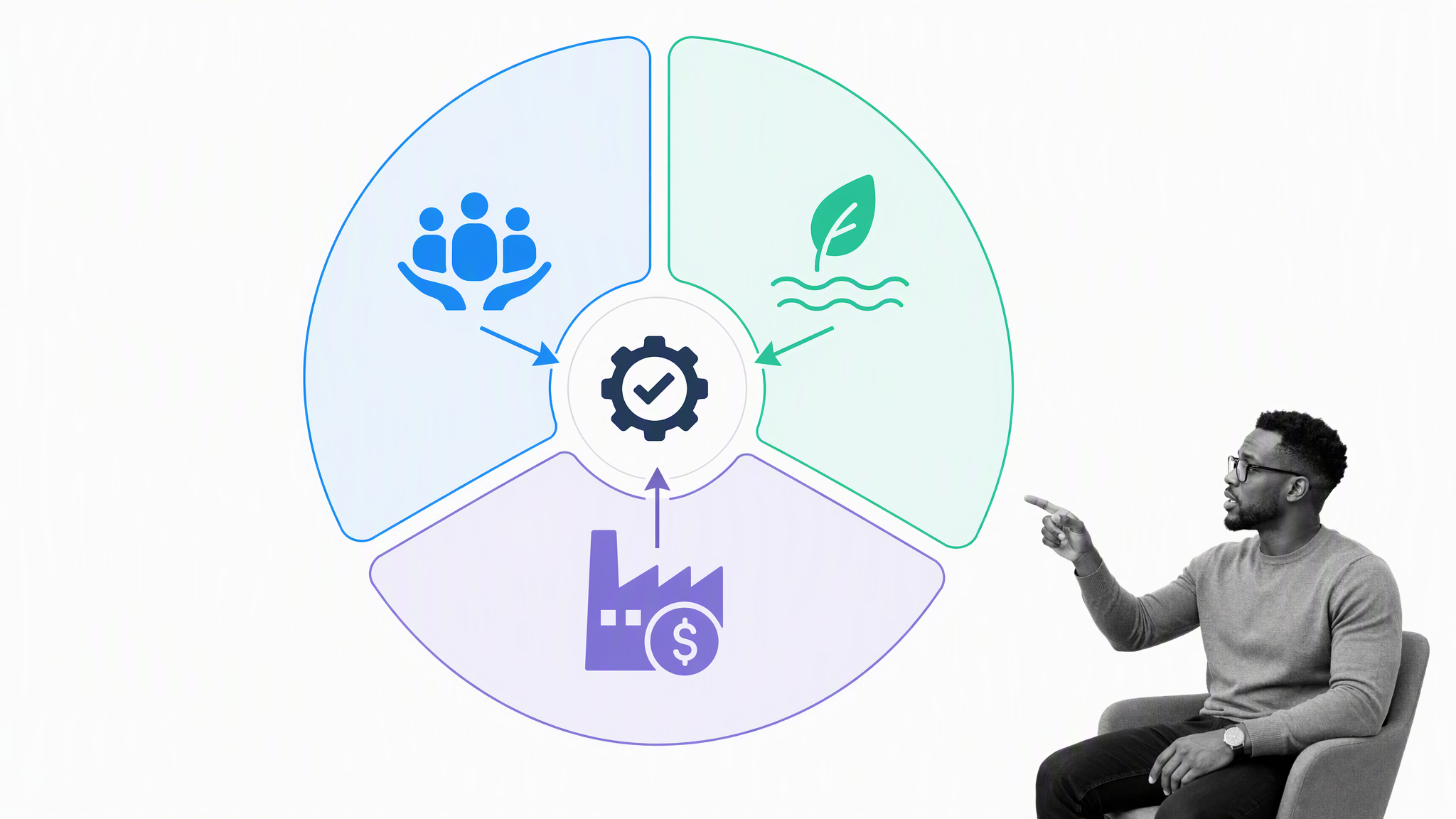
The strongest decisions balance three connected outcomes:
- Environmental performance: Does the technology reduce energy, emissions, water, waste, pollution, or ecosystem damage against a defined baseline?
- Operational durability: Can the organization maintain the technology, train users, manage exceptions, and keep it performing as intended?
- Economic viability: Do the acquisition cost, operating savings, incentives, useful life, and avoided risks support the investment?
This framework prevents teams from treating sustainability as a one-time purchase. It turns the decision into an operating system with goals, ownership, evidence, and periodic review. It also helps leaders compare options that improve different parts of the lifecycle instead of relying on a single marketing claim.
Our economy depends on functioning natural and social systems. Green technology helps businesses reduce resource risk, lower waste, and build more resilient operations.
The benefits of green technology for business
The benefits depend on the technology, the baseline, and how well the change is managed. Common gains include:
- Lower energy costs: Efficient lighting, building controls, equipment scheduling, and renewable electricity can reduce purchased energy. The result should be tracked in kilowatt-hours as well as currency so price changes do not obscure performance.
- Lower water use: Leak detection, metering, efficient fixtures, reuse systems, and irrigation controls help facilities find and prevent avoidable consumption.
- Less material waste: Digital records, reusable packaging, repairable equipment, and better inventory data can reduce unnecessary purchasing and disposal. A reliable document management system can also reduce duplicated records while strengthening control over current versions.
- More reliable operations: Sensors and monitoring can reveal abnormal consumption, equipment drift, or maintenance needs before they become expensive failures.
- Better risk visibility: Resource dashboards and carbon accounting tools make environmental dependencies visible to decision-makers. This supports planning for energy volatility, water stress, supplier disruption, and new reporting expectations.
- Stronger compliance evidence: Technology can capture readings, approvals, inspection records, and corrective actions in a consistent format. Evidence is most useful when it is tied to the procedure that produced it.
- Improved resilience: On-site generation, storage, efficient buildings, and well-designed digital systems can reduce dependence on a single vulnerable resource or location. Resilience claims should still be tested against realistic failure scenarios.
- Credible customer and employee communication: Measured results give organizations something more useful than vague environmental claims. Transparent baselines, methods, limits, and progress reduce the risk of greenwashing.
- Access to incentives and procurement opportunities: Some jurisdictions and customers reward verified efficiency, renewable energy, or lower-impact products. Eligibility and requirements vary, so teams should confirm current rules before building an investment case.
- Innovation and learning: Pilots can reveal better operating methods, new product opportunities, and previously hidden waste. A controlled experiment with clear success criteria is more valuable than a broad rollout with no measurement plan.
None of these benefits is automatic. A smart control can be badly configured. A digital service can run on inefficient infrastructure. Renewable electricity contracts can vary in quality. The organization needs a defined owner, documented procedures, maintenance, user training, and evidence review to keep the technology aligned with its intended outcome.
The same discipline makes small projects valuable. A lighting upgrade, thermostat schedule, or equipment shutdown rule can create an early result while the organization builds the data and governance needed for larger investments. Start with a material resource flow, measure it, improve it, and make the new operating method repeatable.
Six practical applications of green technology
The best starting point is usually a resource flow the business already pays for: heating, cooling, lighting, electricity, cloud infrastructure, equipment standby power, travel, water, or waste. Establish the baseline first, then choose technology that changes that baseline and produces evidence you can review later.
Control heating and cooling around demand
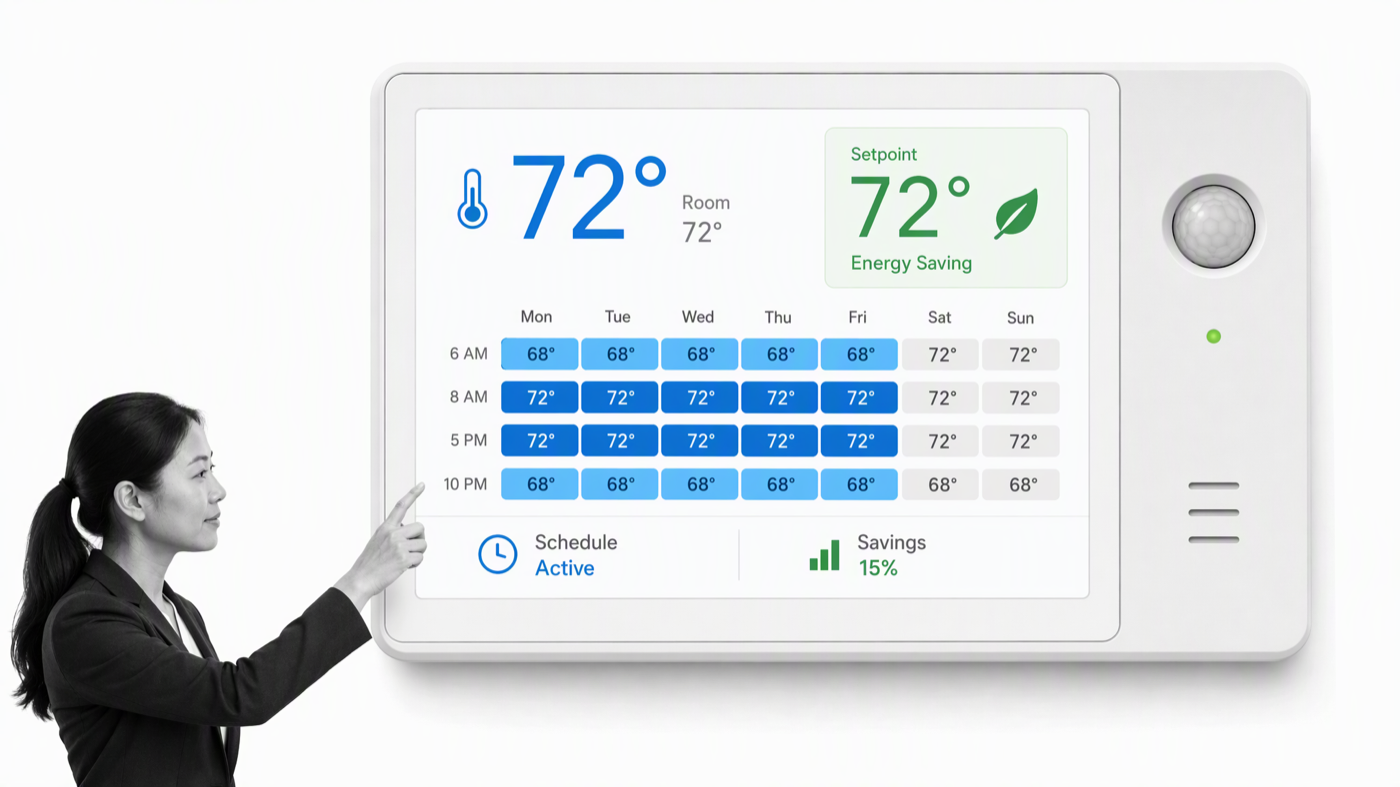
Heating and cooling systems often run on fixed schedules that do not reflect occupancy, weather, or the thermal behavior of a building. Programmable thermostats are the basic version of a broader control strategy. Smart HVAC controls can combine schedules, occupancy sensors, zones, equipment condition, and setpoint limits so a facility uses energy where and when it is needed.
Start with a weekly operating schedule and a measured baseline. Then use setbacks for unoccupied periods, define who may override them, and review consumption after the change. A control that saves energy but makes a workspace unusable will be bypassed. The operating process matters as much as the device.
Commissioning is important. Check sensor placement, zone boundaries, equipment compatibility, and seasonal behavior. Review comfort complaints and energy data together so the team can distinguish a real control problem from an isolated preference. For multi-site businesses, standardize the review checklist while allowing local setpoints to reflect climate and occupancy.
Cut lighting energy with efficient fixtures and sensors
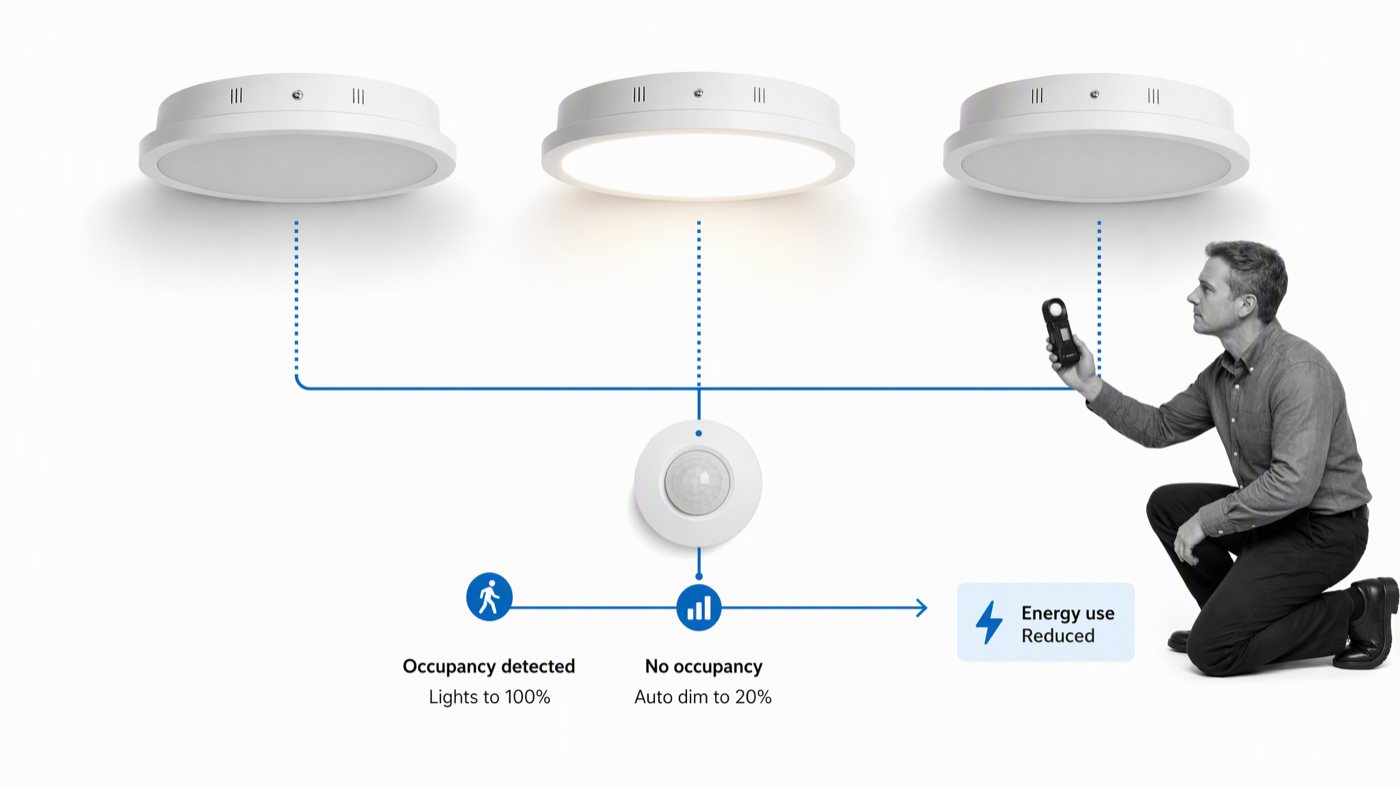
LED lighting is a durable efficiency upgrade because it can reduce electricity demand while extending replacement cycles. The U.S. Department of Energy says LEDs can use about 75% less energy and last 25 to 50 times longer than incandescent bulbs.
The larger opportunity comes from combining efficient fixtures with occupancy sensors, daylight controls, and zoning. Measure fixture count, operating hours, wattage, maintenance frequency, and any safety or quality requirements. That turns a one-off retrofit into a controlled improvement project.
Prioritize spaces with long operating hours, frequent lamp replacement, or inconsistent occupancy. Warehouses, parking areas, corridors, meeting rooms, and back-of-house areas often need different control patterns. Record before-and-after readings and verify that glare, color quality, and safety requirements still meet the needs of the work.
Reduce the infrastructure cost of digital services
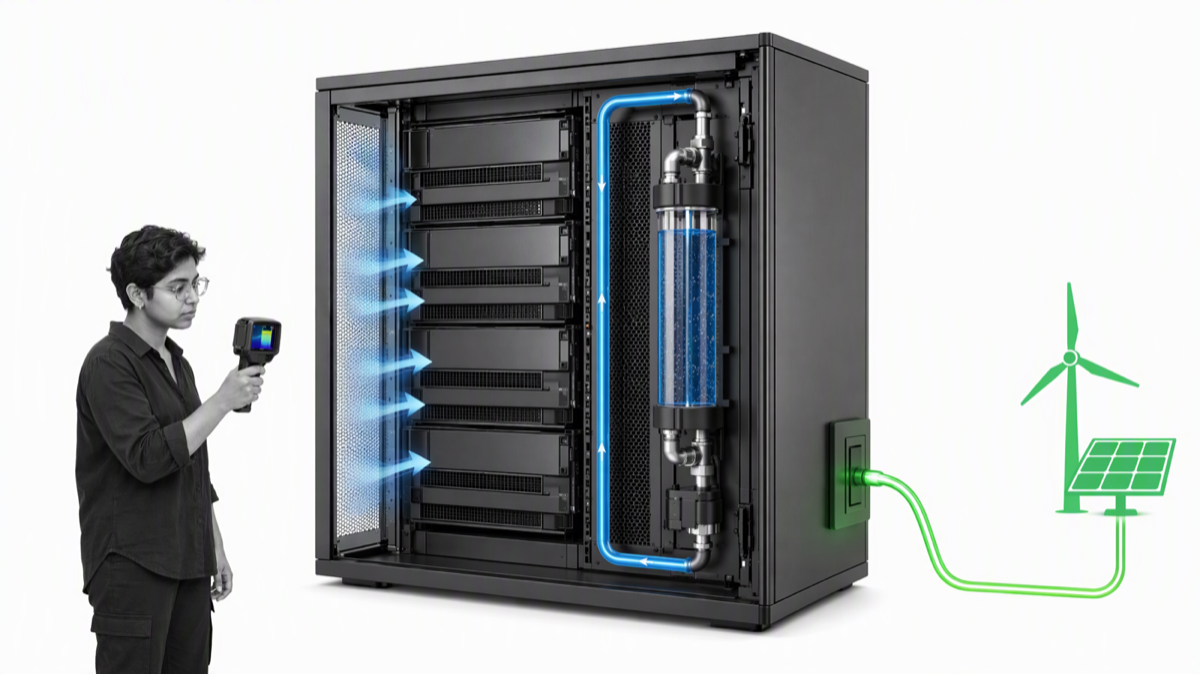
Digital work still depends on physical servers, networks, and cooling. The Department of Energy describes data centers as highly energy-intensive building types and recommends benchmarking, efficient servers, air management, cooling improvements, and ongoing performance tracking.
When selecting a web host or cloud provider, ask for current evidence about electricity sourcing, data-center efficiency, hardware utilization, cooling, regional infrastructure, and emissions reporting. Avoid static “green host” lists that outlive their evidence. The Green Web Directory is a more durable starting point because providers must maintain current verification.
Application design matters too. Right-size storage and compute, delete unnecessary data according to retention rules, schedule batch work intelligently, and monitor utilization. Choosing an efficient provider while leaving idle resources running is only a partial solution. Assign an owner who can review both service reliability and resource use.
Buy cleaner electricity with credible evidence
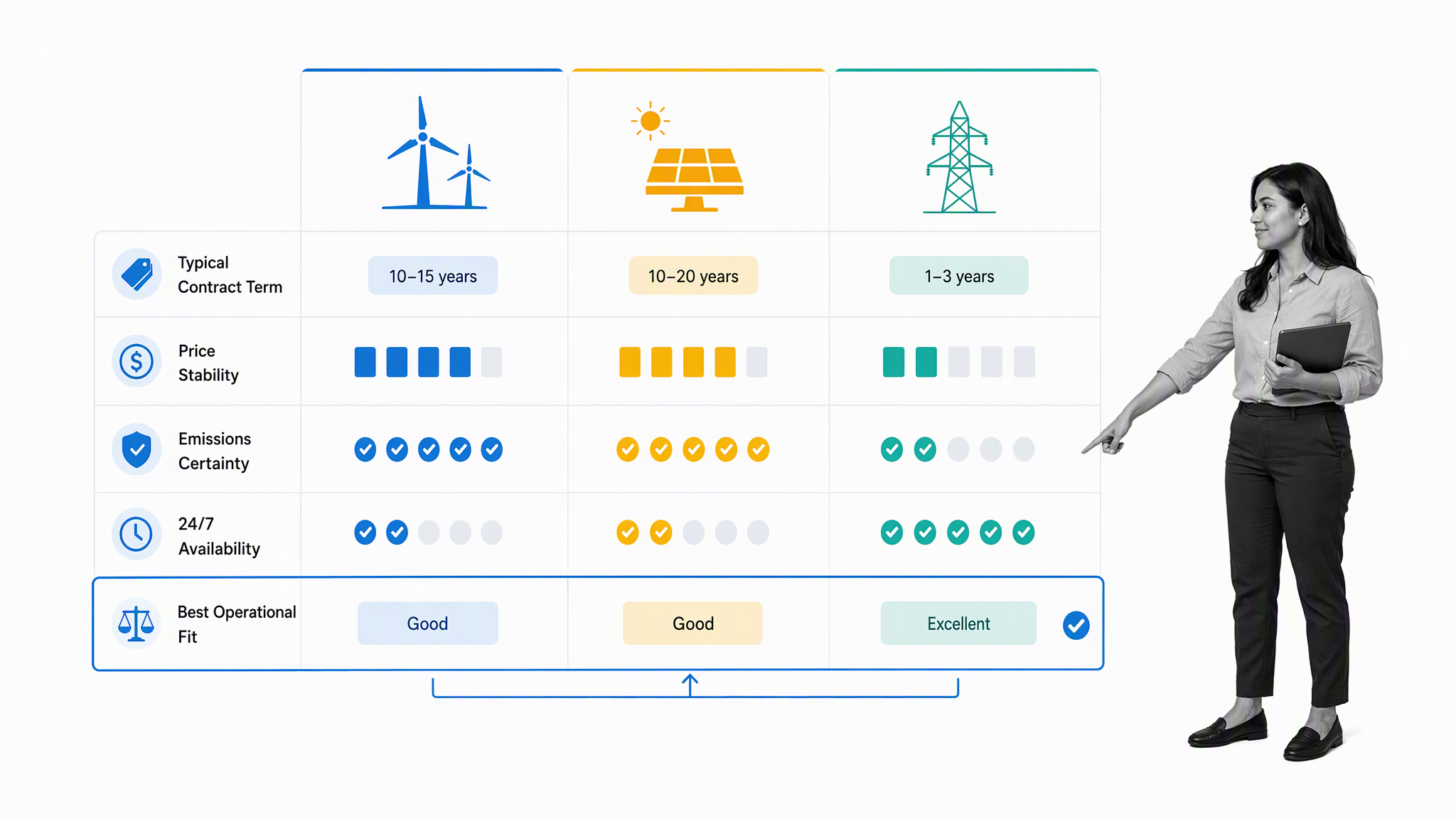
A business can support cleaner electricity through on-site generation, utility green-power products, community programs, renewable energy certificates, or direct contracts, depending on location, load, budget, and risk tolerance. These options are not interchangeable. The environmental claim must match the product purchased and the operations it covers.
The EPA Guide to Purchasing Green Power explains supply options and procurement steps. Record the facilities in scope, annual electricity consumption, contract terms, certificate treatment, reporting period, and renewal owner. For larger programs, hourly matching and location can matter as much as the annual total.
Procurement claims should be specific. Distinguish electricity physically supplied to a facility from contractual instruments used to match consumption. Keep invoices, contracts, certificate records, calculations, and approval decisions together so finance, sustainability, and audit teams can reconstruct the claim later.
Stop equipment from consuming power when idle
Office equipment, displays, chargers, kitchen appliances, and lab devices can consume electricity while idle. Smart plugs and advanced power strips can remove standby loads on a schedule or in response to device state. For commercial equipment, confirm that automatic shutdown will not interrupt updates, safety functions, monitoring, or required availability.
Inventory the devices first. Group them into always-on, scheduled, and safe-to-switch categories. A small pilot can reveal where controls work well and where a manual process, equipment upgrade, or user training is more appropriate.
Document exceptions for equipment that supports security, networking, refrigeration, monitoring, or safety. For switchable loads, define startup behavior and responsibility when schedules change. The cheapest control is not useful if it creates downtime or causes employees to defeat it with unmanaged extension cords.
Measure resource use and make improvement repeatable
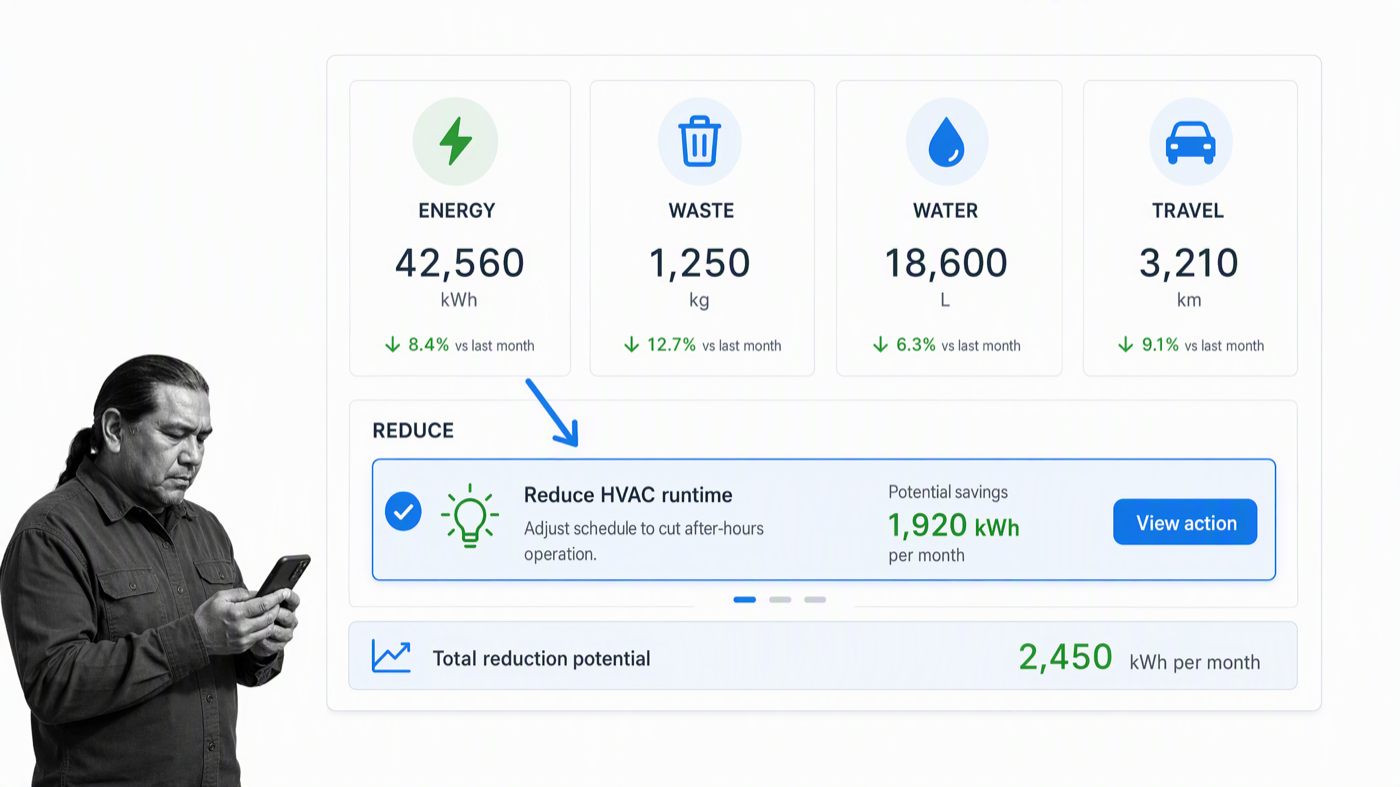
Software can support greener operations when it measures a real resource flow or helps people execute a defined improvement process. Useful categories include energy management, carbon accounting, water and waste tracking, fleet routing, maintenance planning, food-surplus redistribution, and environmental audit workflows.
A digital tool is not automatically green. Evaluate data quality, calculation methods, system boundaries, integrations, evidence retention, and whether the tool changes a decision or action. For a broader view of platforms that measure and manage utility performance, see this guide to energy management software.
Specialist applications can still play a role. For example, Olio for Business supports surplus-food redistribution, while Ecosia publishes financial and project reporting. Treat each application as one component of a measured operating system, not as proof of sustainability by itself.
Prefer tools that expose their methodology and keep an evidence trail. A dashboard should lead to an assigned decision, investigation, maintenance task, supplier change, or policy update. If a metric cannot be traced to source data or no one owns the response, the application is creating visibility without control.
Using Process Street to become more sustainable
Green technology produces better results when it is supported by a repeatable operating system. A sensor may identify waste, but someone still needs to own the response. A renewable-energy contract may change supply, but the business still needs evidence, renewal controls, and consistent reporting. An environmental policy only matters when teams can execute it.
Process Street is a single Compliance Operations Platform with Docs and Ops capability areas plus built-in AI. Teams use Docs to govern environmental policies, procedures, and controlled records. They use Ops to run recurring inspections, audits, approvals, corrective actions, and improvement workflows. Built-in AI can help draft and organize process content, triage information, and support controlled execution while owners and approvals remain explicit.
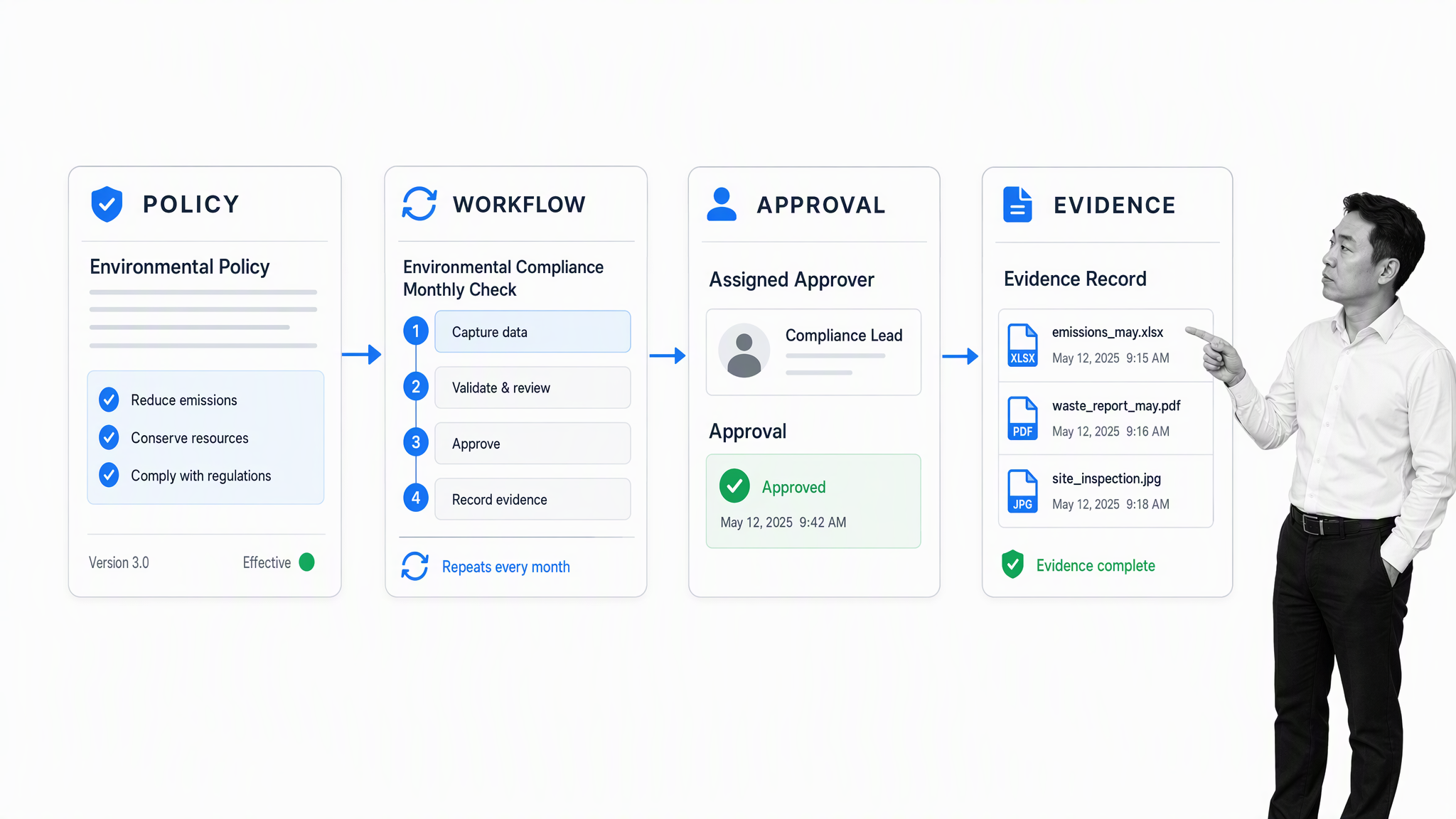
A practical sustainability workflow can:
- define the environmental objective, baseline, scope, and accountable owner;
- schedule meter readings, inspections, maintenance, supplier reviews, and evidence collection;
- route exceptions and proposed changes to the correct approver;
- record decisions, attachments, timestamps, and corrective actions for an audit trail;
- connect environmental policies directly to the work that implements them;
- review results and update the process when the technology or operating conditions change.
The same structure works for a small lighting retrofit and a formal environmental management system. The number of controls changes, but the operating questions remain consistent: Who owns the result? What evidence proves the work happened? Which exceptions need approval? When is the next review due? What change should follow from the data?
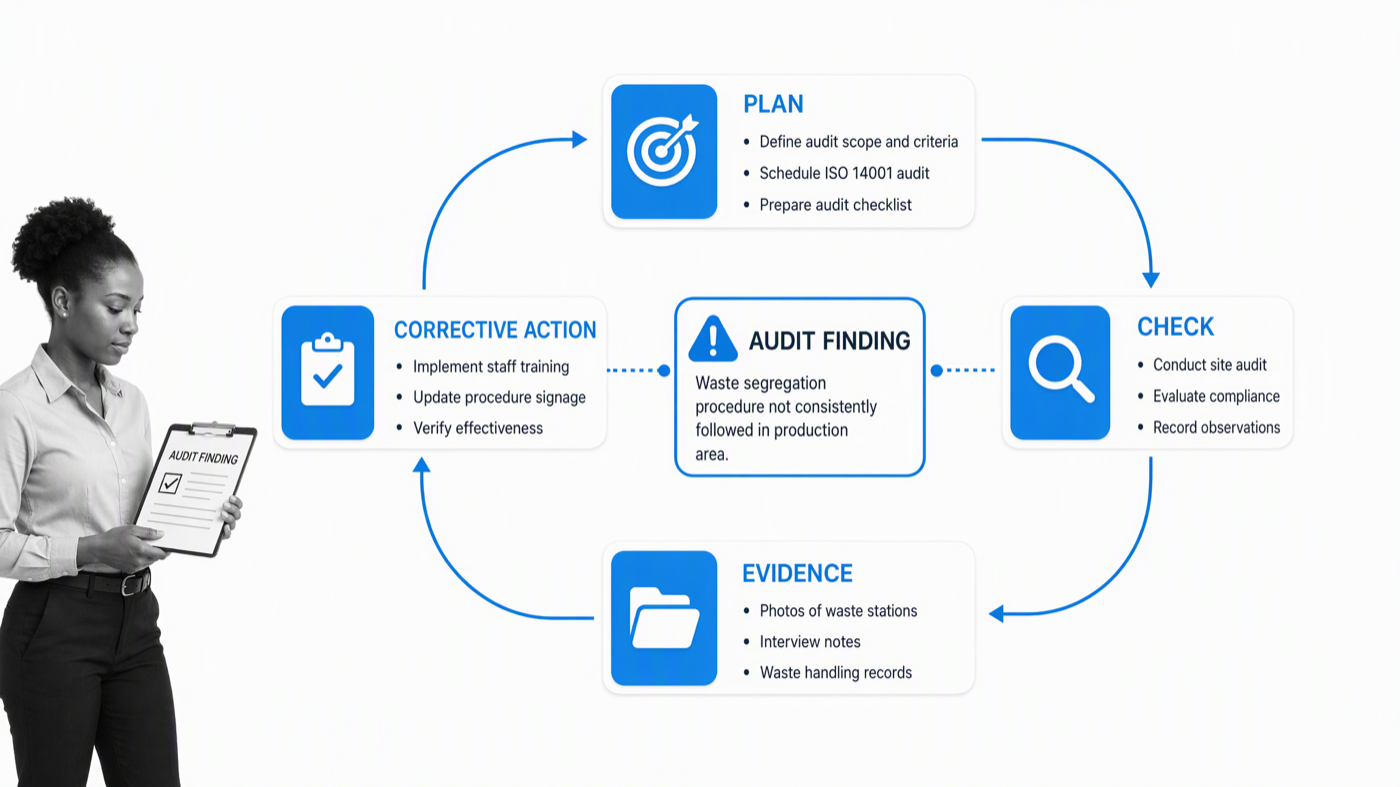
This is especially useful for an environmental management system. If your organization is formalizing ISO 14001 work, Process Street’s ISO 14001 compliance software page explains how governed documents, recurring workflows, evidence, and audit readiness fit together.
Audit environmental costs and controls
Use the Environmental Accounting Internal Audit to examine whether environmental costs, obligations, controls, and disclosures are represented consistently in financial and operating records.
Open the Environmental Accounting Internal Audit.
Put governance in place
Use this workflow to plan the development, implementation, ownership, and review of an environmental management system.
Open the EMS implementation workflow.
Test environmental controls
Use this checklist to assess an environmental management system against ISO 14001 requirements and capture evidence for follow-up.
Open the ISO 14001 self-audit checklist.
Organize controlled requirements and records
Use this template to organize the controlled requirements, procedures, responsibilities, and records that make up an ISO 14001 environmental management system.
Open the ISO 14001 EMS structure template.
Turn requirements into repeatable procedures
Use the mini-manual procedures as a practical example of turning environmental requirements into documented and repeatable operating procedures.
Open the ISO 14001 EMS mini-manual procedures.
Green technology works when people and systems reinforce it
Our Earth is sweltering. Droughts are spreading, wildfires are burning, heatwaves are scorching, deserts are expanding, and glaciers are melting. Storms in many regions are more intense and deadly. Our seas, deep blue oases of life, are polluted with plastic, affected by acidification, and losing species. This is not just about altruism and saving our planet. Sustainability is about humanity and future generations, and it is also about the operating conditions on which every organization depends.
That connection is why green technology cannot sit in a separate corporate initiative. Energy usage, water use, raw materials, office expenses, transportation emissions, waste to landfill, and the environmental costs associated with daily operations belong in ordinary planning and review. Environmental performance improves when the same people who own cost, reliability, safety, facilities, purchasing, and service delivery can see the evidence and act on it.
Small changes can create a useful starting point. Using LED lighting can save an organization money while reducing energy usage. Aerated faucets, efficient toilets, leak detection, and outdoor timing systems can reduce the water bill. Moving to a digital platform can reduce spending on pens, paper, notepads, filing systems, and storage areas, although devices, data centers, and electricity still have an environmental footprint. Digital copies of important documents can also support continuity after a disruption when access, backups, security, and recovery procedures are designed properly.
Green technology can also support workplace productivity and employee wellbeing when it improves light, temperature, air quality, noise, and the reliability of the tools people use. It can be a catalyst for innovation, new market opportunities, and the creation of wealth, but only when the business model and environmental result hold up under scrutiny. Clear evidence can improve brand image and attract customers who care about sustainable initiatives. Vague claims do the opposite, especially when corporations are criticized for poor environmental performance.
Incentives and procurement requirements may strengthen the investment case. Tax benefits, rebates, and contract criteria vary by location and change over time, so current eligibility must be confirmed before a project is approved. The durable principle is to document the baseline, expected benefit, decision assumptions, and verification method. This gives finance, operations, and sustainability leaders a shared record of why the project was selected and whether it delivered.
Remote and hybrid work show how technology and operating choices interact. Virtual meetings can reduce financial and environmental costs by allowing meetings to occur across multiple destinations without the travel need. Working from home can reduce a daily work commute, but it shifts some energy use to homes and depends on the distance, travel mode, building, and equipment involved. Fewer office days may also reduce the need for work clothes and the amount of clothes to wash, which matters because textile production and washing use water and energy. These effects should be measured rather than assumed.
Applications can make the behavior easier to repeat. Olio encourages homes and businesses to share food that might otherwise be thrown out, reducing food wastage to landfill. Ecosia uses advertising revenue to finance tree planting and publishes financial and impact reports. Focus applications can help employees stay focused on a given task, while communication and documentation tools support remote working and online collaboration. The environmental value comes from the behavior and system they enable, not merely from installing the app.
The same rule applies inside Process Street. Role assignments support collaboration and coordinated effort. Dynamic due dates notify individuals when a task is due for completion. Stop tasks control the correct order for critical work. Approvals allow decision-makers to give the go-ahead or rejection on important items and provide necessary comments. Embedded content can connect supporting applications to the governed workflow. Used together, these controls help prevent errors and reduce the wastage of time, energy, and resources.
To be fully digitized is not the goal by itself. The goal is a more reliable operating system. A documented procedure should identify the owner, required evidence, decision point, exception path, and review frequency. For any task, from editing content to sending an invoice or conducting an environmental audit, the procedure should make the expected method visible and make deviations easier to correct.
Successful green technology programs therefore combine scientific innovation with management discipline. They select environmentally friendly products and services, test whether the change reduces environmental externalities relative to the incumbent, and connect the result to everyday work. They also acknowledge tradeoffs. No technology removes every impact, and an efficient device used badly may deliver less benefit than a modest device supported by a strong operating process.
This is where continuous improvement matters. Set the baseline, choose a practical intervention, assign ownership, train the people involved, capture evidence, and compare the result with the expected outcome. If a control is overridden or a target is missed, record why and adjust the system. Over time, coordinated effort turns isolated green products and services into a durable approach to business sustainability.
Some familiar green-technology claims need extra care. Statements that a project attracts more customers, improves disaster recovery, gives tax benefits, reduces water use by up to a half, or automatically improves workplace productivity are not universal results. They are hypotheses to test. Customer research, current incentive rules, recovery exercises, utility data, and employee feedback provide stronger evidence than a broad promise.
Disaster recovery is a useful example. Digital copies of important documents, payroll records, and customer information may be saved in the cloud and accessed from another location after a catastrophe. That does not make the system self-sufficient or independent of human-made infrastructure. It still depends on electricity, networks, identity controls, backups, provider resilience, and tested recovery procedures. The green and resilience benefits come from sound system design.
Digital collaboration also needs a lifecycle view. Rather than printing unnecessary pages, many organizations use online collaboration and documentation tools to reduce paper usage. An embedded view may allow people to interact with other applications without leaving a controlled workflow, supporting cloud solutions and connecting green-technology applications. The organization should still account for device procurement, data storage, network traffic, retention rules, and end-of-life handling.
Workflow controls make the operational intent explicit. Dynamic due dates streamline recurring processes so individuals are notified when a task is due for completion and can complete it without wasted time trying to contact people about upcoming deadlines. Stop tasks help ensure tasks are completed in the correct order. This can prevent errors and the resulting wastage of time, energy, and resources.
Approvals allow decision-makers to give the go-ahead or rejection on important items, and necessary comments can be provided with the decision. Approval tasks act as a filter for error and help surface the environmental costs associated with a change before it is released. Role assignments support collaboration for innovation and coordinated effort to improve efficiency.
The wider idea is sometimes called ecological modernism: technology can help solve large environmental problems when it is supported by institutions, public policy, responsible investment, and sound operations. A useful technical definition makes the comparison explicit: green technology generates or facilitates a reduction in environmental externalities relative to the incumbent. That is why the baseline and lifecycle boundaries matter.
Green technology also engages social responsibility. Using green tech to go green can set an example for a broader shift toward sustainability, but credible leadership requires more than image. Organizations need measured results, transparent limitations, and action when performance falls short. That is what protects brand image from exaggerated claims and turns a positive intention into accountable practice.
Contract opportunities follow the same pattern. Being more sustainable may help when bidding for contracts from governmental or corporate bodies that include environmental criteria. The relevant standard, evidence, scoring method, and reporting duty should be confirmed for each procurement. A generic claim about sustainability is not a substitute for the documentation requested by the buyer.
Finally, efficiency should not be confused with endless consumption. Moving to a green platform may save money across the board, but lower unit costs can encourage more use. Teams should track the total resource outcome, not only the efficiency of one transaction. The goal is a genuine reduction in energy, water, materials, emissions, or waste while maintaining the service the organization needs.
The scale of the environmental context should remain visible. Droughts spreading, wildfires burning, heatwaves scorching, deserts expanding, glaciers melting, and natural disasters multiplying affect infrastructure and supply chains. Seas are poisoned with plastic, polluted, and acidified; habitats are damaged and extinction risk rises. Sustainability is about humanity and saving society as we know it, as well as protecting the natural systems that make economic activity possible.
Travel illustrates the need for careful accounting. Looking at total U.S. greenhouse gas emissions by economic sector, transportation remains a major source. Passenger car travel, rail travel, motorcycle travel, and bus travel have different emissions profiles, but they are all transportation emissions that may be affected when cutting down the daily work commute. A remote-work policy should compare the avoided commute with additional home energy, equipment, and network use.
Clothing and textiles offer another lifecycle example. Removing the need for work clothes may reduce purchases for some employees, but it does not erase clothing demand. Textile waste includes clothing and other textiles, while manufacturing and washing use freshwater and energy. Reducing the need for clothing, extending garment life, washing carefully, and supporting reuse can all contribute, but the organization should avoid claiming a precise benefit without data.
Consumer and reputation claims also require evidence. Surveys sometimes report that a majority of consumers prefer green alternatives or will pay more to support sustainable initiatives. Those findings vary by market, product, wording, and actual buying behavior. A company should not assume that being green will boost sales and leads. It should test the proposition and communicate the measured environmental result.
Depending on the technology implemented, there could be tax benefits for green devices. Solar panels, storage, efficient equipment, and building improvements may qualify under current national, state, or local rules. The percentage, eligible cost, ownership requirement, and deadline must be checked at the time of investment. No fixed tax break should be treated as permanent.
Likewise, aerated faucets, efficient toilets, sensor taps, leak detection, and outdoor timing systems can reduce water use and the water bill. Whether a site reduces water use by a small amount or by up to a half depends on the original fixtures, occupancy, leaks, process demand, and maintenance. Metering before and after the change turns the estimate into evidence.
The concept of ecological modernism sees technology as important to solving big environmental problems, but technology is not a substitute for governance. Green technology investments are shaped by behavior, incentives, infrastructure, and heterogeneous agents with different needs. The operational system determines whether the technical potential becomes a lasting result.
Finally, green technology can improve brand image when evidence supports the claim. Corporations criticized for poor environmental performance show why employing green tech does not automatically create a positive reputation. Transparent goals, credible methods, reported results, and corrective action are what place an organization’s reputation in a positive light.
Energy and office systems are often accessible first projects. Small changes such as using LED lighting can save an organization money. Eco-friendly technology is focussed on efficiency to reduce energy usage, but the result should be verified rather than treated as an automatic win-win situation. Moving to a digital platform can reduce spending on pens, paper, paperclips, markers, notepads, filing systems, and storage areas. Choosing a green web host can also support the digitization of a business when the provider publishes credible energy and infrastructure evidence.
For instance, digital copies of important documents, payroll, and customer information can be saved in the cloud and therefore accessed from another approved location after a catastrophe. Most green technology is not self-sufficient and remains dependent on human-made infrastructure, so recovery planning must cover those dependencies. Using green tech to go green sets an example for a societal shift towards sustainability only when the supporting process is reliable.
A behavioral view reaches the same conclusion. Green technology is technology that generates or facilitates a reduction in environmental externalities relative to the incumbent. Green technology investments still operate in the context of heterogeneous agents, so adoption depends on the people, incentives, and operating conditions around the technical change.
Search is a small example of a behavior-linked choice. Instead of opening Google to search the internet, a user may choose the Ecosia app instead. Ecosia uses profits to plant trees in places that need them most and publishes transparency reports. The environmental value should be judged from those reports and the user’s actual behavior, not from the application label alone.
Use green technology to adapt and survive in our next economy
Business decisions increasingly need to account for operational cost, resilience, environmental impact, and the needs of the communities in which a company operates. Our global economy and the economic state of our businesses, after all, do not operate in isolation. We are part of complex environmental systems, that if tilted off-balance, threaten the existence of society as we know it. Business sustainability becomes concrete when objectives are tied to technology choices, owners, evidence, and measurable operating results. Green technology is most valuable when it helps a team make that system more efficient, resilient, and accountable. For more information about how you can be more sustainable in your business or line of work, check out our following resources:- 5 Free ISO 14001 Checklist Templates for Environmental Management
- What is ISO 14000? EMS Basics & Implementation (Environmental Management)
- How You Can Create a Sustainable Business For Long-Term Success
- Corporate Sustainability: Using System Thinking to Solve a Global Crisis
- Economic Sustainability For Success: What It Is And How To Implement It
- Greenwashing: What It Is and How to Stop It (Free Template)
- GRI Standards for Sustainability Reporting: What They Are and Why They Matter
- What is Environmental Management? How You Can Implement it Today
Green technology FAQ
What is the difference between green technology and clean technology?
The terms often overlap. Green technology emphasizes reducing environmental harm, while clean technology is commonly used for technologies that reduce pollution, emissions, waste, or resource consumption compared with conventional alternatives.
How should a business choose a green technology?
Start with a measurable baseline and a specific operational problem. Compare lifecycle impact, energy or material savings, implementation cost, maintenance, evidence quality, supplier claims, and the people and process changes needed to sustain the result.
Is digital technology always greener?
No. Digital tools rely on devices, networks, data centers, and electricity. A digital solution is environmentally useful when it measurably reduces travel, paper, waste, energy, or another impact without shifting a larger burden elsewhere.
How can Process Street support environmental management?
Process Street can govern environmental policies in Docs and run recurring audits, inspections, evidence collection, approvals, corrective actions, and improvement workflows in Ops, with built-in AI supporting controlled process work.
Do you employ green technology solutions in your business? What green products/services have you found to be the most effective? We would love to hear from you, so please comment below. Who knows you may even get featured in an upcoming article!The post Go Lean and Go Green: Green Technology to Future Proof Your Business first appeared on Process Street | Compliance Operations Platform.


0 Commentaires