A franchise is a business owned by an independent operator who pays for the right to use another company’s brand, products, and operating system. The franchisor supplies the model and support; the franchisee invests capital, runs the local business, follows the agreed standards, and usually pays continuing royalties.
That exchange can accelerate a new operator’s start, but it does not remove business risk. The value lies in a tested identity and a repeatable way of working, while the tradeoff is less local freedom and a continuing financial obligation to the franchisor.
Franchising has become a major part of the US economy. The International Franchise Association’s 2026 outlook projects about 845,000 franchise establishments, nearly 8.9 million jobs, and $921.4 billion in economic output. Those numbers cover far more than restaurants: business services, home services, fitness, retail, lodging, and many other sectors use the same basic model.
This article explains:
- How the relationship between a franchisor and franchisee works
- Which startup and ongoing costs prospective owners need to investigate
- What the story of McDonald’s reveals about systems, control, and scale
- How Benjamin Franklin used a recognizable precursor to commercial franchising
- Why repeatable processes remain the real engine of a successful franchise
How does a franchise work?
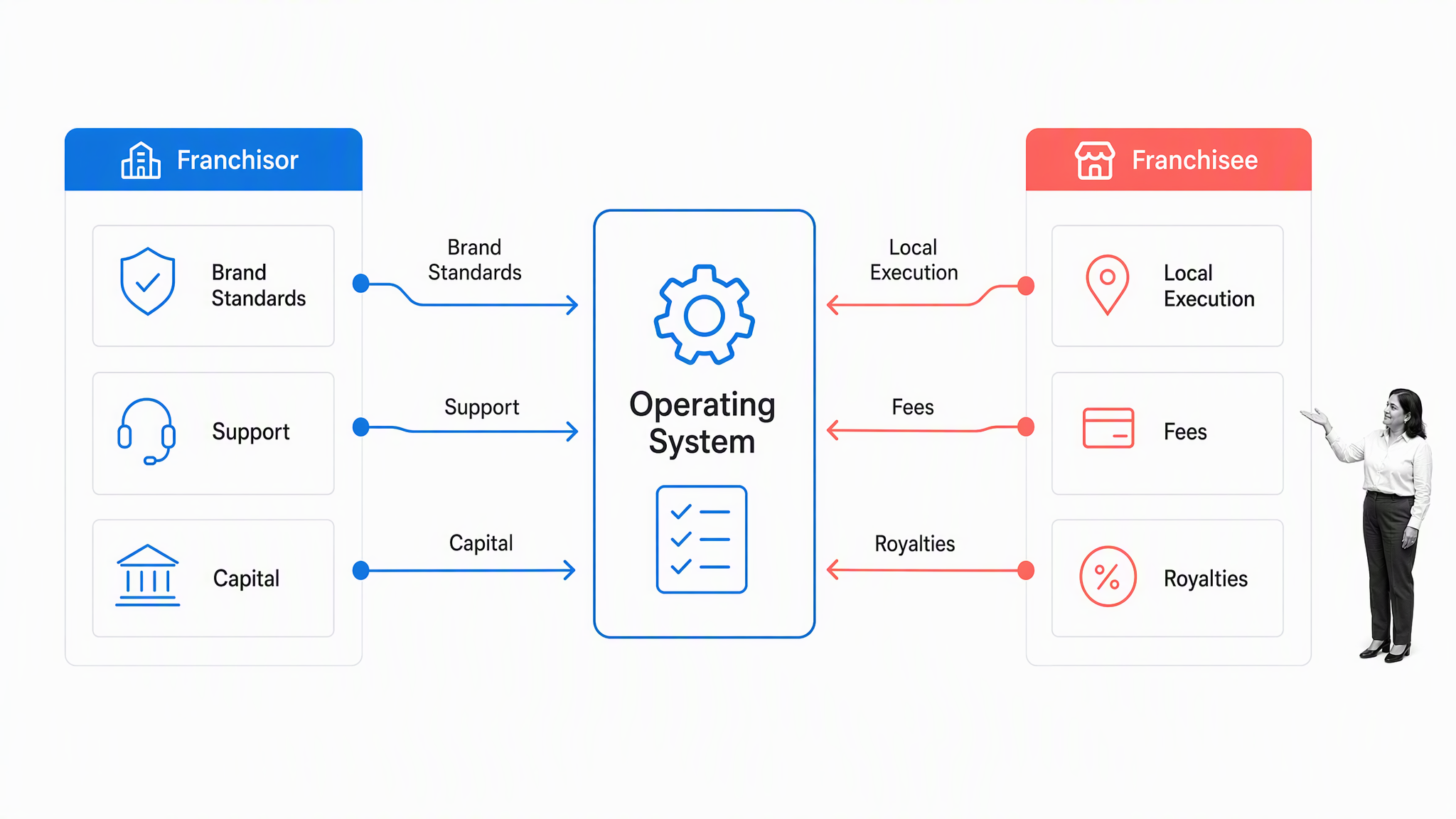
A franchise begins with a legal and commercial relationship. The franchisor owns the brand and defines the system. The franchisee operates a location or territory under that system. In return for an initial fee and continuing payments, the operator may receive training, operating guidance, approved suppliers, marketing support, technology, and permission to trade under the brand.
The agreement does not turn the franchisee into an employee. The operator normally forms and funds an independent business, hires the team, manages local execution, and carries the day-to-day financial risk. At the same time, the operator must follow the standards set out by the franchisor. Those standards can cover products, service, store design, quality controls, reporting, approved purchases, and use of intellectual property.
The written franchise agreement defines that relationship for a fixed term. It typically explains the territory, renewal conditions, transfer rights, default remedies, sourcing obligations, training, and the circumstances under which either side can end the relationship. A strong brand may create customer recognition, but it can also impose detailed controls that an independent founder would not face.
The practical split is straightforward:
- The franchisor builds and protects the system. It develops the brand, documents the model, trains operators, monitors performance, and updates standards.
- The franchisee executes the system locally. It supplies capital, manages people, serves customers, maintains quality, and operates within the agreement.
- Both sides depend on consistency. A weak system cannot be replicated, while weak local execution can damage every operator sharing the brand.
That is why a useful operations manual matters. A promise such as “provide great service” is not enough. Operators need documented procedures, role ownership, training, evidence, and controls that make the desired result repeatable.
Process Street supports that work as a Compliance Operations Platform. It is a single product with Docs and Ops capability areas plus built-in AI, so teams can document standards, run recurring work, collect evidence, and monitor whether the process was followed.
The same discipline also unlocks broader business process automation benefits. When the operating model is explicit, routine handoffs, approvals, reminders, and records can be automated without losing accountability.
How much does it cost to get started?
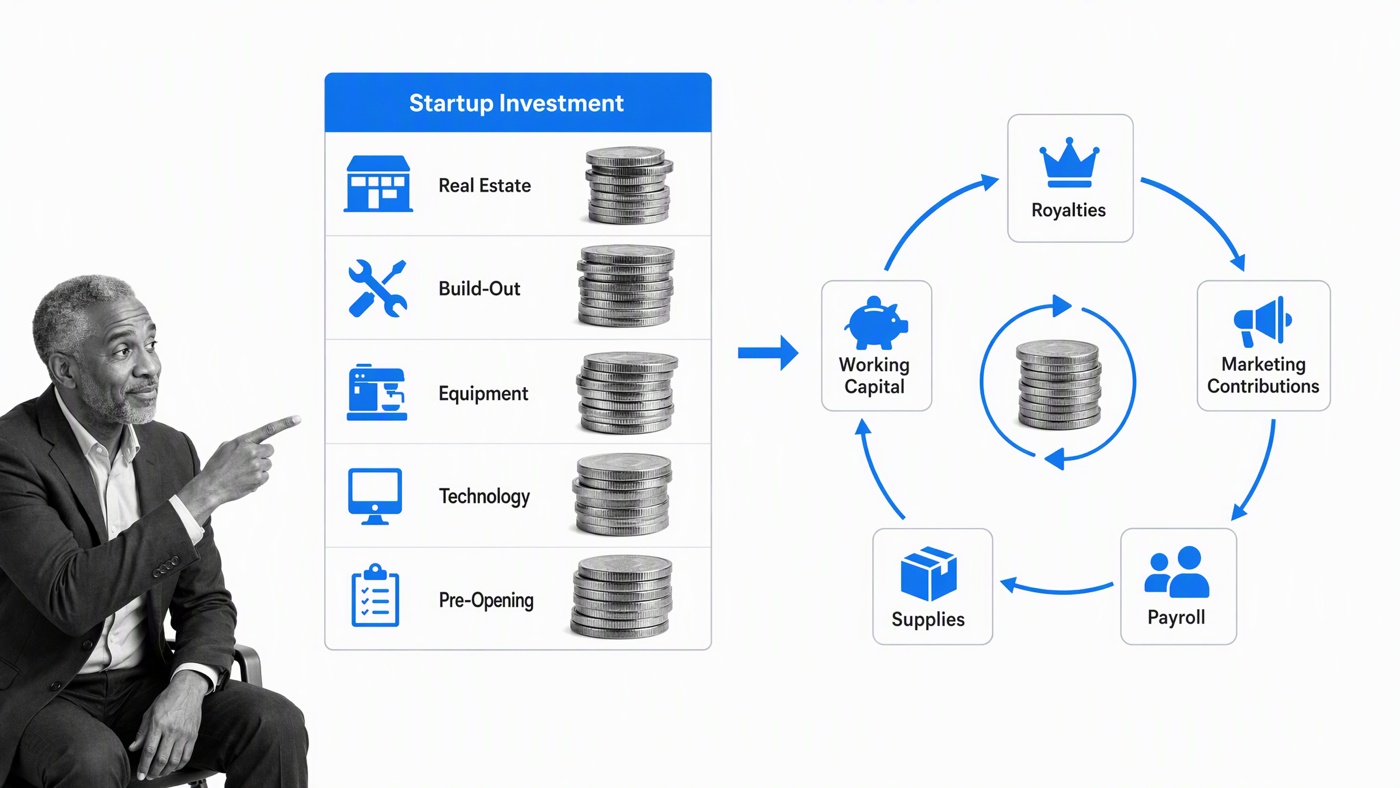
The franchise fee is only one part of the required investment. A prospective owner may also need to fund real estate, construction or leasehold improvements, equipment, signs, inventory, professional fees, insurance, licenses, opening marketing, payroll, and working capital. After launch, royalties and marketing-fund contributions can continue for the life of the agreement.
Current official examples show how widely the numbers vary:
- Subway lists a $15,000 initial franchise fee, a minimum net worth of $150,000, at least $100,000 in liquid assets, and an estimated initial investment of $199,135 to $536,745.
- Cold Stone Creamery estimates an overall initial investment of $255,700 to $680,775, with a traditional location estimated at $390,675 to $680,775.
These figures are examples, not promises or complete budgets. Programs change, locations differ, and a low franchise fee can sit beside a much larger total investment. Prospective owners should examine the complete disclosure, model conservative sales and cost scenarios, and obtain independent legal and financial advice.
Working capital deserves special attention. A new location may need months to reach stable demand while rent, wages, debt service, supplies, and royalties continue. A realistic plan tests slower sales, higher build-out costs, delayed opening, and an owner salary. It also separates expenses paid to the franchisor from costs paid to landlords, contractors, lenders, insurers, and suppliers.
Additional funds create an advantage over debt and keep the owner able to act.
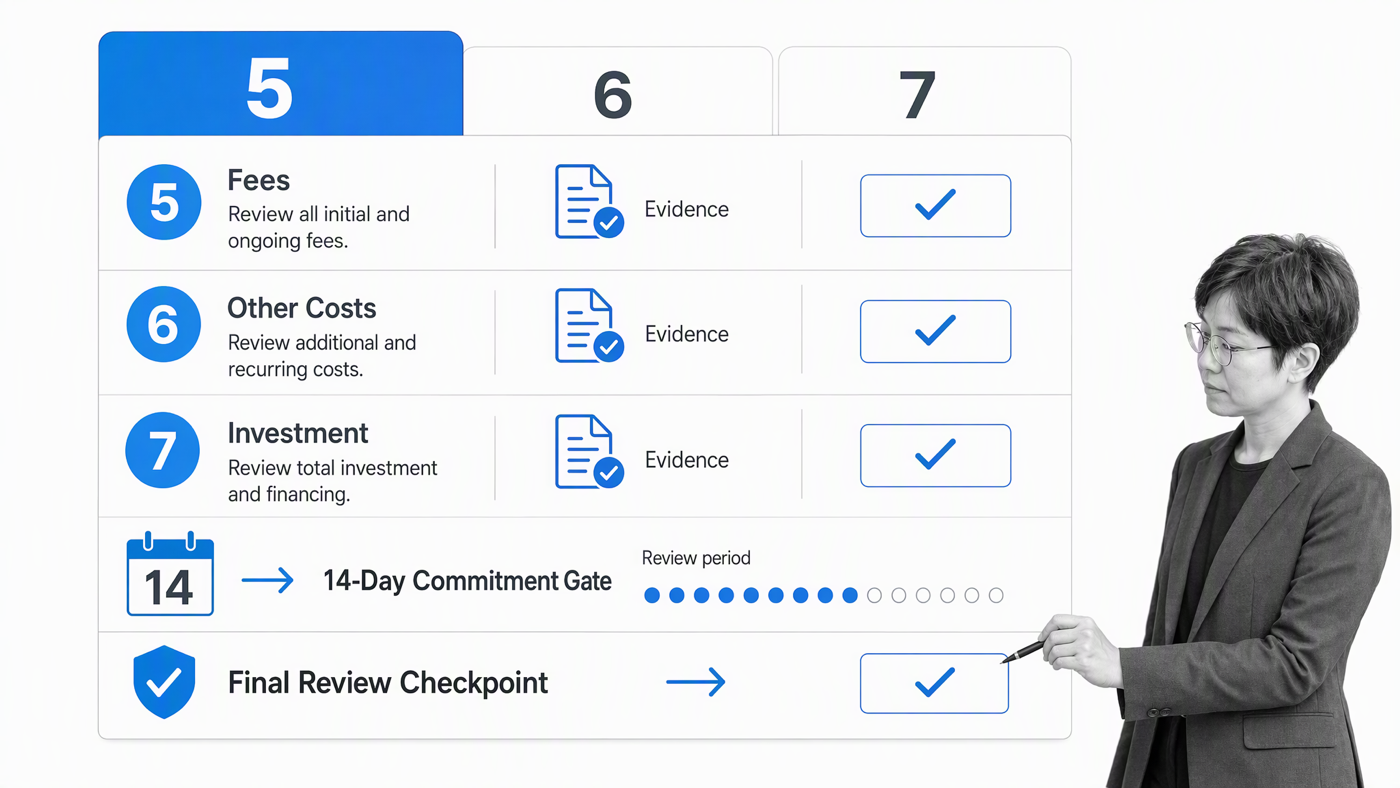
In the United States, the federal Franchise Rule sets the due-diligence timeline. A franchisor generally must provide a Franchise Disclosure Document at least 14 calendar days before a prospective owner signs a binding agreement or pays money to the franchisor or an affiliate.
The FDD contains 23 items. For cost analysis, Items 5, 6, and 7 are essential: initial fees, other fees, and the estimated initial investment. Other items describe litigation, bankruptcy, territory, trademarks, renewal and termination, financial performance representations, outlets, financial statements, and contracts. Together, these disclosures form the federal framework for evaluating a franchise opportunity.
A franchise can provide a known brand and tested procedures, but no disclosure document can guarantee demand, profit, financing, or a successful exit. The owner still needs enough working capital, realistic unit economics, capable management, and a market that supports the location.
How McDonald’s became one of the biggest franchises in the world
The Founder tells the story through Ray Kroc, a milkshake-machine salesman who encountered the McDonald brothers’ unusually efficient restaurant and saw a system that could be repeated. Michael Keaton’s Kroc is charismatic and relentless; Dick and Mac McDonald are exacting operators who care deeply about the integrity of their creation.
The brothers were the innovators and organizers. They had created a system so effective that its scalability also made their control vulnerable. Kroc wanted to expand quickly. The brothers feared that rapid growth would erode quality. The conflict was not simply ambition against caution. It was a collision between two requirements of a franchise: scale and faithful execution.
The film presents the different perspectives of the early key figures. Kroc tastes his first McDonald’s burger and knows he has to pair with the two brothers to build a hamburger-producing colossus. We follow his persuasion of the McDonald brothers and the conflict that emerges from their competing visions.
The burger innovators Dick and Mac are extremely good at what they do. They approach the restaurant with an artisanal commitment to their craft, seeing the business as their creation and something that should hold to its original vision. That rigor is the source of the system’s quality, but it also makes expansion feel like a threat.
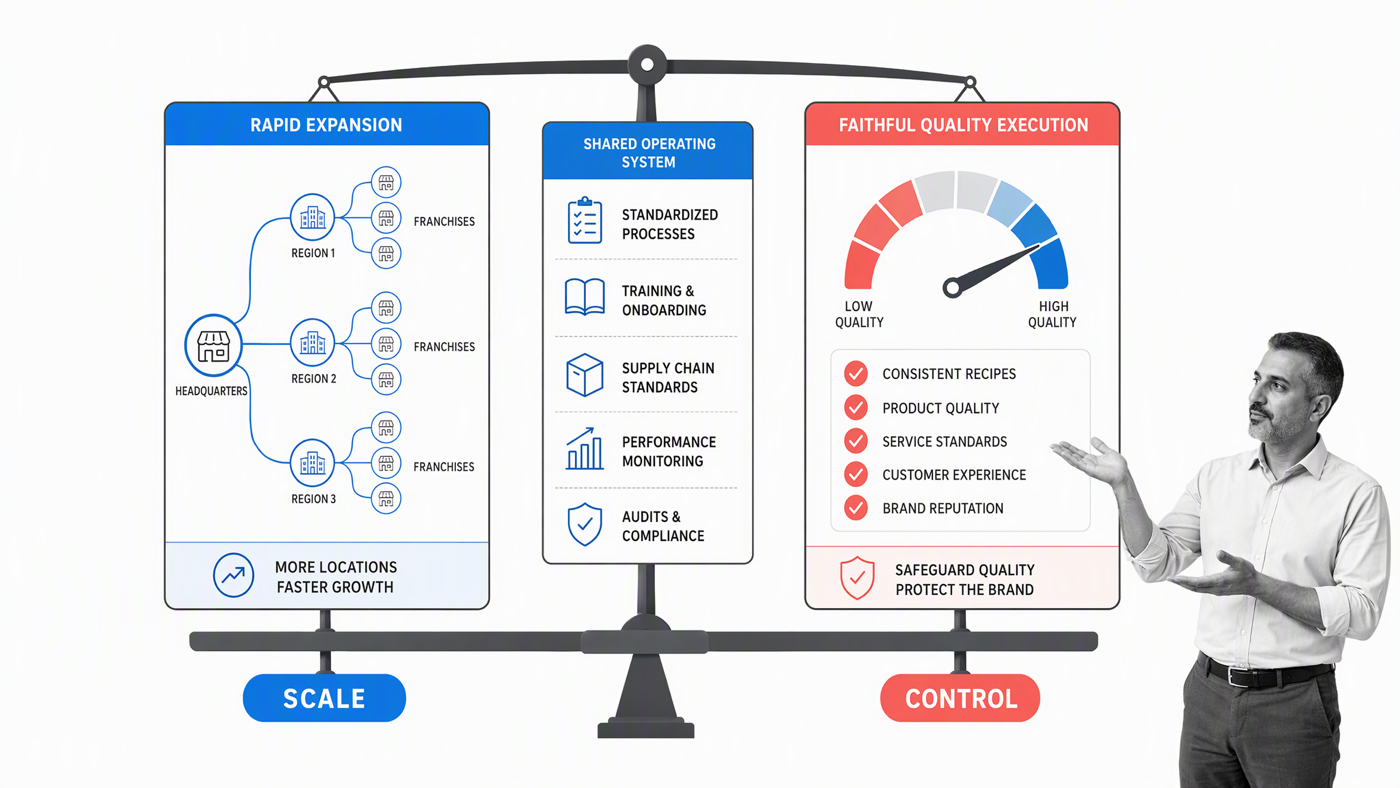
What Kroc recognized was more valuable than a single successful restaurant. He saw a tested operating model that could reduce labor, simplify inventory, increase customer throughput, and be taught to new operators. Around that core, the business could add locations, products, real estate arrangements, and national marketing.
For Kroc, it had to be franchised and it had to grow. McDonald’s eventually expanded beyond the brothers and left them behind, with Kroc pushing the business to new levels of success and national renown. The film does not make him a simple hero or villain. He is an anti-hero whose drive creates something enormous while revealing the unequal power inside the partnership.
That honest storytelling gives us a view into reality without anyone easy to cheer for. The struggle represents both the expansionist, growth-oriented side of business and the quality-focused, product-centric organizational rigor required for success. Without either party, the McDonald’s we know now would likely not exist.
The history of modern franchising traces the original San Bernardino restaurant, the brothers’ Speedee Service System, Kroc’s first visit in 1954, and the opening of his Des Plaines restaurant in 1955. The historical timeline is cleaner than the human conflict dramatized on screen, but both versions point to the same operating insight: a restaurant becomes franchise-ready only when its success can be transferred.
Kroc saw in the brothers’ creation an effective system, one that could be replicated again and again with ease while cutting overhead on staff, real estate, and stock and driving up the turnover of customers. Around this core model, other products and revenue streams could be appended, from a slowly expanding menu to sponsorship and advertising. That is what turned an excellent local operation into a platform for national growth.
Without the brothers’ system there was little to scale. Without Kroc’s drive, the system might have remained local. The resulting enterprise shows both the productive and uncomfortable sides of franchising: a carefully designed model can create enormous opportunity, while control over that model determines who captures the value.
That tension remains useful for any business considering franchising. Growth exposes every ambiguity. If product quality depends on a founder’s judgment, training depends on oral tradition, or suppliers vary without controls, each new location multiplies inconsistency. A transferable system needs observable standards and a way to correct drift before it becomes the customer’s experience of the brand.
The Founding Father who built an early franchise network
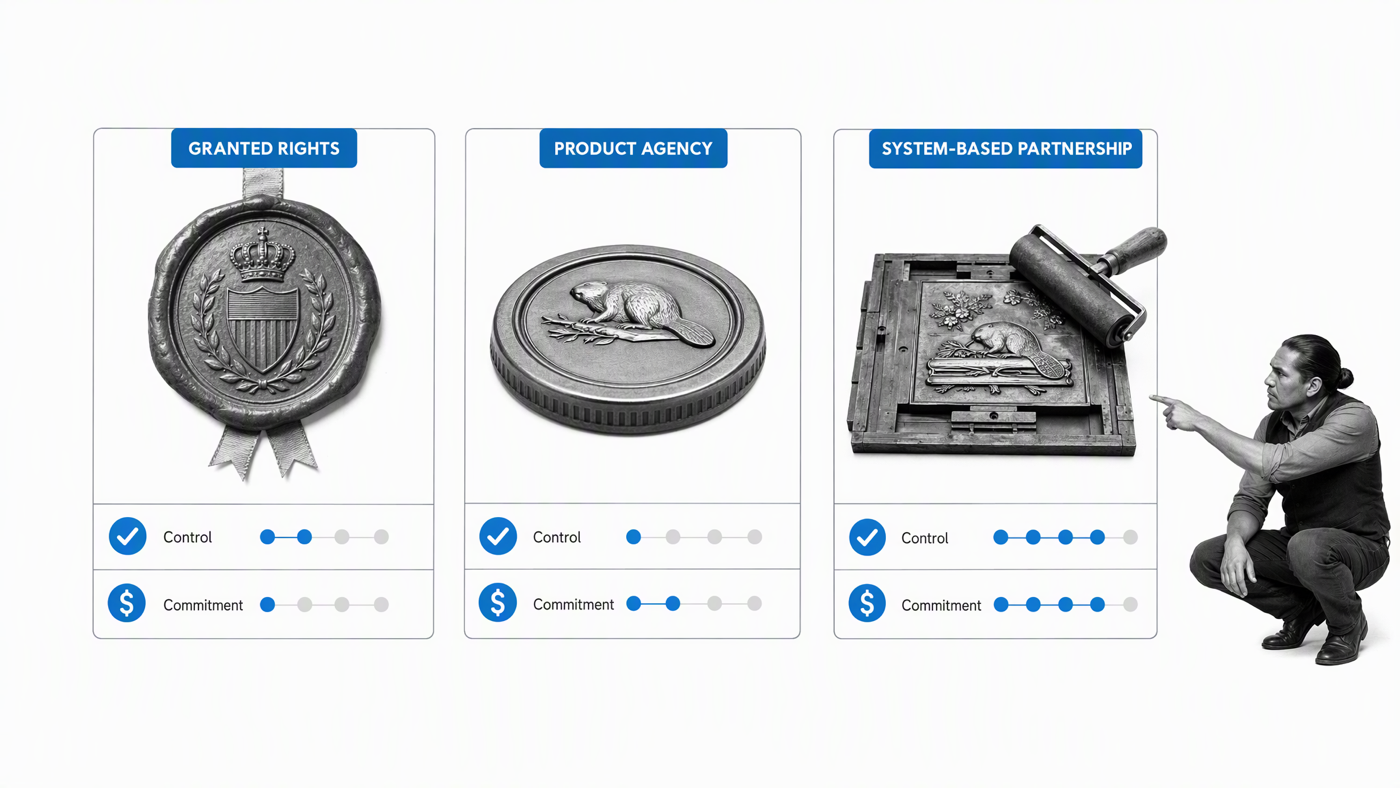
The history of franchising depends on how broadly the word is defined. Long before modern disclosure rules, governments granted commercial rights, producers appointed agents, and owners licensed others to sell goods. Singer sewing-machine distribution is often presented as the beginning of US franchising, but it was part of a much older family of licensing arrangements.
The development of the franchise model is often attributed to Albert Singer, the son of the founder of the I&M Singer Company. Singer employed a form of commercial franchising in which agents sold and repaired sewing machines. Yet defining franchising as access to sell or distribute a product owned by someone else is a very broad application of the term.
With that broad definition, one could point much further back. Lloyd Tarbutton argued that a chain of stores in China around 200 BC could qualify. The feudal system of governance common in Europe through the Middle Ages also rested on a related concept: the right to collect revenue from land passed from king to lord. Those arrangements show pieces of the model, but not the complete business-format relationship familiar today.
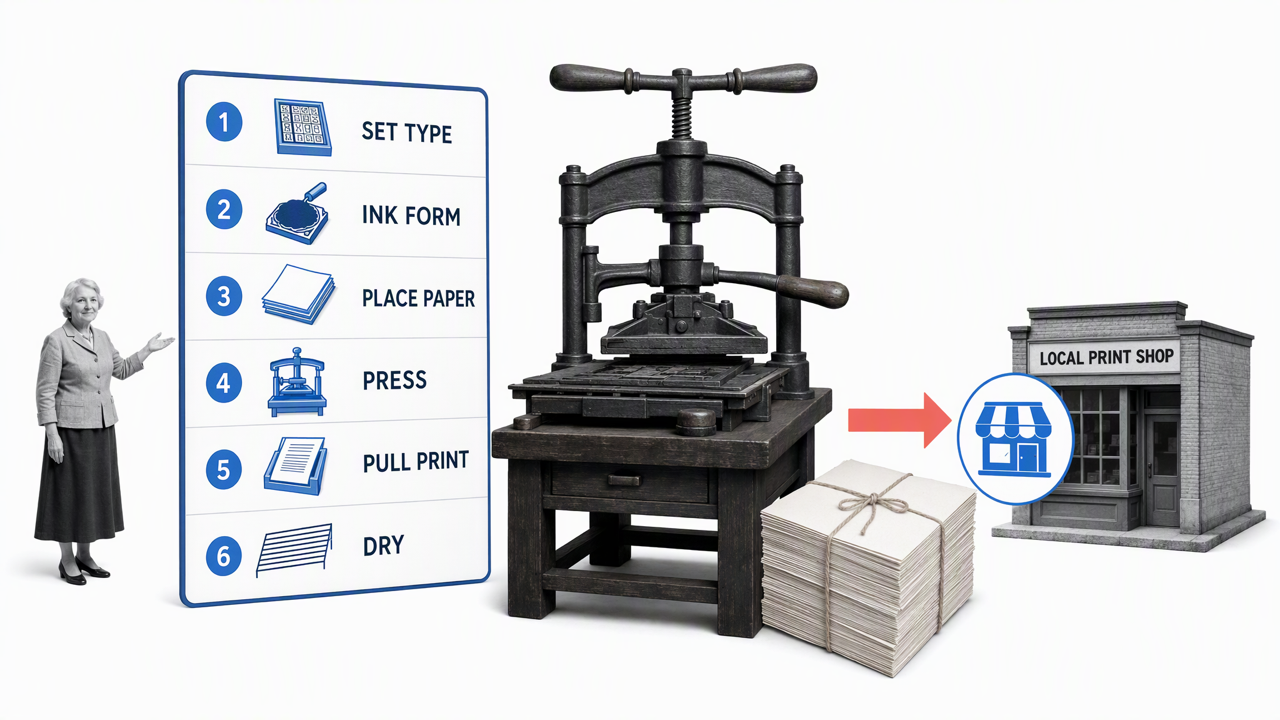
The International Franchise Association’s history of modern franchising identifies Benjamin Franklin’s printing partnerships as an important early example. In 1731, Franklin entered a co-partnership with Thomas Whitmarsh in South Carolina. Franklin supplied printing equipment and arranged access to materials and know-how, while Whitmarsh ran the local shop.
The agreement was not identical to a modern franchise contract. There was no contemporary FDD, franchise statute, or national brand-management team. Yet the commercial structure is recognizable: a central owner extended a working system and resources to an independent local operator, then participated in the result.
Other antecedents help explain why claims about the “first” franchise require care. Medieval rulers granted rights to collect revenue, brewers tied public houses to supply agreements, and manufacturers used dealers or agents to widen distribution. Modern business-format franchising brought those ideas together with a complete brand and operating method rather than a single product or territory right.
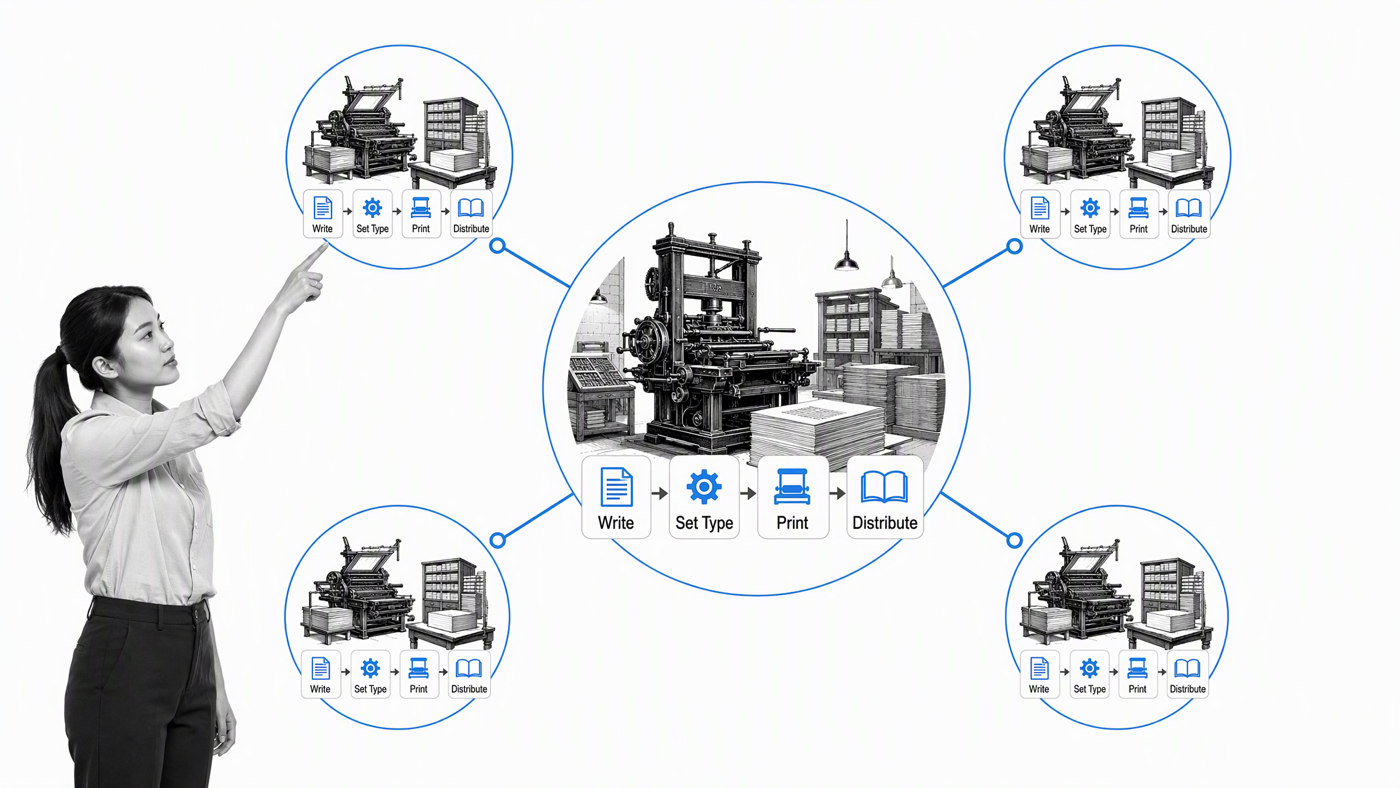
Franklin established comparable relationships with other printers in the colonies and beyond. The network increased the reach of his methods and created income without requiring him to manage every shop directly. It is an early illustration of the same leverage that attracts modern franchisors: local entrepreneurs provide capital and execution while a proven system travels farther than its creator could operate alone.
The original co-partnership specified that Whitmarsh would establish a printing company, source materials through Franklin, and bear the expense of performing the work. Franklin licensed machinery, materials, and process knowledge for a fixed period. He later established similar relationships with printers across the Americas and into Europe.
According to the surviving account, Franklin took no active role in daily printing. The working part was performed by Whitmarsh or at his expense, while Franklin supplied access to machinery, materials, and process expertise.
Revenue from Franklin’s printing interests helped sustain him while he was in France negotiating French entry into the War of Independence. The arrangement did more than spread a printing technique. It helped fund the diplomatic work that secured essential support for the new nation.
The history also sharpens an important point. A franchise is not merely permission to display a name. The durable value comes from passing along the equipment, supply relationships, training, standards, and process expertise needed to reproduce the result.
The business systems that drove McDonald’s growth
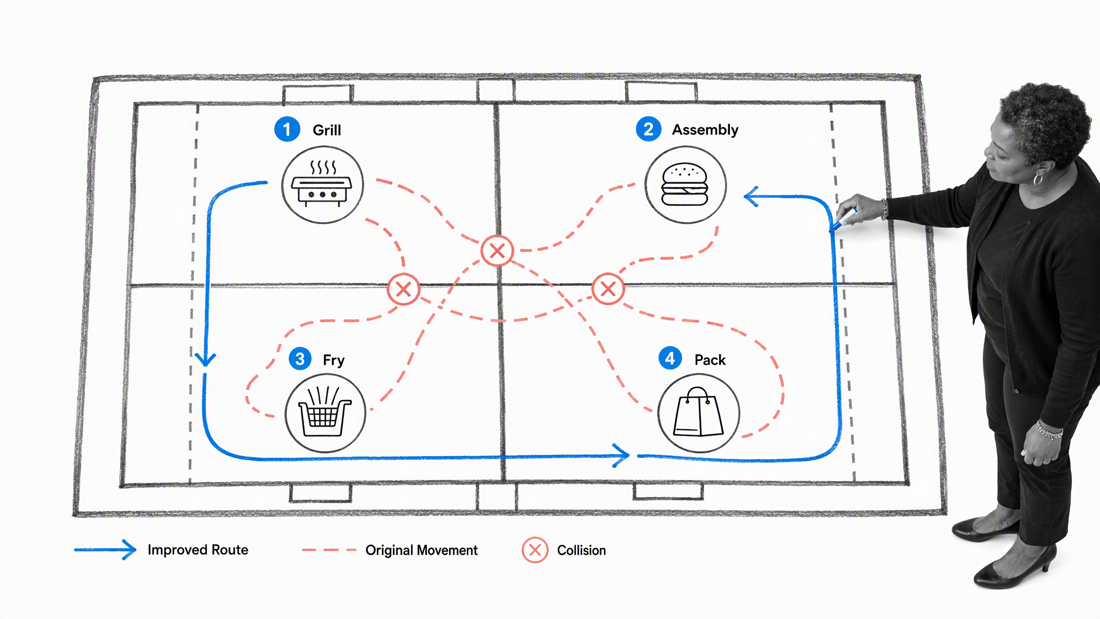
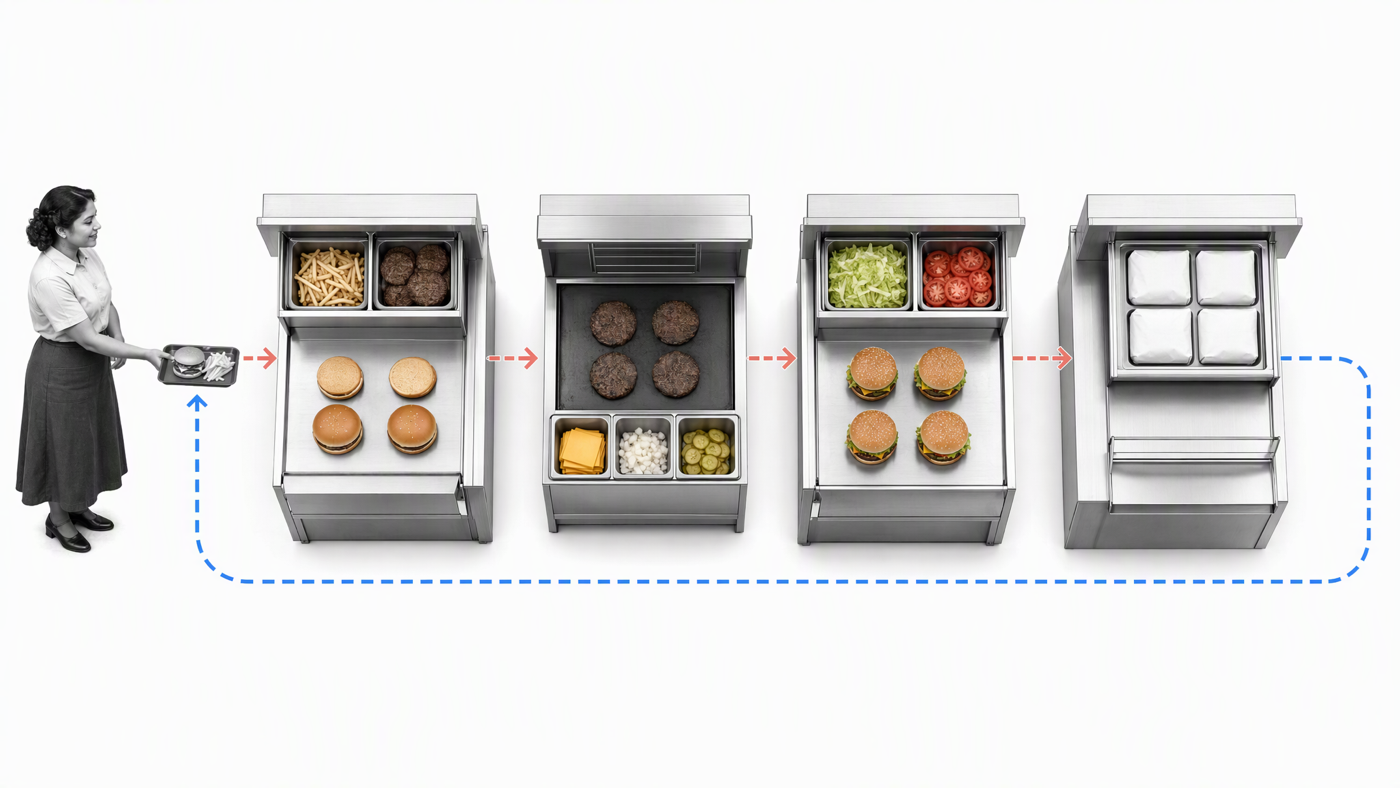
The McDonald brothers called their operating model the Speedee Service System. In the film’s best process-design scene, they draw a kitchen layout on a tennis court and have the team rehearse every movement. They change positions, remove collisions, shorten travel, and repeat the simulation until the work flows.
The brothers spent an afternoon with the kitchen layout chalked out on the ground. All the staff were present, and Dick and Mac watched them work again and again through the process while analyzing the steps each person needed to take. The exercise made invisible waste visible and allowed the team to test improvements before rebuilding the physical kitchen.
The approach applied production-line thinking to food preparation. Each station had a defined purpose. The layout reduced wasted motion, the menu narrowed variation, and the service model aligned customer demand with a faster kitchen.
In the clip, the brothers focus on the elimination of waste: wasted time, wasted energy, and the resulting loss of customer turnover. They watch the staff work through the process again and again, analyzing every step and changing the chalked layout when two routes collide.
Those are recognizable lean manufacturing principles: observe the real work, expose waste, improve flow, standardize the better method, and keep learning from results. They are also visible in Toyota’s efforts to improve a New York food bank, an example discussed in our guide to process implementation.
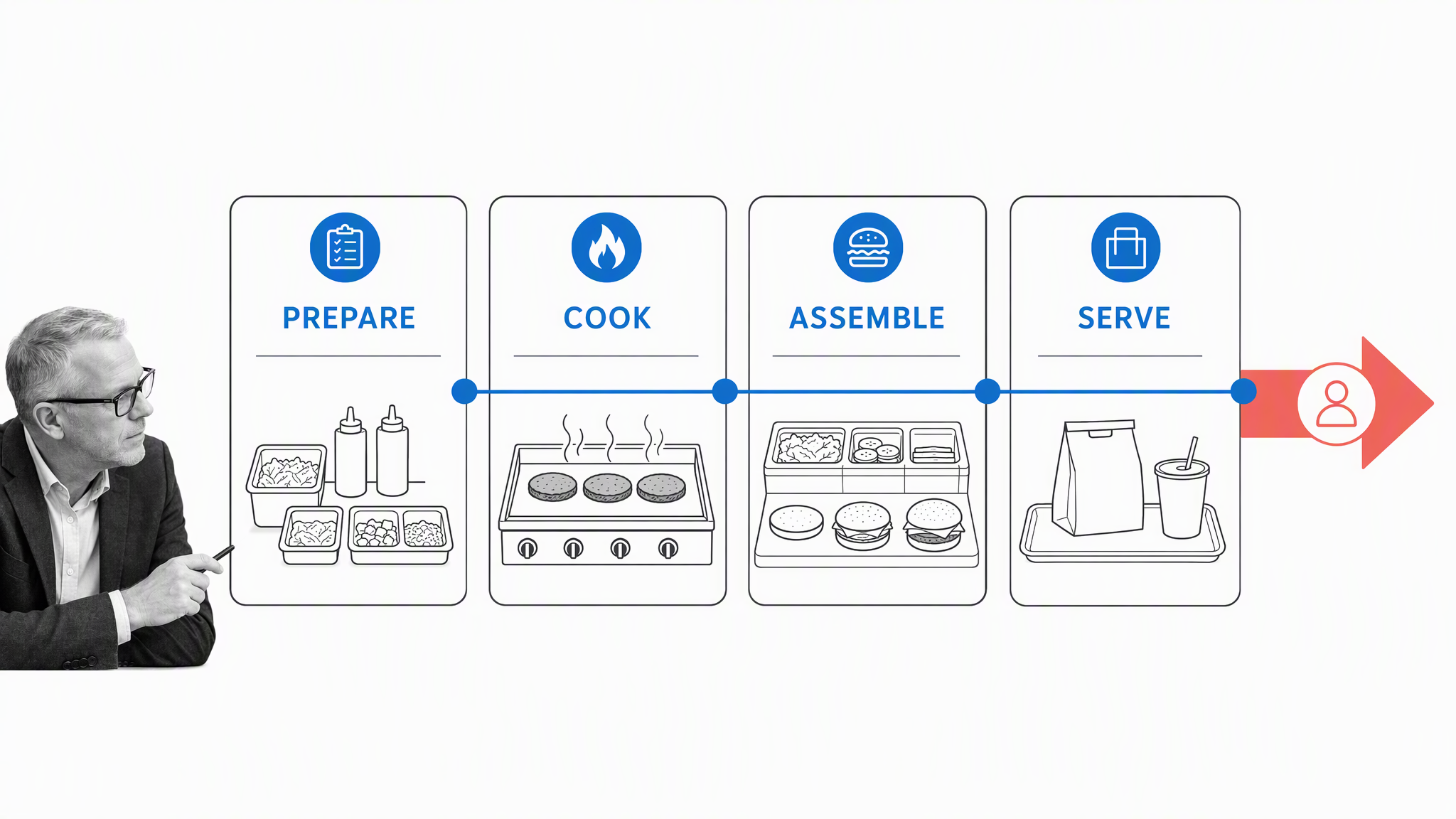
The brothers’ system rested on a handful of reinforcing decisions:
- Design the kitchen specifically for the job. The brothers mapped the processes and routes within the kitchen to reduce time and make fractional, incremental gains. A purpose-built layout also reduced the risk of staff injury, spoiled product, and collisions caused by general kitchen chaos.
- Prepare for predictable demand. The brothers knew roughly how much they were going to sell, so they made that much food. Holding prepared items briefly allowed the restaurant to produce on the basis of predicted demand rather than acting only in response. The approach created consistency and helped the team handle busy periods, although a modern operator would need strict food-safety and quality controls around any holding process.
- Reduce options. By selecting a smaller menu focused on customer favorites, the brothers could deliver those items cheaper and faster than before. The lower price helped the restaurant compete while high customer turnover compensated for a smaller margin on each item. Custom orders de-standardized the process, so the original system avoided them.
- Implement self-service. The two brothers saw a problem in the turnover of customers. Carhops, waiters, and waitresses were slow, which led to buildups of customers and cars unable to leave the lot. Self-service let customers move through the handoff much faster, synchronizing demand with the kitchen’s newly increased output potential.
- Measure and rehearse. The tennis-court exercise treated the workflow as a design that could be tested rather than a habit that had to be accepted. Staff moved through the chalked kitchen again and again while Dick and Mac watched, analyzed each route, changed the layout, and tried the improved sequence.
The entire concept was based on speed, lower prices, and volume. Self-service removed slow carhop handoffs. A smaller menu let the team deliver customer favorites cheaper and faster. Preparing for expected demand meant the kitchen did not have to start every order from scratch during busy periods.
These techniques saw McDonald’s innovate away from its competitors. It was Fordism for drive-thrus: a carefully designed production system applied to a different setting. The Speedee system was so influential that other fast-food founders visited San Bernardino, toured the operation, and carried lessons from the McDonald brothers into their own businesses.
That influence reached beyond a single restaurant. People in the brothers’ close circle studied the model and adapted its lessons. The important thing they copied was not one burger recipe or one building. They copied a way of organizing people, equipment, stock, customer demand, and movement into a reliable service system.
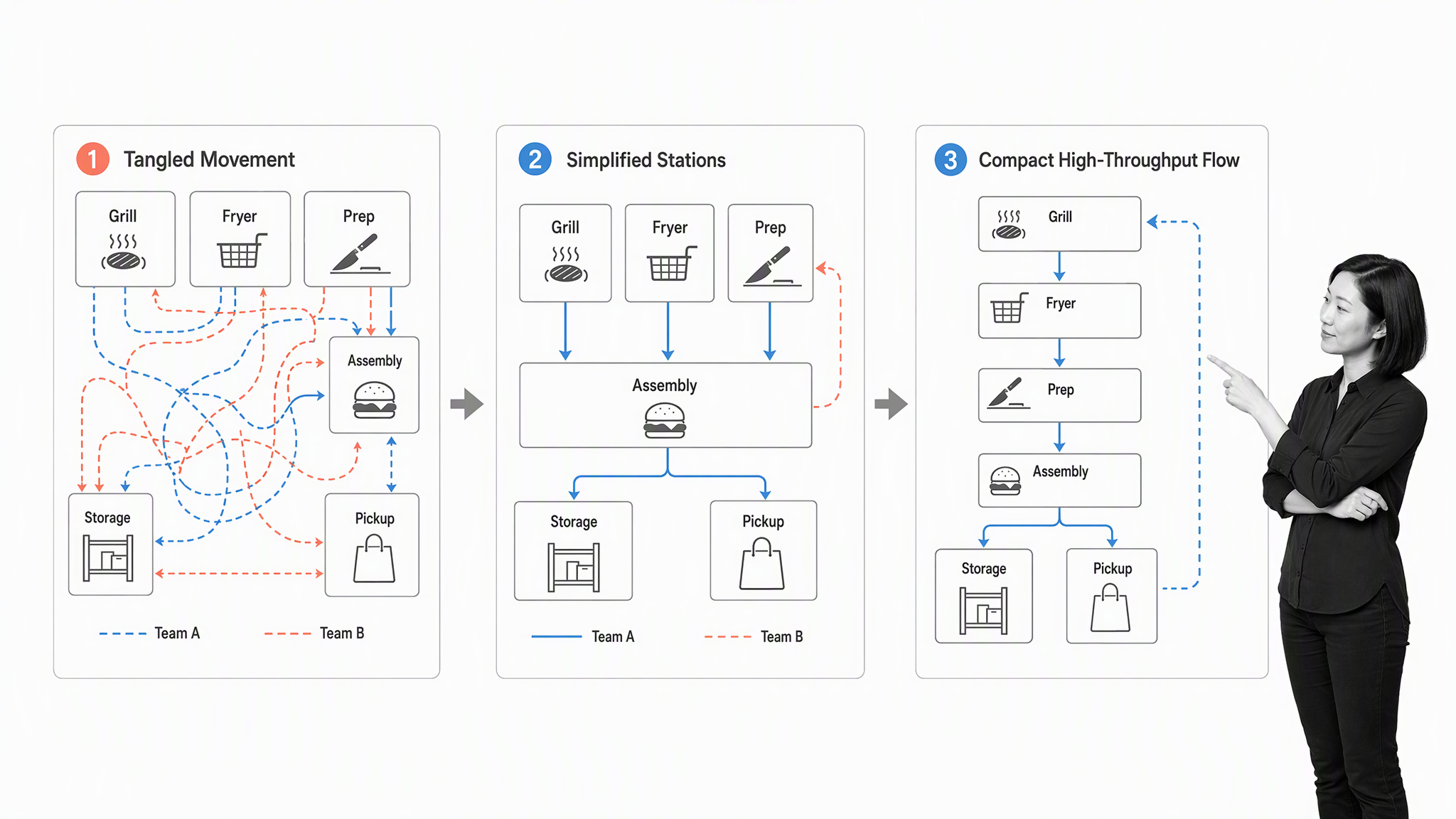
Each choice strengthened the others. A small menu enabled specialized stations. Specialized stations enabled faster training. Faster training and predictable output made the model easier to reproduce in a new location. The franchise was not simply a restaurant concept. It was a package of coordinated operating decisions.
Standardization did not mean the process was frozen. The brothers reached their design through observation and repeated trials. That distinction matters: a standard is the current best-known method, not a ban on learning. A franchise network can collect evidence from many locations, identify a better method, approve it centrally, and then distribute the improvement without allowing uncontrolled variation.
This is where many would-be franchisors stumble. A successful founder may rely on instinct, personal relationships, and constant intervention. Those strengths can make one location excellent but are hard to transfer. Franchising requires the founder to convert tacit knowledge into a system another operator can understand, execute, and improve without destroying the brand promise.
Franchising scales a repeatable system
The romantic picture of franchising combines local ownership with the reach of a national brand. Its real mechanics are less sentimental. The franchisor must define and protect a coherent operating system. The franchisee must fund and execute that system in a local market. Customers decide whether the experience is consistent enough to trust.
The model marries the power and scale efficiencies of a large corporate body with the entrepreneurialism and hard work of a mom-and-pop small business. Depending on your perspective, either the romance of local ownership or the globally reaching corporate drive may seem like its defining trait. In practice, a franchise has to hold both together.
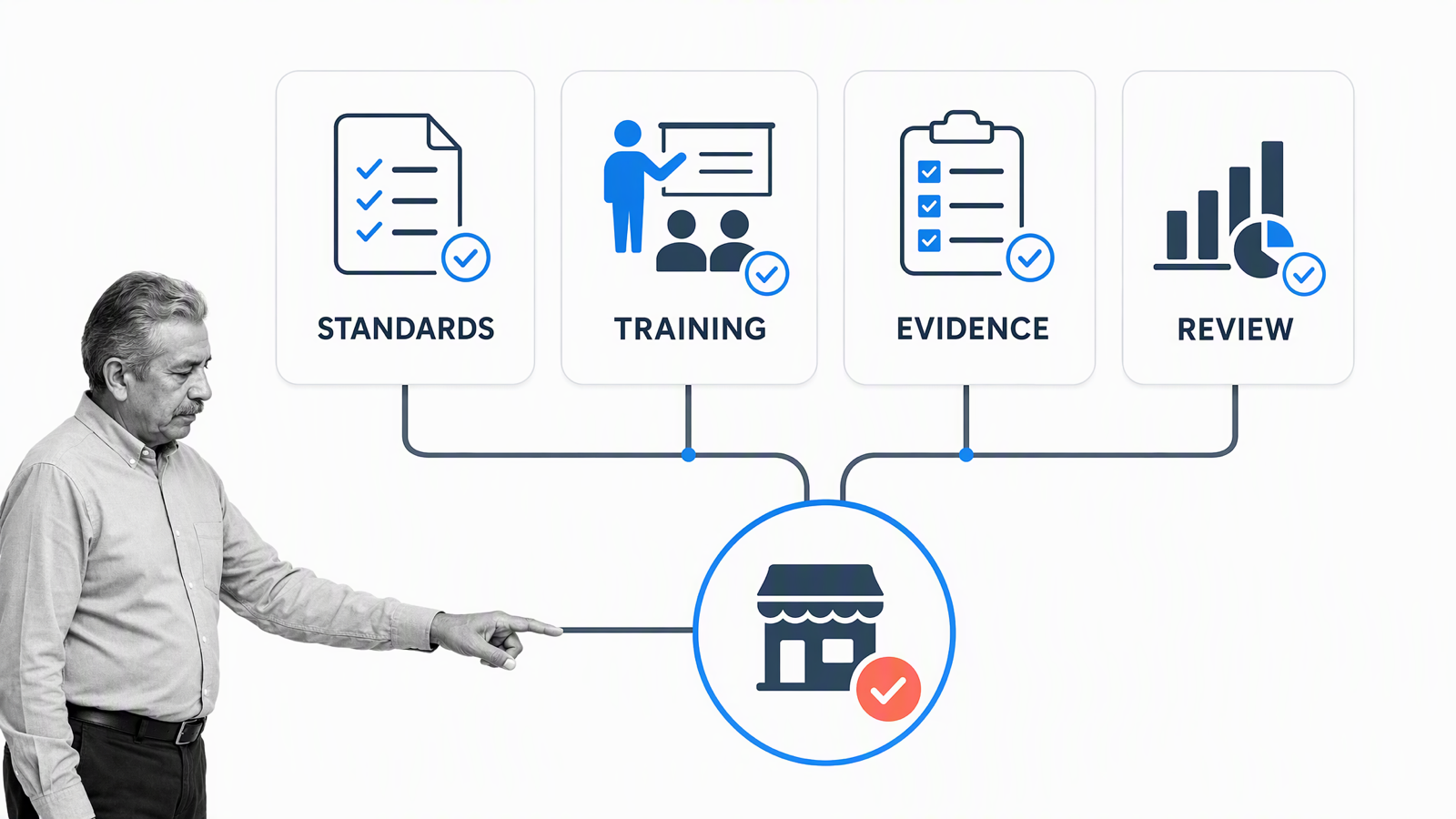
That makes process design central to both sides. Franchisors need controlled documentation, training, approvals, audits, and evidence. Franchisees need clear responsibilities, workable procedures, useful feedback, and enough room to manage real local conditions. Standards that exist only in a binder will not protect either party.
Good governance closes the loop. The franchisor publishes a clear standard, trains people on the reason behind it, observes whether it works in practice, records evidence, and follows up on exceptions. The franchisee receives a usable procedure and a defined channel for questions or improvement ideas. That combination makes consistency measurable instead of aspirational.
For prospective owners, the right question is not simply whether a brand is famous. It is whether the economics are credible, the disclosure is complete, the support is useful, existing operators validate the model, and the system produces a result worth repeating. For prospective franchisors, the question is whether the business can succeed without the founder personally holding every part together.
The McDonald brothers built a better mousetrap in the form of an operating system. Ray Kroc built the path that brought operators and customers to it. A franchise works when both achievements remain in balance: a model strong enough to copy and a network disciplined enough to copy it well.
The precise, hardworking McDonald brothers revolutionized an industry while Kroc drove it to dominance. One side supplied the quality-focused product and organizational rigor; the other supplied the appetite and structure for expansion. The franchise model became successful because it joined those capabilities instead of relying on either one alone.
Ralph Waldo Emerson is often credited with the idea that someone who makes a better mousetrap will find the world beating a path to the door. Franchising adds a final lesson to that image. It may take one person to build the mousetrap, but it takes another kind of system to serve it consistently when the world arrives.
The post How Does a Franchise Work? Uncover The Secret Sauce of an American Franchise Giant first appeared on Process Street | Compliance Operations Platform.


0 Commentaires