Customer reactivation is the process of bringing inactive, disengaged, or churned customers back into a useful relationship. The best win-back campaigns identify why a customer disappeared, decide whether reactivation is worthwhile, and use relevant outreach instead of sending the same message to everyone.
During the Second World War, a young soldier from Lille attended a dance for servicemen about to be deployed. One woman caught his eye, and eventually he worked up the nerve to ask her to dance.
Thinking he would ask again, as most of the other young men would, she politely declined. The soldier was shy and took her refusal at face value. Not knowing her name or whether he would return, he went off to war.
Nearly a century later, their granddaughter, my very closest friend for all of three days, told me the story as we drove through the French countryside between Lille and Arras.
We love stories about chance encounters, unintended separations, and reunions that seem to be acts of fate. Maybe it is finally answering the question What might have been? Personally, I am also just nosy and like a good story.
But reconnections rarely happen without deliberate effort. We lose touch with people all the time: a school friend, a university mentor, a pickup-game buddy, or a customer whose payment failed and whose subscription ended before they realized it.
That last person is one kind of ghost customer. Others stop logging in, disengage after a poor experience, or leave because their needs changed. If you want the right customers back, you need to be proactive. This Process Street guide covers the five principles behind customer reactivation and a practical plan for putting them into operation.
- The journey to passive customer churn
- 5 ways to bring ghost customers back
- A ghost customer reactivation plan
The journey to passive customer churn
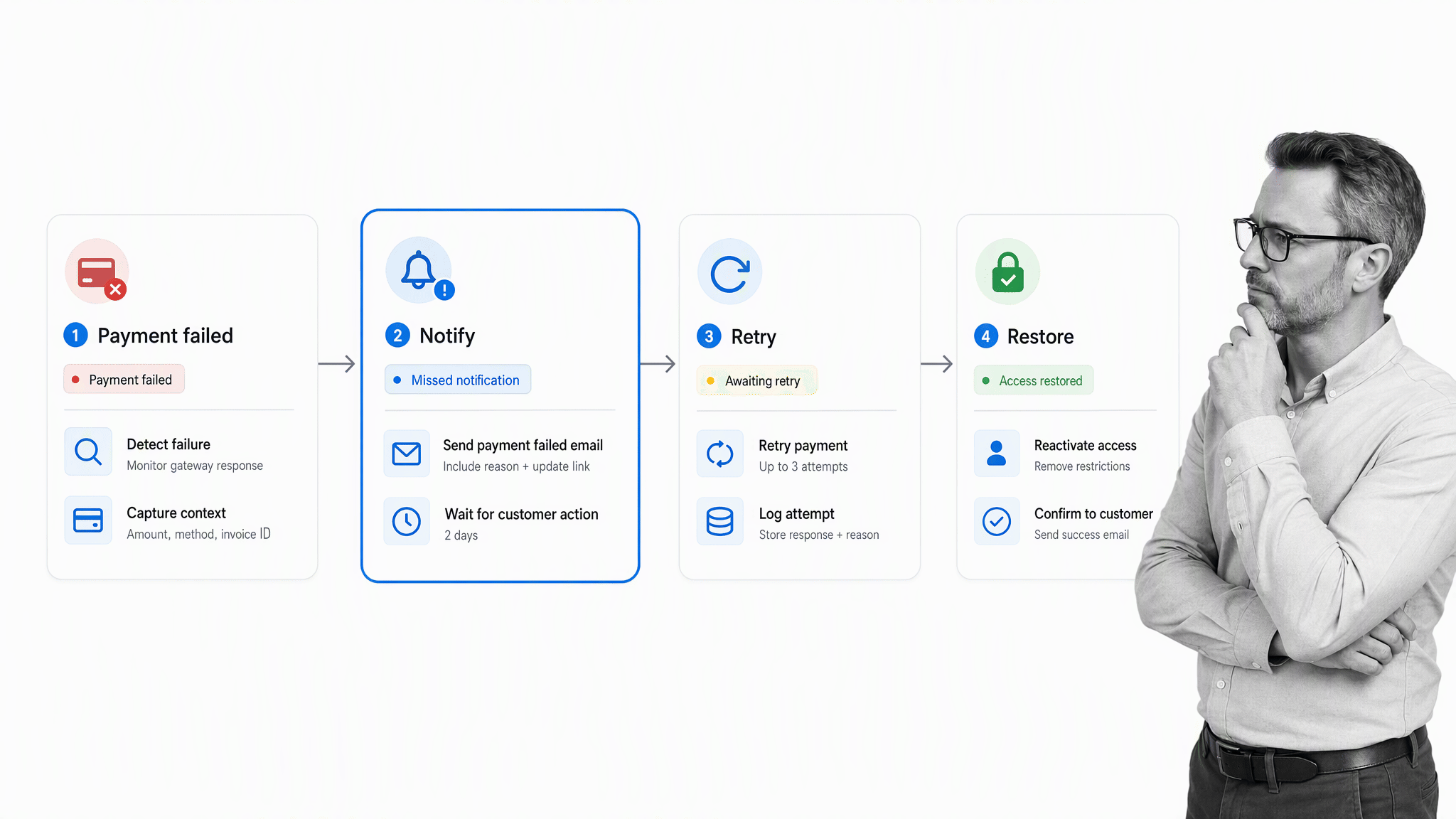
Churn happens. Sometimes a customer consciously leaves because the product is not a fit. That is voluntary churn. Involuntary churn, sometimes called passive churn, happens when the relationship ends without a deliberate decision, often because of a failed payment, expired card, missed notice, or account problem.
Most companies work hard to understand customer churn. They listen, watch customer-success milestones, and improve customer engagement. Yet involuntary churn is easy to underestimate because teams assume the customer will notice and reactivate alone.
That assumption is expensive. Baremetrics’ research on involuntary churn shows how failed payments can quietly erode recurring revenue. Good dunning management combines sensible payment retries, clear notifications, and a human escalation path before access disappears.
The sequence is predictable. Thomas subscribes to your service and is happy with it. His company receives a new credit card, but he forgets to update the subscription details.
The next payment fails. An automated notice goes out, lands in spam, and never reaches him. As far as Thomas is concerned, everything is still working.
The payment is retried and fails again. At the end of the subscription period, his team loses access. They ask Thomas what happened, and he contacts customer success for an explanation.
Support identifies the failed payment and explains how to restore the account. But the delay has already damaged trust and created an opening for a competitor. Through missed signals and slow recovery, the company has lost a customer who never intended to leave.
5 ways to ward off ghosts
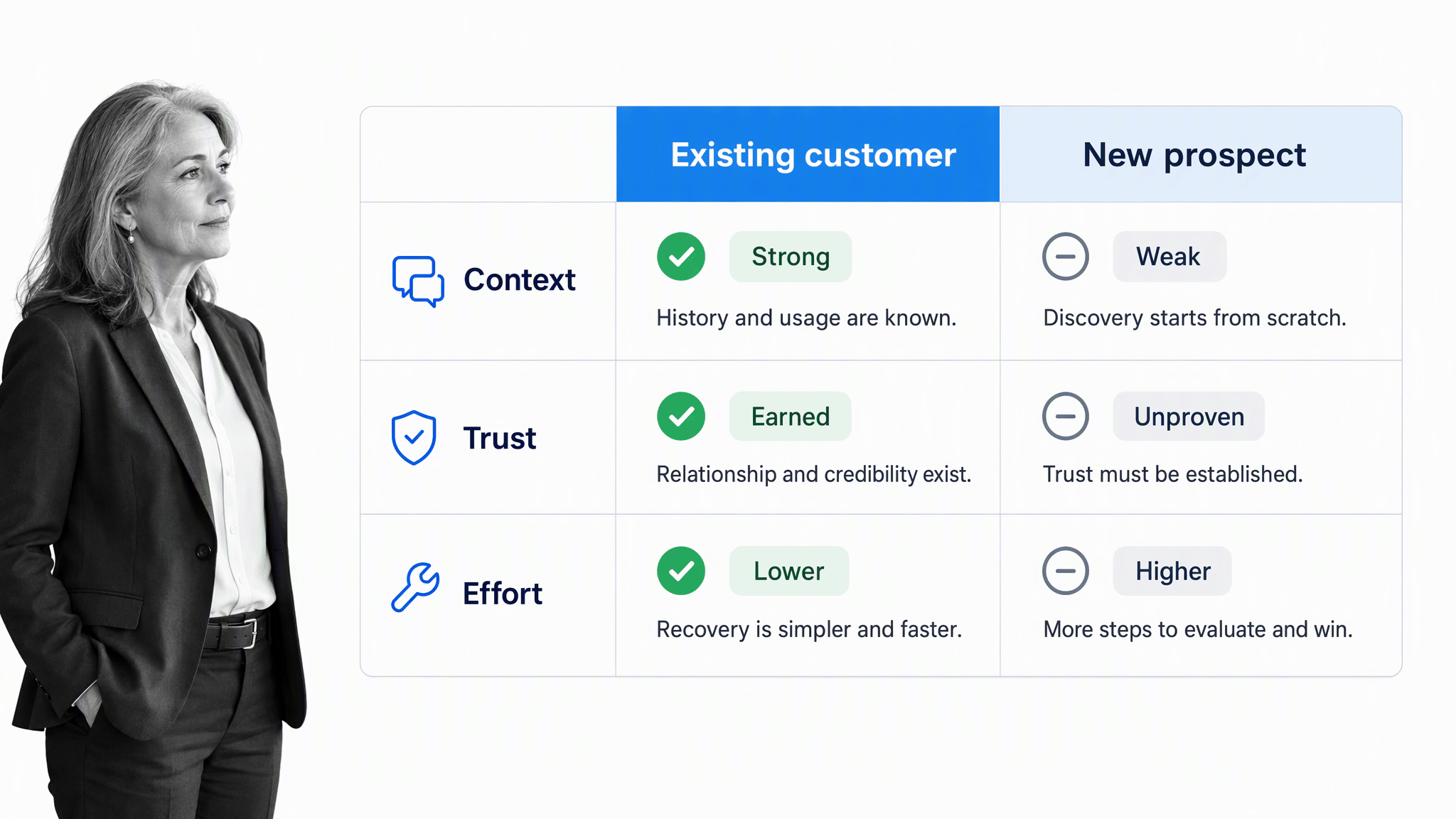
Gaining new customers takes time, attention, and trust. After doing the work to earn a relationship, it makes little sense to let a good-fit customer disappear because the warning signs were missed.
To understand what to do, I spoke with Blake Bailey, who led customer-success content and operations at Process Street when this advice was recorded.
Don’t let it happen in the first place
Blake Bailey’s ghost tip #1:
“Once a customer ghosts, it is a lot harder to get them back versus if you’d kept them engaged and active. Focus your efforts there first, and then focus on reactivations. A strong onboarding can prevent most issues.”
A defined customer onboarding system makes ownership, milestones, and early-warning checks visible before silence turns into churn.
Identify the root cause
Blake Bailey’s ghost tip #2:
“This could be a lack of usage, distaste in the product, a bad fit, or external issues like a failing business. Address each point to the best of your ability, but understand there are some situations you cannot overcome, and instead focus on ones you can actually affect.”
Record a cause before choosing a campaign. A payment failure needs a different response from weak adoption, a missing feature, a changed budget, or a business closure.
Identify early warning signs of customers ghosting
Blake Bailey’s ghost tip #3:
“Good examples are periods of not logging in, decreased activity inside of the app, or even the tone of support requests. By identifying these markers, you can create alerts and even automate the process of reaching out early and often to keep customers engaged.”
Track those signals through a consistent customer health score. The score should trigger review, not an automatic assumption that every quiet account is lost.
Use a personal touch to retain high-value customers
Blake Bailey’s ghost tip #4:
“This may include emailing them to congratulate them on a recent success, adding them on LinkedIn, calling them up, or even asking to take them out to lunch. The personal touch can sometimes break down the barriers and get them to engage once again.”
Match the channel and tone to the relationship. Personal does not mean intrusive. It means relevant context, a recognizable sender, and a clear reason to respond.
Automate polite but firm payment reminders
Blake Bailey’s ghost tip #5:
“After several failed attempts, send a personal note to see if you can help. By having a computer take care of this, the customer will feel less awkward about a failed payment. If it gets to the level of needing a personal touch, do so only in a helpful tone, never accusatory.”
Automation should handle timing, retries, and routing. A person should handle exceptions, confusion, and relationships that deserve care.
Ghost customer resurrection plan
Even with strong prevention, some ghost customers will remain. A customer reactivation campaign can improve the odds of a useful return, but it should begin with one decision:
Is it worth it?
Look at the customer’s value, prior activity, reason for leaving, time since engagement, and likelihood of staying after reactivation. Churn is not always something to correct. Repeatedly pursuing the wrong account wastes resources and can damage trust.
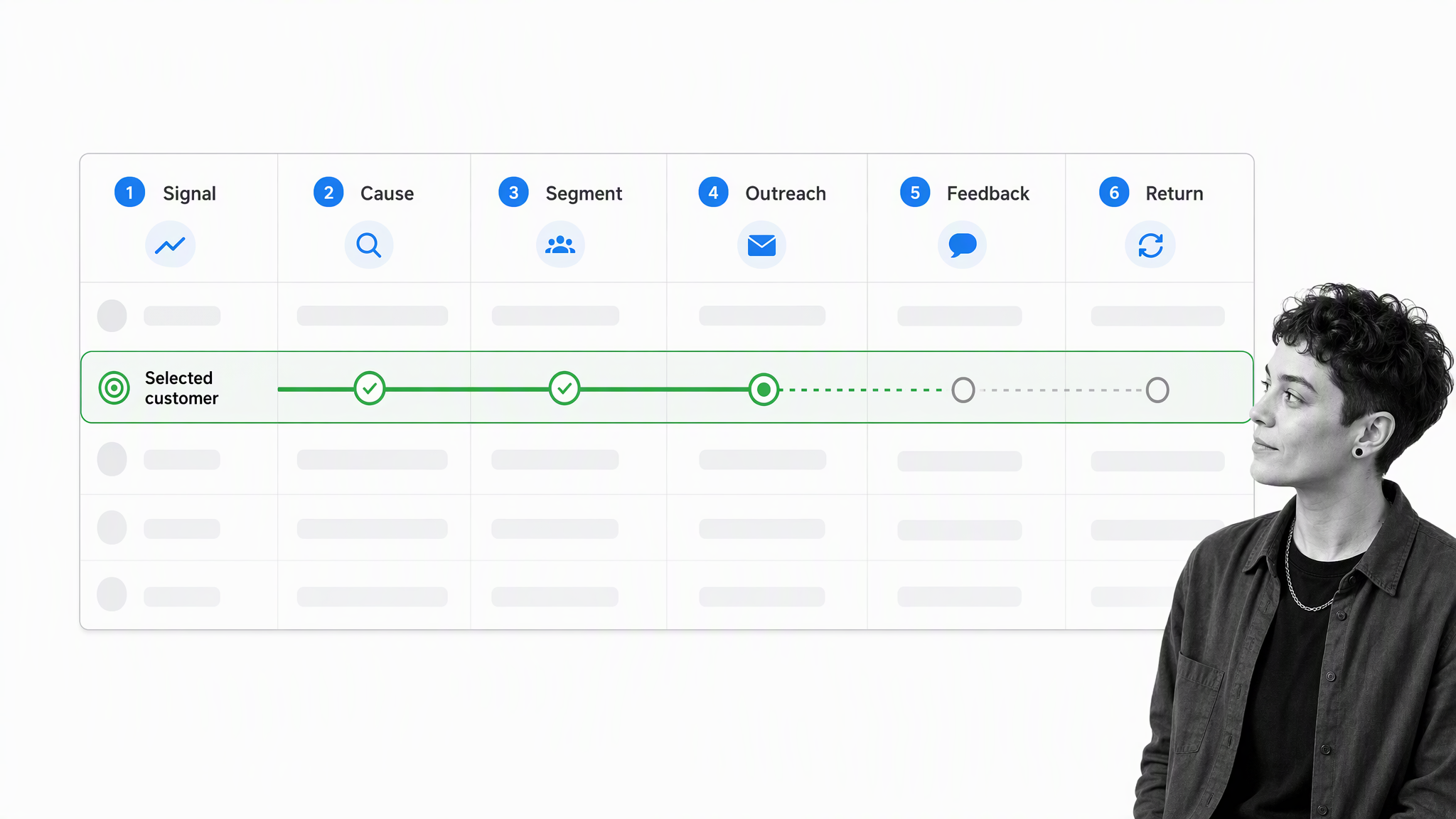
Identify your ghosts
Define inactivity clearly. Use a retention process to identify accounts with failed payments, falling usage, unresolved support issues, missed milestones, or expired contracts. The threshold should reflect the normal behavior of your product and customer segment.
Determine the cause
Do not choose an outreach sequence until you know why the account went quiet. Review payment events, usage patterns, support history, feedback, and known business changes. Assign a cause code, even if the first value is `unknown` and requires human review.
Segment customer types
Group customers by cause, previous value, recency, product fit, and readiness to return. A high-value account with a failed card belongs in a different queue from a low-usage account that never reached its first success milestone.
Minimize reasons for inactivity
Fix the conditions that made the customer inactive before asking them to return. That may mean improving onboarding, resolving a product gap, correcting billing, restoring a missing integration, or repairing a communication breakdown.
Automate communication
Use an appropriate outreach plan with clear stop rules. Stop automated messages when the customer replies, opts out, or enters a human conversation. Make each message reflect the cause and the action the customer can take next.
Process Street is one Compliance Operations Platform. Its Docs capability area keeps the reactivation playbook governed and approved, Ops runs the outreach workflow and escalations, and built-in AI can surface risk signals, draft contextual messages, and route exceptions for human review. The result is a repeatable process with control and proof, not a pile of disconnected reminders.
Incentivize useful feedback
If customers still do not reactivate, audit your customer-success process and ask why. When appropriate, offer a modest incentive for customer feedback, but keep the request easy and specific.
The goal is not merely to collect comments. Feed the evidence back into onboarding, product decisions, billing recovery, and account management so the same failure becomes less likely.
Reactivate and monitor
When a customer returns, confirm access, ownership, the next success milestone, and the person responsible for follow-up. Continue the personalized customer experience after the account is active. A reactivation only counts as successful if the relationship stays healthy.
For a deeper discussion of customer-success operations, watch this webinar with then-Process Street VP of Customer Success Jason MacMurray and then-Higher Logic Chief Customer Officer Jay Nathan:
Banishing your ghosts
You could throw a message in a bottle out to sea and hope it eventually reaches the right person, but customer reactivation should not depend on luck.
With attention, thoughtful workflow automation, and disciplined customer-success operations, you can catch avoidable churn early and give good-fit customers a clear path back.
Remember, this is your customer. You are not the mafia.
Customer reactivation FAQ
What is a ghost customer?
A ghost customer is a customer who stops engaging, becomes inactive, or churns with little direct explanation. The cause may be voluntary, such as poor fit, or involuntary, such as a failed payment.
What is a customer reactivation campaign?
A customer reactivation campaign is a coordinated effort to bring suitable inactive or churned customers back. Strong campaigns segment customers by cause and value, tailor the outreach, stop when the customer responds, and monitor retention after return.
Which signals should trigger reactivation outreach?
Useful signals include failed payments, falling product usage, missed milestones, unresolved support issues, expired contracts, and a clear change in communication. A signal should trigger review before it triggers outreach.
The post How Do You Reactivate Ghost Customers? 5 Tips for Successful Reactivation first appeared on Process Street | Compliance Operations Platform.


0 Commentaires