Strategic planning is the process of choosing a long-term direction, turning it into goals and measurable actions, and deciding how progress will be reviewed. A practical strategic plan connects your mission and priorities to owners, projects, key performance indicators, and deadlines.
This free strategic planning template guides that work from initial discussion through development, approval, and regular review. Use it to document the plan, keep responsibility visible, cut costs caused by scattered work and unclear priorities, and adjust execution when evidence changes.
Open the free Strategic Planning Template.
This guide explains:
- What strategic planning is
- How strategic planning differs from strategic management
- Why strategic planning matters
- How strategic planning models work
- How to use the Process Street template
- What a strategic plan outline includes
- Which other models to consider
Understanding strategic planning
Strategic planning is a plan to execute business strategy.
To understand what strategic planning is, let’s break the term down into its constituent parts.
What is strategy?
“Strategy is the determination of the basic long-term goals of an enterprise, and the adoption of courses of action and the allocation of resources necessary for carrying out these goals.” – Strategy and Structure: Chapters in the history of industrial enterprise, Alfred D. Chandler
Strategy is a plan of action designed to achieve a long-term or an overall aim.
You can see how each task moves down the organizational hierarchy regarding what teams are involved. This is a key feature of the Cascade Strategic Planning Model to gets the whole organization involved to deploy your new strategy.
What is strategic planning?
Strategic planning is an umbrella term describing the processes used to establish long-term/overall goals. A strategic plan explains where the organization going and how the organization will get there.
For understanding, think of a strategic plan in terms of the following steps:
- An organization’s mission, vision, and values (overall direction of the organization) is defined
- Focus ideas and objectives are set
- Policies, projects, and plans are established to achieve objectives
- Metric measures and KPIs are used to assess performance
- Adjustments are made as necessary to stay on track
The strategic plan comes with the overall business plan, along with marketing, financial, and operating/management plans.
Strategic planning and strategic management compared
Strategic planning defines direction and priorities. Strategic management governs the ongoing decisions, execution, measurement, and adaptation needed to pursue them.
When researching the term strategic planning, you may have come across another term strategic management.
Strategic management and strategic planning are related but distinct. Separating them makes it easier to understand where planning ends and ongoing governance begins.
Let’s have a look at these differences…
Both disciplines involve the organization’s mission and goals, so their language often overlaps. The key differences are summarized below.
In summary, strategic management is broader in scope, covering the active oversight of the strategic planning process. That is, strategic management devises and executes the specific steps to reach the goals defined by the strategic planning process.
| Basis For Comparison | Strategic Planning | Strategic Management |
|---|---|---|
| Meaning | Strategic planning sets priorities and determines an organization’s strategy with a future-orientated view. | Strategic management is broad in scope and involves a bundle of decisions, executed to achieve organizational goals set during the strategic planning process. |
| Stresses on | Making optimal strategic decisions | Producing strategic results, new markets, new products/technologies, etc. |
| Management | By plans | By results |
| Process | Analytical | Action-oriented |
| Function | Identifying actions to be taken | Identifying actions to be taken, the individuals who will perform the actions, the right time to act, and the way to perform the action. |
The development of strategic management as a discipline through the years
Strategic planning was born from strategic management, which was born by defining strategy in business.
Before the 1950s/60s, the term strategy was used in reference to war and politics, but not in business.
Post-war, many businesses began to build strategic planning functions.
My previous post, Hoshin Kanri: Gain a Competitive Advantage With This Lean Management Approach (Free Template), gives a good example of how strategy began to claw its way into the business realm. In this instance, the strategic planning model Hoshin Kanri was developed in Japan, a model originating from Samurai warfare .
Over time, academics and business leaders developed on strategic management as a discipline, presenting new and improved models and theories, of which only the best survived to be in use today. Survivors include (but are not limited to):
- SWOT analysis
- Experience curve
- Corporate strategy/portfolio theory/growth-share matrix
- Porters five forces
- Value chain analysis
- Core competency
- Strategic planning process
These frameworks/models reflect an increased focus on cost, competitors, and customers in business over the years.
The importance of strategic planning
Strategic planning gives leaders a shared basis for choosing where to focus and what not to pursue. Research links formal planning with performance, but the value depends on the quality of the process, the operating context, and whether the plan informs real decisions. A strategic plan is not a guarantee of success.
Its practical value is that it creates a disciplined cycle for assessing conditions, allocating resources, assigning ownership, monitoring results, and revising assumptions. That matters when markets, technology, regulation, or customer expectations change. Research on strategic planning in unstable environments also supports using planning as an adaptive process rather than a one-time forecast.
A useful strategic planning process can:
- Set direction: Translate mission and vision into a small number of priorities.
- Improve resource allocation: Make tradeoffs visible before teams commit budget and time.
- Create accountability: Connect each objective to an owner, a KPI, a deadline, and an agreed review cadence.
- Coordinate execution: Show how projects and operating work contribute to organization-level goals.
- Support adaptation: Use evidence from reviews to update actions or assumptions before drift compounds.
The examples below show why assumptions and outcomes need regular review.
Iridium strategic planning example
Iridium launched a global satellite phone network backed by billions of dollars in infrastructure. Its original service reached the market with expensive handsets, high per-minute charges, and practical limitations at a time when terrestrial mobile networks were expanding. The company filed for bankruptcy protection in 1999, though the network later survived under new ownership and a different cost structure.
The lesson is not that a planning document would have predicted the future. It is that a robust review process could have made the critical assumptions explicit: target-customer willingness to pay, handset usability, competitive substitutes, adoption speed, and the cash required to reach scale. The Smithsonian account of Iridium’s rise, fall, and return and the FCC record provide useful context.
eBay strategic planning example
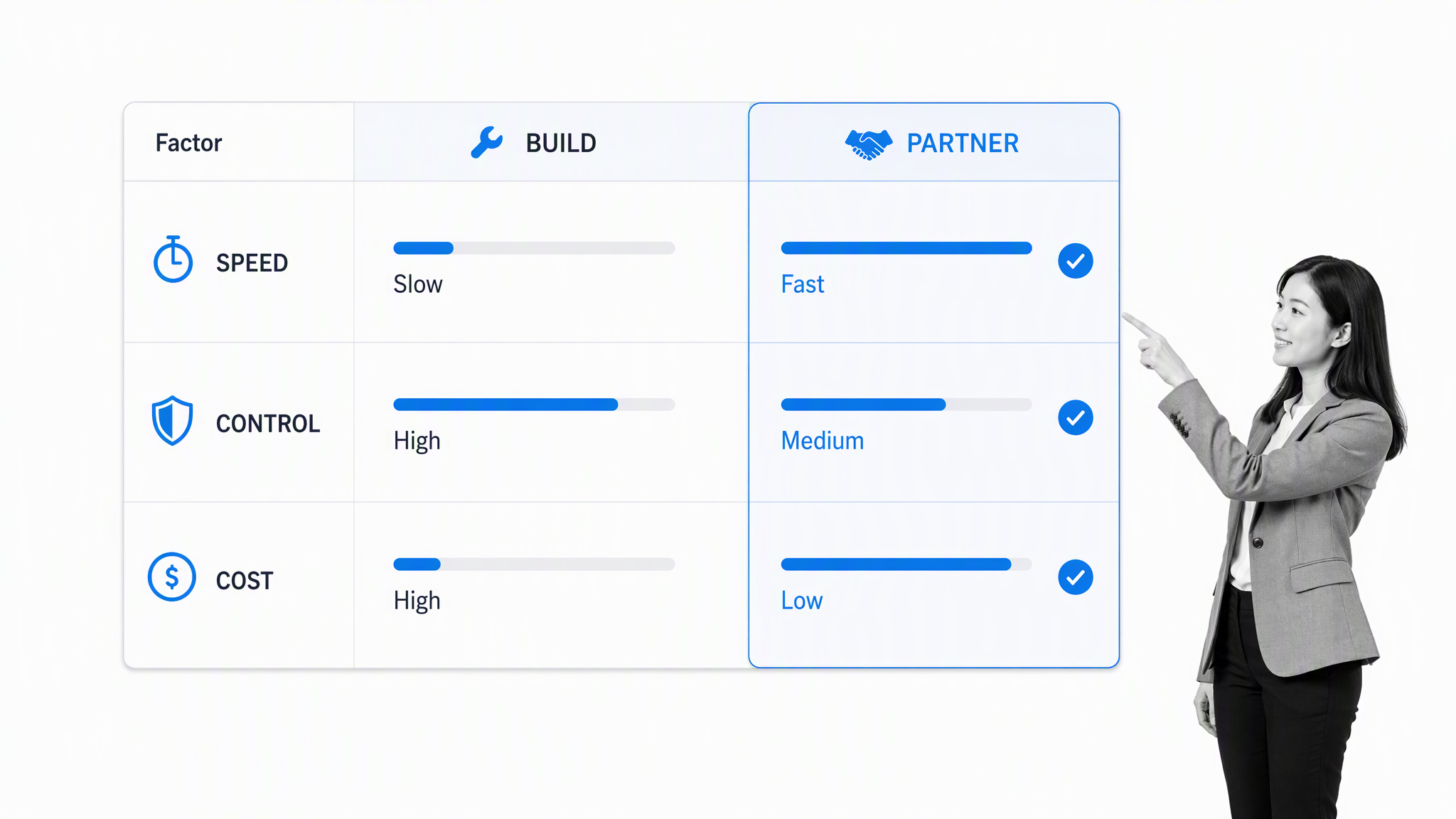
eBay acquired Skype in 2005 with the expectation that voice communication would create value in marketplace transactions. The expected synergies did not materialize as planned, and eBay later recognized a substantial impairment related to the acquisition before selling a majority stake.
This example shows the value of linking an acquisition thesis to observable measures and review points. Teams should define what must be true, how success will be measured, who owns integration, and when leaders will reconsider the plan. eBay’s own investor statement on Skype and the related SEC filing document the later separation.
Understanding strategic planning models
A strategic planning model gives guidance and structure for the successful execution of strategy via a strategic plan. A strategic planning model takes into account the availability of business resources, whilst assessing the internal and external environments in which the company operates.
In this sense, the term strategic planning encompasses strategic planning models, but this inclusion is not exclusive.
The 3 principles of strategic planning
Strategic planning as a discipline comes from the broader academic practice named strategic management, which originated from strategic management in the 1950s/60s.
Since its inception, academic and practicing managers have developed numerous models and frameworks for strategic decision-making processes. These models take into account the complexities that come with a continuously changing business landscape.
A strategic planning model typically includes:
- Structure – This refers to how the different elements of your strategic plan fit together. For instance, objectives are set concerning your vision. Structure refers to how the different components of your business strategy relate to one another.
- Framework – There are different methodologies you can use during your strategic planning process. For instance, SWOT analysis and the PDCA cycle are to name 2. Some of these methodologies are mentioned in this article. Framework refers to the methodologies you use to achieve your strategic goals.
- Governance – Strategic planning places emphasis on tracking, reporting and continuously improving your business processes. Governance is how you go about doing this. In essence, governance is the overall management of your strategy.
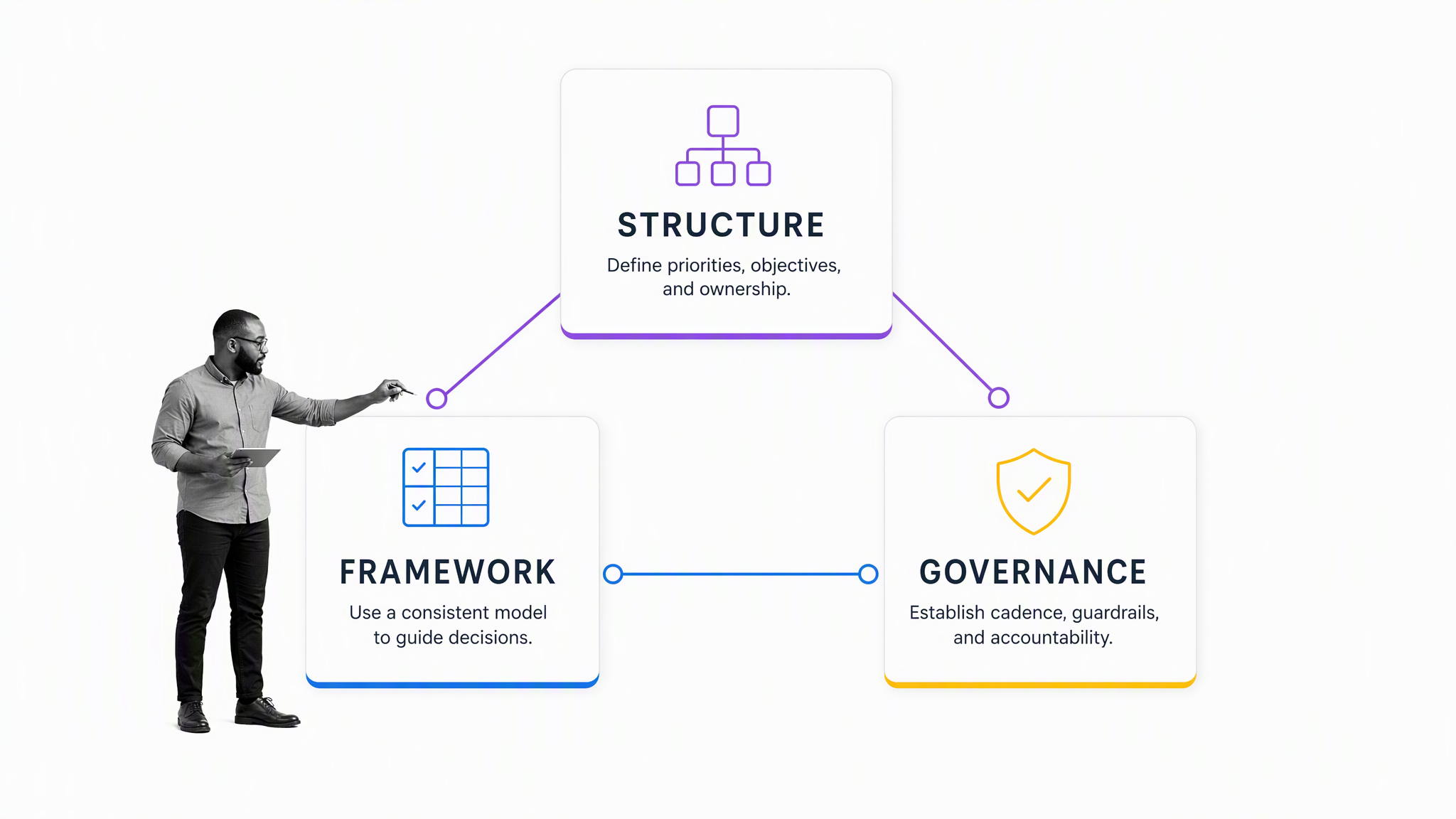
All three principles – framework, structure, and governance – are vital for a strategic planning process. For this reason, at Process Street we recommend you select a strategic planning model that contains all three principles. With lots of models out there, this narrows options down for you.
1 top strategic planning model you should consider is the Hoshin Kanri methodology. For a detailed guide, read: Hoshin Kanri: Gain a Competitive Advantage With This Lean Management Approach (Free Template). The guide explains the method and its application. To implement this strategic planning model, use our Hoshin Planning: Hoshin Kanri Policy Deployment Process Checklist, embedded below.
Click here to access our Hoshin Planning: Hoshin Kanri Policy Deployment Process Checklist for free!
Switching our focus from the Hoshin Kanri methodology, we move forward in this article and turn our attention to another top strategic management model, the Cascade Strategic Planning Model.
This model is simple enough to understand, and can easily be implemented to execute your business strategy. Using the cascade approach, your corporate strategy is communicated down to the functional level, giving a greater clarity for your teams. Seeing activities that must happen at their level, and how that activity connects back to the overall plan is critical for organizational alignment.
Once more – like the Hoshin Kanri approach – the Cascade Strategic Planning Model is:
- Not too complicated: Users of the model do not get lost in jargon. The model focuses on execution and therefore removes unnecessary complexities.
- Scalable: The model can be applied to both small and large organizations.
- Is flexible: This one is pretty self-explanatory. The model is adaptable and can be used in different situations/circumstances.
- Is tangible and measurable: Success is measured using Key Performance Indicators (KPIs).
Consider both Hoshin Kanri and the Cascade Strategic Planning Model, then choose the model that best fits the organization. The rest of this guide focuses on the Cascade model because the Hoshin Kanri method is covered in the linked guide.
You are provided with Process Street’s Strategic Planning Template for the practical implementation of the Cascade Strategic Planning Model.
Put the strategic plan into action with Process Street
A strategic planning template provides a repeatable structure for collecting evidence, making choices, assigning ownership, and reviewing progress. It keeps the plan connected to execution instead of leaving it as a static document.
Process Street is a single Compliance Operations Platform. Its Docs capability helps teams capture policies, guidance, and planning context. Its Ops capability turns that guidance into assigned workflows with due dates, approvals, evidence, and review steps. Built-in AI can help teams work with the information inside those processes while people retain responsibility for decisions and approval.
Use the template to:
- Document the mission, vision, values, and planning assumptions.
- Collect input from internal and external stakeholders.
- Define focus areas, objectives, owners, KPIs, projects, and deadlines.
- Route important decisions through approvals and preserve supporting evidence.
- Schedule reviews so the plan can respond to new results or changed conditions.
This connects strategic direction to a repeatable business operations platform, so teams can coordinate action and maintain an audit-ready record of decisions.
Explore the guided planning experience
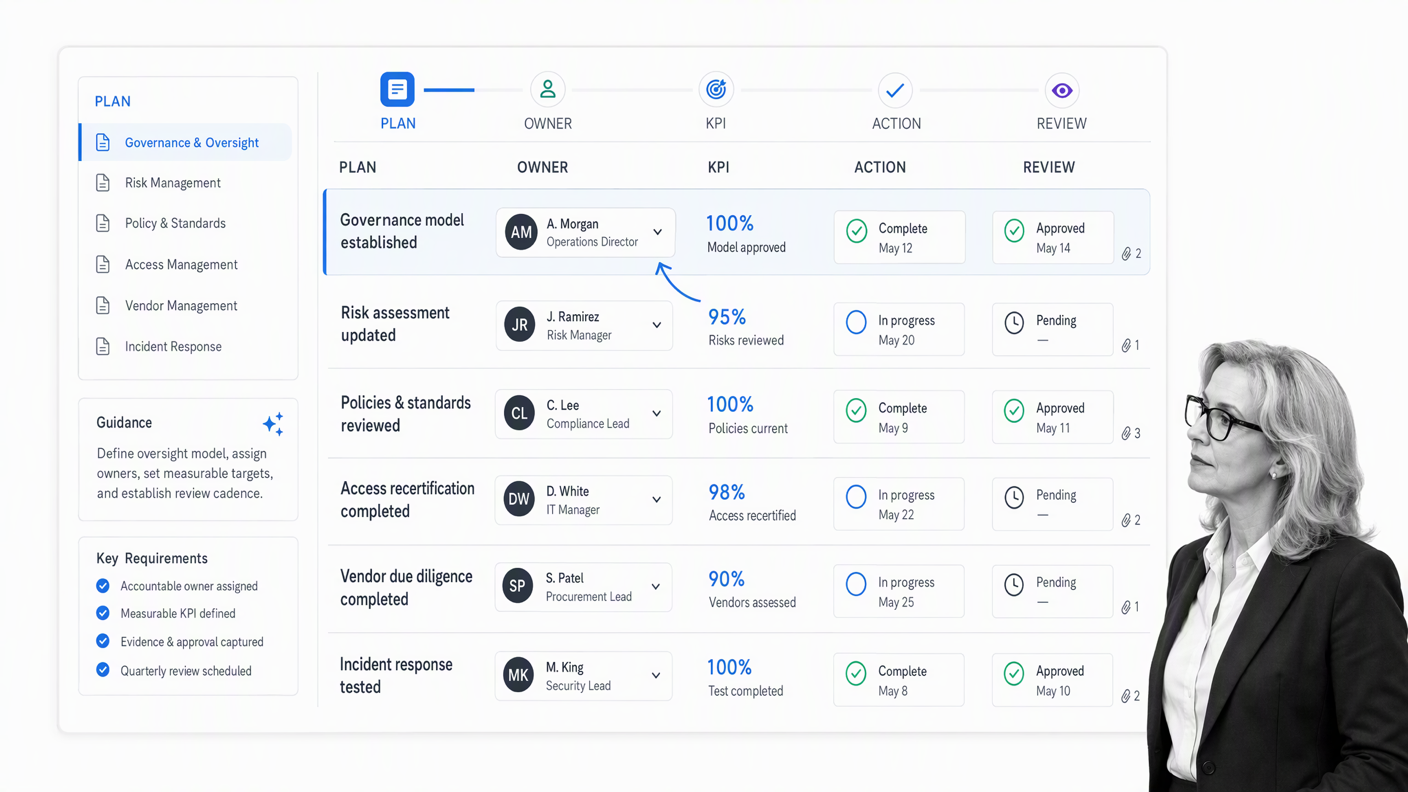
Think of our Strategic Planning Template as your business roadmap and compass, to relocate your corporate position, leading the way for business success.
By using this template you will close the gap between your current state and where you want to be in the future utilizing the Cascade Strategic Planning Model.
Sounds good right?
Click here to access our Strategic Planning Template!
A practical strategic plan outline
Before jumping into our Strategic Planning Template, use this section to familiarize yourself with the Cascade Strategic Planning Model by considering this model’s strategic plan outline.
It is important to understand the model before applying it, to prevent errors, confusion, and wasted time.
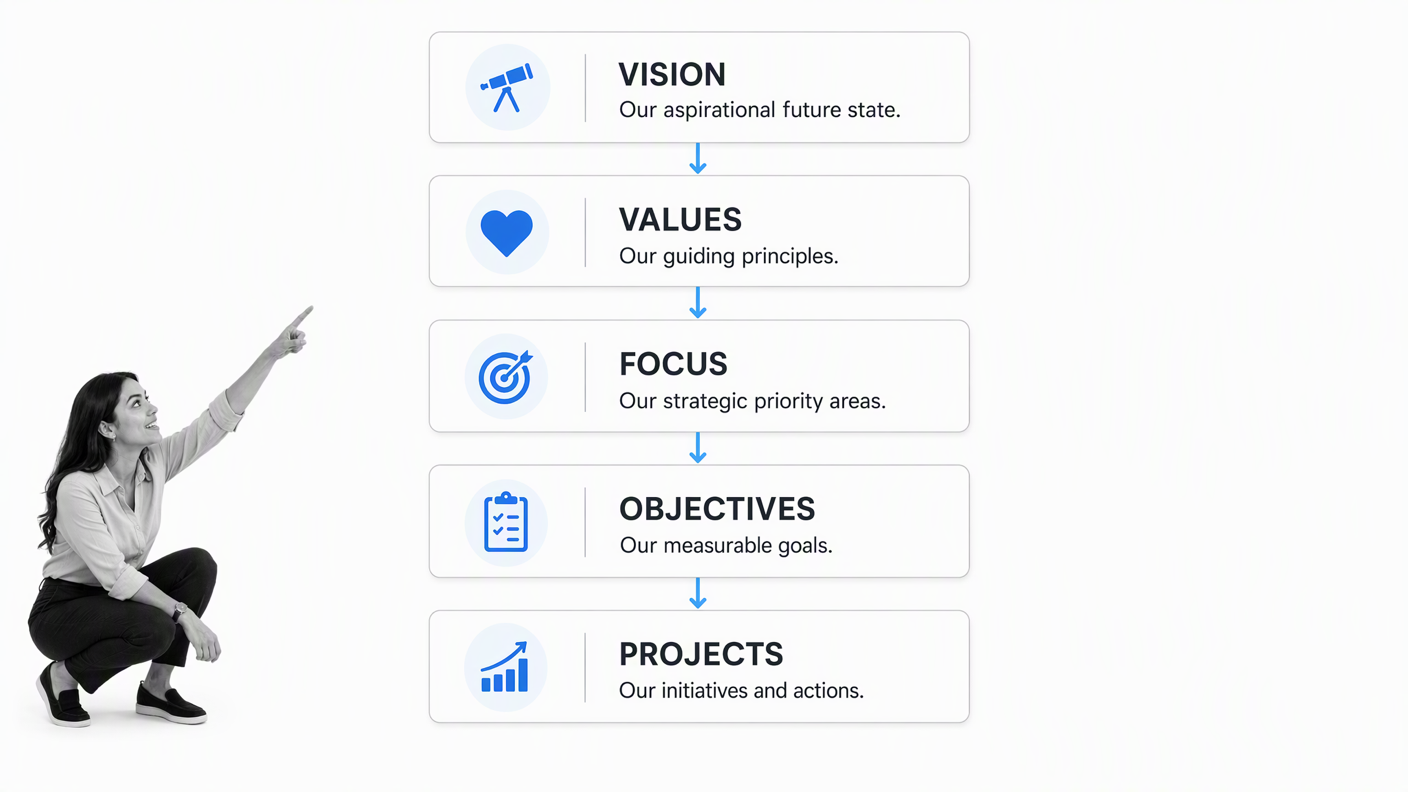
Let’s examine the 3 principles – framework, structure, governance – in relation to the Cascade Strategic Planning Model.
Framework ✏:
- The Cascade Strategic Planning Model is framework agnostic. This means you can apply several different frameworks to help you achieve your goals.
Structure :
- Identification of your mission statement: Your mission statement describes why the organization exists. Your mission statement can evolve.
- Defining values: Your values describe how you want your organization to behave.
- Establishing focus areas: Your identified focus areas define the business division receiving your focused effort.
- Creation of objectives: Objectives detail the outcome you want to achieve for each focus area.
- Defining KPIs: Each objective should contain at least 2 KPIs. You use your defined KPIs to measure whether or not you’re close to reaching your desired outcome.
- Project specifications: Project specifications are the actions you will take to deliver on your set objectives.
Governance :
- Monthly Strategy Updates: Performance is tracked for each objective to check performance.
- Project Updates: Ad hoc updates are made for each project via comparing project plans with reality. Project updates include general updates and progress.
- KPI Exceptions: When KPIs are outside the tolerance level, an explanation is needed along with a detail of actions to be taken to address the gap.
In our Strategic Planning Template, we have split the strategic planning process into 3 phases. To aid your understanding of the Cascade Strategic Planning Model and hence how to use our Strategic Planning Template, we will work through a hypothetical scenario together.
Hypothetical scenario: You want to break into the fashion market with a new, sustainable brand of clothing. You take second-hand clothes, fix-them-up, refresh them, and sell them on (so like eBay on steroids).
To break into the fashion industry, you need a strategy.
Lucky you, as you have signed up to Process Street and have full access to our Strategic Planning Template.
Let’s run a checklist, and get started with your strategic plan .
Strategic planning, phase 1: The discussion phase
This phase is all about gathering information to decipher where you are at present. The discussion phase involves talking with internal and external stakeholders, in addition to conducting industry analysis.
It is recommended that the SWOT framework is used to conduct the industry analysis needed. The purpose of SWOT analysis is to examine an organization, business, or project using the four attributes:
- Strengths
- Weaknesses
- Opportunities
- Threats
Use Process Street’s SWOT Analysis Template in conjunction with our Strategic Planning Template to ensure you are conducting a thorough industry analysis as needed.
Click here to access our SWOT Analysis Template!
Let’s jump back into our hypothetical example. We begin our strategic plan by documenting the executive summary. Detailing the executive summary is important, as, with this, you can make comparisons between where you currently are – detailed in the executive summary – to where you are after X years.
In this case, we want to re-define the fashion industry, to create an industry with minimal waste and centered around the three R’s – Reuse, Reduce, and Recycle. Coming back to the executive summary after having followed our strategic plan will allow progress to be measured against this mission.
Due to the importance of detailing an executive summary, this is a stop task meaning progression in the checklist cannot be made until an executive summary is documented.
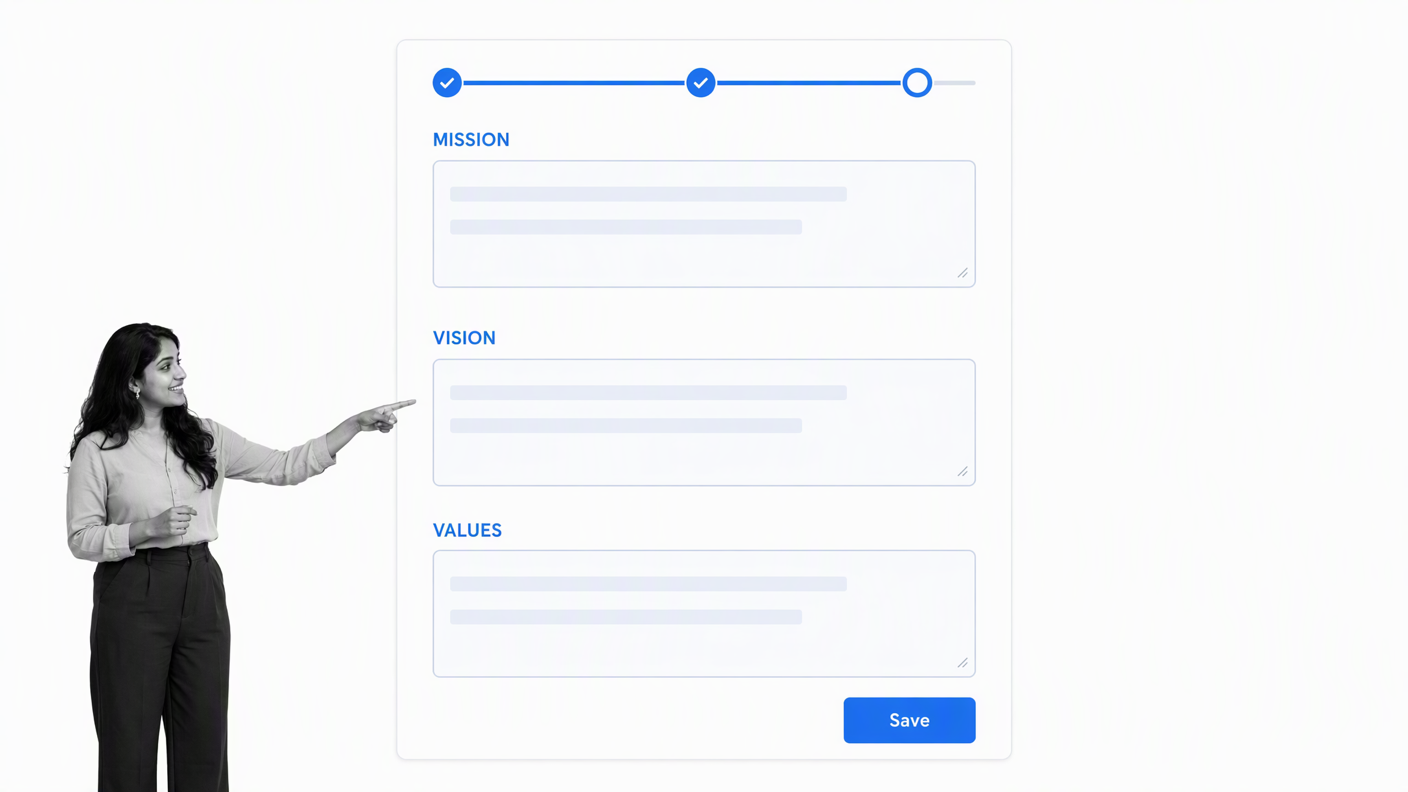
Next, you move onto defining your company’s mission, vision, and values. This helps guide correct strategic direction.
The next steps of the discussion phase involve identifying:
- Clients
- Customers
- Competitors
And then describe the following:
- Industry – which is the fashion industry in this scenario
- Products
- Suppliers
- Delivery system
All this information is then communicated to your team via team meetings.
Here you have the option of using Process Street’s Embed Widget to send an email reminder to team members with information regarding the meeting time and date. Keep your team in the loop without having to jump from one application to another.
Note: It is towards the end of the discussion phase where you will open and use Process Street’s SWOT Analysis Template.
Strategic planning, phase 2: The development phase
In the development phase, you begin putting together your business’s strategic plan. Start by identifying your company’s focus areas. Identifying focus areas streamlines your attention preventing your strategy to run off on a tangent.
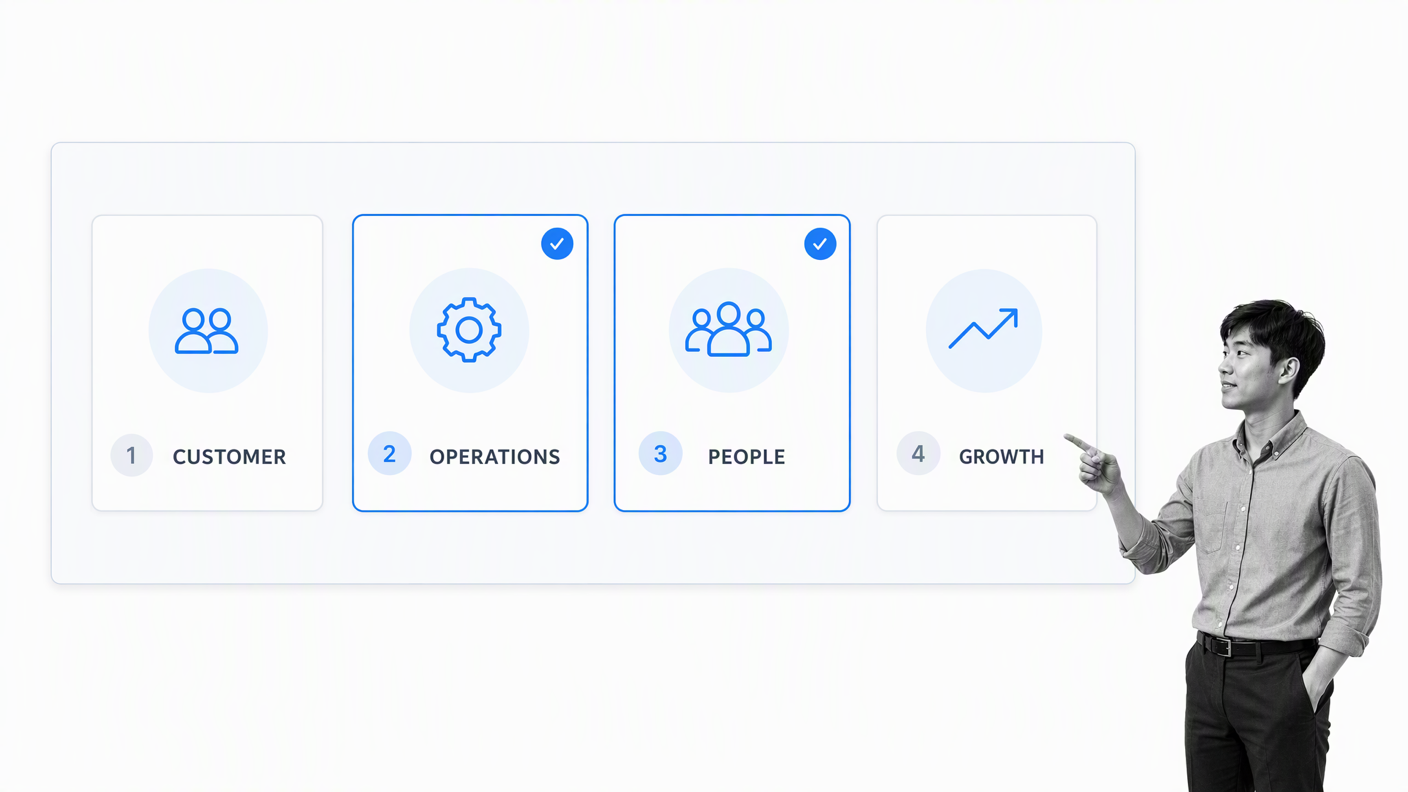
Next, define your objectives and group them as per the related focus area. It is important to begin your objectives with a verb to inspire action.
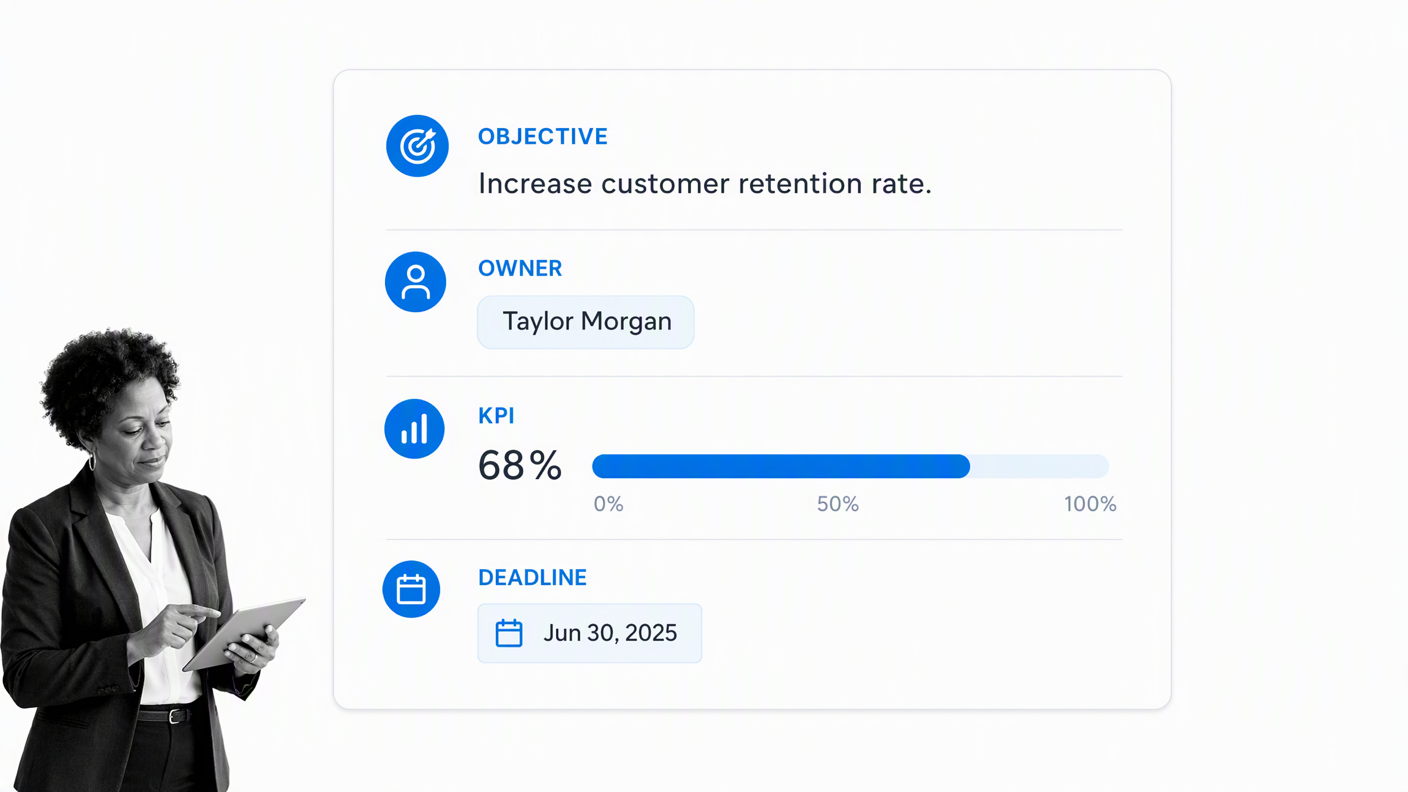
Under each defined objective, state the KPIs, in addition to the associated projects and objectives (with start dates and deadlines noted). All this information compiled is in essence your plan of action that will take your business to where you want it to be.
Strategic planning, phase 3: The review and updating phase
The final phase of our strategic planning process is the review and updating phase. Begin by assigning the individual responsible for reviewing and updating your strategic plan. This assignment uses our task assignments feature, notifying the relevant personnel of their task automatically.
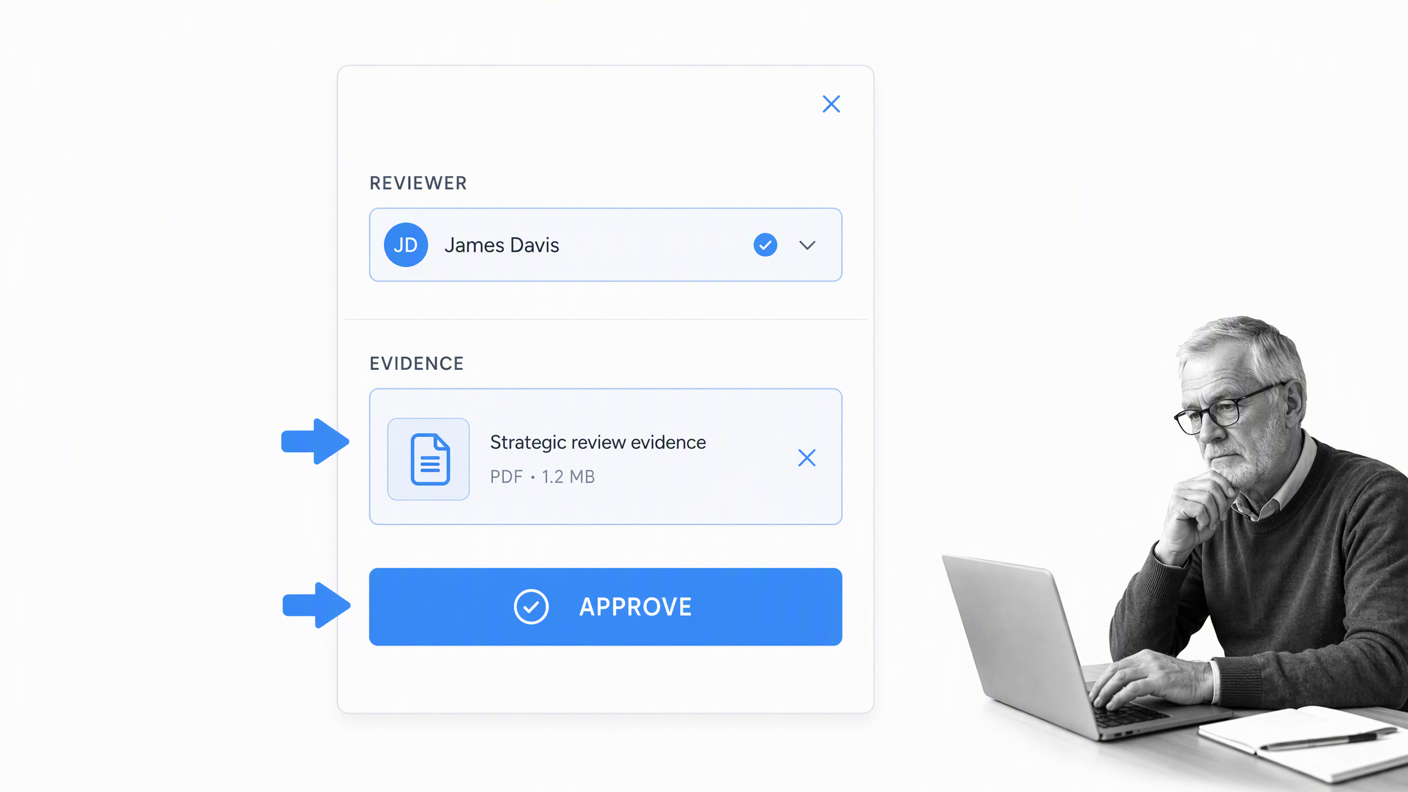
As you run through the review and updating phase, you are encouraged to:
- Manage organizational change appropriately: By developing and implementing a new strategic plan for your organization, you are introducing business change that needs to be managed appropriately. To help you manage this change effectively, Process Street has created 9 top change management model templates, which you can access, for free here ⬅.
- Adopt a continuous cycle of check, plan, do, act: Strategic planning is all about assessing your current status, analyzing what is working and what isn’t, and making the changes as appropriate. For instance, you may miss a given objective before the objective deadline. In reaction, adopt a system that identifies the problem, and guides you to a solution. At Process Street we recommend you use our PDCA Cycle Change Management Model Process Checklist for this. Details of this checklist are given below.
Our PDCA Cycle Change Management Model Process Checklist gives an iterative 4 step process, designed to manage business processes for continual improvement. The model is also referred to as the Deming Cycle.
The PDCA Cycle Change Management Model Process Checklist provides a simple and effective approach for solving problems that present themselves when a given objective has not been reached.
The model is best used for testing and improving measures on a small scale, before updating procedures and working methods.
Click here to access our PDCA Cycle Change Management Model Process Checklist!
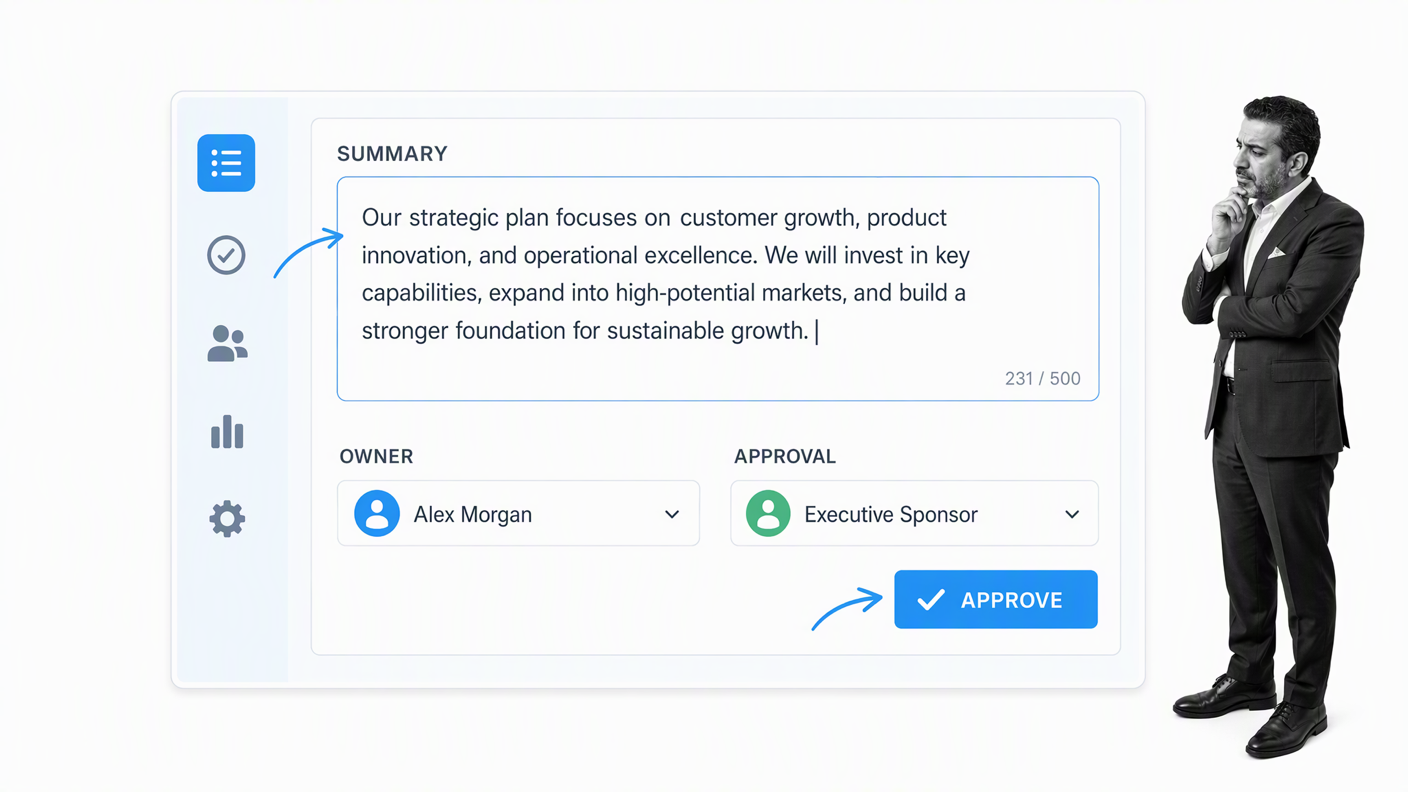
At the end of our strategic planning process, all key information is compiled into your strategic plan summary. This summary is reviewed and approved by the relevant manager before you write up the information into your official and final strategic plan report.
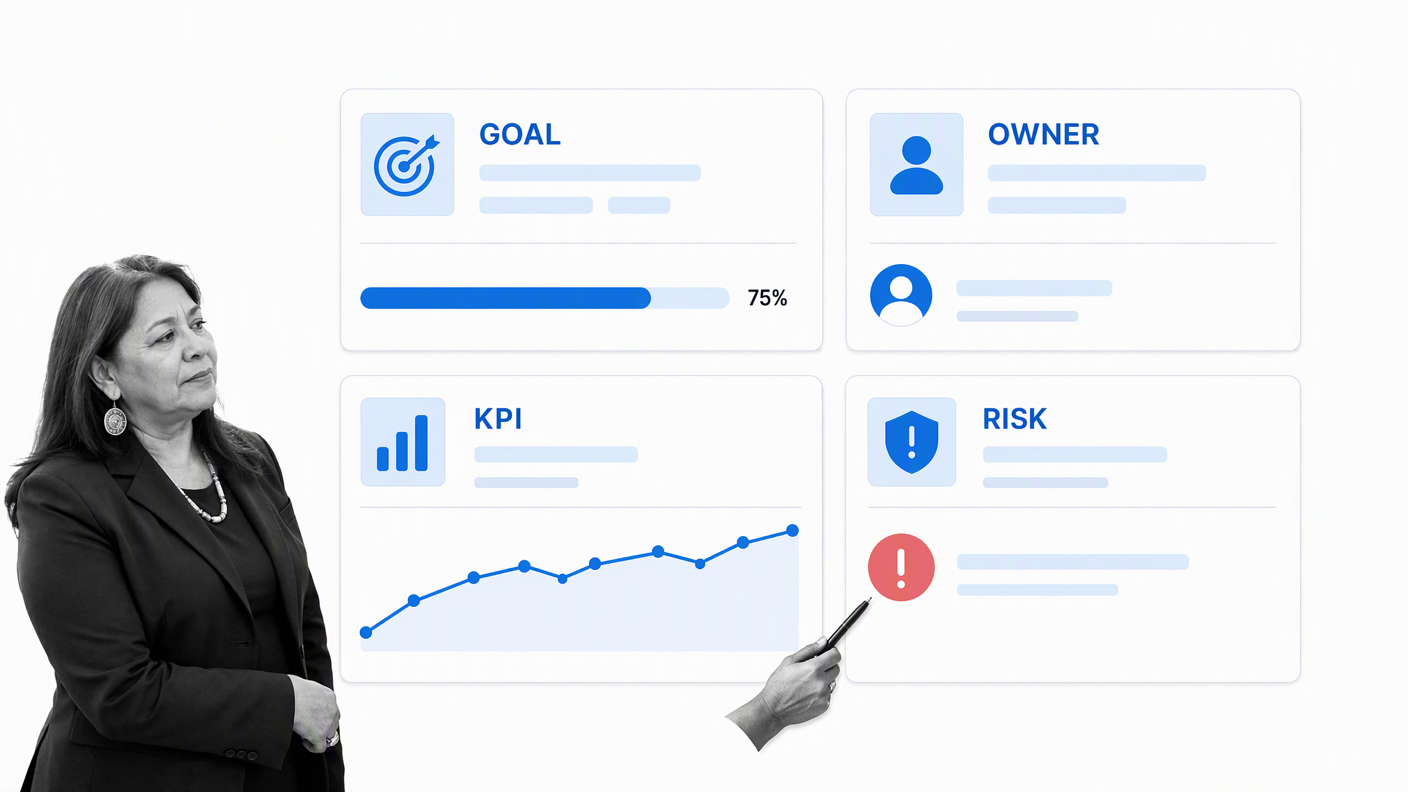
In your strategic plan summary, you can view your action plan, which details your objectives along with their associated objective details. Refer back to this action plan at any point during the planning process.
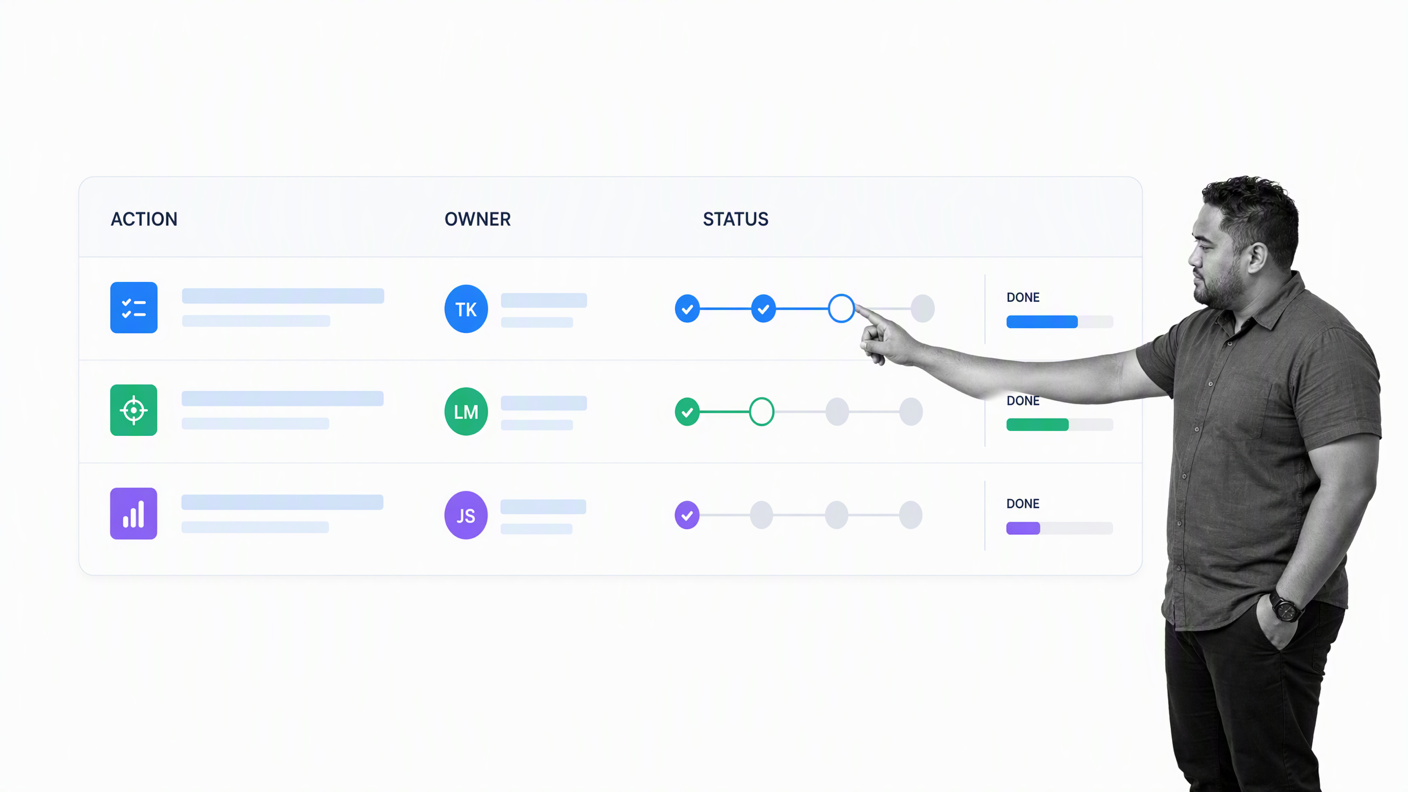
The plan summary needs to be approved by the relevant personnel. This can be done via Process Street’s approval feature. A notification for approval is sent to the relevant personnel on your team automatically, keeping the whole process streamlined.
Other strategic planning models and how you can implement them via Process Street
So far, Process Street has introduced you to 2 top strategic planning models and our associated checklists to go with them:
- The Hoshin Kanri approach, which you can implement for free using our Hoshin Planning: Hoshin Kanri Policy Deployment Process Checklist,
- The Cascade Strategic Planning Model, which you can implement via our Strategic Planning Template.
However, there are more models you should consider employing!
Going into detail on each model is beyond the scope of this article. The resources below explain these models in more detail. Any of them can be translated into a documented Process Street workflow with owners, evidence, approvals, and review steps.
Which model/s you decide to use is personal to you and your business/line of work.
- The Balanced Scorecard
- Objectives and Key Results (OKR)
- Theory of Change
- PESTLE Analysis
- Visioning
- VRIO Framework – we have a ready-made checklist you can use for free. Check out our VRIO Analysis Checklist
- Using and validating the strategic alignment model
- Scenario strategic planning
- Organic strategic planning model
Execute an effective strategic planning process with Process Street
A strategic plan is useful when it guides choices and remains connected to operating work. Start with a clear direction, define measurable objectives, assign owners, and establish a review cadence. Then use each review to test assumptions, inspect evidence, and decide whether to continue, adapt, or stop an initiative.
The free Strategic Planning Template gives your team one place to structure that cycle. In Process Street, documented guidance and assigned workflows can stay connected, while approvals, evidence, deadlines, and built-in AI support consistent execution.
Use the free Strategic Planning Template to turn priorities into owned, measurable action.
Strategic planning template FAQ
What should a strategic planning template include?
It should include mission, vision, values, planning assumptions, focus areas, objectives, owners, KPIs, projects, deadlines, risks, approvals, and a review cadence.
What is the difference between strategic planning and strategic management?
Strategic planning defines direction, priorities, and intended actions. Strategic management is broader: it includes executing, monitoring, governing, and adapting the strategy over time.
How often should a strategic plan be reviewed?
Review operating measures at least monthly and hold a deeper strategic review quarterly. The right cadence depends on decision speed, risk, and how quickly the underlying conditions can change.
How many KPIs should a strategic objective have?
Use the smallest set that shows whether the intended outcome is changing. One to three well-defined KPIs per objective is often easier to govern than a long list of loosely related measures.
The post Cut Costs With This Free Strategic Planning Template first appeared on Process Street | Compliance Operations Platform.


0 Commentaires