An organizational structure is the system that defines how decisions, responsibilities, information, and accountability move through a company. For startups, the best structure is rarely completely flat or rigidly hierarchical. It creates enough clarity to coordinate work while preserving the autonomy and speed that make a young company effective.
Zappos, Buffer, Zapier, and Basecamp each challenged the traditional org chart in a different way. Their experiences show why organizational design is not a choice between managers and freedom. Some organizations change structure to reduce overhead. Others are finding new ways to combat the traditional problems a growing company faces, open a broader talent pool, increase adaptability, or navigate uncertain economic environments. The ultimate goal is to make the company more successful.
- The rise and fall of flat organizational structures
- The Process Street path
- Create the right organizational structure for your business
- Organizational structure FAQ
The rise and fall of flat organizational structures
A flat organizational structure reduces layers of middle management and gives individuals or teams more direct authority. A horizontal management structure can shorten decision paths and improve access to information. It can also create ambiguity if people do not know who sets priorities, resolves conflicts, or owns the final result.
Certain elements once considered part of the normal workplace are being abandoned by experimenting companies in favor of new models. The useful question is whether a model improves adaptability, clarity, and accountability rather than whether it looks unconventional.
That tradeoff explains why many early advocates of flatness later reintroduced leadership roles, explicit processes, or both. The lesson is not that traditional organizational structures always win. It is that autonomy works best when the boundaries of a role are visible and accountability does not disappear.
Most organizations combine several patterns. A functional structure groups specialists such as marketing, finance, and engineering. A divisional structure organizes people around products, regions, or customer segments. A matrix gives an employee responsibilities across more than one dimension. A network or team-based model relies on small cross-functional groups that coordinate through shared standards. The labels are less important than the decision paths they create.
Before changing the org chart, look for the operating problem underneath it. Slow approvals may mean decision rights are unclear. Duplicated work may point to weak visibility. An overloaded founder may need to delegate outcomes instead of individual tasks. A reorganization helps only when it changes how work and decisions move.
Zappos’ Holacracy experiment
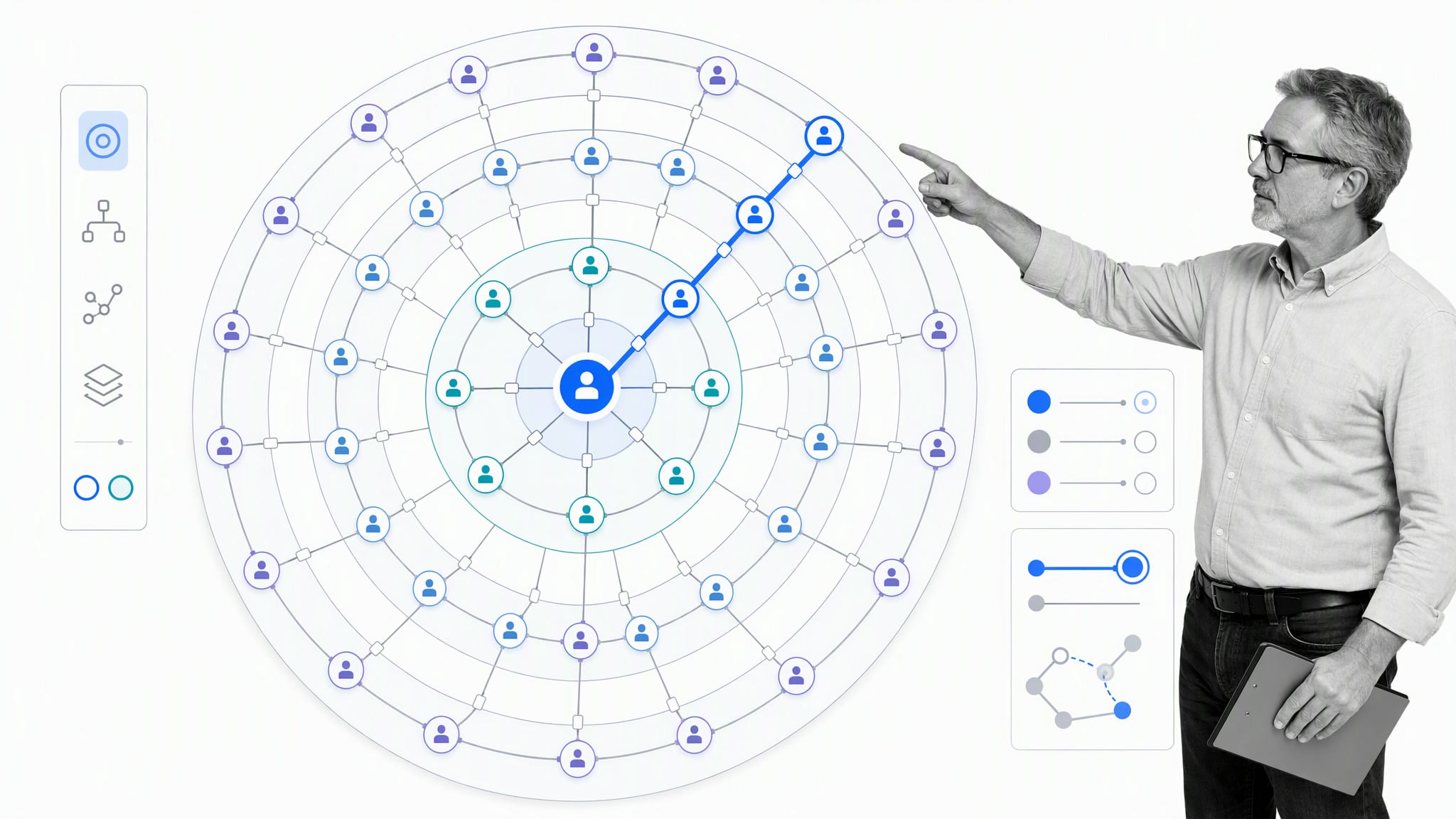
In 2013, Zappos began a widely discussed transition to Holacracy. The method replaces a conventional management hierarchy with defined roles, circles, and governance rules. Authority is distributed, but the operating model is highly structured.
Power is distributed throughout a concrete organizational structure, giving individuals and teams freedom while staying aligned to the organization’s purpose.
The distinction matters. Holacracy is not the absence of structure. It moves authority from job titles into an explicit system of roles and accountabilities. Zappos later adapted its approach as leaders learned that people still needed clear expectations, coordination, and support. Even a radical experiment in self-management needs a reliable way to answer: Who decides? Who does the work? Who is accountable?
Zappos offers the clearest warning against treating a flat structure as an organizational free-for-all. The later model still used leaders who held employees accountable, communicated clear goals and expectations, and enforced company rules and guidelines. Removing managers does not remove management work. Planning, coaching, conflict resolution, and performance feedback still need owners.
Buffer’s transparency and task-force model

Buffer tried both conventional hierarchy and a much flatter model. Flattening the company’s structure involved removing all managers, stopping one-to-one meetings and mentorship sessions, getting previous managers more involved in day-to-day roles and tasks, and letting people freely choose which project they wanted to join.
We just let loose, and the message was, “Everyone go figure out what you want to do and work on, without too much guidance or leadership.”
Co-founder Leo Widrich later described that lack of guidance and accountability as pretty overwhelming. Ultimately, Buffer decided that a little bit of hierarchy can be a good thing. It brought back one-to-one meetings and mentorship sessions, switched from permanent teams to task forces, and implemented a policy of absolute transparency. Its current account of the transition explains why self-management still needs a support system.
The durable idea was not permanent flatness. It was visibility. When priorities, responsibilities, and decisions are open, teams can change shape without losing the context they need. Buffer’s experience suggests that flexibility should be designed into the organization, not confused with the absence of leadership.
Transparency also has to be usable. Publishing every conversation can create noise instead of context. Teams need stable places for goals, decisions, policies, and current responsibilities, along with predictable routines for raising issues. That gives people freedom to act without forcing them to reconstruct the organization from scattered messages.
Zapier’s autonomous remote micro-teams
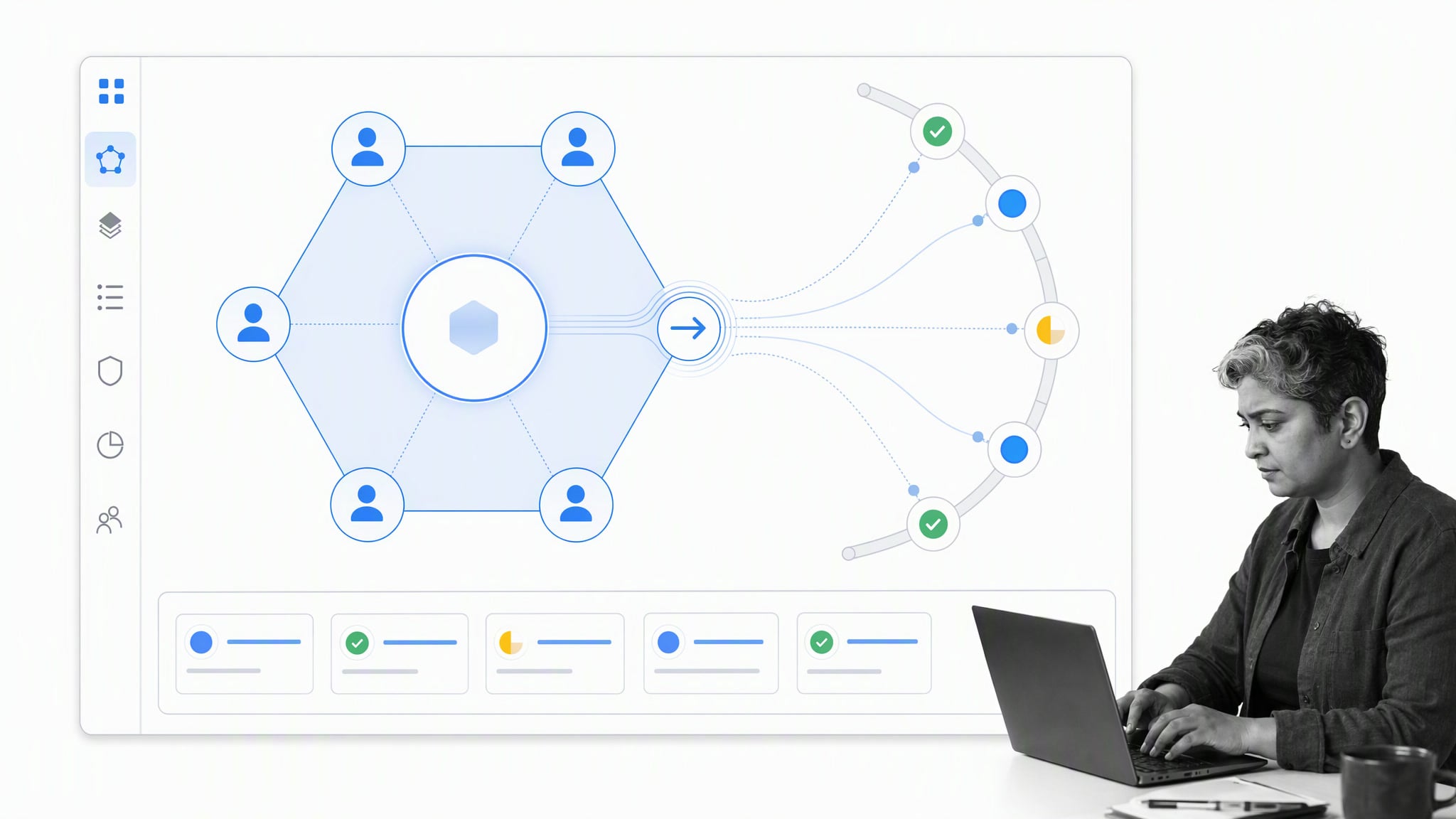
Unlike many remote counterparts, Zapier implemented a management structure early. CEO Wade Foster has argued that building that structure when you only have a small group establishes expectations, creates trust, and prevents culture shock down the road when you really need to put that structure in place. He discusses that evolution in this interview about managing growth.
Zapier’s model has emphasized teams, tools, and processes. Small groups with differing skill sets can have a singular task or mission to complete. Each group works autonomously and remains fully responsible for its success or failure, while shared progress updates keep the wider organization informed. That combination preserves local autonomy without isolating teams from one another.
Good processes let you get work done in the absence of all else. They provide structure and direction for getting things done.
Remote organizations need that clarity because colleagues cannot rely on hallway conversations to fill gaps. A strong process records the expected path, while regular updates expose changing conditions and bottlenecks. Zapier’s guidance on managing remote teams reinforces the role of deliberate communication.
For accountability, each group regularly posts its projects and progress to the whole company. The aim is to provide transparency and overcommunication, not to shame employees who have not made enough progress. When everyone knows what everyone else is doing, knowledge spreads faster and someone else may have the answer to a question or the solution to a bottleneck.
Processes should change when the work changes. Teams need a simple way to improve a process that no longer serves them, remove steps that add no value, and preserve the learning for everyone else. That is how documented knowledge supports speed instead of becoming bureaucracy. A well-designed enterprise knowledge management system helps connect that shared context to the work people perform.
Basecamp’s calm, six-week project cycle
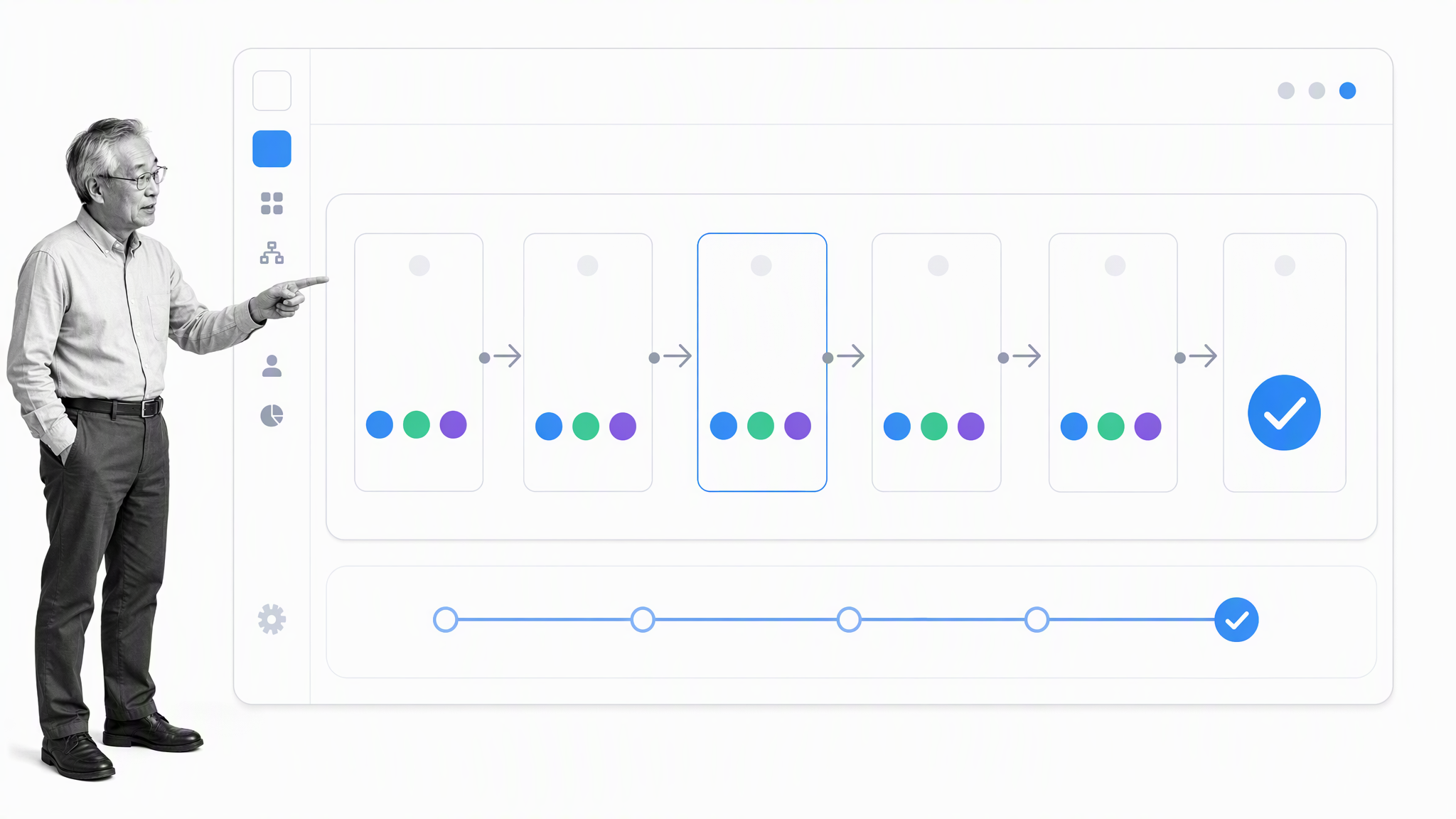
Basecamp’s approach starts with a different constraint: keep the company calm, focused, and intentionally small. Rather than making growth the default goal, its founders have emphasized sustainable work and clear boundaries.
We’ve decided to stay as small as we can for as long as we can.
The company’s Shape Up method organizes product work into six-week cycles. Teams of three are assembled around specific projects, based partly on people’s interests, and work inside a bounded cycle. There is no project manager per se, though a designer or programmer may play the role of team leader. The group does not track hours. It receives a shaped problem, a time boundary, and room to determine the solution.
This is another form of structured autonomy. A bounded cycle reduces the need for daily oversight, while the small team makes ownership visible. Centralized written updates help people understand what other groups are doing and make more informed decisions. The company can stay flexible because the operating rules are clear.
The Process Street path
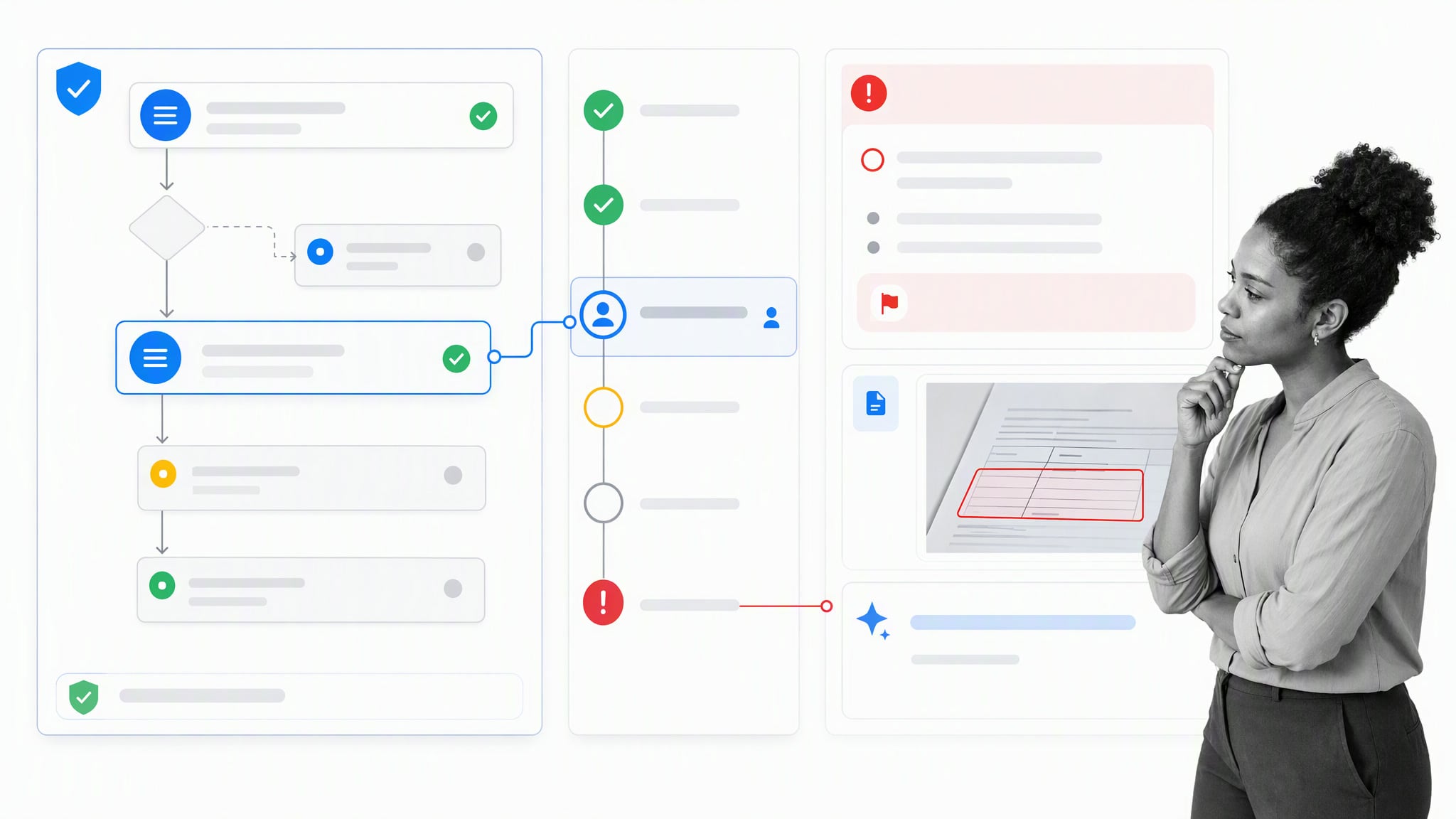
The common thread across these companies is operational clarity. A hierarchy can provide it, but an org chart alone cannot show how recurring work happens. Teams also need governed knowledge, visible ownership, consistent execution, and evidence that the work was completed correctly.
Process Street is a single Compliance Operations Platform with Docs and Ops capability areas plus built-in AI. Docs helps teams govern policies, procedures, and other operational knowledge. Ops turns that knowledge into workflows with assignments, approvals, due dates, conditional logic, and captured evidence. Built-in AI can support the people running and reviewing that work while the organization keeps its controls in one connected system.
That structure supports autonomy without requiring every decision to travel up a management chain. A team member can see the approved procedure, understand the next step, identify the owner, and escalate an exception. Leaders gain visibility into execution without turning every activity into a meeting.
Accessible operational knowledge allows staff to jump into new tasks easily and efficiently, creating organic structure within daily operations. Collaborative creation of policies and procedures can also support self-development, work-life balance, and focused development practices when ownership remains clear.
Turn recurring work into accountable execution

Start with work that repeats and carries operational risk. Document the expected sequence, assign each responsibility, add approval points where judgment is required, and capture the evidence reviewers need. A recurring trigger can launch the workflow on schedule so the structure is present when the work begins.
The result is a practical layer of organizational design. Roles are not only boxes on a chart. They appear in the flow of work, attached to decisions and outcomes. Performance data can reveal where ownership is unclear, where a control creates unnecessary friction, and where a process needs to improve.
For example, an employee onboarding workflow can assign security setup to IT, policy acknowledgment to the new hire, role training to the manager, and a final readiness review to People Operations. Each function keeps its expertise, while the workflow exposes the cross-functional handoffs. The company gets both specialization and end-to-end accountability.
Connect governed knowledge to operations
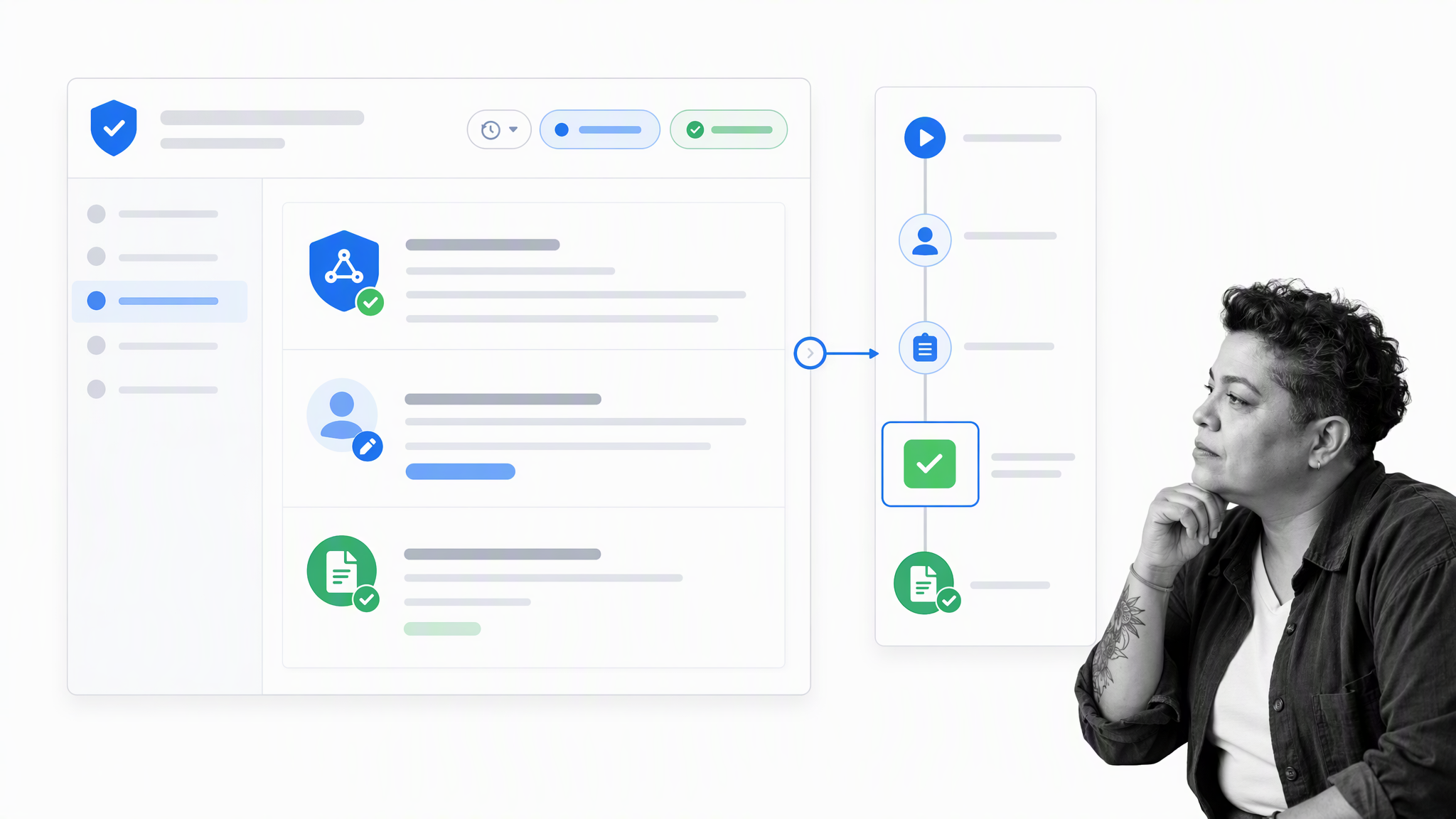
Documented knowledge is most useful when it connects directly to execution. A policy can explain the rule, a procedure can define the approved method, and a workflow can guide people through the work while recording approvals and evidence.
This connection is especially valuable when teams are distributed or changing quickly. New employees can find the current procedure without relying on tribal knowledge. Experienced employees can suggest improvements, and governance owners can review changes before they become the new standard. The organization stays adaptable without losing control.
Create the right organizational structure for your business
There is no universal best company structure for startups. The right choice depends on company size, industry, regulatory exposure, strategy, and workplace culture. A useful design starts with the decisions and work that matter, then assigns the minimum structure needed to make them reliable.
- Map critical decisions. Identify who recommends, approves, executes, and reviews each high-impact decision.
- Define outcomes before titles. Give every role or team a clear mission, boundaries, and measures of success.
- Separate autonomy from ambiguity. State what a team can decide independently and what requires coordination or approval.
- Document recurring work. Turn important routines into visible processes with owners, handoffs, and evidence.
- Create feedback loops. Use one-to-one meetings, retrospectives, operational data, and process reviews to detect gaps.
- Revisit the structure as conditions change. A structure that serves 20 people may obstruct 200. Review it after major growth, strategy, or risk changes.
A vertical organizational structure can be effective when fast escalation, specialist oversight, or strict controls matter. A horizontal organizational structure can work when teams have mature judgment, shared context, and clear missions. Many startups benefit from a hybrid: explicit leadership and governance around flexible cross-functional teams.
Perhaps a better word than flat is horizontal. A flat organizational structure can sound static or stagnant. A horizontal structure is always looking ahead. It can be a straight line or one that zigzags around obstacles, as long as ownership and communication stay clear.
Test the design against real scenarios before announcing a reorganization. Ask who can approve an urgent customer exception, who settles competing priorities, how a new employee finds the current procedure, and what happens when a control fails. If the answers depend on one founder’s memory, the structure is not yet durable. If every answer requires a committee, it is probably too heavy.
The strongest lesson from Zappos, Buffer, Zapier, and Basecamp is simple. Removing layers is not the goal. Build an organization in which people understand the purpose, know the boundaries, can access the right knowledge, and take responsibility for results.
Organizational structure FAQ
What is an organizational structure?
An organizational structure is the system that defines roles, reporting relationships, decision rights, information flow, and accountability across a company.
Is a flat organizational structure good for startups?
It can be, especially when a small team needs fast decisions. It still requires clear ownership, communication, conflict resolution, and performance feedback. Flat should describe fewer layers, not missing accountability.
When should a startup add more hierarchy?
Add structure when decision bottlenecks, duplicated work, unclear priorities, risk, or inconsistent coaching begin to slow the company. Introduce the smallest useful layer and review whether it improves outcomes.
The post How 4 Top Startups are Reinventing Organizational Structure first appeared on Process Street | Compliance Operations Platform.


0 Commentaires