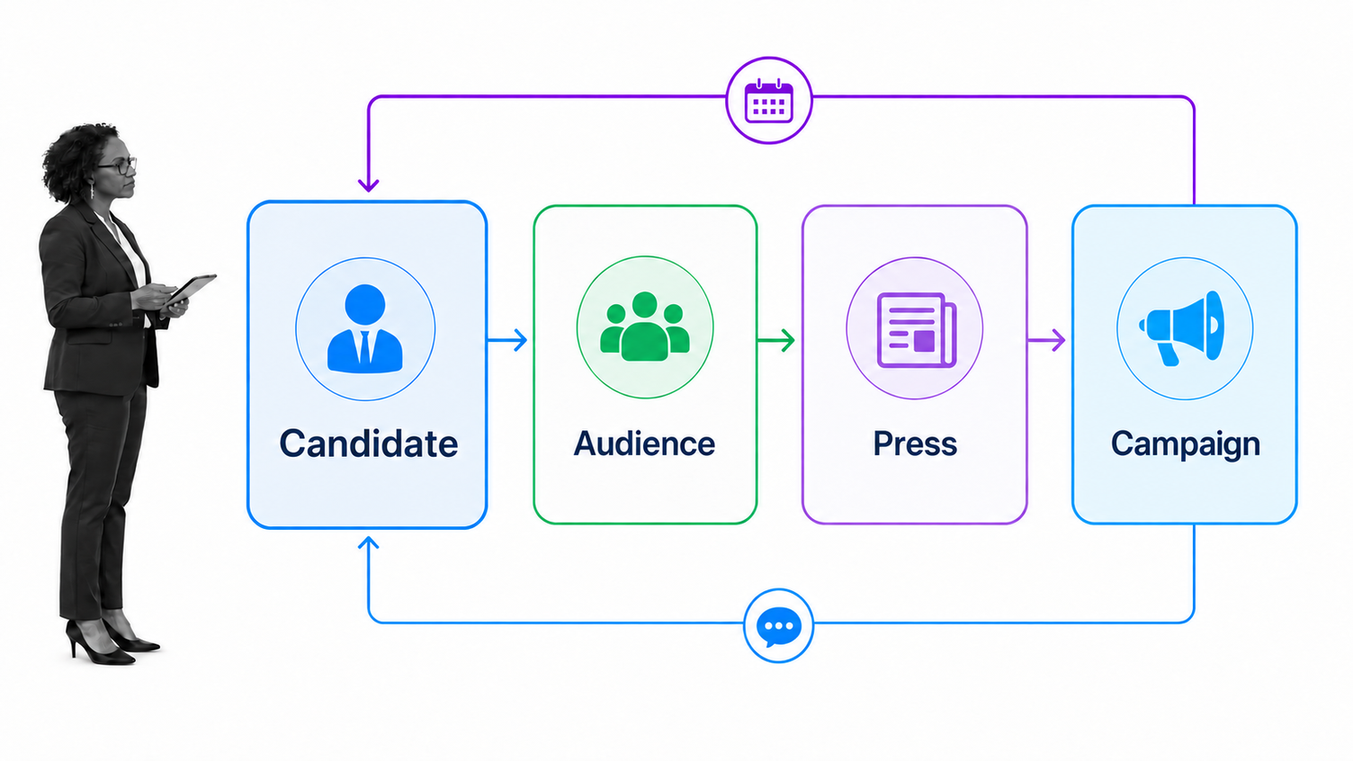
A political campaign strategy is the coordinated plan for a candidate’s message, audience, resources, media, field work, and path to victory.
The 2016 Trump campaign strategy applied Silicon Valley habits to electoral politics: rapid testing, data-driven allocation, outsourced specialist teams, and tight feedback between digital channels and traditional media. Those methods helped the campaign operate with unusual speed and efficiency, but technology was only one factor in a close and complicated election.
Researchers at the MIT Laboratory for Social Machines described Donald Trump as a dominant force in the 2016 election’s media ecosystem. That influence did not come from one channel. Candidate statements, online communities, news coverage, campaign operations, and audience reaction continually reinforced one another.
The campaign also benefited from a broader shift in how political attention moved. Social platforms enabled candidates to address supporters directly, while the 24-hour news cycle amplified provocative messages well beyond a candidate’s own following. A Pew Research Center analysis found that the 2016 candidates used social media in notably different ways to connect with the public.
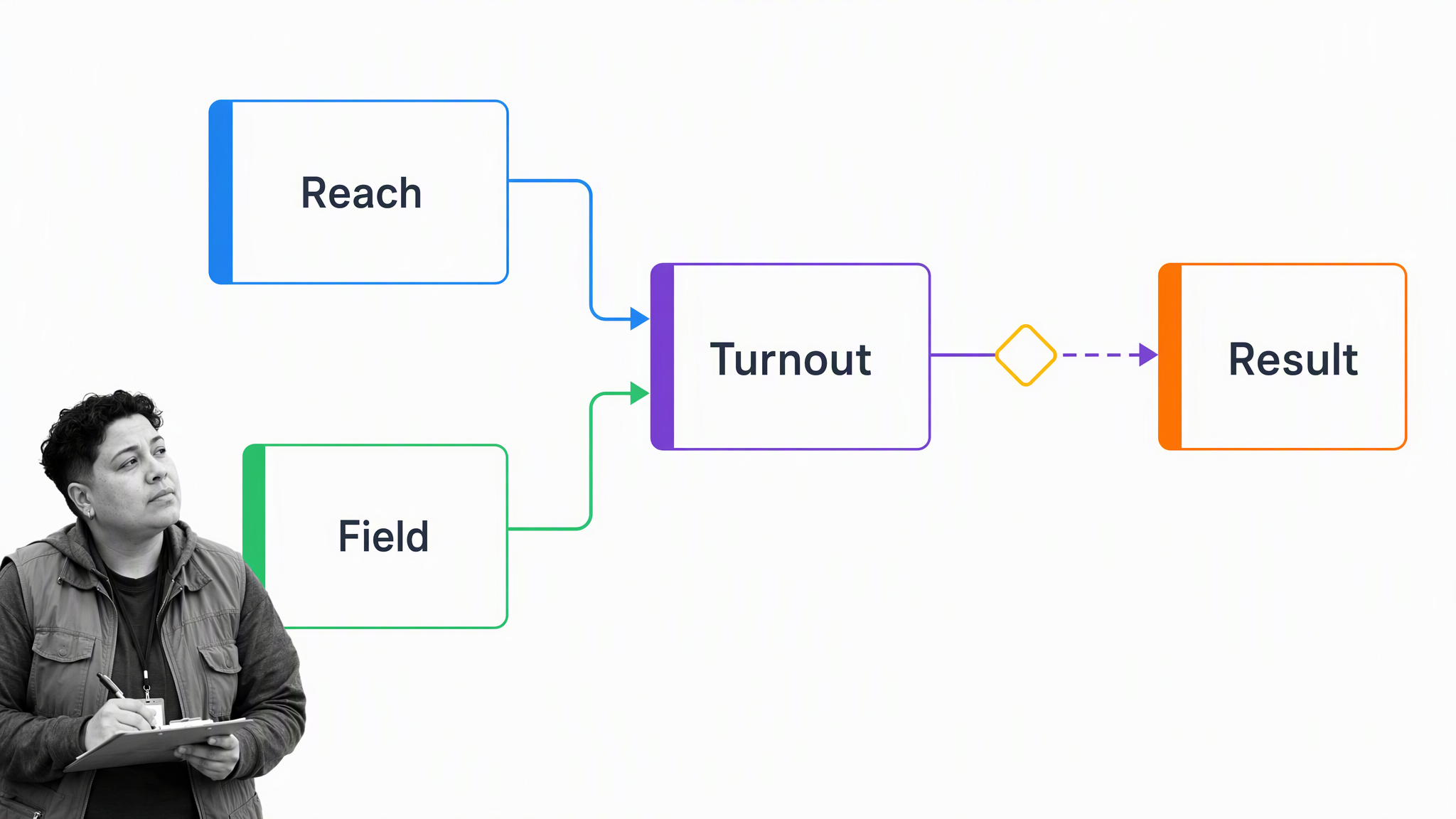
Much of the original reporting focused on what Trump said. Looking at the campaign team behind those messages reveals a second story: technology mattered most when it was connected to clear operating choices about testing, targeting, spending, and where to compete.
Utilizing tech is not a silver bullet
Trump’s media strategy was considered key
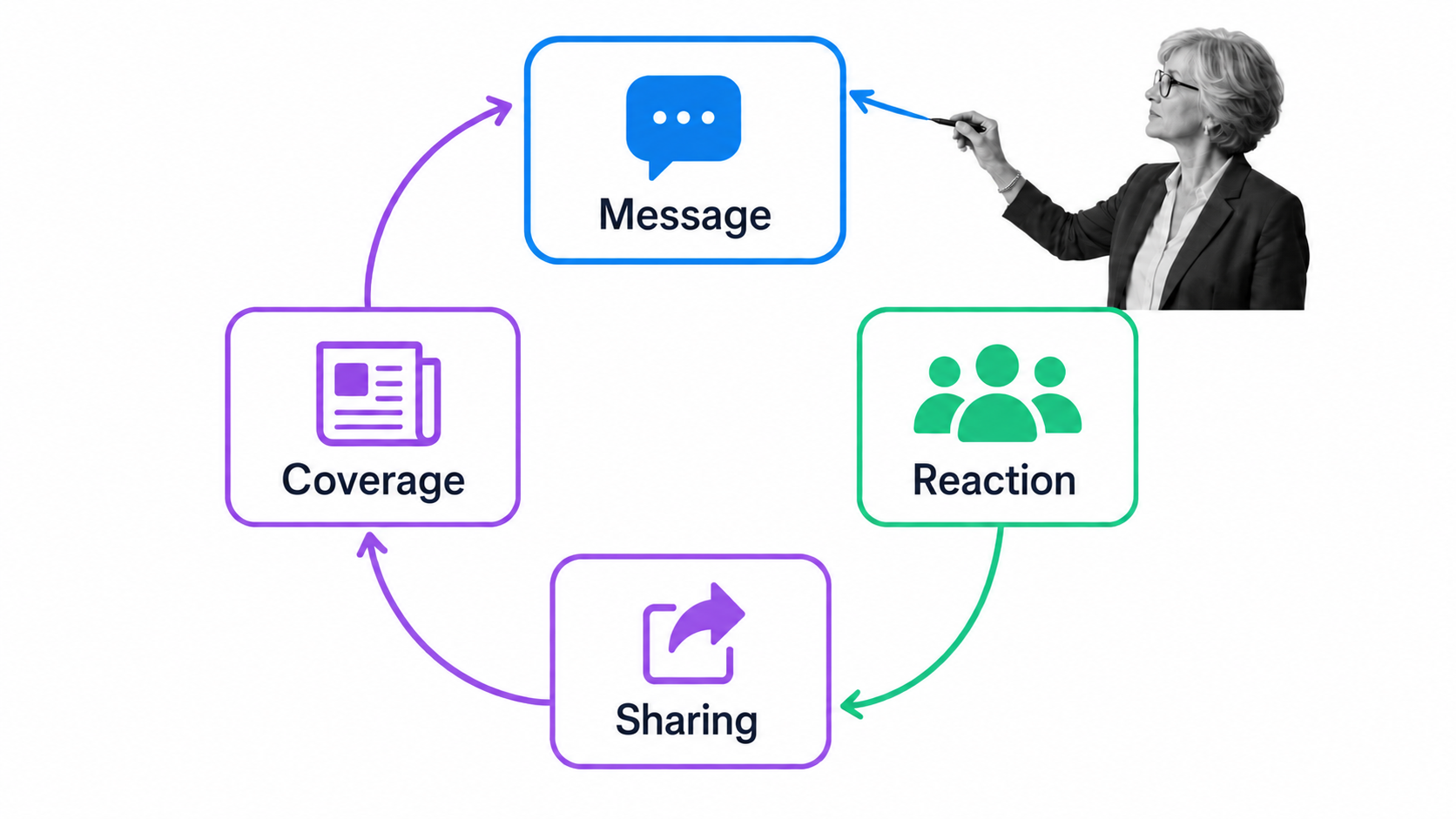
“The media relationship is defined by power, and as the power of traditional media ebbs, the relationship between journalists and those they cover is redefined. Trump’s media strategy is confirmation that the most effective way to get media attention today is to engage in shocking behavior, use social media to control your message, and rely on traditional media to amplify your voice. As long as that strategy works, it will be used.”Simon’s core argument was that Trump understood the 24-hour news cycle we live in and exploited both it and online news media’s need for clicks. Trump was able to place himself in the middle of the spotlight whenever he chose by saying something provocative. Simon goes on to suggest that this outspoken and brazen expression of opinions helped not just awaken his supporters, but make his supporters more aware of each other. In turn, this spurred the creation of online communities committed to Trump’s cause. This phenomenon was dubbed the Meme Wars by many of his adherents. Comical as it may be, the groundswell of collective political action online added extra high energy to the Trump campaign and may well have contributed to his overall victory. The Google Trends analysis below shows the online dominance of Trump vs Clinton over the course of 2016 in terms of prominence in conversations. This media strategy of Trump’s may have been understood early by those within the industry, but they still followed along with others in providing Trump with the coverage he aimed for. Jim Rutenberg, writing for the New York Times on January 12th 2017, identifies:
“The news media remains an unwitting accomplice in its own diminishment as it fails to get a handle on how to cover this new and wholly unprecedented president.”The theme identified by Simon was that traditional media outlets were losing relevance against the power of social media for information dissemination, and Trump exploited these technological shifts. However, it seems this conclusion shouldn’t be seen separately from the rise of new independent media organizations – most notably Breitbart, whose former chairman Steve Bannon would go on to serve as chief strategist and senior counselor to President Trump. These organizations allowed for Trump to gain positive media coverage even when the mainstream wouldn’t give it to him. These opposing-view articles could then be trotted out to counter the coverage given by established media outlets. Trump’s media strategy was highly successful even if it could be argued it wasn’t core to his victory. Yet, not only was it intelligent strategy, it was also founded on a smart and slick technological infrastructure. There was more method behind the madness than self-critical journalists are giving him credit for.
How Trump employed software and startup practices
“It’s hard to overstate and hard to summarize Jared’s role in the campaign. If Trump was the CEO, Jared was effectively the chief operating officer.”While Google’s Eric Schmidt, who was helping the Clinton campaign, described:
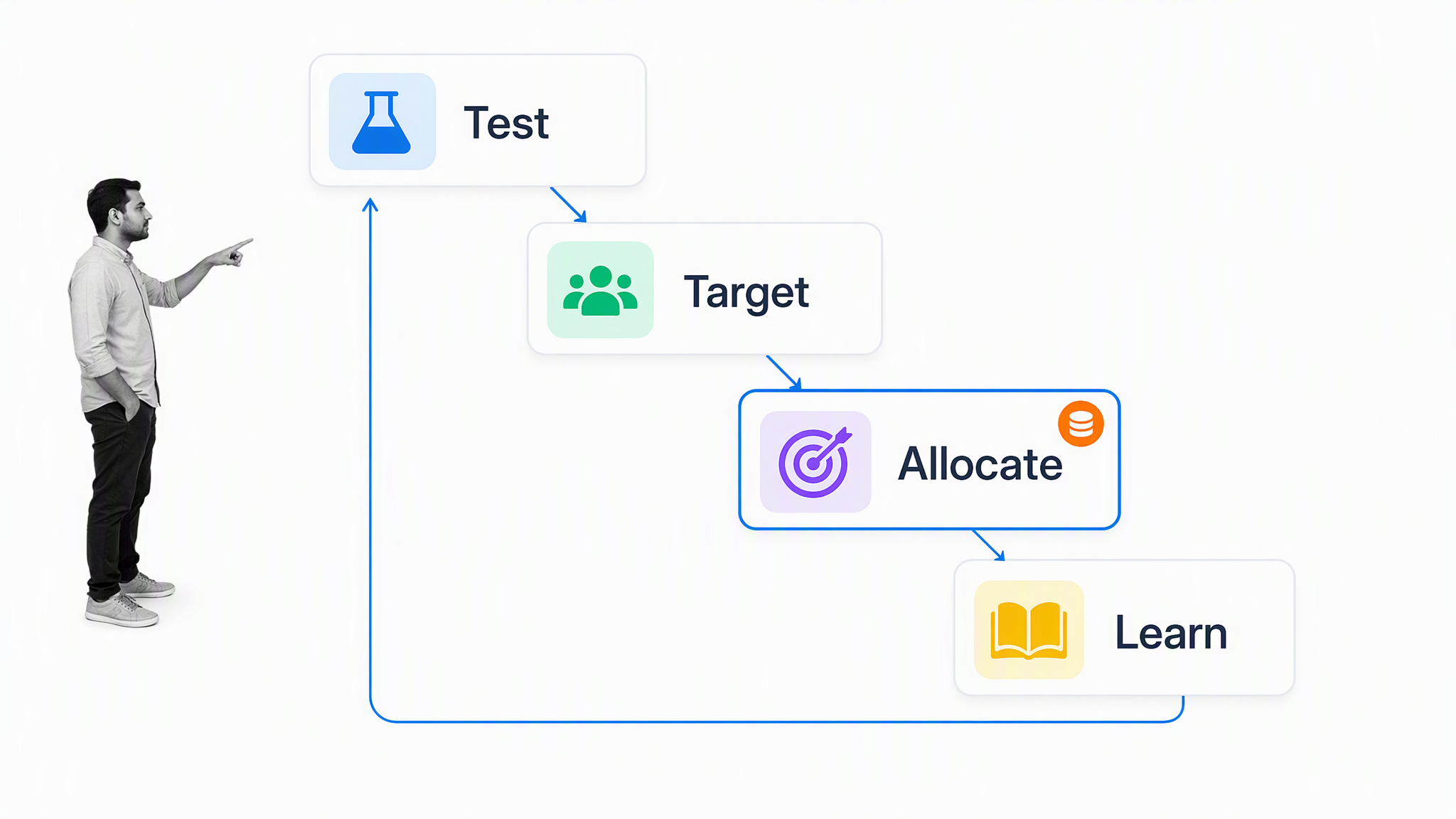
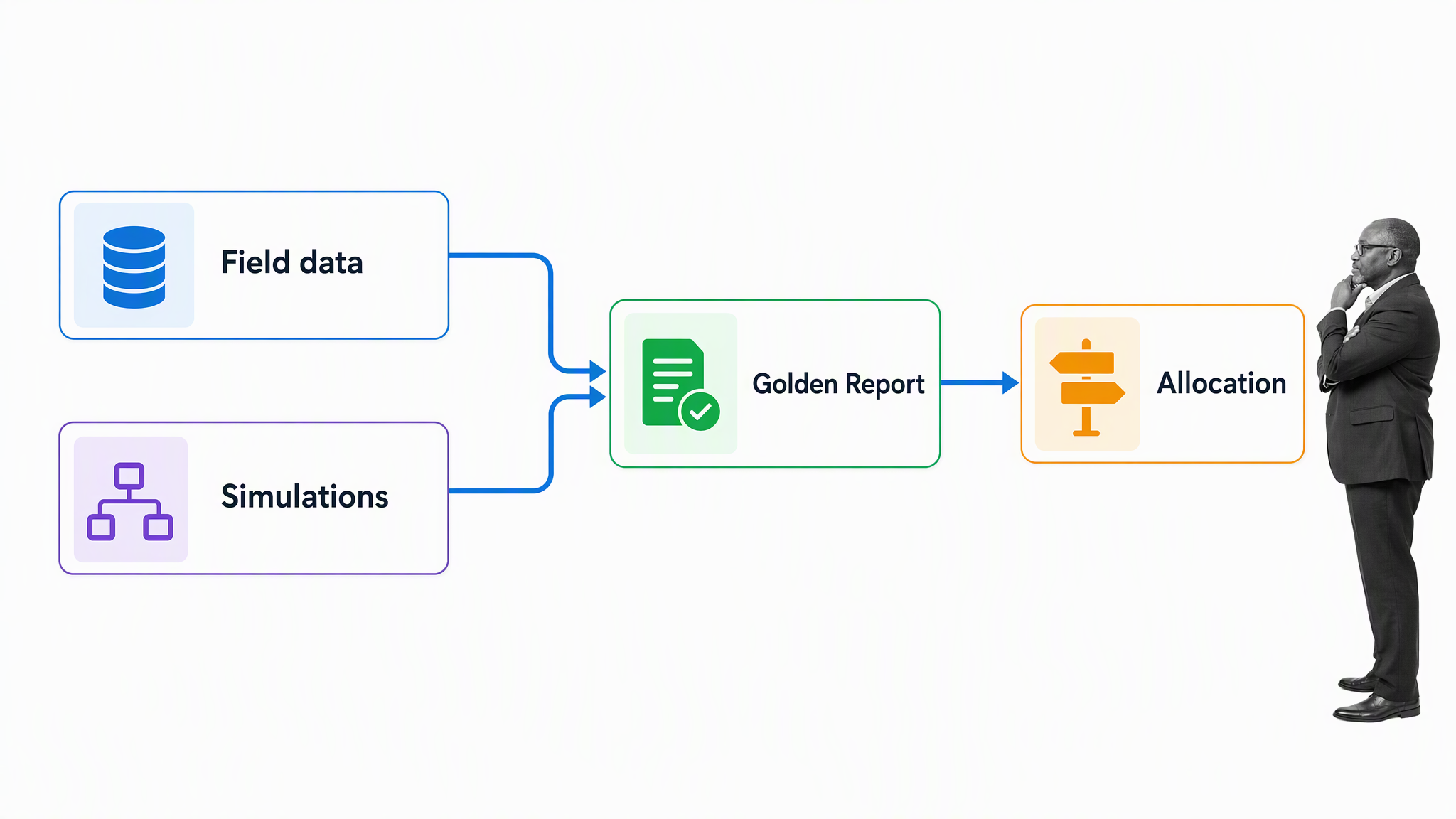
“Jared Kushner is the biggest surprise of the 2016 election. Best I can tell, he actually ran the campaign and did it with essentially no resources.”Kushner reportedly leveraged his Silicon Valley connections and asked for the best digital marketers in the world. In an early test, he used Facebook’s micro-targeting and a stash of Trump merchandise to test the boundaries of money-making. The campaign went from making $8,000 a day to $80,000. Using this initial test as a base, Kushner spent $160,000 promoting a low-tech straight to camera video of Trump, which probably cost almost nothing to make. The video received 74 million views. Once the Republican nomination was nailed on, Kushner took over the campaign. His tests had been done and their concepts proven. Now he needed to find a way to scale these tests up to a nationally successful level. The campaign set up a 100 person office in San Antonio while keeping a low key presence. This office was the data center.
“We played Moneyball, asking ourselves which states will get the best ROI for the electoral vote. I asked, how can we get Trump’s message to that consumer for the least amount of cost?” – KushnerThis focus on customer acquisition cost and the lean principles Kushner instilled into the team drove the campaign forward. Every cent would be spent wisely; not just avoiding wastage, but focusing spending via strategy. Bertoni writes:
“FEC filings through mid-October indicate the Trump campaign spent roughly half as much as the Clinton campaign did.”Kushner’s approach resembled the disruption of a traditional industry for which Silicon Valley has become synonymous with. Contemporary reporting said the campaign used outside data partners, including Cambridge Analytica, to map issues by geography, and Deep Root to target television advertising by program and audience. Later investigations and the FTC’s Cambridge Analytica case make it important to treat those practices as a historical record of aggressive data use, not a model for responsible voter-data governance. They also employed unusual techniques. It was noted that they would employ multiple digital marketing firms and have them compete against each other side by side to cut costs and inefficiencies – creating optimum processes. Schmidt sums up the Kushner lead campaign:
“Jared understood the online world in a way the traditional media folks didn’t. He managed to assemble a presidential campaign on a shoestring using new technology and won. That’s a big deal. Remember all those articles about how they had no money, no people, organizational structure? Well, they won, and Jared ran it.”
Tech in political processes on both sides
“We offer an incredibly scarce resource: How do people really feel about the country?”Civis weren’t alone in wanting to use technology to help spur a Clinton victory. Eric Schmidt of Google, who coincidentally is the sole investor in Civis, had been assisting Clinton separately to establish a digital hub from which to manage her technology. Adam Pasick and Tim Fernholz, writing for Quartz, describe the shadowy Groundwork project backed by Schmidt, which would supposedly give Clinton the edge. It was described as bridging the gap between the technology and the politics, allowing politicians and their staffers to understand what’s going on within their campaigns. After the election, Groundwork was described as a political software operation combining analytics, data management, and organizing tools. The historical point is that both major campaigns were investing in systems intended to bridge technical analysis and political decision-making.
What the campaign strategy can and cannot explain
- Trump’s media strategy was based around his personal social media influence and brand, his populist message and its ability to motivate highly vocal online supporters, and his omnipresence in traditional media coverage.
- Kushner’s data-driven warehouse was twice the size of Obama’s 2012 Cave, with approximately 100 employees against 54. The reported activities of Kushner’s data center are also more aggressive and competitive in nature.
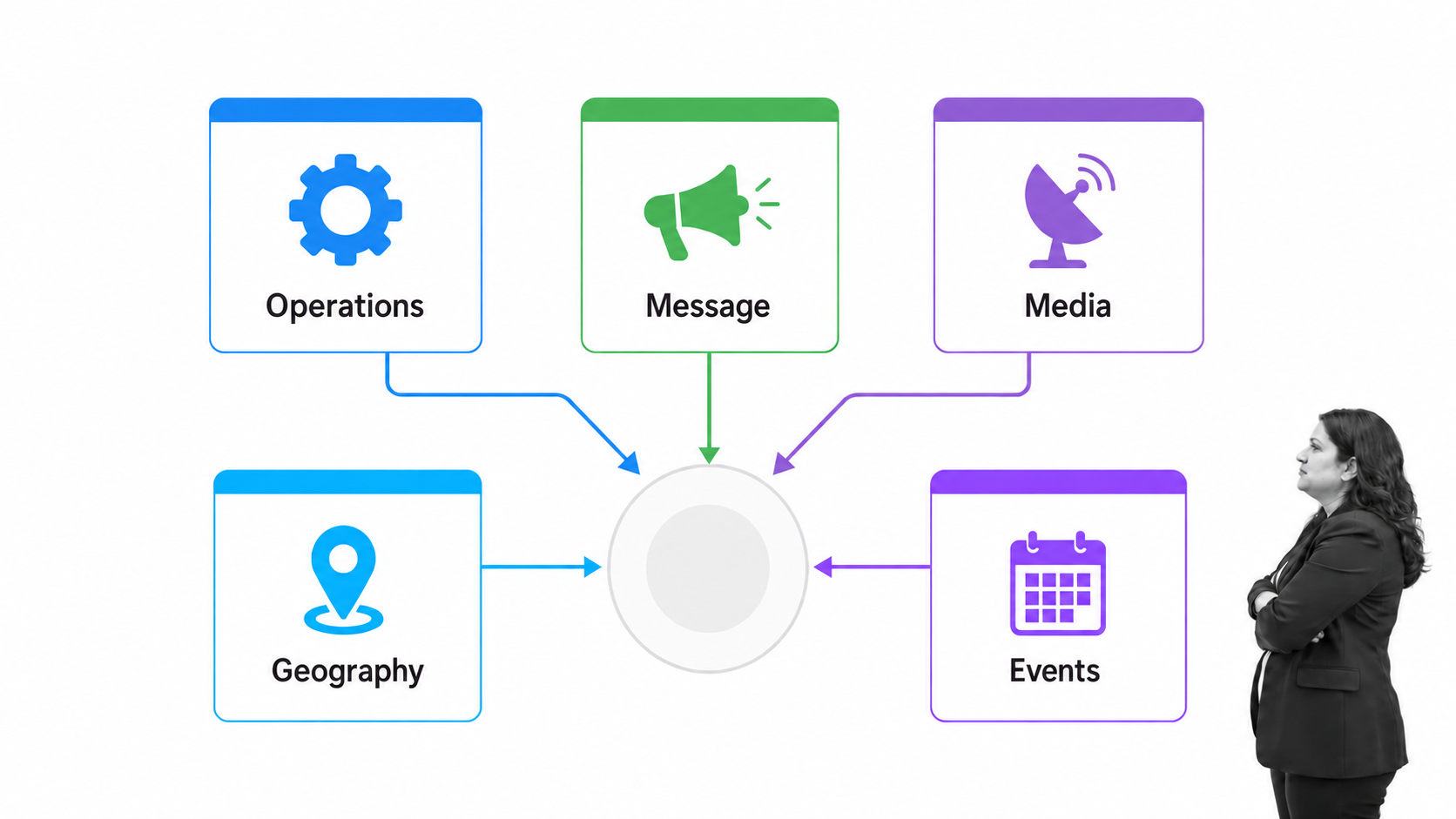
No single operational choice proves why an election turned out as it did. The official 2016 federal election results document the outcome, not a controlled test of its causes. Media amplification, candidate appeal, geography, field organization, voter data, late campaign events, and the Electoral College all interacted.
The durable lesson is narrower. A political campaign strategy gains leverage when message, audience, experimentation, resource allocation, and field work operate as one system. Technology can shorten feedback loops and make tradeoffs visible, but it cannot substitute for a persuasive candidate, accurate assumptions, lawful data practices, or voters who are willing to act.
That operational discipline applies beyond elections. Teams can optimize business processes by defining the outcome, mapping the work, measuring bottlenecks, testing improvements, and documenting what changes. Process Street is a single Compliance Operations Platform with Docs and Ops capability areas plus built-in AI. Teams can govern procedures in Docs, run repeatable workflows in Ops, and use built-in AI to classify information, draft and summarize content, and support execution inside those controls.
The 2016 campaign remains a useful case study because it shows both the power and the limits of an integrated system. The tools mattered. The way people organized around them mattered more. The outcome cannot be reduced to software alone.
The post How a Silicon Valley Campaign Strategy Won Trump the Election first appeared on Process Street | Compliance Operations Platform.


0 Commentaires