Remote onboarding can skyrocket productivity when every new hire knows what to do, who owns each step, and where to go when they get stuck. Without that structure, remote employees can spend their first weeks waiting on access, hunting through docs, and guessing what good performance looks like.
The best remote onboarding processes combine a clear checklist, early connection, manager follow-through, and workflow software that keeps tasks, approvals, and due dates visible. This guide covers 10 remote onboarding best practices you can use to build a repeatable remote onboarding process and remote onboarding checklist that improves productivity and retention.
- Let’s talk about the employee onboarding experience
- 10 best practices to give the best remote onboarding experience
- Taking your employee retention to the next level
Let’s talk about the employee onboarding experience
Onboarding is the process used to integrate new hires into a company and its culture. Although onboarding is used to welcome new employees into an organization, it should be treated as a continuous process to boost employee engagement.
It’s an investment that when done well can:
- Strengthen company culture;
- Attract top talent easily;
- Boost productivity;
- Better employee loyalty to the company.
How is onboarding related to employee retention?
The onboarding experience sets the pace for what an employee can expect throughout their journey in your organization. That means that it’s one of the most crucial drivers of employee success and retention.
If your onboarding isn’t up to par, it will leave a bad taste in your new hire’s mouth and leave them wondering if they made a mistake joining your company. 5 in 10 employees leave after one month of employment because of a poor onboarding experience.
On the other hand, new hires are 18 times more likely to remain with a company if they had a good onboarding experience. When executed well, your remote onboarding process should be the start of a continuous developmental foundation that boosts your employee’s growth and strengthens their cultural alignment.
10 best practices to give the best remote onboarding experience
1. Follow a structured plan
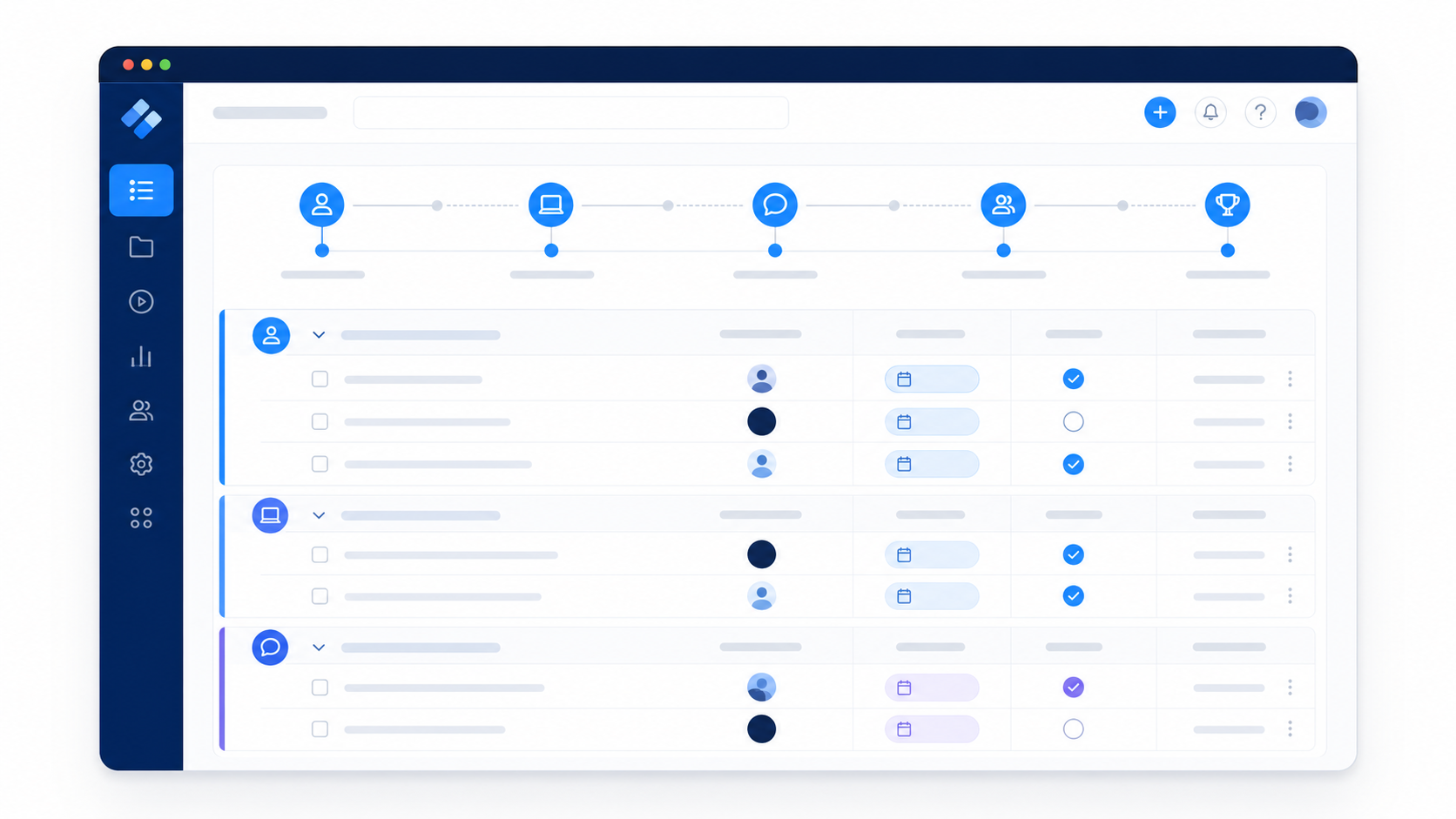
You need to have a clear onboarding plan when hiring remote employees. When creating this onboarding process, you want it to be repeatable and consistent. In doing this, you ensure that your new hires each get the same efficient onboarding experience.
With a documented process, you can find out how your employees react to the process. This also makes it easier to receive and implement feedback because the feedback is based on a consistent experience.
A good onboarding plan should highlight:
- The timeline that the new hire should be following;
- All paperwork that needs to be completed before their first day;
- What tasks need to be completed and by who (line manager, HR representative, new hire, mentor, etc.);
- Introductory meetings and scheduled check-ins.
The tasks in the onboarding process should function like milestones and have specific due dates assigned to each one. This helps everyone involved in the onboarding process understand what is expected of them and when it should be done by.
2. Start early
Onboarding shouldn’t begin when the new hire walks in on their first day. You need to get the ball rolling as soon as they accept your job offer.
Just because your new hire has said they’ll work for you doesn’t mean they’ve fully committed, yet. It’s your job to keep them engaged until they begin work. 1 in 5 workers accepts a job offer and then ghost the employer, you don’t want to be one of them.
Pre-boarding forms part of the complete onboarding process and its focus is to prepare your new hires for their role while keeping them engaged before their first day.
How your company decides to welcome its new hires depends on your budget and existing culture. No matter these factors, you should always prioritize having a pre-boarding plan.
3. Set clear expectations
Virtual onboarding can leave your new hire in the dark. That’s why it’s vital to use an onboarding process to ensure they know what’s expected of them in their position.
You want to be as clear as possible and make sure they know:
- What the onboarding workflow looks like;
- How much time they should dedicate to the onboarding process;
- The due dates of each task;
- Their responsibilities during the onboarding experience.
Visibility is oftentimes a problem when virtually onboarding new hires. It can be tempting to micromanage them to ensure the work gets done, but you do not want to do this. Micromanaging a remote team can lead to a lack of creativity and fast-track employee burnout.
Your new employee will be required to rapidly learn so much during the onboarding process. Giving them some leeway early on will work in your favor.
The way you supervise them at the start will set the tone of what to expect for the rest of their employment with your organization.
Autonomous working is a crucial skill for remote workers. That’s why setting your expectations early on and letting them take it from there can foster their work independence.
4. Create a connection
Remote employees don’t have the opportunity to be shown around the office and introduced to their colleagues like their in-office counterparts do.
This can be problematic because employees with close relationships with their co-workers are 50% happier.
That’s why you need to encourage them to make connections with their team. Otherwise, they can quickly feel left out and lack that essential social aspect of work.
Here are some ways to help your new hires create a connection with their colleagues:
- Share their start date with team members: There’s nothing worse than starting your first day and people not expecting you. Announce your new hire’s arrival to the team before they start to prevent this. Adding the new hire to your communication channels before their start date can also help them find their way around the platform faster.
- Host video icebreakers: You can introduce your new employee to their team. This encourages them to get acquainted with their colleagues and is a good first step to nurturing these connections.
- Schedule 1:1s with team members: Once the new hire has been introduced to the team, they can begin scheduling 1:1s with their colleagues to get to know each other better. These current employees can also act as a source of knowledge as the new hire works through their onboarding plan.
5. Set up a mentoring program
Along with nurturing employee connections, you should also set up a mentoring program. Having a mentor can help the new hire integrate into the rest of the organization.
It’s typical for remote employees to miss social and collaborative meetings. These opportunities are vital to boosting engagement and productivity. Having a mentor show them the way and include them in these meetings can help:
- Improve retention;
- Inspire loyalty;
- Introduce them to the company culture.
6. Offer training
How well your new hire acclimates to their new position is largely based on the quality of remote training you provide. Build training around the role, not a generic orientation deck.
Here are some tips to make a good virtual training program:
- Use concise live training sessions for discussion and questions.
- Add async modules, recorded walkthroughs, and role-specific SOPs to the onboarding plan.
- Assign current employees to share internal process knowledge and context.
- Break training into a step-by-step plan with knowledge checks.
- Maintain two-way communication with the new hire.
- Ask for feedback and use it to improve the next onboarding run.
- Make sure all information is accessible to the new hire before they need it.
7. Communicate company culture
A remote-friendly environment that’s reflected in the company’s culture is crucial for onboarding success. Every employee should understand where they fit into the team and how their work impacts the organization as a whole.
Your priority should be to create a sense of belonging for your employees. One way to do this is to make your company culture well-known. These learning resources about company culture should include:
- Channels of communication and messaging norms;
- Remote working hours and response-time expectations;
- Decision-making norms and escalation paths;
- Level of formality;
- Virtual meeting etiquette.
An in-office worker can quickly pick up on company culture because they walk around in it and see how their colleagues align with it.
Remote employees are more likely to feel dissociated from it and the rest of their team. That’s why it’s crucial to communicate this company culture and share learning resources to ensure everything is understood.
8. Train managers
It’s no good having a well-thought-out onboarding process if the hiring managers aren’t adequately trained to give a good experience.
Train managers on the parts of onboarding they own before day one, on the first day, during the first week, and through the first 30 days.
- Before day one, confirm the role plan, access needs, mentor, and first-week calendar;
- On day one, explain expectations, communication norms, and the first milestone;
- During week one, check progress, remove blockers, and connect the new hire with the right people;
- During the first 30 days, review performance signals, document feedback, and adjust the onboarding plan.
9. Have regular check-ins
You can’t take a quick walk around the office and stick your head in the new hire’s cubicle to check in on them. That’s why it’s necessary to create a strategy that supports these regular check-ins.
One way to do this is by scheduling consistent one-on-one meetings through video or async check-ins. During each check-in, assess the new employee’s progress, blockers, confidence, and next milestone.
This is a vital time for HR managers to see if their new hire has any issues or needs help. Problems can go unnoticed for a significant time in remote workspaces. As an HR manager, you can’t wait for quarterly or annual performance reports. You need to solve these problems as quickly as they arise.
Here are some tips you can use when you have an employee check-in:
- Always enter the meeting with an agenda.
- Focus on your new hire’s performance and development.
- Create a plan focused around achieving the desired result.
10. Use onboarding software
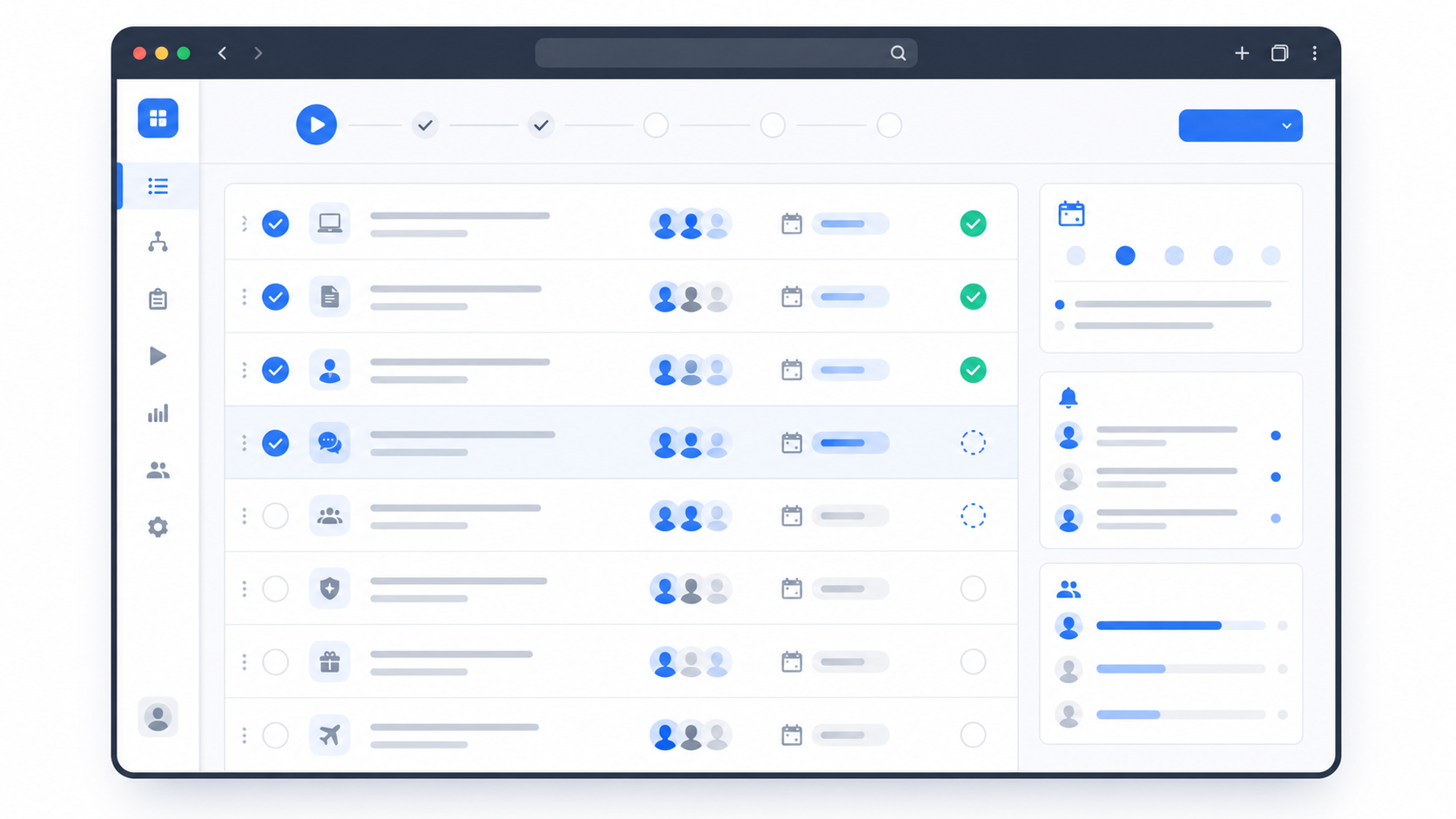
Your employee onboarding documentation is only useful if people can act on it. A static checklist can tell HR, IT, the manager, and the new hire what should happen, but onboarding software turns those steps into assigned work with due dates, approvals, reminders, and a live record of completion.
Process Street is a Compliance Operations Platform for recurring work like remote onboarding. Docs keeps SOPs and onboarding policies governed. Ops turns those policies into automated workflows with role assignments, stop tasks, conditional logic, approvals, and automations. Cora, the AI compliance agent, helps teams monitor process health, spot gaps, and improve execution over time.
For remote onboarding, that means every new hire can move through the same approved workflow while each stakeholder sees exactly what they own. HR can confirm paperwork, IT can track access setup, managers can schedule check-ins, mentors can record touchpoints, and leadership can see whether the process is working without chasing status updates.
Here are some Process Street features that help remote onboarding stay consistent:
- Dynamic due dates to keep pre-boarding, first-day, and follow-up tasks on schedule;
- Stop tasks to make sure critical steps happen before the workflow moves forward;
- Approvals for sign-offs on equipment, access, policy acknowledgments, or manager reviews;
- Conditional logic to personalize onboarding by role, department, location, or employment type;
- Role assignments so HR, IT, managers, mentors, and new hires each get the right tasks;
- Automations to reduce manual handoffs across the tools your team already uses.
Taking your employee retention to the next level
Remote onboarding is not a one-day orientation. It is a managed process that starts before day one, carries through the first weeks, and keeps new employees connected, trained, and clear on expectations.
The strongest remote onboarding programs are repeatable without feeling impersonal. They give every new hire the same reliable foundation while leaving room for managers, mentors, and teammates to build real connection.
Use the practices above to turn onboarding from a scattered set of tasks into a workflow your team can run, improve, and prove every time.
The post 10 Remote Onboarding Best Practices to Skyrocket Productivity and Retention first appeared on Process Street | Compliance Operations Platform.


0 Commentaires