Most people meet AI through a chat window. They type a question, read an answer, and go do the work themselves. That experience is now the default mental model for what AI is. It is also the reason the term “AI coworker” gets used loosely and lands flat. A coworker is not a chatbot that got smarter. It is a different kind of thing doing a different kind of job.
Start with what a coworker actually is in a company, before any of it is artificial. A coworker is a member of the team. They talk to other people on the team. They talk to customers. They move between the systems the business runs on, the CRM, the inbox, the billing tool, the internal dashboards, and they reach outside the company too, to a vendor portal, a partner, a government filing site. They use the same software everyone else uses. And critically, they own outcomes, not keystrokes. You give a colleague a result to deliver, not a list of buttons to press.
An AI coworker is built to fit that shape
An AI coworker is built to fit that same shape. It participates in the team rather than waiting in a separate window. It can pick up a thread in Slack, hand work to a person and take work back, and answer a customer in the channel the customer already uses. It signs into the tools your team signs into and operates them. It carries the context of who your customers are and how your company does things, and it holds that context across days instead of forgetting at the end of a session. The conversation is one surface it can use. It is not the boundary of what it can do. This is the line between today’s applications of AI and the next one.

Set that next to a chatbot
Set that next to a chatbot and the line is clear. A chatbot is a single interface you drive. Every action runs through you. It tells you the email it would send; you send it. It describes the report it would build; you build it. It is genuinely useful, and it is also sealed off from your real systems by design. Nothing it produces becomes real until a person carries it across. A coworker is the opposite arrangement. You hand it the result, and it works across people, customers, and systems to produce that result, the same way a new hire would. A coworker also stays inside a shape, which is why agents do not improvise well outside one.
The hard part is not intelligence. It is trust
That difference changes the problem you have to solve. With a chatbot, the question is whether the answer is good. With a coworker, the answer being good is the easy part. The hard part is trust. The moment software can act inside your real systems, talk to your real customers, and change records that matter, “is it smart enough” stops being the interesting question. “Can I trust it to operate here” becomes the whole game. A chatbot never raised that question, because a chatbot was never holding anything.
Trust is a structure you build
Here is the part most definitions skip. Trust is not a property of the model. It is a property of the structure the model works inside. We already know how to extend trust to a new team member, because we do it every week with people, the same way a good AI onboarding curve works. You do not hand a new hire your admin credentials and wish them luck. You give them a defined job. You tell them which steps they can complete on their own and which ones stop for a review. You let them earn the parts that can break something, one approved step at a time. Trust is a structure you build, not a feeling you grant on day one.
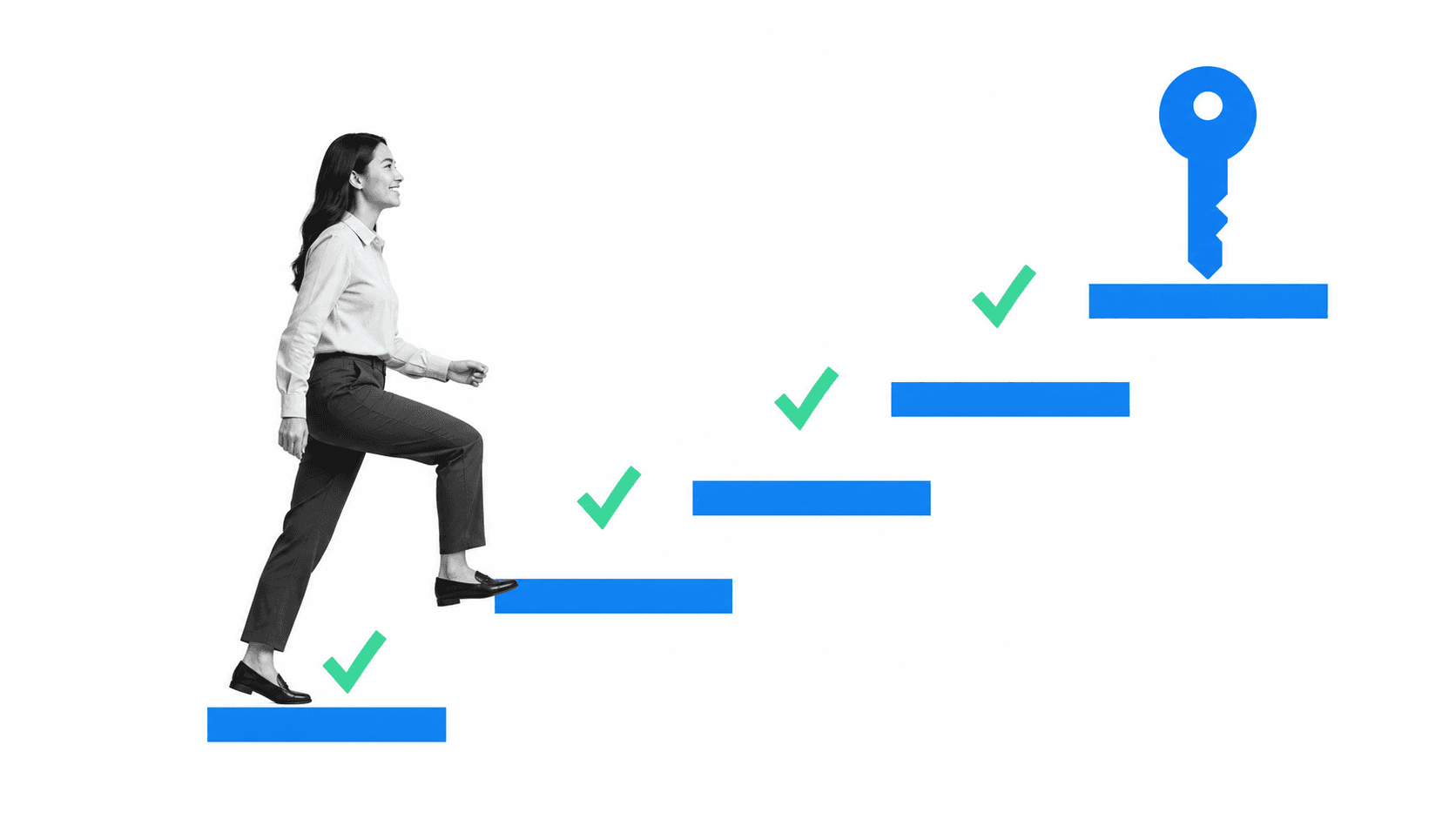
A real AI coworker works the same way. It runs inside a defined shape: the steps it follows, the points where it pauses for a human before it does something it cannot take back, and the record it leaves of what it did and why. That structure is what turns raw capability into a teammate you can rely on, and it is the same idea behind any well-built workflow automation with checkpoints and automations. Without it, you do not have a coworker. You have a fast, confident system with access to your business and no rules about how to use it.
Two questions that cut to whether it is real
So when someone tells you they have built an AI coworker, two questions cut straight to whether they have. What can it do across your team, your customers, and your systems without a person carrying every action? And where does it stop and check with a human before it does something irreversible? A chatbot has no answer to either, because it was never trying to. A real coworker has a clear answer to both.
The chatbot showed everyone what the technology can say. The coworker is what happens when it gets a real job, real access, and the structure to handle both.
The post What Is an AI Coworker, and How Is It Different From a Chatbot? first appeared on Process Street | Compliance Operations Platform.


0 Commentaires