
The Great Resignation made the war for talent impossible to ignore. The 2021 spike in quitting has cooled, but the underlying challenge has not disappeared: employees still compare employers on flexibility, manager support, development, workload, compensation, and whether work feels worth the tradeoff. In May 2026, the the May 2026 JOLTS analysis from Indeed Hiring Lab noted that the quits rate held at 1.9%, well below the peak but still large enough to expose weak retention systems.
In this post for Process Street, we will explore why the talent war still matters and how your business can retain people, improve employee experience, and onboard top talent without relying on last-minute hiring heroics.
- The Great Resignation: Causes & effects
- How companies can win the talent war
- 1. Benchmark your real talent competitors
- 2. Build flexible work with clear operating rules
- 3. Offer rewards people can actually use
- 4. Make culture operational, not aspirational
- 5. Automate the work that makes jobs harder
The Great Resignation: Causes & effects
The need to reduce the spread of COVID-19 pushed companies to adopt remote work tools faster than many leaders expected. Employees gained flexibility, more time with family, fewer commutes, and a clearer view of which work practices helped or hurt their lives outside work. Returning to rigid in-person expectations meant giving up those benefits, and many people were unwilling to do that.
At the same time, low wages, limited benefits, burnout, weak manager support, and poor communication made employees more willing to look elsewhere. The Great Resignation was not only about quitting. It was also about employees reassessing the deal they had with work. The strongest employers responded by looking at retention, employee engagement, and operating systems together.
The labor market is more balanced now, but talent risk has shifted rather than vanished. Gallup’s 2026 State of the Global Workplace reports that global employee engagement fell to 20% in 2025, while low engagement carried a major productivity cost. That means companies cannot treat retention as a compensation-only problem. People stay when the work, management system, and culture make success easier.
How companies can win the talent war
Companies first need to explore why turnover has increased or why engagement has weakened. Exit interviews, stay interviews, pulse surveys, manager notes, and workload reviews all help identify where the employee experience is breaking down. There are various ways you can collect information from former and current team members, but the key is to turn that information into operating changes.
Once you understand the pressure points, use the five talent strategies below to improve retention and become a more credible choice for the people you want to hire.
1. Benchmark your real talent competitors
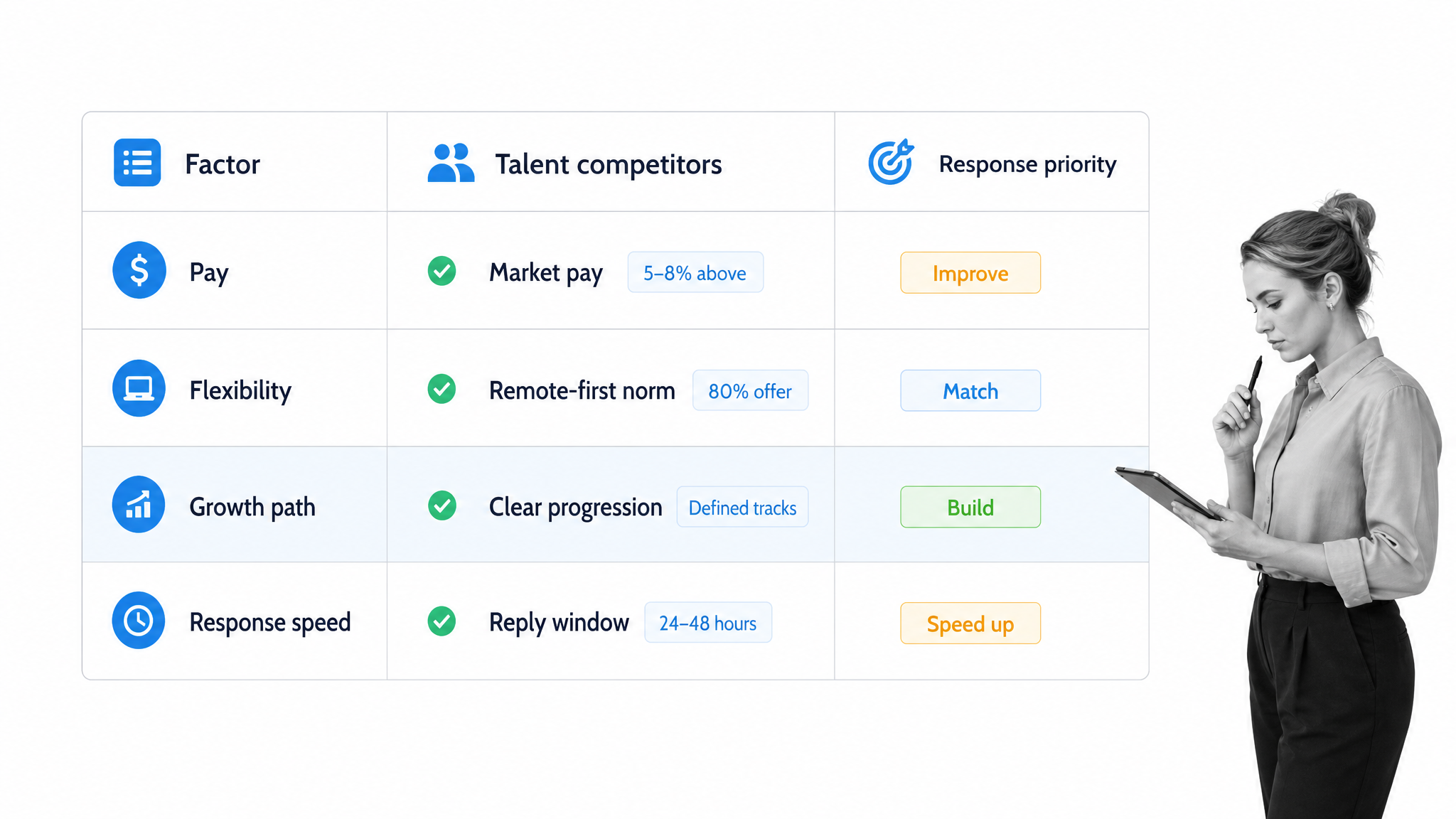
Explore what companies with high staff retention are doing to keep their employees. Your competitors for talent are not always the same companies you compete with for customers. A great operations manager, HR analyst, support lead, or finance specialist may compare your role with remote-first companies, larger employers with stronger benefits, or freelance work that offers more control.
Pay is still important. If you are not paying a competitive rate, it will be hard to keep staff or replace people who have left. But pay is only one part of the employee value proposition. Benefits like insurance, paid time off, employee incentive programs, development opportunities, and manager support all influence where someone chooses to work.
Freelance and independent work also remains a credible alternative for skilled employees. Upwork’s 2026 freelancer income data points to meaningful earnings for skilled freelancers, which means traditional employers need to compete on autonomy and quality of work, not just salary.
Build a simple benchmark table for pay, flexibility, benefits, career progression, response speed during hiring, and manager quality. Then decide where to match the market, where to exceed it, and where to explain tradeoffs honestly.
2. Build flexible work with clear operating rules
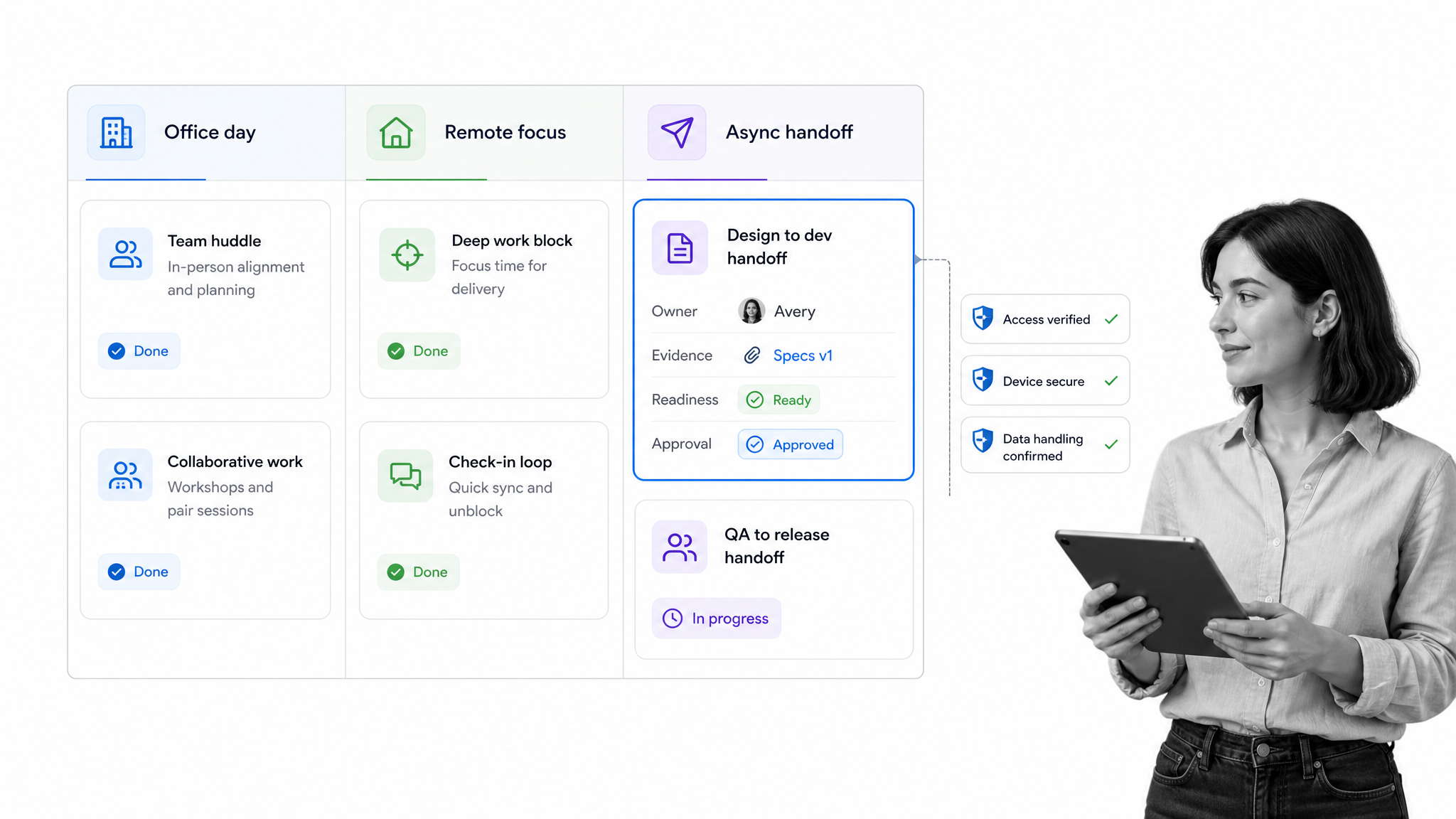
Work flexibility and the ability to work from home became benefits many individuals could not give up. A hybrid work model can boost satisfaction because it combines the needs of the employee and the employer, but flexibility only works when the operating rules are clear.
Again, remote work can shrink commuting costs and create flexibility for the worker. Staff can more easily handle appointments, family responsibilities, and a healthy work-life balance. The risk is that unclear expectations can make hybrid work feel chaotic.
Set standards for meeting hygiene, async handoffs, decision records, response-time expectations, equipment, and secure access. If you choose a hybrid or remote model, be sure to implement safeguards that protect business networks and private employee data. Verizon’s 2026 Data Breach Investigations Report highlights vulnerability exploitation as a major breach pattern, so hybrid teams need documented security habits, not informal reminders.
You can add this free Network Security Audit checklist to identify vulnerable spots in your security:
3. Offer rewards people can actually use
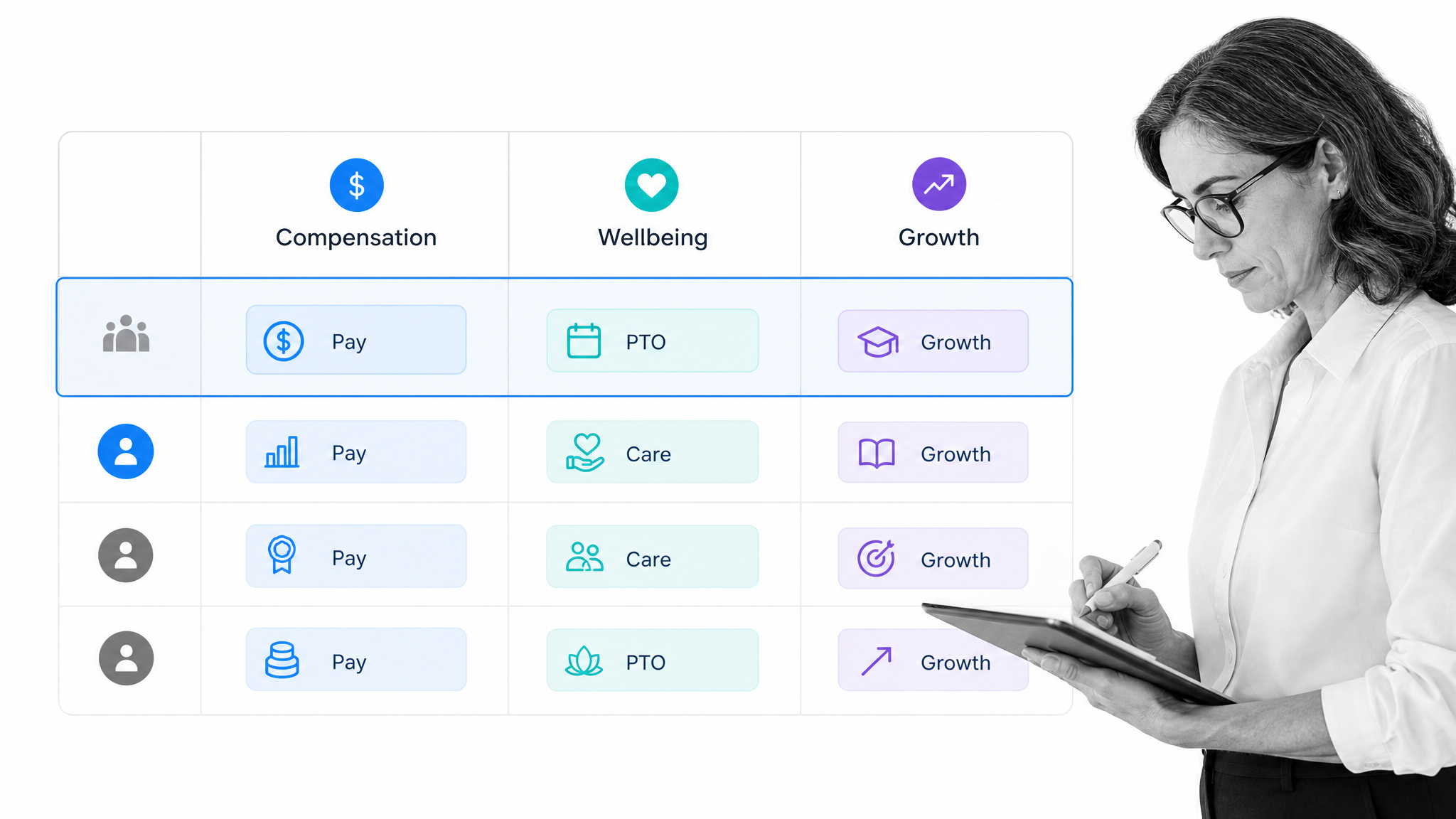
It is paramount to pay staff competitive wages and provide insurance benefits, but this is not the only way to support employee satisfaction. Ask yourself what value your employment provides prospective team members beyond a paycheck. Health coverage, PTO, flexible schedules, mental health support, childcare support, learning budgets, and wellness programs all matter more when they match the needs of your actual workforce.
Health insurance is one way to reduce the personal stress employees may experience. A comprehensive plan may be more appealing than one with less coverage, but if you can offer a variety of options, employees can choose what best suits their needs. Plans that include services like vision, dental, and mental health coverage can also support day-to-day productivity.
Paid time off is another way to attract and keep employees. In the case of unforeseen circumstances, workers are able to maintain their income. PTO also allows staff a chance to take a break from work as a way to avoid burnout. Overall, it can show you respect and value your staff members.
The next perk that will keep you competitive in the current job market is employee incentive programs. People want to know and feel that they are valued, and you can work toward that goal with incentives. Bonuses, lunch days, peer recognition, learning stipends, and small gifts can all express appreciation when they are fair and consistent.
This Employee Satisfaction Survey will give you a good read on how your employees feel about their roles:
Competitive rates and benefits are crucial factors that potential employees seek during their job hunt. Businesses that lack either are in jeopardy of both high turnover and difficulty filling positions. The most effective reward programs are easy to understand, available to the people they are meant to help, and reviewed regularly as employee needs change.
4. Make culture operational, not aspirational
Another aspect of gaining productive employees is cultivating a positive environment. In your search for workers, it is vital to consider carefully who you will choose to fill a role. Sometimes you may find a talented employee, yet their attitude creates a poor environment that stifles team morale.
The people who run your business must be able to operate as a team. No one wants to be surrounded by a negative atmosphere. Think about how you approach conflict as a company, how decisions are communicated, and how sustainable communication practices show up in daily work.
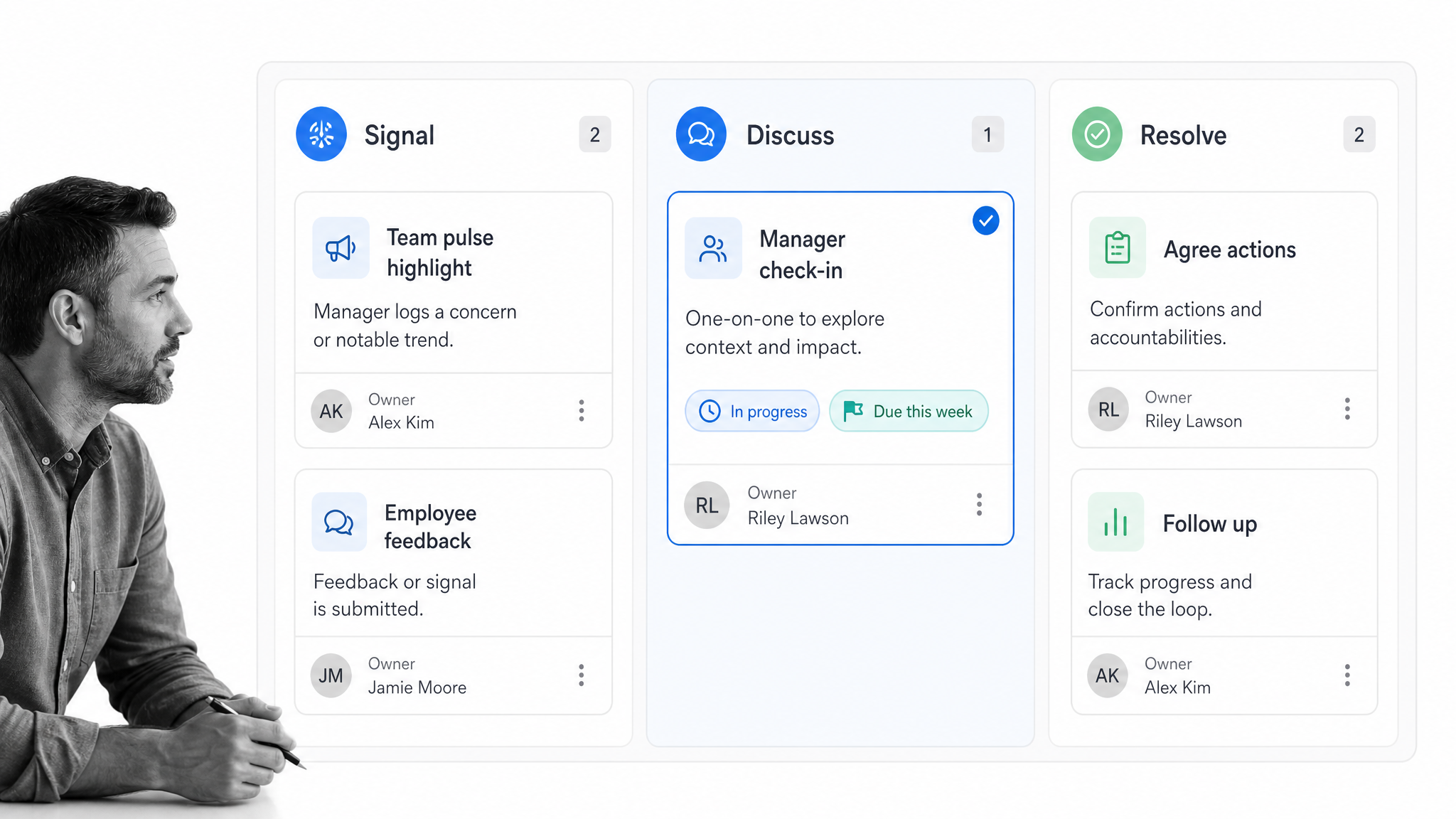
Culture becomes real through routines: manager one-on-ones, decision logs, escalation paths, peer recognition, onboarding check-ins, and feedback loops. Perpetual disagreements are off-putting and create a negative work atmosphere. Staff may decide to change jobs due to internal conflicts and a pessimistic setting.
Managers play a crucial role here. Employees should be able to approach their bosses for aid when they are inundated with too many tasks. Leaders also handle problem-solving when broken tools, interpersonal conflicts, and missed deadlines contribute to stress. Give managers templates, escalation paths, and time to coach instead of expecting culture to survive on slogans.
5. Automate the work that makes jobs harder
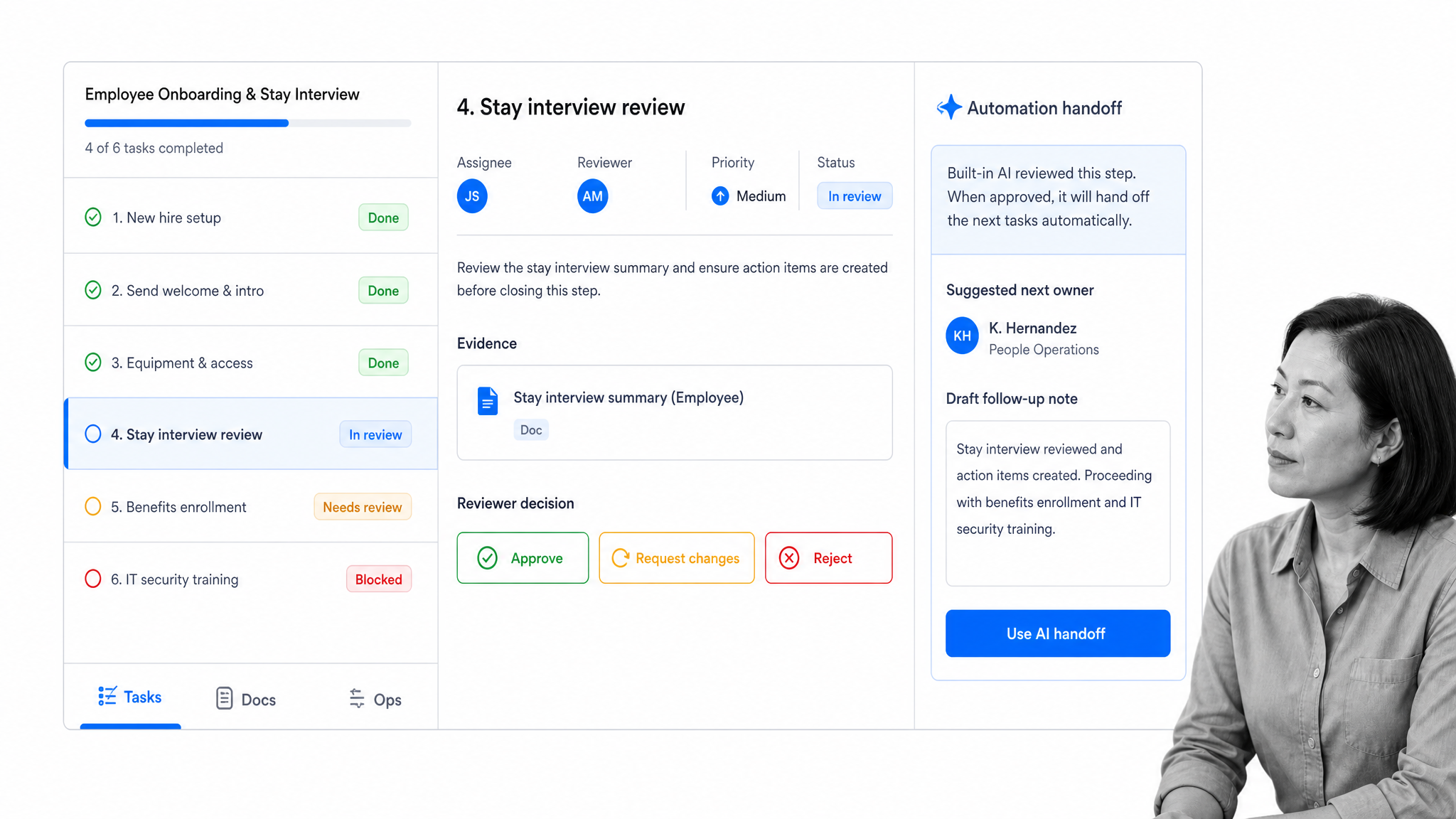
Without adequate management and the right tools, team members can become overwhelmed, cause mistakes, and lower output. Streamlining operations can simplify tasks, making jobs easier to manage.
There are many tools and services that can help in this process. Automation can eliminate tedious tasks like repetitive status updates, approval chasing, mass emails, FAQ chatbots, and inventory management handoffs. Try to find a respectable amount of work for staff: not too much and not too little.
Process Street helps teams run this kind of work as a Compliance Operations Platform: one product with Docs for capturing how work should happen, Ops for executing recurring workflows, and built-in AI for accelerating reviews, handoffs, and routine process decisions. That combination is useful for talent strategy because retention depends on day-to-day clarity as much as big HR programs.
For example, an employee onboarding process can assign owners, collect evidence, standardize IT and benefits handoffs, and trigger follow-up steps before a new hire is left waiting. Stay interviews, performance check-ins, security reviews, and manager escalations can follow the same pattern.
Key takeaways
Recent staff losses and labor shortages showed how quickly weak retention systems can affect a business. Remember, your staff members have lives outside of work, and more people are choosing occupations that allow them to live a life rather than merely get by.
People want to reduce the stress in their lives, and work can be a major contributor to that pressure. Competitive wages and benefits like health insurance can decrease stressors experienced outside the workplace, while proper management, a healthy workplace environment, and better tools can lessen the strain employees feel while at work.
A combination of competitive rewards, flexible work rules, operational culture, strong onboarding, and recurring process automation will help you become one of the success stories of businesses improving employee retention and onboarding.
The post 5 Factors That Will Help Your Company Win the War for Talent first appeared on Process Street | Compliance Operations Platform.


0 Commentaires