Business risk is any event, condition, or decision that can stop a company from meeting its objectives. The risk may start inside the business, with people, systems, customers, competitors, or controls, or outside it, with disrupted supply chains, extreme weather, climate transition, and ecosystem loss.
Managing business risk means identifying exposure early, assessing likelihood and impact, assigning an owner, choosing a response, and collecting evidence that the control worked. This guide covers six direct business risks and the 3 main threats that can cascade through climate and nature. It also explains how you can manage each risk through controlled execution.
A phone notification announcing a market shock in March 2020 was a blunt reminder that a low-frequency event can become an operating crisis overnight. The lesson is broader than one pandemic: risk management cannot predict every event, but it can make the response faster, clearer, and more controlled.
Confront business risk with a risk management process
Without beating around the bush, I want to present Process Street’s Risk Management Process, ready for you to use right now for free. You can sign up to Process Street here, and access our Risk Management Process today.Business risk definition and why risks need to be identified
Business risk is concerned with lowered profits and business failure, identifying factors that could contribute. Anything that could cause a business to miss its targets or goals is considered a business risk. Before we look into the 2020 Global Risk Report results, I will identify smaller-scale business risks that you need to be aware of. I will present these risks alongside valid risk response strategies, to illustrate the process of risk management from risk identification and onwards.Business risk #1: Employee sickness

Business risk #2: Unhappy customers
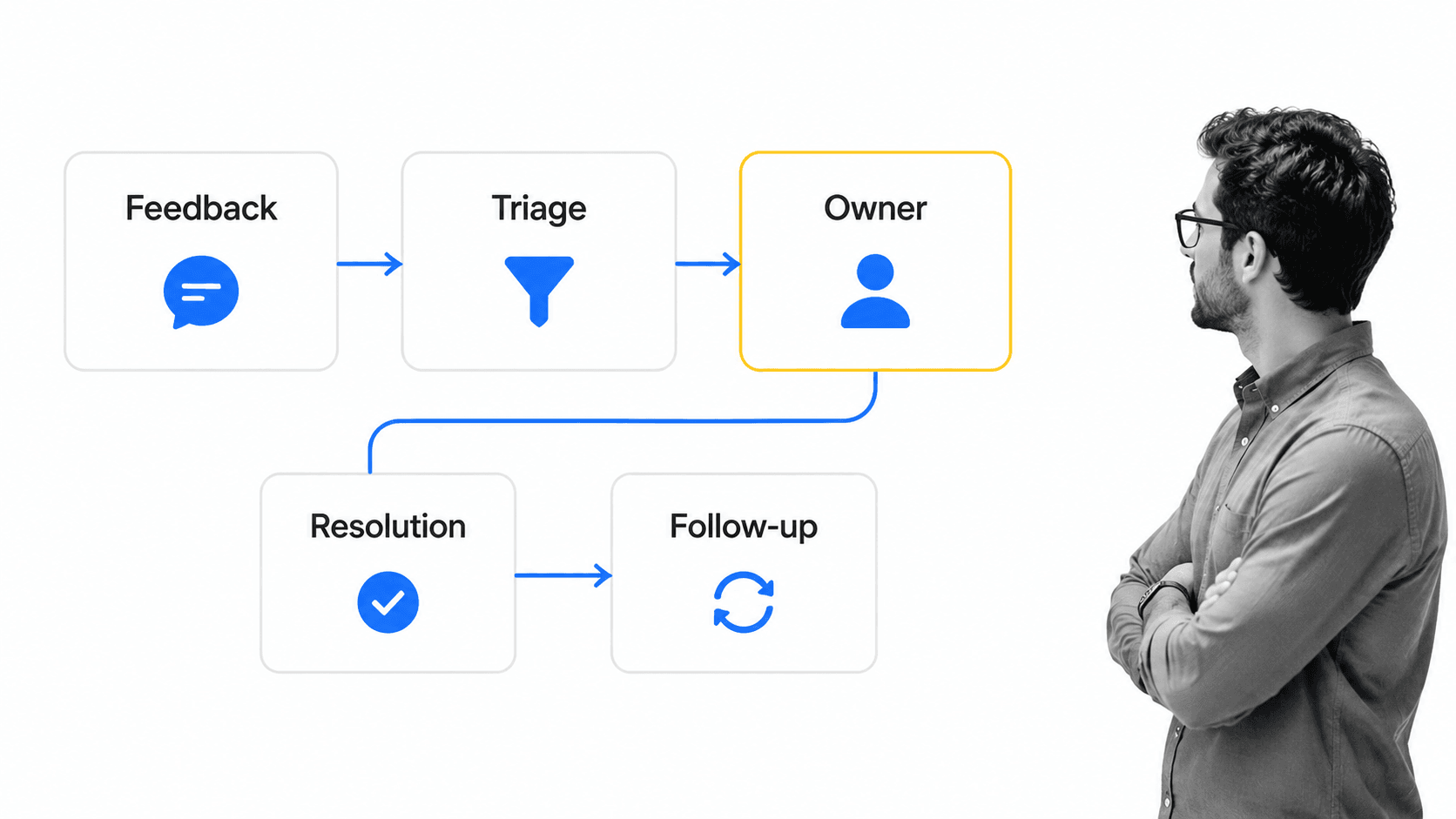
Business risk #3: Competitors ♂️
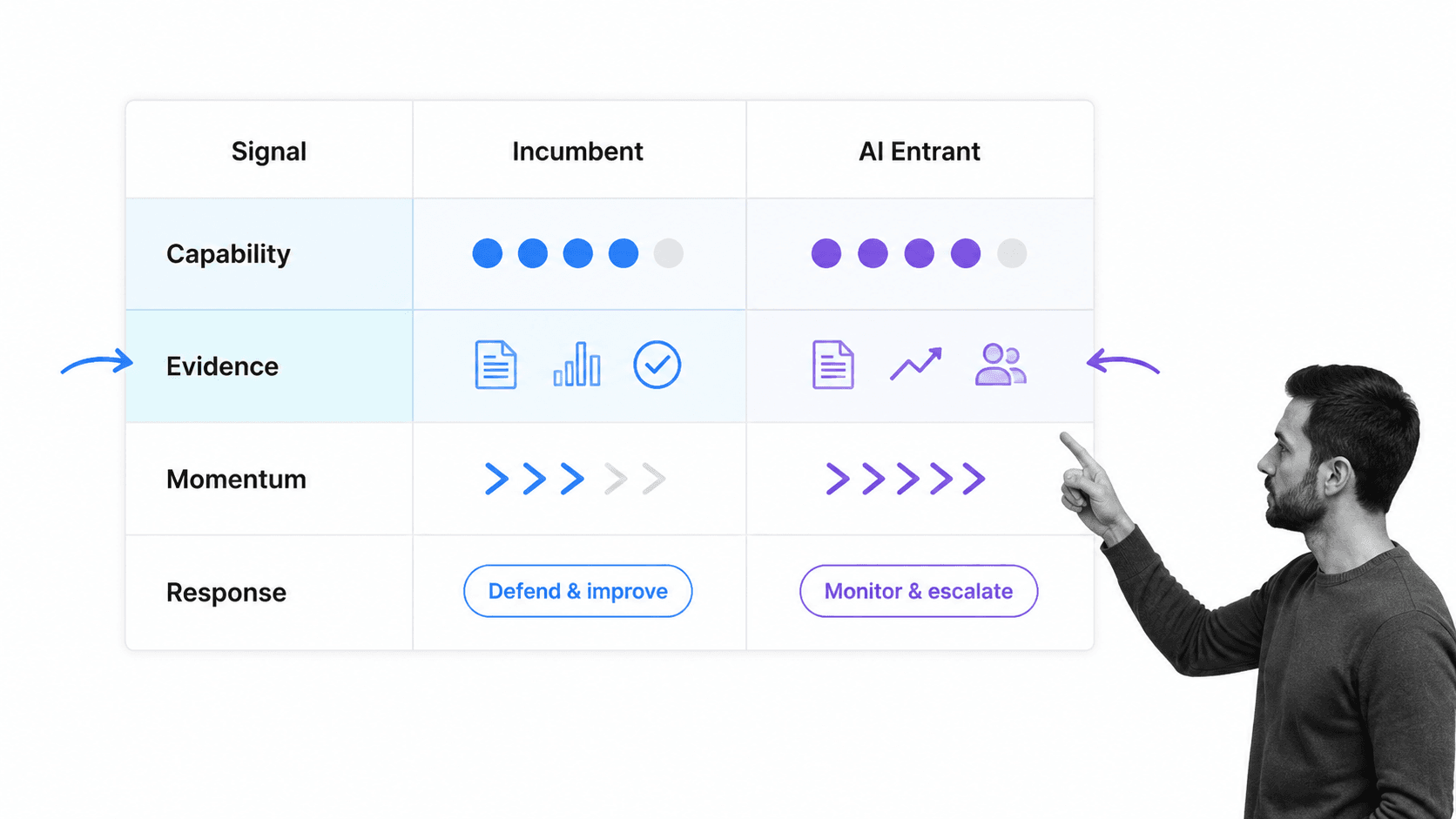
Business risk #4: Disruptions
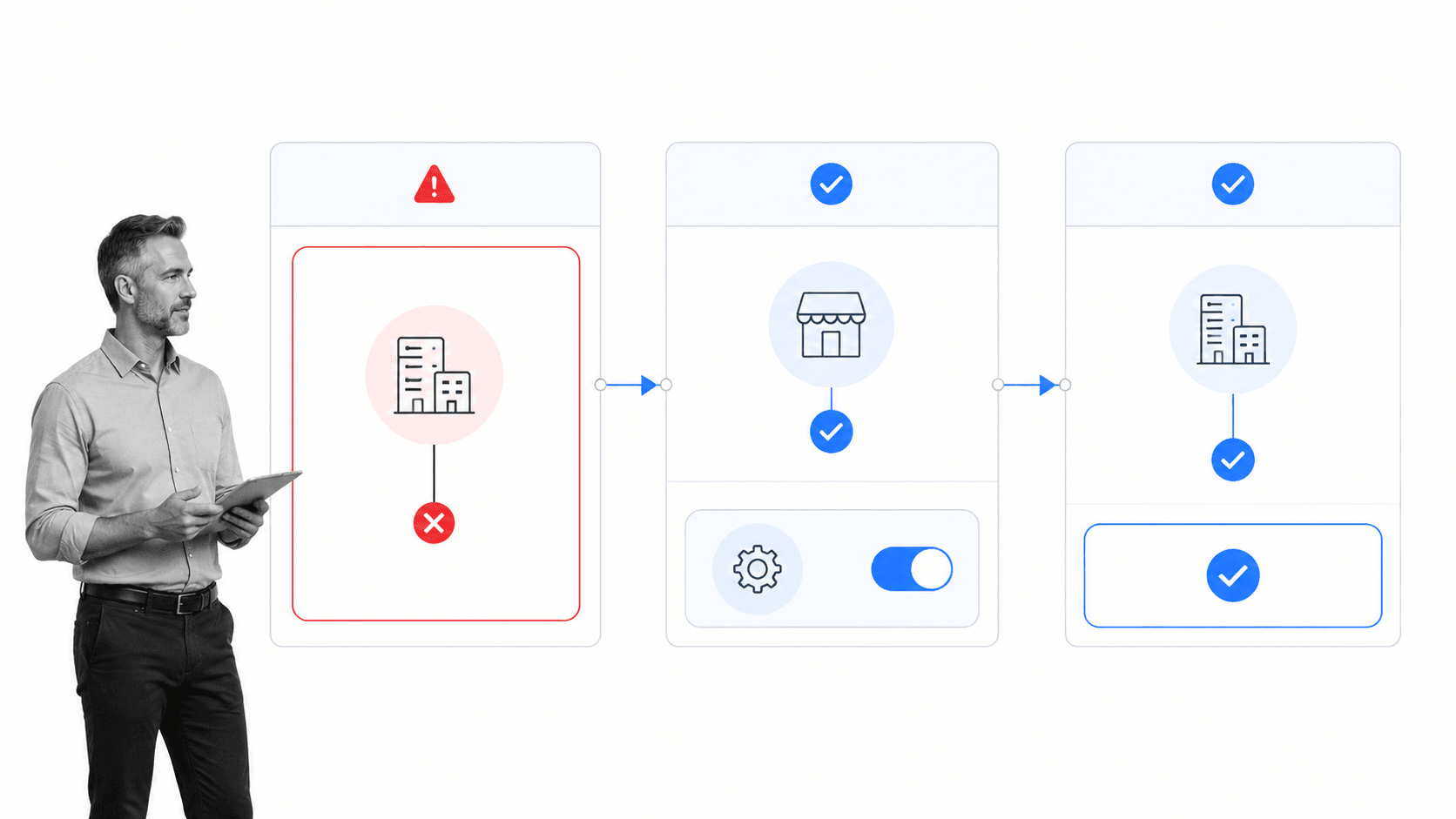
Business risk #5: Cybersecurity risks
Business Risk #6: Compliance risks
Use an effective risk management process with an actionable response
For ultimate risk management and control, best practice includes running an effective risk management process for risk identification and review, like our Risk Management Process checklist provided above ⬆. During the risk management process, you will ask what processes need to be in place as a risk response strategy? I have provided examples of risk response strategies by detailing some of Process Street’s checklists alongside the identified risk items. You can create any checklist to document, refine and adapt your risk response strategy with Process Street for free. Moving on from these local acting risks, we stand back to observe the big picture. We are concerned with risks operating on a global scale, which have rippling effects on the country, region, business, and consumer economics.Global business risks from the World Economic Forum
The Global Risk Report is an annual study, published by the World Economic Forum. The report describes yearly changes occurring in the global risk landscape by surveying top business, governmental and non-profit leaders. Painting this risk landscape for the year 2020, without the knowledge of what was to come, the report ranks various risks and provides detail for each. Considering impact alongside likelihood the report details the top 3 risks to our economy:- Extreme weather ⛈
- Climate action failure
- Biodiversity loss
What is a risk management process and how do we use it?
A risk management process is a set of steps taken to identify, monitor and manage potential risks for the negative consequences to be minimized. The aim of risk management is for a company to only take on risks that will help goal attainment, whilst keeping other risks under control. Taking this concept, and aligning it alongside the 2020 Global Risk Report results, we understand the report’s top 3 risks need to be confronted for any business to bloom. For this, you need a succinct risk management process, one that can be stringently followed, adapted and enforced. Like our already mentioned Risk Management Process checklist. You can use our Risk Management Process checklist to define your action plan; to safeguard your business against the imposing environmental risks engulfing our economy today. Click here to access our Risk Management Process.Reviewing the Global 2020 top 3 risk items using Process Street’s Risk Management Process
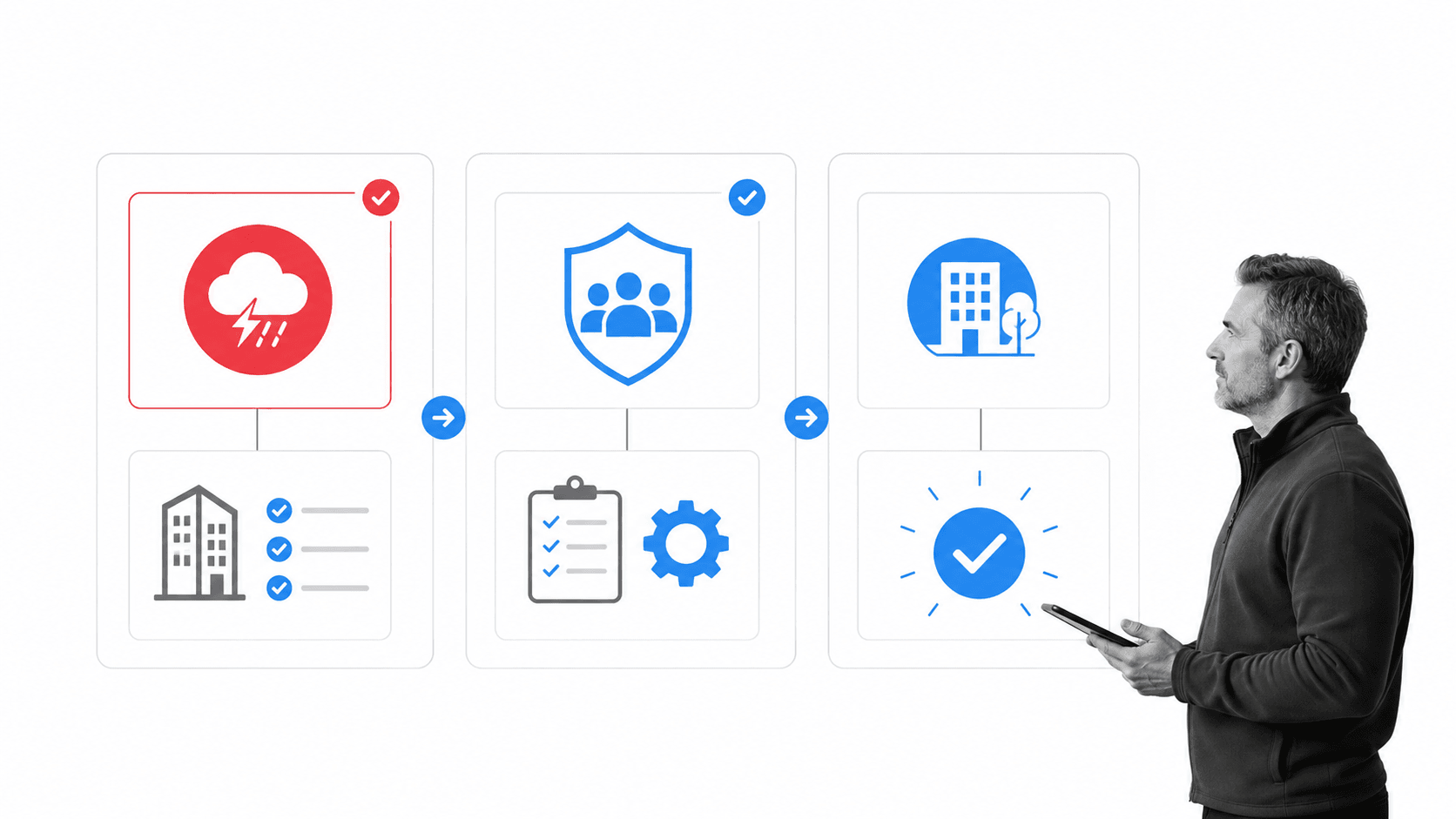
Under task 9: Identify Risks, to re-cap, your 3 risks to be addressed are:- Extreme weather ⛈
- Climate action failure
- Biodiversity loss
- Risk Mitigation: What It Is and How to Implement It (Free Templates)
- The Ultimate Risk Management Guide: Everything You Need to Know
Incorporating the Global Risks Report 2026 results within your risk management process
The Global Risk Report of 2020 is one of great significance, foreshadowing a worrying trend. You see, it is the first time in the report’s history that environmental issues comprised the top five risks in terms of likelihood. Extreme weather dethroned weapons of mass destruction from the top spot. Concentrating on the top 3 risk items – regarding likelihood and impact – I will provide the following details:- Cause and economic effect
- What can be done
Risk item 1: Extreme weather, cause, and economic effect ⛈
- June 2019: The greatest June heatwave in European history, with temperatures soaring above 45°C (113°F). The heatwave disrupted the continent’s economic backbone, damaging roads, railway tracks, and other physical structures.
- July 2018 – June 2019: The wettest 12-month period in U.S. continental history, with every state receiving above-average precipitation. The socio-economic impacts of this ripple through. For instance, crop growth significantly slowed during this period.
- June-September 2019: India’s wettest monsoon in 25 years, killing over 1600 people, caused by warmer than usual sea surface temperatures. These more extreme monsoon seasons are causing an economic slowdown of the continent.
- August 2019: The second strongest hurricane on record ravaged the Bahamas, costing the country $3.4 billion.
- August 2019: Hotter and dryer weather threatens our rainforests, Earth’s biodiversity centers. The events of August 2019 slammed this fact into the headlines, with over 7,200 square miles of forest pluming to the skyline in smoke. The G7 offered $20 million to combat the fires.
- October 2019: Typhoon Hagibis roared ashore on Japan’s coastline, killing 98 and costing the economy $15 billion, making it the most expensive typhoon in history. The review paper Tropical Cyclones and Climate Change Assessment: Part I. Detection and Attribution, identified human-caused climate change contributed to the event.
- November 2019: Australian bush fires of intense magnitude caused by an unusual, climate-change driven dry season, burnt 25.5 million acres of natural habitat. The economic cost of these fires is set to exceed $4.4 billion.
- February 2020: Temperature broke the 20°C (68°F) mark in Antarctica, a signal that something different is happening with our climate. Contributing to rising ocean waters, the melting of Antarctica’s ice sheet could cost trillions.
Risk item 2: Climate action failures, cause, and economic effect
An explanation for weather extremes
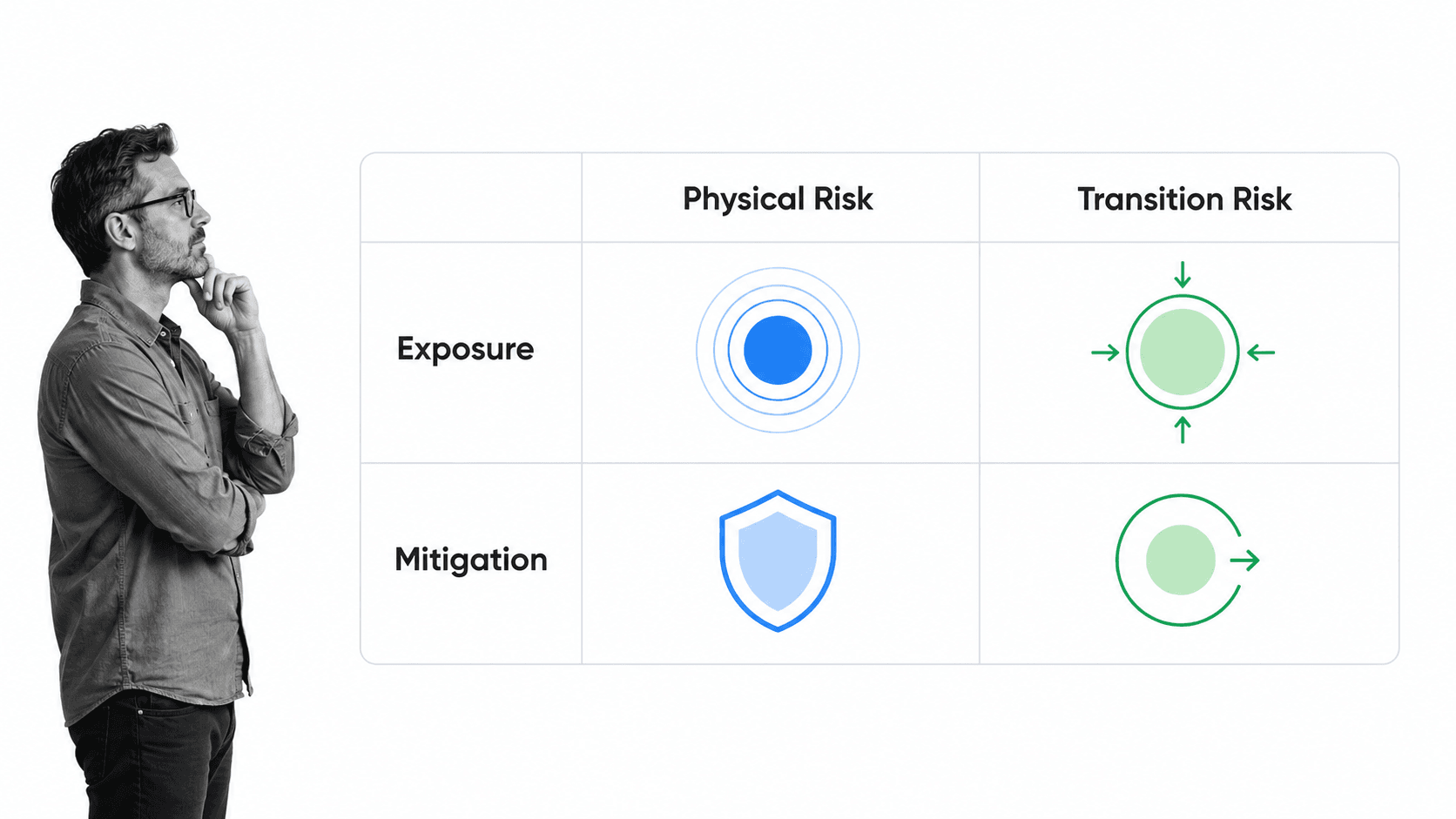
To understand climate change and how it is related to weather extremes, the difference between climate and weather must be understood.- Climate: Climate refers to the conditions remaining in an area, generally over a long time. For instance, Antarctica has a cold, dry climate. The U.K. (unfortunately for me) has a wet, cool climate. The U.S. as a huge continent has a variety of climates, however, the majority is continental with cold winters and hot summers. As the global average temperature increases, this is reflected in the rapid alteration of climates across the globe (climate change).
- Weather: Weather refers to the state of the atmosphere at a particular place and time. One day it could be raining. The next it could be sunny. Weather is directly related to climate, however, when talking about the weather, smaller scales in terms of time and space are being considered.
The economic cost of climate change
The global average temperature has increased around 1°C (33.8°F) since the start of the industrial revolution (1750). The World Meteorological Organization states we are on trend for a further 3-5°C (5.4-9°F of change) increase, the worst-case scenario regarding global warming. According to scientists Yangyang Xu and Veerabhadran Ramanathan, this would be catastrophic not only for our economy but for human existence as we know it. Taking a more optimistic stance, what do you think would happen if we address climate change head-on, with huge investment, research, and innovation? What would our future look like? A lot brighter, and a lot cooler I would say. For instance, a new report led by Microsoft founder Bill Gates, former UN Secretary-General Ban Ki-moon and World Bank Chief Executive Officer Kristalina Georgieva, concluded that investing $1.8 trillion by 2030 in action to climate change would yield $7.1 trillion in benefits. Moving on from this study, we ask: What would climate action success rather than failure look like? A target of 1.5°C (2.7°F of change) was a best-case scenario, set to action climate change and control the impacts to manageable levels. Reaching this goal would signal climate action success. However, according to studies, there is only a 5% chance of reaching this 1.5°C (2.7°F of change) goal, with current installments pushing us past the threshold. Only through infrastructure retirement can we gain a 50% chance of remaining in this 1.5°C (2.7°F of change) temperature limit.Risk item 3: Biodiversity loss, cause, and economic effect
- We need towering forests across 1/3 of the land’s surface to lock away carbon and keep our climate stable.
- We need millions of pollinators, billions of soil dwellers and megatons of plankton to keep the food we eat in supply.
- We need strange plants, buried deep in jungles to supply our medicines.
- We need coral reefs and mangrove swamps to protect our coastlines.
Biodiversity loss and economic impact case study
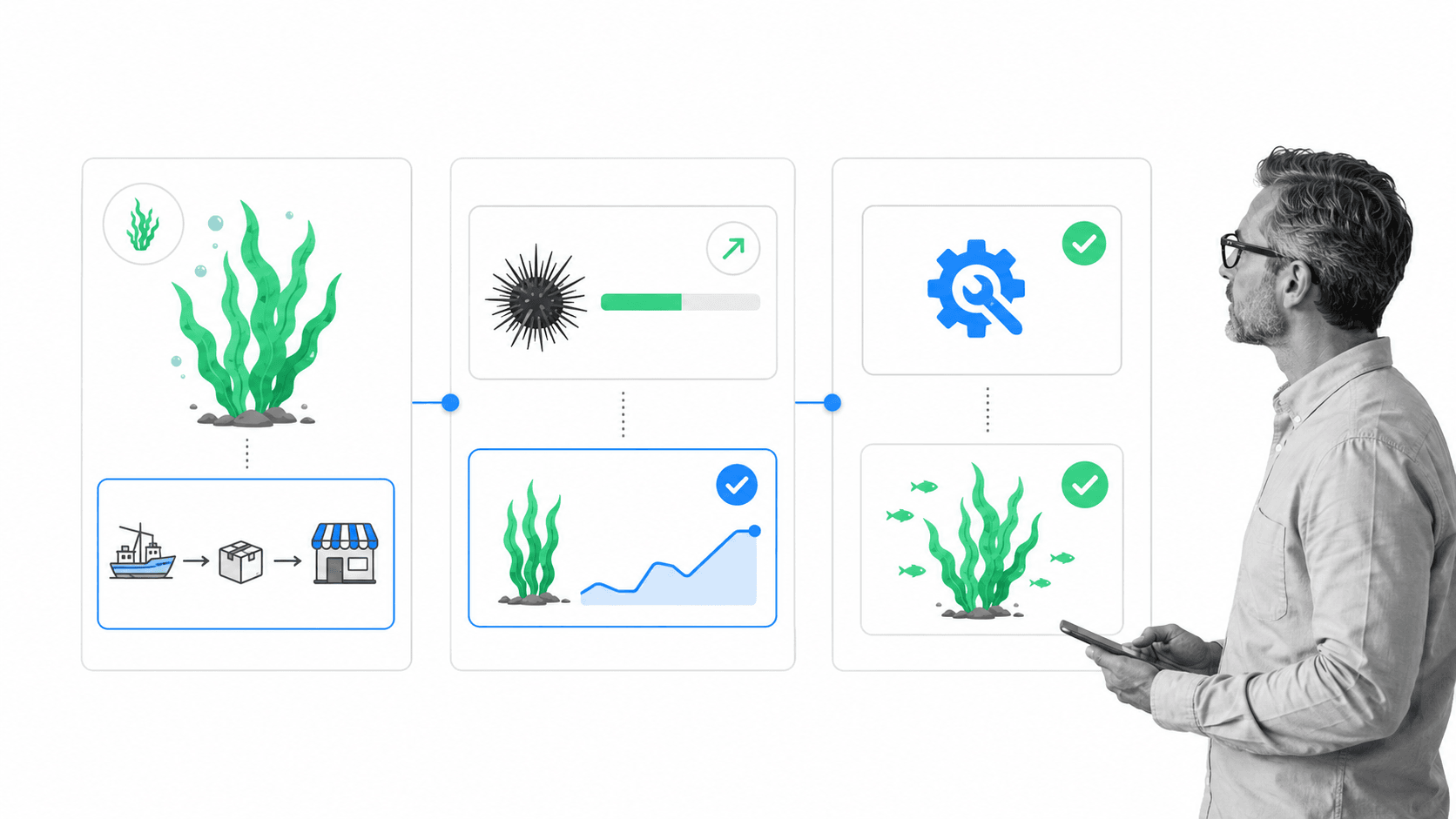
Every ecosystem, every species across our planet is connected. Humans included. I vividly remember the day this was drilled into me. Sitting in a lecture theatre at the age of 21, nursing a bad hangover. Coffee in hand, I was half dazed trying to muster the spirit to listen. This didn’t take much, as the story I was about to be told would instigate an intense unease, fear and drive to do something. Sea lion, seal, and sea otter populations are crashing. Theories were being flung here and there to try and explain these trends. What was causing these populations to decline rapidly? Was it climate change? Was it overexploitation of these species? In truth, no consensus could be drawn. It was an utter mystery. Until one revelation. A proposed cause, that the over-fishing of great whales was the source. Whales are a prime food supply for killer whales. With the removal of this food, killer whales were eating their way down the food chain, targeting sea lions, sea otters, and seals. But the cascading impacts didn’t stop there. Sea otters eat an animal called the sea urchin, meaning with sea otter decline came the rapid expansion of sea urchin populations. Sea urchins eat kelp forests, meaning as sea urchin populations increased, kelp forest expanses began to shrink. All of this because great whales were being overexploited. Kelp forests are a vital source of alginic acid (a chemical compound used in food, textile and pharmaceutical industries), they provide a home for many species of economic importance, are vital carbon dioxide sinks, and are a great source of scientific interest. This case study exemplifies the intricacies of nature, how, like the toppling of domino pieces, one action causes many knock-on effects. There is no separation from a human-created world and the natural world. Whether we like it or not, both worlds are intertwined and dependant. Biodiversity loss adversely impacts our economy. This is inevitable.Why sustainability is part of a good risk assessment
Risk assessments involve the identification of potential hazards and risk factors that could cause harm. Risk assessments are a key stage to your risk management process. The World Economic Forum Global Risks Report 2026 has done the risk assessment leg work for us, identifying 3 risks of utmost concern. Weather extremes, climate action failure, and biodiversity loss are global risks. Despite their global relevance, these risks directly impact business when considering more local scales. Managing these 3 global risks for your business comes down to creating a business that aligns economic, social and environmental needs. That is, you need a sustainability risk management process.Managing business risk through sustainability risk management
Sustainability risk management is a business strategy aligning profit goals and environmental needs, with the aim of efficiency to sustain a business whilst preserving the environment. Utilizing this approach offers a strategic road map to manage your environmental risks, and at Process Street we have detailed this roadmap into our Sustainability Risk Management Checklist. In this checklist, sustainability risk management has been designed as a process, to help you:- Improve awareness and the necessity of sustainability risk management
- Identify sustainability risks and opportunities
- Promote operational efficiencies
- Promote innovation
- Develop a risk management model, policies and guidelines that are company-specific
- Manage sustainability funds
- Integrate sustainability considerations into decision-making processes
- Proactively manage risk and achieve a competitive advantage
- Increase value and innovative capacities
- Move towards sustainable business practices
- Increase environmental, social and financial contributions
- Improve corporate reputation
- Promote corporate social investment, citizenship, and social responsibility
- Stop tasks to ensure task order
- Dynamic due dates, so no deadline is missed
- Conditional logic, creating a dynamic template that caters to your needs
- Role assignments, to ease task delegation within your team
- Approvals, allowing decision-makers to give the go-ahead (or rejection) on important items.
- You will successfully balance and integrate economic, social and environmental performance.
- Fully integrate sustainability-based topics into business strategy, management, and organization at all levels.
- Optimize corporate value.
- Provide reasonable assurance to achieve corporate objectives utilizing the concept of a triple-bottom-line.
- Optimize corporate resources.
- Optimize corporate risk.
Document sustainability risk management with Process Street
Implementing sustainability risk management into your business is easier with documented processes. Documenting processes provides full transparency over your business operations so that they can be stringently analyzed and improved upon for your sustainability targets. Like our Risk Management Process checklist and our Sustainability Risk Management Checklist, you can document any business process in Process Street. For more information on how and why you should document your business processes via checklists read: How and Why to Document Your Workflows. This article explains the benefits documented workflows bring to a business. For more information on how to create checklists using Process Street watch our below video. Because we care about you, society and our planet, Process Street has a wealth of free resources available to assist your sustainable business. To reiterate, a sustainable business is one that considers the environment and society along with the economy. I have listed these resources below:- 12 Inspection Checklists to Maximize Safety in the Work Place
- Office Safety Inspection Checklist
- Hotel Safety Inspection Checklist
- What is IS0 31000? Getting Started With Risk Management
- ISO 45001 Occupational Health and Safety (OHS) Audit
- Warehouse Safety Checklist
- 5 Free ISO 14001 Checklist Templates for Environmental Management
- Environmental Accounting Internal Audit
- Hotel Sustainability Audit
- What is Workplace Diversity? Improving Diversity in the Workplace (8 Free Templates)
- How to Build Better Employee Accountability with Processes
- How to Get, Process and Act on Employee Feedback
- Why You Should Unleash Collaboration and How to Do it
- GRI Standards 101: Foundation 2016 Checklist Template
- GRI Standards 102: General Disclosure 2016 Checklist Template
- GRI Standards 103: Management Approach 2016 Checklist Template
- Environmental Management System (EMS) Implementation Checklist Template
- Economic Sustainability to Success
- Greenwashing: What It Is and How to Stop It (Free Template)
Consider risks acting on both a global and local scale for successful risk management
Risk management connects the big picture to controlled daily work. Geoeconomic shocks, conflict, cyber insecurity, extreme weather, climate transition, and biodiversity loss can all become local through suppliers, sites, systems, employees, customers, and regulatory obligations.
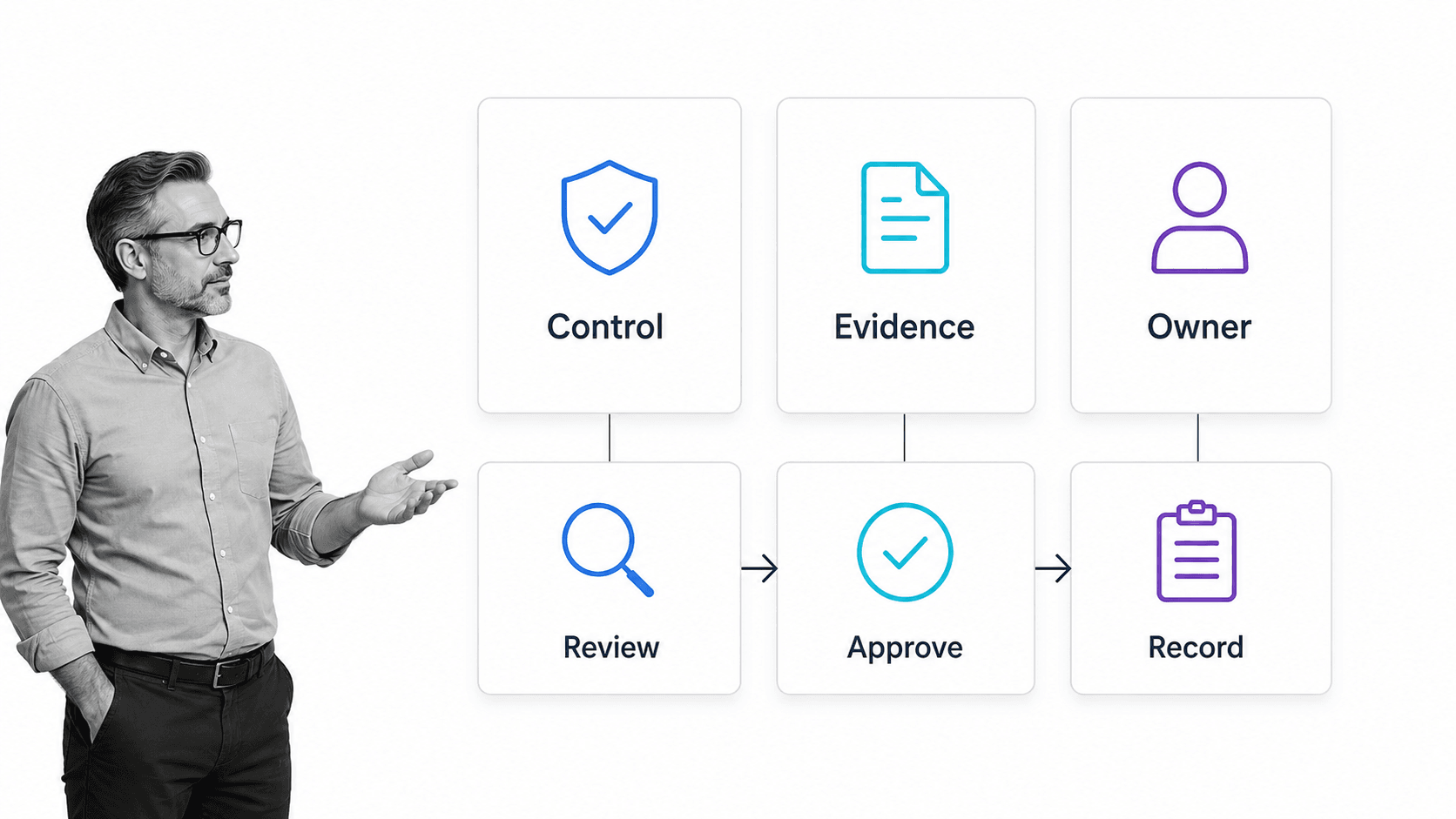
A risk register is useful only when it changes what people do. The most useful risk management tools connect each material risk to a controlled procedure, accountable owner, evidence requirement, approval path, exception rule, escalation threshold, and review date.
Process Street is one Compliance Operations Platform with Docs and Ops capability areas plus built-in AI. Docs gives teams a governed place to author, version, review, and approve policies and procedures. Ops turns those procedures into workflows with assignments, logic, approvals, automations, integrations, and audit-ready records. Built-in AI helps surface exceptions, summarize evidence, and suggest improvements while owners keep control of decisions.
Process Street has direct, universal integrations to 5,000+ systems. Need a new one? An AI agent builds it on the fly. That lets a risk response connect to the systems where finance, HR, security, quality, compliance, and operations already work.
Start with one objective that matters. Identify the conditions that can stop it, assign ownership, choose a response, execute the control, and review the evidence. Then repeat the process at both the local and global scale.
The post Business Risk: The 3 Main Threats to Your Business and How You Can Manage Them first appeared on Process Street | Compliance Operations Platform.


0 Commentaires