Cognitive functions describe preferred ways of taking in information and making judgments. In Jungian type theory, sensing, intuition, thinking, and feeling can each be directed inward or outward, producing eight functions that later informed the Myers-Briggs Type Indicator (MBTI).
At work, these ideas are most useful as prompts for reflection and conversation. They can help teammates discuss communication, feedback, planning, and decision-making preferences. They should never be used to decide who gets hired, promoted, assigned to a role, or treated as capable of particular work.
This guide explains Jung’s eight cognitive functions, how they relate to the 16 MBTI types, how to interpret a free open-source personality test, and how to turn the resulting conversation into clearer team agreements.
Most people want a better understanding of themselves and each other, in or out of the workplace. They may want to communicate better, develop social relations, work more efficiently, take on new responsibilities in a current position, or prepare for a completely new challenge. Personality frameworks are attractive because they offer language for questions that otherwise feel complicated.
Presented as a series of weighted questions, a personality assessment returns a type. The apparent clarity can be satisfying, but simplified personality classifications have been debated for as long as they have existed. A result is a snapshot shaped by the answers, the instrument, and the complexities of human behavior. It does not reveal a permanent inner self.
The productive approach is to use these assessments as tools of self-analysis, self-reflection, and process improvement. Take a measured approach and combine the result with examples, feedback, and direct observation. That can help you appreciate differences between teammates and the unique strengths each individual brings without reducing anyone to a category.
Professional working life is a complex social arena. Communication is crucial between teammates, stakeholders, and customers, and different perspectives can create both insight and friction. Cognitive-function theory provides one possible vocabulary for examining those differences. It is useful only when the conversation remains voluntary, evidence-aware, and open to correction.
- What are cognitive functions?
- Why understand cognitive functions?
- Jung’s eight cognitive functions
- MBTI and cognitive functions
- MBTI in the workplace
- A free personality test
- Turning reflection into team practice
What are cognitive functions?
In Psychological Types, Carl Jung proposed that people differ not only in an introverted or extraverted orientation, but also in the psychological functions they tend to prefer. He used the term cognitive functions for characteristic ways of perceiving information and reaching judgments.
Jung’s model combines four basic functions with two attitudes. Sensing and intuition are perceiving functions: they describe ways of noticing and interpreting information. Thinking and feeling are judging functions: they describe ways of evaluating information and deciding what matters. Each can be introverted, directed primarily toward an internal frame of reference, or extraverted, directed primarily toward the outer situation.
Jung believed people were born with a certain inclination, or predisposition for behaving in certain ways. He described distinct aspects of personality through four separate and opposing pairs and argued that one preference would usually prevail. Modern readers should understand that as the theory’s claim, not a settled fact about every individual.
The result is eight function-attitude combinations: extraverted sensing (Se), introverted sensing (Si), extraverted intuition (Ne), introverted intuition (Ni), extraverted thinking (Te), introverted thinking (Ti), extraverted feeling (Fe), and introverted feeling (Fi). Jung treated sensing, intuition, thinking, and feeling as basic psychological functions. Their expression still has to be understood on a case-by-case basis: accumulated data may support astute connections, but no type label explains the whole person.
A preference is not an ability score. People can use every function, and behavior changes with context, role, experience, culture, stress, and development. The dominant-hand analogy is useful: most people can use both hands, but one may feel more natural for certain tasks. Practice can expand the range without changing the fact that a preference exists.
Cognitive functions are not mutually exclusive, and the model is not a decision between either-or abilities. People can learn alternative methods, grow functions that are not predisposed, and act differently depending on the situation. Using a less familiar approach may take more energy and focus, just as writing with a non-dominant hand usually requires more deliberate effort.
Why should you understand cognitive functions?
The practical value is a richer vocabulary for differences that teams already experience. One colleague asks for concrete examples before discussing possibilities. Another wants to explore patterns and alternatives before committing. One person tests a proposal against impersonal criteria; another begins with how the decision affects people and shared values. Naming those preferences can make the disagreement easier to examine.
This does not mean explaining every behavior with a four-letter code. A useful conversation stays close to observable work: What information helps you prepare? Do you want feedback in writing or in the moment? When a decision is ambiguous, which evidence do you reach for first? What kind of deadline or check-in helps you deliver?
Teams are often interdependent and self-organizing. Scrum and Kanban, for example, make work and coordination more visible, but no framework removes the need to listen, clarify assumptions, or resolve conflicting priorities. The current Scrum Guide and Kanban Guide both depend on people using evidence and shared agreements to improve how work flows.
Cognitive-function language can support that work when it invites curiosity instead of labeling. It may help a team notice blind spots, vary how information is presented, or create more than one path for contributing to a decision. The test of usefulness is not whether a description sounds flattering. It is whether the conversation leads to a clearer, fairer, and more effective way of working together.
This article uses the psychological meaning developed in Jungian type theory, not the medical or neuroscientific meaning of cognitive functions such as memory, attention, and executive control.
Jung’s 8 cognitive functions
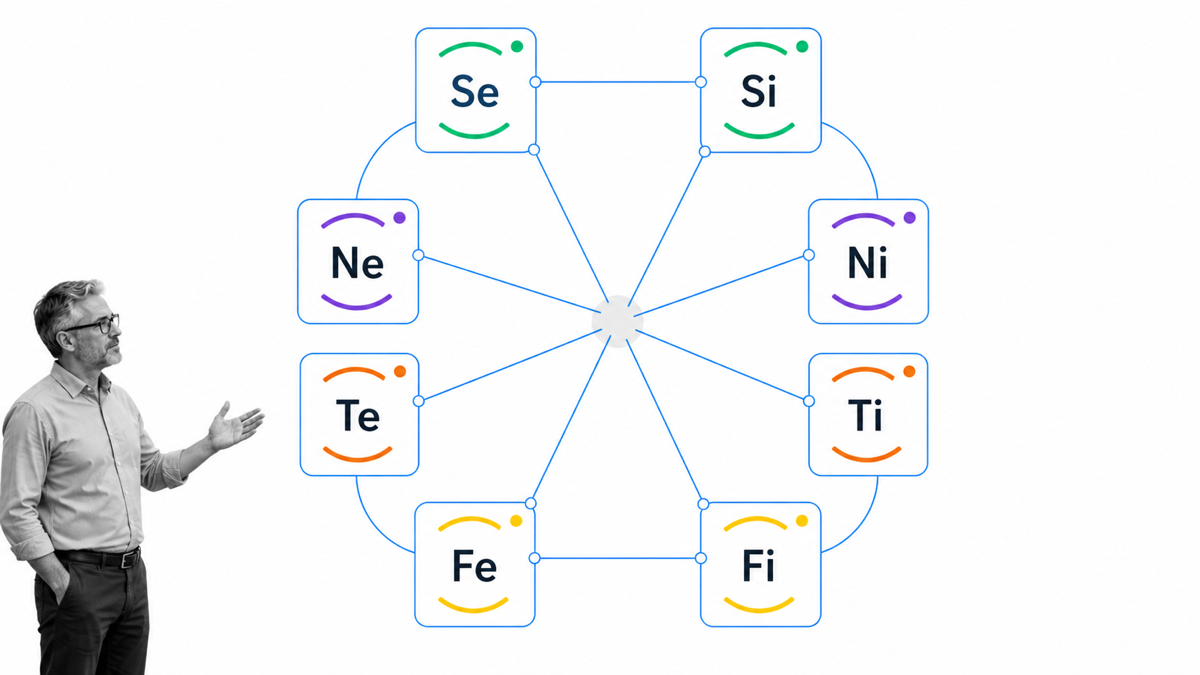
There is a lot to digest, so start with the structure. First ask whether a function is introverted or extraverted. Then ask whether it involves sensing, intuition, thinking, or feeling. Combining the two gives the eight functions below.
In type theory, sensing and intuition are ways of perceiving. Thinking and feeling are ways of judging. The terms do not mean that sensing types lack imagination, thinking types lack emotion, or feeling types cannot reason. They point to a preferred starting place, not a boundary around what someone can do.
Extraverted Sensing (Se)
Extraverted sensing attends to immediate, concrete information in the outer environment. It notices what is happening now, responds to changing conditions, and often learns through direct engagement. At work, Se may show up as quick awareness of practical opportunities, visible reactions, physical constraints, or the details of an unfolding situation.
A team can benefit from that real-time attention during facilitation, incident response, customer observation, field work, or any task where conditions change faster than a static plan. The risk is not inherent to the function, but a team leaning only on immediate data may underweight longer-term patterns.
Introverted Sensing (Si)
Introverted sensing compares present information with stored experience. It notices familiarity, continuity, and specific details, then uses what has happened before as a reference point. At work, Si may appear as careful recall of prior cases, attention to proven procedures, or sensitivity to discrepancies between the current situation and an established standard.
This preference can support quality, continuity, documentation, and dependable execution. It becomes especially valuable when a team must learn from previous incidents or preserve institutional knowledge. Past experience should remain evidence to consider, not an automatic veto on a new approach.
Extraverted Intuition (Ne)
Extraverted intuition scans the outer world for connections and possibilities. It generates alternatives, notices emerging patterns, and asks what else an observation could mean. In a team setting, Ne may appear as energetic brainstorming, reframing a problem, connecting ideas from different domains, or proposing several paths before selecting one.
That breadth can unlock innovation and expose assumptions. It can also create more options than a team can pursue. Pairing exploration with an explicit decision point allows divergent thinking to contribute without leaving every choice open.
Introverted Intuition (Ni)
Introverted intuition synthesizes information into an internal pattern or directional insight. It often focuses on underlying meaning, likely implications, and how a situation may develop over time. At work, Ni may show up as a unifying concept, a strategic hypothesis, or a sense that scattered signals point toward the same future condition.
This long-range pattern recognition can help with strategy and transformation. Because the synthesis may be difficult to explain immediately, it is useful to make the evidence, assumptions, and reasoning visible so others can test the insight rather than accept it on authority.
Extraverted Thinking (Te)
Extraverted thinking organizes the outer environment using explicit criteria, sequence, and measurable results. It asks what works, what the objective requires, and how resources should be arranged to reach it. At work, Te may appear in planning, prioritization, risk management, operating metrics, or a drive to remove inefficiency.
That focus can turn discussion into coordinated action. It is strongest when the criteria are transparent and open to challenge. Efficiency is not neutral if the selected metric ignores human impact, quality, or a constraint that matters.
Introverted Thinking (Ti)
Introverted thinking analyzes information against an internal logical framework. It clarifies definitions, tests consistency, categorizes concepts, and works toward a precise account of how something functions. At work, Ti may appear as careful model-building, debugging, questioning an ambiguous term, or finding an exception that exposes a flaw in the rule.
This precision can improve systems, policies, and technical decisions. A private model is most useful to a team when its assumptions and terminology are explained in shared language rather than left implicit.
Extraverted Feeling (Fe)
Extraverted feeling evaluates situations with attention to people, shared values, and the needs of the group. It notices interpersonal cues and works toward coordination that participants can support. At work, Fe may appear in facilitation, stakeholder communication, mediation, and awareness of how a decision will land across a team.
This social attunement can strengthen trust and adoption. Harmony alone is not the goal, however. A healthy team also makes room for dissent, evidence, and uncomfortable information that protects the group from a poor decision.
Introverted Feeling (Fi)
Introverted feeling evaluates information against deeply held personal values and an internal sense of authenticity. It asks whether an action is congruent with what matters and whether a choice respects the people affected. At work, Fi may appear as principled advocacy, sensitivity to individual experience, or resistance to a decision that violates an important value.
This perspective can reveal ethical or human consequences that a purely instrumental analysis misses. Because personal values are not always visible, explaining the principle and the practical concern helps teammates understand the objection without demanding that everyone share the same internal response.
Function roles and development
Later type models arrange functions into a hierarchy, often described as dominant, auxiliary, tertiary, and inferior roles. The dominant function is treated as the most familiar orientation, while the auxiliary balances it with a different mode of perceiving or judging. The lower positions are described as less conscious or less practiced.
These roles are interpretations within type theory, not measurements of cognitive capacity. They are most constructive when they encourage development: a person who prefers analysis can practice attending to group impact; a person who prefers open-ended exploration can practice closing decisions; a person who relies on precedent can deliberately seek evidence that the current situation is different.
The Myers-Briggs personality test
Isabel Briggs Myers and Katharine Cook Briggs developed the Myers-Briggs Type Indicator during the 20th century, drawing on Jung’s type theory. The official history describes how their work translated theoretical preferences into an assessment intended to make type differences understandable and useful. The Myers & Briggs Foundation provides the historical connection.
MBTI results use four letters: E or I for extraversion or introversion, S or N for sensing or intuition, T or F for thinking or feeling, and J or P for judging or perceiving. A result such as INTP summarizes a pattern of reported preferences. It is not a diagnosis, a measure of intelligence, a complete personality portrait, or a prediction of performance.
The four letters and the function stack are related but not identical. Type-dynamics models use the letters to infer which functions are directed inward or outward and how they are ordered. The foundation’s overview of type dynamics and processes explains this hierarchy.
Self-report assessments also have limits. Results depend on how a person interprets each question and how they see themselves at that moment. People near a preference midpoint may receive a different letter on another occasion. Culture, context, current role, and expectations can influence responses. Treat the result as a hypothesis to examine against lived experience, not a verdict to defend.
Research does not support using MBTI type as a strong predictor of leadership outcomes. A 2023 systematic review found that the instrument had limited utility for predicting leadership behaviors and outcomes. That is another reason to keep the framework in the domain of reflection and development rather than selection. See the review indexed by PubMed.
MBTI in the workplace
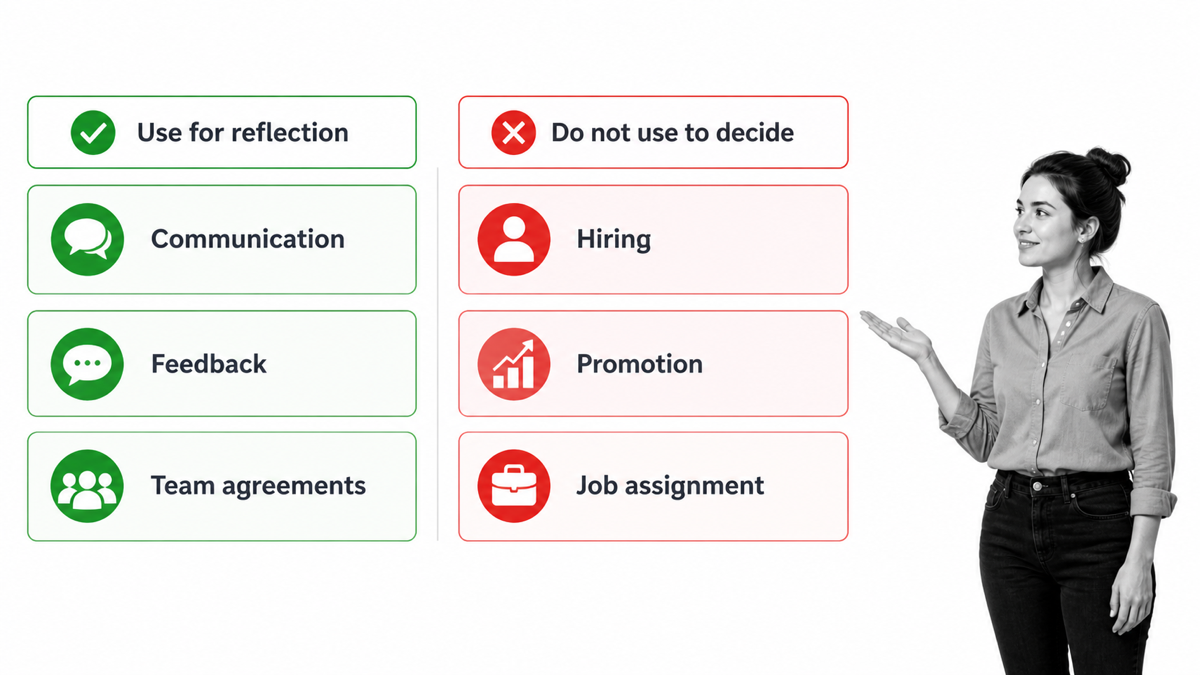
The safest workplace use begins with voluntary participation and a narrow purpose. A team might use type language to discuss meeting formats, feedback preferences, decision pace, conflict, or how people recover energy. The facilitator should make clear that every person is more complex than the profile and has the final say in whether a description fits.
Do not use type results to screen applicants, decide promotion, assign jobs, limit development, or explain away poor treatment. The official MBTI Code of Ethics says results should not be used to counsel a person to or away from a career, or to influence hiring, selection, and assignment. Those decisions require job-relevant evidence, consistent criteria, and accountable human judgment.
The 16 MBTI cognitive function stacks
The following table shows the common dominant, auxiliary, tertiary, and inferior function order used in type-dynamics discussions. It protects the useful mapping without turning a type into a career prescription or a list of fixed traits.
| Type | Function stack | Type | Function stack |
|---|---|---|---|
| ISTJ | Si, Te, Fi, Ne | ISFJ | Si, Fe, Ti, Ne |
| INFJ | Ni, Fe, Ti, Se | INTJ | Ni, Te, Fi, Se |
| ISTP | Ti, Se, Ni, Fe | ISFP | Fi, Se, Ni, Te |
| INFP | Fi, Ne, Si, Te | INTP | Ti, Ne, Si, Fe |
| ESTP | Se, Ti, Fe, Ni | ESFP | Se, Fi, Te, Ni |
| ENFP | Ne, Fi, Te, Si | ENTP | Ne, Ti, Fe, Si |
| ESTJ | Te, Si, Ne, Fi | ESFJ | Fe, Si, Ne, Ti |
| ENFJ | Fe, Ni, Se, Ti | ENTJ | Te, Ni, Se, Fi |
For example, the INTP stack is commonly written Ti, Ne, Si, Fe. In theory, introverted thinking provides the leading drive to understand internal logical structure, while extraverted intuition supports exploration of alternatives and connections. Introverted sensing and extraverted feeling are placed in the lower positions. That sequence is a lens for reflection, not evidence that every INTP will behave the same way.
Likewise, an ESFP stack begins Se, Fi, Te, Ni, and an INTJ stack begins Ni, Te, Fi, Se. The labels summarize different theoretical patterns, but work behavior still depends on knowledge, motivation, opportunity, role design, psychological safety, and the situation in front of the person.
Common descriptions of the 16 types
The brief profiles below retain the familiar workplace vocabulary associated with each type. Read them as hypotheses about possible preferences, not evidence of skill, character, career fit, or future performance. No profile applies uniformly to everyone who receives the same four-letter result.
ESFP (The Performer)
Common descriptions emphasize the following tendencies, but they are prompts rather than predictions.
Fun-loving individuals that work well as part of a team. Very proficient socialites, and see teamwork as an opportunity to interact and engage in a lighthearted manner. Perhaps not as task-driven or efficiency-obsessed as their teammates, but they may be very receptive to the needs of others, and be happy to offer support in whatever way they can.ISFP (The Composer)
Common descriptions emphasize the following tendencies, but they are prompts rather than predictions.
Sensitive and helpful team players who are always seeking opportunities to give back to the team, in practical and pragmatic ways. They take pride in assisting others and providing high-quality support, and may make a point to listen carefully to all feedback given. Very good at cooperation and will have no problem accommodating and adapting to shifting needs of the team. Often prepared with relevant and specific data to aid their fellow teammates with any given problem.ESTP (The Promoter)
Common descriptions emphasize the following tendencies, but they are prompts rather than predictions.
Enthusiastic problem-solvers who love to uncover new resources for practical solutions to hard problems. They perform well under pressure, where their skills of adaptability and action-oriented problem solving shine. may be vocal about their proposals and will jump at the opportunity to break down the actionable steps needed to solve any given problem.ISTP (The Crafter)
Common descriptions emphasize the following tendencies, but they are prompts rather than predictions.
Pragmatic and practical task-masters who could be summarized with the mantra “process over people”. Keen to contribute to a team environment, preferably with actions that will give them immediate results. Very straightforward communicators and skilled at troubleshooting. ISTP individuals may get on with things without the need for team validation; they are one of the less communicative types. Rather than talk about a problem, they’re more likely to jump in and get started with working on a solution.INFJ (The Counselor)
Common descriptions emphasize the following tendencies, but they are prompts rather than predictions.
Creative problem solvers, specifically people problems. They are good at understanding people’s strengths and weaknesses, and as such effective at nurturing and directing human potential. Typically they will observe and focus on processes that involve the group as a whole, and act as a mediator between differing opinions and approaches, to the end goal of drawing out a balanced and unified vision. INFJs prefer harmony, and may have trouble in teams made up of highly contested or conflicting individuals.ENFJ (The Teacher)
Common descriptions emphasize the following tendencies, but they are prompts rather than predictions.
Great motivators, and will facilitate collaboration and inspiration towards a group-oriented vision of progress. ENFJs are effective communicators and mediators, often bridging gaps between opposing priorities and opinions. They are naturally enthusiastic, and may succeed in aligning, engaging, and encouraging individuals with their goals.INFP (The Healer)
Common descriptions emphasize the following tendencies, but they are prompts rather than predictions.
As the name suggests, INFPs are great at support roles and excel at understanding the different perspectives of their team. Effective listeners, they are able to process multiple opposing points of view and are talented at figuring out an imaginative middle-ground that works for everyone. They are adaptive, creative thinkers who are not afraid of innovation, and will be open to consideration of almost any idea, as long as it doesn’t clash too hard with their own personal values.ENFP (The Champion)
Common descriptions emphasize the following tendencies, but they are prompts rather than predictions.
Strongly grounded in their sense of values, ENFPs are charismatic and bold team players with an appetite for innovation. They are inspired by people and their ideas, especially those with an imaginative spark. Open-minded, with little regard for the established way of doing things. Keenly interested in the driving principles behind the ideas of their colleagues, and equally likely to advocate for outside-of-the-box thinking.INTJ (The Mastermind)
Common descriptions emphasize the following tendencies, but they are prompts rather than predictions.
Analytical, strategic, systems-obsessed thinkers. Attention to the fine details of process management, analysis, and improvement. Always striving to optimize, and cut inefficiency out of their processes. They excel at defining goals and aligning these goals with a clear and unified plan of action. Highly logical and rational in their critique of ideas and project proposals, they desire the freedom to make changes necessary to facilitate their supreme agenda of process improvement and optimization. Unsurprisingly, they may feel comfortable in agile positions where flexibility and change is encouraged.ENTJ (The Fieldmarshal)
Common descriptions emphasize the following tendencies, but they are prompts rather than predictions.
Also known as commanders, they are the executive-minded individuals who need to feel in control. Strategic and tactical thinkers with an intuitive sense of what needs to be done, and how, and who needs to do it. ENTJs tend to have a clear, high-level vision of the systems and processes they are involved with. This allows them to understand and identify process improvements more readily than others. Despite the clarity of their ideas, they may not see the value of taking the time to clearly explain their reasoning to others, instead expecting a blind devotion to their superior insight. For this reason, they may clash with individuals who have cause to question their authority.INTP (The Architect)
Common descriptions emphasize the following tendencies, but they are prompts rather than predictions.
Able problem solvers, with a penchant for complex, difficult problems. Their analytical, thoughtful minds attract them to the theoretical and philosophical underpinnings of their teams goals and objectives, and they can be helpful at identifying these key principles and generating innovative ideas. INTPs are skilled at observing existing goals and solutions in order to provide their rational and objective analysis.ENTP (The Inventor)
Common descriptions emphasize the following tendencies, but they are prompts rather than predictions.
Ingenious and innovative, these individuals have an entrepreneurial spirit that drives them to seek new ideas. They are obsessed with the “best” way to do something, and innovation excites them. Needless to say, they are not preoccupied with following rules or implementing established processes. Rather, they see value in the pursuit of difficult problems and in exploring new and uncharted territories.ESFJ (The Provider)
Common descriptions emphasize the following tendencies, but they are prompts rather than predictions.
“Balance” is perhaps the keyword of the ESFJs. They thrive in a team environment and will work towards building an environment of support for themselves and their peers. They place importance on group participation, and will attempt to involve everyone and make sure their needs and voices are validated. ESFJs are at home in a harmonious team environment. As task organizers, they may make efforts to hear from everyone before organizing tasks based on the needs and priorities of everyone involved.ISFJ (The Protector)
Common descriptions emphasize the following tendencies, but they are prompts rather than predictions.
Process-oriented and results-driven, ISFJs are not so much interested in leading as they are driving the group forward through their attention to detail and knowledge of optimizations and process improvements. Effective in supporting their teammates, and receptive to the needs and differences of the individuals around them.ESTJ (The Supervisor)
Common descriptions emphasize the following tendencies, but they are prompts rather than predictions.
With a tendency to take the reins, ESTJs are structural thinkers and good decision makers. Clear and direct with their communication, they are able to deliver objective evaluation effectively. They don’t waste time beating around the bush. Very results-oriented, and invested in the productivity of their team and work environment, they lead by example of hard work and process-driven organizational thinking, expecting others to follow suit.ISTJ (The Inspector)
Common descriptions emphasize the following tendencies, but they are prompts rather than predictions.
Highly task-oriented, ISTJs are goal-oriented and task-driven individuals. Preferring to clarify and define goals in as specific terms as possible, they seek established, proven methods for evaluating their team’s performance. Structured systems and clearly-defined rules are core ISTJ values. They prefer an environment within which everyone has their roles and duties and they stick with those. Highly attentive to details, and effective monitors of compliance and regulatory requirements.Questions for each of the 16 types
Instead of assigning a fixed workplace identity to each type, use its proposed stack to generate questions. The questions below preserve the distinctions behind the 16-type model while leaving room for a person to agree, disagree, or describe a different experience.
- ISTJ (Si, Te, Fi, Ne): Which past examples and operating standards help you evaluate a plan? When would exploring a less familiar possibility improve it?
- ISFJ (Si, Fe, Ti, Ne): Which details from prior experience help you support the group? What emerging possibility deserves attention before the team settles?
- INFJ (Ni, Fe, Ti, Se): What long-range pattern do you see, and how might it affect people? Which present facts would confirm or challenge that interpretation?
- INTJ (Ni, Te, Fi, Se): What future outcome organizes your thinking? Which measurable criteria and current observations should the team use to test the strategy?
- ISTP (Ti, Se, Ni, Fe): How does the system work in practice, and where does the logic break? Who needs context or support before a technically sound fix can succeed?
- ISFP (Fi, Se, Ni, Te): What value or individual need matters in this immediate situation? Which structure would help turn that concern into a durable result?
- INFP (Fi, Ne, Si, Te): Which option best reflects the purpose and people involved? What precedent, constraint, or measurable next step would make the idea workable?
- INTP (Ti, Ne, Si, Fe): Which definition or assumption needs closer analysis? How can the model be explained so the group can examine and use it together?
- ESTP (Se, Ti, Fe, Ni): What can the team learn by engaging with the situation now? Which downstream effect should be considered before acting?
- ESFP (Se, Fi, Te, Ni): What do current conditions and individual needs call for? What simple plan would preserve that responsiveness while moving toward the outcome?
- ENFP (Ne, Fi, Te, Si): Which new connection or alternative feels most meaningful? What evidence, precedent, or execution plan will help the team evaluate it?
- ENTP (Ne, Ti, Fe, Si): Which assumption could be reframed, and what alternative does that reveal? How will the proposal affect shared work and lessons already learned?
- ESTJ (Te, Si, Ne, Fi): Which objective, sequence, and standard should organize the work? Where should the team make room for a new possibility or a values-based concern?
- ESFJ (Fe, Si, Ne, Ti): What coordination does the group need, and which prior experience can guide it? Is there an untested assumption beneath the apparent consensus?
- ENFJ (Fe, Ni, Se, Ti): What shared direction could align the people involved? Which immediate evidence and logical distinctions would make that direction more credible?
- ENTJ (Te, Ni, Se, Fi): What system and long-term direction will produce the desired result? Which present realities and human values must the plan protect?
These prompts are deliberately balanced. They invite attention to the leading functions while also asking about information or judgment that the stack model places elsewhere. The goal is not to make someone perform their type. It is to widen the conversation and expose what the group may be overlooking.
What personality type cannot tell you
A type result cannot tell you whether someone has the knowledge to perform a job, whether they will act ethically, how they respond under every form of pressure, or whether they can learn a skill. It does not replace a work sample, structured interview, validated job assessment, performance evidence, or a candid conversation about expectations.
Type also cannot explain behavior without context. A person may speak little in a meeting because they prefer time to reflect, because the agenda was unclear, because a senior leader dominates the room, because the topic is outside their expertise, or because the environment is not psychologically safe. Jumping to an introversion label can hide the condition the team actually needs to fix.
Be cautious with group summaries. Counting the apparent types on a team may create an attractive chart, but it can make minority preferences more visible than individuals want and encourage managers to treat a model as a staffing formula. Ask what the work requires, then make participation methods broad enough for different people to contribute.
Keep assessment data private and collect as little as possible. A facilitated workshop usually needs reflections and chosen agreements, not a permanent database of scores. Tell participants who can see responses, how the information will be used, whether it will be retained, and how they can participate without disclosing a result.
A better way to discuss type with a team
Start with a real work moment rather than a profile description. Ask each person to identify a recent meeting, decision, handoff, or piece of feedback that went well. Then ask what information, preparation, interaction, and follow-up made it effective. Compare the answers without requiring anyone to disclose a test result.
If the team chooses to discuss type, translate preferences into testable agreements. A team might circulate context before a meeting, begin brainstorming silently, time-box option generation, define decision criteria, record dissent, and name who closes the decision. Those practices support multiple ways of contributing and can be evaluated by their effect on the work.
Revisit the agreements after a few weeks. Keep what improves clarity and delivery. Change what creates friction. The useful outcome is not a wall of four-letter labels; it is a better operating system for the team.
Free personality test
The Open Extended Jungian Type Scales assessment is a free, public option based on the Open Extended Jungian Type Scales version 1.2. The underlying instrument and development notes are available as a PDF.
This is not the official MBTI assessment, and its result should not be presented as one. It is an informal self-report tool that can generate a four-letter type estimate and offer material for reflection. If you came looking for a workplace free MBTI test, use this open alternative with that distinction in mind. Answer for how you usually behave, not how you think an ideal employee should behave. If a question feels context-dependent, note the contexts that change your answer.
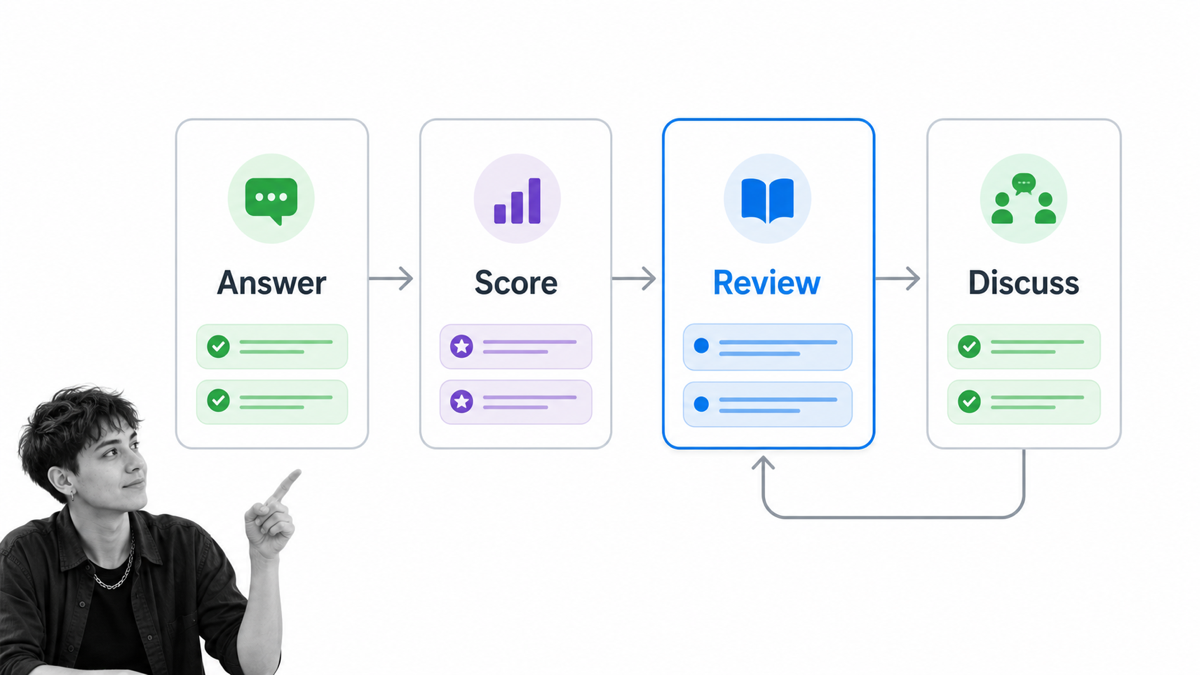
After scoring, review the result in four steps:
- Read critically: Mark what fits, what does not, and what feels too general.
- Use examples: Connect any claimed preference to a recent decision, communication, or work habit.
- Check context: Ask whether role expectations, stress, culture, or experience better explain the behavior.
- Discuss voluntarily: Share only what you want to share, then turn useful insights into a small team experiment.
Retaking a test until the label feels right is less useful than exploring why different answers seem true in different contexts. A result can open a question, but it cannot settle one.
Turn personality reflection into team practice
A personality discussion becomes valuable when it changes how the team works. Document the agreements that emerge, assign owners, test them in real work, and review the evidence. Examples include a standard for meeting preparation, a feedback protocol, a decision record, or a recurring team retrospective.
Process Street is one Compliance Operations Platform with Docs and Ops capability areas plus built-in AI. Docs gives teams a governed place to write, review, approve, version, and certify policies and procedures. Ops turns those procedures into workflows with assignments, due dates, conditional logic, approvals, integrations, and audit-ready evidence.
For a personality-reflection exercise, a team can use Docs to define the purpose, privacy boundary, facilitation notes, and approved team agreements. Ops can guide the voluntary exercise, collect non-sensitive observations, assign follow-up experiments, and schedule a review. Built-in AI can help draft questions or summarize themes while people remain responsible for interpretation and decisions.
This approach connects reflection with team collaboration. Instead of storing test results as labels, the team records the practical commitments it wants to try: how to prepare, how to contribute, how to challenge an idea, how to close a decision, and when to revisit the process.
Cognitive functions are most useful when they increase curiosity and reduce assumptions. Keep the language tentative, protect voluntary participation, judge performance from relevant evidence, and let people describe themselves in their own words. Then use what you learn to build clearer, more inclusive ways of working.
The post Cognitive Functions and Your Personality in the Workplace (Free MBTI Test!) first appeared on Process Street | Compliance Operations Platform.


0 Commentaires