
A career coach helps you clarify what you want from work, compare realistic options, and turn a decision into action. The best career coaching combines an outside perspective with structured goals and accountability, so useful insight does not disappear once the conversation ends.
Ari Meisel brings a systems-led approach to that job. His work connects career coaching with communication, project management, process automation, and deliberate follow-through. This guide explains his approach and gives you five free checklists from his Process Playbook to put the ideas into practice.
Meisel is also an author, speaker, podcast creator, productivity coach, leadership coach, business coach, and entrepreneurial strategist. His work has appeared in The Wall Street Journal, TechCrunch, Refinery29, and TEDxEast.
- Career coaches provide essential guidance
- What are the benefits of career coaching?
- Who is Ari Meisel?
- Ari Meisel’s coaching leadership style for helping people in their careers
- Ari Meisel’s Process Playbook quicklinks
- Additional resources for streamlining your career and life
Career coaches provide essential guidance
A writer who contributed to this article once described arriving at university without a clear picture of what work should come next. He enjoyed writing, but he could not see a profession that combined creative freedom with financial stability.
A practicing career coach helped him test an option he had not seriously considered: marketing writing. That suggestion led to a content-writing internship and, eventually, a career that felt both creative and commercially useful.
The value was not that the coach chose a career for him. The coach provided an impartial view, surfaced an option that was difficult to see from inside the problem, and encouraged a small experiment. That combination of perspective and action is what useful career coaching should deliver.
The career coach was an external, impartial figure who helped him identify inefficiencies, suggest alternative routes he had not considered himself, and adopt best practices that could serve him for years to come. After taking an internship as a content writer, he found the career he wanted: creative freedom, interesting audiences, and the satisfaction of contributing to a company’s success.
A coach can also expose the gap between what someone says they want and what their calendar, habits, and applications show. The conversation creates clarity. A repeatable process turns that clarity into progress.
Benefits of career coaching

The International Coaching Federation describes coaching as a partnership that helps clients maximize their personal and professional potential. In practice, career coaching is most useful when the problem is not a lack of information, but difficulty choosing, acting, or staying accountable.
A career coach can help you name your constraints, identify strengths you are underusing, compare roles without romanticizing them, prepare for difficult conversations, and build a plan with concrete next actions. The coach can also challenge assumptions that friends or colleagues may be too close to question.
Coaches help their clients or students do and be better. Although coaching styles differ, coaching as a method of teaching, instructing, and providing education becomes valuable when it produces smarter goal setting, better balance, lower stress, stronger self-confidence, and an improvement in quality of life. In short, coaches are there to help clients truly succeed.
AI can accelerate research, draft application materials, summarize job descriptions, and help prepare interview questions. It cannot own the decision or replace the human judgment needed to understand your values, risk tolerance, relationships, health, and long-term goals. A strong coach uses tools to improve the work while keeping responsibility with the client.
The clearest sign that coaching is working is not a motivational high after a call. It is better decision quality followed by visible action: conversations booked, options tested, skills practiced, applications improved, and commitments reviewed.
Ari Meisel’s background
Ari Meisel built his approach through a period of serious business and health pressure. While working on entrepreneurial ventures, he accumulated significant debt and was diagnosed with Crohn’s disease in his early twenties.
He responded by redesigning how he worked. Repetitive duties became documented and automated processes. Work that did not require his judgment was optimized, delegated, or removed. That shift gave him more room to manage his health while continuing to build businesses and teach other founders.
Through trial and error, time-consuming daily duties became automated processes. By spending less time doing repetitive work and more time living, Meisel prioritized his body and health while getting his businesses and his time back. The experience shaped an approach built around saving time, effort, and money without losing sight of the life the system is meant to support.
Meisel developed the Less Doing body of work and wrote books including Less Doing, More Living, The Art of Doing Less, and The Replaceable Founder. His current work at Less Doing includes coaching, courses, books, and a deep podcast archive focused on productivity, automation, and making founders less operationally indispensable.
Ari Meisel’s coaching leadership style for helping people in their careers
Meisel teaches through coaching, self-paced material, books, and practical operating systems. His Replaceable Founder course is built around reducing dependence on the founder without losing execution quality.
Three themes run through the approach:
- Communication: make requests, decisions, and handoffs explicit so work does not stall inside inboxes or meetings.
- Project management: define owners, next actions, and completion criteria so objectives move forward without constant chasing.
- Process automation and optimization: document recurring work, automate predictable steps, and preserve human attention for judgment-heavy decisions.
The first module is about mastering internal and external communications so communicative bottlenecks do not stop progress. The second module focuses on project management so tasks are completed and objectives are reached. The third module is concerned with process automation and optimization so precious hours in the workday can be reclaimed. Videos, worksheets, and coaching calls turn the principles into practical operating habits.
Those themes also explain why the approach fits career coaching. A career change is easier to manage when the goal is translated into conversations, experiments, deadlines, evidence, and review points instead of remaining an abstract ambition.
The same ideas appear throughout The Process Playbook, an anthology that moves from streamlining the hiring process to developing better lead generation, building a content distribution machine, automating podcast production, and handling a process in the absence of a trigger. The workflows provide actionable resources that are applicable across a wide range of roles and industries.
Process Street is one Compliance Operations Platform with Docs and Ops capability areas plus built-in AI. Docs governs procedures, Ops turns them into automated and auditable workflows, and built-in AI helps teams monitor and improve execution. That structure is useful for the kind of repeatable playbooks Meisel advocates because the guidance lives where the work happens.
Ari Meisel’s “Process Playbook” quicklinks
The five workflows below cover hiring, content distribution, podcast production, lead generation, and exception handling when an expected trigger never arrives.
- How to Streamline the Hiring Process
- How to Develop a Content Distribution Machine
- How to Automate Podcast Production
- How to Develop Better Lead Generation
- How to Automate a Process in the Absence of a Trigger
Hiring without repeated administration

Hiring slows down when intake, screening, scheduling, interviews, and decisions are treated as separate bursts of work. The result is repeated data entry, unclear ownership, delayed feedback, and qualified candidates waiting for an answer.
As technology evolves, recurring work should become easier, simpler, and faster. Hiring often fails that test. Organizations struggling to reduce time-to-hire can use automation to their advantage, but the workflow still needs manual review steps for candidate quality, context, and final decisions.
Ari Meisel’s hiring workflow treats recruitment as one connected process. The first run establishes the automations and decision points. Future runs reuse the same structure while the role, candidates, and evidence change.
The first time you follow the workflow, you create the necessary automations. When you need to hire for another position, run a new checklist from the template and complete the manual steps. Because the automations are already in place, the recruiting team can focus on qualified candidates instead of rebuilding the operating sequence.
The durable lesson is to automate administration without automating judgment. Capture candidate information once, assign review owners, schedule the right follow-ups, and preserve human evaluation for the moments where context matters. This is one practical example of the broader process automation discipline.
Distributing one source across channels

A useful piece of content should not depend on a single channel. A recorded conversation can become a podcast episode, article, newsletter, short video, and set of social posts when the source, transformation steps, owners, and publishing checks are defined in advance.
The content distribution workflow captures that one-to-many model. Repurpose.io can still support multi-channel publishing, but the larger idea is tool-independent: start with one strong source asset and route it through a controlled production system.
From blog posts to newsletters, videos to podcasts, content marketing plays an important role in reaching an audience. Meisel’s workflow shows how one broadcast can be turned into marketing podcasts, blog posts, social videos, and more by setting up a handful of automations. Follow the guide once, build the automations, and reuse the system to create and distribute digital content across the web.
Content creation and content distribution can be lengthy processes when a team is not automating or using digital tools to save labor. A repeatable content machine makes the transformation explicit, keeps the source and outputs connected, and gives every asset an owner and publishing check.
AI can assist with transcripts, clips, summaries, and first drafts. Editorial judgment still decides what deserves to ship, what fits each channel, and what should be discarded. Automation should reduce repetitive handling, not multiply mediocre content.
Producing a podcast consistently

Podcast production includes predictable work around guest intake, recording, editing, review, show notes, artwork, publishing, and distribution. Without a defined workflow, every episode becomes a small project reconstructed from memory.
The internet fostered the growth of formats such as blogging, vlogging, and podcasts. Meisel became the creator and host of the Less Doing Podcast, a show about life hacks, automations, productivity, and related ideas. That experience informs a production process designed to build, create, and automate podcast work.
Meisel’s podcast production workflow turns those recurring steps into a repeatable sequence. The system can assign owners, enforce review gates, and prevent publishing before required work is complete.
By optimizing, automating, and outsourcing tasks that would otherwise take precious time, a production team can create strong content more rapidly. Stop tasks ensure important work is not skipped and make the workflow easier to run consistently. The aim is to save time and effort while keeping the editorial and production checks that protect quality.
Meisel also built a large archive of conversations about life hacks, automation, productivity, and founder operations. Less Doing remains the best starting point for his current work and that body of ideas.
Moving qualified leads to follow-up
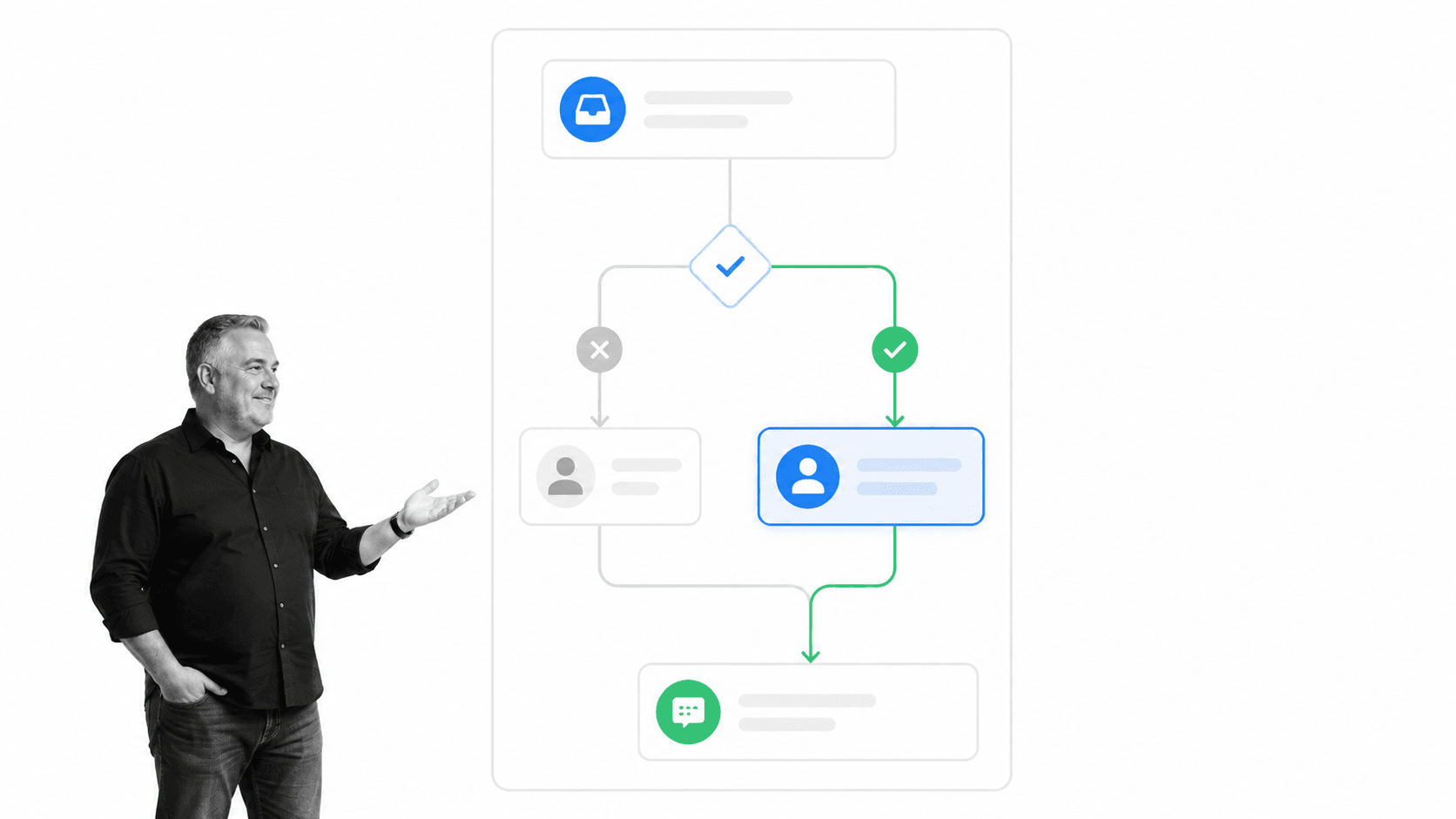
Lead generation improves when capture, enrichment, qualification, routing, and follow-up operate as one system. The specific tools will change. The operating questions do not: What information is required? How is intent classified? Who owns the next action? What happens when no one responds?
With podcast production automated and a content machine in place, the result should be more leads. Lead generation can be improved with machine learning and automations when the workflow captures a new email signup, tags the record appropriately, and notifies the team. From that point, the sales team can do what it does best: apply judgment and build the relationship.
Ari Meisel’s lead generation workflow demonstrates how those stages can be connected. A modern implementation can use current enrichment data and an AI classification step, then route each lead to the right owner with an explicit follow-up deadline.
The checklist is a practical example of using digital tools to maximize productivity and minimize wasted time. Once a new signup is captured and classified, the workflow notifies the right owner so the sales team can follow up. More leads only matter when the operating system turns them into timely, useful conversations.
Keep human review where the evidence is ambiguous or the relationship is important. The goal is not to automate every conversation. It is to remove delays and make sure a real opportunity never disappears between systems.
Acting when a trigger never arrives
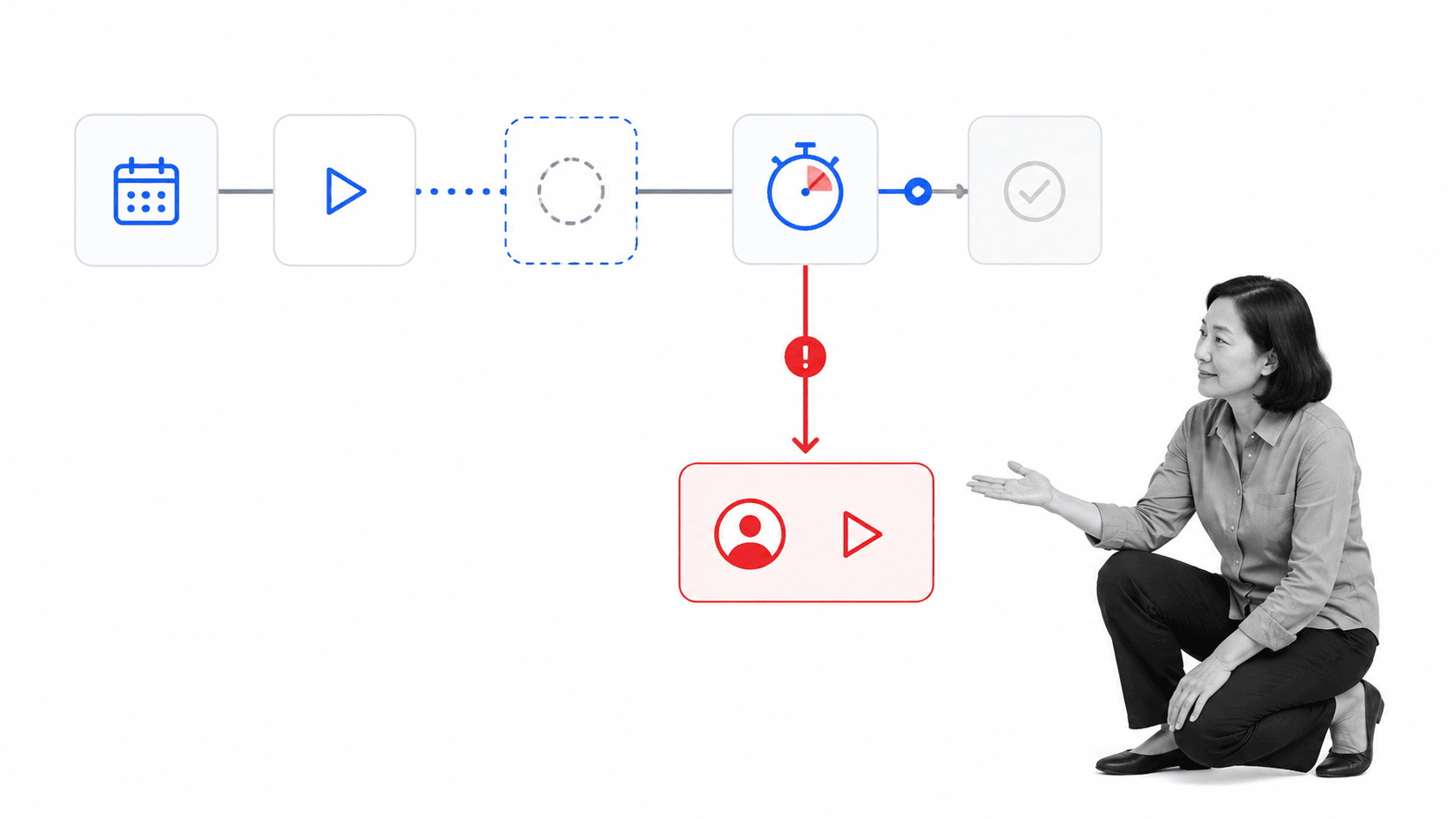
Most automation begins when something happens. A form is submitted, a payment clears, or a record changes. Meisel’s missing-trigger workflow solves the inverse problem: how do you act when an expected event does not happen?
People working with business process automation and recurring tasks often ask whether it is possible to trigger an automation when something does not happen. After trial and error, Meisel worked out how to automate a process in the absence of a trigger by combining scheduled checks, specific rules, and the appropriate pieces of software.
His example uses restaurant managers who are expected to send weekly status updates. If the update arrives on time, the normal route continues. If the deadline passes without an update, a different route starts and the absence becomes the trigger.
Meisel presents the use case for an owner of a small restaurant chain whose managers give weekly updates on the status of their restaurants. If the managers report back on time, a certain action takes place. If they do not report back in due time, a different action occurs. A scheduled rule converts that absence into something the automation can evaluate.
The same pattern works for overdue approvals, missing documents, unanswered client requests, failed health checks, and recurring reports. A scheduled check evaluates the expected condition, then starts the appropriate workflow. Tools such as Zapier can participate in that design when the implementation calls for them.
The automation works across many scenarios. Edit the appropriate informational fields in the web form, data source, and Zap, then apply the rule to a situation relevant to you. This is a useful pattern whenever the expected input is missing but the absence itself demands an accountable response.
Required steps can also use stop tasks so the workflow cannot move forward before critical information is present.
Additional resources for streamlining your career and life
Career development is not only about choosing a role. It also depends on routines, self-talk, communication, and the ability to protect time for deliberate work. These three embedded Process Street templates provide additional coaching resources.
The checklists draw on the work of life coaches Tony Robbins, Lisa A. Romano, and Brian Tracy. They move from a morning routine to overcoming a negative, critical inner voice and preparing a public speech, giving you practical wisdom to apply in your career and wider life.
Tony Robbins: Morning routine
Lisa A. Romano: Overcoming negative self-talk
Brian Tracy: Public speech preparation
Use the templates as starting points, then adapt the owners, timing, prompts, and evidence to your own goals.
- Five checklists to help life coaches transform their clients
- Time management tools to stay on track and beat procrastination
- Bullet journal ideas to create routines for work and life
- How to avoid burnout at work
- How to use a to-do list without sabotaging productivity
A career coach can help you see a better direction. A system helps you keep moving after the conversation. Ari Meisel’s playbooks connect those two jobs by turning advice into repeatable action.
The post Career Coach: How Ari Meisel Does Career Coaching (5 Free Checklists) first appeared on Process Street | Compliance Operations Platform.


0 Commentaires