Concierge onboarding is a high-touch customer onboarding approach in which a real person guides each customer through setup, decisions, and early milestones. It works best when the account is valuable, the product is complex, or the cost of a poor start is high.
The point is not to replace automation with meetings. Automate routine coordination, then use human judgment where context, confidence, or trust matters. That combination helps customers reach value without feeling like they have been dropped into a generic sequence.
Megatrends, a technological prophet
The 1980s marked the dawn of technology as we know it and an era of hilarious technological hyperbole. You could hear the excitement in the voices of companies declaring that they had built the only computer you would need for years. Although laughable now, commercial home computers such as the Commodore 64 were a huge improvement on the monstrous machines of past eras. Systems such as ENIAC were so unwieldy they had to be built into rooms. For the first time in history, a person could buy a computer of their own.
As technology became an important part of life, an imbalance emerged in the amount of time spent with machines and other humans. People were not used to the lack of human contact that computers allowed and demanded. In the past, playing games was a social activity with neighborhood kids or family around a Monopoly board. It could now become a solo affair, facing off against an AI that was always ready to play again. Computer adverts initially focused on graphics, pixels, and visualizations of data. Over time, that focus shifted to the user, adding a human face to the machine to make computers more relatable.
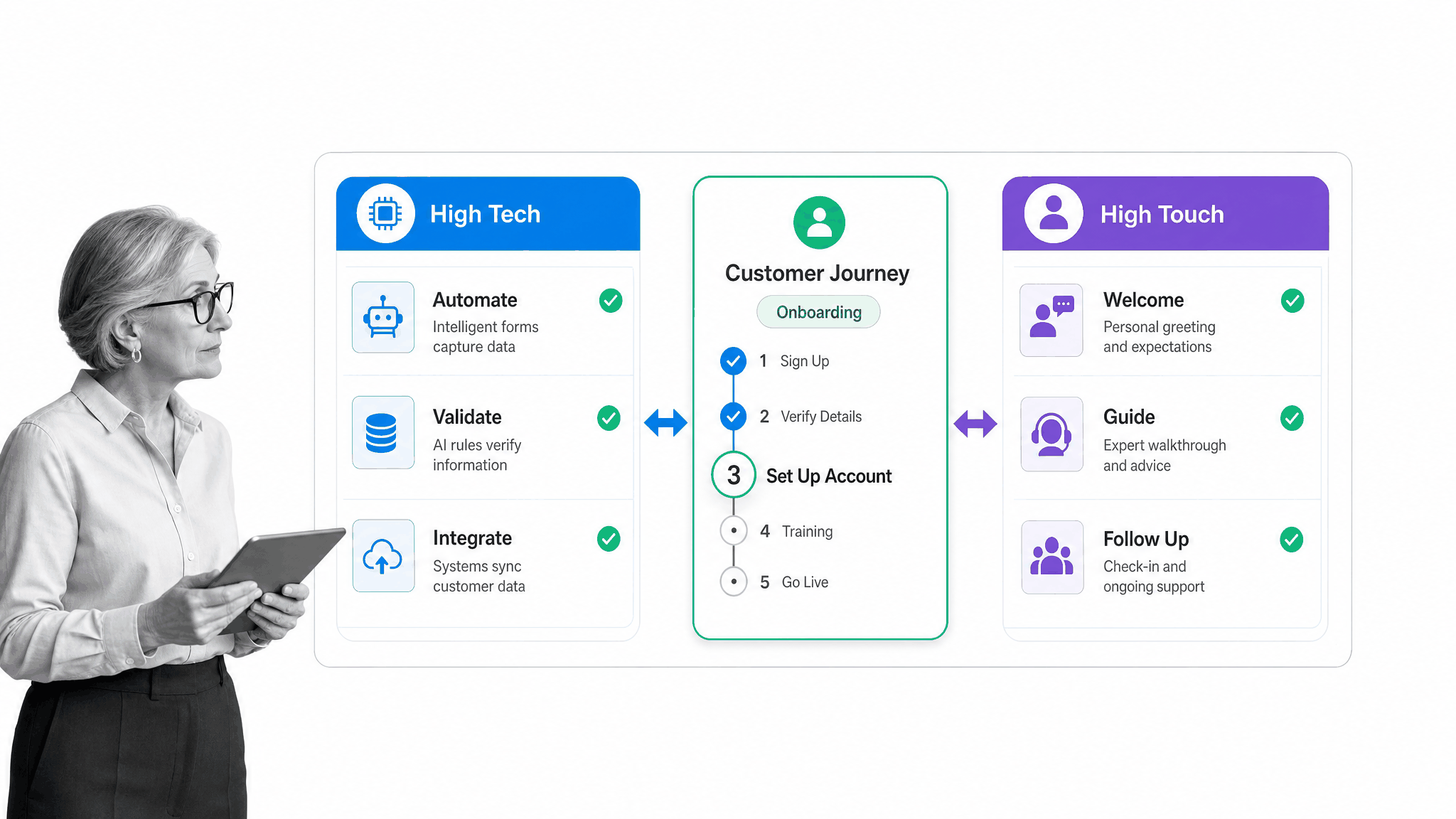
These ideas came from a prophetic theory book written between 1972 and 1982: John Naisbitt’s Megatrends. It detailed ten emerging trends shaping the future of society with a striking amount of accuracy. Naisbitt called one theory High Tech / High Touch. As technology becomes more prevalent and complex, humans need a counterbalancing human connection.
“High tech/high touch is a formula I use to describe the way we have responded to technology. What happens is that whenever new technology is introduced into society, there must be a counterbalancing human response that is, high touch or the technology is rejected. The more high tech, the more high touch.”
John Naisbitt
Technophobia
The impact of complex technology produced a real cultural backlash. Naisbitt even argued that it was directly related to growth in the self-help industry. The fast onset of seemingly all-seeing, all-knowing machines inspired films such as Terminator and Blade Runner, set in futures where technology dominated people and made them question, or give up questioning, their humanity.
Computerphobia reached its height in American offices in the mid-1980s. IBM advertisers hoped graphical software would convince even dedicated computerphobes. Parents feared that games such as Death Race would encourage impressionable children to become violent, even though its graphics looked like drawing lines in a basic paint program. The controversy around the game became an early example of fear outrunning what the technology could actually do.
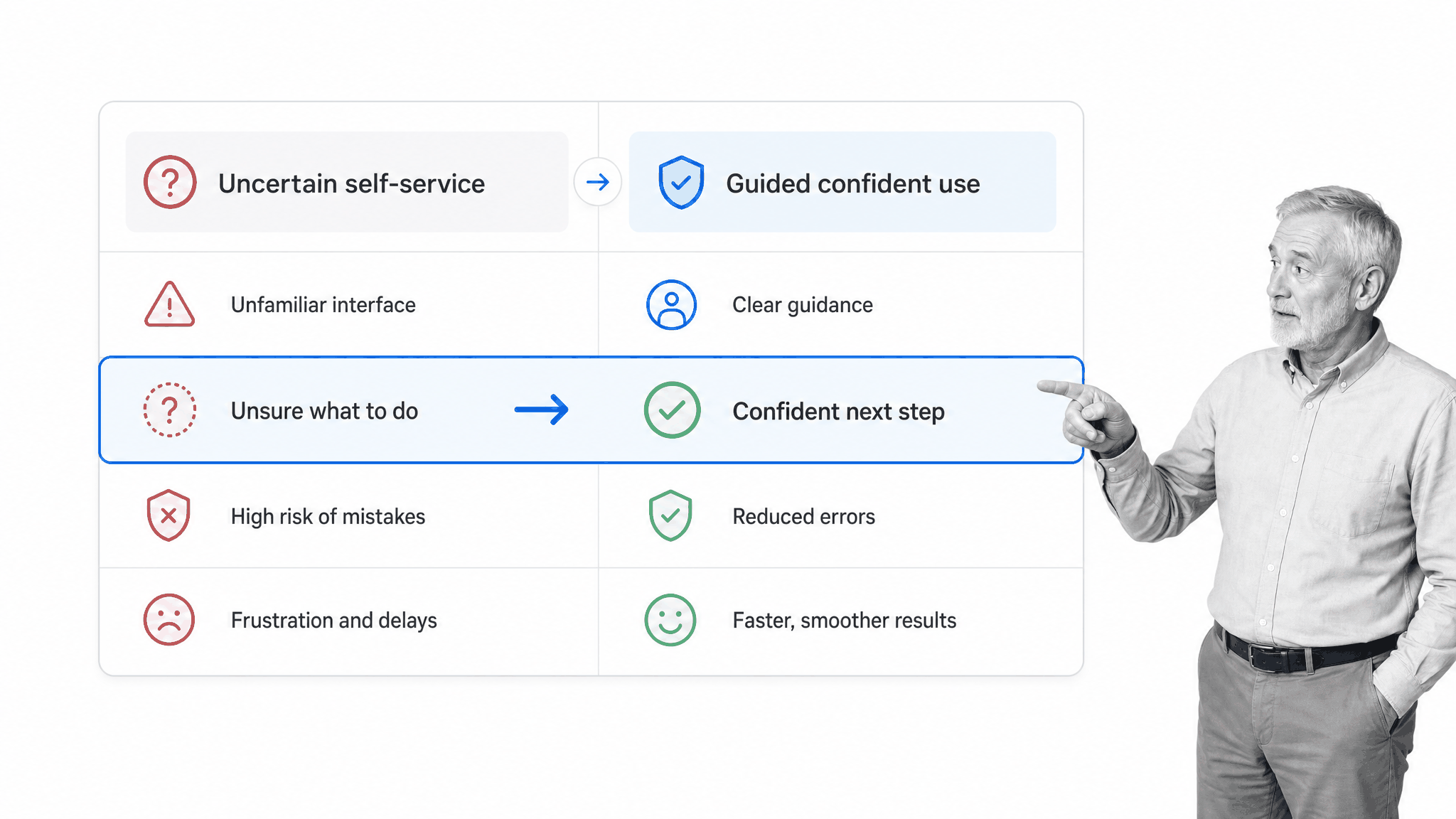
Most people were not rejecting technology itself. They were rejecting uncertainty, unfamiliar interfaces, and the feeling that nobody would help when something went wrong.
High Tech / High Touch
Naisbitt later expanded the idea in High Tech High Touch. The specific technologies changed, but the tension remained. Software can make work faster while also making an experience feel distant, especially when communication and information pass through layers of systems.
“We love technology when it works. We hate it when it looms like an owner’s manual we’re never going to read. We love technology when it feels like a brand-new toy, but we hate it when it breaks.”
John Naisbitt
That is the useful part of the theory for customer onboarding. Customers do not need a human to perform every repeatable task. They need a human response when the system cannot understand their context, when a decision carries risk, or when uncertainty could stop progress.
How can we relate this to SaaS?
Software now makes individualized treatment possible at a scale Naisbitt could only sketch. Product events, account data, and behavior-based segments can identify who is moving, who is stuck, and what each customer is trying to achieve. Platforms such as Intercom can deliver in-product guidance, while Customer.io can trigger messages from customer attributes and events.
“I think we are beginning to understand just how liberating the computer is in a high tech/high touch sense. For example, a company with 40,000 employees has treated those employees pretty much the same for generations. It had to because that was the only way to keep track of them. With the computer to keep track, the employees can be treated differently, with a unique contract for each of the 40,000.”
John Naisbitt
AI expands that capacity. It can summarize account context, prepare a kickoff, draft a follow-up, and flag an onboarding risk. But it should not turn every customer into a row in an automated campaign. The best high-touch onboarding uses automation for preparation and coordination, then routes judgment, explanation, and relationship-building to a person.
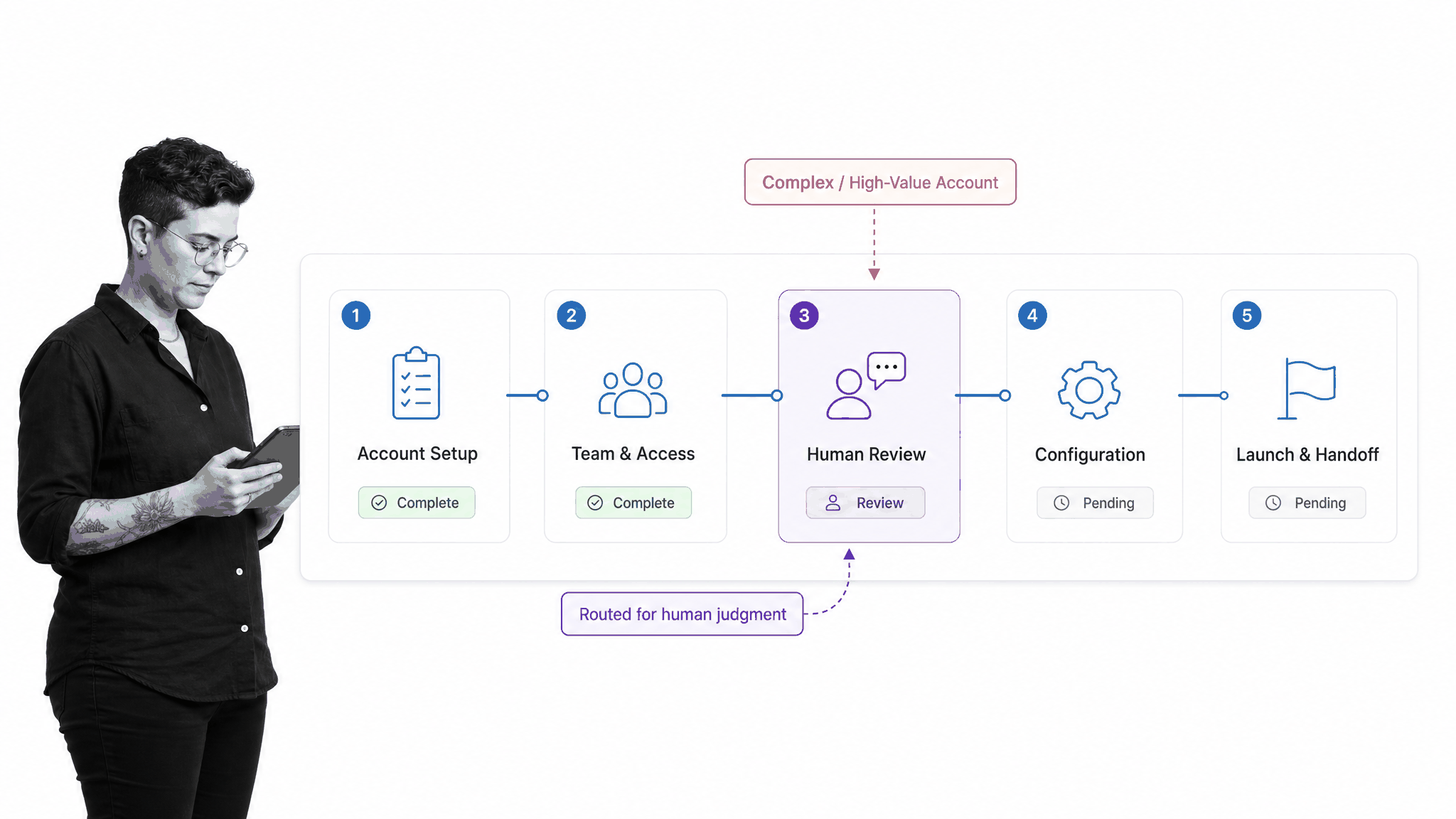
This model protects both sides of the experience. Customers get help at the moments that matter. The onboarding team avoids spending the same manual effort on every account, including customers who are already progressing safely through self-service.
High Touch, Concierge Onboarding
A concierge onboarding program starts by deciding which accounts need it. Complexity, contract value, regulatory risk, multiple stakeholders, migration work, and a short time-to-value target are useful signals. A simple account may need good product guidance and one check-in. A complex account may need a named owner, kickoff, shared success criteria, configuration help, training, approvals, and an explicit handoff to ongoing customer success.
The operating sequence is straightforward: capture the sales context, agree on the outcome, assign owners, guide setup, track the first-value milestone, and respond when progress stalls. Measure whether customers complete onboarding, how quickly they reach value, which features they adopt, and whether early retention improves. Those signals tell the team where a human intervention earns its cost.
The human work still needs a system. If two customers are both named Kevin, or Linda already said she was not interested in a particular feature, the team should not depend on memory. A repeatable client onboarding process keeps the context, commitments, owners, and next action together.
That combination is what makes customers happy and helps keep them that way. They get a personal level of support without forcing the onboarding team to rely on scattered messages, untargeted emails, or memory.
Concierge Onboarding with Process Street
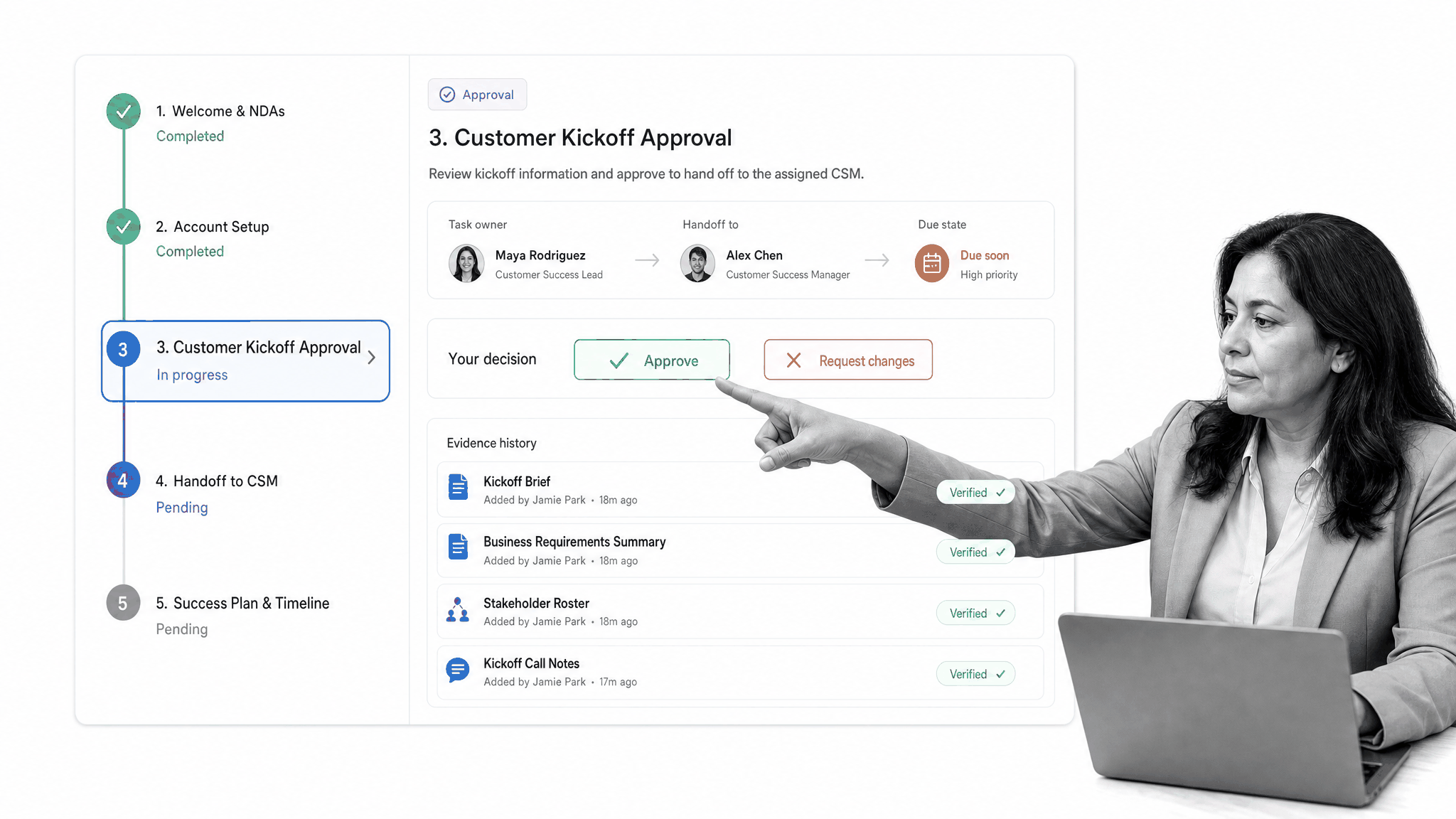
Process Street is one Compliance Operations Platform with Docs and Ops capability areas plus built-in AI. Docs keeps the onboarding standard governed and current. Ops turns that standard into customer-specific workflows with owners, forms, due dates, approvals, conditional paths, handoffs, and evidence of what happened.
That structure makes concierge service repeatable without making it impersonal. The workflow can route a high-value account to a named onboarding specialist, require approval before a critical handoff, carry sales context into implementation, and preserve an audit-ready record. Built-in AI can help prepare and monitor the work while the team stays in control of decisions and exceptions.
Process Street has direct, universal integrations to 5,000+ systems. Need a new one? An AI agent builds it on the fly. Customer data and actions can move between the systems the team already uses without turning each handoff into another manual follow-up.
The post Concierge Onboarding: How to Make Customers Happy and Keep Them That Way first appeared on Process Street | Compliance Operations Platform.


0 Commentaires