Organizational commitment is the strength and nature of an employee’s psychological attachment to an organization. It helps explain whether someone stays because they want to, need to, or feel they ought to.
That attachment matters for retention, but it is not a shortcut or a loyalty test. Healthy commitment grows when employees experience fair treatment, useful work, trustworthy managers, career development, and reliable support. This guide explains the three types of organizational commitment, how each one affects retention, and how HR teams can strengthen the right kind of bond.
The five organizational commitment topics covered here are:
- What is organizational commitment?
- How can organizational commitment help retention?
- Why HR managers should prioritize organizational commitment
- The three types of organizational commitment
- Organizational commitment and employee engagement
What is organizational commitment?
Organizational commitment describes an employee’s relationship with their employer: how attached they feel, what they believe they would lose by leaving, and whether they feel a sense of obligation to remain. It is studied in industrial and organizational psychology and is related to, but distinct from, job satisfaction, engagement, and job embeddedness.
Meyer and Allen’s three-component model organizes commitment into affective, continuance, and normative components. An employee can experience more than one component at the same time, and the balance can change as their work, relationships, and circumstances change.
How can organizational commitment help retention?
Commitment can strengthen retention because it creates a bond between employees and the organization. People are less likely to leave when they identify with the organization’s goals, trust its leaders, see a future for themselves, and believe the employment relationship is fair.
Employees leave jobs for many reasons, including career advancement, extra money, limited opportunities, and the need to avoid burnout. Organizational commitment cannot prevent every departure, nor should it. It can help prevent avoidable employee churn by making employees feel valued, clarifying a long-term future, and addressing problems before people decide to go.
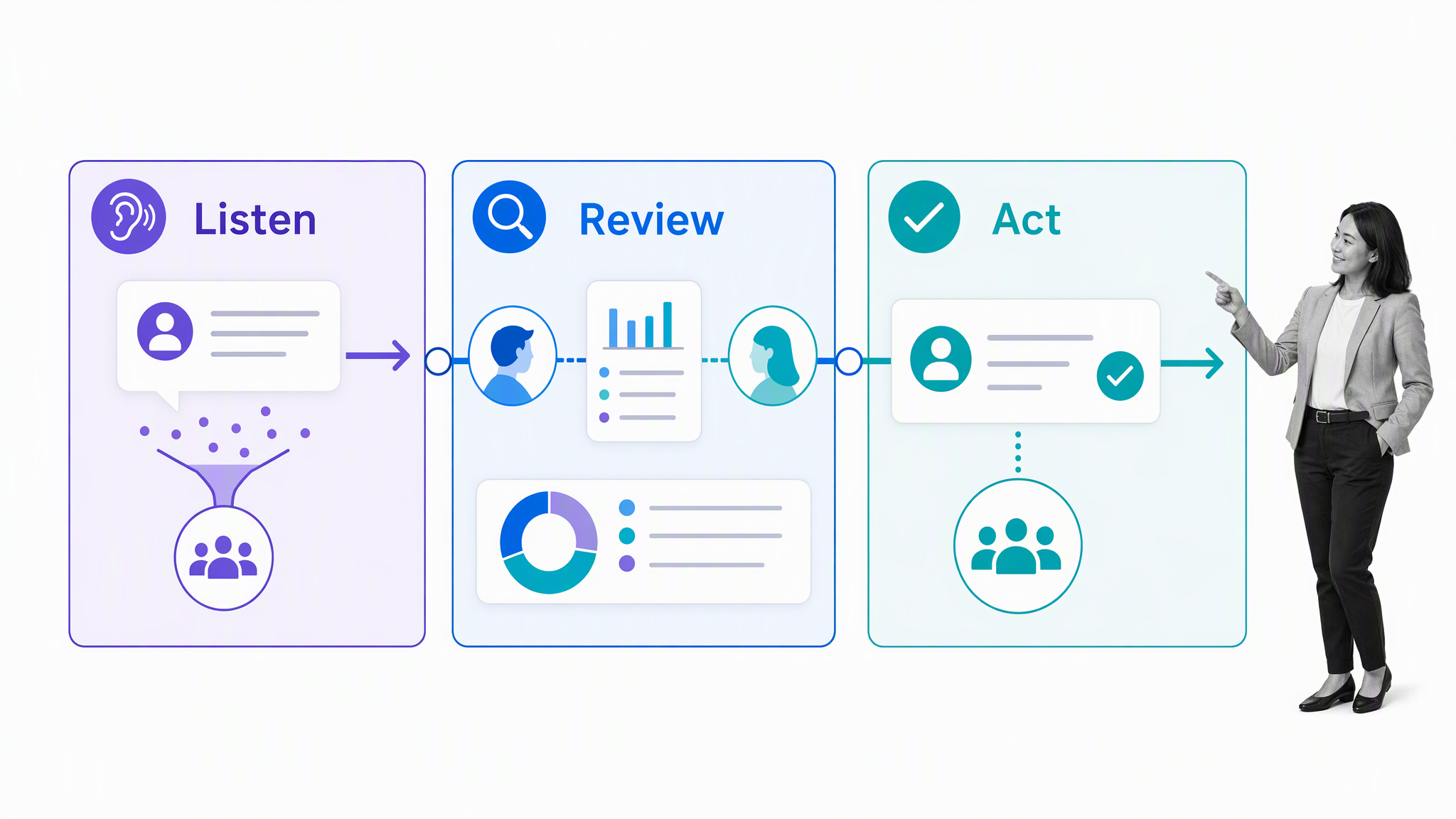
Organizational commitment works best as an equal partnership. Employees contribute effort, knowledge, and judgment. Employers provide clear expectations, meaningful support, growth opportunities, and consistent follow-through. Listening to employee signals, reviewing what they reveal, and acting on the findings turns that partnership into an operating habit rather than an annual survey.
Why HR managers should prioritize organizational commitment
Committed employees often report higher job satisfaction and are more willing to contribute beyond the minimum requirements of a role. The relationship is not a guarantee, but it gives HR leaders a useful way to connect retention with employee development, engagement, well-being, attendance, and performance.
The practical work is straightforward: make expectations clear, give employees a credible path to grow, recognize good work, address problems early, and keep people processes consistent. When absence, leave, reviews, or development requests depend on scattered messages, trust erodes. A documented workflow creates a shared standard without removing the human judgment these moments require.
Another benefit can be reduced absenteeism and a greater willingness to take on added responsibilities. Committed employees are more likely to protect company assets, share company goals, attend work regularly, and contribute beyond their formal job tasks. HR should treat those behaviors as a result of a healthy relationship, not as permission to overload reliable people.
The three types of organizational commitment
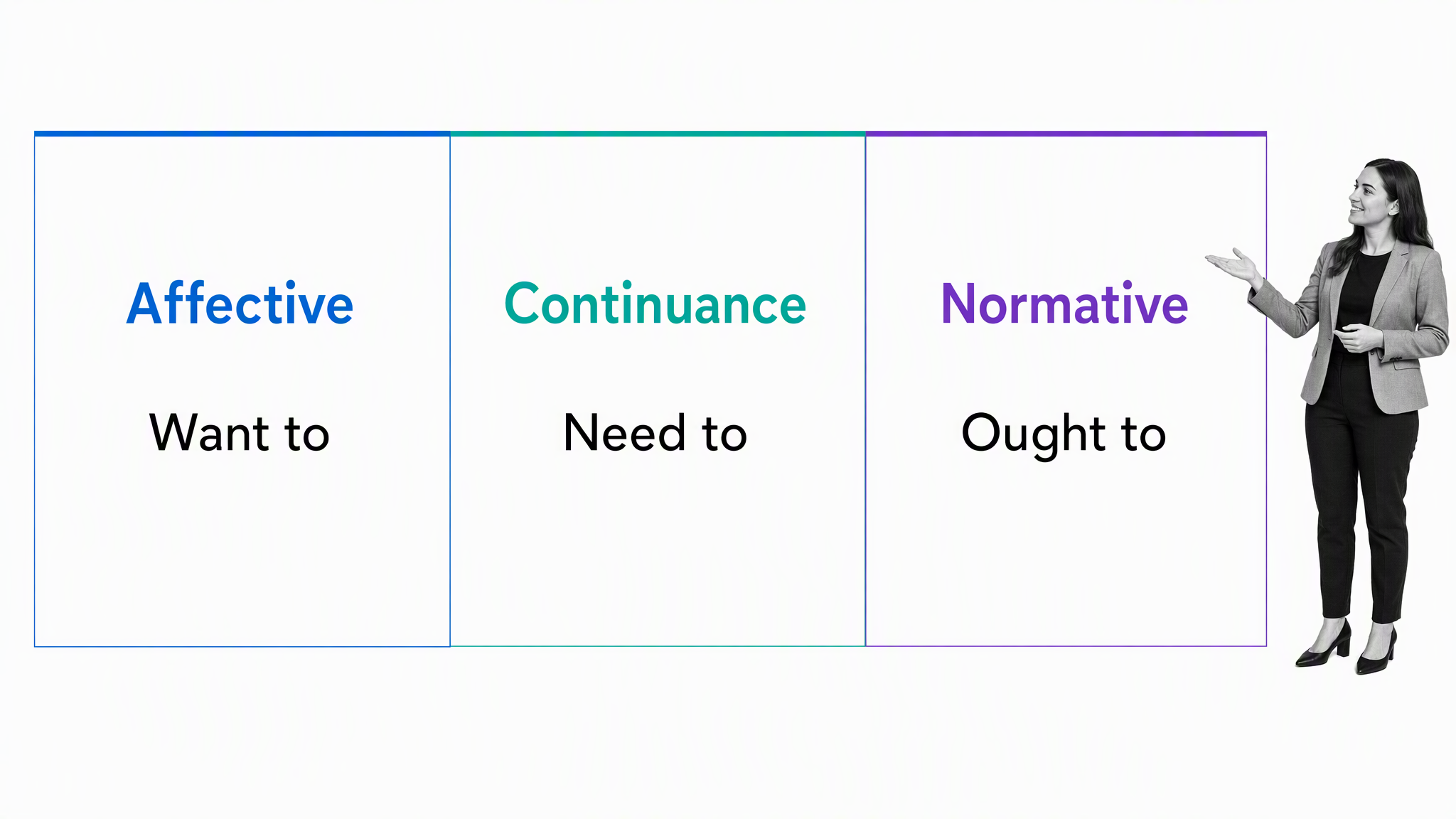
The three types of organizational commitment are affective, continuance, and normative commitment. They answer three different questions: Do I want to stay? Do I need to stay? Do I feel I ought to stay?
| Type | Core feeling | Typical employee thought | Healthy HR response |
|---|---|---|---|
| Affective | Emotional attachment | I want to stay | Build trust, belonging, growth, and meaningful work |
| Continuance | Cost of leaving | I need to stay | Offer fair rewards without creating dependence |
| Normative | Sense of obligation | I ought to stay | Earn reciprocity through fair, consistent support |
All three can reduce turnover, but they do not produce identical outcomes. A meta-analysis of organizational commitment research found the strongest favorable relationships for affective commitment. Continuance commitment was weaker and sometimes negatively related to desirable outcomes. The goal is not simply to make leaving costly. It is to create a workplace people genuinely want to remain part of.
Affective commitment
Affective commitment is an employee’s emotional attachment to the organization. People with strong affective commitment identify with its goals and feel that they belong.
You can support affective commitment with honest communication, useful recognition, inclusive team practices, and work that connects to a clear purpose. Career conversations also matter. Discuss an employee’s future, identify skills they want to develop, and follow through with training or stretch assignments. These actions show commitment to the employee rather than demanding commitment from them.
Social activities can also help employees create friendships between colleagues when participation is optional and accessible. A team might arrange outside-of-work sports days, host events, or celebrate diversity in ways that welcome different interests and backgrounds. The point is not forced fun. It is to create space for connection while continuing to invest in career development and providing training that employees can use.
Continuance commitment
Continuance commitment is the calculation that leaving would carry a meaningful cost. An employee may consider compensation, benefits, relationships, tenure, location, or the difficulty of finding a comparable role.
- Pay and benefits they would give up;
- Professional relationships and institutional knowledge;
- Career progress or flexibility that may not transfer.
Competitive compensation and reliable benefits are necessary, but cost-based dependence should not be the retention strategy. If continuance commitment is high while affective commitment is low, employees may remain while feeling trapped. Use pay reviews to maintain fairness, then invest in the conditions that create trust, growth, and belonging.
The fear of loss may include accumulated job-specific knowledge, past promotions, valuable friendships, benefits, or flexibility that is hard to replace. HR should constantly review salaries and wages for fairness, especially for best-performing employees, and use retention bonuses carefully. Long-term assurances about employment can provide stability, but they should not be used to make rival organizations or a better opportunity seem artificially costly.
Normative commitment
Normative commitment describes an employee’s sense that staying is the right thing to do. It can grow from reciprocity, shared values, professional norms, or meaningful support from the organization.
Support should never create a debt that employees must repay with loyalty. An employee assistance program, fair leave process, or thoughtful accommodation matters because it helps people when they need it. The healthier result is earned trust. HR should also watch for stress and burnout, especially among highly committed employees who may take on too much.
Employees with strong normative commitment may feel obligated to stay after an organization supported them during a difficult period. An EAP helps employees with personal issues, but using support must never become an obligation to continue in a role. Highly committed employees may also develop a strong work ethic and high output. An unintended consequence is burnout, so leaders must take employee well-being seriously and monitor workload as well as results.
Organizational commitment and employee engagement
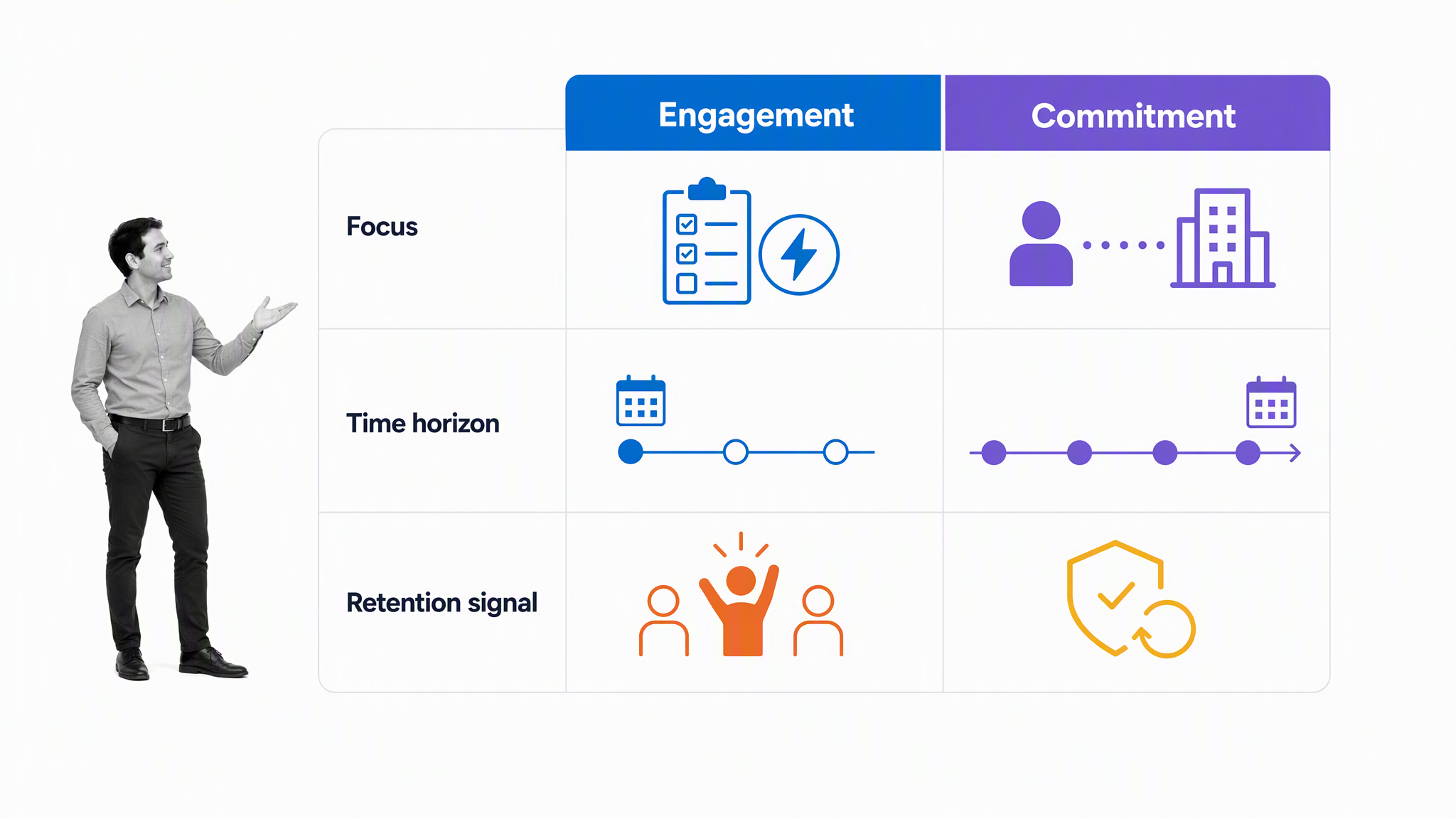
Employee engagement describes the energy and involvement a person brings to their work. Organizational commitment describes their attachment to the organization. The concepts reinforce each other, but they are not interchangeable. Someone can enjoy a project without planning to remain, or feel loyal to an employer while disengaging from a particular role.
Job analysis, role clarity, manager feedback, and job rotation can improve the work itself. A broader commitment strategy also asks whether employees trust decisions, see fair opportunities, and believe the organization keeps its promises. Gallup’s engagement meta-analysis connects stronger engagement with outcomes including turnover, absenteeism, productivity, quality, and well-being.
To retain a well-engaged workforce, leaders must invest time in practices that foster engagement. A job analysis reexamines a position to see whether HR can streamline low-value work, clarify responsibilities, or redesign confusing handoffs. Job rotation can broaden skills and perspective. Both strategies can improve job satisfaction when employees have a voice in the change.
Organizational commitment and diversity
Diversity alone does not guarantee commitment. Inclusive, fair, and consistent practices are what help employees from different backgrounds feel respected and able to contribute. Research on cultural diversity and commitment shows that the relationship depends on how the organization manages the employee experience, not simply on workforce composition.
Use transparent hiring criteria, equitable access to development, accessible feedback channels, and consistent responses to employee concerns. Anonymous diversity surveys can surface patterns, but the survey earns trust only when leaders communicate what they learned and what they will change.
Inclusive practices help employees feel recognized and valued, and help them see that their talents are appreciated. Ready-made workflows covering diversity processes can make follow-through more consistent, but a workflow cannot substitute for listening. Ask employees about barriers, share what will change, and track whether the experience improves across different groups.
Organizational commitment and employee performance
Organizational commitment is associated with performance-related behaviors such as persistence, acceptance of change, service quality, and willingness to help beyond a formal job description. The pattern is strongest for affective commitment, which is why leaders should focus on attachment and trust instead of relying on the cost of leaving.
Employee reviews can support commitment when they produce clear expectations, useful coaching, and credible development actions. They can also undermine it when they feel forced or disconnected from daily work. Gallup reports that only 14% of employees strongly agree their performance reviews inspire them to improve. A consistent review workflow helps managers prepare, collect evidence, agree on actions, and follow up without turning the conversation into a formality.
A well-designed review can foster commitment; a poorly run review can demotivate employees. The process should be a sequence of tasks followed through from start to finish, including preparation, discussion, development actions, and follow-up. Workflow apps can make recurring tasks easier, but the manager still owns the quality of the conversation and the fairness of the outcome.
Organizational commitment and job satisfaction
Job satisfaction and organizational commitment often reinforce each other. Satisfaction reflects how people evaluate their job experience, while commitment reflects their relationship with the organization. A personal touch matters, but it works only when the systems behind it are reliable.
Process Street is one Compliance Operations Platform with Docs and Ops capability areas plus built-in AI. Docs keeps policies and procedures governed and current. Ops turns them into assigned, automated, auditable workflows with forms, approvals, conditional logic, integrations, evidence, and execution history. Built-in AI helps teams create, run, and improve those processes without separating guidance from the work itself.
For HR teams, that means onboarding, reviews, leave, feedback, and development can follow a consistent standard while preserving the judgment each employee needs. Start with the free Leave of Absence workflow template, or use the employee onboarding checklist to build commitment from the first days of employment.
When you are ready to connect governed HR documentation with repeatable execution, request a Process Street demo.
Frequently asked questions about organizational commitment
What are the three types of organizational commitment?
The three types are affective commitment, which means wanting to stay; continuance commitment, which means needing to stay because leaving has costs; and normative commitment, which means feeling an obligation to stay.
How is organizational commitment measured?
Researchers commonly use the Meyer and Allen organizational commitment scale or shorter validated versions. Practical HR teams can combine a validated questionnaire with retention data, engagement results, stay interviews, and manager feedback. A survey should be confidential, consistently administered, and followed by visible action.
Which type of commitment should employers strengthen?
Affective commitment is usually the healthiest target because employees stay from attachment and shared purpose. Fair pay and reliable support still matter, but employers should not try to retain people by making departure unusually costly or by creating a sense of personal debt.
The post How Organizational Commitment Can Help Retention (+ Free Template) first appeared on Process Street | Compliance Operations Platform.


0 Commentaires