Most content creation advice is a recycled list of prompts, tools, and shortcuts. The useful content creation lessons are harder earned: how to find an idea with evidence behind it, turn research into a structure, edit without flattening the work, and build a distribution loop that teaches you what to do next.
Process Street writer Benjamin Brandall built the lessons below from a year in which he published 157 articles. The examples come from that body of work, updated with current tools and stronger operating practices for research, AI-assisted execution, review, and measurement.
Idea generation techniques
Writing is creative work and professional work at the same time. You cannot order a useful idea to appear on schedule, but you can build a system that gives good ideas more chances to surface. The lesson from producing 157 articles was simple: collect audience evidence continuously, then use editorial judgment to decide what deserves to become a piece.
Mine audience questions, not recycled topic lists

A question is valuable when it reveals a real gap between what someone needs and what existing content explains. Quora can still provide signals, but it is only one source. Search Console queries, customer calls, support tickets, sales objections, Reddit discussions, specialist forums, and internal search logs often reveal stronger evidence. AI can cluster those signals and expose repeated themes, but a person still needs to judge whether the problem matters and whether you can add something original.
Capture the exact language people use, the situation behind the question, and the outcome they want. A promising idea should connect to a known audience problem, not merely contain a high-volume phrase.
Create a mind map of related subjects
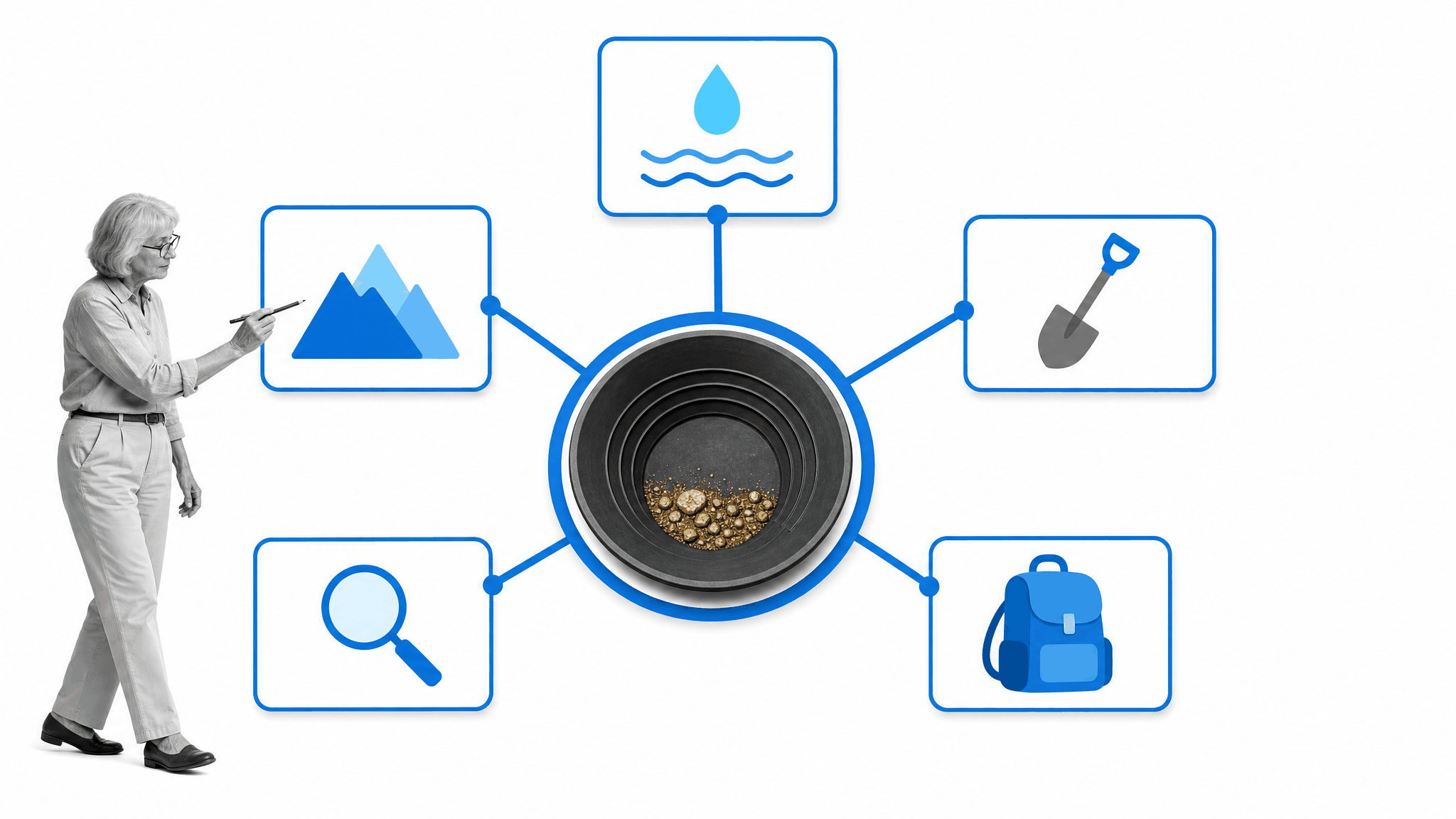
At Process Street, we do not write only about processes. We also cover the problems that people who run processes care about, including productivity, marketing, software, operations, and business systems. A mind map makes those adjacent interests visible.
Imagine you are writing about gold panning. Put the subject in the center, then branch into equipment, geology, safety, locations, history, and regulations. Each branch can split again into questions, comparisons, mistakes, and first-person experiments. The unusual example matters because it proves the method works beyond familiar marketing topics. A tool such as MindMup can help, but paper or a simple whiteboard works just as well.
Build an always-on idea intake

One version of this system collected trending Reddit posts in a spreadsheet and eventually held more than 4,000 rows. The durable lesson is not one recipe. It is that idea research should continue while you are writing.
A current setup can collect selected community posts, customer notes, search queries, and support themes into one queue. Deduplicate near-identical items, cluster them by problem, keep the source URL and date, and flag unusual spikes. Automation can move the data and prepare summaries. Human editorial review decides what is credible, relevant, and worth pursuing. Google Sheets is enough for a small team; a structured content database is useful when ownership, status, and evidence need to travel with each idea.
Interview experts and build a definitive article
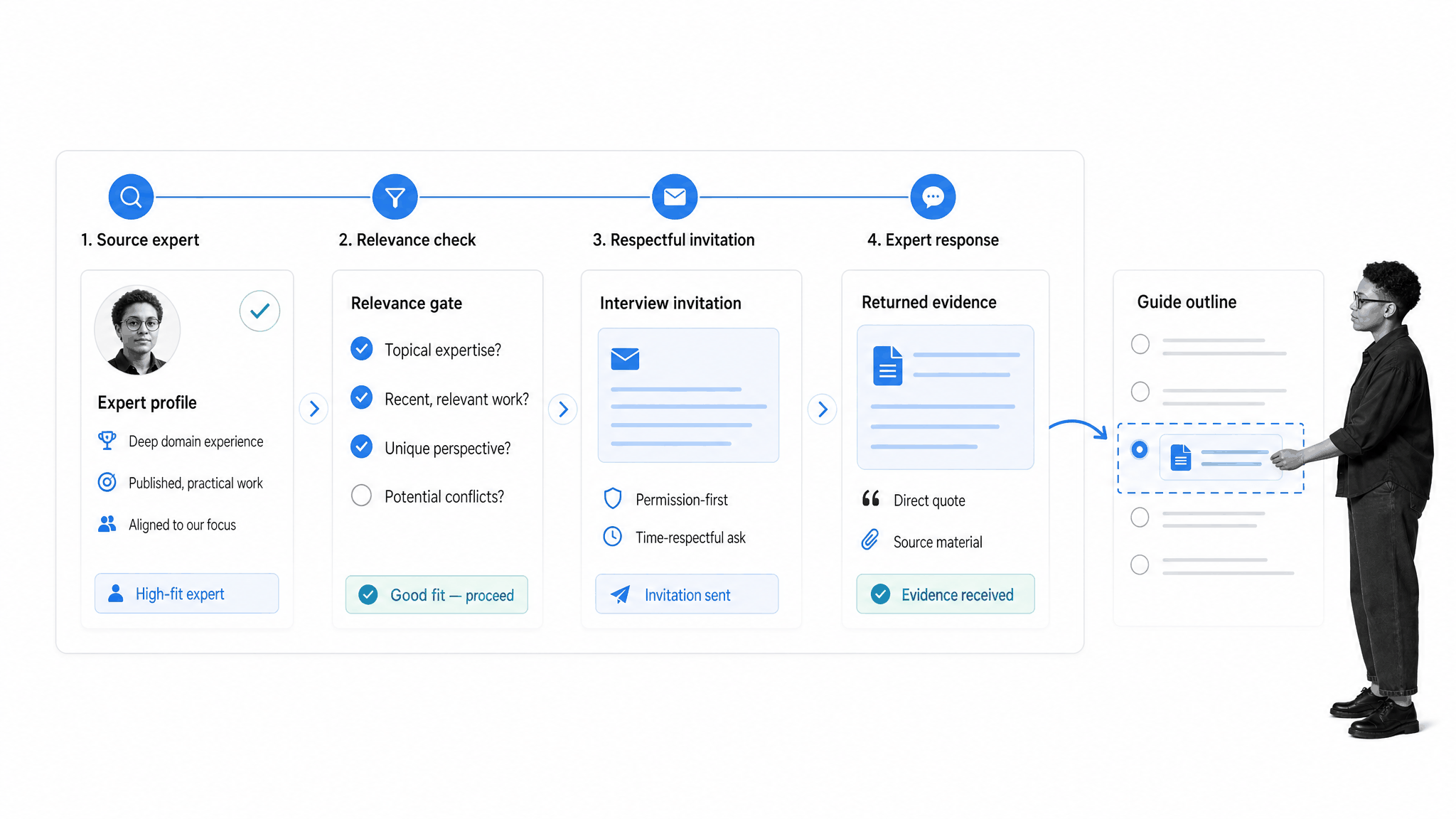
One of the strongest articles in this body of work came from interviewing 14 SaaS companies about customer success. The interviews produced more than 10,000 words of source material, which became a guide of just under 3,000 words. The outreach went to 73 relevant companies and received 14 complete responses, roughly a 19% reply rate.
The modern version starts with careful expert selection, a clear reason for the request, and permission-conscious contact data. Explain the exact question, why that person is relevant, what the response will contribute, and how attribution will work. A CRM such as Close can track outreach, but the quality comes from relevance and a respectful ask, not from blasting a scraped list. Preserve the interview notes, quotations, approvals, and source links so the final guide can be verified.
Techniques for efficient writing and note-taking

Once you have an idea, the job is to turn scattered evidence into a draft without losing the thread. Separate capture, structure, and prose. Capture quickly, organize when the pattern becomes visible, then write from the structure rather than from a pile of open tabs.
Writers struggle when they expect an actual brain to behave like a content machine and produce enough ideas for the content calendar on command. Let early notes stay messy. Break the material into a bullet point for each subheading, add an accompanying tag when it helps, and keep previous notes visible. Sources can exist in more than one place when the system preserves the link back to them.
Take notes with WorkFlowy

WorkFlowy remains useful for roughing out a draft because a nested outline can move from source material to key points to sections without forcing an early document structure. Break each source into the claims, examples, and questions that matter. Group related points, create a heading for each argument, then zoom into one branch while writing. Tags can keep notes for the introduction, examples, evidence, and conclusion visible without duplicating them.
The tool is optional. The method is the durable part: sources become atomic notes, notes become a hierarchy, and the hierarchy becomes a draft.
Use an inbox and tags to organize research

Evernote still supports notebooks, tags, the Web Clipper, and email-to-note capture. A simple setup uses an inbox for unprocessed material, a notebook or project view for active articles, and tags for topics, evidence types, or draft sections. A source can carry several tags, which is more useful than trapping it in one folder.
Process the inbox on a schedule. Add the source URL, record why the item matters, connect it to a project, and archive anything that does not earn a place. Evernote is one implementation; the same discipline works in other note systems.
Capture research without breaking your flow

Pocket shut down in 2025, but the job it served still matters. Use a current web clipper or read-later tool to save a source with one action, attach a project tag, and return to the research session. Notion Web Clipper and Readwise Reader are current options. A browser bookmark folder can also work if it preserves the source and gives you a reliable review habit.
Do not confuse collection with research. During review, remove duplicates, record the claim each source supports, prefer primary evidence, and note anything that needs verification before publication.
Keep a swipe file of great writing examples

Copywriting and content writing overlap most clearly in headlines, openings, transitions, examples, and calls to action. When a piece makes you click or keep reading, save the exact passage and label the move it performs. A useful swipe file is organized by lesson, not by where the clipping came from.
Use it to study patterns, not to imitate language. Before drafting an opening, review a few examples tagged for tension, specificity, story, or proof. Then close the swipe file and write the version that fits your reader and evidence.
Use a system to write stronger headlines
A repeatable headline review prevents the first acceptable idea from becoming the final title. Check that the headline can accurately describe the article, sells the benefits rather than the features, addresses the reader’s real objections, and makes the distinctive evidence visible. Write several alternatives, test them against the body, and remove any promise the article does not deliver.
A practical review asks whether the title is extremely specific, whether a number, fact, percentage, or statistic genuinely improves it, and whether power words fit without turning the claim into rubbish. Check over useful formulas, but do not copy the most famous headlines ever written. Redraft until every word earns its place. Channel length and search display constraints can guide the final cut, but there is no universal five-to-eighteen-word rule. The Process Street headline checklist gives you a repeatable review gate without outsourcing judgment to a score.
Techniques for editing
Bad editing can be the death of good content. While writers furiously bash their words out because over-thinking means stopping the flow, editing needs to be in place to make sure the words being written are true, readable and well-structured. Recently, I put together a complete editing checklist, but here are some extra tips.The Traffic Light editing pass

Edit collaboratively, then run a readability pass
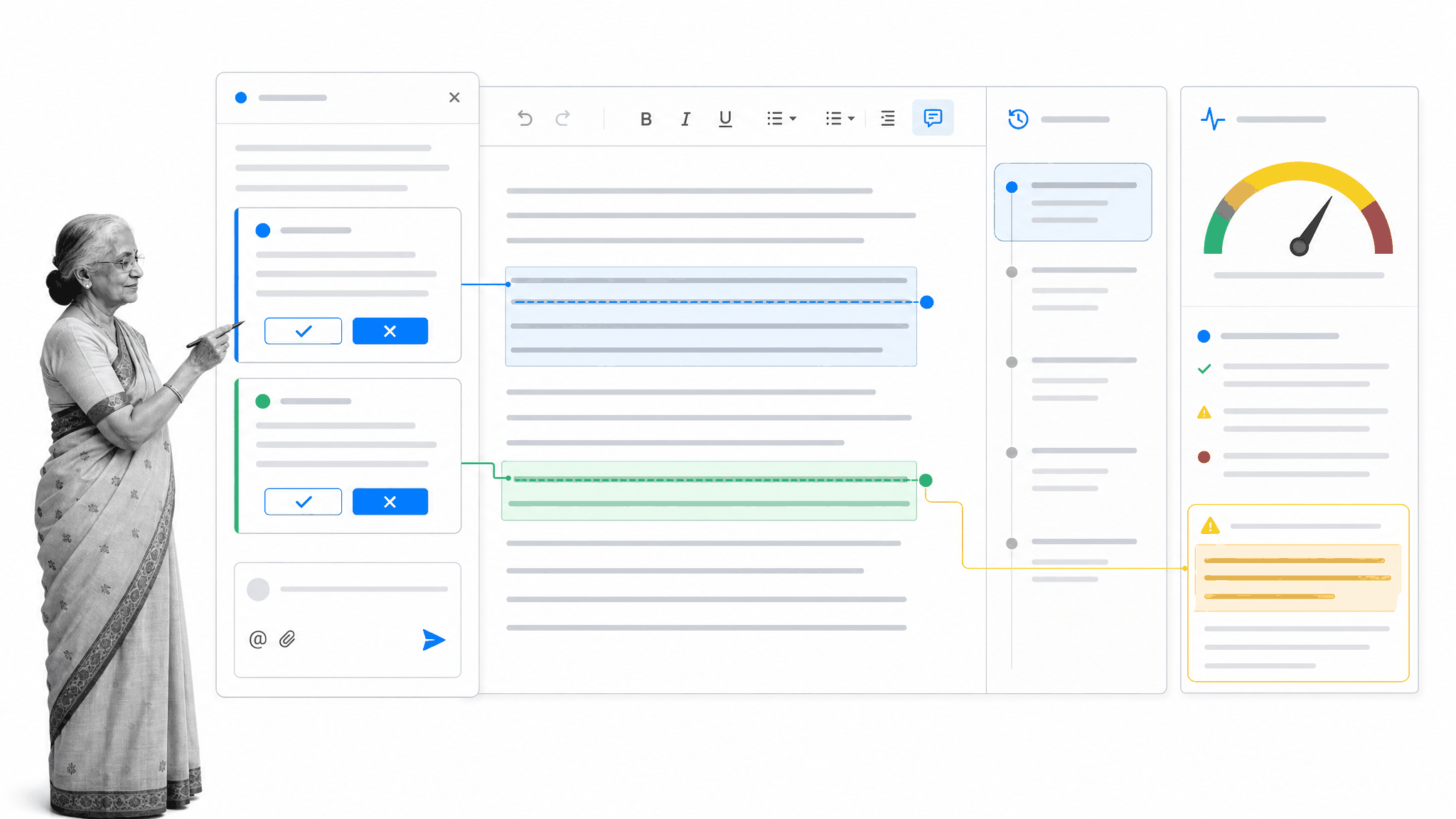
Beegit closed in 2018, but its useful idea survives: write and edit in a shared surface that preserves comments, suggestions, and version history. Keep formatting lightweight during the draft. Assign one owner for structural edits and another for the final proof when the risk justifies it. Resolve comments with a decision, not a silent rewrite, so reviewers can see what changed.
A readability tool such as Hemingway Editor can expose long sentences, passive constructions, and dense passages. Treat those signals as prompts for judgment. Clear technical language can still be complex, and a short sentence can still be vague. The editor decides what the reader needs.
Use a checklist to quickly edit your blog posts (without mistakes)
Don’t delete anything until the final draft
Here’s a tip I picked up from Scott Berkun’s short talk about avoiding writer’s block. If you haven’t seen it, it’s well worth a watch just to see time-lapse footage of a writer’s process. The idea is that we can easily get attached to sentences which don’t fit in with the article. Scott suggests writing with a divider at the bottom the page where you put your sentences condemned to sad deletion. This is good because you might find a way to work it in later, and also you won’t hesitate so much when killing your darlings.SEO and content performance

A good article needs a distribution path. Search is one part of that path, and the work starts before the draft. Define the reader’s problem, inspect the current results, and decide what your article can contribute that the existing pages do not. Search volume and difficulty matter, but so do intent, traffic potential, business relevance, authority, and the quality of evidence you can bring.
Choose a query the article can satisfy
Use keyword research to understand language and demand, then read the results yourself. A phrase is attractive only when the search intent matches the article and your site can credibly solve the problem. The current Ahrefs keyword research guide is a useful reference for intent, traffic potential, difficulty, and business value. Protect specific first-hand evidence rather than sanding it down to resemble every ranking page.
Optimize the page without writing for a robot
Make the main answer clear near the opening. Use descriptive headings, natural term variations, useful internal links, and source-backed examples. Link related concepts when the next page genuinely helps the reader. The Backlinko on-page SEO guide covers current on-page practice, including search engines and AI answer surfaces. Clean structure helps retrieval systems, but unique experience is what gives them something worth retrieving.
Process Street found opportunities in operational topics that looked boring from the outside. What we learned about employee onboarding was not that the keyword was easy. It was that we understood the process well enough to publish a detailed answer, connect it to a real workflow, and earn relevant links. That same standard applies now: solve a narrow problem completely and prove the advice with something you have actually done.
Measure, distribute, and improve
Publication is not the finish line. Record the final URL, owner, date, target audience, and distribution plan. Review search visibility, qualified traffic, engagement, conversions, sales use, and reader feedback on a schedule that matches the topic. Update weak sections, consolidate overlap, strengthen evidence, or retire content that no longer serves a clear job. AI can help classify feedback, compare a draft with its brief, and surface stale claims. Human reviewers remain responsible for sources, judgment, and final approval.
Process Street is a single Compliance Operations Platform with Docs and Ops capability areas plus built-in AI. Teams can document editorial standards, run content workflows with owners and approvals, retain evidence, and connect work across their stack. For a broader view of coordinating briefs, assets, feedback, and review, see this guide to creative workflow management software.
What have you learned?
The best content creation tips survive a change in software because they describe the work itself. Collect evidence before choosing an idea. Preserve source context. Build a clear structure. Separate review from approval. Publish with a distribution plan. Measure what happened, then feed the learning back into the next brief.
The tools will keep changing. A reliable content creation workflow lets the team change with them without losing the standards, ownership, evidence, and judgment that make the work worth reading. That operating discipline is what turns isolated publishing wins into a repeatable content system.
The post Content Creation: Lessons From Writing 157 Articles in a Year first appeared on Process Street | Compliance Operations Platform.


0 Commentaires