Employee retention strategies are the policies, management practices, and day-to-day experiences that give people good reasons to stay. The Great Resignation made retention an urgent topic, but its most durable lesson is simple: Employees compare what an organization promises with what managers, systems, and career opportunities actually deliver.
The quit surge has cooled, yet retention is still an operating concern. The U.S. Bureau of Labor Statistics reported a 1.9% quits rate in July 2026 and about 38 million quits during 2025. Gallup also found that 42% of voluntary leavers believed their departure was preventable. This Process Street guide explains seven practical ways to retain employees without relying on short-term perks.
- Why employee retention remains difficult
- 7 employee retention strategies
- Benefits of investing in employee retention
- Build a retention system that lasts
Why employee retention remains difficult
The Great Resignation describes the unusually large wave of voluntary departures that followed the first year of the COVID-19 pandemic. In 2021, tens of millions of U.S. workers quit. A Pew Research Center study found that low pay, a lack of advancement opportunities, and feeling disrespected at work were the leading reasons people left. Childcare problems, scheduling, benefits, and hours also mattered.
Those findings are historical, but the underlying management problems are not. Employees still judge the fairness of compensation, the quality of their manager, the usefulness of their work, and whether the organization makes growth possible. A retention strategy has to address that whole experience. A single bonus cannot repair unclear expectations, weak onboarding, poor work design, or a manager who never discusses development.
A resurgent economy can create a rising demand for talent and a demand-supply gap in particular roles. New jobs and roles open avenues for talent to shift to different positions and companies. Competition for top talent can push organizations to provide higher salaries, flexible work options, and more paid leave. While it is challenging to retain employees in that environment, effective retention and recruitment strategies can reduce avoidable churn without trying to block healthy career movement.
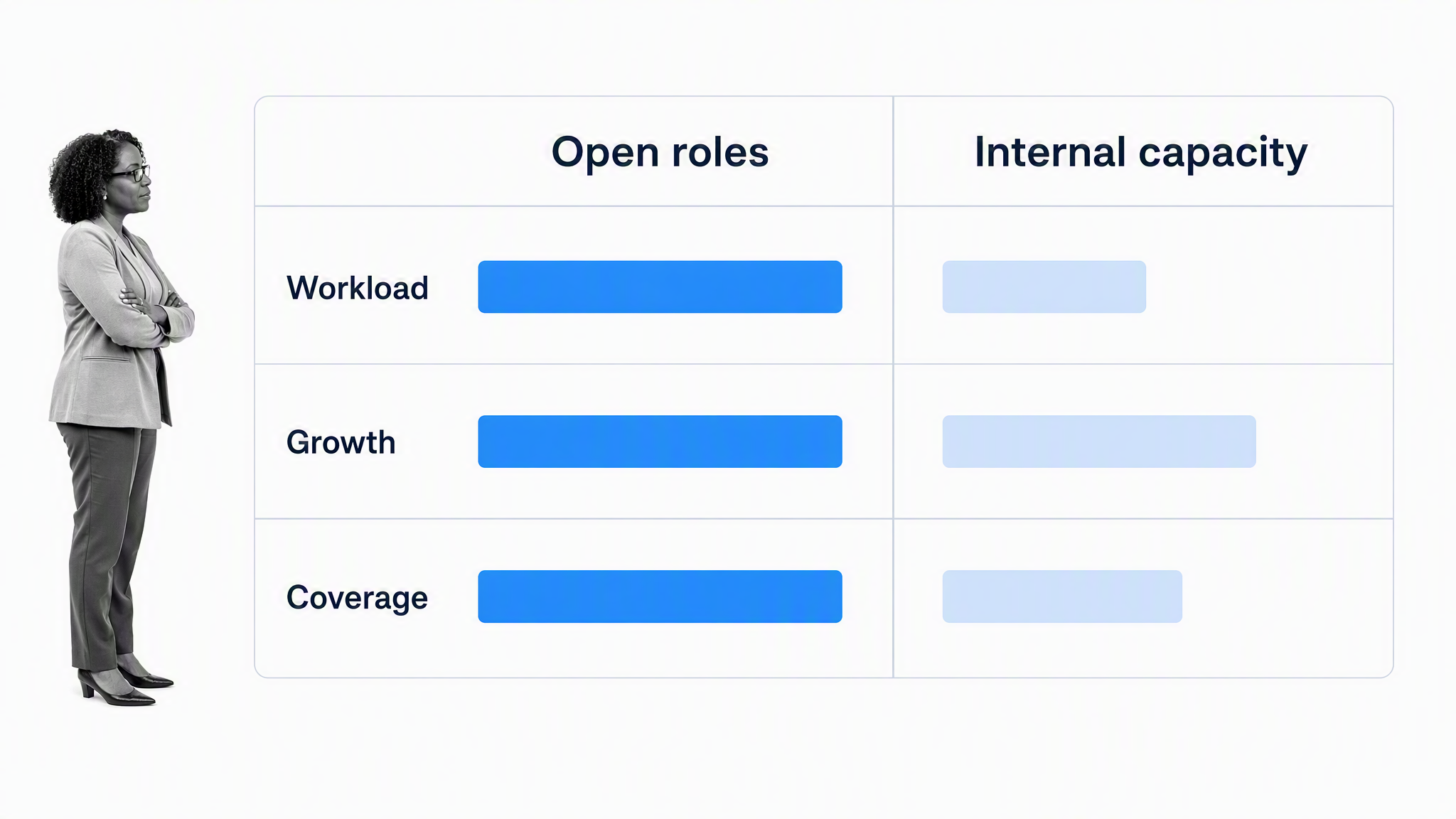
Retention also depends on workforce planning. Compare the demand for each role with the capacity and skills already available inside the organization. If workloads, growth opportunities, or coverage are persistently out of balance, attrition is more likely to look like an employee problem when the real cause is the operating model. Review voluntary turnover by team and tenure, then combine the numbers with stay interviews and exit themes. Never use one metric to diagnose an individual.
7 employee retention strategies
Effective employee retention strategies connect the employee lifecycle instead of treating every departure as a surprise. The seven strategies below reinforce one another: Strong onboarding creates clarity, flexibility makes work sustainable, development and career paths create momentum, connection builds belonging, recognition shows that contributions matter, and trust gives people room to perform.
Refine your onboarding process
Retention starts before a new employee completes their first week. A clear job preview, a prepared manager, working access, and a realistic first-month plan reduce uncertainty at the moment when a new hire is deciding whether the organization matches what they were promised. Gallup found that employees with an exceptional onboarding experience were 2.6 times as likely to be extremely satisfied with their workplace.
Use a repeatable employee onboarding checklist to coordinate welcome messages, account provisioning, required training, role context, and check-ins. Give every task an owner and due control. The manager should explain what good work looks like at 30, 60, and 90 days, introduce the people who can unblock the employee, and schedule time to ask what remains confusing.
Onboarding reflects what your company is and leaves the first impression on new employees. Extra steps may be needed to make sure employees joining remotely feel integrated into their team. Each team member should have the necessary training, events, materials, and certifications at their disposal. Personalized onboarding experiences should still follow a governed standard, so a remote employee and an office-based employee both receive the role context, access, and human connection they need.
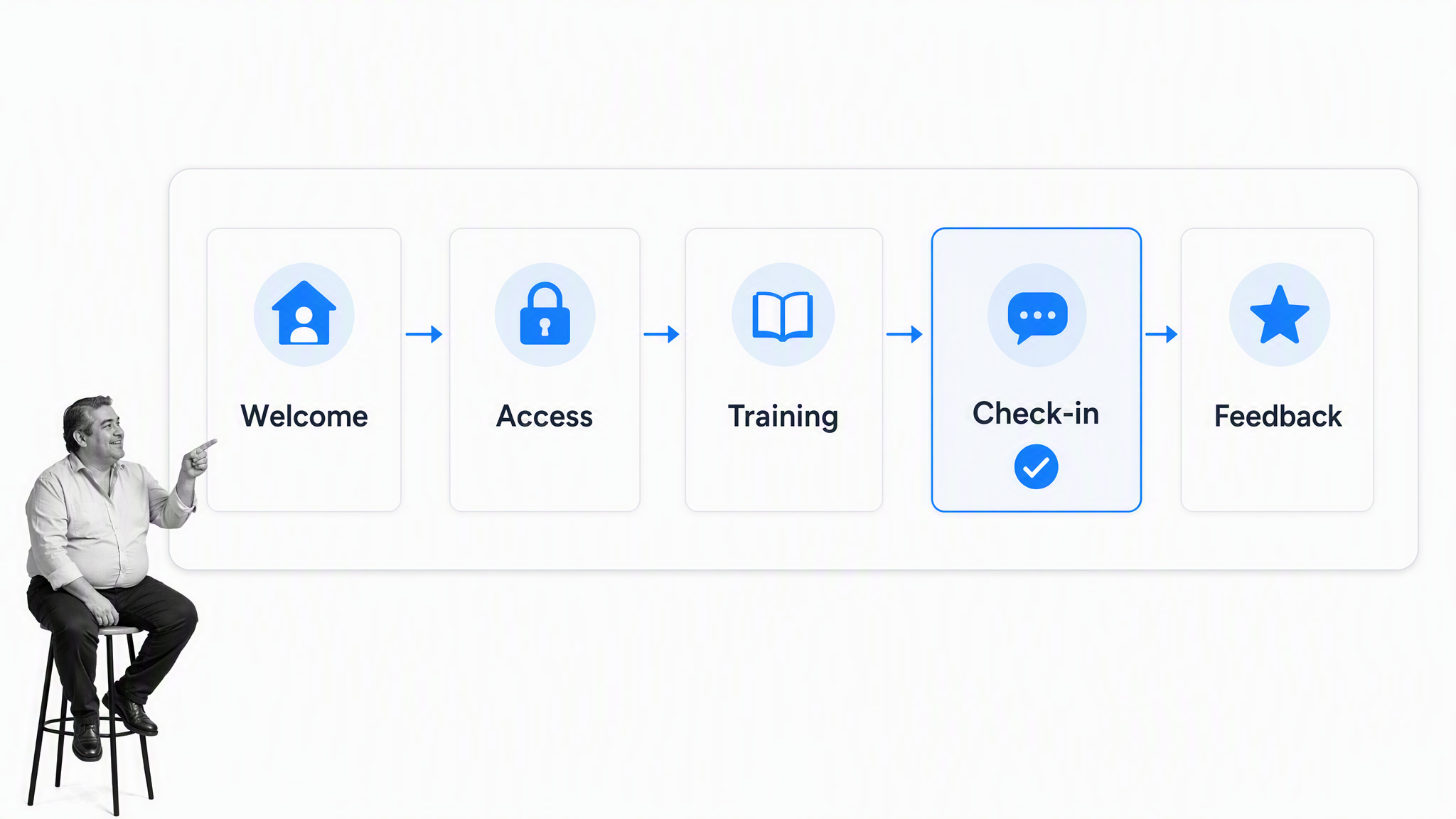
Onboarding should not end after orientation. Ask new hires about role clarity, access, manager support, workload, and belonging at several points during the first 90 days. Treat repeated friction as a process defect. Fix the workflow for the next employee rather than asking each new hire to improvise around the same missing information.
Offer flexibility and the tools to support it
Flexibility is most credible when it is designed into the work. Define which outcomes matter, which meetings require live participation, what coverage the team needs, and where employees can choose their location or schedule. In its 2025 workplace research, Pew Research Center found that many workers with remote-capable jobs still worked from home at least some of the time, and flexibility remained important to them.
Flexible work can give employees back time, reduce commuting costs, and provide more control over their day. It can also create coordination gaps if decisions, documents, and responsibilities live only in meetings. Give people access to the tools, equipment, and documented processes they need. Use shared standards for handoffs and response times, but avoid monitoring activity as a substitute for managing outcomes.
Three factors often shape how a modern-day worker evaluates flexibility: time utilization, money, and control. A long commute consumes time that could otherwise be spent with friends and family. Working at an office can also involve commuting, city rent, childcare, and other expenses. Work-shift flexibility coupled with remote work can support a better work-life balance when the role allows it. The important question is whether the arrangement lets the employee do the job effectively while meeting team and customer needs.
Flexibility is not identical for every role. Frontline, site-based, and customer-facing teams may need predictable scheduling, shift-swapping rules, or compressed workweeks instead of remote work. Explain the business constraints and give each group meaningful choices inside them. Perceived fairness comes from a transparent rationale, not from pretending every job can use the same arrangement.
To adopt flexible work successfully, pair the policy with flexible tools and explicit working agreements. Make sure that remote employees can join important activities, find current decisions, and contribute without being tethered to a fixed location. Give managers guidance for evaluating performance consistently across locations. Ask employees which constraints are useful and which create avoidable friction, then make the operating rules visible so flexibility does not depend on an individual manager’s preference.
Create progress with employee development plans
People are more likely to stay when they can see progress. An employee development plan should connect the person’s interests, current capabilities, role expectations, and near-term opportunities. It is not a promise of promotion. It is a shared record of the skills to build, experiences to seek, support the manager will provide, and evidence that will show improvement.
Managers should hold regular development conversations, not save them for an annual review. Ask what the employee wants to learn, which work gives them energy, where they feel underused, and what would make the next six months meaningful. Turn the answers into one or two concrete goals with time, coaching, and practice built in. Training without an opportunity to apply it rarely feels like progress.
Development can include stretch assignments, mentoring, job shadowing, certification, peer teaching, or ownership of a small improvement project. Review the plan as business needs change. If the only available path is management, employees who want deeper expertise may conclude that growth requires leaving.
Your employees are more likely to prioritize the business when the business visibly prioritizes them. On-the-job training can help a team maintain its edge while grasping new industry standards. Investments in developing an existing team can build trust and affinity that contribute to loyalty over the longer run. Communicate why each person is an important part of the organization, connect their work with a meaningful employee mission, and recognize that public appreciation should never be a substitute for private coaching or fair opportunity.
Progress includes the ability to see and describe achievement. Employees want to know that coworkers and managers appreciate their effort and that meaningful accomplishments are recognized. Help people collect evidence of new capabilities, completed activities, and stronger results. According to the goals in the development plan, review what the employee has achieved, which standards they can now meet, and what experience is still missing. That record supports better career decisions and prevents development from becoming a series of vague promises.
Make room for growth with clear career paths
Career paths make advancement criteria visible. Show employees how a role can grow laterally as well as vertically, which skills each move requires, and how decisions are made. Pair those paths with fair compensation practices. Pay is not the only reason employees stay, but persistent inequity or opaque ranges can make every other retention effort feel cosmetic.
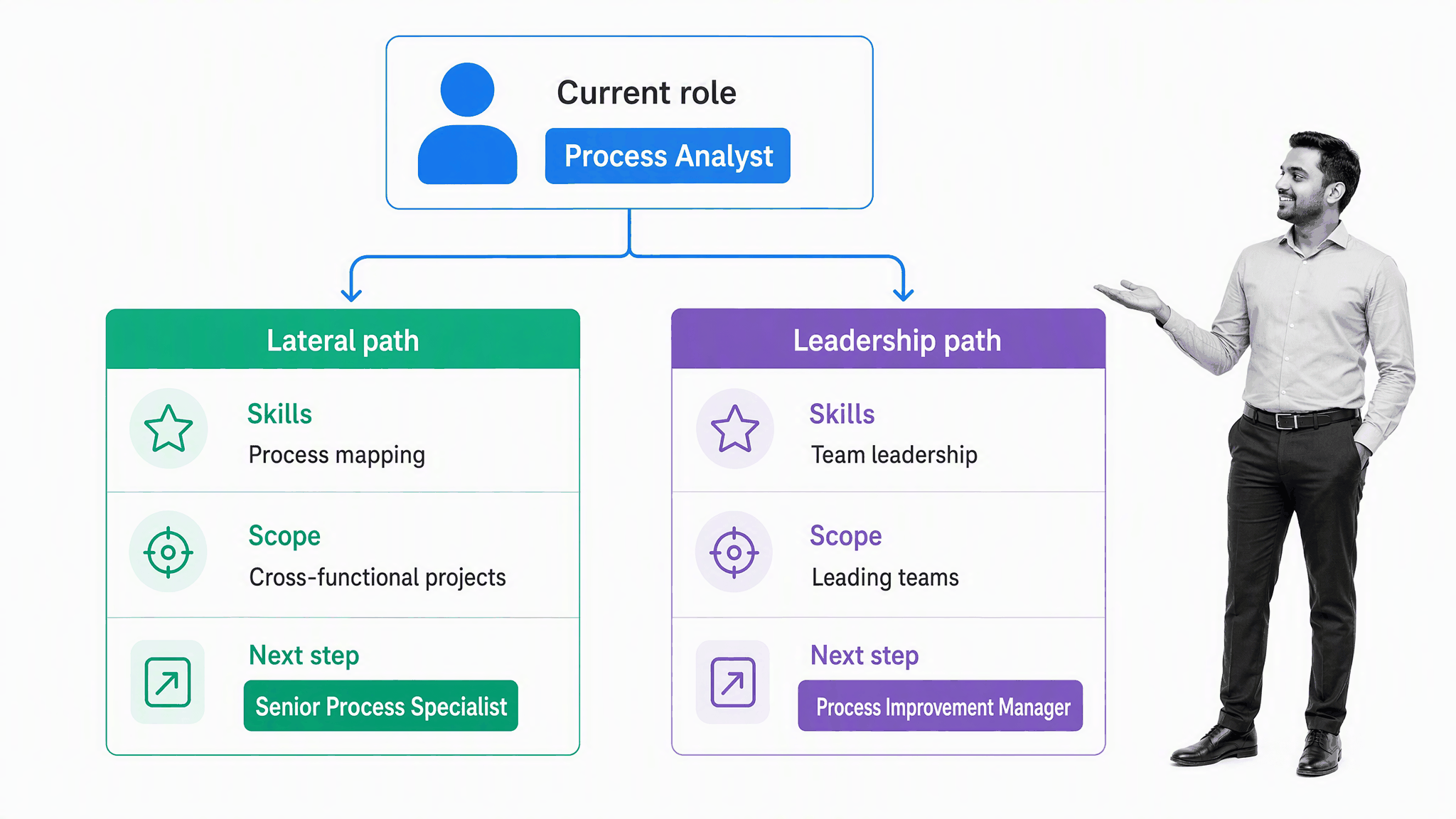
A process analyst, for example, might deepen expertise through cross-functional process mapping and move into a senior specialist role. The same employee might build leadership skills, take responsibility for a team, and progress toward process improvement management. Both paths deserve explicit expectations, access to relevant work, and a manager who can help the employee test the next step.
Post internal openings, publish the selection process, and track internal applications and moves. Employees should be able to explore opportunities without being treated as disloyal. When a promotion is not available, be honest about timing and identify an assignment that still builds portable capability. False promises damage retention more than a clear no.
Both lateral and vertical growth opportunities can boost employee retention. The rising competition for talent forces businesses to offer financial and educational incentives to attract candidates, but those incentives should also be available to the people already doing the work. Keep staff motivated by paying attention to what employees have to say about the business, offering growth opportunities, and making compensation reviews regular enough to address meaningful changes in skill, scope, and performance.
Try making the workplace more engaging by offering growth opportunities, motivating high performers, and paying attention to what employees have to say about the business. A quarterly career conversation can sit above the day-to-day coaching without becoming a forced quarterly pay increase. Employees should understand what they are allowed to pursue, how leaders align opportunities with business needs, and how achievements will be evaluated. Above all, never ask someone to complete extra work indefinitely on the vague possibility of future advancement.
Strengthen connections across the organization
Connection is not the same as constant social activity. Employees need useful relationships with their manager, peers, collaborators, and the people their work serves. Those relationships make it easier to ask for help, exchange knowledge, resolve conflict, and understand how individual work contributes to a larger outcome.
Create repeatable moments for connection: manager one-on-ones, team retrospectives, cross-functional planning, communities of practice, and peer mentoring. Make participation accessible across time zones and work locations. Tools such as Polly can support lightweight check-ins, but software cannot replace a manager who listens and follows through.
Make time for connection even when things are hectic. Building trust among coworkers can include a team lunch, a well-designed team-building activity, or an informal session that helps people learn how colleagues work. Foster collaboration across different backgrounds and locations instead of forcing participation in a single social format. Employees are often keen on learning from and helping each other, so create expertise-driven knowledge-sharing sessions and encourage people to share practical lessons that help others benefit.
Pay particular attention to employees who are new, changing roles, or working at the edge of a team. Ask who they rely on, who relies on them, and where knowledge is concentrated. A healthy network lowers the cost of asking for help and reduces the risk that one departure removes critical knowledge.
Recognize employees in ways that matter to them
Recognition tells employees which contributions the organization values. It works best when it is timely, specific, and connected to real impact. “Great job” is pleasant but vague. Naming the behavior, the customer or team outcome, and why it mattered helps the employee repeat it and helps peers understand the standard.
Recognition does not have to be expensive, but it should fit the recipient. Some people appreciate public praise; others prefer a private note, development opportunity, additional responsibility, or time back. Ask employees how they want to be recognized and build peer recognition into normal work instead of reserving it for annual awards.
Gallup reported that well-recognized employees were 45% less likely to have turned over two years later. Recognition should never hide a pay, workload, or management problem. Use it to reinforce meaningful contributions while fixing the conditions that make good work unnecessarily hard.
Make employee recognition a continual and integral part of business culture. A peer-to-peer recognition program can encourage staff to recognize one another’s hard work regularly. Personalized recognition links employees to purpose, achievement, and each other. Organizations can establish meaningful milestones and make sure that achieving those milestones in a reasonable timeline is acknowledged. Work anniversaries and personal occasions may matter to some employees, but participation should be voluntary and respectful of privacy.
A highly effective reward program should be understandable and available to the people whose work meets its criteria. Define the accomplishment, the predetermined timeline if one is relevant, and the incentive before the result is judged. On-floor appreciation, a thoughtful message, or a small gift can create a sense of recognition among colleagues, while larger rewards need consistent approval rules. Review participation to ensure the program does not repeatedly overlook less visible work.
Build trust instead of managing through control
Trust grows when leaders make expectations clear, keep commitments, explain decisions, and give employees appropriate autonomy. Micromanagement sends the opposite message. It increases the cost of routine decisions, slows learning, and encourages employees to optimize for visible activity instead of useful results.
Set outcomes, decision rights, quality standards, and escalation points. Then let employees choose how to complete the work inside those boundaries. Managers should stay available for coaching and remove obstacles without taking ownership back at the first sign of difficulty. When a mistake occurs, distinguish a learning problem from negligence and repair the process as well as the immediate result.
A lot of time and effort goes into finding the right people and trusting them to do their job. Keep everyone aligned by ensuring each person knows what they are responsible for, what colleagues own, and how cross-departmental tasks connect. Prioritize output over hours when the work supports that approach. Modern work often involves completing time-bound tasks, organizing meetings, creating reports, and coordinating decisions, so performance standards should reflect the value and quality of the result.
Transparency supports trust when it is relevant and responsible. Share the goals, constraints, and information employees need to make good decisions. Do not use transparency as an excuse to expose private data or distribute sensitive financial detail without context. Trust is built through consistent judgment, not indiscriminate disclosure.
Benefits of investing in employee retention
Retention protects more than recruiting cost. Experienced employees carry customer context, process knowledge, and working relationships that take time to rebuild. Stable teams can spend more energy improving the work instead of repeatedly transferring it. Retention can also strengthen morale because employees see colleagues growing inside the organization rather than leaving to find every next opportunity.
Redirecting appropriate HR effort from constant recruitment toward employee development and retention can improve employee satisfaction and prevent costly churn. It can boost employee morale, increase camaraderie, and contribute to a healthier work environment that focuses on employee engagement. Meaningful employee development gives people incentives to stick around and care about the company’s growth. Connecting long-term ambitions with business goals can build a stronger team that is more likely to deliver outstanding results for customers.
A well-run retention program also boosts employees’ morale, increases camaraderie, and creates a happier work environment focused on employee engagement. It should encourage employees to share expertise, participate in useful team activities, and help coworkers achieve important goals. Make sure to take employees’ opinions on which policies they want to implement first so they are involved in decision-making. Their feedback does not decide every policy, but it gives leaders evidence about which constraints and benefits matter most.
Not every departure is preventable or undesirable. The goal is not zero turnover. The goal is to understand avoidable patterns, protect high-value capability, and give people a fair opportunity to succeed. Measure several signals together:
- Overall retention rate: the share of employees who remain through the measurement period.
- Regrettable voluntary turnover: departures the organization would have preferred to prevent, defined consistently.
- 90-day retention: an early indicator of role, hiring, and onboarding quality.
- Internal mobility: the rate of lateral moves, promotions, and qualified internal applications.
- Stay and exit themes: recurring qualitative evidence about managers, workload, pay, development, flexibility, and trust.
Assign a review cadence and an accountable owner for each measure. Monthly operational reviews can flag sudden changes, while quarterly reviews are better for patterns that need a larger sample. Put the rate beside the underlying employee count so a small team does not produce a dramatic percentage without context. Record which interventions began, when they began, and which population they were meant to help. That history makes later comparisons more useful and keeps the team from attributing every change to the newest program.
Segment results carefully by role, team, location, tenure, and other relevant factors, but protect privacy and avoid conclusions from very small groups. Compare trends over time and investigate meaningful changes. A correlation between a program and retention does not prove the program caused the outcome. Use the data to ask better questions and test improvements.
Build a retention system that lasts
The Great Resignation showed what happens when accumulated dissatisfaction meets a labor market with more options. Its lasting lesson is not that employees became unpredictable. It is that low pay, weak advancement, disrespect, inflexible work, and poor management can remain hidden until people have a credible alternative.
Although the Great Resignation presents challenges, it is not the first difficult challenge global businesses have faced. The concept of employment flexibility also includes working hours and location. Retention also speaks to confidence in the hiring choice: Trust people in the position and task they were hired to perform. Also encourage employees to share expertise, and think about personalized recognition so accomplishments are recognized in ways employees value.
Build employee retention strategies into the way work runs. Give managers a consistent onboarding process, regular stay conversations, visible development plans, fair career criteria, useful recognition, and clear decision rights. Review retention data with operational context and fix repeatable friction at its source.
Process Street is one Compliance Operations Platform with Docs and Ops capability areas plus built-in AI. Docs can hold governed policies, role expectations, career frameworks, and retention standards. Ops can run onboarding, check-ins, approvals, development plans, and follow-up as accountable workflows. Built-in AI can support approved drafting and analysis inside those controls, with people responsible for final decisions.
Has the Great Resignation affected your organization, or changed what employees expect from work? Which part of your employee experience creates the strongest reason to stay, and where does the process still depend on a manager remembering what to do? Use those answers to decide which policy or practice to implement first and how employees will remain involved in the decision-making.
Steven Macdonald is a digital marketer based in Tallinn, Estonia who contributes practical growth and retention guidance.
The post Employee Retention Strategies to Survive the Great Resignation first appeared on Process Street | Compliance Operations Platform.


0 Commentaires