Customer Success 2.0 is an organization-wide operating model that aligns go-to-market work, funding, talent, analytics, and culture around measurable customer outcomes.
The model comes from McKinsey’s Customer Success 2.0 framework. This guide keeps its five-part structure and shows how a current software stack can turn each element into repeatable work.
- Customer success 2.0 vs. customer success 1.0
- Customer success 2.0 software stack to execute the McKinsey model
- Customer success 1.0 vs. 2.0 in practice
- Customer Success 2.0 FAQs
Customer success 2.0 vs. customer success 1.0
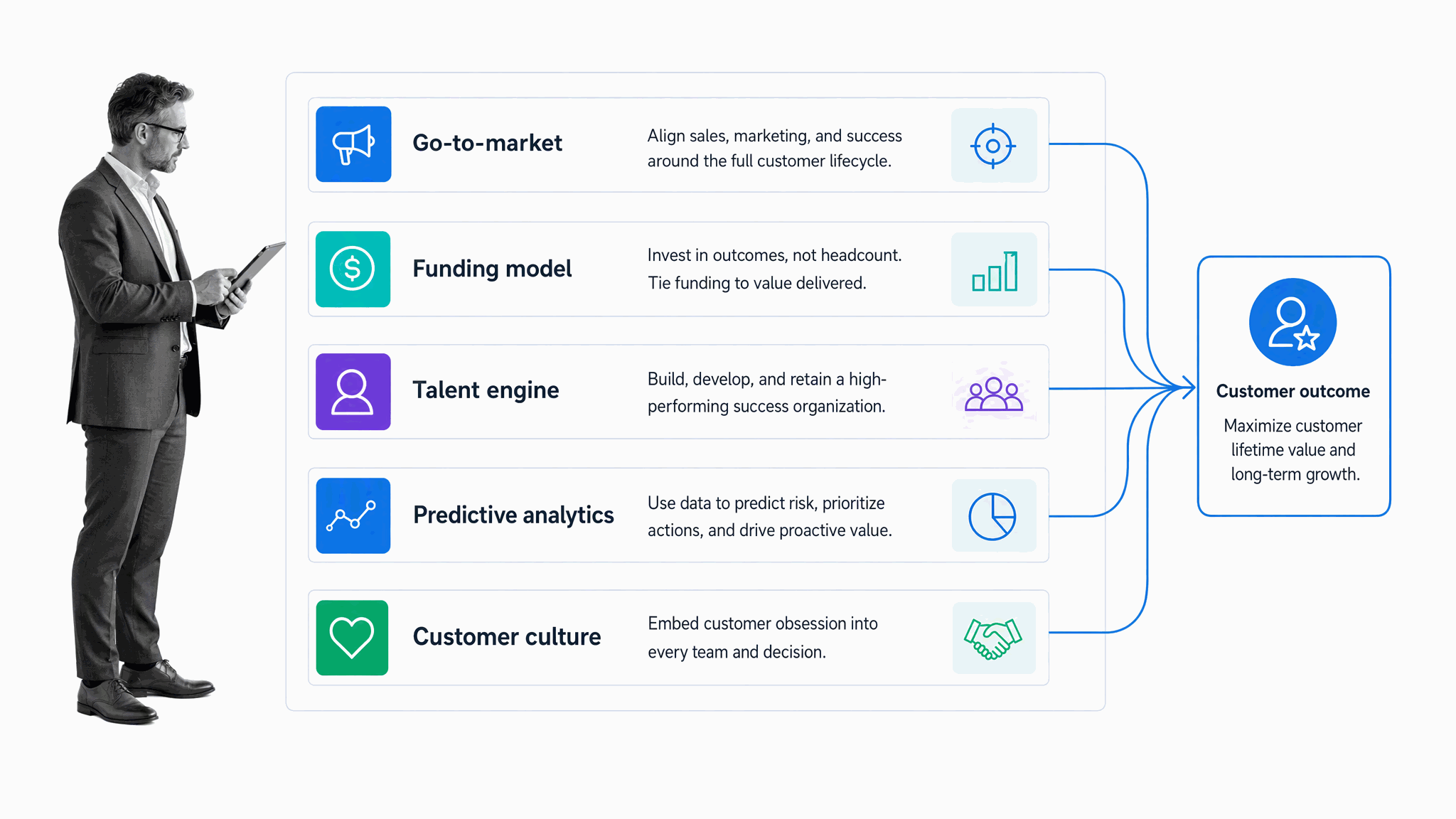
Customer success 2.0 takes a holistic approach to customer success to cultivate a customer’s maturing use of a product/service. In essence, customer success 2.0 looks at how a business can help their customers grow with them to achieve their goals. Strategic objectives are laid out with the aim of propelling the customer’s business forward with product/service use versus driving this use for increased revenue. In contrast, customer success 1.0 spends an inordinate amount of effort on labor-intensive adoption and reactive processes, with little or no regard to what the customer wants to achieve – aka, their goals. Customer success 1.0 may achieve customer satisfaction, but that isn’t the same customer success. Customer satisfaction is momentary, whereas customer success is long-term.The distinction matters only when it changes how teams operate. McKinsey identifies five elements that turn the idea into an actionable framework. Getting customer success right, and not letting your customers down is therefore your utmost priority. According to McKinsey & Company’s, to make sure customer success 2.0 is executed successfully, you need to apply the philosophy across your entire organization. And for this, you’ll need to adopt these five critical elements:
- Customer success 1.0: Focuses on churn reduction and risk management. Emerged from SaaS companies focused on complex business applications.
- Customer success 2.0: Recognizes customer success as a growth engine used by companies across a range of business-to-business sectors to change the approach to customer life-cycle management.
- A unified go-to-market model : Customer success is integrated into sales activities, roles, incentives, and organizational approach.
- A sustainable funding model supported by premium services : Funding models represent the intrinsic value of customer success activities and include a spectrum of free and fee-based services.
- The customer success talent engine : Clarity is given on the capabilities and intrinsic characteristics of top-performing, customer-success managers, with a comprehensive learning journey building internal capabilities. Career paths are given that offer growth and advancement.
- Advanced analytics to predict customer behaviors and target customer segments : Analytics are used to identify and predict customer risks and opportunities, combined with activities proven to deliver customer success. Change management is used to promote the use of analytical insights in daily work processes.
- Customer-success philosophy embedded across the organization : A cross-functional, comprehensive approach is used to deliver an optimal customer experience, with a customer-focused culture across the organization.
Customer success 2.0 software stack to execute the McKinsey Model
McKinsey’s benchmark data suggests existing customers account for between 1/3 and 1/2 of total revenue growth, even for startups. To capture this revenue potential, you need to ensure your implementing the five critical customer success 2.0 elements with effect. The software stack listed below will help you do that.Implement a unified go-to-market model using Process Street
What is Process Street?
Process Street is a single Compliance Operations Platform with Docs and Ops capability areas plus built-in AI. Docs governs procedures and customer-success playbooks. Ops turns them into executable workflows with assignments, approvals, evidence, due dates, and audit trails. Built-in AI helps teams create, run, and improve the work without separating policy from execution.
How does Process Street support a unified go-to-market model?
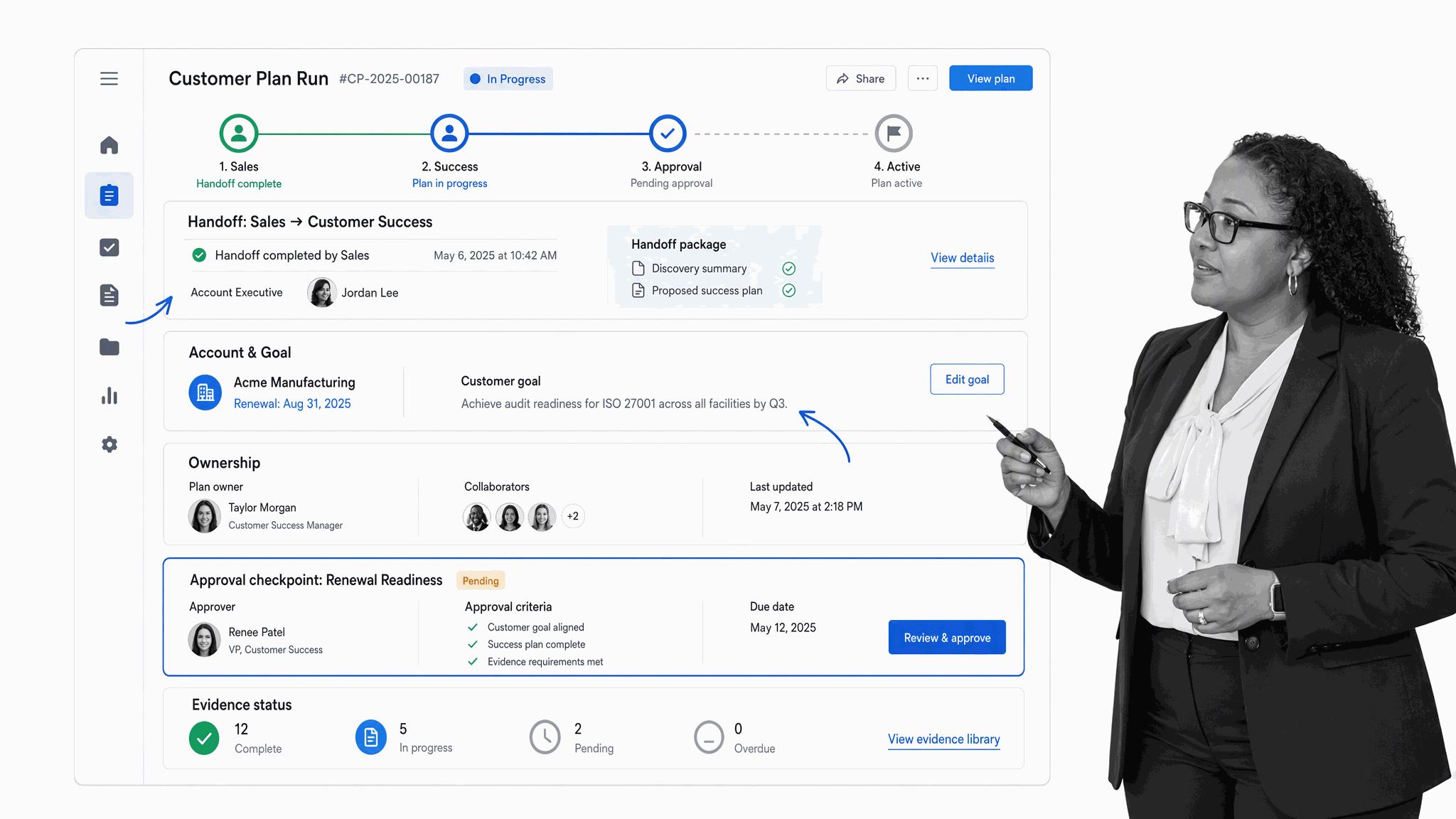
A unified model depends on shared customer goals, clear handoffs, and accountable execution across sales, customer success, service, and product. Process Street gives those teams one governed customer plan: role assignments identify who owns each step, task permissions protect sensitive account information, approvals control key decisions, and the workflow records what happened.
The platform is especially useful when analysis must become action. A health-score change can trigger a review, assign the right owner, collect supporting evidence, route an approval, and document the intervention. Teams can build this into a customer success onboarding playbook instead of relying on reminders and disconnected documents.
Process Street has direct, universal integrations to 5,000+ systems. Need a new one? An AI agent builds it on the fly. Customer context can move between the systems of record and the governed workflow while accountability remains visible in one place.
Implement a sustainable funding model using Gainsight
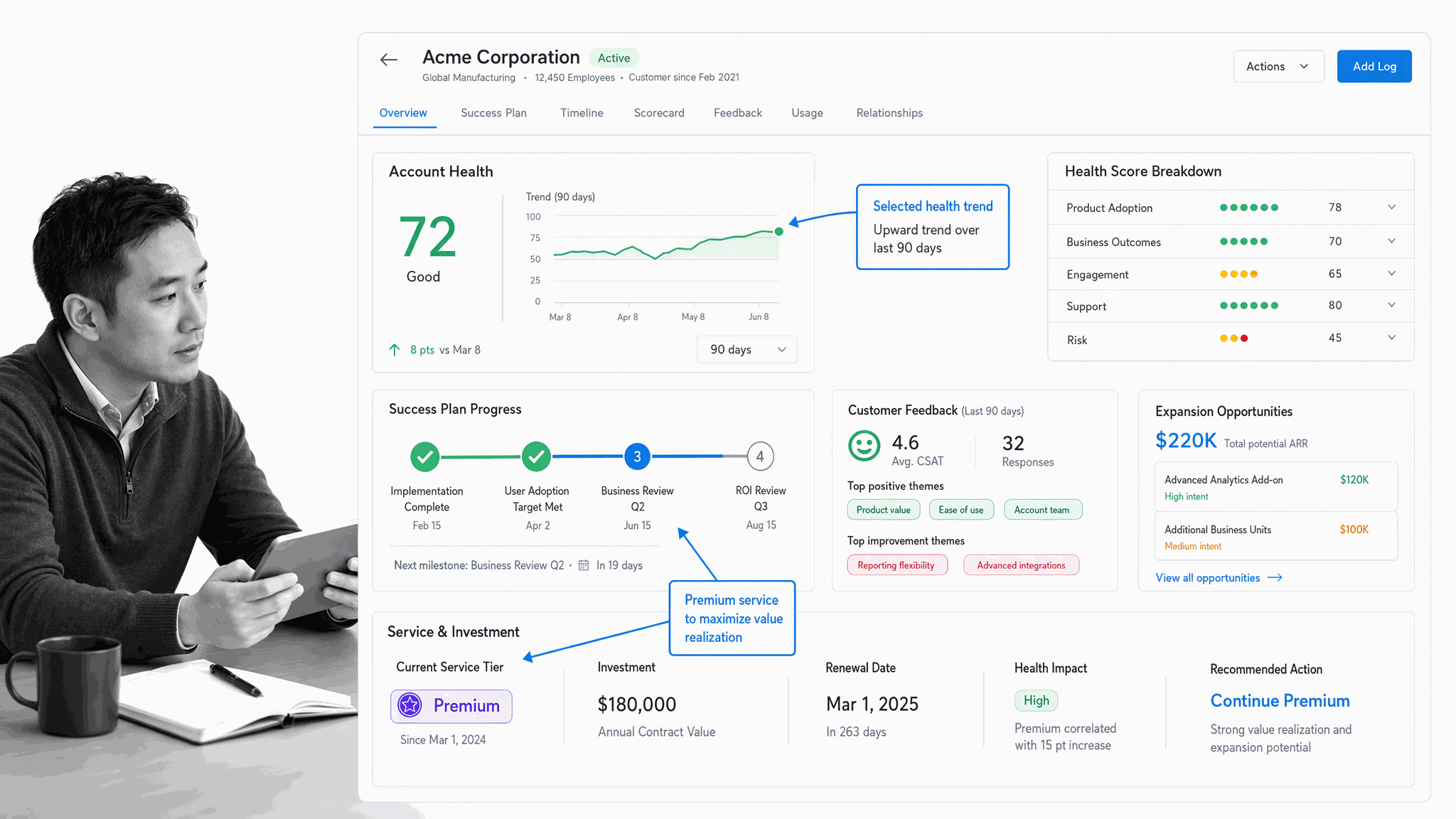
- Support ticket information
- Customer health scores
- Customer segmentation
- NPS surveys
- Customer health trends
- Customer lifetime value
- Churn rate
Build a customer success talent engine
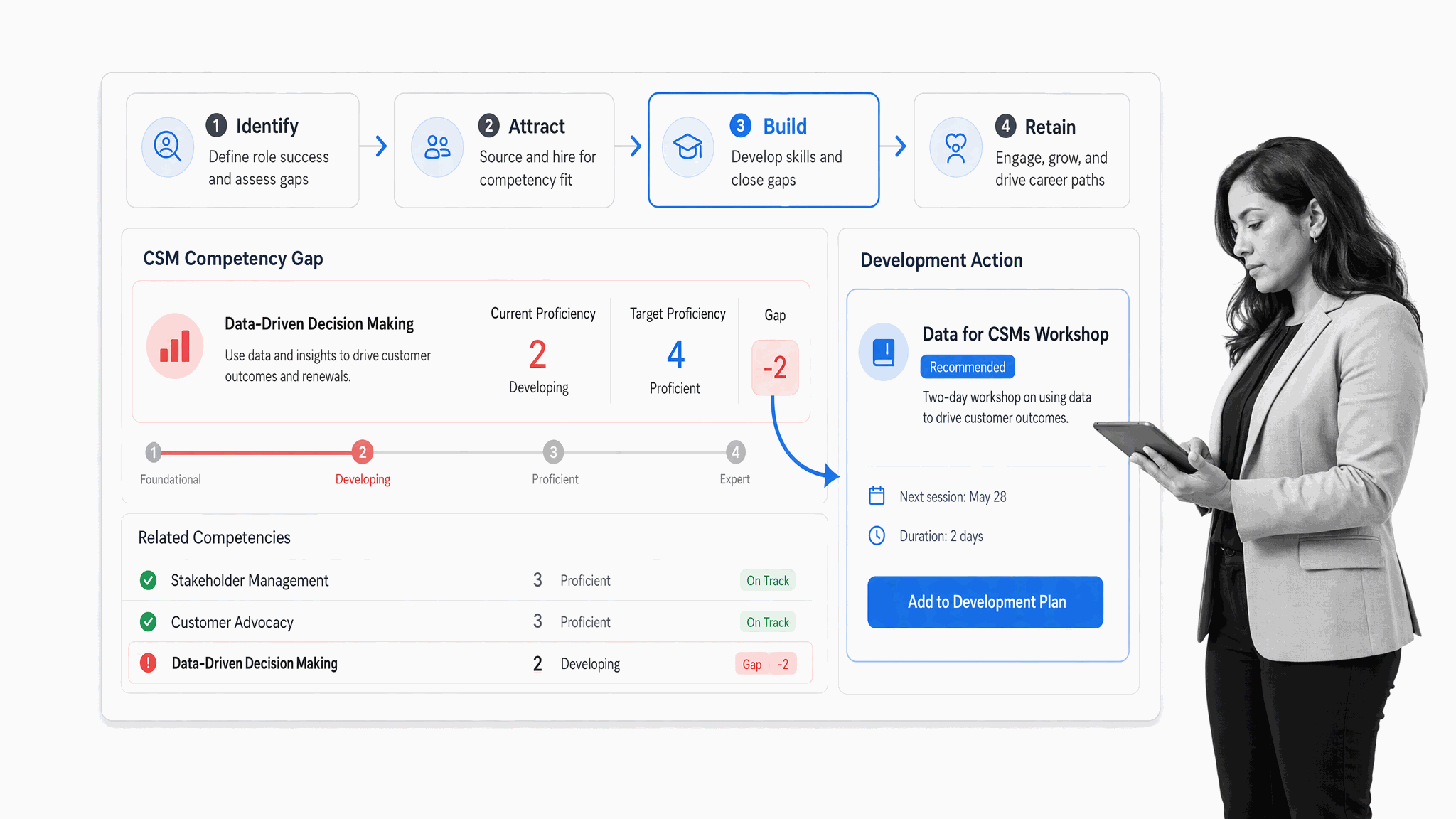
A customer success talent engine needs more than a recruiting database. It needs an HRIS or talent platform that connects hiring, competencies, learning, performance, and career development to the outcomes customers expect.
The four-part sequence from the original framework remains useful:
- Identify: Link customer outcomes and goals to the skills and experience required for each customer success role. Record the competency model and the evidence that defines good performance.
- Attract: Search for candidates who match the role’s domain, technical, and relationship requirements instead of using one generic CSM profile.
- Build: Create development pathways from each person’s current capability level. Use observed gaps, coaching, formal learning, and workflow evidence to guide the plan.
- Retain: Give people clear career paths, meaningful progression, and visible mastery of the skills that create customer value.
The durable requirement is the capability system, not one vendor. The HR platform should show who has each competency, where gaps exist, which development actions are active, and how progress connects to the customer-success operating model.
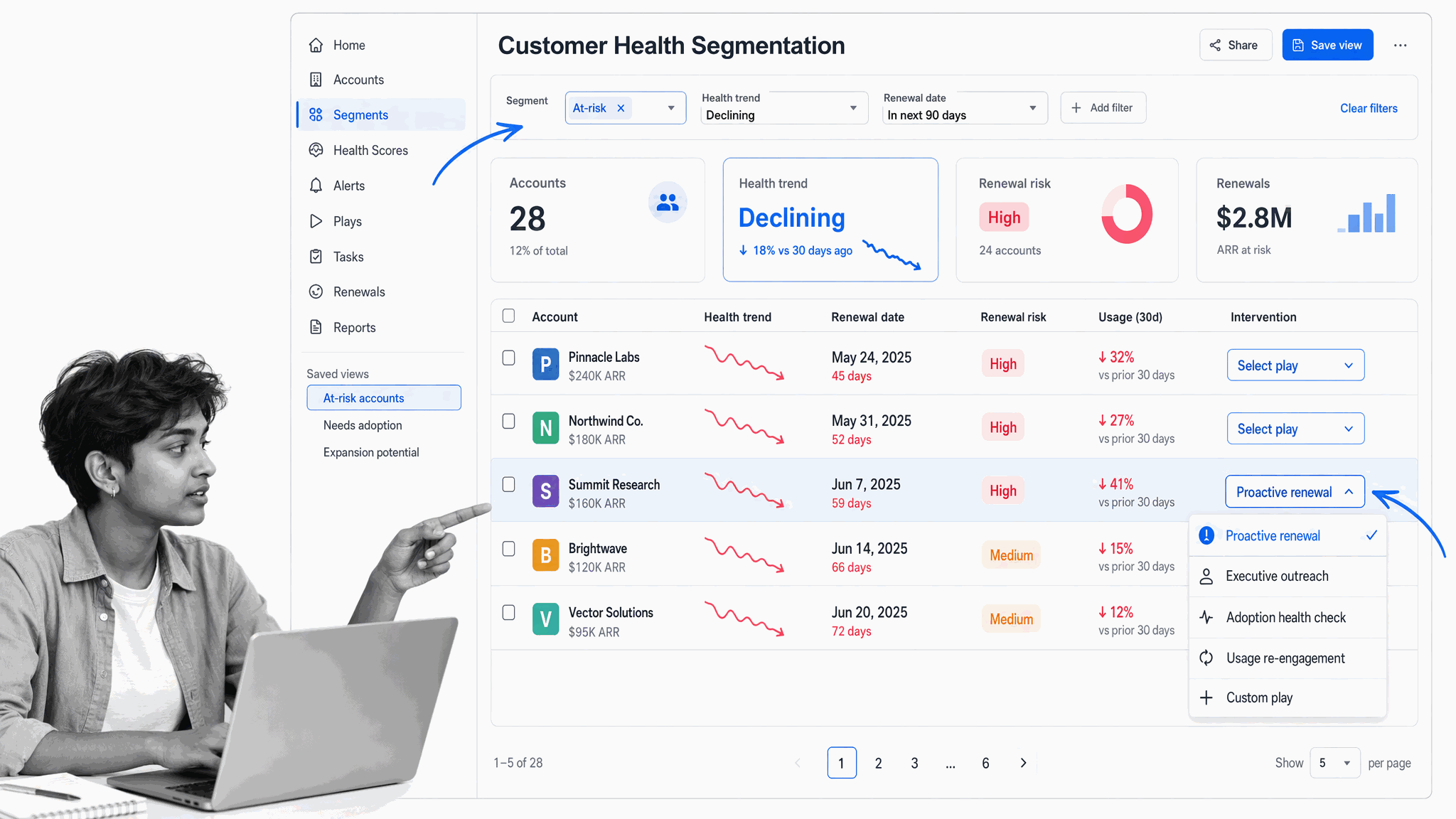
Predict customer behavior and target customer segments using ChurnZero
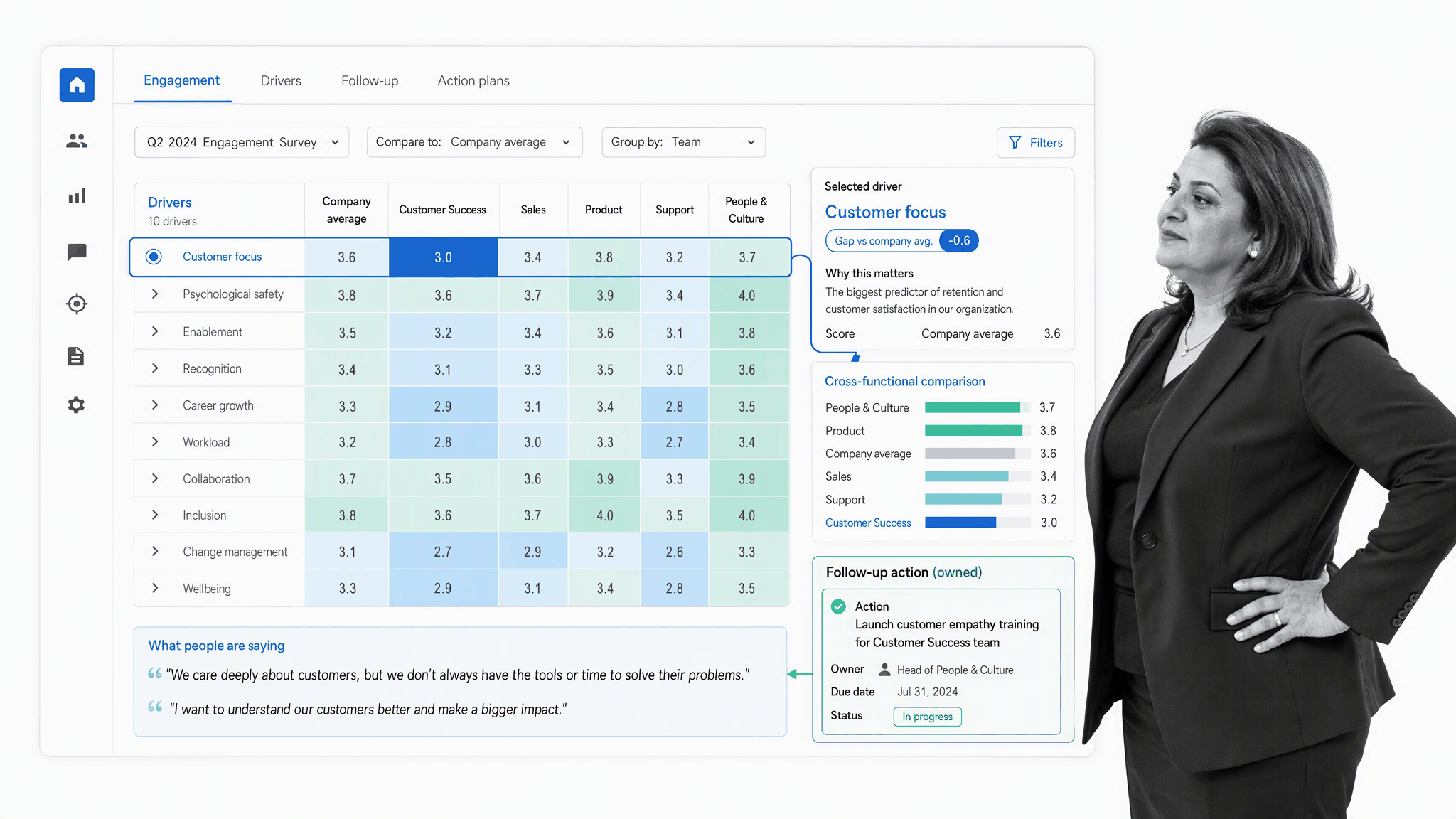
Embed a culture of success using Culture Amp
- Create clear accountability across multiple teams at each stage of the customer’s journey.
- Define the desired customer-success outcomes and how they’re linked to value. Culture Amp helps your teams understand how they’re linked to value creation, important for employee engagement.
- Implement processes that support cross-functional collaboration and learning. The insights gathered from your customer-success team can be shared with other teams.
- Empower a leader with oversight of the customer experience from end-to-end. Use data obtained from Gainsight and ChurnZero to assess your user experience from the initial contact they have with you, right through to the end customer journey goal. Then use Culture Amp to connect leaders with their teams to drive data-driven decisions.
- Ensure your company’s culture and all operations and processes focus on delivering value to the customers. Culture Amp improves employee engagement, retention, and performance under the company’s set of values. When it comes to customer success, this means your entire workforce will be working under the same customer success culture.
Comparing customer success 1.0 with customer success 2.0 in practice
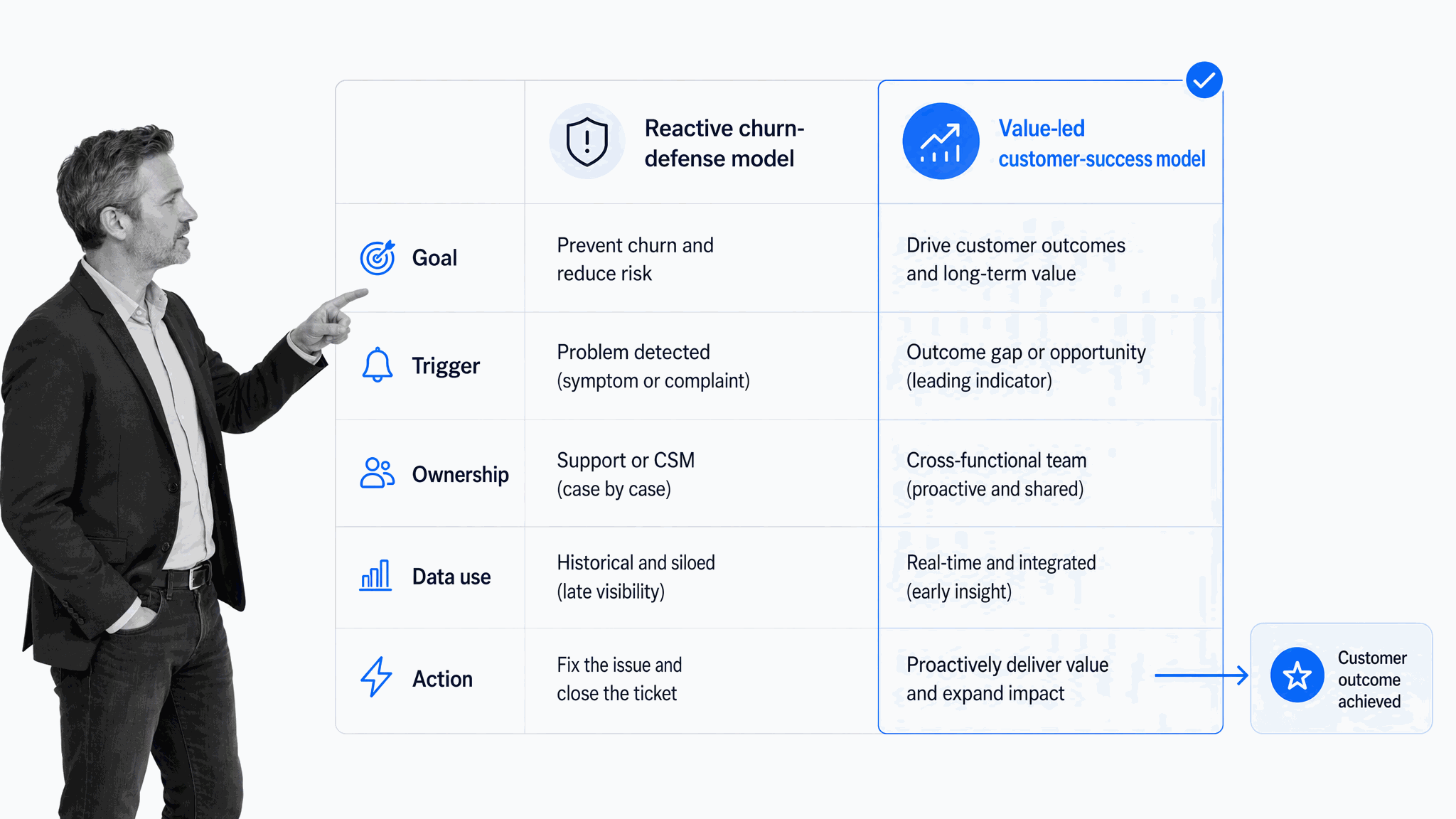
The practical difference is not whether a company cares about customers. It is how the operating model responds when an account needs attention or presents an opportunity.
A reactive customer success 1.0 model starts with a problem: a complaint, support escalation, missed adoption target, or renewal risk. Ownership is often assigned case by case. Data is historical and spread across systems. The immediate action is to fix the issue and close the ticket. This can reduce churn, but it keeps customer success focused on defense.
A value-led customer success 2.0 model starts with the outcome the customer is trying to achieve. Cross-functional teams share ownership. Product usage, feedback, commercial context, and workflow evidence are connected early enough to guide action. The team does not wait for a complaint. It uses health and opportunity signals to deliver value proactively.
The shift changes five operating choices:
- Goal: From preventing churn to creating measurable customer outcomes and long-term value.
- Trigger: From a reported problem to a leading indicator, milestone, or opportunity gap.
- Ownership: From a single support or CSM queue to shared responsibility across sales, success, service, product, and operations.
- Data use: From late and siloed reporting to timely signals connected to a governed customer plan.
- Action: From closing the immediate issue to running a repeatable intervention, recording evidence, and learning from the result.
Customer satisfaction can be momentary. Customer success is long-term. The Customer Success 2.0 model turns that distinction into a system teams can run.
Customer success 2.0: Your new approach to customer success
Customer Success 2.0 identifies opportunities to deliver more value to customers, then gives the organization a repeatable way to act on them. The framework is not a collection of tools. It is an operating model supported by the right tools.
Put the customer first. Revenue growth follows when teams can connect customer outcomes to accountable work, current evidence, and continuous improvement.
Customer Success 2.0 FAQs
What is Customer Success 2.0?
Customer Success 2.0 is an organization-wide operating model that aligns go-to-market work, funding, talent, predictive analytics, and company culture around measurable customer outcomes.
How is Customer Success 2.0 different from Customer Success 1.0?
Customer Success 1.0 is mainly reactive and focused on churn reduction. Customer Success 2.0 is proactive, cross-functional, and focused on creating customer value and growth.
What software belongs in a customer success tech stack?
A durable stack typically includes a governed workflow layer, a customer success platform, CRM and product signals, talent and learning systems, employee experience tools, and integrations that move context into accountable execution.
How does AI change the customer success operating model?
AI can summarize account context, identify risks and opportunities, draft customer plans, trigger governed workflows, and help teams improve interventions. Human owners still control decisions, approvals, and customer relationships.
The post Customer Success 2.0: The Essential Software Stack to Execute McKinsey’s Model first appeared on Process Street | Compliance Operations Platform.


0 Commentaires