A gap analysis is a structured comparison between performance in the current state and potential in a measurable target state. It identifies the gap between them, investigates why that distance exists, and turns the findings into an action plan.
This guide explains what a gap analysis is, where it is useful, the main types and tools, and a practical process for moving from evidence to implementation. It also shows how to assign owners, deadlines, and review points so the analysis leads to improvement rather than another report.
- What is a gap analysis?
- What is the use of a gap analysis?
- Benefits of gap analysis
- Common gap analysis examples
- Different types of gap analysis
- How to do a gap analysis
- Gap analysis tools
- How to streamline gap analysis
- Gap analysis FAQs
What is a gap analysis?
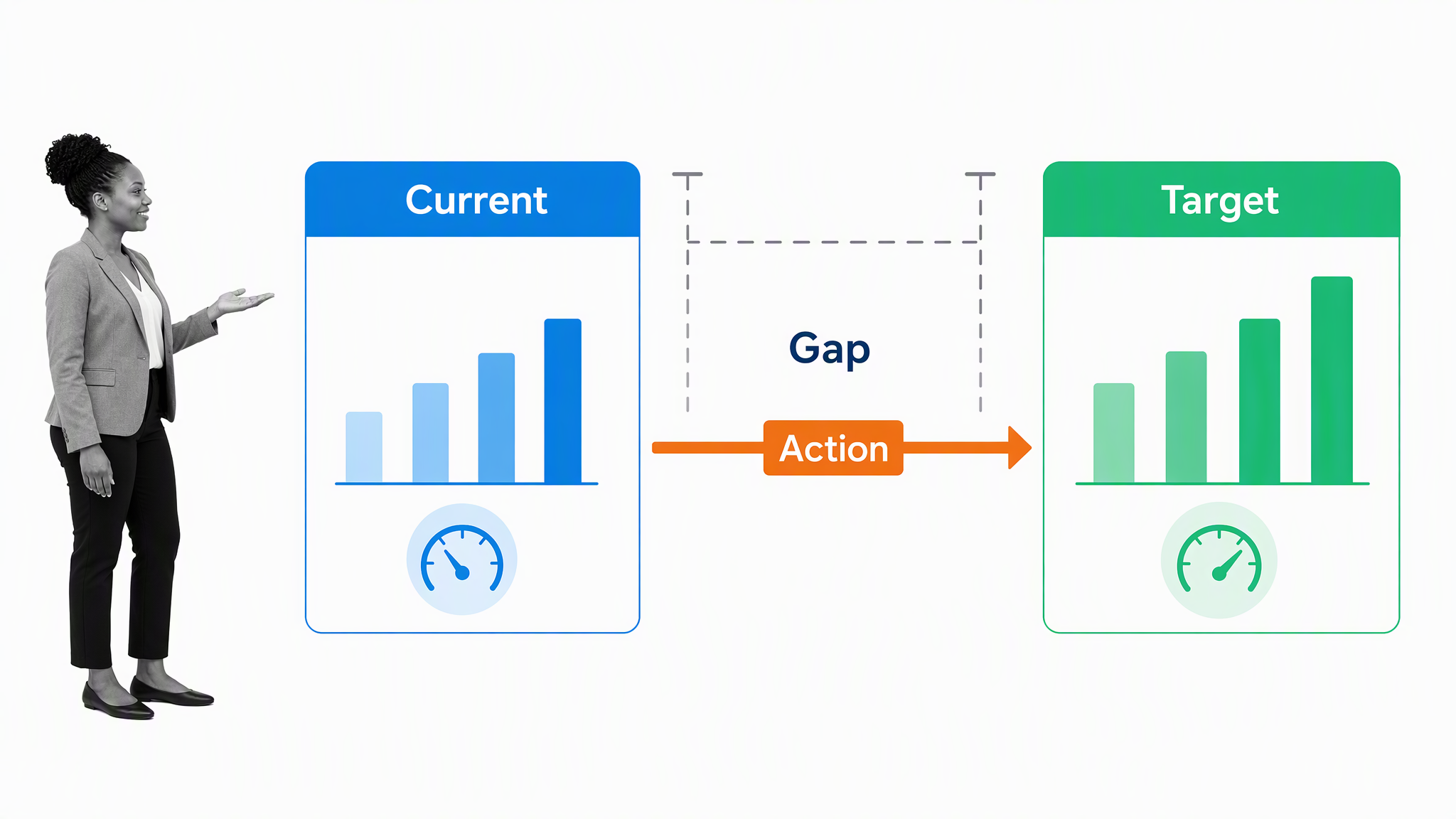
A gap analysis examines three connected elements: the current situation or performance, the desired situation or potential, and the work required to bridge the gap. The gap may be a shortfall in results, a missing capability, an inconsistent process, or a difference between a standard and actual practice.
- The current state, supported by evidence such as process data, customer feedback, or employee interviews.
- The target state, expressed as a clear standard, outcome, or performance level.
- The gap, including its size, likely causes, and business impact.
- The action plan for closing the gap, with priorities, owners, deadlines, and review measures.
You may also see related terms such as needs analysis or needs assessment. They overlap, but they are not always exact synonyms. A needs assessment often determines what a group requires, while a gap analysis explicitly compares an observed state with a defined target.
The method is useful because it forces an organization to make both sides of a problem visible. A statement such as “onboarding takes too long” is hard to act on. A finding such as “median onboarding takes 12 business days against a target of seven, with most delay occurring during security approval” gives a team something specific to investigate and improve.
The basic approach can be applied to many subjects being examined within an organization. Applications include actual versus budgeted sales, current versus required skills, planned versus observed output, and current controls versus a defined standard. In each case, the analysis provides a basis for understanding the difference and deciding how resources should be allocated.
Uses of gap analysis
A gap analysis helps identify specific areas for improvement and provides a route toward actionable changes in processes, products, services, skills, and strategy. It can be used when performance is below target, but it can also reveal improvement opportunities when results appear healthy.
If improving performance means breaking a problem into well-defined steps, the analysis helps determine which steps matter most. It separates symptoms from the difference that actually needs to be closed, then connects that difference to evidence and possible causes.
A gap analysis can also augment performance when there are no obvious inefficiencies or problems. Evaluating performance places focus on attributes such as output level, productivity, employee competency, and the resources available to the team. This creates a documented view of what is working well as well as what could be improved.
Fundamentally, the method helps explain why a company, person, product, or process is not achieving its full capacity. Which factors are preventing the subject of the analysis from reaching the desired outcome? Which factors contributed to success? Answering both questions makes the action plan more useful than a list of deficiencies.
Gap analysis is especially useful during planning, audits, process redesign, technology changes, and performance reviews. A team can compare its operation with an internal objective, an external benchmark, a customer requirement, or a formal standard. For example, a quality team may compare its system with ISO 9001:2026, while a sales team may compare current conversion rates with an approved quarterly target.
The analysis can focus on the seller’s and buyer’s perspective, a team’s ability to achieve an objective, or the capacity that exists for further expansion. It can also help explain whether brand image, reputation, service design, or resource allocation is affecting sales and whether adjustments are likely to improve the outcome.
Like continuous improvement approaches such as the Deming cycle or Six Sigma, the output should inform a decision. The value is not the report itself. It is the shared understanding of what is happening, what should happen, and which controlled changes will close the difference.
Benefits of gap analysis
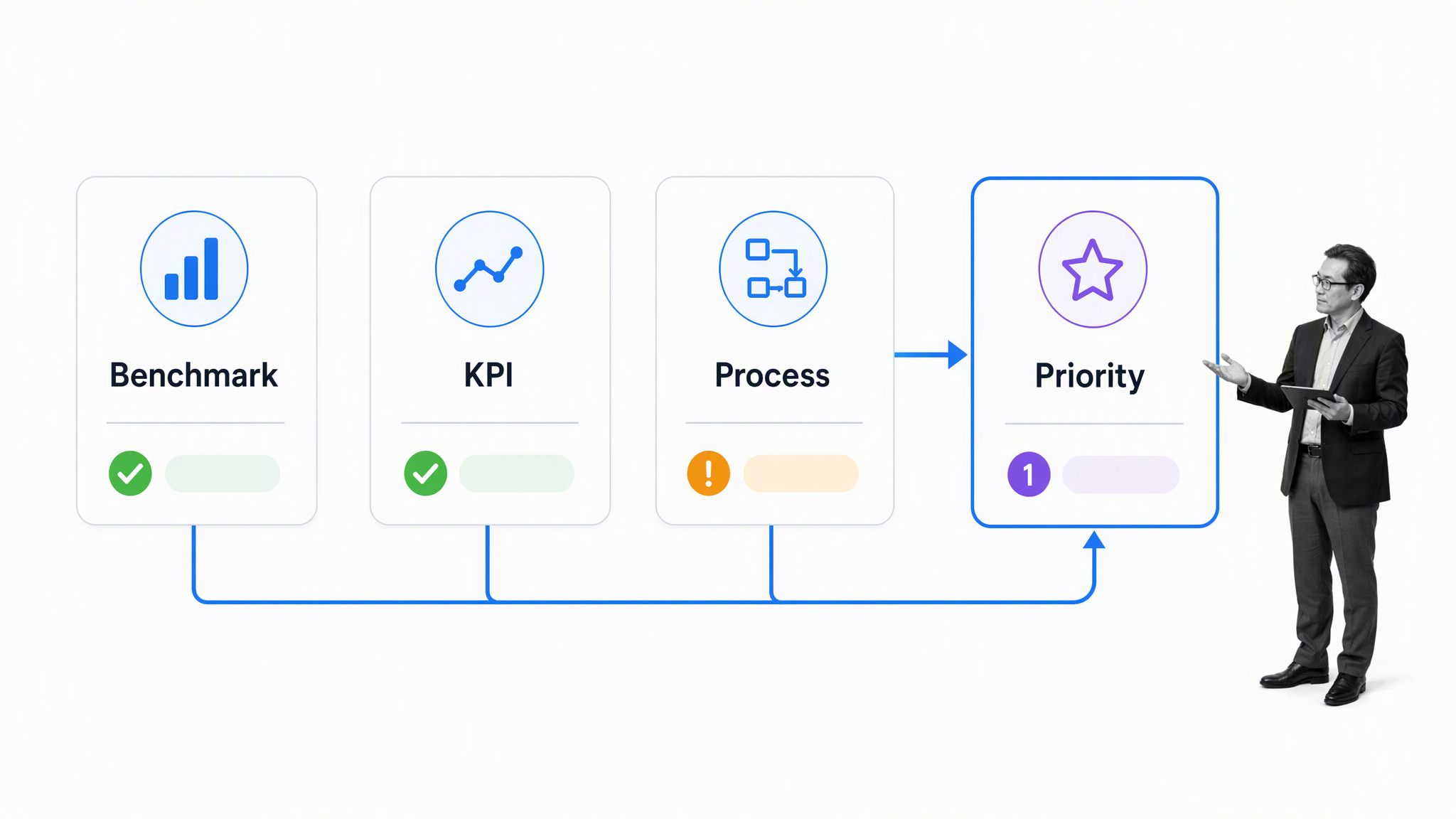
A well-scoped gap analysis can combine several kinds of evidence without losing sight of the decision that needs to be made. The most useful benefits include the following.
External benchmarking
External benchmarking compares documented results for a product, service, or process with an outside criterion. A company might compare customer review patterns with a competitor or compare its quality management system with the requirements of ISO 9001:2026. The comparison creates a reference point, but the team still needs to decide which differences are material in its own context.
Profit percentage analysis
When profit falls short of forecast, a gap analysis can help determine why the target was missed. The cause may involve resource allocation, pricing, demand, delivery costs, or competition. Breaking the result into contributing factors prevents a broad financial miss from producing an equally broad response.
Process improvement
Every organization uses processes, but not every process is designed, documented, or measured consistently. A gap analysis can reveal where actual execution differs from the intended process and where that difference affects time, quality, risk, or customer experience. The result is a more focused starting point for process improvement.
Understanding key performance indicators
KPIs such as customer acquisition cost, return on investment, cycle time, defect rate, and sales conversion can be the focus of a gap analysis. A sales team can examine why it missed a quarterly goal, but it should also inspect the process behind the number. A KPI indicates where to look; it does not prove the cause.
Identifying gaps in the market
A product or market gap is the difference between needs that exist and the options currently available. The analysis can combine market research, customer interviews, win-loss data, and product evidence to test whether an opportunity is real. It can also reveal that brand position, channel coverage, product fit, or an inaccurate demand assumption is limiting reach.
Common gap analysis examples
The same current-state and target-state logic applies across many business areas. What changes is the evidence, the target, and the people responsible for acting on the result.
Launching a new product
Before launch, a team can compare the current feature set, readiness criteria, and enablement materials with approved launch requirements. After launch, it can compare adoption, retention, support volume, or sales results with the forecast. The analysis should distinguish a product gap from a positioning, training, or execution gap.
Productivity in a factory
Factory throughput depends on the interaction of people, processes, equipment, materials, and scheduling. A gap analysis can compare observed output and quality with the target, then isolate constraints such as downtime, rework, changeover time, or material shortages. That evidence helps determine where optimization effort will have the greatest effect.
Gaps across the supply chain
Supply chain conditions change quickly, so incomplete or delayed information can limit the ability to respond. If a business runs short of critical supplies, the current-state review may expose lead-time variation, inaccurate demand signals, supplier concentration, or poor reorder controls.
- Vendor selection that is not supported by consistent criteria
- An unclear choice between outsourcing and in-house work
- Poor visibility into supply, demand, or inventory risk
- Approval or handoff delays that are hidden inside the workflow
Sales teams
Sales gap analysis examines every step of the sales process from both the seller and buyer perspective. A team might find that demos arrive too late, follow-up is inconsistent, qualification criteria differ by representative, or a specific segment lacks relevant proof. The action plan can then address the workflow instead of simply raising the quota.
Different types of gap analysis
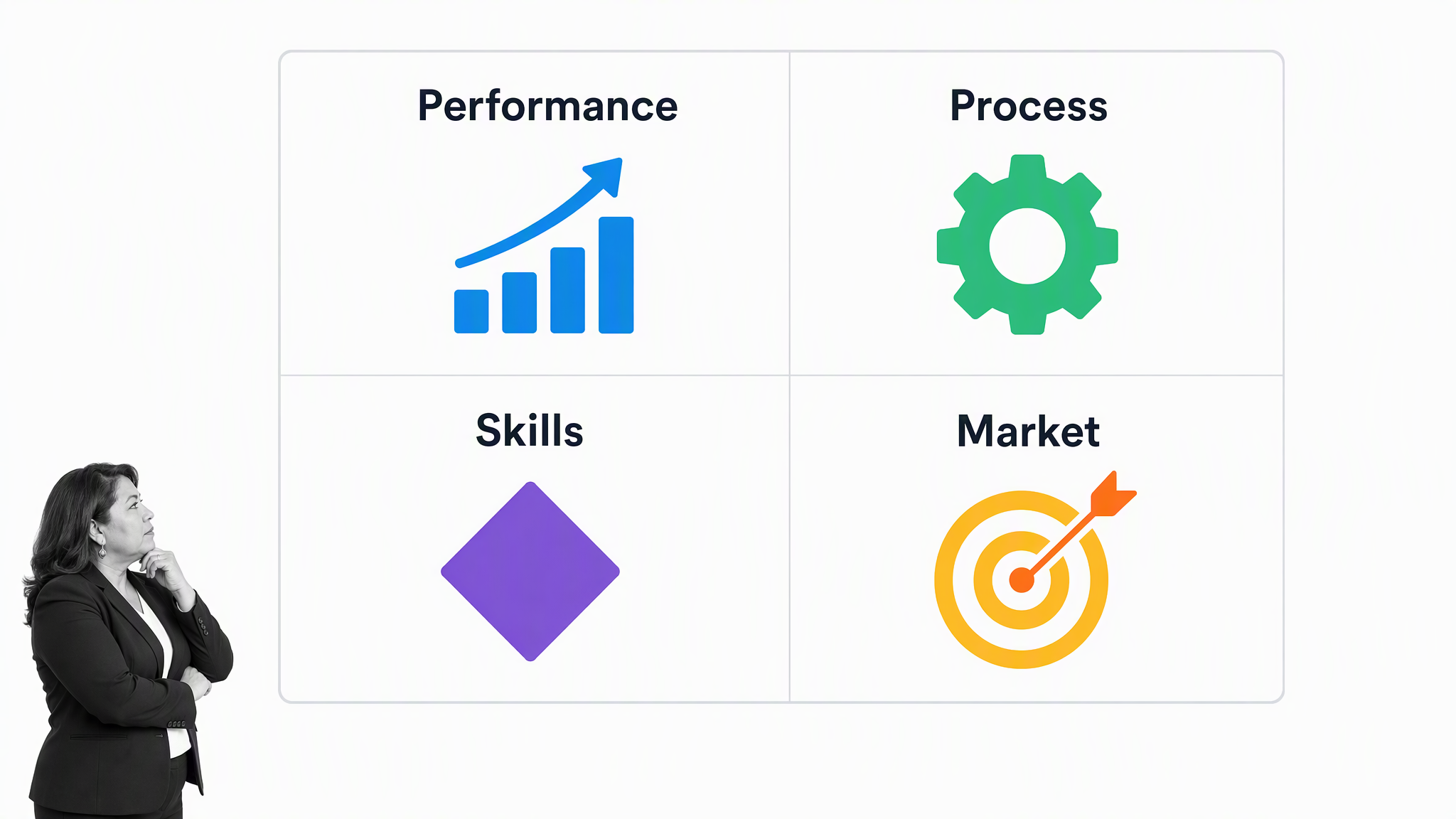
The phrase “gap analysis” describes a general comparison method, not a single rigid framework. Choose the type that matches the decision, then define evidence and targets before collecting data.
- Performance or strategy gap: actual results compared with an approved objective.
- Process gap: actual execution compared with a designed process, control, or service level.
- Skills or workforce gap: available capabilities and capacity compared with what future work requires.
- Product or market gap: current offering and reach compared with a validated customer opportunity.
- Compliance gap: current controls and evidence compared with a legal, regulatory, or standard requirement.
Performance gap analysis
A performance gap analysis compares business or team results with expected performance. It may focus on a specific goal or a broader strategy. The gap represents the variance that requires explanation, not automatic proof that the strategy is wrong. Teams should separate execution problems, unrealistic targets, and changing external conditions before choosing a response.
At a high level, this analysis asks how far a company has come in terms of completed goals and what it still needs to do to reach the remaining ones. Sometimes called a strategy gap, it can expose variance between a company’s mission, values, strategic objectives, and future performance indicators.
Product or market gap analysis
A product or market gap analysis looks for customer needs that are not adequately served. It can be performed internally, through portfolio and customer evidence, or externally through market research and competitive analysis. It is not a substitute for market research; the research supplies evidence for the comparison.
Think of this as a way to research sales opportunities where demand may be greater than supply. Used carefully, it can identify under-served markets and help a business make logical, evidence-based decisions instead of relying only on observation or opinion.
Profit gap analysis
When profit falls short of forecast, the team can compare plan assumptions with actual revenue, costs, mix, timing, and execution. The point is to identify which assumptions or activities created the variance and which corrective actions are within the organization’s control.
Problems with profit forecasting may be related to planning, execution, or both. Shifting market trends, aggressive competition, supply costs, and political or regulatory conditions can affect the result. The analysis should distinguish external pressure from a correctable internal decision.
Skills or workforce gap analysis
A skills or workforce gap analysis compares current capability and capacity with future work requirements. Results can inform hiring, training, succession planning, budgeting, outsourcing, and employee onboarding. The analysis should evaluate roles and skills without reducing people to a headcount calculation.
The findings can inform onboarding, offboarding, training, hiring, in-sourcing, and outsourcing decisions. They also give management a clearer overview of workforce competencies and show where current capability sits in relation to the corporate strategic vision.
Running a gap analysis in practice
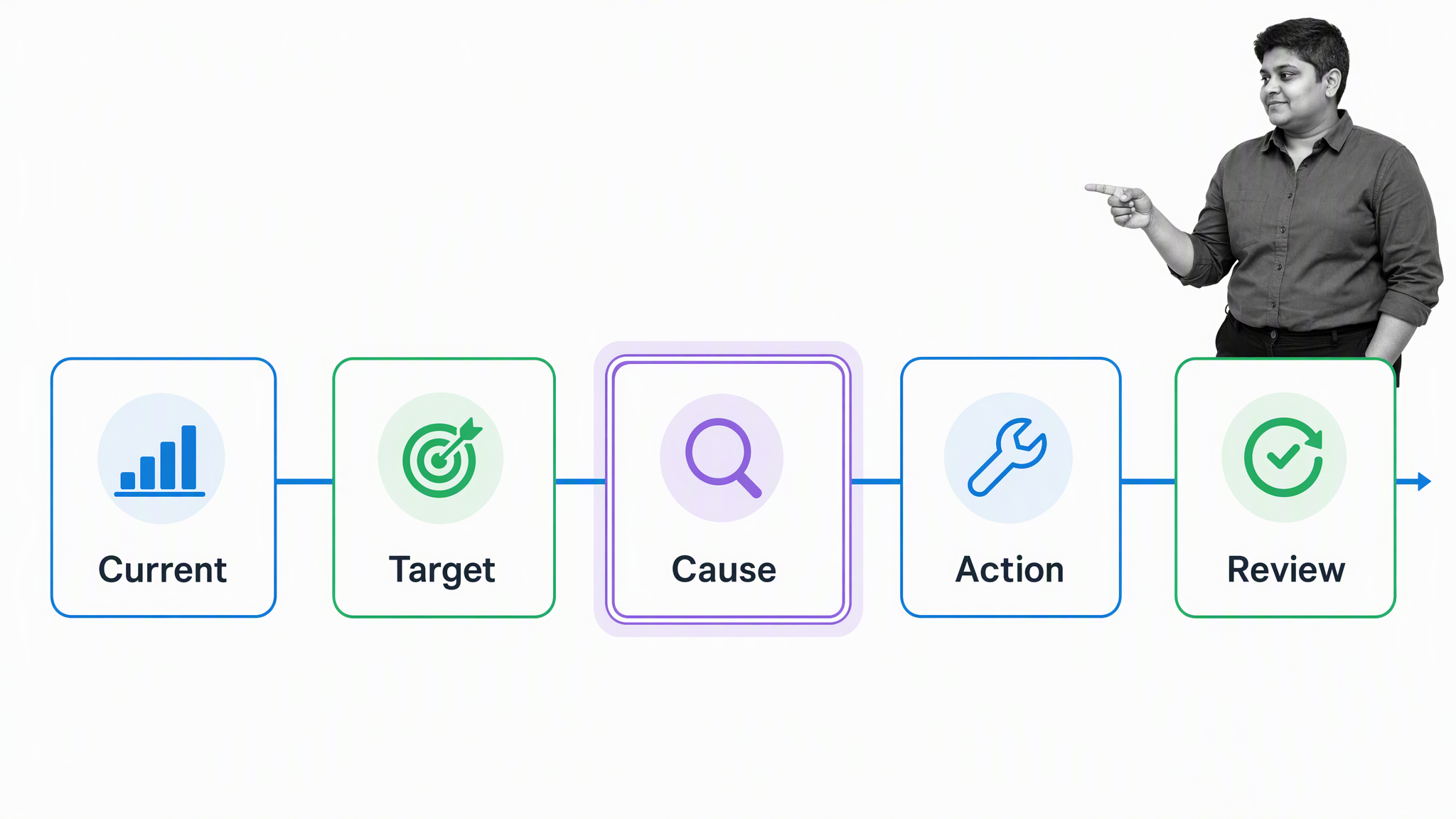
A simplified gap analysis has four components: current state, target state, gap, and improvement. A reliable implementation adds prioritization, root-cause validation, cost and benefit, approval, ownership, and monitoring. The following process preserves the simple structure while making it operational.
Where are you now? Understanding the current state
Begin by defining exactly what will be analyzed. Establish boundaries, stakeholders, the time period, and the decision the analysis must support. Then select evidence that describes the current state objectively. The IIBA gap-analysis guide recommends using KPIs and metrics at this stage.
- Decide which process, result, capability, or control is in scope.
- Choose methods for assessing the current situation and confirm the data source.
- Record factors that affect success or failure and explain why each factor matters.
- Validate the description with the people who perform or receive the work.
Quantitative evidence may include cycle time, defect rates, sales figures, and service levels. Qualitative evidence may include employee interviews, customer feedback, audit observations, and process documentation. Use both when they answer different parts of the question, and state any limits in the evidence.
Where do you want to be? Understanding the target state
Define the desired state as a measurable target, requirement, or observable operating condition. The target might come from a business objective, customer commitment, benchmark, budget, regulation, or service-level agreement. It should be specific enough to test later.
Avoid descriptions such as “faster onboarding” or “better quality.” State the metric, target, scope, and deadline. For example: “Reduce median onboarding cycle time from 12 business days to seven by the end of Q4 without increasing security exceptions.” A clear target prevents the analysis from turning into an unrestricted wish list.
Understanding and defining the gap
Compare the current and target states, quantify the difference where possible, and investigate the cause. Ask what changed, where variation occurs, which handoffs or constraints matter, and what evidence would disprove the leading explanation. Tools such as fishbone diagrams, process maps, and the five whys can help, but the team should validate a cause before funding a solution.
Prioritize findings by impact and feasibility. A large gap is not automatically the first priority if the impact is low, the evidence is weak, or another change is a prerequisite. Record the reason for each priority so stakeholders can review the decision.
Link the factors recorded in the current situation with the factors listed for the target situation. The goal is to understand where the holes in the strategy or operation sit, what the organization is doing well, and what it could be doing differently. Even when the apparent gap is small, examine how the result was achieved so successful conditions can be repeated.
- What resources are required to bridge the gap?
- Do we need to modify or set new objectives?
- What key events and critical decisions led to this point?
- What did we do well?
- What could we have done differently?
Record observations as clearly as possible and connect current factors with target factors where the evidence supports the link. Keep assumptions separate from confirmed causes. This prevents a brainstorming session from being mistaken for a diagnosis.
Bridging the gap
Translate each priority into a specific action with an owner, deadline, required resources, expected benefit, and review measure. Consider cost, implementation risk, dependencies, and whether approval is required. Then implement the action and monitor the measure used to define the original gap.
Use all information gathered during the previous steps to inform strategic action. Solutions should be specific, actionable, and direct. Consider the cost of implementation and confirm that the people, budget, technology, and authority required for the proposed solution are actually available.
Also consider the time frame within which the gap must be closed. Set deadlines and intermediate checkpoints so important action is not overlooked or under-prioritized. Deadlines can motivate progress, but ownership and an agreed review routine are what make them enforceable.
A compact action record can look like this:
| Current state | Target state | Validated gap | Action | Owner and review |
|---|---|---|---|---|
| Median onboarding takes 12 business days | Seven business days by Q4 | Security approval waits four days on average | Add intake validation and route complete requests immediately | Security operations owner; review cycle time monthly |
Set checkpoints before the final deadline. If the measure does not move as expected, revisit the cause or implementation rather than assuming the target was unrealistic. A gap analysis is complete only when the action is owned and its effect is reviewed.
Gap analysis tools
Gap analysis can be supported by several durable methodologies. Choose a tool because it clarifies a particular question, not because every analysis needs every framework. A broader guide to quality management tools can help match the method to the evidence.
SWOT
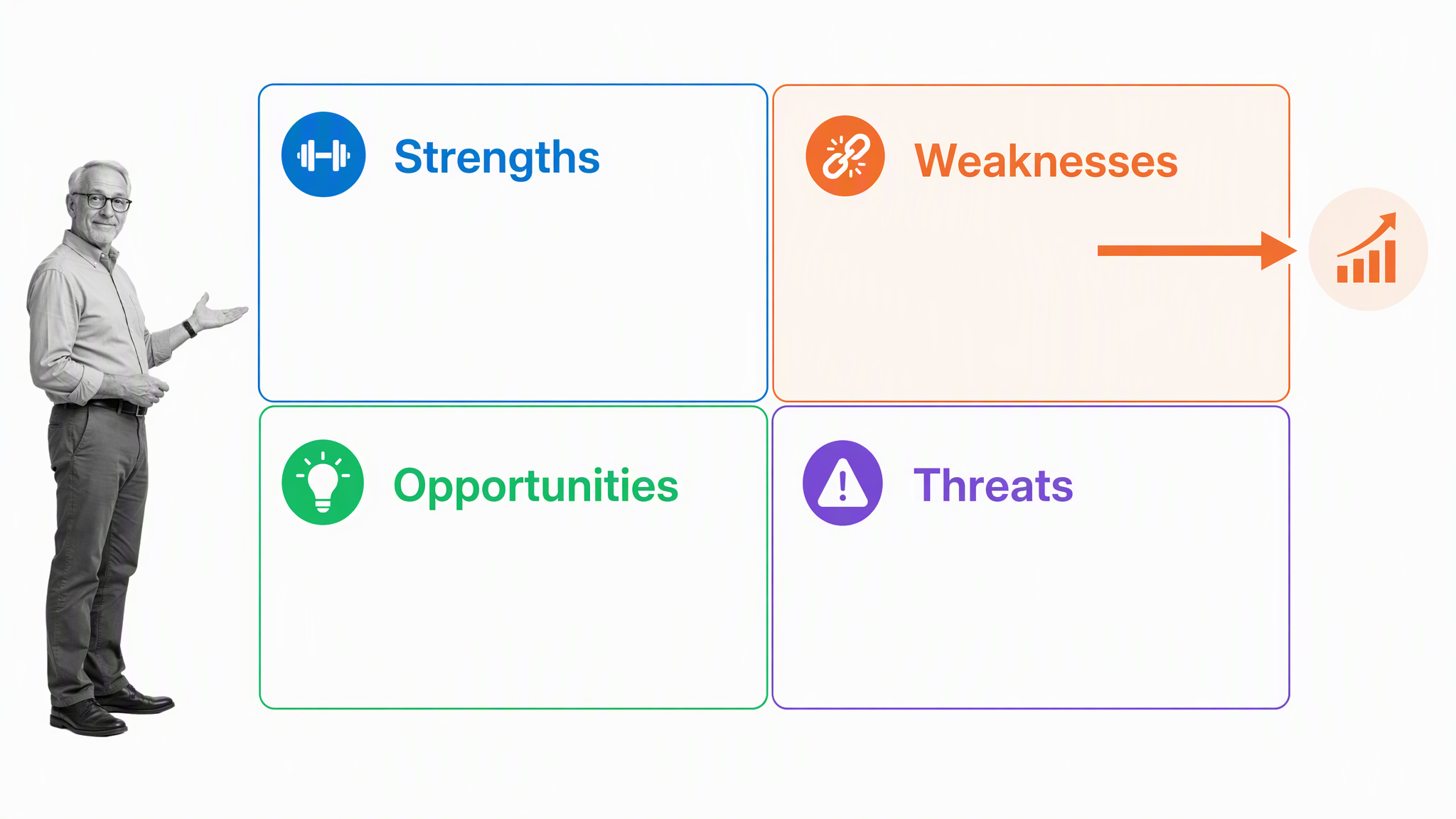
SWOT maps internal strengths and weaknesses against external opportunities and threats. It can help a team organize evidence before deciding which gaps deserve action. It does not quantify a gap by itself, so pair the matrix with targets and measures.
You can perform a SWOT analysis with the Process Street template below:
FMEA
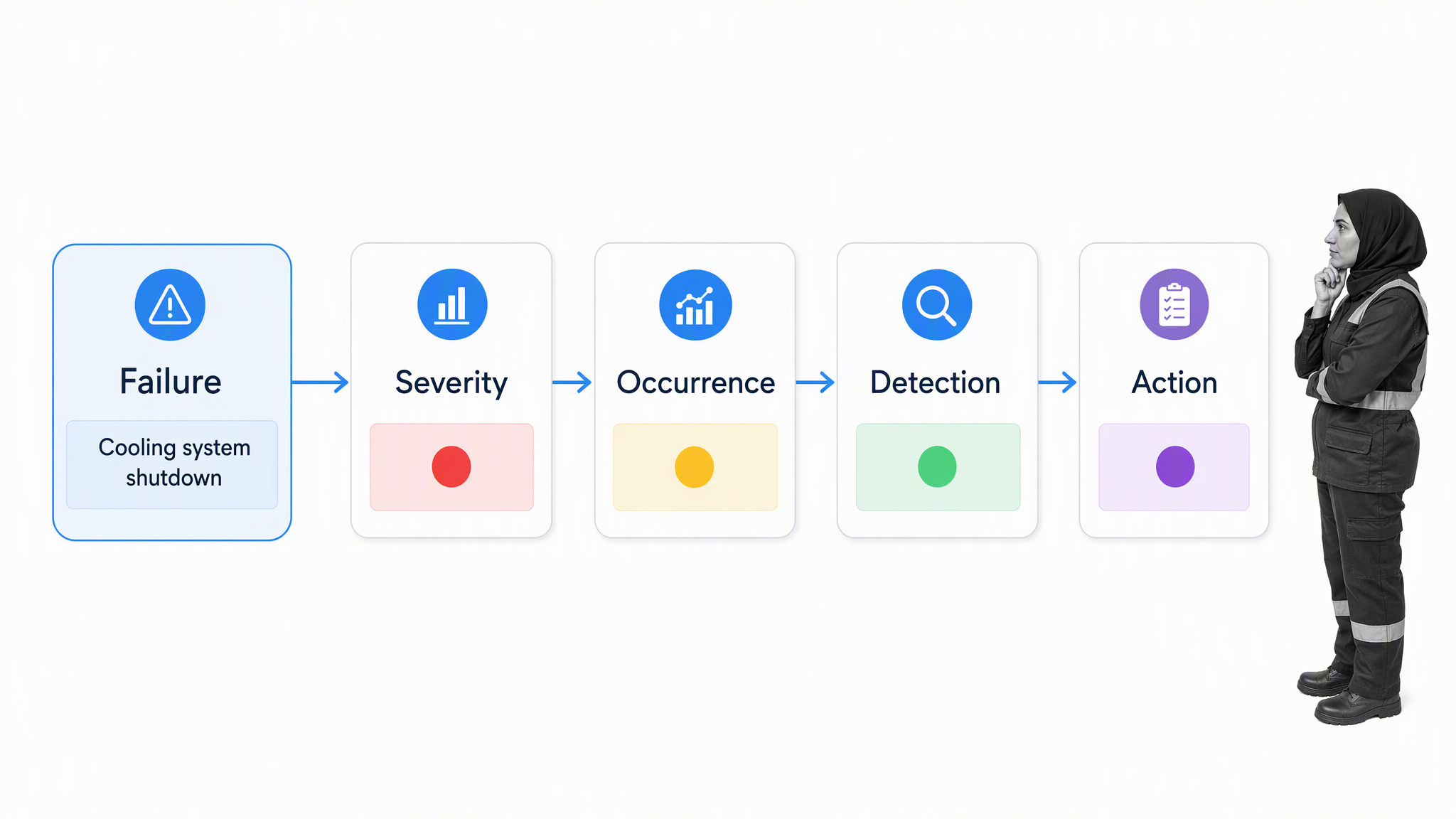
Failure Mode and Effects Analysis identifies ways a process or product could fail, evaluates severity, occurrence, and detection, and helps prioritize preventive action. It is especially useful when the gap involves reliability, safety, or risk management.
The Process Street FMEA template provides a structured starting point:
Applying McKinsey 7-S
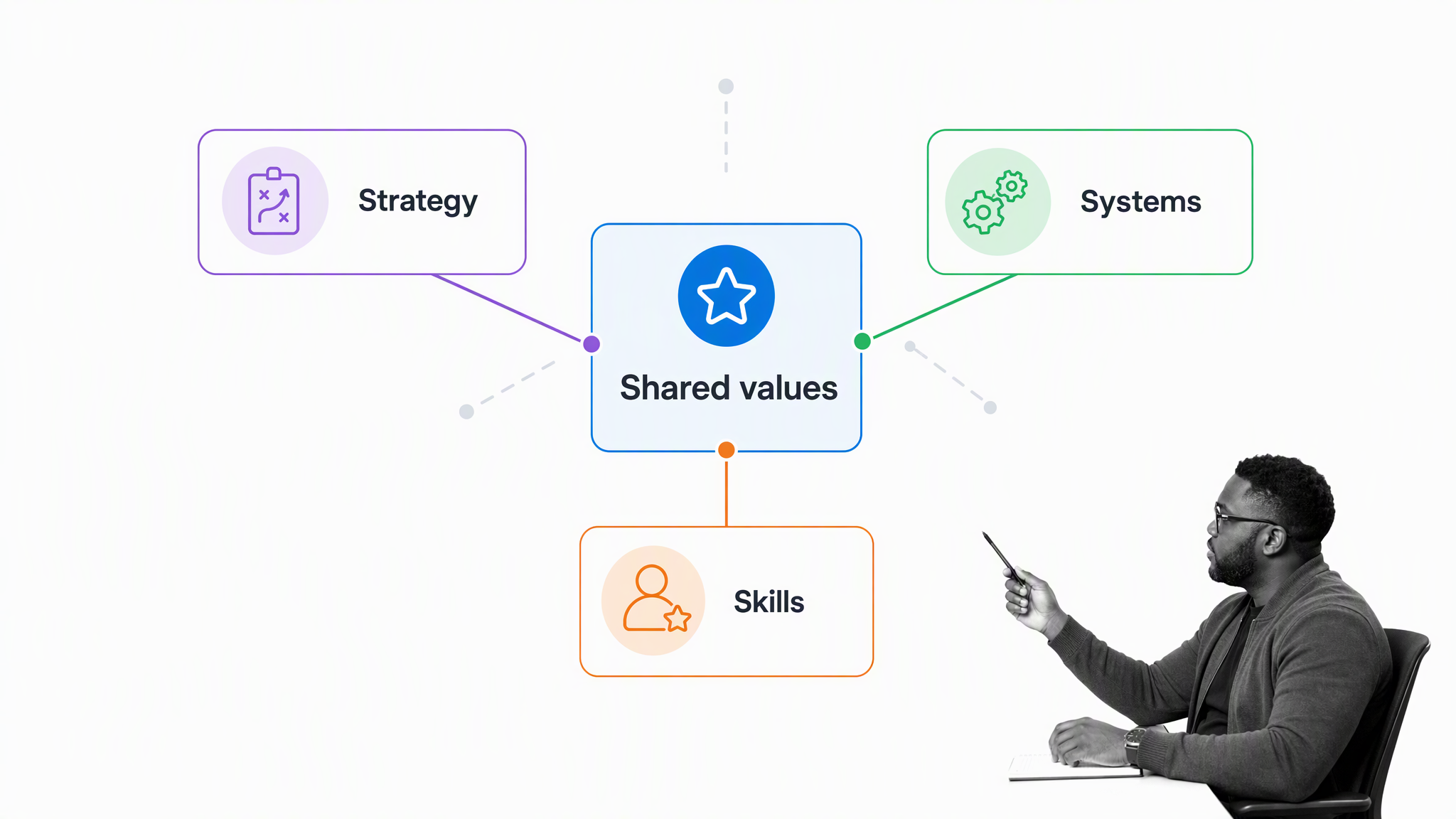
The McKinsey 7-S framework examines alignment among strategy, structure, systems, shared values, style, staff, and skills. It remains useful for organization-wide change, although it is a specialist tool rather than a default for every gap analysis.
- Strategy
- Structure
- Systems
- Shared values
- Style
- Staff
- Skills
Use it when a performance gap appears to involve relationships among several organizational elements rather than a single broken process.
Applying Nadler-Tushman congruence
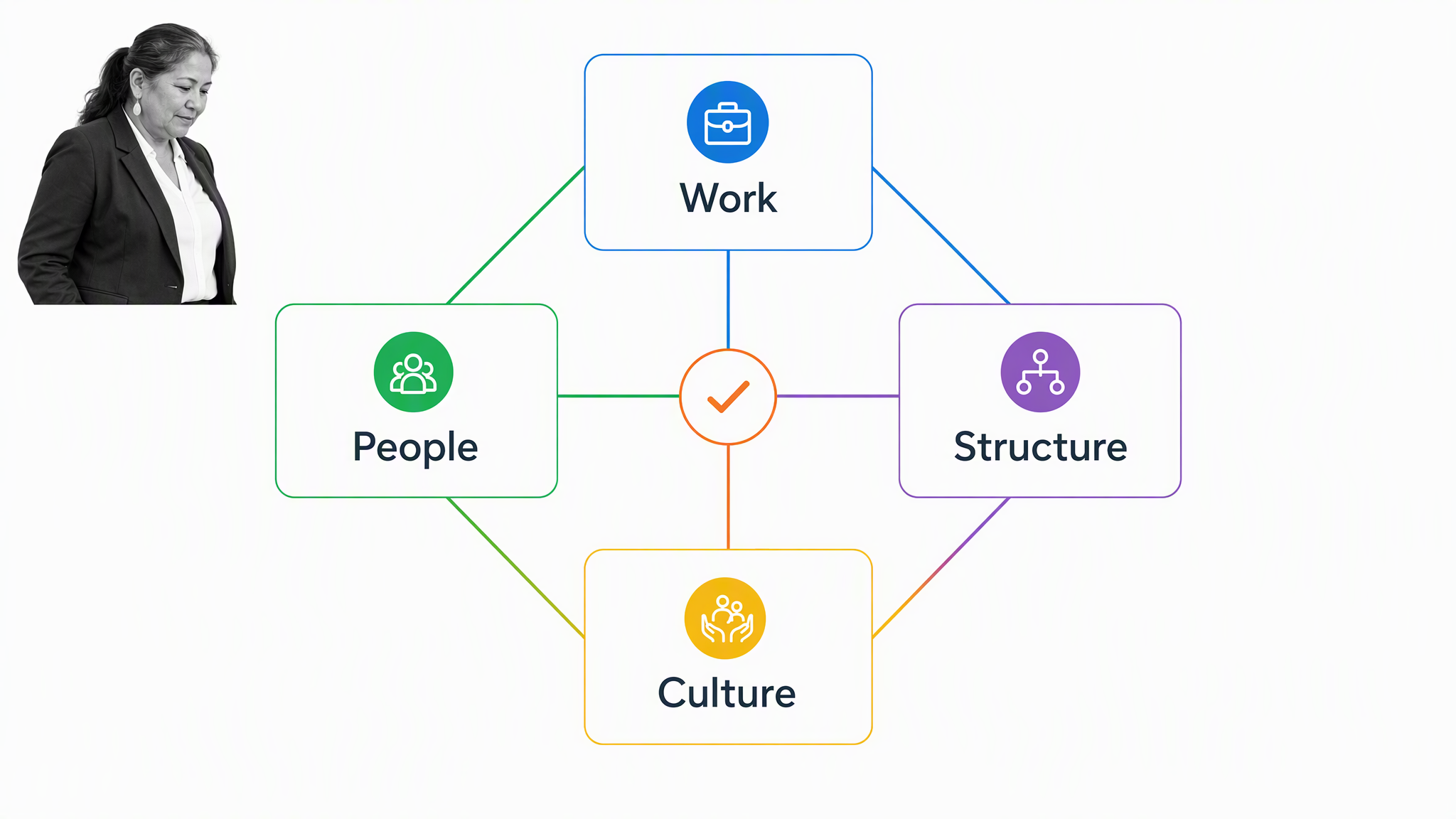
The Nadler-Tushman congruence model assesses the fit among work, people, structure, and culture. Its purpose is not to distribute effort equally. It tests whether those components reinforce one another and where a mismatch may be reducing performance.
- Work
- People
- Structure
- Culture
This model is useful when a change succeeds in one part of the organization but produces friction elsewhere.
Fishbone diagram (Ishikawa diagram)
A fishbone or cause-and-effect diagram organizes possible causes of a specific problem or effect. The ASQ fishbone guide explains how to group and explore potential causes. It is valuable during root-cause work, but each proposed cause still needs evidence.
Fishbone analysis is also commonly used within the DMAIC process.
Streamlining gap analysis with controlled workflows
Process Street is a Compliance Operations Platform that brings Docs and Ops capability areas together with built-in AI. Teams can document the approved gap-analysis method, run it as an operational workflow, collect evidence, assign decisions, and retain a reviewable record in one product.
Docs provide a governed home for guidance, standards, and process knowledge. Ops turns that knowledge into repeatable work with assignments, forms, approvals, due dates, and conditional paths. Built-in AI can help teams work with information inside the process while the workflow keeps responsibility and control visible.
For a gap analysis, that means using form fields to capture current and target measures, task assignments and role assignments to establish ownership, dynamic due dates to control timing, and conditional logic to route different findings to the right response.
The workflow should retain the evidence gathered during analysis, the approval decision, the action owner, and the review result. This makes it easier to repeat the analysis, compare changes over time, and demonstrate how a finding moved from observation to controlled action.
Explore Process Street pricing and start a free trial.
Gap analysis FAQs
The post Gap Analysis: How to Bridge the Gap Between Performance and Potential first appeared on Process Street | Compliance Operations Platform.


0 Commentaires