
Work efficiency is the ability to produce the right result with less wasted time, attention, and effort. Learning how to improve work efficiency starts with choosing the work that matters, then building a reliable way to complete it.
Whether you are a maker or a manager, knowing how to be more efficient at work means asking one practical question: What is the most important task for today? In this episode of Business Systems Explored, Zachary Sexton, host of The Productivity Show at Asian Efficiency, explains how individuals and teams can build a culture of productivity around that question.
How to be more efficient at work
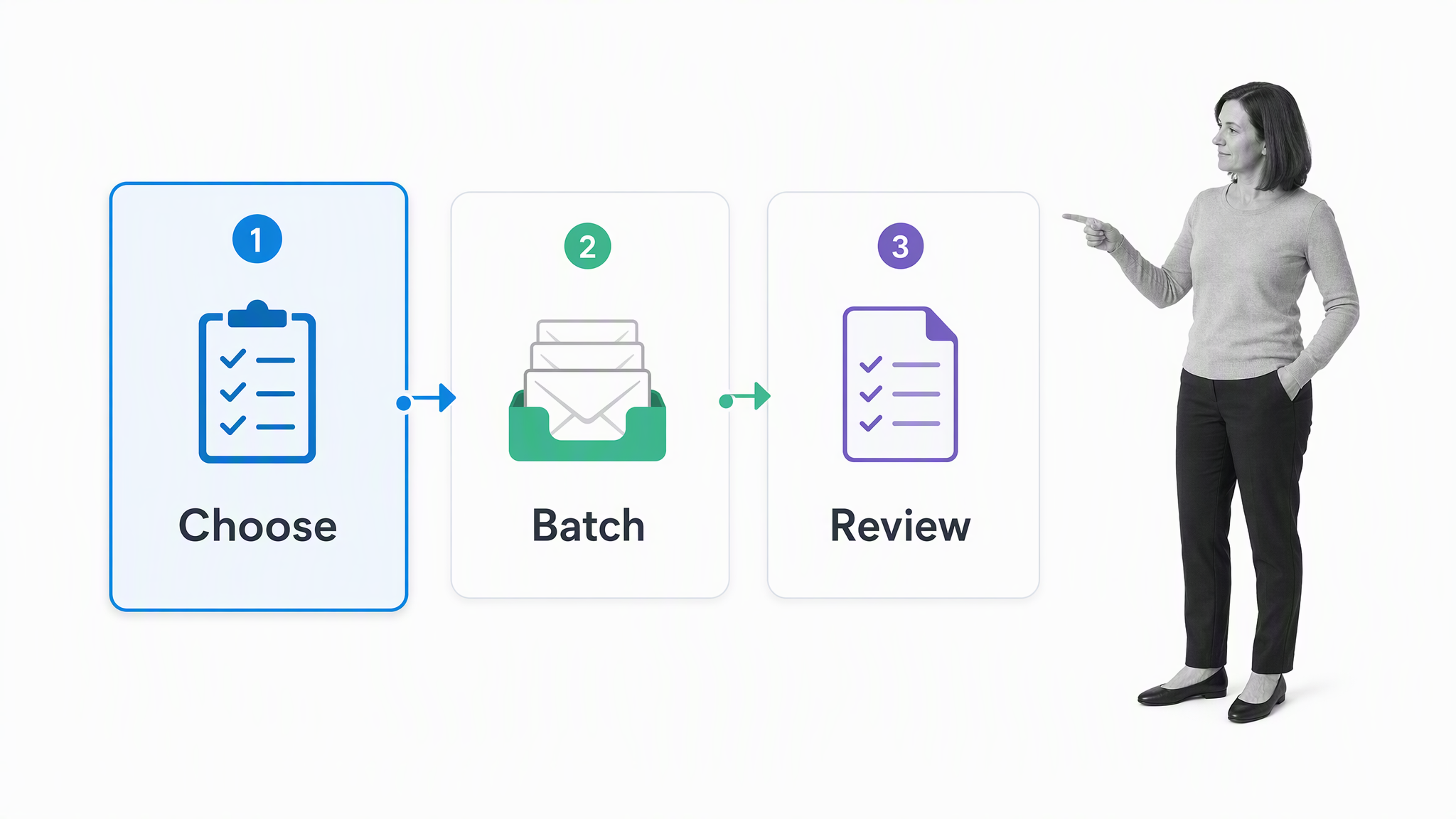
The episode covers tools, systems, and working methods Zachary learned through The Productivity Show and his consulting work. The strongest ideas form a simple loop: choose important work, protect time to do it, standardize what repeats, and review the friction that remains.
Choose one important outcome
A full task list can hide the difference between activity and progress. Start the day by identifying the one outcome that would make the biggest difference. Define what finished looks like, block time for it, and let lower-value work wait until the important task has momentum.
This approach works for teams too. A manager can make priorities visible, limit work in progress, and give each recurring responsibility a clear owner. People spend less time guessing what matters and more time completing useful work.
Match tasks to energy and batch communication
Different tasks demand different kinds of attention. Put analytical, creative, or decision-heavy work in the part of the day when your focus is strongest. Save routine administration for lower-energy periods. That is a more efficient use of time at work than switching constantly between deep work and small requests.
Email is one of the easiest places to lose that focus. Instead of keeping the inbox open all day, process messages in batches, use snippets for repeated answers, and move work that needs ownership into a system where it can be tracked. The goal is not to answer everything immediately. It is to keep communication from controlling the workday.
Standardize recurring work
Standard operating procedures reduce the effort spent remembering, explaining, and correcting recurring work. A useful SOP names the trigger, owner, steps, decision points, evidence, and expected result. It should make the correct path easier to follow without pretending every situation is identical.
Process Street is a Compliance Operations Platform that turns repeatable work into governed workflows. Its Docs and Ops capability areas connect documented procedures to execution, while built-in AI helps teams create, run, and improve work with approvals, evidence, and audit trails in the same product.
Make meetings earn their time
Productive meetings have a clear purpose, the right participants, and a defined result. Share context before the call, use the meeting for decisions that need discussion, and leave with named owners and deadlines. If the same meeting repeatedly produces no decision or action, change the format or remove it.
Review friction without blaming the person
Several bad days in a row are useful evidence. Look for the recurring constraint: unclear priorities, too many handoffs, missing information, overloaded communication, or a process that no longer fits the work. Fixing the system prevents the same problem from consuming attention again.
Listen to the episode
- Listen through the Business Systems Explored archive on Amazon Music.
- Explore current episodes of The Productivity Show.
Quote from the episode
“Productivity applies to everybody. There’s no person out there who doesn’t want to do more.”
Zachary Sexton
Show notes
- How to assess your productivity
- How to become more efficient and do more with your time
- The importance of writing down standard operating procedures
- Creating engaging standard operating procedures for your team
- Running a competition to see who can write documentation the fastest
- Hiring based on personality tests
- Getting the best idea of what your team is doing day to day
- Why improving productivity is a self-perpetuating system
- The biggest time wasters people fall prey to
- How to start every day in a productive way
- The number one thing you should never spend too much time on
- Using Jira for non-development projects
- Storing documentation in Confluence
- How to spend less time on email
- Tips for working within email
- Knowing what time of day to do different kinds of work
- Why email can consume a workday, and how to prevent it
- The two-minute rule of email processing
- Managing incoming emails from clients
- Batching email responses
- Using a CRM to improve communication productivity
- Building emails from snippets
- Growing a team around individual productivity strengths
- Building a culture of productivity
- Getting the team on board with new initiatives
- Tips for productive meetings
- Using the MAPS system for better meetings
- What to do after several bad days in a row
Resources mentioned in the episode
The conversation references products and services that were available when the episode was recorded. Some have since closed or changed names. The current destinations below are provided where the product or a clear successor remains active.
- Standard Procedure by Tony L. Brown
- I Done This, now archived
- HipChat, discontinued
- Asana
- Jira
- Confluence
- Contactually, closed
- Gmail, the successor to Inbox by Gmail
- SaneBox
- Airtable
- Snagit, the successor to Jing
- Audacity
- FollowUp.cc
- Boomerang
- Close
- SalesforceIQ, discontinued
- Help Scout
- Bonusly
- Asian Efficiency episode 87
- Habitica
About Zachary Sexton
Learn more at Zachary Sexton’s website and Asian Efficiency.
Frequently asked questions
What does being efficient at work mean?
Being efficient at work means producing the right result with less wasted time, attention, and effort. It is not about filling every minute. It is about prioritizing useful outcomes and designing repeatable ways to achieve them.
How can you improve work efficiency?
Choose one important outcome, protect focused time for it, batch communication, match tasks to your energy, standardize recurring work, and review where handoffs or missing information create friction.
How do standard operating procedures improve efficiency?
Standard operating procedures reduce repeated decisions and make ownership, steps, evidence, and expected results clear. Teams spend less time explaining routine work and can improve the process using consistent execution data.
The post How to Be More Efficient at Work first appeared on Process Street | Compliance Operations Platform.


0 Commentaires