
An electrical inspection checklist turns a complex safety review into a repeatable sequence of checks, evidence, findings, and corrective actions. It helps a qualified inspector cover the right ground without relying on memory or scattered notes.
This collection gives you eight ready-to-run checklists for general electrical systems, premises motor circuits, marinas, electric vehicle charging equipment, agricultural buildings, health-care facilities, residential rough-ins, and air-conditioning or refrigerating equipment.
Electrical requirements vary by jurisdiction. These workflows organize common inspection steps around topics in the National Electrical Code, but the NEC edition adopted by the authority having jurisdiction, local amendments, manufacturer instructions, and other applicable standards control. Use them as workflow starters, not as substitutes for a qualified electrical inspector or the governing code.
How the electrical inspection checklists work
Processes can sometimes be free flowing entities which give space and creativity to work within, while other times they can be rigid and strict, procedural. An electrical inspection process needs to manage these two styles: it must create a strict set of procedures which is still flexible enough to be applied to different situations and variables. These electrical inspection checklists fall into the latter camp.
Given the vital importance of safety measures and checks within electrical systems, inspectors need effective guidelines to follow and need to interpret those same guidelines in a range of similar but individual circumstances. Each actionable task is presented with the relevant NEC reference which calls for its presence. There is a short explanation of the task to help an inspector have a clear idea of what is expected, plus form fields throughout to enter comments and notes while moving forward through the process. The individual steps are left open enough to apply them to different scenarios while still providing for adherence to accepted standards.
Inspectors can record pass, fail, and not-applicable outcomes, document visible damage or test results, assign corrective work, and preserve the evidence behind the decision. That creates a useful record because the completed workflow shows who inspected what, when, and what happened next. Required fields, approvals, and stop tasks can prevent a run from moving forward until critical evidence is present.
Through the template overview, users can access the history of every checklist run from that template. This provides the opportunity to review data gathered across a host of different inspections and export that data for further use. Once all the fields for an active checklist are complete, the checklist can be printed or saved as a PDF. Task names provide the contents and structure of the report, task descriptions provide a detailing of activities, and notes entered into form fields provide the inspector’s professional opinion and feedback.
Choose the right electrical inspection checklist
Start with the general checklist for a broad electrical safety review. Use the residential rough-in workflow before walls close, the motor-circuit workflow for premises and industrial motors, or one of the specialist checklists when the environment introduces risks such as water, corrosive dust, patient-care equipment, charging infrastructure, or refrigeration loads.
- General electrical inspection
- Motors, motor circuits, and controls
- Marinas, docks, and boatyards
- Electric vehicle charging equipment
- Agricultural buildings
- Hospitals and health care
- Residential rough inspection
- Air-conditioning and refrigerating equipment
1. General electrical inspection checklist
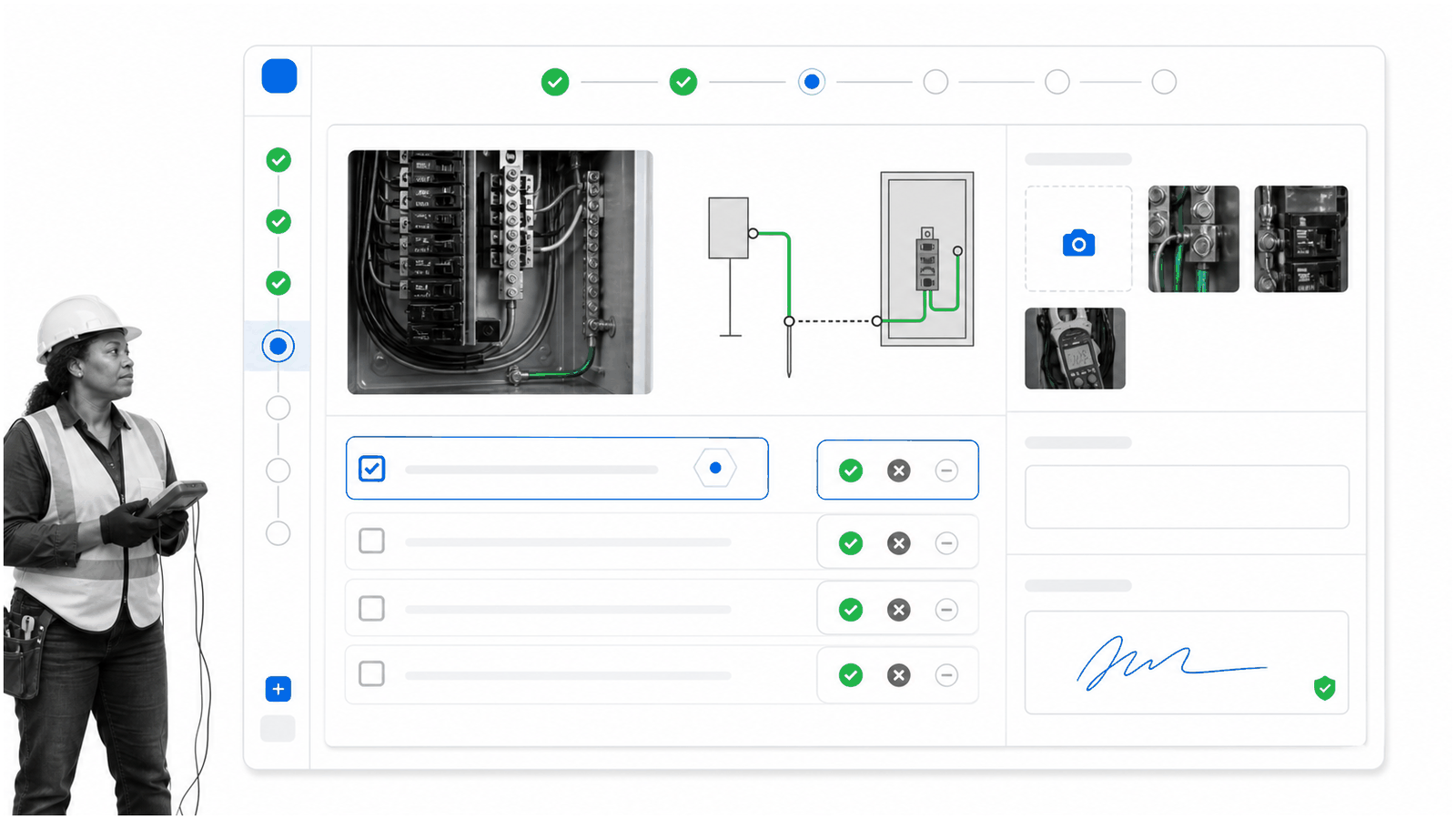
The first part of any electrical inspection checklist should be assessing your own safety as an inspector. Before opening equipment or taking measurements, confirm the scope, required personal protective equipment, safe access, de-energization or energized-work controls, and the limits of the inspection. This general checklist is broadly applicable while remaining focused on technical details, and relevant NEC references make it clear how each step relates to standards.
From there, the workflow can cover service equipment, panels, visible wiring, enclosures, grounding and bonding, overcurrent protection, GFCI or AFCI protection where applicable, labeling, clearances, and signs of heat, moisture, corrosion, damage, or unauthorized alterations. The checklist is broad by design, so you can copy it and adapt the fields or conditional paths for commercial, industrial, or recurring facility inspections.
You can also copy the checklist once it is in your organization and create a series of variants of it to more closely match your most common use cases. Keep the governing requirements and acceptance criteria controlled, then change the site details, evidence fields, assignments, and conditional branches that make each inspection type distinct.
For a visual electrical inspection, make the evidence requirements explicit. Photograph damaged conductors, scorched terminations, open knockouts, missing covers, water entry, poor labeling, or blocked working space. For a panel inspection, capture the equipment rating, directory condition, breaker compatibility, bonding arrangement, conductor condition, and any sign that requires testing or immediate isolation.
Run the general Electrical Inspection Checklist.
2. Motors, motor circuits, and controls
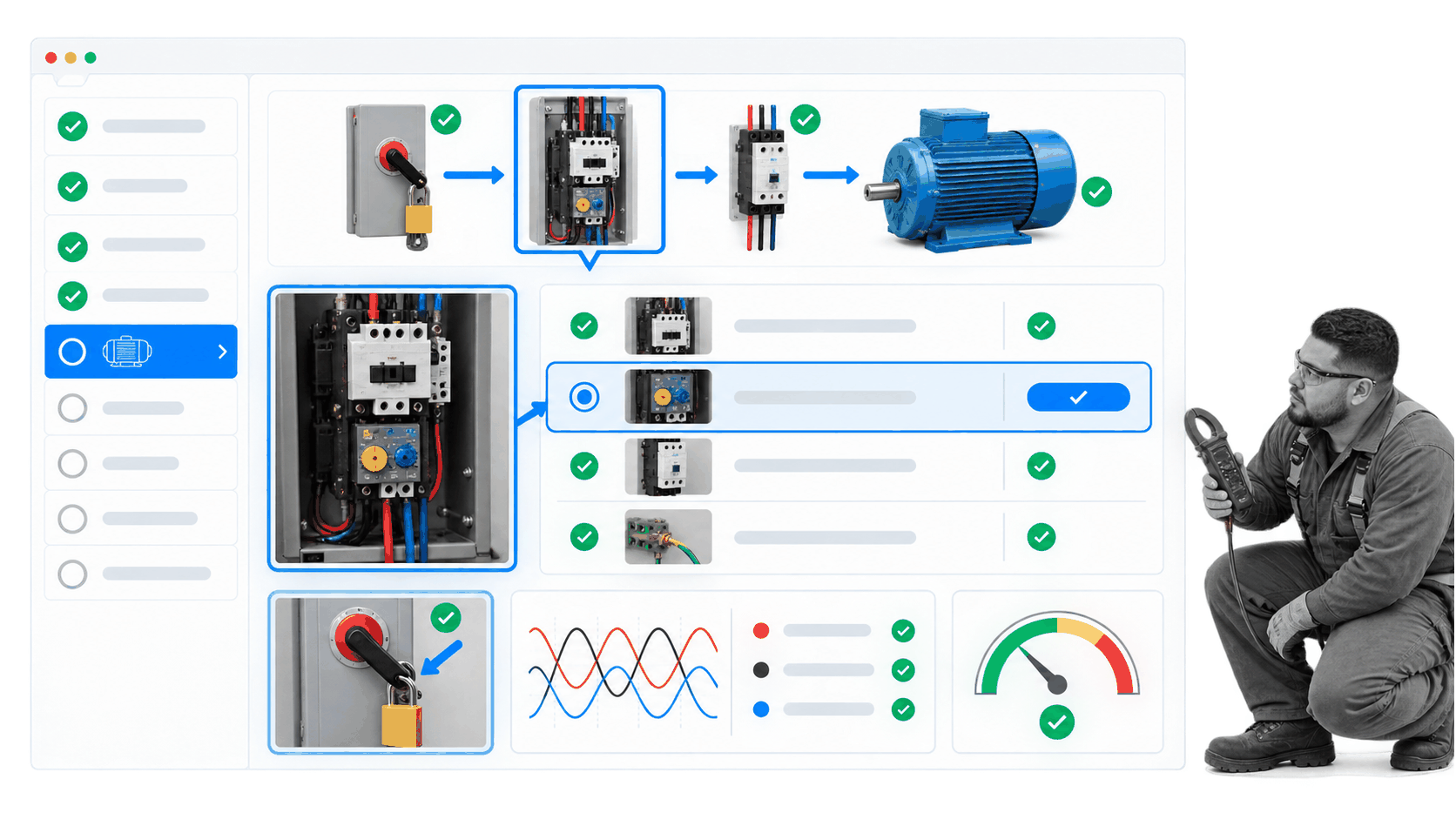
The checklist titled “Motors and Vehicles” is most useful for premises and industrial motor systems covered by NEC motor-circuit requirements. Ordinary automotive wiring is generally outside NEC scope, so this workflow should not be treated as a car inspection checklist.
Use it to inspect motor nameplate information, branch-circuit conductors, short-circuit and ground-fault protection, overload protection, controllers, disconnecting means, motor control centers, grounding and bonding, and the physical condition of equipment. A good run records the equipment identifier, measured or observed condition, protective-device details, and any corrective action that must be completed before the motor returns to service.
Motor inspections also benefit from a clear boundary between an observation and a test. Visible heat damage, loose covers, contamination, missing labels, or an inaccessible disconnect can be documented directly. Current, insulation, continuity, rotation, and protective-device tests need the appropriate instrument, procedure, and qualified person. Keep those requirements inside the task so the final record shows how the conclusion was reached.
Open the Motors and Vehicles checklist and tailor it to the motor systems in scope.
3. Marinas, docks, and boatyards
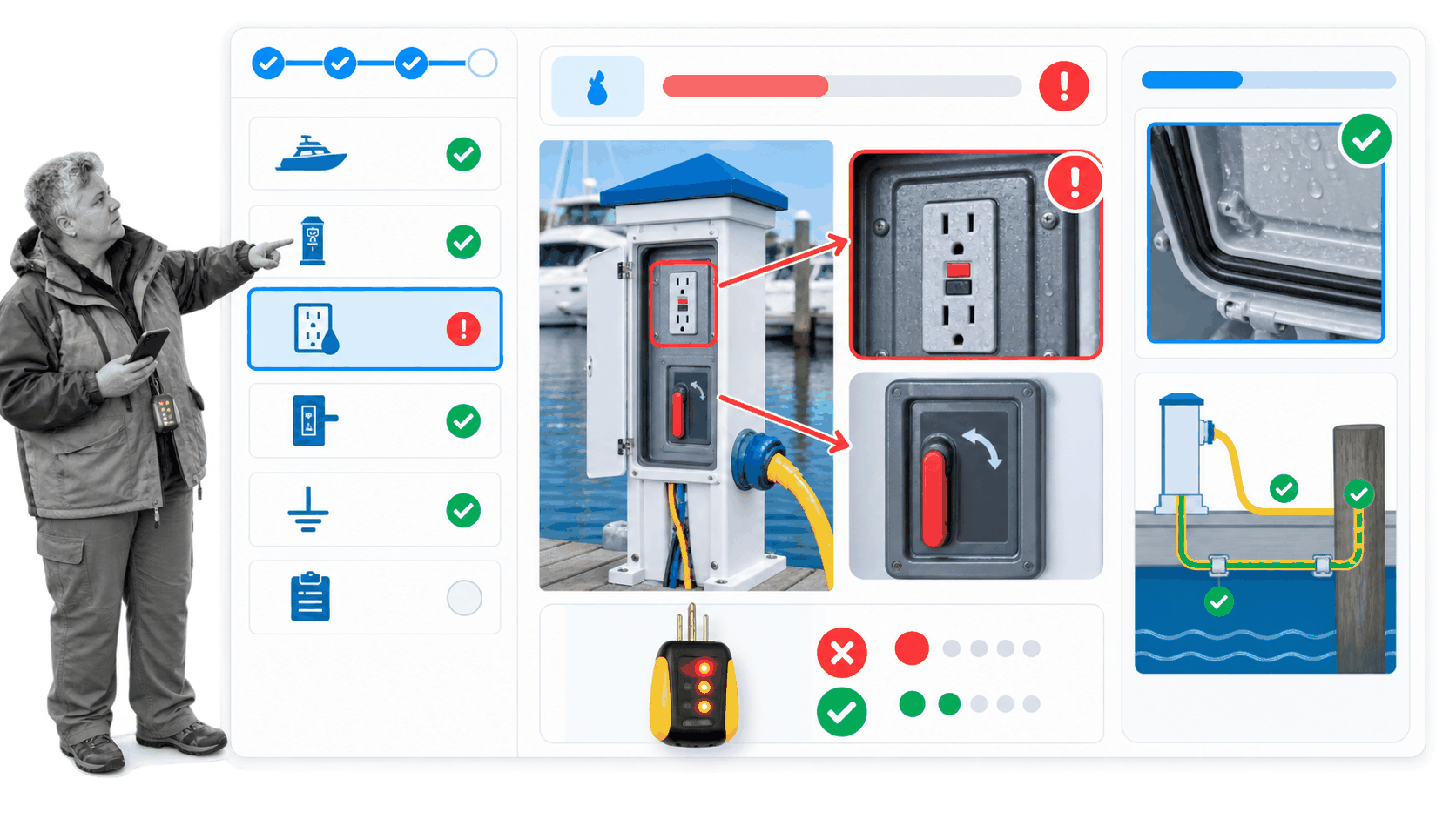
Marinas combine electricity, water, corrosion, changing water levels, shore-power connections, and public access. That makes small installation defects more dangerous and gives inspectors a strong reason to use a disciplined wet-location workflow.
The inspection should address shore-power pedestals, receptacles, enclosures, wiring methods, disconnecting means, grounding and bonding, leakage and personnel protection, separation from floating surfaces, physical damage, and the condition of cords and connectors. Record exactly where a failure appears, because similar-looking pedestals can have different histories and exposure.
A marina checklist should identify the dock, berth, pedestal, circuit, and observed water conditions before the inspector records a result. Photos and equipment identifiers make follow-up work much easier. If a protective device trips, an enclosure is open, or a connection shows corrosion or heat damage, route the run to corrective action instead of letting the problem disappear into a general site note.
Use the Marinas, Docks, and Boatyards checklist as the starting workflow for Article 555 environments.
4. Electric vehicle charging equipment
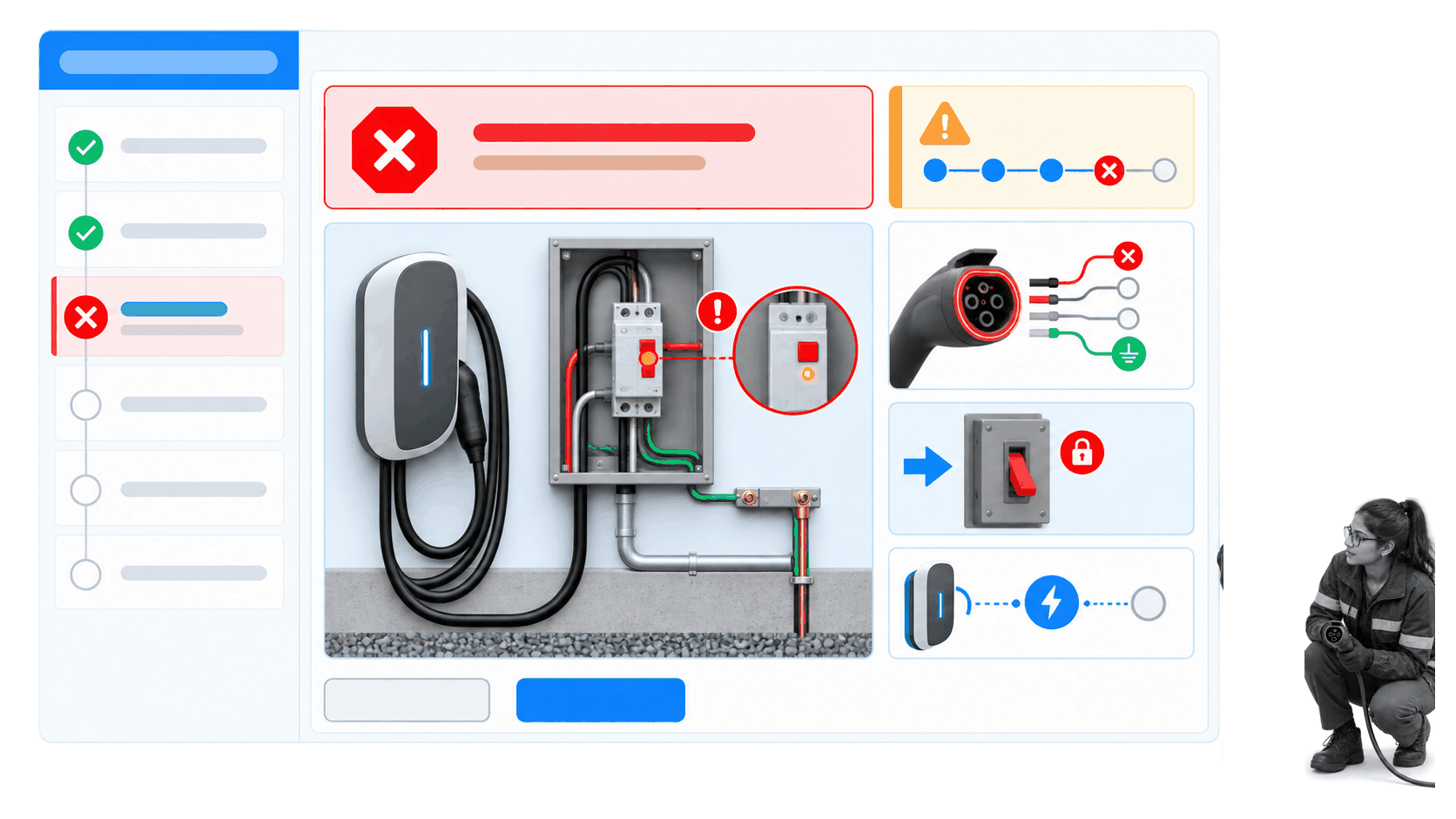
Electric vehicle supply equipment can be installed at homes, workplaces, parking facilities, fleets, and public charging sites. The inspection scope changes with the equipment and installation, but each run should make the protection and connection path easy to reconstruct.
Check equipment listing and condition, mounting, working space, conductor and overcurrent protection, load calculations or energy-management controls, grounding, personnel protection, disconnecting means where required, labeling, connector condition, and signs of heat or impact. Bidirectional and power-export systems also need the applicable interconnection and control requirements reviewed.
The workflow should distinguish the charger, branch circuit, panel, connector, and any networked or energy-management control. Record the make and model, installation location, circuit rating, protective devices, observed fault state, and re-test result. That gives the owner an inspection record that is useful even when the charging equipment is serviced or replaced later.
Run the Electric Vehicle Charging Equipment checklist.
5. Agricultural buildings
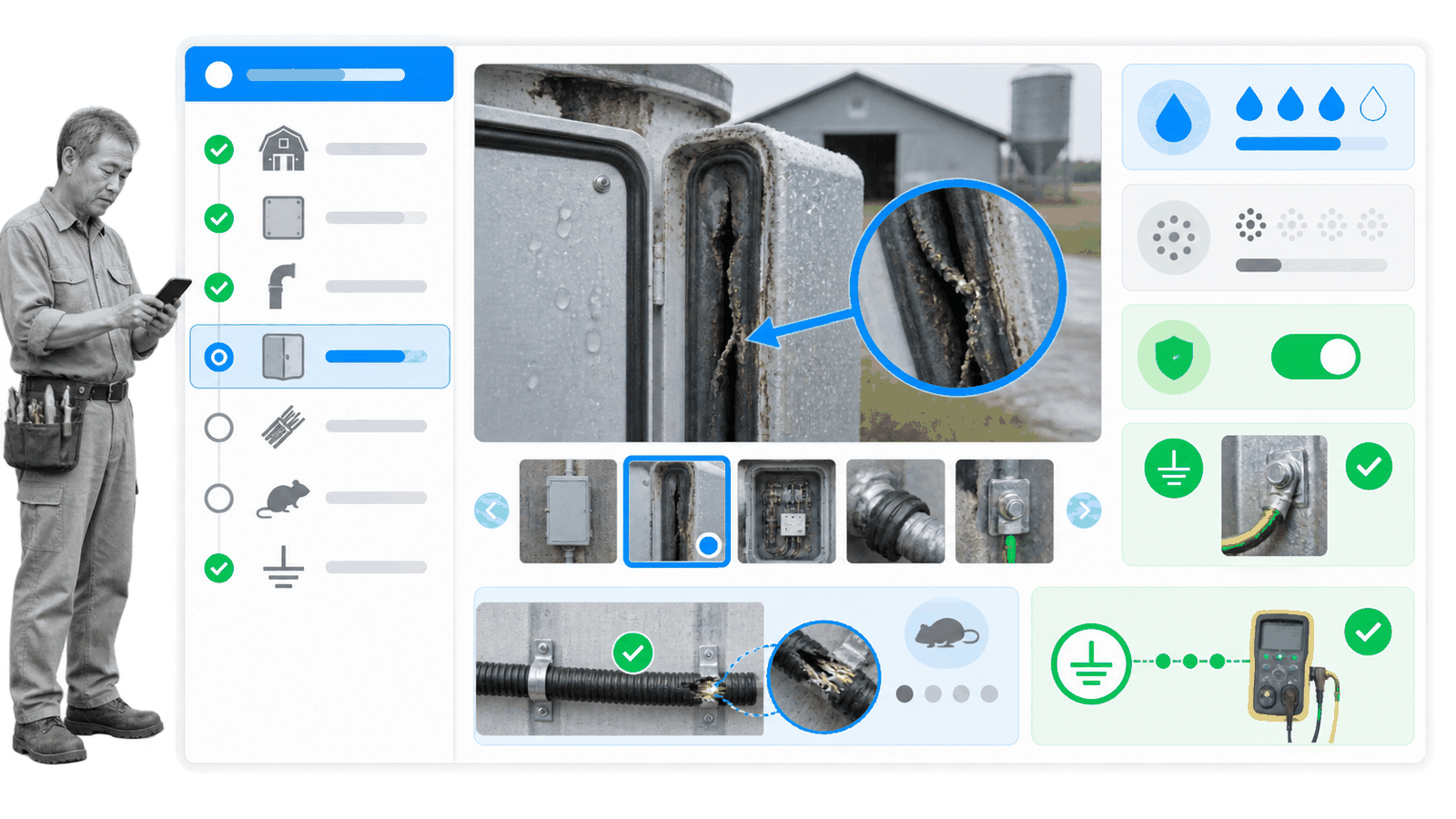
Agricultural locations can often come under a lot of stress from the elements. Buildings designed to house livestock can take a beating, and many agricultural buildings are open to wind, rain, animals, and barely regulated temperatures. All this causes wear and tear, so an inspector needs to make sure the wearing has not produced too much tearing and that the area provides a safe workspace for agricultural workers and a safe environment for animals.
A focused inspection covers wiring and enclosures suited to the environment, corrosion, cable protection, grounding and bonding, equipotential planes where applicable, GFCI protection, motors and ventilation equipment, damaged covers, and evidence of overheating or contamination. The workflow should also document risks to workers and animals, not only whether equipment still operates.
Site conditions can change between inspections. Washdown practices, feed dust, ammonia, rodents, new machinery, temporary cords, and damaged doors or guards can create new exposure around previously acceptable equipment. Use photos and condition fields to show what the inspector actually saw, then assign repairs to a named owner with a due date and verification step.
Use the Agricultural Buildings checklist and verify the site against the locally adopted requirements for agricultural buildings.
6. Hospitals and health care
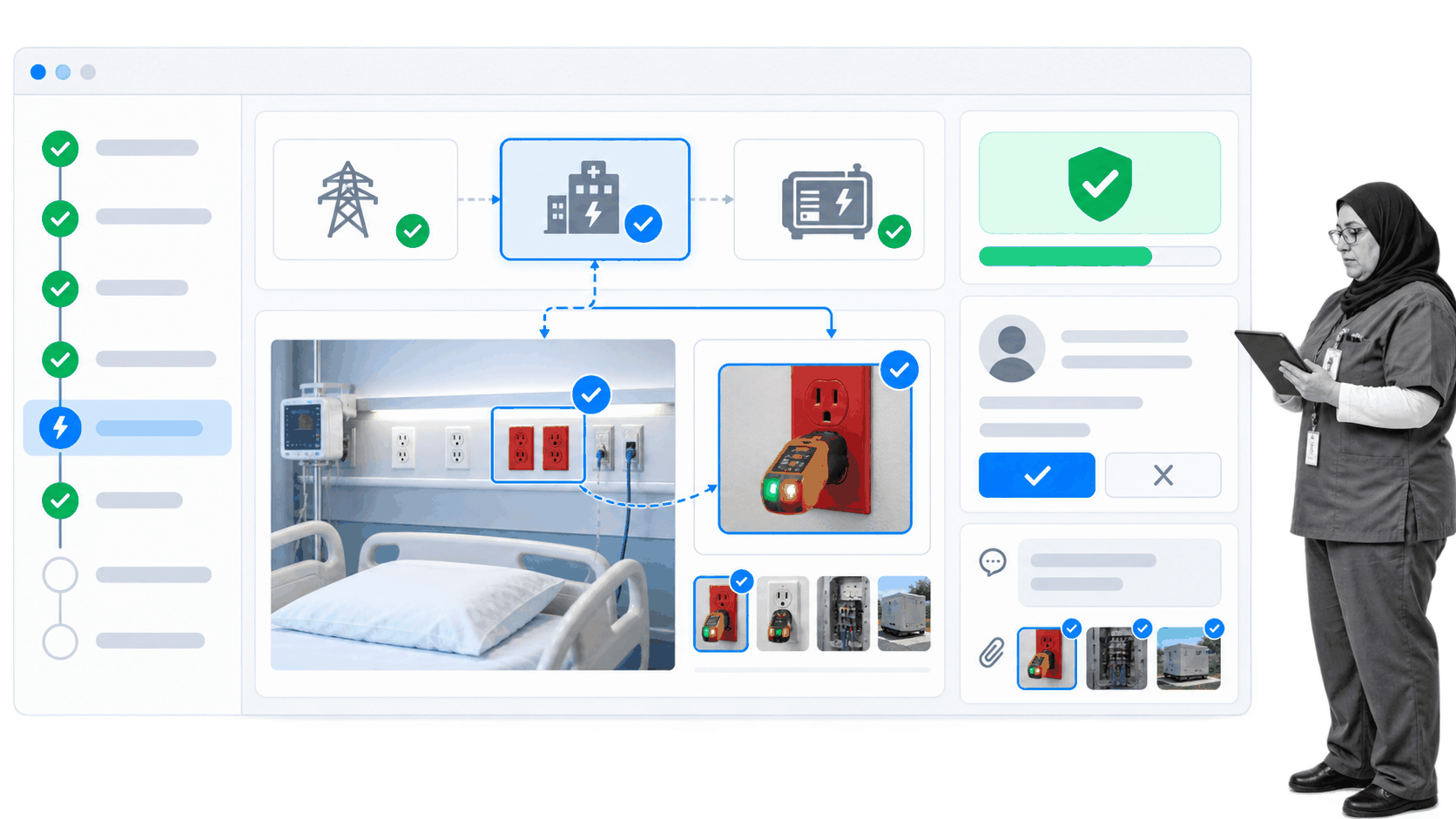
Health-care facilities contain patient-care spaces, life-supporting equipment, essential electrical systems, alternate power sources, and different risk categories. The inspection process must reflect the room, equipment, and clinical function in scope rather than applying one generic hospital rule everywhere.
Use the workflow to capture receptacle and branch-circuit checks, grounding, equipment condition, critical and life-safety branch evidence, transfer and alternate-source observations, required testing, and escalation of deficiencies. Coordinate the inspection with the applicable NEC health-care provisions, NFPA 99, facility procedures, and the authority having jurisdiction.
The run should identify the patient-care space or system, the equipment under review, the risk category, and the required evidence. A failed receptacle test in a general support area is not documented or escalated the same way as a deficiency affecting critical care or essential power. Conditional tasks can route each finding to the correct facilities, clinical, compliance, or vendor owner.
Run the Hospitals and Health Care checklist.
7. Residential rough inspection
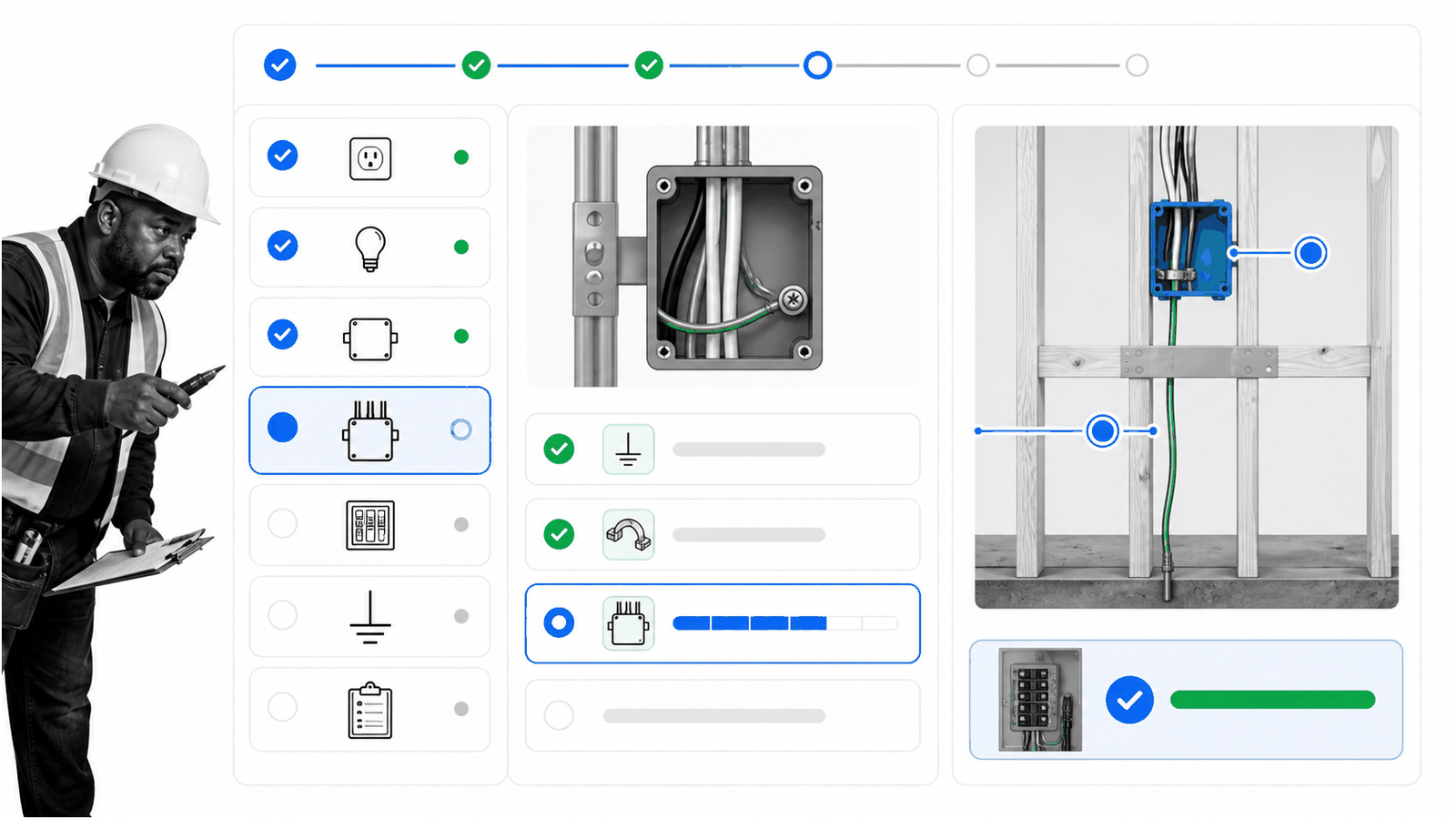
Residential electrical inspections cover a broad scope, and there is plenty within the NEC materials to review. A residential rough inspection provides a useful overview of residential electrical needs because it happens while wiring, boxes, and cable routes are visible and before wall finishes hide the work. It is the right moment to catch unsupported cable, damaged conductors, box-fill problems, missing protection, grounding or bonding defects, and installations that conflict with insulation or framing.
The checklist can cover service or panel preparation, conductor sizing and routing, cable support and protection, box placement and fill, grounding and bonding, required circuits, GFCI and AFCI provisions, smoke-alarm wiring, and equipment clearances. Local amendments and the authority having jurisdiction determine the exact pass criteria.
Residential work is easier to review when the workflow follows the building in a logical order: service and panel, branch circuits, rooms and required outlets, dedicated equipment, life-safety devices, and exterior or wet locations. Photos taken before close-up can preserve evidence of cable routing, nail-plate protection, box condition, and grounding connections that will soon be hidden.
Use the Residential Rough Inspection General checklist.
8. Air-conditioning and refrigerating equipment
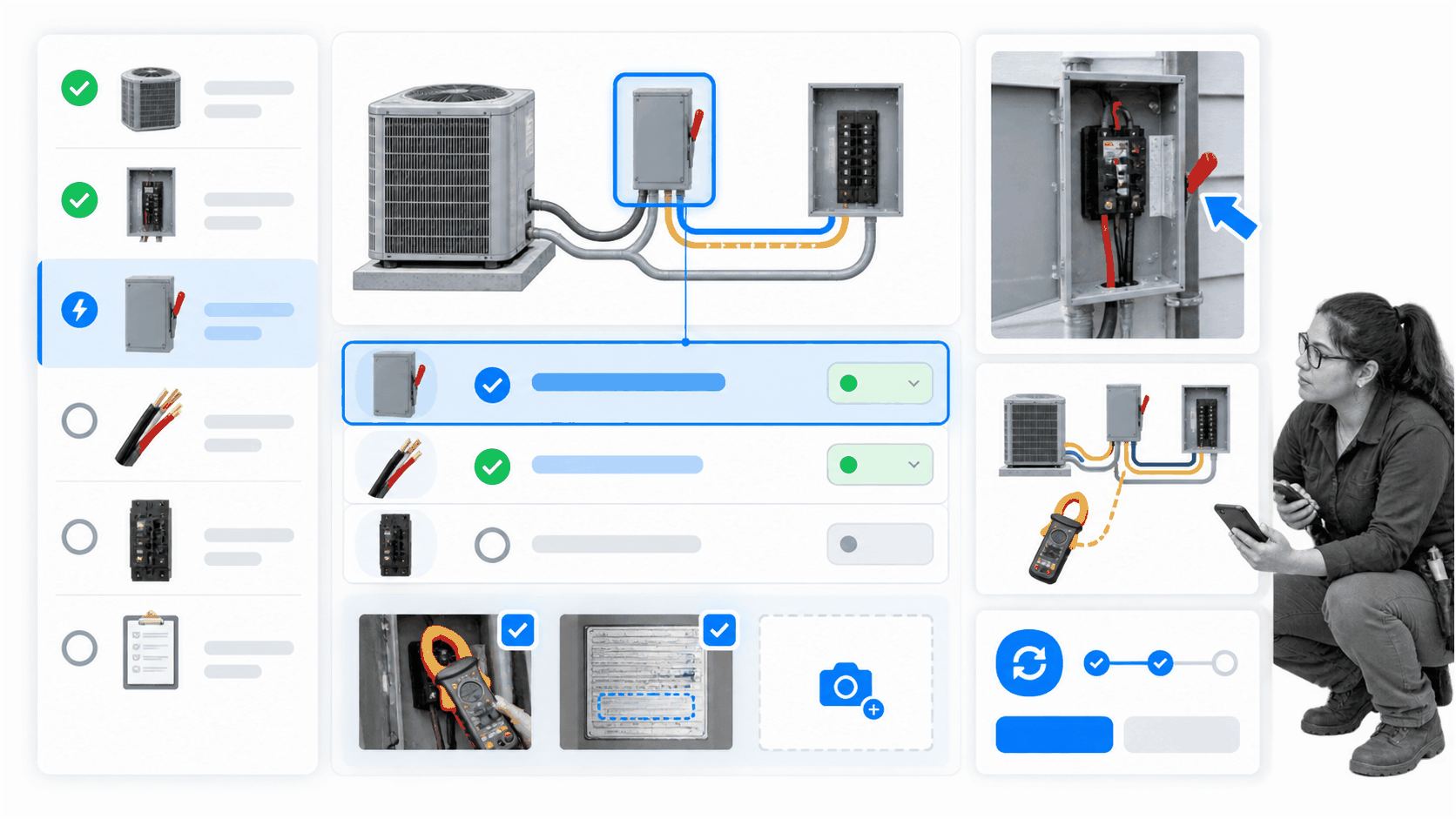
Cooling equipment can still create electrical fire and shock hazards. Compressors, motors, conductors, controllers, disconnects, and protective devices all need to match the equipment rating and installation conditions.
Inspect nameplates, conductor sizing, branch-circuit protection, overload protection, controllers, disconnect location and condition, grounding and bonding, working space, service receptacles, damaged insulation, and signs of overheating. The Grenfell Tower Inquiry found that an electrical fault in a fridge-freezer started the fire, while the building’s external wall system drove its catastrophic spread. The distinction matters: equipment faults and building-level fire performance both need their own controls.
Record the equipment nameplate, minimum circuit ampacity, maximum protective-device rating, disconnect details, controller condition, conductor observations, and test evidence that applies to the job. When one outdoor unit serves several indoor components or a refrigeration system contains multiple motors and controls, conditional paths can keep the run focused without dropping the checks unique to each component.
Run the Air-Conditioning and Refrigerating checklist.
Manage electrical inspections in Process Street
Process Street is a single Compliance Operations Platform. Its Docs and Ops capability areas, plus built-in AI, connect governed procedures to the workflows that execute them. For an electrical inspection program, that means the approved procedure, assigned inspection, captured evidence, corrective action, approval, and final record can stay connected.
Teams can use Process Street as quality management software for repeatable inspections, findings, approvals, and audit-ready history. Required tasks enforce the sequence. Conditional logic adapts the run to the equipment or location. Stop tasks hold critical failures. Reports and exports make it easier to review recurring problems across sites.
The same system can support commercial electrical inspections, residential rough-ins, panel inspections, maintenance rounds, and specialist equipment reviews without forcing every site into one rigid form. Start from a controlled procedure, expose only the tasks that apply, require the right evidence, and keep the corrective-action trail connected to the original finding.
Add the relevant checklist to your organization, verify it against the governing requirements, and adapt it to the equipment and evidence your inspectors actually use.
There’s a big world out there. Keep it safe for us, yeah?
The post 8 Electrical Inspection Checklists to Keep Your Workspaces Safe first appeared on Process Street | Compliance Operations Platform.


0 Commentaires